
Blog
The Best Lowland Single Malt Scotch Whisky Brands: 15 Distilleries and Whiskies to Discover


The Best Lowland Single Malt Scotch Whisky Brands: 15 Distilleries and Whiskies to Discover
The Lowlands of Scotland offer some of the most diverse and rewarding single malt Scotch whiskies in the country. Traditionally associated with elegant, approachable spirits, floral aromas, fresh fruit, citrus, vanilla and gentle sweetness, the region has developed far beyond its historic reputation.
Today, Lowland whisky includes classic triple-distilled single malts, richly matured expressions, experimental peated whiskies, farm-distilled releases and exciting new names reshaping Scottish whisky. For newcomers to Scotch, Lowland single malts can be an excellent introduction. Their lighter, often fruit-forward character can make them approachable without sacrificing complexity.
For experienced whisky drinkers, the region offers something equally compelling: distinctive production methods, limited releases, unusual cask maturation and the opportunity to discover emerging distilleries before their whiskies become widely available.
Some of the most recognisable names include Auchentoshan, Glenkinchie, Bladnoch and Rosebank. Meanwhile, newer producers such as Lochlea, Kingsbarns, Lindores Abbey, Holyrood and The Glasgow Distillery are helping expand the definition of Lowland single malt Scotch whisky.
Table of Contents
-
-
- What Is Lowland Single Malt Scotch Whisky?
- What Makes Lowland Whisky Different?
- The Best Lowland Single Malt Scotch Whisky Brands
- Traditional Lowland Whisky vs Modern Lowland Whisky
- How to Choose the Best Lowland Scotch
- Lowland Whisky and Food Pairings
- How to Taste Lowland Single Malt Scotch Whisky
- Lowland Scotch Whisky as a Gift
- Frequently Asked Questions
- Final Thoughts
-
What Is Lowland Single Malt Scotch Whisky?
Lowland single malt Scotch whisky is whisky distilled in Scotland’s Lowland region and made according to the requirements for single malt Scotch whisky. Broadly, single malt Scotch is produced at one distillery using water and malted barley, distilled in pot stills, and matured in Scotland in oak casks for at least three years.
The Scotch Whisky Association identifies five recognised Scotch whisky regions: Lowland, Highland, Speyside, Islay and Campbeltown. The Lowland region lies south of a line running between Greenock in the west and Dundee in the east. The region’s whisky character varies considerably between distilleries, so it is best treated as a geographical guide rather than a guarantee of a particular flavour.
Read the Scotch Whisky Association’s guide to Scotch whisky regions for further background.
Historically, Lowland whisky became associated with a lighter and more delicate style. Some producers used triple distillation, a process that can create a different spirit profile from the more common double-distillation approach. But triple distillation is not a requirement for Lowland Scotch, and not every Lowland whisky is light, floral or unpeated.
Modern Lowland distilleries produce a broader range of flavours, including orchard fruit, lemon, green apple, vanilla, honey, toasted grain, spice, sherry-derived dried fruit and, in some expressions, smoke.
What does “single malt” mean?
The word single refers to one distillery, not one cask. A single malt can combine whisky from multiple casks, provided the whisky comes from the same distillery and meets the applicable production requirements.
This distinction matters when comparing bottles. A single malt from one Lowland distillery may taste very different from a single malt produced a short distance away. Barley, fermentation, still design, distillation practices, cask selection, maturation and bottling decisions all influence the final whisky.
Is Lowland whisky good for beginners?
Often, yes. Many Lowland single malts have a welcoming profile built around fruit, vanilla, cereal, honey and gentle spice rather than intense peat smoke. That can make them a useful starting point for someone learning to appreciate Scotch.
However, beginners should not assume that every Lowland whisky is mild. Some modern releases are heavily peated, bottled at high strength or matured in casks that contribute powerful flavours. Reading the label and tasting notes is more reliable than choosing by region alone.
What Makes Lowland Whisky Different?
1. Floral, grassy and fresh fruit notes
Lowland single malts are frequently associated with fresh, delicate flavours. Depending on the distillery and bottling, you may encounter green apple, pear, lemon zest, peach, meadow flowers, fresh grass, cereal, honey or vanilla.
These are common tasting descriptions, not mandatory regional characteristics. A whisky matured in a strongly flavoured sherry cask, for example, may show raisins, dates, nuts and dark chocolate more prominently than fresh citrus.
2. Triple distillation at selected distilleries
Triple distillation involves passing the spirit through three distillation stages rather than two. Auchentoshan is particularly associated with this approach.
Triple distillation can produce a lighter, more refined spirit under certain production conditions, but the final flavour depends on the entire process. It does not automatically make a whisky superior, smoother or less complex. Cask maturation and bottling strength also have substantial influence.
3. A wide range of cask influences
Oak casks contribute much of the colour, aroma and flavour that develop during maturation. Ex-bourbon casks may bring vanilla, coconut, caramel and sweet oak. Sherry casks can contribute dried fruit, nuts, spice and richer sweetness. Red-wine casks and other wine-seasoned casks may add fruit, tannin and spice.
Cask descriptions are useful clues, but they are not precise flavour guarantees. The result depends on the type and previous use of the cask, the whisky’s age, the warehouse environment and the distillery’s spirit character.
4. A region experiencing renewed interest
The modern Lowland whisky scene combines historic names with a growing group of newer producers. Established distilleries continue to release familiar bottlings, while newer operations are exploring different barley varieties, fermentation approaches, peat levels and maturation strategies.
That makes Lowland Scotch particularly interesting for drinkers who enjoy comparing established house styles with younger, more experimental whisky.
The Best Lowland Single Malt Scotch Whisky Brands
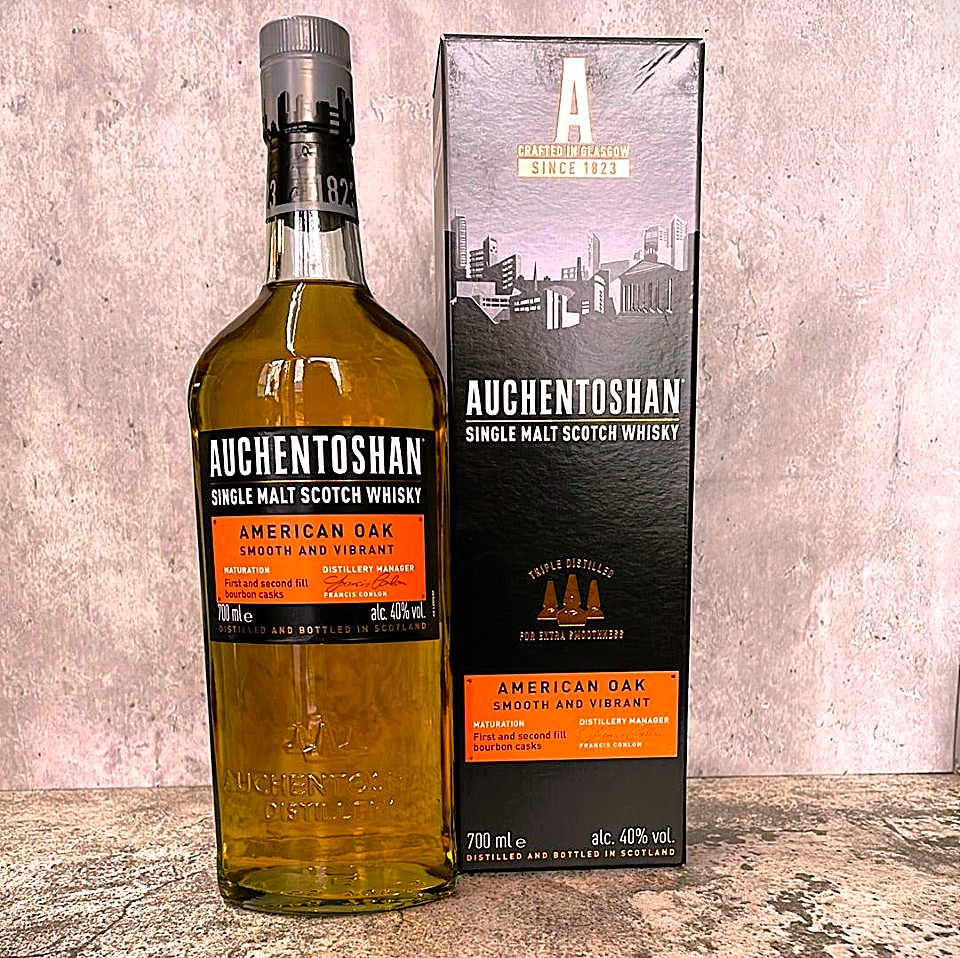
Auchentoshan-lowland-single-malt-scotch-whisky
1. Auchentoshan: The Classic Triple-Distilled Lowland Malt
Auchentoshan is one of the best-known names associated with Lowland single malt Scotch whisky. Based near Glasgow, the distillery has built its identity around triple distillation and a style that can emphasise citrus, vanilla, cereal sweetness and gentle oak.
For drinkers beginning their Scotch journey, Auchentoshan is a useful reference point because it demonstrates how distillation choices can contribute to a lighter-feeling spirit. Its character is not simply neutral or flavourless, however. Depending on the expression, maturation can introduce coconut, toffee, spice and richer fruit notes.
What to look for
Auchentoshan American Oak is a useful expression to explore if you enjoy vanilla-led whisky. Ex-bourbon casks can contribute sweet oak, coconut and caramel-like flavours.
Other Auchentoshan expressions and older bottlings may offer more pronounced cask influence or additional maturity. Availability changes by market, so check the current range rather than assuming every historical release remains on sale.
Who should try Auchentoshan?
-
-
- Beginners looking for a comparatively approachable Scotch.
- Drinkers who enjoy vanilla, citrus and gentle oak.
- Whisky enthusiasts interested in triple distillation.
- Anyone comparing production techniques across Scottish regions.
-
Best reason to explore it: Auchentoshan provides a clear introduction to the traditional association between Lowland whisky and triple distillation.
2. Glenkinchie: Elegant, Floral and Approachable
Glenkinchie is another important Lowland name and is often recommended to drinkers who prefer elegant whisky rather than heavy peat or intense oak. Located in East Lothian, it is associated with the Edinburgh area and has a long-established place in the region’s single malt story.
Its better-known bottlings are frequently described through notes of orchard fruit, honey, flowers, malt, gentle spice and soft sweetness. The precise balance varies with the expression and maturation.
What to look for
Glenkinchie 12 Year Old is a useful starting point for exploring the distillery’s established style. Its age statement tells you the youngest whisky in the bottle has matured for at least 12 years, not that every component is exactly 12 years old.
When tasting it, look for the relationship between delicate fruit, malt sweetness and oak. Rather than expecting a powerful smoky profile, consider how subtle aromas and a lighter-feeling palate can provide complexity in a different way.
Who should try Glenkinchie?
-
-
- Beginners who want to understand a classic Lowland profile.
- Drinkers who prefer floral and orchard-fruit aromas.
- Fans of a more delicate after-dinner dram.
- Collectors interested in established Scottish distillery ranges.
-
Best reason to explore it: Glenkinchie is a useful benchmark for the gentle, aromatic side of Lowland single malt Scotch.
3. Bladnoch: Southern Lowland Character with Modern Range Diversity
Bladnoch, in the south of Scotland, is one of the region’s best-known distilleries. Its history and changing ownership have helped make it an important name for whisky enthusiasts interested in the revival of traditional Scotch producers.
Bladnoch’s whiskies can show fruit, citrus, malt, vanilla and oak, while particular releases explore richer maturation or peated character. It is therefore worth judging each expression on its own rather than assuming that the entire range has a single flavour profile.
What to look for
Bladnoch’s age-stated releases, including 11-, 13- and 16-year-old bottlings when available, can be useful comparisons for understanding the influence of maturation. The Bladnoch Alinta expression has also been associated with a peated style and maturation involving bourbon and Pedro Ximénez sherry casks.
Who should try Bladnoch?
-
-
- Drinkers who enjoy fruit-led Scotch with a range of cask influences.
- Experienced enthusiasts seeking something beyond the most familiar supermarket labels.
- Collectors interested in the history and revival of Scottish distilleries.
- Whisky fans curious about the contrast between unpeated and peated Lowland expressions.
-
Best reason to explore it: Bladnoch illustrates how a historic Lowland distillery can offer more than one interpretation of the regional style.
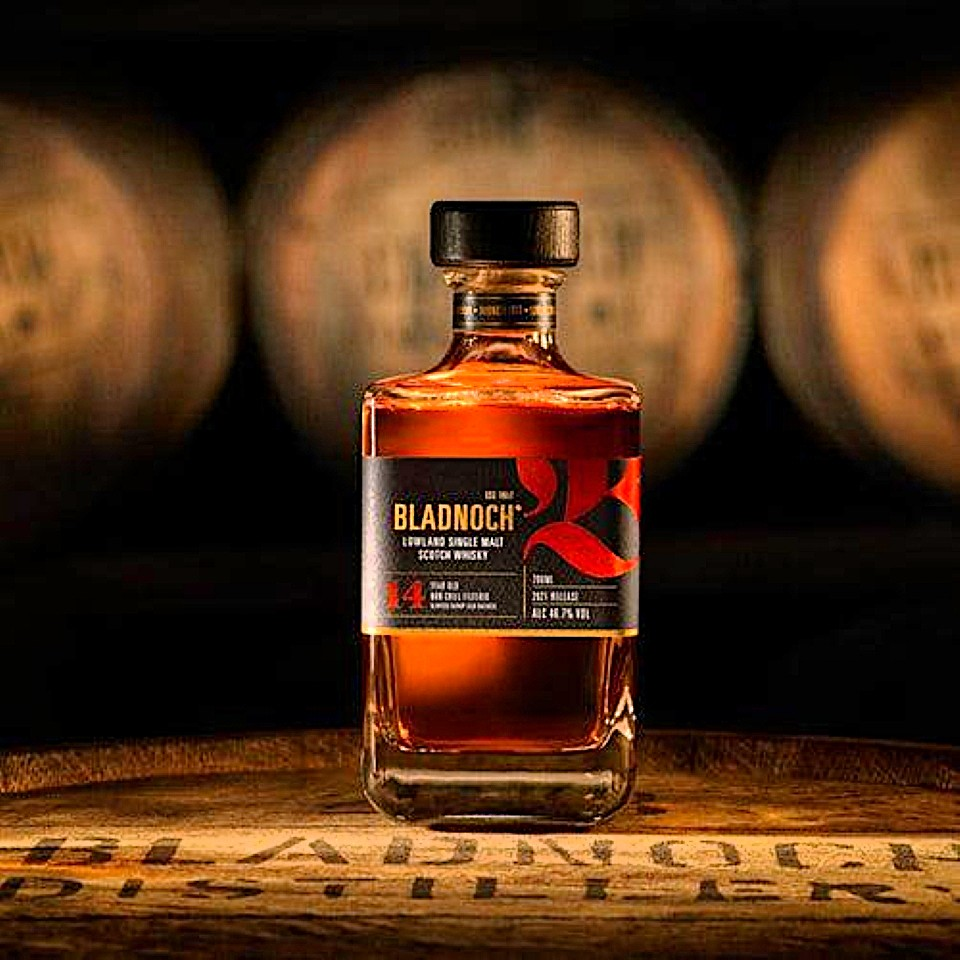
Blandnoch-lowland-single-malt-scotch-whisky
4. Rosebank: A Historic Name Re-entering the Conversation
Rosebank is one of the most celebrated names in Lowland whisky history. The distillery closed in 1993 and became particularly sought after among collectors during its years of inactivity. Its return to distilling has renewed interest in the brand, although new production and commercially available mature whisky are not the same thing.
Older Rosebank bottlings can be scarce and expensive, with prices influenced by condition, provenance, bottle size and collector demand. Newer releases should be assessed separately from historic stock: they represent whisky from a new production era and require their own maturation time.
What makes Rosebank distinctive?
Rosebank has traditionally been associated with a refined, fruity and floral style, and with triple distillation. Enthusiasts often seek its historic releases for their reputation, rarity and distinctive house character.
If considering a bottle for collecting, check the precise distillation and bottling dates, label details, fill level, seal condition and seller provenance. A famous name alone does not establish authenticity or investment value.
Who should consider Rosebank?
-
-
- Experienced whisky drinkers interested in distillery history.
- Collectors who understand the risks of rare-bottle purchases.
- Enthusiasts curious about the revival of historic Scotch producers.
- Buyers seeking a special-occasion bottle rather than an everyday dram.
-
Best reason to explore it: Rosebank connects Lowland whisky heritage with the region’s contemporary revival.
5. Kingsbarns: Modern Fife Whisky with a Fruit-Forward Style
Kingsbarns is a modern Lowland distillery in Fife, an area with a strong agricultural identity and a growing role in Scotland’s contemporary whisky industry. Its production story connects the landscape with a fresh approach to single malt.
Kingsbarns whiskies are often discussed in terms of fruit, honey, vanilla and sweet malt. Cask selection can add further layers, including spice and richer fruit. Its releases are worth exploring for drinkers who enjoy a modern style that is not defined by heavy peat.
What to look for
Kingsbarns Dream to Dram has been an important expression in the distillery’s range. Other releases, including limited bottlings and distillery-focused editions, may be available depending on the market and release schedule.
A tasting comparison between an ex-bourbon-influenced expression and a whisky matured using wine-seasoned casks can help reveal how maturation changes the profile.
Who should try Kingsbarns?
-
-
- Drinkers who enjoy fruity, approachable single malts.
- Fans of contemporary Scottish distilleries.
- People exploring whisky from Fife.
- Enthusiasts interested in cask maturation and modern production.
-
Best reason to explore it: Kingsbarns offers a modern perspective on Lowland single malt with an emphasis on fruit and cask character.
6. Lochlea: Farm-Connected Whisky from Ayrshire
Lochlea is an independent distillery in Ayrshire with a strong farm-based identity. Its whisky story centres on the relationship between the land, barley and distillation, making it especially interesting for drinkers who want to learn more about whisky production beyond the finished liquid.
Its releases have explored different combinations of malt character, fruit, sweetness, spice and cask influence. As a younger distillery, its range may evolve as more spirit matures and the producer develops its long-term house style.
What to look for
Lochlea has released expressions such as Our Barley, alongside seasonal or limited editions. These bottlings can provide an introduction to the distillery’s approach, but the range and availability should be checked at the time of purchase.
Younger whisky is not automatically inferior to older whisky. A well-made young single malt can offer vibrancy and clarity, while a longer maturation may bring additional oak influence and complexity. Age is one factor among several, not a universal measure of quality.
Who should try Lochlea?
-
-
- Whisky drinkers interested in farm-to-bottle production.
- Fans of emerging Scottish distilleries.
- Collectors who follow new releases as a distillery develops.
- Drinkers who enjoy exploring whisky outside the most established brands.
-
Best reason to explore it: Lochlea provides a way to follow the evolution of a modern Lowland distillery over time.
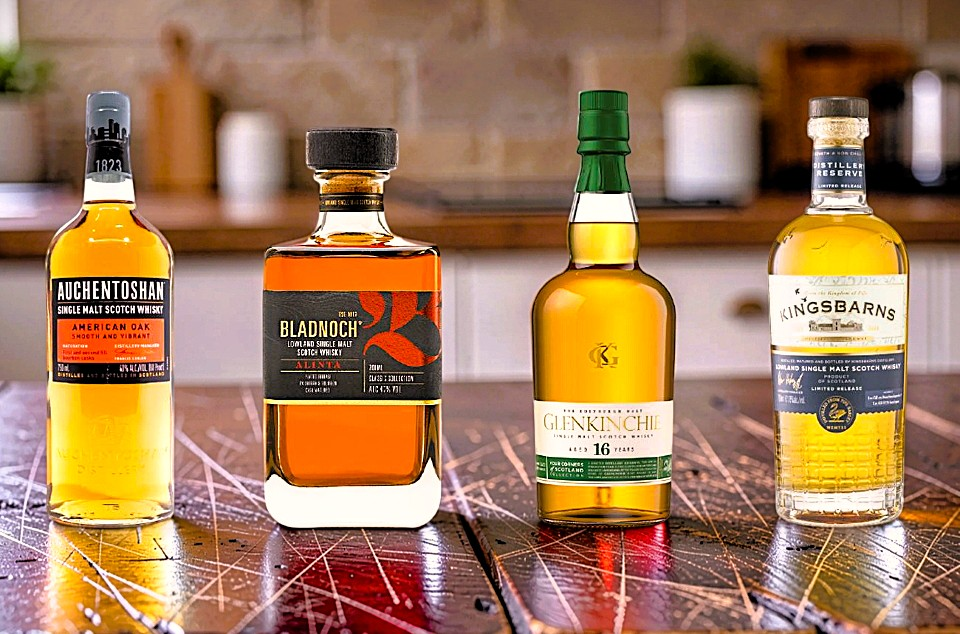
lowland-single-malt-scotch-whisky-brands
7. Lindores Abbey: Whisky with Deep Historical Associations
Lindores Abbey Distillery occupies a site in Fife associated with one of the earliest surviving written references to the production of aqua vitae in Scotland. That historical connection is important, but it should not be confused with proof that today’s whisky is produced using an unchanged medieval recipe.
The modern distillery makes its own contemporary single malt. Its identity combines historical inspiration with current production and maturation practices.
What to look for
Lindores Abbey has released whiskies under its own distillery name, including expressions that explore different cask types and maturation influences. Look for current releases from the producer and read the cask information carefully, particularly if comparing bottlings.
The best way to appreciate the distillery is to consider both its historical setting and the character of the whisky in the glass. Heritage can make a bottle more interesting, but flavour and production details should remain central to the buying decision.
Who should try Lindores Abbey?
-
-
- History-minded whisky enthusiasts.
- Drinkers interested in newer Lowland producers.
- Collectors who follow emerging distillery releases.
- Anyone who enjoys learning about Scotland’s whisky heritage.
-
Best reason to explore it: Lindores Abbey links a significant historical whisky location with contemporary Lowland distilling.
8. The Glasgow Distillery: Urban Whisky with an Experimental Outlook
The Glasgow Distillery has helped re-establish single malt production in a city with a major history in Scotland’s spirits industry. Its whisky portfolio is associated with the Glasgow 1770 brand, which explores a variety of production and maturation approaches.
Unlike the idea that all Lowland whisky should be light and unpeated, Glasgow 1770 includes different styles, including peated and unpeated expressions. This makes it an excellent example of the diversity developing in the region.
What to look for
The Glasgow 1770 Original is one of the brand’s recognisable expressions. The portfolio has also included peated and triple-distilled bottlings. Each expression should be assessed separately because peat level, cask type and distillation choices can change the whisky substantially.
A peated Lowland single malt can be an especially interesting purchase for a drinker who enjoys smoke but wants to compare it with the better-known peated styles of Islay.
Who should try Glasgow 1770?
-
-
- Fans of experimental whisky.
- Drinkers who enjoy comparing peated and unpeated expressions.
- Whisky enthusiasts interested in Glasgow’s distilling revival.
- Buyers looking for a contemporary Scottish single malt.
-
Best reason to explore it: Glasgow 1770 challenges the assumption that Lowland whisky must always be delicate and unpeated.
9. Holyrood Distillery: Edinburgh’s Contemporary Whisky Maker
Holyrood Distillery brings modern distilling to Edinburgh, a city with deep connections to Scotland’s brewing and whisky history. Its approach has included a focus on ingredients, fermentation and the ways production decisions can shape flavour.
This makes Holyrood particularly interesting for drinkers who want to understand how whisky character develops before maturation even begins. Fermentation and the choice of malt can influence the flavours that eventually appear in the glass, although cask maturation remains a major part of the final profile.
What to look for
Explore the distillery’s current single malt releases and read the producer’s notes on malt, fermentation and maturation. As a relatively modern producer, Holyrood’s whisky range may change as its stock matures and new bottlings are released.
Check whether a particular bottle is a mature whisky release, a limited edition or another product in the distillery’s wider portfolio before comparing it with established age-stated single malts.
Who should try Holyrood?
-
-
- Whisky enthusiasts interested in production science.
- Drinkers exploring new Scottish distilleries.
- Visitors and fans of Edinburgh’s spirits culture.
- Buyers who like contemporary whisky with a clear production story.
-
Best reason to explore it: Holyrood offers a modern, process-focused perspective on Lowland whisky.

A lineup of Lowland single malt Scotch whisky bottles representing established distilleries and modern whisky producers.
10. The Clydeside Distillery: Glasgow’s Waterfront Whisky Story
The Clydeside Distillery is located in Glasgow and draws on the city’s historic relationship with the River Clyde and its shipbuilding and trading heritage. Its modern distilling operation adds another chapter to Glasgow’s whisky revival.
Its single malt is a useful option for people who want to discover a newer producer rather than choosing only familiar names. As with other young distilleries, the whisky’s character and range will continue to develop as more stock matures.
What to look for
Check the distillery’s current bottlings and tasting notes, paying attention to age, cask type, bottling strength and whether a release is limited. These details help provide a more useful basis for comparison than the location or branding alone.
Who should try The Clydeside?
-
-
- Drinkers interested in urban Scottish distilleries.
- Visitors exploring Glasgow’s whisky heritage.
- Enthusiasts following the growth of modern Lowland single malt.
- Buyers looking for a whisky with a strong sense of place.
-
Best reason to explore it: The Clydeside connects contemporary whisky production with Glasgow’s historic waterfront.
11. Daftmill: Farm Distilling and Limited Availability
Daftmill is a farm distillery in Fife known for a small-scale approach and limited releases. Its agricultural setting is central to its identity, and its bottlings can attract attention from collectors who follow independent Scottish producers.
Because availability is limited, Daftmill is not always a practical everyday recommendation. When a bottle appears at retail, the price and provenance deserve careful attention.
What to look for
Daftmill releases can vary by vintage, age, cask and bottling details. Rather than expecting one permanent core range to represent the entire distillery, read the specific release information and compare like with like. The appeal is not simply scarcity. Farm production, the producer’s approach and the opportunity to taste a distinct distillery character are also reasons enthusiasts follow the brand.
Who should try Daftmill?
-
-
- Collectors who research bottles before buying.
- Drinkers interested in farm-based distilling.
- Whisky enthusiasts comfortable exploring limited releases.
- Buyers seeking something less widely encountered.
-
Best reason to explore it: Daftmill demonstrates how a small producer can build interest through a distinctive production identity and limited availability.
12. Ailsa Bay: A Different Side of Lowland Whisky
Ailsa Bay is an important example of a Lowland producer that does not fit the conventional image of a light, floral whisky. Associated with a modern production facility in Ayrshire, Ailsa Bay has explored carefully controlled peat levels and a distinctive approach to balancing smoke with sweetness.
Its existence is a reminder that whisky regions are not flavour rules. A Lowland whisky can be smoky, assertive and technically experimental while still belonging to its geographical region.
What to look for
Ailsa Bay has been known for peated single malt releases with a modern, measured approach to smoke. Availability can be inconsistent, and bottlings may be less commonly found than those from major established brands.
Before buying, check the exact product name and current release information. Do not assume a whisky described as “peated” will taste identical to an Islay malt: the source and character of the peat, distillation and maturation can all affect the result.
Who should try Ailsa Bay?
-
-
- Drinkers who enjoy smoky whisky.
- Enthusiasts interested in modern production methods.
- Scotch drinkers comparing regional styles.
- Buyers who want to challenge their assumptions about Lowland whisky.
-
Best reason to explore it: Ailsa Bay shows how diverse Lowland single malt can be.
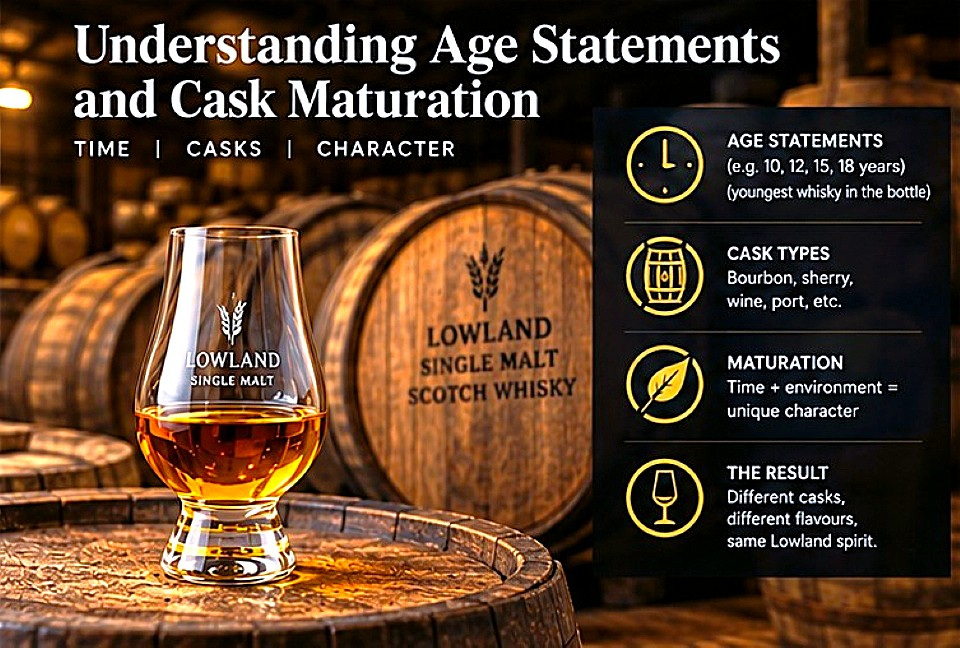
A whisky tasting glass beside oak casks illustrating how age, cask selection and maturation influence single malt Scotch whisky.
13. Annandale: Peated and Unpeated Styles from the Same Distillery
Annandale Distillery, in southern Scotland, has developed a distinctive identity by producing both peated and unpeated spirit. Its two familiar style names are Man O’Words for unpeated whisky and Man O’Sword for peated whisky.
This side-by-side approach is particularly useful for whisky education. When two styles share a distillery background but differ in peat treatment, drinkers can begin to understand how smoke interacts with the underlying spirit and maturation.
What to look for
Explore the producer’s current Man O’Words and Man O’Sword releases. Pay attention to the maturation details and bottling strength rather than relying on the peated/unpeated distinction alone.
Who should try Annandale?
-
-
- Curious drinkers who enjoy comparative tastings.
- Fans of both smoky and non-smoky Scotch.
- Enthusiasts interested in the Lowlands’ newer distilleries.
- Collectors following developing whisky brands.
-
Best reason to explore it: Annandale makes the contrast between peated and unpeated whisky central to its identity.
14. InchDairnie and KinGlassie: Technical Innovation in Fife
InchDairnie is a modern distillery in Fife with a reputation for exploring production methods and different styles of Scottish whisky. Its KinGlassie single malt releases have helped draw attention to the range of flavours emerging from the Lowlands.
This is a useful name for drinkers who want to look beyond the traditional profile of soft fruit and floral aromas. The distillery’s approach places emphasis on production decisions, maturation and the distinct character of individual releases.
What to look for
KinGlassie bottlings have included expressions with distinctive maturation approaches, including double-matured whisky. Specific releases can differ significantly, so the label and producer’s technical information are essential when comparing them.
If a bottle is described as double matured, look for details about the sequence of casks. A finishing period in a second cask can alter the whisky’s balance, but the result depends on the cask type, length of finishing and character of the original spirit.
Who should try InchDairnie and KinGlassie?
-
-
- Whisky fans who enjoy technical detail.
- Experienced drinkers looking for less familiar Lowland producers.
- Collectors following new releases from Fife.
- Anyone interested in how production and maturation influence flavour.
-
Best reason to explore it: InchDairnie demonstrates the innovative side of contemporary Lowland whisky.
15. Borders Distillery: Whisky from Scotland’s Southern Borders
The Borders Distillery in Hawick represents the return of whisky production to a part of Scotland with a strong regional identity. Its location and modern production story make it an interesting addition to the broader Lowland whisky conversation.
As with any newer distillery, the availability of mature single malt depends on the age of its stock and the timing of releases. Not every product associated with a distillery is necessarily single malt Scotch, so confirm the exact category and maturation details when choosing a bottle.
What to look for
Check the producer’s current range, including the specific product name, production details and age statement where applicable. A transparent label and reliable product description are especially important when comparing younger whisky with established age-stated bottlings.
Who should try Borders Distillery?
-
-
- Drinkers interested in regional Scottish spirits.
- Enthusiasts following newer distilleries.
- Visitors to the Scottish Borders.
- Whisky fans who enjoy exploring beyond major commercial brands.
-
Best reason to explore it: Borders Distillery broadens the story of whisky production in southern Scotland.
Historic Lowland Names Worth Knowing
The region’s history includes distilleries that closed long ago, alongside names that have returned to production. These historic producers matter to whisky enthusiasts, but it is important to distinguish an old distillery’s legacy from current production.
St Magdalene
Also known as Linlithgow, St Magdalene was a historic Lowland distillery that closed in the 1980s. Bottlings from its former stocks can be sought after by collectors. These are historical whiskies, not current production from an operating St Magdalene distillery.
Littlemill
Littlemill is another closed Lowland distillery whose remaining stocks have appeared in collectible bottlings. Its name is relevant to the history of Lowland whisky, but availability is limited and bottle authenticity and provenance are particularly important.
Inverleven and other closed distilleries
Other historic names appear through old bottlings and independent releases. When considering these bottles, verify the distillation date, bottler, cask details and provenance. Rare Scotch can be rewarding to research, but rarity alone does not guarantee quality or future appreciation.
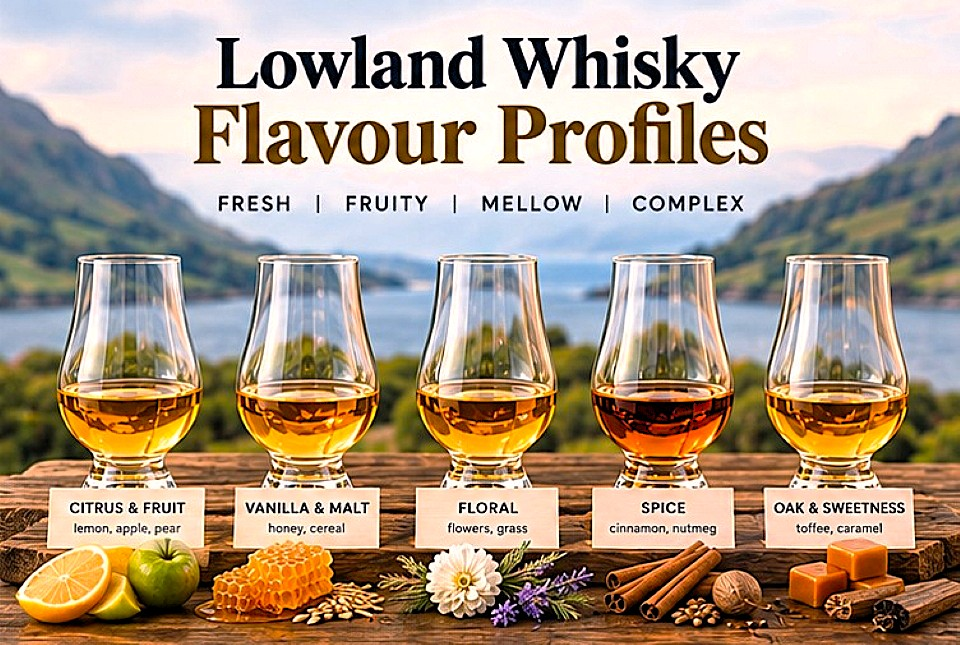
Whisky tasting glasses illustrating Lowland Scotch flavour notes such as citrus, orchard fruit, honey, floral aromas, spice and oak.
Traditional Lowland Whisky vs Modern Lowland Whisky
One of the biggest mistakes when exploring the Lowlands is assuming every whisky will taste the same. The region is better understood as a collection of different distilleries and production philosophies.
| Style or approach | What you may notice | Distilleries to explore |
|---|---|---|
| Triple-distilled and approachable | Citrus, vanilla, gentle malt and sweet oak | Auchentoshan |
| Floral and fruit-led | Orchard fruit, honey, delicate spice | Glenkinchie |
| Varied cask influence | Fruit, oak, spice and sometimes smoke | Bladnoch |
| Historic and collectible | Character varies by vintage and bottling | Rosebank, St Magdalene, Littlemill |
| Farm-linked production | Barley, fruit and cask-driven character | Lochlea, Daftmill |
| Modern and experimental | Diverse profiles, including peated styles | Glasgow 1770, Ailsa Bay, Annandale |
| New regional producers | Evolving house styles and contemporary approaches | Kingsbarns, Lindores Abbey, Holyrood, The Clydeside |
This table is a starting point, not a guarantee of flavour. A whisky’s age, cask, strength and batch can make a substantial difference.
How to Choose the Best Lowland Scotch
The best Lowland whisky is the one that matches your preferences, budget and occasion. The following approach can make choosing easier.
For beginners
Start with an approachable expression from Auchentoshan or Glenkinchie. Look for a bottle with clear producer information and familiar tasting notes, such as citrus, apple, honey, vanilla or gentle spice.
You do not need to buy an expensive bottle to begin learning about Scotch. A standard release from an established distillery can be more useful than a rare collectible because it gives you a reference point for future tastings.
For fruit-forward whisky drinkers
Consider Glenkinchie, Kingsbarns, Lochlea or selected Bladnoch releases. Look for tasting notes that mention orchard fruit, citrus, pear, peach, honey or malt sweetness. If you prefer richer fruit, examine the maturation details. Sherry casks may contribute dried fruit and nuts, while wine-cask influence can add another dimension of fruit and spice.
For fans of peat and smoke
Explore Glasgow 1770’s peated expressions, Annandale’s Man O’Sword or Ailsa Bay where available. Bladnoch has also released peated whisky. Remember that “peated” does not mean every whisky will taste alike. Smoke can range from subtle earthiness to pronounced medicinal, smoky or barbecue-like notes, depending on production and maturation.
For collectors
Rosebank, Daftmill, selected limited releases and historic closed-distillery bottlings may be of interest. Research the exact bottling rather than buying based on the name alone. For older or rare whisky, examine the seller’s reputation, bottle condition, fill level, closure, label and provenance. Prices can vary widely, and collectability should not be treated as a guarantee of investment returns.
For a special gift
Choose a bottle that suits the recipient’s taste and experience. An approachable, established single malt can be a thoughtful gift for someone new to Scotch. A limited or age-stated release may be more appropriate for a seasoned enthusiast, provided you understand their preferences.
A gift does not have to be the rarest or most expensive bottle to be memorable. Presentation, a useful explanation of the distillery and a personal connection to the recipient can make the experience more meaningful.
Lowland Whisky and Food Pairings
Pairing whisky with food can reveal aromas and flavours that may be less obvious when tasting it alone. The aim is to complement the whisky rather than overwhelm it.
Cheese
Mature cheddar can work well with a malt that shows honey, oak and spice. A creamy cheese may complement a softer, fruit-led whisky, while a stronger cheese can stand up to a more robust expression. Try small portions and alternate between the whisky and cheese. Salt, fat and texture can change the way flavours are perceived.
Dark chocolate
Dark chocolate can pair well with whiskies showing oak, dried fruit, coffee or cocoa-like notes. A richer cask-matured whisky may work particularly well, although very bitter chocolate can dominate a delicate malt. Start with a small piece of chocolate and a modest pour, then notice whether the pairing emphasises sweetness, spice or bitterness.
Smoked foods
A peated Lowland whisky may pair with smoked nuts, grilled food or lightly smoked fish. Avoid assuming that more smoke always creates a better match. The intensity of the food and whisky should be balanced.
Fruit desserts
Apple tart, pear desserts and dishes featuring stone fruit can complement whiskies with orchard-fruit and vanilla notes. A simple dessert may allow the whisky’s more delicate aromas to remain noticeable.
Nuts and dried fruit
Almonds, walnuts, raisins and dates can suit whiskies with sherry-cask influence or a richer, more mature profile. Serve them in small portions so they enhance rather than dominate the tasting.

A Lowland single malt Scotch whisky bottle, tasting glass and tasting notes illustrating how to choose and enjoy whisky.
How to Taste Lowland Single Malt Scotch Whisky
A structured tasting helps you compare distilleries more fairly and discover what you actually enjoy.
1. Observe the whisky
Pour a small amount into a clean glass. Colour may offer clues about maturation, but it cannot reliably tell you the whisky’s age or quality. Cask type and permitted colouring practices can affect appearance.
2. Smell gently
Bring the glass toward your nose without placing it too close. Take short, gentle sniffs. Look for broad categories first: fruit, flowers, cereal, vanilla, spice, oak or smoke. You do not need to identify every aroma. Personal associations differ, and tasting notes are a vocabulary for communicating impressions rather than a test with one correct answer.
3. Take a small sip
Allow the whisky to coat your palate. Notice sweetness, acidity, spice, texture, oak and any smoky or earthy character. Consider how the flavour changes from the first sip to the finish.
4. Add a little water if desired
A few drops of water may open up aromas or change the perceived balance, especially in higher-strength whisky. Add it gradually and taste before adding more. Water is optional; there is no single correct way to enjoy a dram.
5. Compare two whiskies side by side
A comparison can be more informative than tasting one bottle in isolation. For example, compare a triple-distilled Auchentoshan with a Glenkinchie, or contrast an unpeated whisky with a peated Glasgow 1770 expression.
Lowland Scotch Whisky as a Gift
Lowland single malt can make a thoughtful gift because the region offers options for different levels of experience and different flavour preferences.
Gifts for whisky beginners
An approachable bottle from an established producer such as Auchentoshan or Glenkinchie can be a practical introduction. Include a short note explaining the distillery and a few tasting suggestions.
Gifts for experienced enthusiasts
Consider a limited release, a distinctive cask maturation or a bottle from a newer distillery. Before buying a collectible, confirm the recipient enjoys collecting and is interested in that particular producer.
Gifts for whisky collectors
Rosebank and historic Lowland bottlings may appeal to collectors, but rare whisky requires more research than a standard retail bottle. Confirm authenticity, condition, bottling details and seller reputation.
Gifts in Toronto and the GTA
For readers shopping locally, Always Dial A Bottle Toronto can be a relevant starting point for exploring available whisky and gift-delivery options. Check the current catalogue, delivery coverage, legal age requirements and service terms before placing an order. Product availability can change, and not every distillery or limited release will be stocked by every retailer.
Frequently Asked Questions
What are the best Lowland single malt Scotch whisky brands?
Well-known names include Auchentoshan, Glenkinchie, Bladnoch and Rosebank. Modern producers such as Kingsbarns, Lochlea, Lindores Abbey, Holyrood, Glasgow 1770, The Clydeside, Annandale and InchDairnie also deserve attention. The best choice depends on flavour preference, availability and budget.
Is Lowland Scotch whisky smooth?
Many Lowland single malts are approachable and may have a gentle, fruit-forward profile, but “smooth” is subjective. Alcohol strength, cask influence, age and personal preference affect how a whisky feels. Lowland origin alone does not guarantee a soft or mild spirit.
Is all Lowland whisky triple distilled?
No. Triple distillation is associated with Auchentoshan and has a place in the region’s history, but it is not a requirement for Lowland Scotch. Production methods differ between distilleries.
Is Lowland whisky always unpeated?
No. Although many traditional Lowland expressions are unpeated, producers such as Glasgow 1770, Annandale, Ailsa Bay and Bladnoch have explored peated styles. Always check the specific expression.
Which Lowland whisky is best for beginners?
Auchentoshan and Glenkinchie are useful starting points because their established ranges can offer accessible ways to explore fruit, vanilla, malt and gentle spice. The best option is the one whose tasting profile appeals to the drinker.
What is the difference between Lowland and Islay whisky?
Islay is particularly famous for peated whiskies with smoky, earthy, medicinal or maritime character, although not every Islay malt is heavily peated. Lowland whisky has historically been associated with lighter, floral and fruit-led styles, but its modern range also includes smoky expressions. The regions are diverse, so comparing individual bottles is more informative than relying on stereotypes.
Is Rosebank whisky still being made?
Rosebank has returned to production after its historic closure. However, newly produced spirit and mature whisky released today are different things. Check the exact bottling and production details, especially when comparing new releases with older collectible bottles.
Are Lowland single malts expensive?
Prices range from relatively accessible standard bottlings to expensive limited releases and rare historical bottles. Age, availability, cask selection, release size and collector demand can all influence price. A higher price does not automatically mean a whisky will suit your palate better.
What is the difference between single malt and blended Scotch?
Single malt Scotch comes from one distillery and is made from malted barley using pot stills. Blended Scotch combines different types of Scotch whisky, commonly including malt and grain whisky. Both categories include a wide range of quality levels and styles.
How should Lowland single malt be served?
A clean whisky glass and a small pour are good starting points. Taste the whisky neat first if you wish, then experiment with a few drops of water. Some people enjoy whisky over ice, although chilling and dilution can change the aromas and texture.
Can Lowland Scotch make a good gift?
Yes. An approachable single malt can suit a beginner, while a distinctive limited release may appeal to an enthusiast. Match the bottle to the recipient’s preferences and buy from a reputable retailer.
Where can I learn more about Scotch whisky regions?
The Scotch Whisky Association’s regional guide explains the five recognised Scotch whisky regions. Individual distillery websites are also useful for checking current releases, production details and visitor information.
Testing-lowland-single-malt-scotch-whisky-brands
Final Thoughts: Discover the Diversity of Lowland Single Malt Scotch Whisky
The best Lowland single malt Scotch whisky brands demonstrate how much variety exists within one Scottish whisky region. Auchentoshan offers a useful introduction to triple distillation; Glenkinchie represents an elegant, aromatic style; Bladnoch combines heritage with range diversity; and Rosebank connects the region’s historic reputation with renewed production.
Beyond those established names, Kingsbarns, Lochlea, Lindores Abbey, Glasgow 1770, Holyrood, The Clydeside, Daftmill, Ailsa Bay, Annandale, InchDairnie and Borders Distillery show how contemporary Lowland whisky continues to evolve.
For beginners, start with a bottle whose tasting notes sound appealing rather than buying solely by age or price. For experienced drinkers, compare different cask types, distillation approaches and peated versus unpeated styles. For collectors, research the precise bottling and verify provenance before paying a premium.
Lowland whisky is not one flavour profile. It is a varied collection of established distilleries, new producers and historic names, each offering a different way to explore Scotch. That diversity is precisely what makes the region worth discovering.