
Blog
The Best Campbeltown Single Malt Scotch Whisky Brands: 12 Exceptional Whiskies to Discover


The Best Campbeltown Single Malt Scotch Whisky Brands: 12 Exceptional Whiskies to Discover
Campbeltown single malt Scotch whisky occupies a special place in the world of whisky. Produced in a small coastal town on Scotland’s Kintyre Peninsula, these distinctive malts are celebrated for their robust character, maritime influence, complex flavours, and deep connection to Scottish whisky-making heritage.
Once known as the “Whisky Capital of the World,” Campbeltown was home to dozens of distilleries during its nineteenth-century heyday. Although the industry contracted dramatically, the town’s whisky tradition survived. Today, Springbank, Glen Scotia, and Glengyle continue to produce distinctive whiskies that demonstrate why Campbeltown remains one of Scotland’s most fascinating whisky regions.
For enthusiasts exploring the best Campbeltown single malt Scotch whisky brands, the region offers several different experiences. Springbank combines lightly peated malt with a distinctive production method and a complex, maritime character.
Longrow offers a more pronounced smoky profile, while Hazelburn provides an unpeated, triple-distilled alternative. Glen Scotia explores coastal fruit, spice, and cask influence, while Kilkerran showcases another interpretation of traditional Campbeltown whisky.
Table of Contents
-
-
- What Is Campbeltown Single Malt Scotch Whisky?
- Why Campbeltown Whisky Is So Special
- The History of Campbeltown, Scotland’s Historic Whisky Town
- The Best Campbeltown Single Malt Scotch Whisky Brands
- Springbank: A Benchmark for Campbeltown Whisky
- Longrow: Campbeltown’s Smoky Single Malt
- Hazelburn: The Lighter, Unpeated Campbeltown Style
- Glen Scotia: Maritime Character and Modern Craft
- Kilkerran: The Distinctive Single Malt from Glengyle
- How Campbeltown Whisky Brands Compare
- The Main Flavour Profiles of Campbeltown Scotch
- How to Choose the Best Campbeltown Single Malt
- Campbeltown Whisky and Food Pairings
- How to Taste Campbeltown Single Malt Scotch Whisky
- Campbeltown Whisky as a Gift
- Campbeltown Whisky vs. Islay, Highland, and Speyside Scotch
- Frequently Asked Questions
- Final Thoughts: Discovering the Best Campbeltown Whisky
-
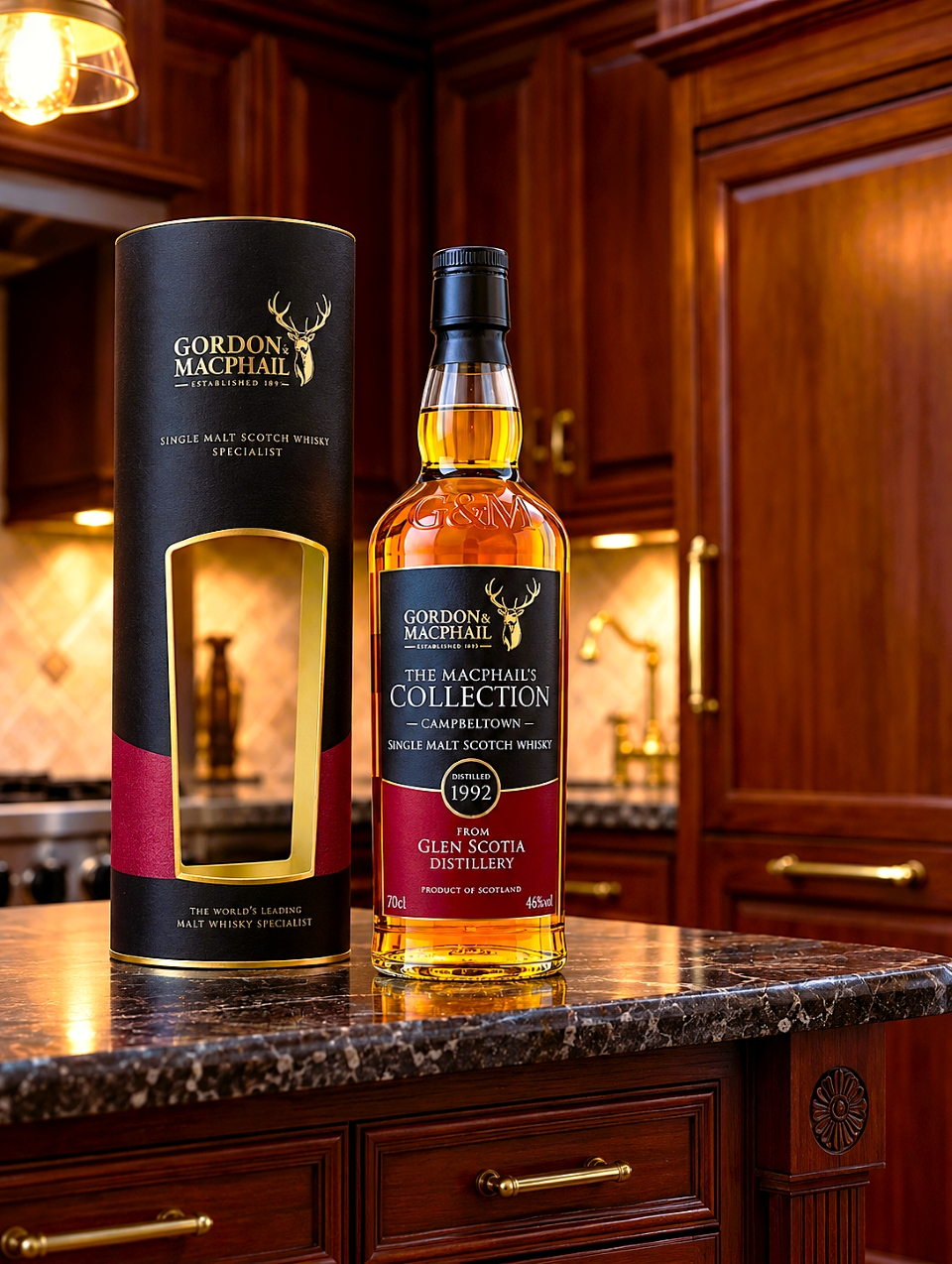
Gordon & MacPhail-campbeltown-single-malt-scotch-whisky
1. What Is Campbeltown Single Malt Scotch Whisky?
Campbeltown single malt Scotch whisky is whisky distilled at a single distillery in Campbeltown, Scotland, using malted barley and produced according to the legal requirements for Scotch whisky. The regional designation connects the whisky to the historic town on the Kintyre Peninsula, in Argyll and the west of Scotland.
The Scotch Whisky Association recognises five traditional Scotch whisky regions: Campbeltown, Highland, Islay, Lowland, and Speyside. Each region offers a different perspective on Scotch whisky, although flavour is influenced by several factors, including the distillery’s production methods, the shape of its stills, fermentation, peat use, cask selection, and maturation.
Campbeltown whisky is often described as robust, rich, and complex. Common tasting notes can include:
-
-
- Sea salt and coastal minerality
- Citrus and orchard fruit
- Honey, vanilla, and toffee
- Malt, cereal, and toasted grains
- Black pepper and baking spices
- Earthy or oily textures
- Peat smoke, from subtle to pronounced
- Dried fruit, chocolate, and oak
-
These are general descriptions rather than rules. Not every Campbeltown whisky is smoky, salty, or heavy. Hazelburn, for example, is unpeated and triple-distilled, while some Glen Scotia expressions emphasise fresh fruit and cask character. Even within the Springbank family, the differences between Springbank, Longrow, and Hazelburn are substantial.
That diversity makes Campbeltown an appealing region for whisky drinkers who want to explore different production styles without leaving one geographic whisky tradition.
What Does “Single Malt” Mean?
The term single malt Scotch whisky has a specific meaning. It must be made at one distillery in Scotland from water and malted barley, using pot still distillation, and it must be matured in Scotland in oak casks with a capacity no greater than 700 litres for at least three years. It must also satisfy the other legal requirements governing Scotch whisky.
“Single” refers to the distillery, not to a single barrel. A single malt can combine whisky from numerous casks produced at the same distillery.
This distinction matters when comparing Campbeltown bottles. Springbank, Longrow, Hazelburn, Glen Scotia, and Kilkerran are single malt brands or ranges. Campbeltown Loch, by contrast, is a blended malt: it combines single malt whiskies from different distilleries and is not itself a single malt.
For readers seeking more background, the Scotch Whisky Association’s official regional guide and Scotch whisky category information provide useful reference points.
2. Why Campbeltown Whisky Is So Special
Campbeltown is one of Scotland’s smallest whisky regions by the number of active distilleries, yet it has a disproportionately important place in whisky history. Its appeal rests on three key qualities: distinctive flavour, production heritage, and the diversity of the whiskies made by its surviving distilleries.
A Recognisable Coastal Character
Campbeltown sits beside the sea, and many of its whiskies are associated with maritime impressions such as salt, brine, mineral notes, and a slightly oily texture. These characteristics can complement fruit, malt sweetness, spice, and smoke.
It is important not to confuse tasting descriptions with literal ingredients. A whisky described as salty does not necessarily contain added salt, and a coastal flavour impression does not prove that sea air directly creates that note. Whisky character develops through the combined effects of production, maturation, and the individual casks used.
Traditional Production Methods
Some Campbeltown distilleries preserve production methods that give their whiskies a distinctive identity. Springbank, for example, is known for carrying out the entire whisky-making process on its site, including traditional elements of production that are unusual in the modern industry.
Springbank also uses a distinctive partial-triple-distillation process for its namesake whisky. Hazelburn is triple-distilled and unpeated, while Longrow is more heavily peated and double-distilled. These differences demonstrate why the distillery name alone does not fully explain the whisky in the glass.
A Region with Several Distinct Styles
The modern Campbeltown landscape is concentrated around three active distilleries:
-
-
- Springbank Distillery: Home to Springbank, Longrow, and Hazelburn single malts.
- Glen Scotia Distillery: Produces a range of maritime, fruity, spicy, and sometimes peated single malts.
- Glengyle Distillery: Produces Kilkerran single malt.
-
Although these brands share a regional heritage, they should not be treated as interchangeable. Their production approaches and cask programmes can lead to markedly different results.
3. The History of Campbeltown, Scotland’s Historic Whisky Town
Campbeltown’s whisky history stretches back centuries, but the town became particularly prominent during the nineteenth century. Its position on the Kintyre Peninsula, together with local industry and shipping connections, helped establish it as an important centre of whisky production.
At the height of its success, Campbeltown supported more than 30 distilleries, according to historical accounts commonly cited by the region’s whisky businesses and retailers. The town became known as the “Whisky Capital of the World.”
However, the industry faced serious challenges. Changes in demand, economic downturns, business decisions, and wider disruptions contributed to the closure of many distilleries. By the twentieth century, Campbeltown’s once-large whisky industry had contracted dramatically.
The survival of Springbank and Glen Scotia, together with the revival of Glengyle in the early twenty-first century, helped preserve the region’s identity. Glengyle began distilling again in 2004, and its whisky is sold under the Kilkerran name. The story of Campbeltown is therefore not simply one of decline. It is also a story of preservation, renewal, and the continued relevance of a small whisky-making community.
For collectors, that history adds context to the region’s surviving distilleries. Some whisky names evoke historic distilleries that no longer operate, while current producers continue to develop new expressions and styles.
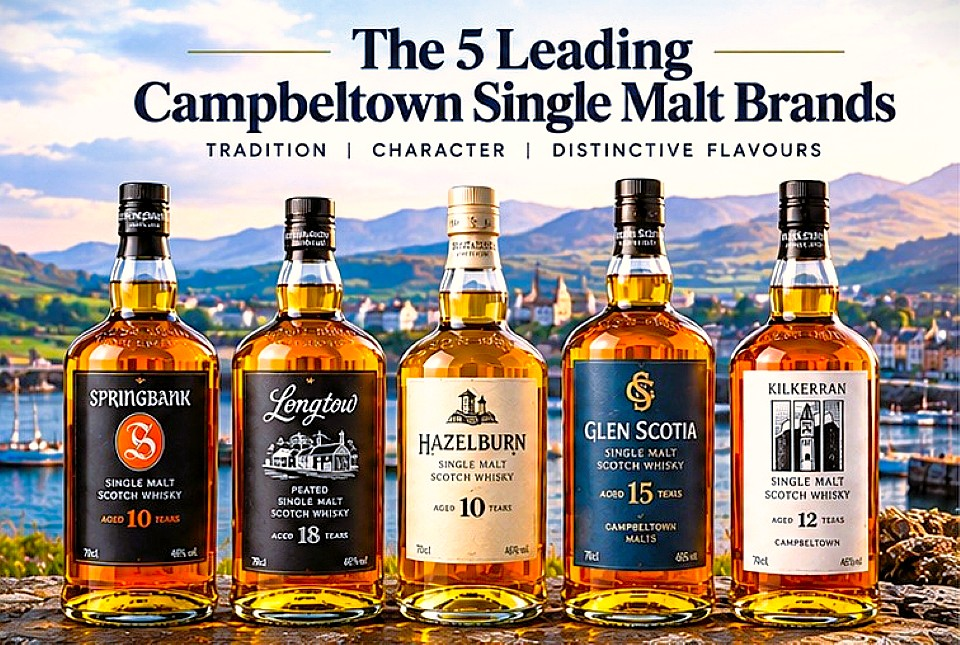
Five Campbeltown single malt Scotch whisky brands: Springbank, Longrow, Hazelburn, Glen Scotia and Kilkerran.
4. The Best Campbeltown Single Malt Scotch Whisky Brands
The following guide focuses on the principal modern Campbeltown single malt brands and the expressions that help illustrate their character. Individual releases, age statements, cask finishes, and bottle availability can change over time, so treat the examples as a guide to styles rather than a guarantee of current stock.
Quick Comparison: Campbeltown’s Leading Single Malt Brands
| Brand | General style | Best suited to |
|---|---|---|
| Springbank | Complex, lightly peated, oily, maritime | Enthusiasts seeking a classic Campbeltown profile |
| Longrow | Heavily peated, smoky, rich | Lovers of robust smoky whisky |
| Hazelburn | Unpeated, triple-distilled, delicate | Drinkers who prefer fruit, malt, and subtle complexity |
| Glen Scotia | Coastal, fruity, spicy, varied by release | Those exploring maritime whisky and cask finishes |
| Kilkerran | Characterful, often earthy, fruity, and sometimes smoky | Drinkers seeking a distinctive traditional style |
These descriptions are broad. A specific bottling’s age, cask type, alcohol strength, and batch can change its flavour profile significantly.
5. Springbank: A Benchmark for Campbeltown Whisky
Springbank is one of the best-known names in Campbeltown single malt Scotch whisky. Produced at Springbank Distillery, the brand is associated with traditional methods, a complex house character, and a strong connection to the town’s whisky heritage.
Springbank has been distilled since 1828. Its lightly peated malt and distinctive 2.5-times distillation process contribute to a style that can combine cereal richness, fruit, gentle smoke, spice, and maritime notes.
For many enthusiasts, Springbank is an essential starting point for understanding Campbeltown whisky—not because every Campbeltown malt tastes like Springbank, but because the brand illustrates how many different elements can coexist in a single whisky.
Springbank 10 Year Old
Springbank 10 Year Old is a useful introduction to the brand’s house style. It is generally matured using a combination of ex-bourbon and ex-sherry casks, bringing together fresh fruit, malt, sweetness, spice, and a characteristic coastal edge.
Typical tasting descriptions may include:
-
-
- Green apple, citrus, and other fresh fruit
- Malted barley and cereal notes
- Honey, vanilla, and toffee
- Baking spices
- A lightly smoky, salty finish
-
The result is a whisky that offers several layers without necessarily requiring a long whisky-tasting background to appreciate.
Why consider it: Springbank 10 is a strong candidate for drinkers looking for a representative expression of the distillery’s style. It can also work well as a reference bottle when comparing other Campbeltown malts.
Who may enjoy it: Whisky enthusiasts who appreciate complexity, gentle smoke, and a balance of fruit, malt, and maritime character.
Springbank 12 Year Old Cask Strength
Springbank 12 Year Old Cask Strength releases offer a different experience from the standard 10 Year Old. Bottled at a higher strength, these editions can present more concentrated aromas, texture, and flavour. The exact profile depends on the edition and cask composition. Depending on the release, drinkers may encounter citrus, mineral notes, cereal sweetness, smoke, spice, or richer fruit.
Cask-strength whisky is not automatically better than a standard-strength bottling. Its appeal lies in the more concentrated presentation and the opportunity to add a little water to explore how the aromas develop.
Why consider it: A good option for experienced drinkers who enjoy high-strength whisky and want to explore the influence of different casks and batches.
Buying tip: Check the bottling year, alcohol percentage, cask details, and batch information before comparing prices. Different editions can vary substantially.
Springbank 15 Year Old
Springbank 15 Year Old often leans towards richer, darker flavours than the younger standard expression, particularly when sherry-cask influence is prominent. Potential tasting notes include dried fruit, dark chocolate, nuts, leather, spice, and earthy smoke, balanced by Springbank’s characteristic malt and maritime elements.
Its fuller profile can make it a good after-dinner dram, particularly for drinkers who enjoy whisky with depth and a lingering finish.
Why consider it: A mature, rich style for those who prefer darker fruit, sherry influence, and a more substantial whisky.
Who may enjoy it: Drinkers who favour robust single malts and want to explore the relationship between age, cask influence, and distillery character.
Older and Limited Springbank Releases
Springbank’s older and limited releases can attract considerable attention from enthusiasts and collectors. Age-stated bottlings and special cask editions may offer unusual combinations of fruit, spice, wood, smoke, and maritime character. However, an older age statement is not a guarantee that every drinker will prefer the whisky. Cask quality, maturation history, bottling strength, and personal taste all matter.
Limited availability can also create a substantial difference between the original retail price and resale prices. Before buying a collectible bottle, confirm its authenticity, storage history, condition, and provenance.
Springbank verdict: For drinkers seeking a complex, traditional Campbeltown single malt, Springbank is one of the most important brands to explore. The 10 Year Old is a logical starting point, while cask-strength and older expressions offer opportunities for deeper exploration.
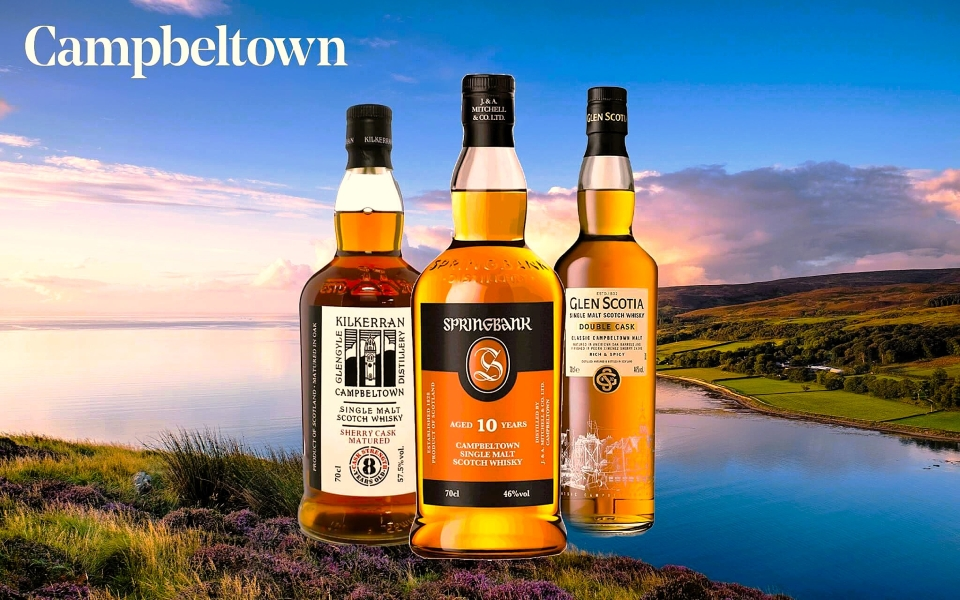
Campbeltown-single-malt-whisky-brands
6. Longrow: Campbeltown’s Smoky Single Malt
Longrow is Springbank Distillery’s heavily peated single malt range. Although it comes from the same distillery as Springbank and Hazelburn, its more pronounced peat influence gives it a different identity.
Longrow was first produced in 1973 as an experiment intended to demonstrate that a strongly peated, Islay-inspired style could be made on mainland Scotland. It is named after a historic Campbeltown distillery that no longer operates.
Longrow is generally double-distilled and made using more heavily peated malt than Springbank’s namesake whisky. Its style can combine smoke with sweetness, fruit, spice, and a rich texture.
Longrow Peated
Longrow Peated is the natural starting point for anyone exploring the range. It offers a more direct smoky profile than many other Campbeltown single malts, while retaining enough sweetness and richness to avoid being defined by smoke alone.
Typical tasting notes can include:
-
-
- Peat smoke and ash
- Vanilla and creamy sweetness
- Toasted grain
- Herbs and earthy notes
- Rich fruit
- A long smoky finish
-
The balance between smoke and sweetness is part of its appeal. Instead of presenting a single overwhelming flavour, a good tasting session can reveal changes as the whisky sits in the glass.
Why consider it: Longrow Peated is a strong choice for people who enjoy smoky Scotch and want to compare a Campbeltown interpretation with peated whiskies from Islay.
Who may enjoy it: Drinkers who appreciate peat smoke, savoury flavours, and a robust finish.
Longrow Red
Longrow Red is a limited-release series that explores the relationship between peated whisky and red-wine cask maturation or finishing. The precise cask type, maturation details, and availability vary by edition.
Depending on the release, red-wine casks may contribute impressions of berries, darker fruit, spice, or tannic structure. The Longrow spirit provides a smoky foundation that can create a striking contrast with the fruit character of the cask. Because Longrow Red is an edition-based series, it is particularly important to check the label and release information rather than assume all bottles have identical characteristics.
Why consider it: A compelling option for drinkers interested in cask experimentation, especially when they enjoy both peat smoke and red-fruit flavours.
Buying tip: Compare the exact edition, cask details, age statement if provided, and bottling strength. Do not assume one Longrow Red release is identical to another.
Longrow 18 Year Old and Other Mature Releases
Older Longrow releases can combine developed peat smoke with dark fruit, chocolate, nuts, leather, and spice. The cask composition can play a major role, so individual editions may lean in different directions. Maturation does not simply remove smoke or make whisky smoother. Instead, the relationship between spirit character and oak changes over time, and different casks can create different results.
Longrow verdict: Longrow is one of the leading choices for anyone seeking smoky Campbeltown single malt. The Peated expression provides an accessible introduction to its identity, while limited releases can appeal to enthusiasts looking for more unusual combinations of smoke and cask influence.
7. Hazelburn: The Lighter, Unpeated Campbeltown Style
Hazelburn demonstrates why Campbeltown should not be reduced to a single smoky flavour profile. Produced at Springbank Distillery, Hazelburn is unpeated and triple-distilled, giving it a different character from both Springbank and Longrow.
The brand takes its name from a historic Campbeltown distillery that has closed. Its modern whisky was first produced in 1997. Hazelburn is often associated with a lighter, fruitier, and more delicate style, although its flavour can still include cereal richness, sweetness, spice, and mineral notes.
Hazelburn 10 Year Old
Hazelburn 10 Year Old is a natural introduction to the range. Its unpeated character makes it useful for drinkers who want to explore Campbeltown whisky without a strong smoky component.
Typical tasting impressions may include:
-
-
- Citrus and orchard fruit
- Baked pineapple or tropical fruit
- Honey and sweet malt
- Vanilla and creamy textures
- Gentle ginger or other spice
- A subtle mineral finish
-
The exact profile varies with the bottling and maturation details. The important point is that Hazelburn’s unpeated character allows fruit, malt, and cask influence to take centre stage.
Why consider it: A good choice for people who prefer unpeated Scotch or want to compare how different distillation approaches influence whisky from the same distillery.
Who may enjoy it: Drinkers who favour fruit-forward single malts, delicate sweetness, and a more restrained style.
Hazelburn 12 Year Old and Special Releases
Older Hazelburn expressions and special releases can offer additional depth through maturation and cask selection. Depending on the edition, sherry casks or other wood types may contribute dried fruit, chocolate, spice, nuts, and richer sweetness. Because Hazelburn is unpeated, these cask-driven flavours can be easier to distinguish for some drinkers than they would be in a heavily smoky whisky.
Hazelburn verdict: Hazelburn is an essential inclusion in any serious overview of Campbeltown single malt. It is especially useful for demonstrating that regional identity can encompass both smoky and unpeated styles.
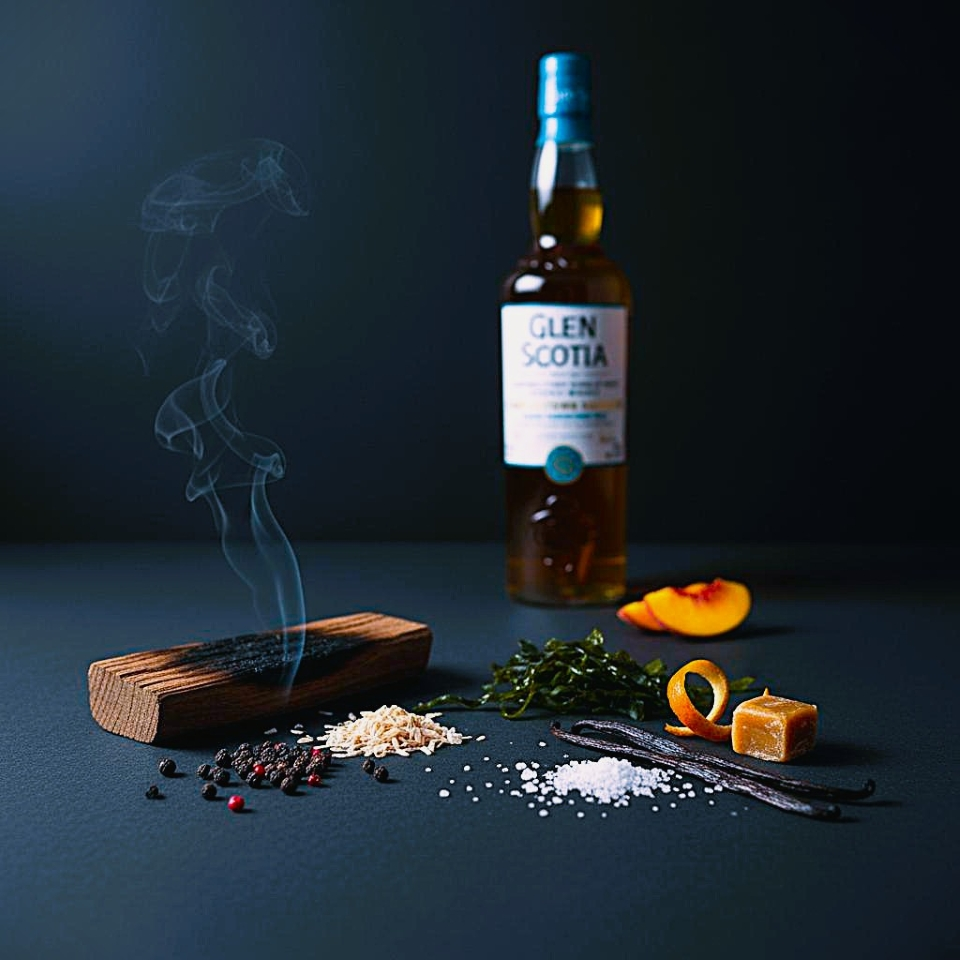
Glen -Scotia-Campbeltown-single-malt-whisky-brands
8. Glen Scotia: Maritime Character and Modern Craft
Glen Scotia is one of Campbeltown’s three active distilleries and a central part of the region’s modern whisky identity. Founded in 1832 as Scotia Distillery, it has a long connection to Campbeltown’s historic whisky industry.
The distillery produces a range of single malts that explore coastal character, fruit, spice, oak, and different levels of peat influence. Its core expressions and limited editions provide several ways to experience the distillery’s style. Glen Scotia is particularly worth exploring for drinkers who enjoy a maritime impression without wanting every whisky to be heavily smoky.
Glen Scotia 10 Year Old
Glen Scotia’s 10 Year Old is a useful entry point to the brand. The distillery describes its style in terms that include fresh fruit, citrus, rich oils, and maritime character. Depending on the bottling, a drinker may notice green fruit, lemon or orange zest, vanilla, malt sweetness, spice, and a coastal finish.
Why consider it: It offers a way to explore Glen Scotia’s house style without immediately moving to older or limited releases.
Who may enjoy it: Drinkers who prefer balanced Scotch with fruit, malt, and coastal character.
Glen Scotia 15 Year Old
Glen Scotia 15 Year Old is a useful option for people who want to explore a more mature expression of the distillery’s whisky. Its character may include richer fruit, vanilla, oak, spice, and a maritime edge. Compared with a younger bottling, the additional maturation can introduce a different balance of cask-derived flavours and distillery character.
As with all age-stated whisky, the number on the label should be considered alongside cask composition and personal preference.
Why consider it: A candidate for drinkers looking for a more developed Glen Scotia profile, especially if they enjoy a balance of fruit, oak, and coastal notes.
Glen Scotia Victoriana
Victoriana is one of Glen Scotia’s distinctive expressions and is often associated with a richer, more concentrated style. Its bottling strength and cask treatment distinguish it from the distillery’s standard age-stated expressions. Tasting impressions can include dark fruit, caramelised sugar, spice, oak, and a fuller texture. The exact balance depends on the release and the whisky in the bottle.
Why consider it: An option for experienced drinkers who prefer bold flavours and want to explore a more intense Glen Scotia expression.
Buying tip: Verify the specific edition and alcohol percentage. Bottling details can change, and limited or special releases should not be assumed to have identical specifications.
Glen Scotia Festival and Limited Editions
Glen Scotia regularly showcases its whisky through special releases and festival bottlings. These may explore different cask finishes, ages, peat levels, or bottling strengths. For enthusiasts, these editions can be a useful way to investigate how the same distillery’s spirit responds to different maturation choices. They can also provide a more distinctive gift than a standard core-range bottle.
However, a limited-edition label does not automatically make a whisky superior. Evaluate the actual whisky, its cask history, its price, and whether the flavour profile suits the recipient.
Glen Scotia verdict: Glen Scotia is an important Campbeltown brand for people seeking maritime character, fresh and tropical fruit, spice, and varied cask influence. Its range provides an alternative to the distinct styles produced by Springbank and Glengyle.
9. Kilkerran: The Distinctive Single Malt from Glengyle
Kilkerran is the single malt whisky produced at Glengyle Distillery. The historic distillery was founded in 1872 by William Mitchell, who had previously been associated with Springbank. Production stopped in 1925, and the site remained closed for decades before being restored.
The distillery was acquired in 2000 by Mitchell’s Glengyle Ltd, and production resumed in 2004. The whisky is sold as Kilkerran because the name Glengyle was already used as a trademark for a different whisky product. Kilkerran’s revival has helped reinforce Campbeltown’s position as an active whisky region. It also gives drinkers a third major distillery perspective alongside Springbank and Glen Scotia.
Kilkerran 12 Year Old
Kilkerran 12 Year Old is one of the best-known expressions from the Glengyle distillery. It offers a useful introduction to the brand’s style and can display a balance of fruit, malt, earthy notes, spice, and a subtle smoky character.
Depending on the bottling and the drinker’s palate, impressions may include citrus, orchard fruit, vanilla, cereal, oiliness, pepper, and gentle peat. Kilkerran can feel robust without being dominated by smoke. Its complexity often makes it an interesting whisky to revisit as the glass opens up.
Why consider it: A strong choice for drinkers who want a Campbeltown malt that feels traditional, characterful, and distinct from both Springbank and Glen Scotia.
Who may enjoy it: Enthusiasts who like textured whisky with fruit, earthy notes, and a little smoke.
Kilkerran Heavily Peated
Kilkerran Heavily Peated is a series that gives peat a more prominent role. As with other series-based releases, the details can vary between batches, so check the specific edition before buying. The whisky can offer a combination of smoke, malt, fruit, earthiness, and spice. Compared with an unpeated malt, the peat character is more obvious, but the whisky’s overall profile depends on maturation and bottling details.
Why consider it: A useful option for drinkers who want to explore peat in a Campbeltown context without choosing Longrow.
Kilkerran Work in Progress and Other Special Releases
Earlier Kilkerran releases included the Work in Progress series, which documented the development of whisky from the revived Glengyle distillery. Special releases and bottlings with different cask treatments have also provided opportunities to explore the distillery’s evolving style.
For collectors, older releases can carry historical interest because they reflect the early years of modern production at Glengyle. For drinkers, however, a current bottle may be the more practical way to understand the distillery’s present character.
Kilkerran verdict: Kilkerran deserves a place on any shortlist of the best Campbeltown single malt Scotch whisky brands. It combines regional history with a distinctive contemporary identity and offers an appealing alternative to the Springbank family and Glen Scotia.
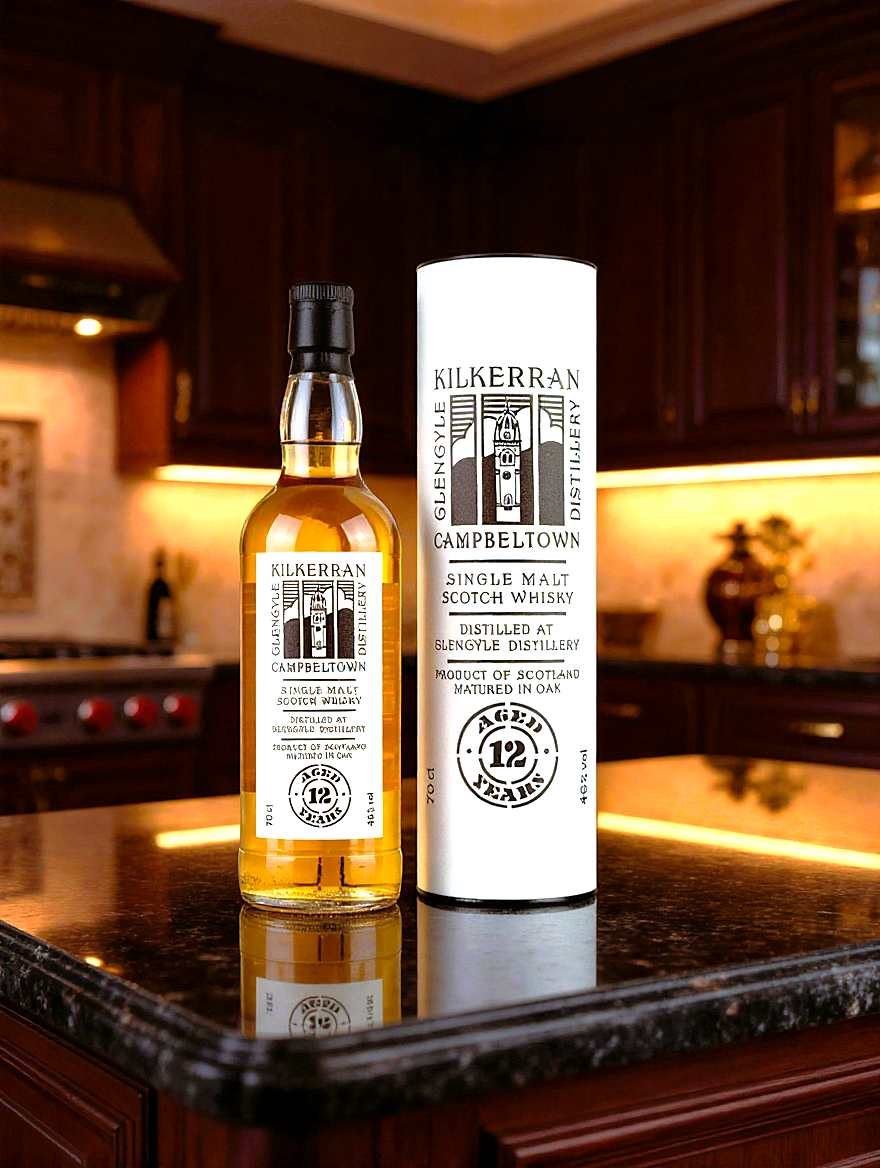
Kilkerran-campbeltown-single-malt-whisky-brands
10. How Campbeltown Whisky Brands Compare
Choosing the best Campbeltown whisky depends on the character you want from the glass. The region’s leading brands differ in peat level, texture, fruit character, cask influence, and availability.
Best for a Classic Campbeltown Profile: Springbank
Springbank is a logical choice for drinkers who want a complex blend of malt, fruit, gentle smoke, spice, and maritime character. Its traditional production approach and established house style make it a useful reference point when exploring the region.
Best for Smoky Whisky: Longrow
Longrow is the obvious candidate for drinkers who want a more pronounced peat character. Its smoky style can work well for people who enjoy heavily peated Scotch but want to explore something from outside Islay.
Best for Unpeated Whisky: Hazelburn
Hazelburn is the most straightforward choice in this group for drinkers who prefer unpeated whisky. Its lighter and fruitier style offers a contrast to Longrow and a different perspective on Springbank Distillery.
Best for Coastal Fruit and Cask Variety: Glen Scotia
Glen Scotia is worth exploring if you enjoy maritime notes balanced with fresh fruit, oak, spice, and occasional peat. Its range of core and limited expressions provides opportunities to compare different approaches to maturation.
Best Alternative to Springbank: Kilkerran
Kilkerran is a compelling option for those who want a distinctive Campbeltown malt from Glengyle. It can combine fruit, malt, earthy character, and subtle smoke in a style that is recognisably its own.
Best Overall Approach: Compare the Styles
Instead of trying to identify one universally best brand, consider tasting three different styles:
-
-
- A Springbank expression for complexity and maritime character.
- A Longrow expression for pronounced peat smoke.
- A Hazelburn expression for unpeated fruit and malt.
-
Adding a Glen Scotia or Kilkerran bottle broadens the comparison. This approach makes the region’s diversity easier to understand than simply choosing bottles by age statement or price.
11. The Main Flavour Profiles of Campbeltown Scotch
Campbeltown whiskies are often described as robust and characterful, but their flavour profiles can be divided into several useful categories.
Maritime and Saline Notes
Maritime notes are commonly associated with Campbeltown whisky. These may be perceived as brine, sea air, mineral character, or a savoury edge. Springbank and Glen Scotia are often discussed in this context, but the intensity of these impressions varies by expression. The term “maritime” is a tasting description, not a guarantee that every bottle will taste salty.
Fruit and Citrus
Fruit notes can range from green apple, pear, and lemon to pineapple, orange, berries, and dried fruit. Fresh fruit can make a whisky feel bright, while dried fruit and darker berry notes can contribute a richer impression. Cask selection plays an important role in the final balance.
Malt, Honey, and Vanilla
Sweet cereal notes, honey, vanilla, and toffee can appear across the region’s whiskies. These flavours may come from the whisky’s underlying spirit character, maturation, or the interaction between both. Ex-bourbon casks often contribute vanilla and sweet oak impressions, although the result depends on the cask’s history and condition.
Smoke and Peat
Peat smoke is a prominent feature of Longrow and some Kilkerran releases. Springbank is generally associated with a lighter peat influence, while Hazelburn is unpeated. Peat level is not a simple measure of quality. Some drinkers prefer a smoky whisky, while others favour a cleaner presentation of fruit and malt.
Spice, Oak, and Dark Fruit
Spice and oak can become more prominent depending on the casks used and the length and conditions of maturation. Sherry casks may contribute dried fruit, nuts, chocolate, or richer sweetness, while other cask types can bring different fruit and spice characteristics. The best approach is to consider the complete whisky rather than assuming a particular cask type will always produce the same flavour.
12. How to Choose the Best Campbeltown Single Malt
Buying Campbeltown whisky can be more straightforward when you begin with your flavour preferences rather than the bottle’s reputation.
Step 1: Decide How Much Smoke You Enjoy
-
-
- If you like bold peat smoke, start by exploring Longrow Peated or a Kilkerran Heavily Peated release.
- If you prefer gentle smoke with fruit and malt, consider Springbank.
- If you want no peat smoke, Hazelburn is a useful starting point.
-
Glen Scotia provides additional options, including expressions with different peat levels.
Step 2: Choose Your Preferred Flavour Direction
Consider which of these profiles appeals most:
-
-
- Fresh and fruity: Look for expressions with citrus, green apple, pear, or tropical fruit notes.
- Rich and sweet: Explore whiskies with vanilla, toffee, honey, or dried-fruit characteristics.
- Smoky and savoury: Consider Longrow or a peated Kilkerran release.
- Complex and maritime: Springbank and selected Glen Scotia bottlings are worth comparing.
- Unpeated and delicate: Hazelburn is a natural choice.
-
Remember that these are broad starting points. A particular release may combine several profiles.
Step 3: Understand Age Statements
An age statement indicates the age of the youngest whisky in the bottle. A 15-year-old single malt may contain older whisky, but it cannot contain whisky younger than 15 years and still carry that age statement.
Age can influence flavour, but it does not guarantee quality. Some younger whiskies retain vibrant fruit and malt, while some older whiskies develop more oak, spice, and dried-fruit character. The best age is the one that suits your taste and budget.
Step 4: Consider Cask Influence
Cask maturation is one of the most important influences on whisky flavour.
-
-
- Ex-bourbon casks: Can contribute vanilla, caramel, coconut, and sweet oak impressions.
- Sherry casks: May bring dried fruit, nuts, chocolate, and richer sweetness.
- Wine casks: Can introduce additional fruit, spice, and tannic impressions.
- Other cask types: May create distinctive variations depending on the wood and previous contents.
-
These are tendencies, not guarantees. The cask’s age, condition, previous use, and the whisky’s maturation history all matter.
Step 5: Compare Alcohol Strength
Many single malts are bottled at a standard strength, while others are released at cask strength or a higher alcohol percentage.
Higher strength can deliver concentrated flavour and texture, but it can also make alcohol more prominent. Adding a few drops of water may open up some whiskies and make certain aromas easier to perceive. Do not assume that a higher alcohol percentage means better quality. Choose based on balance and preference.
Step 6: Consider Availability and Authenticity
Some Campbeltown whiskies and special releases can be difficult to find. Before paying a premium, compare reputable retailers, verify the exact bottling, and check the condition of the bottle and packaging.
For collectible whisky, provenance matters. Be cautious about unusually low prices, vague seller information, damaged seals, or listings that do not clearly identify the edition. If a bottle is intended for drinking rather than collecting, a readily available core-range expression may offer better value than a rare bottle purchased at a substantial markup.

A Campbeltown single malt Scotch whisky bottle, tasting glass and notebook illustrating how to select and appreciate whisky.
13. Campbeltown Whisky and Food Pairings
Campbeltown single malts can work with a variety of foods, from seafood to rich desserts. The best pairing depends on the whisky’s intensity, sweetness, smoke, and cask character.
Springbank with Mature Cheese
Springbank’s combination of malt, fruit, spice, and maritime character can pair well with mature cheddar or other full-flavoured cheeses. The cheese’s savoury richness can complement the whisky’s sweetness and texture. Try a small serving of each rather than allowing the food to overwhelm the dram.
Longrow with Smoked or Grilled Foods
Longrow’s peat smoke can work with grilled mushrooms, smoked fish, or robust grilled dishes. The smoky notes in the whisky may echo the food’s charred character. Avoid choosing a dish with so much heat or seasoning that the whisky becomes difficult to taste. A simple preparation can make the pairing more effective.
Hazelburn with Fruit Desserts
Hazelburn’s unpeated character can pair well with apple tart, poached pears, or desserts that feature baked fruit and vanilla. A fruit-based dessert can echo the whisky’s orchard-fruit and sweet-malt notes without competing with smoke.
Glen Scotia with Seafood
A Glen Scotia expression with a coastal profile may complement grilled prawns, smoked salmon, or other seafood dishes. The pairing works best when the food is not excessively salty or heavily spiced. A small tasting pour alongside a modest serving is usually enough to evaluate the combination.
Kilkerran with Dark Chocolate
Kilkerran’s malt, earthy character, and potential notes of spice or smoke can pair well with dark chocolate. Choose chocolate according to the whisky’s style. A sweeter, fruitier expression may work with a less bitter chocolate, while a robust whisky can stand up to a more intense cocoa profile.
A General Rule for Whisky Pairings
Begin with small portions and let the whisky lead the pairing. Strongly flavoured food can dominate delicate whisky, while a very smoky dram may overwhelm a subtle dish. You do not need an elaborate meal to enjoy Campbeltown Scotch. Sometimes a small piece of cheese or dark chocolate is enough to reveal a new dimension of flavour.
14. How to Taste Campbeltown Single Malt Scotch Whisky
A deliberate tasting can help you understand why Campbeltown whiskies differ so much from one another.
Use a Suitable Glass
A tulip-shaped whisky glass or another glass that concentrates aromas can help you explore the whisky’s nose. A standard tumbler is also perfectly acceptable for casual enjoyment. The most important factor is that the glass is clean and free from strong odours.
Start with the Aroma
Pour a small amount and let it rest for a moment. Bring the glass towards your nose gently rather than inhaling deeply at close range, particularly with higher-strength whisky.
Look for broad categories before trying to identify specific notes:
-
-
- Fruit
- Malt and cereal
- Vanilla or caramel
- Spice
- Smoke
- Oak
- Coastal or mineral impressions
-
There is no requirement to identify every flavour. Tasting notes are personal descriptions, not a test with a single correct answer.
Take a Small Sip
Allow a small sip to move across the palate. Notice whether the whisky feels light, creamy, oily, dry, sweet, spicy, or smoky. Consider how the flavours change from the first impression to the middle of the palate and the finish.
Add Water if You Wish
A few drops of water can alter the aroma and texture of whisky, particularly at higher strengths. Add water gradually and compare the whisky before and after. There is no universal rule that whisky must be consumed neat. The best serving method is the one that lets you appreciate the whisky comfortably.
Compare Different Campbeltown Styles
For a useful comparison, taste a Springbank, Longrow, and Hazelburn side by side in small pours. If available, add Glen Scotia or Kilkerran. Notice how the peat level, fruit character, texture, and cask influence change between the glasses.
For a fair comparison, use similar serving sizes and avoid changing too many variables at once. You may also want to record your impressions so you can remember which styles you prefer.
15. Campbeltown Whisky as a Gift
Campbeltown single malt Scotch whisky can make a thoughtful gift for whisky enthusiasts, particularly those interested in regional styles or traditional distilleries. The best bottle depends on the recipient’s experience, flavour preferences, and interest in collecting.
For Someone New to Campbeltown Whisky
A standard expression from Springbank, Glen Scotia, or Kilkerran can introduce the region without requiring the recipient to understand limited-release editions. If the recipient is unsure about smoke, a less heavily peated or unpeated expression may be the safer choice.
For a Peat Enthusiast
Longrow Peated or a Kilkerran Heavily Peated release may suit someone who already enjoys smoky Scotch. Before choosing, consider whether the recipient prefers a medicinal, earthy, savoury, or sweeter interpretation of peat. Smoky whiskies can differ considerably.
For Someone Who Prefers Unpeated Whisky
Hazelburn is worth considering for a drinker who favours fruit, malt, and cask influence over peat smoke. Glen Scotia also offers expressions that may appeal to people who prioritise coastal fruit and oak character.
For an Experienced Collector
An older Springbank, a special Glen Scotia bottling, a limited Longrow, or a distinctive Kilkerran release may be appropriate if the recipient appreciates unusual editions. Check the exact release and authenticity carefully. Do not assume a high price or a limited production label makes a bottle the best gift.
Presentation and Personalisation
A whisky gift can be made more personal with a suitable glass, a tasting notebook, or a short explanation of why you selected that particular bottle. For a premium presentation, keep the focus on the recipient’s preferences rather than simply buying the oldest or most expensive bottle available.
If you are purchasing for someone in Toronto or the Greater Toronto Area, confirm the retailer’s current product selection, delivery area, and delivery terms before placing an order. Availability of specific Campbeltown releases can change quickly.
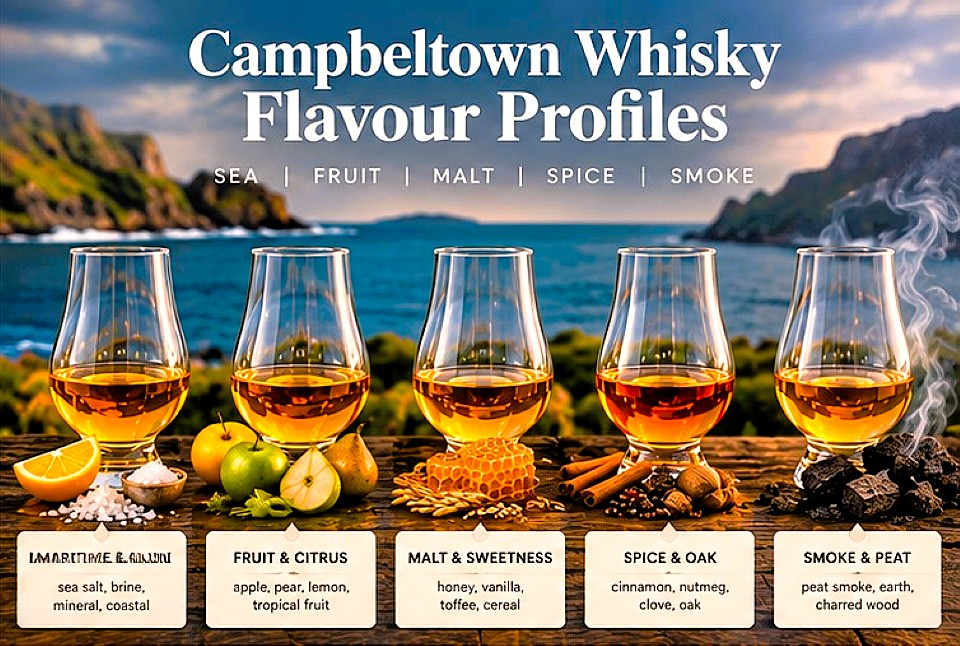
Campbeltown Scotch whisky tasting glasses illustrating maritime, fruity, malty, spicy and smoky flavour profiles.
16. Campbeltown Whisky vs. Islay, Highland, and Speyside Scotch
Campbeltown is often compared with Islay because some Campbeltown whiskies are smoky and maritime. However, the two regions should not be treated as identical.
Campbeltown vs. Islay
Islay is widely associated with peated whisky, although not every Islay single malt is heavily smoky. Campbeltown also produces peated whisky, particularly Longrow, but its overall selection includes unpeated and lightly peated styles. Campbeltown’s appeal often lies in the combination of fruit, malt, texture, maritime impressions, and varying levels of smoke.
Campbeltown vs. Speyside
Speyside is commonly associated with fruit-forward whisky, honey, and sherry-cask styles, though the region is diverse. Campbeltown can also display fruit and sweetness, but its whiskies may offer a more pronounced maritime or earthy dimension, depending on the bottling.
Campbeltown vs. Highland
The Highland region encompasses a wide range of styles, from light and fruity to rich, coastal, and smoky. Campbeltown is much smaller and more concentrated in its modern production base. Its appeal is partly its distinctive history and the differences between a relatively small group of distilleries.
Campbeltown vs. Lowland
Lowland whisky is diverse and can include lighter, delicate, fruity, and more robust styles. Hazelburn, despite being produced in Campbeltown, offers an unpeated and triple-distilled style that can interest drinkers who normally favour lighter whisky. However, it is best to compare individual bottles rather than rely on regional stereotypes.
17. Frequently Asked Questions About Campbeltown Single Malt Scotch Whisky
What Are the Best Campbeltown Single Malt Scotch Whisky Brands?
The principal modern brands to explore are Springbank, Longrow, Hazelburn, Glen Scotia, and Kilkerran. Springbank, Longrow, and Hazelburn are produced at Springbank Distillery; Kilkerran is made at Glengyle Distillery; and Glen Scotia is produced at Glen Scotia Distillery.
The best choice depends on whether you prefer maritime complexity, pronounced peat smoke, unpeated fruit, or a combination of malt, spice, and cask character.
How Many Campbeltown Whisky Distilleries Are There?
Campbeltown is generally described as having three active whisky distilleries: Springbank, Glen Scotia, and Glengyle. Their single malt brands include several distinct styles, so the number of brands is greater than the number of distilleries.
What Makes Campbeltown Whisky Different?
Campbeltown whisky is often associated with robust character, maritime impressions, malt richness, fruit, spice, and varying levels of smoke. Its distinct identity also comes from the history of the town and the production traditions preserved by its distilleries. Not every bottle shares all these characteristics, so individual expressions should be evaluated on their own merits.
Is Campbeltown Whisky Smoky?
Some Campbeltown whiskies are smoky, but not all are heavily peated. Longrow is the most obvious choice for a pronounced smoky style, Springbank generally has a lighter peat influence, and Hazelburn is unpeated. Kilkerran also offers different styles, including heavily peated releases.
Is Springbank the Best Campbeltown Whisky?
Springbank is one of the region’s most prominent and influential brands, but “best” depends on personal preference. Some drinkers prefer Longrow’s stronger peat character, Hazelburn’s unpeated style, Glen Scotia’s coastal and cask-driven expressions, or Kilkerran’s distinctive profile. Comparing styles is more useful than assuming one brand is universally superior.
What Is the Difference Between Springbank, Longrow, and Hazelburn?
All three are produced at Springbank Distillery, but they use different production approaches. Springbank is lightly peated and uses a distinctive 2.5-times distillation process. Longrow is more heavily peated and double-distilled. Hazelburn is unpeated and triple-distilled. These differences help explain their distinct flavour profiles.
What Is Kilkerran Whisky?
Kilkerran is the single malt brand produced at Glengyle Distillery in Campbeltown. The distillery resumed production in 2004 after a long period of closure. The name Kilkerran is used because the Glengyle name had already been trademarked for another whisky product.
Is Glen Scotia a Campbeltown Single Malt?
Yes. Glen Scotia is one of Campbeltown’s active distilleries and produces single malt Scotch whisky. Its range includes expressions with maritime character, fruit, spice, and different levels of peat influence.
What Does Campbeltown Whisky Taste Like?
Campbeltown whisky can taste fruity, malty, salty, oily, spicy, smoky, sweet, or earthy, depending on the distillery and bottling. Commonly described impressions include citrus, orchard fruit, vanilla, toffee, peat smoke, and coastal notes. There is no single flavour profile that applies to every Campbeltown whisky.
Is Campbeltown Whisky Rare?
Some Campbeltown bottles, particularly limited releases and older expressions, can be difficult to find. Standard expressions may be easier to obtain, but availability varies by market and retailer. Rarity does not necessarily mean a whisky is better. Consider flavour, price, authenticity, and the intended purpose of the purchase.
Is Older Campbeltown Whisky Always Better?
No. Age can influence complexity, oak character, and the balance of flavours, but it does not guarantee quality. Younger whiskies may offer freshness and vibrant fruit, while older ones may develop richer or more oak-driven profiles. The best bottle is the one whose character suits your taste.
How Should Campbeltown Whisky Be Served?
Campbeltown whisky can be enjoyed neat, with a few drops of water, or in a suitable whisky glass that helps concentrate the aromas. Higher-strength releases may benefit from gradual dilution. There is no single correct way to enjoy whisky. Start with a small pour and adjust the serving method to your preference.
What Food Pairs Well with Campbeltown Scotch?
Mature cheese, smoked fish, grilled foods, fruit desserts, and dark chocolate can all work with selected Campbeltown whiskies. The best pairing depends on the whisky’s peat level, sweetness, texture, and cask character. Choose food that complements rather than overwhelms the whisky.
Can I Buy Campbeltown Whisky in Toronto?
Availability depends on the specific expression and current retail inventory. Check current local listings and authorised sellers for the exact bottle you want, and verify the age statement, edition, and bottle size before purchasing. For any delivery order, confirm the retailer’s delivery area, current stock, applicable legal requirements, and delivery terms.
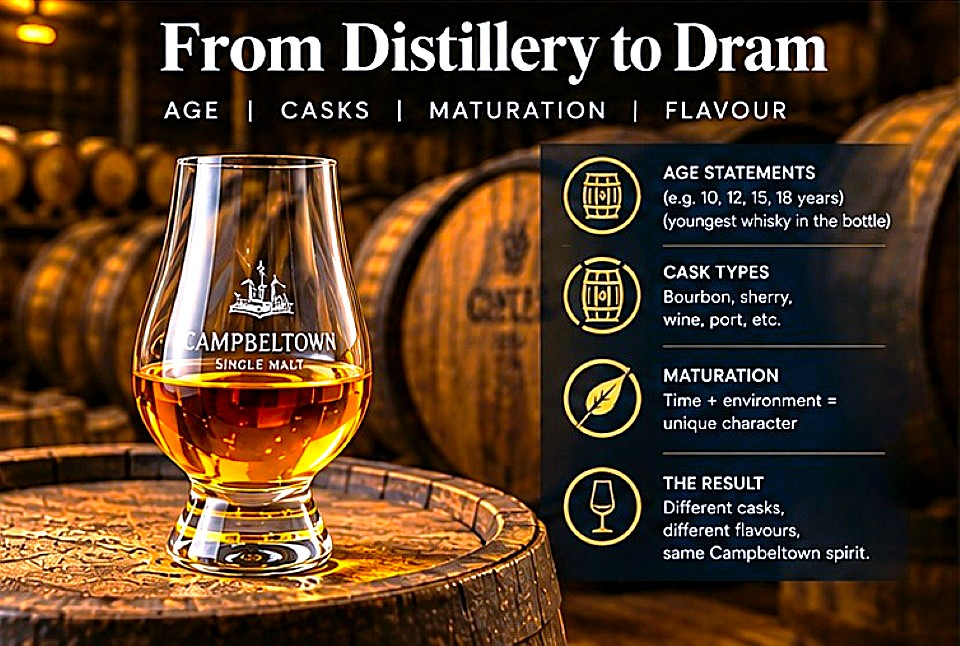
A Scotch whisky tasting glass beside oak maturation casks illustrating the influence of age, cask type and maturation on flavour.
18. Final Thoughts: Discovering the Best Campbeltown Whisky
Campbeltown single malt Scotch whisky offers an unusually rich range of experiences from a small and historically important whisky region. Its surviving distilleries preserve traditional production methods while continuing to explore different cask treatments, peat levels, and maturation styles.
Springbank is a compelling starting point for drinkers seeking complexity, gentle smoke, and maritime character. Longrow offers a more pronounced smoky profile, while Hazelburn demonstrates the appeal of unpeated, triple-distilled whisky. Glen Scotia brings coastal fruit, spice, and varied cask expressions to the comparison, and Kilkerran represents the revival and continuing development of Glengyle Distillery.
Rather than searching for one universally superior bottle, consider what you enjoy most. Do you prefer smoke or fruit? A rich, oily texture or a lighter presentation? Sweet vanilla and honey, or darker fruit and spice? Your answers will help narrow the selection.
For newcomers, a comparison of Springbank, Hazelburn, and Glen Scotia can provide a useful introduction. Smoky-whisky enthusiasts should explore Longrow and selected Kilkerran releases. More experienced drinkers may enjoy comparing cask-strength and limited editions, provided the price and provenance make sense.
Campbeltown’s appeal lies in its distinctive combination of history, individuality, and flavour. Exploring its single malts is not simply about finding a bottle to buy; it is an opportunity to discover how a small Scottish town continues to contribute to the wider world of Scotch whisky.
Whether you are building a collection, choosing a gift, or simply learning more about regional Scotch, the best Campbeltown single malt is the one that rewards your curiosity and suits your own palate.