
Blog
The Best Single Malt Scotch Brands in the World: 20 Exceptional Whisky Makers


The Best Single Malt Scotch Brands in the World: 20 Exceptional Whisky Makers
Single malt Scotch whisky is one of the most celebrated spirits in the world. From the elegant fruit and honey notes of Speyside to the maritime character and peat smoke of Islay, Scotland’s distilleries produce an extraordinary range of whiskies for beginners, collectors and experienced enthusiasts.
But which are the best single malt Scotch brands in the world? The answer depends on what you enjoy. Some drinkers prefer rich, sherried whisky with notes of dried fruit, chocolate and spice. Others seek gentle vanilla, orchard fruit and honey, while peat lovers gravitate towards powerful whiskies with smoke, seaweed and earthy complexity.
This guide explores 20 outstanding single malt Scotch whisky brands, explaining their distinctive styles, notable expressions and what makes each worth discovering. It also covers the five recognised Scotch whisky regions, how single malt is made, how age statements work, how to choose a bottle and how to enjoy Scotch whisky.
Table of Contents
-
-
- What Is Single Malt Scotch Whisky?
- The Five Scotch Whisky Regions
- The 20 Best Single Malt Scotch Brands in the World
- Single Malt Scotch Brands Compared
- How to Choose the Best Single Malt Scotch
- How to Taste Single Malt Scotch Whisky
- Food Pairings for Single Malt Scotch
- Frequently Asked Questions
- Final Thoughts
-
1. What Is Single Malt Scotch Whisky?
Single malt Scotch whisky is whisky produced at one distillery in Scotland using water and malted barley, distilled in batches in copper pot stills. It must mature in Scotland in oak casks for at least three years and be bottled at a minimum alcoholic strength of 40% ABV. Single malt Scotch whisky must also be bottled in Scotland.
The term single malt describes where and how the whisky is produced; it does not mean that the bottle contains whisky from only one cask. A distillery may combine whisky from several casks, and a bottle can contain whisky from different years, provided all the whisky comes from the same distillery and meets the category’s legal requirements.
For the category definition and further information, consult the Scotch Whisky Association’s guide to single malt Scotch whisky.
Single malt versus blended Scotch whisky
Single malt and blended Scotch whisky are different categories, not simple measures of quality.
-
-
- Single malt Scotch whisky comes from one distillery and is made from malted barley.
- Blended Scotch whisky combines single malt whisky with single grain Scotch whisky.
- Blended malt Scotch whisky combines single malt whiskies from more than one distillery.
- Single grain Scotch whisky comes from one distillery but may use cereals other than malted barley, subject to the category’s production rules.
-
Single malt appeals to many enthusiasts because it can express the distinctive character of an individual distillery. However, excellent blended Scotch whisky can also offer balance, complexity and exceptional craftsmanship.
Why do single malts taste different?
A whisky’s flavour develops through a combination of factors:
-
-
- Barley and malt production: The raw material and malting process influence the spirit’s character.
- Peat: Peated malt can contribute smoky, earthy, medicinal or coastal impressions.
- Fermentation: Yeast selection and fermentation conditions influence the compounds that form in the wash.
- Distillation: Still shape, operating conditions and cut points influence the character of the new spirit.
- Cask maturation: Oak type, previous cask contents, cask size, warehouse conditions and maturation time affect flavour and colour.
- Blending within the distillery: Whisky makers may combine different casks to achieve a consistent house style or create a distinctive release.
-
Vanilla, caramel, dried fruit, nuts and spice may develop during maturation, while the spirit’s original character remains part of the final whisky. No single factor explains every flavour in the glass.
2. The Five Scotch Whisky Regions
Scotland has five recognised Scotch whisky regions: Highland, Speyside, Lowland, Islay and Campbeltown. Each has its own history and geographical identity, but regional labels should be treated as helpful guides rather than guarantees of flavour.
Speyside: Fruit, honey and elegance
Speyside is associated with a large concentration of Scotch whisky distilleries. Many Speyside single malts feature orchard fruit, honey, vanilla, malt and gentle spice. Sherry-cask-matured examples can offer raisins, dates, nuts, dark chocolate and richer dried-fruit flavours.
Brands to explore: The Glenlivet, Glenfiddich, The Macallan, Aberlour and Glenfarclas.
Highland: Diversity and character
The Highlands cover a large geographical area, so Highland single malts vary considerably. Depending on the distillery and cask selection, you may encounter floral aromas, orchard fruit, malt, spice, coastal notes, waxy textures or robust oak.
Brands to explore: Glenmorangie, Dalmore, Oban and Deanston.
Islay: Smoke, peat and maritime influence
Islay is famous for many of Scotland’s most recognisable peated whiskies. Some deliver pronounced smoke, medicinal notes, sea spray and earthy flavours; others are lighter, fruitier or less heavily peated.
Brands to explore: Lagavulin, Laphroaig, Ardbeg, Bruichladdich and Bunnahabhain.
Lowland: Lightness and approachability
Lowland whiskies can offer citrus, grass, floral aromas, cereal notes and a relatively delicate profile. The region is diverse, and individual distilleries can produce richer or more distinctive styles than broad regional descriptions suggest. When exploring Lowland whisky, check the individual distillery’s range and production style rather than relying on the region alone.
Campbeltown: Maritime complexity and individuality
Campbeltown has a distinctive whisky heritage and a relatively small group of producers. Its whiskies can show maritime character, oiliness, fruit, malt, smoke and spice, depending on the distillery and expression.
Brand to explore: Springbank.

Single malt Scotch whisky bottles representing the Speyside, Highland, Islay, Lowland and Campbeltown whisky regions of Scotland.
3. The 20 Best Single Malt Scotch Brands in the World
The following selection covers a range of established producers, regional styles and flavour preferences. It includes approachable introductory bottles, rich sherried whiskies and intensely peated expressions.
1. Glenfiddich — A classic introduction to single malt Scotch
Glenfiddich is one of the most recognisable names in single malt Scotch whisky. Based in Speyside, the distillery is known for a broad portfolio that gives drinkers an accessible introduction to the category while offering more mature and specialised releases for experienced enthusiasts.
Signature style: Orchard fruit, pear, apple, malt, gentle oak and vanilla in many core expressions.
Expressions to explore: Glenfiddich 12 Year Old, 15 Year Old and 18 Year Old, subject to local availability.
Glenfiddich 12 Year Old is a useful starting point for someone exploring single malt Scotch for the first time. Its approachable fruit-led profile makes it easy to enjoy neat or with a few drops of water. Older expressions generally offer a different balance of fruit, oak and spice, although age alone does not determine whether a whisky will suit a particular drinker.
The brand is also worth considering when buying a gift for someone who enjoys classic Speyside whisky but may not want an aggressively smoky or intensely sherried style.
Best for: Beginners, traditional Speyside fans and whisky gifts.
2. The Glenlivet — Elegant, fruit-forward Speyside whisky
The Glenlivet has a long history in Speyside and is widely associated with approachable, fruit-led single malt Scotch. Its range includes entry-level bottles as well as older and cask-influenced releases.
Signature style: Orchard fruit, citrus, floral notes, vanilla and gentle spice, depending on the expression.
Expressions to explore: The Glenlivet 12 Year Old, 15 Year Old French Oak Reserve and 18 Year Old.
The Glenlivet 12 Year Old is a sensible choice for drinkers who prefer a lighter, accessible style. The 15 Year Old offers a different cask influence, while the 18 Year Old typically aims for greater depth and complexity.
For someone new to Scotch, The Glenlivet provides an opportunity to explore how cask selection and maturation can change a distillery’s core character without moving immediately into heavy peat or powerful smoke.
Best for: Beginners, fruit-forward whisky fans and relaxed sipping.
3. The Macallan — Rich, polished and strongly associated with sherry casks
The Macallan is one of the best-known luxury single malt Scotch brands. Its reputation is closely associated with carefully selected oak casks, particularly sherry-seasoned casks used in many of its well-known releases.
Signature style: Dried fruit, orange, spice, oak, chocolate and rich sweetness, depending on the range.
Expressions to explore: The Macallan Sherry Oak 12 Years Old and Double Cask 12 Years Old, where available.
The Sherry Oak range is a natural place to begin for drinkers who enjoy whisky with dried fruit, warming spice and a pronounced oak influence. The Double Cask range offers a different approach to oak selection, creating a distinct profile.
The Macallan is often chosen for special occasions, premium gifting and collectors’ shelves. However, its reputation and price can reflect factors beyond flavour, including presentation, demand and limited availability. A more expensive bottle is not automatically a better personal match than a less costly single malt.
Best for: Sherry-cask enthusiasts, premium gifts and special occasions.
4. The Balvenie — Craft, honey and rounded complexity
The Balvenie is a Speyside distillery known for its range of traditional and cask-finished single malts. Its portfolio appeals to drinkers who enjoy a rounded profile with honeyed sweetness, malt, vanilla and gentle spice.
Signature style: Honey, vanilla, orchard fruit, malt and oak, with variation across the range.
Expressions to explore: The Balvenie DoubleWood 12 Year Old and Caribbean Cask 14 Year Old.
DoubleWood is a useful introduction to the brand’s approach to cask maturation. Caribbean Cask offers a different finish that can bring additional sweetness and fruit character.
The Balvenie is worth considering for drinkers who want a whisky with layers of flavour but do not necessarily seek heavy smoke or a highly medicinal profile. Its range also provides a good way to compare how finishing in different casks changes the final whisky.
Best for: Honeyed whisky fans, relaxed sipping and thoughtful gifts.
5. Glenmorangie — Refined Highland whisky and cask experimentation
Glenmorangie is a Highland distillery known for its tall stills and a broad range of whiskies that explore different cask influences. Many of its core expressions are approachable, with fruit, vanilla and floral notes.
Signature style: Citrus, peach, vanilla, flowers, malt and spice, depending on the release.
Expressions to explore: Glenmorangie The Original 12 Years Old and Lasanta, subject to the current market range.
The Original is a natural starting point for drinkers who prefer a lighter, fruit-forward Scotch. The Lasanta expression has traditionally explored sherry-cask influences, offering a richer contrast.
Glenmorangie is also an interesting brand for whisky enthusiasts who enjoy comparing maturation and finishing techniques. When shopping, read the exact expression name because the range, age statements and packaging can change over time.
Best for: Highland whisky beginners, fruit-led styles and cask-finish enthusiasts.
6. Aberlour — A destination for rich, sherried Scotch
Aberlour is a Speyside producer especially associated with rich, full-flavoured single malt. Many of its expressions combine fruit, oak and spice with the influence of sherry-seasoned casks.
Signature style: Raisins, dried fruit, dark chocolate, spice, nuts and oak.
Expressions to explore: Aberlour 12 Year Old and A’bunadh, where available.
Aberlour 12 Year Old is a useful entry into the distillery’s style. A’bunadh is known for a more powerful presentation and has often been bottled at cask strength, so the exact batch and label should be checked before purchase.
Cask-strength whisky can be rewarding for experienced drinkers, but it may feel intense if tasted too quickly. Adding a little water can help open the aromas and make the alcohol less dominant. Aberlour is a strong option for those who prefer darker fruit, baking spice and a fuller impression rather than a very light, floral whisky.
Best for: Sherry-cask lovers, full-bodied Scotch fans and experienced tasters.
7. Glenfarclas — Traditional Speyside character
Glenfarclas is an independent family-owned distillery with a long-established reputation for traditional Speyside single malt. Sherry-cask maturation plays an important role in many of its expressions.
Signature style: Dried fruit, malt, nuts, warming spice and oak.
Expressions to explore: Glenfarclas 12 Year Old, 15 Year Old and 25 Year Old.
The 12 Year Old is a useful introduction to the distillery’s style, while the older expressions provide opportunities to explore more mature whisky and changing cask influence.
Glenfarclas is particularly relevant to drinkers who want to compare traditional sherried Scotch with other Speyside styles. It can also appeal to enthusiasts who value a distillery’s continuity and established identity rather than a constantly changing series of novelty finishes.
Best for: Traditional whisky enthusiasts and fans of sherried single malt.

A lineup of single malt Scotch whisky bottles representing established brands from Speyside, the Highlands and Islay.
8. The Dalmore — Bold Highland whisky with a luxurious profile
The Dalmore is a Highland single malt brand associated with rich, cask-driven whiskies and a premium presentation. Many of its releases use combinations of cask types to build a layered flavour profile.
Signature style: Orange, dried fruit, chocolate, spice, caramel and oak, depending on the expression.
Expressions to explore: The Dalmore 12 Year Old and selected older releases.
The Dalmore 12 Year Old is a familiar starting point for the brand. Its cask programme contributes to a richer style that can appeal to drinkers who enjoy dark fruit and warming spice.
The Dalmore is frequently positioned in the premium gifting market. Before buying an expensive expression, compare the bottle’s age statement, maturation information, alcohol strength and price with alternatives. The label and presentation matter for a gift, but the flavour profile should still guide the choice.
Best for: Premium gifting, rich Highland whisky and fans of dark-fruit flavours.
9. Highland Park — Balanced smoke, malt and island character
Highland Park comes from Orkney, an island group north of mainland Scotland. Its whiskies are often associated with a combination of malt sweetness, spice, oak and a measured smoky character.
Signature style: Heather-like impressions, honey, malt, spice, oak and smoke, depending on the expression.
Expressions to explore: Highland Park 12 Year Old and 18 Year Old.
Highland Park can be a useful bridge for someone curious about peat but not ready for the more forceful smoke of some Islay malts. Its balance of sweetness, oak and smoke makes it interesting for comparative tastings.
As with any distillery, individual expressions vary. Check the current label and product description rather than assuming every Highland Park release has the same age, cask composition or intensity.
Best for: Drinkers seeking a balance of malt sweetness and smoke.
10. Lagavulin — Deep, smoky Islay single malt
Lagavulin is one of Islay’s most celebrated single malt producers. Its whisky is often associated with substantial peat smoke, a full texture and flavours that can suggest sea air, earthy notes, dried fruit and oak.
Signature style: Peat smoke, maritime impressions, malt, oak and deep, savoury complexity.
Expressions to explore: Lagavulin 16 Year Old and selected limited releases.
Lagavulin 16 Year Old is a widely recognised expression and a reference point for many drinkers exploring traditional Islay single malt. Its smoky character can feel intense to newcomers, especially if they are accustomed to lighter Speyside whisky.
A small pour, time in the glass and careful nosing can help reveal more than the initial smoke. Some drinkers detect sweetness and fruit beneath the peat, while others focus on earthy or coastal notes. Lagavulin is a compelling choice for those who want a whisky with a distinctive identity rather than a neutral, easy-drinking profile.
Best for: Peat lovers, smoky Scotch enthusiasts and contemplative sipping.
11. Laphroaig — Bold, medicinal and unmistakably peated
Laphroaig is an Islay distillery known for a powerful and highly distinctive style. Its heavily peated whisky can feature medicinal, earthy, smoky and maritime impressions.
Signature style: Peat smoke, iodine-like or medicinal notes, seaweed, salt, oak and sweetness beneath the smoke.
Expressions to explore: Laphroaig 10 Year Old and Quarter Cask, subject to availability.
Laphroaig 10 Year Old is a useful benchmark for the brand. It is not designed to taste like a gentle, sweet Speyside malt; its appeal lies in its unmistakable peat character and the contrast between smoke, sweetness and oak.
Quarter Cask explores additional maturation influences and may offer a different texture and balance. Check the current product details because bottlings and availability vary. For beginners, Laphroaig can be an acquired taste. For peat enthusiasts, its strong identity is precisely the attraction.
Best for: Experienced peat drinkers and fans of medicinal, smoky whisky.
12. Ardbeg — Intense Islay peat with layers of flavour
Ardbeg is another major name in peated Islay single malt. Its whiskies are known for pronounced smoke, but they can also reveal citrus, malt, pepper, sweetness and other layers beneath the peat.
Signature style: Peat smoke, citrus, pepper, earthy notes and a combination of sweetness and savoury character.
Expressions to explore: Ardbeg 10 Year Old, An Oa and Uigeadail.
Ardbeg 10 Year Old is a natural entry point into the brand’s style. An Oa offers a different approach to cask maturation, while Uigeadail is known for combining peated character with sherry-cask influence. The contrast between smoke and richer cask flavours makes Ardbeg useful for a guided tasting. Compare it with Lagavulin or Laphroaig to see how three Islay producers can produce distinct interpretations of peat.
Best for: Peated whisky enthusiasts and drinkers who enjoy powerful flavour.
13. Talisker — Maritime character from the Isle of Skye
Talisker is associated with the Isle of Skye and a distinctive maritime-influenced style. Many of its whiskies combine peppery notes with smoke, malt and a sense of coastal character.
Signature style: Black pepper, smoke, malt, salt-like impressions and warming spice.
Expressions to explore: Talisker 10 Year Old and selected older or special releases.
Talisker 10 Year Old is a well-known starting point. Its character differs from many fruit-led Speyside malts, offering a more savoury, peppery experience without necessarily reaching the intensity of the most heavily peated Islay expressions.
Talisker is a strong candidate for drinkers who enjoy a whisky with structure and a memorable finish. It also works well in a regional comparison alongside Highland Park and Islay malts.
Best for: Maritime whisky fans, peppery flavours and drinkers exploring smoky Scotch.
14. Oban — Coastal Highland single malt
Oban is a Highland distillery located in the west of Scotland, with a style often described as a meeting point between some Highland and island characteristics.
Signature style: Citrus, malt, honey, gentle smoke, salt-like impressions and oak.
Expressions to explore: Oban 14 Year Old and selected limited releases.
Oban 14 Year Old is a useful way to explore the distillery’s character. It generally offers a more restrained smoky profile than strongly peated Islay whiskies, making it a useful option for drinkers who want some coastal complexity without overwhelming peat.
Oban is also a good reminder that whisky regions do not produce uniform flavours. The individual distillery, cask selection and expression matter more than relying on a regional stereotype.
Best for: Coastal whisky fans and drinkers seeking a middle ground between fruit and smoke.
15. Springbank — Distinctive Campbeltown whisky
Springbank is one of the defining names associated with Campbeltown single malt. The distillery is valued by many enthusiasts for its distinctive production character and a portfolio that rewards comparison.
Signature style: Malt, oiliness, fruit, spice, coastal impressions and varying levels of smoke, depending on the whisky.
Expressions to explore: Springbank 10 Year Old and selected older releases, where available.
Springbank 10 Year Old is often a starting point for exploring the distillery’s style. Its character can feel different from the polished, fruit-forward profile many beginners associate with Speyside. That individuality is part of its appeal.
Demand and availability for some Springbank bottlings can be uneven. If a bottle is unusually expensive, compare its standard retail positioning and the specific expression before deciding whether the premium makes sense for you. Springbank is particularly interesting for enthusiasts who want to explore Campbeltown and understand how production choices can influence the character of a single malt.
Best for: Whisky enthusiasts, Campbeltown exploration and distinctive distillery character.

best-single-malt-scotch-brands
16. Bruichladdich — Islay beyond heavy peat
Bruichladdich demonstrates that Islay is not exclusively a region of heavily peated whisky. Its portfolio includes unpeated single malt, as well as peated expressions under the Port Charlotte and Octomore names.
Signature style: Varies by range; unpeated releases may emphasise fruit, malt and cask character, while peated ranges can deliver substantial smoke.
Expressions to explore: The Classic Laddie, Port Charlotte 10 Year Old and selected Octomore releases.
The Classic Laddie is a useful starting point for those curious about Islay whisky without assuming it must be heavily smoky. Port Charlotte offers a more pronounced peated style, while Octomore is known for releases that explore very high levels of peat in the malt.
Because the range spans such different profiles, the expression name is essential when choosing a Bruichladdich bottle. It is more useful to compare the actual whisky than to assign one flavour description to the entire brand.
Best for: Curious drinkers, Islay exploration and enthusiasts interested in peat variation.
17. Bunnahabhain — Richness with a different Islay perspective
Bunnahabhain is an Islay distillery often associated with unpeated or lightly peated styles in its core range, although the wider portfolio includes variation. It offers a different perspective from the intensely smoky reputation of some other Islay producers.
Signature style: Malt, nuts, dried fruit, caramel, oak and coastal impressions, depending on the expression.
Expressions to explore: Bunnahabhain 12 Year Old and selected sherry-influenced releases.
The 12 Year Old is a useful starting point for exploring the brand. Its profile can appeal to drinkers who like texture, fruit and cask character but prefer less dominant peat smoke.
Bunnahabhain is an excellent example of why regional identity should not be treated as a flavour guarantee. Two distilleries on the same island can produce markedly different whiskies, and those differences are part of what makes Scotch worth exploring.
Best for: Drinkers who want Islay provenance without dominant peat.
18. Arran — Modern single malt with approachable fruit
Arran’s distillery on the Isle of Arran has developed a strong following for its single malt range. Its core style often appeals to drinkers who enjoy fruit, malt, citrus and a clean sense of distillery character.
Signature style: Citrus, apple, vanilla, malt and spice, with variation across cask finishes and releases.
Expressions to explore: Arran 10 Year Old and selected sherry-cask or cask-strength releases.
Arran 10 Year Old is a useful entry point for those looking for a fruit-forward single malt outside the most familiar Speyside names. The wider range provides opportunities to explore different cask influences and intensities.
Arran can be a good choice for someone building a small tasting flight: pair it with a Speyside malt, a sherried expression and a lightly peated whisky to compare how different distilleries approach fruit, malt and oak.
Best for: Fruit-led whisky fans and drinkers seeking variety beyond the biggest names.
19. Deanston — Highland malt with a rounded character
Deanston is a Highland single malt producer whose range can appeal to drinkers who enjoy malt sweetness, vanilla, oak and a fuller texture without requiring heavy peat.
Signature style: Malt, honey, vanilla, cereal notes and oak, depending on the expression.
Expressions to explore: Deanston 12 Year Old and selected cask-finished releases.
Deanston 12 Year Old is a useful introduction to the distillery. It offers an alternative to the most heavily marketed premium brands and can be interesting for drinkers who want to explore the breadth of Highland whisky.
As with any bottle, the best way to assess value is to compare the current price, alcohol strength, age statement and style with similar options. A whisky does not need a luxury presentation to be a worthwhile addition to a home collection.
Best for: Malt-forward whisky fans and drinkers seeking an alternative Highland bottle.
20. Benromach — Traditional character with a hint of smoke
Benromach is a Speyside distillery known for a style that can combine fruit, malt, oak and a measured smoky character. Its whiskies can appeal to drinkers who want something between a completely unpeated Speyside malt and a heavily peated Islay whisky.
Signature style: Orchard fruit, malt, spice, oak and gentle smoke, depending on the expression.
Expressions to explore: Benromach 10 Year Old and selected older releases.
Benromach 10 Year Old is a useful starting point for the brand. Its balance of fruit, malt and smoke makes it a good comparison bottle for a tasting that includes both classic Speyside whisky and peated Scotch. The distillery is also a reminder that peat is not exclusive to Islay. Producers elsewhere in Scotland may use peated malt or develop smoky characteristics through their own production choices.
Best for: Drinkers who enjoy traditional character and moderate smoke.
4. Single Malt Scotch Brands Compared
Use this table as a starting point for narrowing your choices. The descriptions are broad guides to the brands and selected core expressions, not guarantees that every bottle in each range will taste the same.
| Brand | General style | A good place to start |
|---|---|---|
| Glenfiddich | Fruit, pear, malt and vanilla | Glenfiddich 12 Year Old |
| The Glenlivet | Orchard fruit and gentle spice | The Glenlivet 12 Year Old |
| The Macallan | Rich oak and dried fruit | Sherry Oak 12 Years Old |
| The Balvenie | Honey, malt and rounded sweetness | DoubleWood 12 Year Old |
| Glenmorangie | Citrus, fruit and vanilla | The Original 12 Years Old |
| Aberlour | Rich fruit, spice and sherry-cask character | Aberlour 12 Year Old |
| Glenfarclas | Traditional malt and dried fruit | Glenfarclas 12 Year Old |
| The Dalmore | Orange, spice and rich oak | The Dalmore 12 Year Old |
| Highland Park | Malt, spice and balanced smoke | Highland Park 12 Year Old |
| Lagavulin | Deep peat smoke and oak | Lagavulin 16 Year Old |
| Laphroaig | Strong peat and medicinal notes | Laphroaig 10 Year Old |
| Ardbeg | Powerful smoke, citrus and spice | Ardbeg 10 Year Old |
| Talisker | Pepper, smoke and coastal character | Talisker 10 Year Old |
| Oban | Malt, citrus and gentle coastal notes | Oban 14 Year Old |
| Springbank | Malt, fruit, spice and individuality | Springbank 10 Year Old |
| Bruichladdich | Varies from unpeated to heavily peated | The Classic Laddie |
| Bunnahabhain | Malt, nuts and dried fruit | Bunnahabhain 12 Year Old |
| Arran | Citrus, fruit and malt | Arran 10 Year Old |
| Deanston | Malt, vanilla and honey | Deanston 12 Year Old |
| Benromach | Fruit, malt and measured smoke | Benromach 10 Year Old |
Important: Expression names, age statements, packaging and availability may change. Confirm current bottle details with the retailer or producer before purchasing.

top-20-single-malt-scotch-whisky
5. How to Choose the Best Single Malt Scotch
There is no universally best single malt Scotch whisky. The right bottle depends on your flavour preferences, experience, budget and reason for buying it.
Choose by flavour profile
-
-
- If you prefer sweet, fruit-forward whisky: Start with Glenfiddich, The Glenlivet, Glenmorangie or Arran. These brands offer expressions that can highlight orchard fruit, citrus, vanilla and malt.
- If you enjoy dried fruit, chocolate and warming spice: Explore The Macallan, Aberlour, Glenfarclas or The Dalmore. Look closely at the maturation details, particularly when sherry-seasoned casks are part of the whisky’s profile.
- If you want smoke without the most intense peat: Highland Park, Talisker, Oban and Benromach offer useful starting points, depending on the expression.
- If you love powerful peat smoke: Consider Lagavulin, Laphroaig or Ardbeg. Bruichladdich’s Port Charlotte and Octomore ranges offer additional ways to explore peated whisky at different intensities.
- If you want an unusual or enthusiast-focused bottle: Springbank, selected Bruichladdich releases and certain limited bottlings from established distilleries may be worth investigating. Always compare the actual expression and price rather than assuming a scarce bottle will suit your taste.
-
Consider your experience level
For a first single malt, choose a widely available expression with a clear, approachable style. A standard 10- or 12-year-old whisky can be a useful starting point, but there is no requirement to begin with a particular age.
If you already enjoy Scotch, try contrasting styles rather than simply buying progressively older bottles. For example, compare a fruit-forward Speyside malt with a sherried whisky and a peated Islay expression. This teaches you more about your preferences than tasting three similar bottles in succession.
Understand age statements
An age statement identifies the age of the youngest whisky in the bottle. A 12-year-old single malt may contain whisky that is older than 12 years, but none of the whisky can be younger than the stated age.
Age can influence flavour, texture and complexity, but it does not automatically determine quality. The type and condition of the cask, the distillery’s character and the way the whisky is matured also matter. A well-made younger whisky may be more enjoyable to you than a much older bottle. Compare styles and prices rather than treating age as a universal quality score.
Understand cask maturation
Cask maturation is central to single malt Scotch. Whisky makers may use American oak, European oak and casks that previously held bourbon, sherry or other drinks, depending on the product and applicable rules.
Common flavour associations include:
-
-
- Ex-bourbon casks: Often associated with vanilla, caramel, coconut and gentle oak.
- Sherry-seasoned casks: Can contribute dried fruit, nuts, spice and richer colour.
- Wine or other finishing casks: May add fruit, tannin, spice or other characteristics, depending on the cask and finishing process.
-
These are broad associations, not guarantees. Cask history, wood quality, maturation conditions and the whisky itself all influence the outcome.
Consider alcohol strength
Many standard single malts are bottled at 40% or 43% ABV, while some expressions are bottled at higher strengths or at cask strength.
Higher ABV does not automatically mean better quality. It can deliver a more concentrated flavour experience, but the alcohol may initially dominate the aromas. A few drops of water can help some whiskies open up. If you are buying a bottle as a gift, check the strength and whether the recipient prefers a traditional bottling or a higher-strength expression.
Choose according to budget
The most expensive whisky is not necessarily the best bottle for your needs. Prices can reflect age, rarity, cask selection, presentation, market demand and collector interest, as well as the liquid itself.
For everyday enjoyment, a distillery’s core range may offer a more sensible value proposition than a limited release. For a milestone gift, an older expression or a premium presentation may be appropriate if it suits the recipient. Compare prices for the exact bottle and volume, and be cautious of unusually large markups on scarce releases.
Buying single malt Scotch in Toronto and the GTA
If you are shopping in Toronto or the Greater Toronto Area, confirm that the exact expression is available in your preferred bottle size and check the current retail price. A brand may have several similarly named expressions, so verify the age statement, cask finish and alcohol strength before ordering.
For information about delivery services, visit Always Dial A Bottle Toronto. Check the retailer’s current product listings and applicable delivery requirements rather than assuming that every brand or expression is in stock.
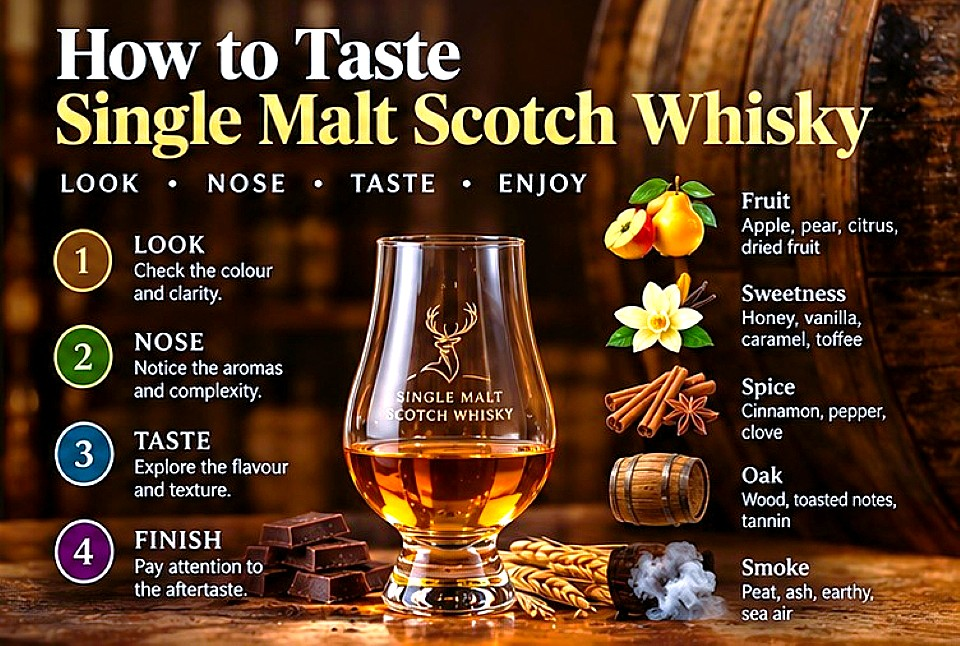
A glass of amber single malt Scotch whisky illustrating the steps of observing, nosing, tasting and assessing the finish.
6. How to Taste Single Malt Scotch Whisky
Tasting Scotch is not about identifying a prescribed list of flavours. It is about noticing what you personally experience and how the whisky changes as you spend time with it.
Step 1: Choose an appropriate glass
A tulip-shaped whisky glass or a similar glass that concentrates aromas can make nosing easier. A standard tumbler is also suitable for casual enjoyment. The glass is a tool, not a requirement for appreciating good whisky.
Step 2: Observe the colour
Look at the whisky in good light. Colour can be influenced by cask maturation and, where permitted, colouring practices. It is not a reliable standalone measure of age, quality or flavour.
Step 3: Nose gently
Bring the glass toward your nose without taking an aggressive inhalation. Start with a little distance, especially with high-strength or heavily peated whisky.
Look for broad categories:
-
-
- Fruit: apple, pear, citrus or dried fruit.
- Sweetness: honey, vanilla, caramel or toffee.
- Spice: cinnamon, pepper or clove-like impressions.
- Oak: wood, toasted notes or tannin.
- Smoke: peat, ash, earth or medicinal impressions.
-
You do not need to identify every aroma to enjoy the whisky.
Step 4: Take a small sip
Let a small amount coat your palate. Notice the initial sweetness or dryness, the body, the development of flavours and the finish. Ask yourself whether the whisky feels light or full, fruity or smoky, soft or intense. These simple comparisons can be more useful than trying to match a long professional tasting note.
Step 5: Add a little water if you wish
A few drops of water may reduce the sensation of alcohol and change the aromas. Add it gradually and taste again. Some whiskies become more expressive; others may lose intensity. There is no single correct way to drink Scotch.
Step 6: Compare two or three styles
A simple tasting flight might include:
-
-
- A fruit-forward Speyside malt, such as Glenfiddich or The Glenlivet.
- A richer, sherried whisky, such as Aberlour or Glenfarclas.
- A peated whisky, such as Lagavulin or Ardbeg.
-
Use small pours, drink slowly and have water available. A tasting should be about comparing flavour, not consuming large amounts of alcohol.

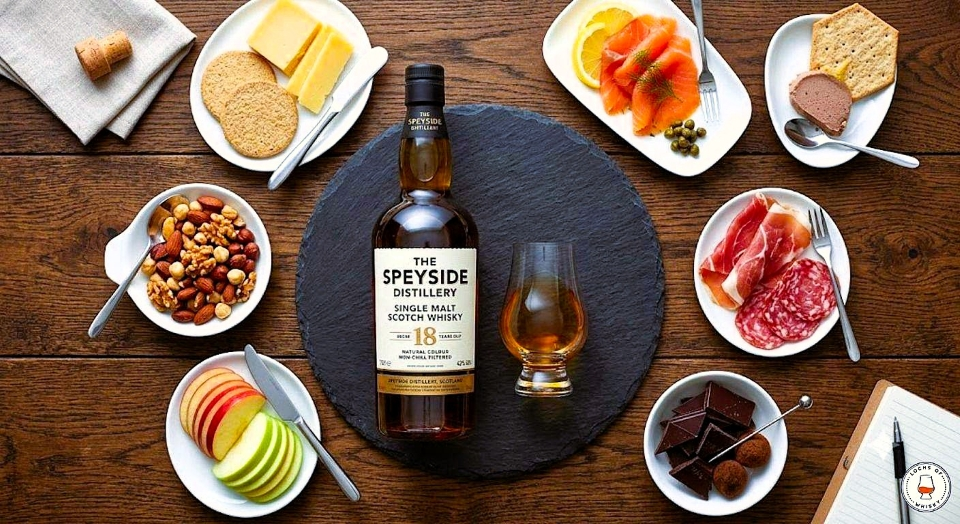
Single malt Scotch whisky served with dark chocolate, aged cheese, nuts and dried fruit for a whisky tasting and food pairing.
7. Food Pairings for Single Malt Scotch
Food can change the way whisky tastes, and whisky can change how you experience a dish. The following pairings are starting points rather than strict rules.
Dark chocolate
Dark chocolate can work particularly well with richer whiskies that offer dried fruit, oak, spice or chocolate-like notes. Try a small piece alongside a sherried Speyside malt or a rich Highland expression. Very bitter chocolate may make some whiskies seem sharper, so experiment with different cocoa percentages.
Aged cheese
Mature cheddar and other strongly flavoured cheeses can pair well with whiskies that have sufficient body and intensity. A malt with oak, spice or a little smoke can stand up to the richness of the cheese.
Smoked foods
Smoked salmon and other smoked foods can complement some peated whiskies, although the smoke levels do not need to match exactly. A lighter coastal whisky may work better with a delicate dish than an extremely smoky expression.
Nuts and dried fruit
Almonds, walnuts, dates, figs and raisins can suit whiskies with sherry-cask influence or a naturally rich, malty profile. They are also easy additions to a tasting board.
Roasted or grilled meat
A robust whisky with smoke, spice or oak can complement grilled meat. Choose the whisky according to the seasoning and intensity of the dish rather than automatically pairing all peated Scotch with all grilled foods.
Desserts
Vanilla desserts, caramel-based sweets and fruit desserts can work with approachable, sweet-leaning single malts. For a richer dessert, a sherried whisky may offer a more complementary flavour profile. The most useful rule is to experiment with small portions. The best pairing is the one that makes both the food and whisky more enjoyable to you.
8. Frequently Asked Questions About Single Malt Scotch Whisky
What is the best single malt Scotch brand in the world?
There is no universally agreed winner. Glenfiddich, The Glenlivet, The Macallan, The Balvenie, Lagavulin, Laphroaig, Ardbeg and many other producers have distinctive strengths. The best choice depends on whether you prefer fruit, honey, sherry-cask richness, oak or peat smoke.
Which single malt Scotch is best for beginners?
A fruit-forward and approachable expression from Glenfiddich, The Glenlivet, Glenmorangie or Arran can be a useful starting point. Choose a standard core-range bottle and compare it with another style once you understand your preferences.
What is the difference between single malt and blended Scotch?
Single malt Scotch is made from water and malted barley at one distillery and batch-distilled in copper pot stills. Blended Scotch whisky combines single malt Scotch with single grain Scotch whisky. Both categories include high-quality products.
Is Speyside whisky always sweet?
No. Speyside is associated with many fruit-forward and honeyed whiskies, but the region includes a variety of distillery styles, cask programmes and production choices. A regional label is a useful clue, not a guarantee of flavour.
Which single malt Scotch is the smokiest?
Some releases in the Ardbeg, Laphroaig and Octomore ranges are known for intense peat smoke. The actual level of smoke varies by expression and production details, so check the specific bottle rather than relying only on the brand name.
Is Islay whisky always smoky?
No. Islay is famous for heavily peated whisky, but its producers also make less peated or unpeated expressions. Bruichladdich and Bunnahabhain are useful examples of why the island’s whisky styles should not be reduced to one profile.
Does older Scotch whisky taste better?
Not necessarily. An age statement tells you the age of the youngest whisky in the bottle. Older whisky can develop additional complexity, but cask quality, maturation, distillery style and personal preference matter too. Older bottles are not automatically better value.
What does a sherry-cask single malt taste like?
Sherry-cask influence can contribute notes of dried fruit, raisins, nuts, spice and richer sweetness. The result depends on the cask, the whisky, maturation conditions and how the producer uses the cask. Not every sherry-influenced whisky tastes the same.
Should single malt Scotch be served neat or with water?
Both approaches are valid. Neat whisky offers the undiluted bottling strength, while a few drops of water may change the aroma and palate. Try a small sip first, then add water gradually if you wish.
Is single malt Scotch a good gift?
It can be an excellent gift when the recipient’s taste is known. Fruit-forward Speyside whisky suits many newcomers, while sherried or peated expressions can appeal to people with more specific preferences. For a premium gift, confirm the exact expression, presentation, price and availability.
What is the best single malt Scotch for a whisky collection?
A useful collection represents different styles rather than simply accumulating expensive bottles. Consider a fruit-forward Speyside malt, a sherried expression, a coastal whisky, a peated Islay bottle and a distinctive Campbeltown or other regional whisky. This provides a broad tasting experience.
Can single malt Scotch be used in cocktails?
Yes. Although many enthusiasts prefer sipping premium single malt neat or with water, Scotch can also be used in cocktails. Choose a whisky whose flavour will work with the other ingredients, and consider whether the recipe calls for a smoky, fruity or more delicate style.
How should single malt Scotch be stored?
Keep bottles upright, away from direct sunlight and major temperature changes. Make sure the closure is secure. Once opened, a bottle’s flavour may gradually change with exposure to air, so avoid leaving it open for extended periods. Store bottles safely out of reach of children.
single-malt-scotch-food-pairings
9. Final Thoughts: Finding Your Best Single Malt Scotch
The world of single malt Scotch whisky is rich enough to reward a lifetime of exploration. Glenfiddich and The Glenlivet offer approachable ways to discover fruit-led Speyside whisky. The Macallan, Aberlour and Glenfarclas appeal to those drawn to richer, sherried styles. Glenmorangie and The Balvenie provide further opportunities to explore fruit, honey and cask influence.
For smoke and maritime character, consider Highland Park, Talisker and Oban before moving towards the more intense peat of Lagavulin, Laphroaig or Ardbeg. Springbank, Bruichladdich, Bunnahabhain, Arran, Deanston and Benromach broaden the picture, demonstrating just how much variety exists across Scotland’s distilleries.
Rather than asking which brand is objectively number one, begin with the flavour you enjoy most. Compare bottles at similar prices, read the details on the label, and explore contrasting styles. A thoughtful choice based on taste is often more satisfying than buying a bottle simply because it is famous, expensive or difficult to find.
For readers in Toronto and the Greater Toronto Area, Always Dial A Bottle Toronto provides a starting point for learning about local delivery services. Check current product listings and delivery terms to confirm availability before ordering.