
Blog
Most Popular Cognac Cocktails in the World: 30 Classic Recipes Every Cognac Lover Should Try

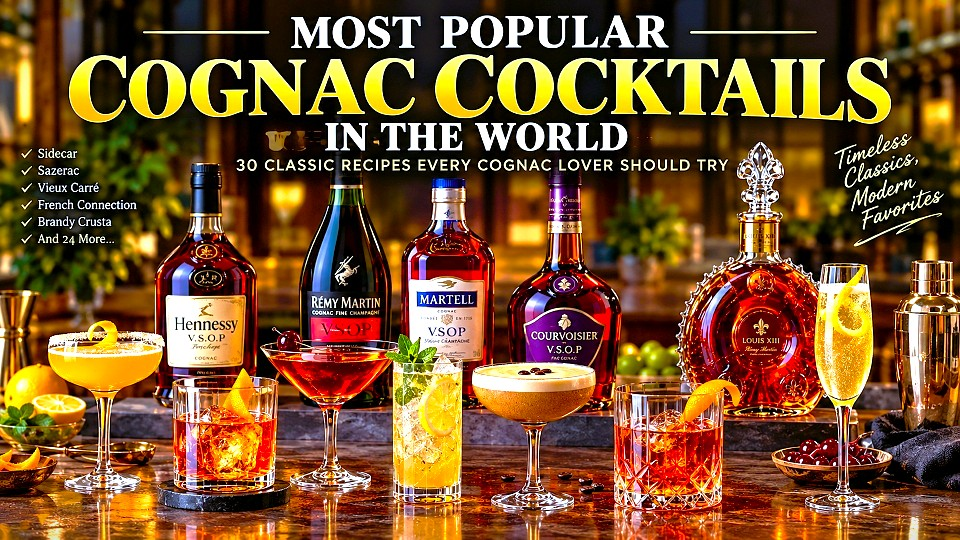
Discover 30 of the most popular Cognac cocktails in the world, including the Sidecar, Sazerac, Vieux Carré, French Connection, Stinger, Brandy Crusta, Cognac French 75, Between the Sheets and classic Cognac Sours. Learn the recipes, ingredients, techniques, best Cognac styles, garnishes and easy variations for making exceptional Cognac drinks at home.
Cognac has a reputation for being a sophisticated after-dinner spirit. But that tells only half the story.
For generations, Cognac has also been an important cocktail ingredient, appearing in elegant classics, powerful New Orleans drinks, sparkling aperitifs, citrus-forward sours and modern long drinks.
In fact, the Cognac industry itself says that nearly 80% of Cognac is consumed in cocktails globally, according to its latest 2026 industry figures. The same source reports that Cognac is exported to nearly 139 countries, demonstrating just how international the category has become.
That makes Cognac especially interesting for cocktail lovers.
The spirit can be:
-
-
- fruity
- floral
- rich
- spicy
- oaky
- dried-fruit driven
- silky and elegant.
-
And depending on the recipe, it can play very different roles.
-
-
- In a Sidecar, Cognac works with orange liqueur and lemon to create a bright, balanced sour.
- In a Sazerac, Cognac combines with sugar, Peychaud’s bitters and an absinthe rinse.
- In a Vieux Carré, Cognac shares the stage with rye whiskey, sweet vermouth, Benedictine and bitters.
- In a French Connection, Cognac becomes an elegant two-ingredient after-dinner drink.
- In a Stinger, it takes on a cool, minty character.
-
This guide focuses on 30 of the world’s most recognizable and useful Cognac cocktails, combining historic classics, IBA-recognized recipes, enduring bar favorites and modern variations.
There is no single official worldwide ranking of every Cognac cocktail, so this isn’t presented as an absolute statistical league table. Instead, the list considers classic status, international recognition, professional cocktail relevance, historical importance and practical appeal for home bartenders.
That distinction matters because cocktail popularity changes depending on the audience.
Drinks International’s current Cocktail Report, for example, draws on a 100-bar panel of influential international venues and asks those bars to identify their bestselling classic cocktails. Its long-term data show that classic cocktail preferences change relatively slowly, with established drinks often remaining popular for years.
So let’s explore the Cognac cocktails that deserve a place in your home bar.
Table of Contents
-
-
- What Makes Cognac So Good in Cocktails?
- What Type of Cognac Is Best for Cocktails?
- VS vs. VSOP vs. XO for Cocktails
- How to Choose Cognac for Different Drinks
- 30 Most Popular Cognac Cocktails in the World
- Sidecar
- Sazerac
- Vieux Carré
- French Connection
- Stinger
- Brandy Crusta
- Between the Sheets
- Cognac Sour
- Champagne Cocktail
- Cognac French 75
- Cognac Old Fashioned
- Cognac Manhattan
- Cognac Negroni
- Champs-Élysées
- Brandy Alexander
- Horse’s Neck
- Japanese Cocktail
- Café Brûlot
- Cognac Highball
- Cognac Rickey
- Cognac Collins
- Cognac Daisy
- Cognac Sidecar Royale
- Cognac Ginger Highball
- Cognac Apple Sour
- Cognac Espresso Cocktail
- Cognac Maple Sour
- Best Cognac Cocktails for Beginners
- Best Cognac Cocktails for Summer
- Best Cognac Cocktails for Winter
- Best Cognac for Cocktails
- How to Make Better Cognac Cocktails
- Cognac Cocktail Garnishes
- Cognac Cocktail Food Pairings
- Current Cognac Cocktail Trends
- Frequently Asked Questions
- Final Thoughts
-
What Makes Cognac So Good in Cocktails?
Cognac begins as wine rather than grain. That gives it an entirely different flavor foundation from whiskey.
Depending on the producer, cru and maturation, Cognac can bring aromas of:
-
-
- Grapes
- Pear
- Apricot
- Citrus
- Flowers
- Vanilla
- Oak Baking spice
- Dried fruit
- Nuts
- Cocoa
-
Those characteristics make it unusually flexible behind a bar. Citrus can emphasize the fruit. Sugar can soften the spirit. Bitters can highlight its spice. Vermouth can add depth. Liqueurs can emphasize orange, coffee, mint or herbs. Sparkling wine can lighten it. And ice can transform it into a refreshing long drink.
The result is a spirit that can move easily between aperitif, dinner, dessert and nightcap cocktails.
What Type of Cognac Is Best for Cocktails?
For cocktails, you generally don’t need the oldest Cognac you can afford. In many recipes, VS and VSOP are the most practical choices. The reason is simple.
-
-
- A Sidecar contains lemon and orange liqueur.
- A Sazerac contains sugar and bitters.
- A French Connection adds amaretto.
- A highball introduces considerable dilution.
-
Putting an expensive XO into a cocktail doesn’t necessarily make the cocktail better. In fact, the more complicated the cocktail becomes, the more likely it is that some of XO’s subtle mature aromas will be obscured.
Younger Cognac often gives you the ideal combination of: fruit + spice + oak + value.
VS vs. VSOP vs. XO for Cocktails
The official Cognac aging system is based on the youngest eau-de-vie in the blend.
The recognized minimum ages are:
| Cognac category | Minimum age of youngest eau-de-vie | Best use |
|---|---|---|
| VS | 2 years | Cocktails |
| VSOP | 4 years | Premium cocktails + sipping |
| Napoleon | 6 years | Cocktails + sipping |
| XO | 10 years | Mostly sipping |
| XXO | 14 years | Mature sipping |
These age designations and their rules are defined by the Cognac appellation.
Best general rule
-
-
- VS: citrus cocktails and highballs
- VSOP: almost everything
- XO: spirit-forward cocktails where the Cognac remains the star
-
That isn’t a hard rule. It’s a starting point.
How to Choose Cognac for Different Drinks
-
-
- For a Sidecar: Choose a fruit-forward VS or VSOP.
- For a Sazerac: Choose an aromatic VS or VSOP.
- For a Vieux Carré: Choose a VSOP with enough weight to compete with rye and vermouth.
- For a French Connection: VSOP or XO can be excellent because there are only two ingredients.
- For a Stinger: A smooth VSOP works beautifully.
- For an Old Fashioned: A richer VSOP or XO can be interesting.
- For a long drink: VS is usually an excellent value.
-
30 Most Popular Cognac Cocktails in the World
The following recipes combine classic formulas and practical modern variations. Where the International Bartenders Association provides a recognized recipe, it is used as the primary reference.
The IBA describes its official cocktail collection as a professional international reference built around highly requested drinks and cocktail traditions from around the world.
1. Sidecar
Profile: Citrus, dry, elegant
The Sidecar is arguably the most famous Cognac cocktail in the world.
The current IBA specification is remarkably simple:
-
-
- 50 ml Cognac
- 20 ml Triple Sec
- 20 ml fresh lemon juice
-
Shake well with ice and strain into a chilled cocktail glass.
Method
-
-
- Add Cognac, triple sec and lemon juice to a shaker.
- Add ice.
- Shake hard.
- Double strain into a chilled coupe.
-
Garnish: Optional orange or lemon twist.
Best Cognac: VS or VSOP.
Why it works?
The recipe provides exactly what Cognac needs: fruit + acidity + sweetness.
Pro tip: Fresh lemon juice makes a huge difference.
2. Sazerac
Profile: Spirit-forward, spicy, aromatic
The Sazerac is one of the most historically important cocktails in the Cognac world.
The IBA’s current Cognac-based specification contains:
-
-
- 50 ml Cognac
- 10 ml absinthe
- 1 sugar cube
- 2 dashes Peychaud’s bitters
-
However, the absinthe is used primarily as a rinse rather than retained as the full 10 ml in the finished drink. The IBA also notes that rye whiskey eventually replaced Cognac as Cognac became harder to obtain after the American Civil War.
Method
-
-
- Rinse a chilled Old Fashioned glass with absinthe.
- Set aside.
- Stir the Cognac, sugar and Peychaud’s bitters with ice.
- Discard excess absinthe and ice.
- Strain into the prepared glass.
- Express lemon zest over the drink.
-
Best Cognac: Aromatic VS or VSOP.
Best garnish: Lemon zest.
Why it’s important?
The Sazerac shows exactly how a small amount of absinthe can transform a Cognac cocktail.
3. Vieux Carré
Profile: Rich, spicy, herbal
The Vieux Carré is one of New Orleans’ great classics.
The IBA recipe uses:
-
-
- 30 ml rye whiskey
- 30 ml Cognac
- 30 ml sweet vermouth
- 1 bar spoon Benedictine
- 2 dashes Peychaud’s bitters
-
Method: Stir with ice and strain into a chilled cocktail glass. The IBA specifies orange zest and a Maraschino cherry as garnish.
Best Cognac: VSOP.
Why it works?
Cognac brings fruit and richness. Rye contributes spice. Vermouth adds wine-like sweetness. Benedictine adds herbal depth. Peychaud’s bitters tie it together. This is an advanced cocktail—but absolutely worth learning.
4. French Connection
Profile: Rich, sweet, nutty
The French Connection is one of the easiest Cognac cocktails to make.
The IBA uses:
-
-
- 35 ml Cognac
- 35 ml Amaretto
-
Method: Pour both directly into an Old Fashioned glass filled with ice and stir gently.
Best Cognac: VSOP.
Garnish: None required.
Why it’s great?
Two ingredients. No shaker. No complicated preparation.
Best occasion: After dinner.
5. Stinger
Profile: Minty, cool, rich
The Stinger combines:
-
-
- 50 ml Cognac
- 20 ml white crème de menthe
-
Method: The IBA calls for stirring the ingredients with ice and straining into a chilled Martini glass, with mint leaves optional as garnish.
Best Cognac: Smooth VSOP.
Best occasion: After dinner.
Flavor: Cognac + peppermint + cooling sweetness.
6. Brandy Crusta
Profile: Citrus, herbal, sweet
The Brandy Crusta is one of the classic ancestors of the modern Sidecar.
A representative version uses:
-
-
- 50 ml Cognac
- 10 ml Maraschino
- 10 ml orange liqueur
- 15 ml fresh lemon juice
- 1 dash aromatic bitters
- Sugar for the rim
-
Method: Shake with ice and strain into a sugar-rimmed cocktail glass.
Garnish: Long lemon peel.
Best Cognac: VSOP.
Why it matters?
The drink demonstrates how 19th-century bartenders built complex citrus-and-brandy cocktails long before modern craft cocktail culture.
7. Between the Sheets
Profile: Citrus, dry, powerful
Between the Sheets combines:
-
-
- Cognac
- White rum
- Triple sec
- Lemon juice
-
A practical home recipe:
-
-
- 30 ml Cognac
- 30 ml white rum
- 30 ml triple sec
- 20 ml fresh lemon juice
-
Method
-
-
- Shake with ice.
- Strain into a chilled coupe.
-
Best Cognac: VS.
Why try it?
The rum adds tropical depth while Cognac provides fruit, oak and spice.
8. Cognac Sour
Profile: Tart, balanced, elegant
Ingredients
-
-
- 60 ml Cognac
- 30 ml fresh lemon juice
- 20 ml simple syrup
- Optional egg white
- 2 dashes bitters
-
Method
-
-
- If using egg white, dry shake first.
- Add ice.
- Shake again.
- Double strain into a chilled coupe.
-
Garnish: Lemon peel.
Best Cognac: VSOP.
This is one of the easiest ways to appreciate the fruit character of Cognac.
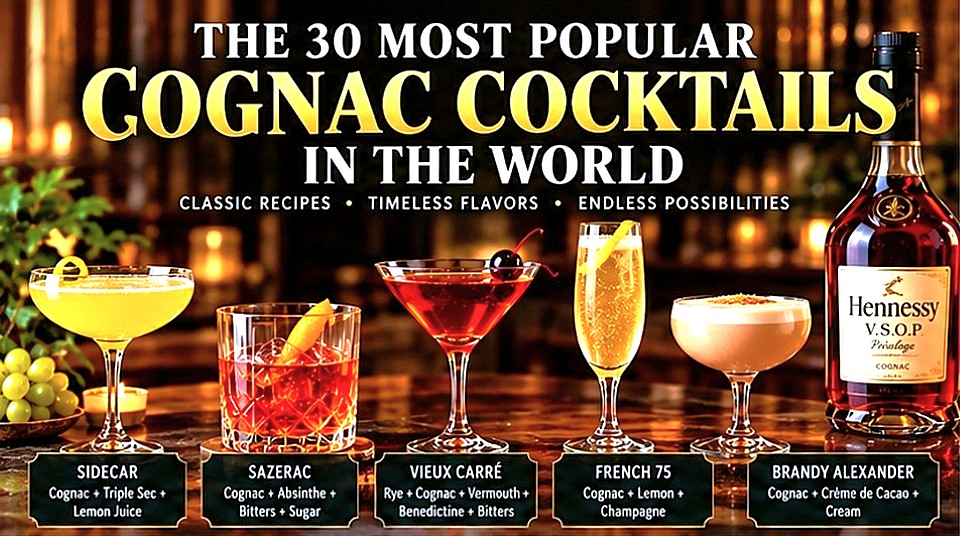
30 most popular Cognac cocktails including Sidecar, Sazerac, Vieux Carré, French 75 and Brandy Alexander with Cognac bottles and cocktail recipes
9. Champagne Cocktail
Profile: Sparkling, elegant, aromatic
The IBA’s current Champagne Cocktail uses:
-
-
- 90 ml chilled Champagne
- 10 ml Cognac
- 2 dashes Angostura bitters
- 1 sugar cube
- A few drops of Grand Marnier, optional
-
Method: The sugar cube is treated with bitters, Cognac is added, and chilled Champagne is poured gently over it. Orange zest and a Maraschino cherry are the listed garnish.
Best Cognac: VSOP.
Best for: Celebrations.
10. Cognac French 75
Profile: Sparkling, bright, citrusy
The classic French 75 uses gin, but Cognac creates an excellent variation.
Ingredients
-
-
- 30 ml Cognac
- 15 ml fresh lemon juice
- 15 ml simple syrup
- 60 ml Champagne
-
Method
-
-
- Shake Cognac, lemon and syrup with ice.
- Strain into a flute.
- Top with Champagne.
-
Best Cognac: VS.
Garnish: Lemon twist.
Best occasion: Brunch and celebrations.
11. Cognac Old Fashioned
Profile: Rich, bittersweet, spirit-forward
Ingredients
-
-
- 60 ml Cognac
- 7.5 ml sugar syrup
- 2–3 dashes Angostura bitters
- Orange peel
-
Method
-
-
- Add Cognac, syrup and bitters to a mixing glass.
- Stir with ice.
- Strain over a large cube.
- Express orange peel over the drink.
-
Best Cognac: VSOP or XO.
Pro tip: A richer Cognac makes an especially luxurious Old Fashioned.
12. Cognac Manhattan
Profile: Rich, herbal, elegant
The classic Manhattan is traditionally made with rye whiskey, but Cognac provides an elegant variation.
Ingredients
-
-
- 50 ml Cognac
- 25 ml sweet vermouth
- 2 dashes Angostura bitters
-
Method
-
-
- Stir with ice.
- Strain into a chilled coupe.
-
Garnish: Cocktail cherry.
Best Cognac: VSOP.
Flavor: Richer and fruitier than a rye Manhattan.
13. Cognac Negroni
Profile: Bitter, rich, herbal
-
-
- 30 ml Cognac
- 30 ml Campari
- 30 ml sweet vermouth
-
Method
-
-
- Stir with ice.
- Serve over a large cube.
-
Garnish: Orange peel.
Best Cognac: VSOP.
Why it works?
Cognac’s fruit and oak provide an excellent counterpoint to Campari’s bitterness.
14. Champs-Élysées
Profile: Herbal, citrusy, elegant
The Champs-Élysées is one of the classic Cognac cocktails.
Ingredients
-
-
- 50 ml Cognac
- 20 ml green Chartreuse
- 20 ml fresh lemon juice
- 10 ml sugar syrup
- 2 dashes Angostura bitters
-
Method
-
-
- Shake with ice.
- Strain into a chilled coupe.
-
Garnish: Lemon peel.
Best Cognac: VSOP.
Best for: Drinkers who enjoy herbal complexity.
15. Brandy Alexander
Profile: Creamy, chocolate, rich
A classic dessert cocktail.
Ingredients
-
-
- 30 ml Cognac
- 30 ml dark crème de cacao
- 30 ml cream
-
Method
-
-
- Shake vigorously with ice.
- Strain into a chilled coupe.
-
Garnish: Freshly grated nutmeg.
Best Cognac: VSOP.
Best occasion: After dinner.
16. Horse’s Neck
Profile: Light, citrusy, aromatic
Horse’s Neck is a classic long drink.
A Cognac version uses:
-
-
- 45–50 ml Cognac
- Ginger ale
- Optional bitters
-
Method
-
-
- Build over ice in a tall glass.
- Add a long spiral of lemon peel.
-
Best Cognac: VS.
Best for: Casual drinking.
Why the garnish matters?
The long lemon peel adds a substantial citrus aroma.
17. Japanese Cocktail
Profile: Sweet, nutty, aromatic
The Japanese Cocktail is a historic Cognac drink.
Ingredients
-
-
- 60 ml Cognac
- 15 ml orgeat syrup
- 2 dashes Angostura bitters
-
Method
-
-
- Stir with ice.
- Strain into a chilled coupe.
-
Garnish: Lemon peel.
Best Cognac: VSOP.
Flavor: Cognac + almond + bitters. Very simple. Very distinctive.
18. Café Brûlot
Profile: Coffee, spice, aromatic
Café Brûlot is an elaborate New Orleans-style coffee drink.
A traditional preparation often combines:
-
-
- Cognac
- Hot coffee
- Orange
- Lemon
- Cinnamon
- Cloves
- Sugar
-
Method: The Cognac and citrus are traditionally warmed with spices before being combined with hot coffee.
Best Cognac: VSOP.
Best occasion: After dinner.
Pro tip: This is a presentation-heavy cocktail—excellent for entertaining.
19. Cognac Highball
Profile: Light, refreshing, simple
Ingredients
-
-
- 45 ml VS Cognac
- 120 ml chilled soda water
- Ice
- Lemon peel
-
Method
-
-
- Build in a highball.
- Stir gently.
-
Best Cognac: VS.
Why it works?
The carbonation lifts the fruit and floral aromas while dilution makes the spirit remarkably approachable.
20. Cognac Rickey
Profile: Dry, tart, refreshing
Ingredients
-
-
- 50 ml Cognac
- 25 ml fresh lime juice
- 100 ml soda water
- Ice
-
Method
-
-
- Build in a highball.
- Stir gently.
-
Best Cognac: VS.
Best for: Summer.
Key point: No added sugar. That makes the drink crisp and dry.
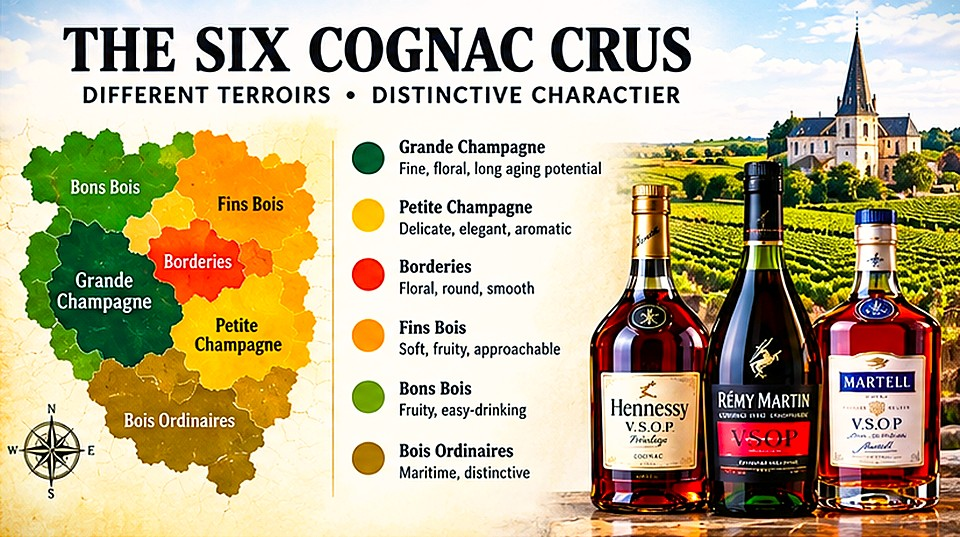
The six Cognac crus including Grande Champagne, Petite Champagne, Borderies, Fins Bois, Bons Bois and Bois Ordinaires with Cognac terroir map
21. Cognac Collins
Profile: Citrus, sparkling, refreshing
Ingredients
-
-
- 50 ml Cognac
- 25 ml fresh lemon juice
- 15 ml simple syrup
- 75–100 ml soda water
-
Method
-
-
- Shake Cognac, lemon and syrup.
- Strain over fresh ice.
- Top with soda.
-
Garnish: Lemon wheel and cherry.
Best Cognac: VS.
22. Cognac Daisy
Profile: Citrus, sweet-tart, refreshing
The Daisy family is closely related to many classic sour structures.
Ingredients
-
-
- 50 ml Cognac
- 25 ml fresh lemon juice
- 15 ml orange liqueur
- 10 ml simple syrup
-
Method
-
-
- Shake with ice.
- Strain over fresh ice.
-
Garnish: Orange wheel.
Best Cognac: VS.
23. Cognac Sidecar Royale
Profile: Sparkling, citrusy, elegant
Take the classic Sidecar and add sparkling wine.
Ingredients
-
-
- 40 ml Cognac
- 20 ml orange liqueur
- 20 ml fresh lemon juice
- 40–60 ml dry sparkling wine
-
Method
-
-
- Shake the Cognac, orange liqueur and lemon.
- Strain into a coupe.
- Top with sparkling wine.
-
Garnish: Orange twist.
Best occasion: Celebrations.
24. Cognac Ginger Highball
Profile: Spicy, refreshing, aromatic
Ingredients
-
-
- 50 ml Cognac
- 10–15 ml fresh lemon juice
- 100 ml ginger beer
- Ice
-
Method
-
-
- Build over ice.
- Stir gently.
-
Garnish: Lemon and mint.
Best Cognac: VS.
Flavor: The ginger brings spice while the Cognac contributes fruit and vanilla.
25. Cognac Apple Sour
Profile: Apple, citrus, warming spice
Ingredients
-
-
- 50 ml Cognac
- 30 ml fresh apple juice
- 20 ml lemon juice
- 15 ml maple syrup
- 2 dashes bitters
-
Method
-
-
- Shake with ice.
- Strain over fresh ice.
-
Garnish: Apple slice and cinnamon.
Best season: Autumn.
26. Cognac Espresso Cocktail
Profile: Coffee, rich, warming
Ingredients
-
-
- 45 ml Cognac
- 30 ml fresh espresso
- 20 ml coffee liqueur
- 10 ml simple syrup
-
Method
-
-
- Shake very hard with ice.
- Double strain into a chilled coupe.
-
Garnish: Three coffee beans.
Best Cognac: VSOP.
Why it works?
The coffee emphasizes Cognac’s roasted, vanilla and dried-fruit characteristics.
27. Cognac Maple Sour
Profile: Rich, sweet-tart, warming
Ingredients
-
-
- 60 ml Cognac
- 25 ml lemon juice
- 15 ml maple syrup
- 2 dashes Angostura bitters
-
Method
-
-
- Shake with ice.
- Strain over fresh ice.
-
Best Cognac: VSOP.
Best season: Autumn and winter.
28. Cognac Cranberry Smash
Profile: Fruity, tart, refreshing
Ingredients
-
-
- 50 ml Cognac
- 25 ml cranberry juice
- 20 ml lemon juice
- 15 ml simple syrup
- Fresh rosemary
-
Method
-
-
- Gently press rosemary with syrup.
- Add Cognac, cranberry and lemon.
- Shake with ice.
- Strain over fresh ice.
-
Garnish:Rosemary and cranberries.
Best season: Fall and holiday entertaining.
29. Cognac Spritz
Profile: Light, sparkling, citrusy
Ingredients
-
-
- 30 ml Cognac
- 15 ml orange liqueur
- 15 ml lemon juice
- 60 ml sparkling wine
- 30 ml soda water
-
Method
-
-
- Shake Cognac, orange liqueur and lemon.
- Strain over ice.
- Top with sparkling wine and soda.
-
Garnish: Orange peel.
Best for: Brunch and aperitif drinking.
30. Cognac Tonic
Profile: Dry, bitter, refreshing
Ingredients
-
-
- 45 ml VS Cognac
- 120 ml premium tonic water
- 10 ml fresh lemon juice
- Ice
-
Method
-
-
- Build in a large wine glass.
- Stir gently.
-
Garnish: Lemon or grapefruit peel.
Best Cognac: VS or light VSOP.
Why try it?
The combination is unexpectedly refreshing and demonstrates that Cognac doesn’t always need to be served neat or in a traditional short cocktail.
Best Cognac Cocktails for Beginners
For your first Cognac cocktail, don’t start with something complicated. Start with drinks that have straightforward structures.
-
-
- Sidecar: Three core ingredients.
- French Connection: Two ingredients.
- Cognac Highball: Very easy.
- Cognac & Tonic: Refreshing and simple.
- Cognac Sour: Easy to balance.
- Stinger: Only Cognac and crème de menthe.
-
A good progression is: French Connection → Sidecar → Cognac Sour → Sazerac → Vieux Carré
That sequence introduces you gradually to more complex flavor combinations.
Best Cognac Cocktails for Summer
Cognac can be an excellent summer spirit when paired with:
-
-
- lemon
- lime
- ginger
- soda
- tonic
- sparkling wine
- fresh fruit.
-
Try:
-
-
- Cognac Highball
- Cognac Rickey
- Cognac Collins
- Cognac Tonic
- Cognac Ginger Highball
- Cognac Spritz
- Sidecar Royale
- Champagne Cocktail
-
The Cognac trade itself is currently promoting long drinks and tonic- or ginger-beer-based serves as part of its effort to broaden Cognac’s aperitif role beyond after-dinner drinking.
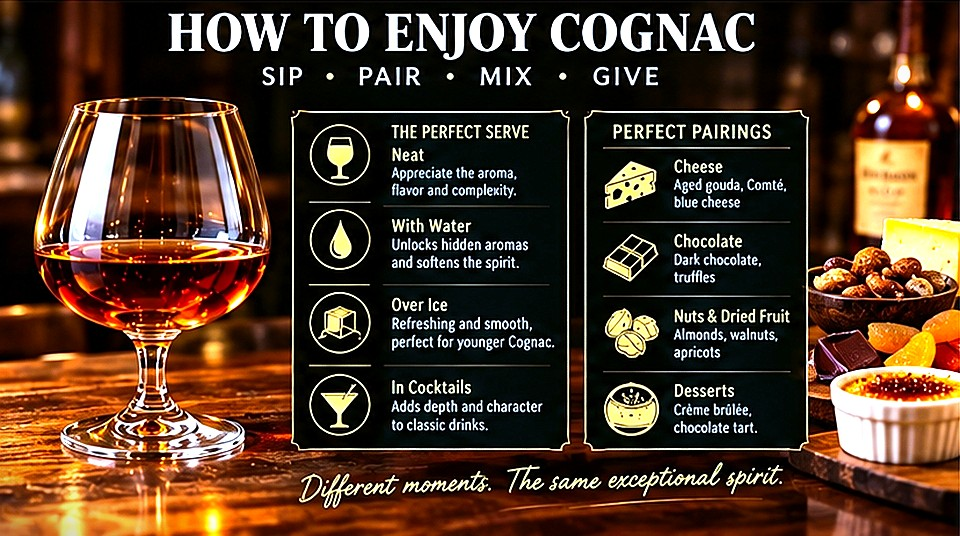
How to enjoy Cognac neat, with water, over ice or in cocktails paired with cheese, chocolate, nuts, dried fruit and desserts
Best Cognac Cocktails for Winter
Winter favors:
-
-
- maple
- apple
- coffee
- chocolate
- spices
- orange
-
Try:
-
-
- Cognac Old Fashioned
- Brandy Alexander
- Café Brûlot
- Cognac Espresso Cocktail
- Cognac Maple Sour
- Cognac Apple Sour
- Stinger
- French Connection
-
These drinks highlight Cognac’s warmer, richer side.
Best Cognac for Cocktails
-
-
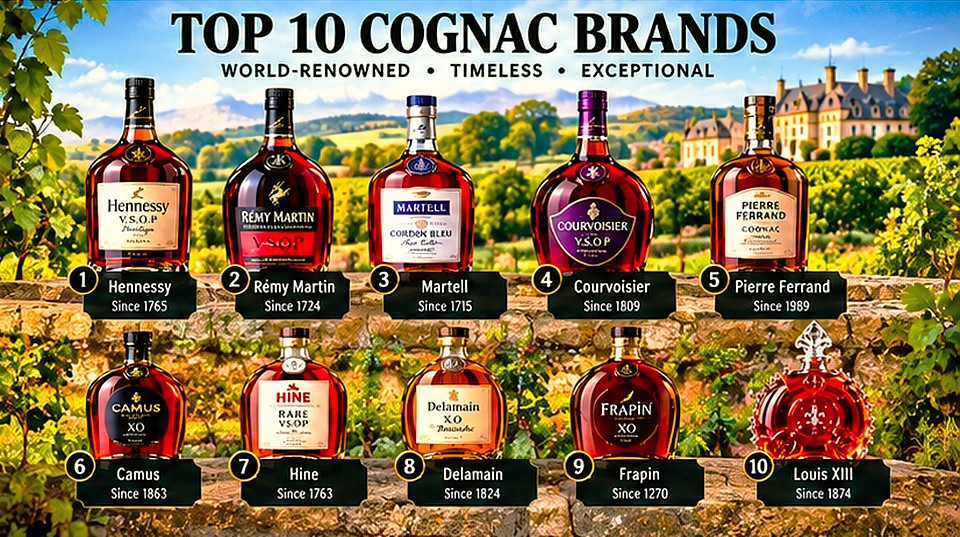
- Hennessy VS: A versatile mainstream choice.
- Rémy Martin VSOP: Particularly useful when you want richer fruit and structure.
- Martell VSOP: Good for classic cocktails and sipping.
- Courvoisier VSOP: Works well when a softer, rounder profile is desired.
- Pierre Ferrand: An especially strong name for cocktail enthusiasts. Drinks International’s Cognac coverage has repeatedly highlighted Cognac Ferrand’s position among leading bars, including a third-place finish in its 2025 report.
- Hine: A strong option for bartenders seeking a cocktail-friendly house.
- Camus: Interesting for drinkers who want to explore aromatic Borderies-influenced styles.
-
The major global houses remain dominant, but independent producers can offer particularly interesting expressions for cocktail enthusiasts.
How to Make Better Cognac Cocktails
Use fresh citrus: Fresh lemon and lime should be your default.
Don’t oversweeten: Cognac already has natural fruit sweetness.
Measure carefully: A small change in liqueur or citrus can dramatically shift the balance.
Use the appropriate glass:
Coupe:
-
-
- Sidecar
- Cognac Sour
- Champs-Élysées
-
Highball:
-
-
- Cognac Collins
- Horse’s Neck
- Cognac Rickey
-
Rocks glass:
-
-
- Cognac Old Fashioned
- French Connection
-
Chill your glassware: Especially for stirred and shaken cocktails served without ice.
Use good ice: Large cubes for spirit-forward drinks. Crushed ice for certain refreshing serves.
Respect dilution: Water is part of the cocktail.
The Importance of Dilution
One reason professional cocktails taste different from rushed home drinks is dilution. Cognac straight from the bottle can taste powerful. After proper shaking or stirring, some of that alcohol intensity is reduced. Aroma becomes more integrated. Texture changes. The finish becomes smoother.
This is especially important for:
-
-
- Sidecars
- Sours
- French 75 variations
- Old Fashioned-style drinks.
-
Cognac Cocktail Garnishes
-
-
- Sidecar: Orange or lemon twist.
- Sazerac: Lemon zest.
- Vieux Carré: Orange zest and cherry.
- French Connection: No garnish necessary.
- Stinger: Mint leaf.
- Champagne Cocktail: Orange zest and cherry.
- Cognac Old Fashioned: Orange peel.
- Brandy Alexander: Nutmeg.
- Horse’s Neck: Long lemon peel.
-
The rule: The garnish should contribute aroma. It shouldn’t exist merely to make the glass look crowded.
Cognac Cocktail Food Pairings
Cognac is remarkably food-friendly.
Sidecar + seafood
Excellent with:
-
-
- Oysters
- Shrimp
- Ceviche
- Light seafood starters
-
Sazerac + grilled meat
The spirit and bitters can stand up to:
-
-
- Steak
- Barbecue
- Charred meats
-
French Connection + cheese
-
-
- Comté
- Gouda
- Aged cheddar
-
Brandy Alexander + chocolate
An obvious pairing: Cognac + chocolate + cream.
Champagne Cocktail + appetizers
Ideal with:
-
-
- Smoked salmon
- Canapés
- Soft cheese
- Fruit-forward appetizers
-
Cognac and Cocktail Culture
Cognac has sometimes been perceived primarily as a sipping spirit. The current industry picture tells a different story. The BNIC’s latest figures say nearly 80% of Cognac is consumed globally in cocktails. That means cocktail culture is not peripheral to Cognac. It’s central.
The category also has deep historical connections with bartending.
-
-
- The Sazerac became a defining New Orleans cocktail.
- The Sidecar became one of the great 20th-century sours.
- The Vieux Carré established Cognac alongside rye whiskey in a quintessentially New Orleans formula.
- The French Connection demonstrated the spirit’s potential as a simple nightcap.
-
And today, Cognac is increasingly being used in:
-
-
- highballs
- tonic serves
- ginger beer drinks
- spritzes
- lighter aperitif cocktails.
-
This broadening is strategically important because it introduces Cognac to drinkers who may not traditionally order a neat brandy.
Current Cognac Cocktail Trends
The Cognac category is currently navigating a more difficult global market. But cocktails remain an important avenue for growth and experimentation.
The latest BNIC figures show a highly international industry, with 96.8% of Cognac consumed outside France by value in 2025, exports across 139 countries and annual sales of roughly €2.22 billion.
At the same time, the organization is actively promoting modern Cognac serves using:
-
-
- tonic
- ginger beer
- long-drink formats
- aperitif-style presentations.
-
1. Lighter Cognac drinks
Highballs and tonic drinks introduce younger consumers to the category.
2. Premium cocktails
VSOP and premium VS expressions are increasingly being used in cocktail menus that treat Cognac as a serious base spirit.
3. The revival of classics
The modern cocktail industry continues to bring historical drinks back to attention.
Drinks International’s long-term research shows that established classics are exceptionally durable: once cocktails enter the leading-bar rankings, they often remain there for years rather than disappearing immediately. That trend strongly favors historic Cognac recipes.
Why Sidecar Is So Important
The Sidecar is perhaps the clearest demonstration of Cognac’s versatility.
It doesn’t require:
-
-
- Bitters
- Soda
- Egg white
- Vermouth
- Heavy syrup
-
Just: Cognac + orange liqueur + lemon.
The IBA’s current formula is 50 ml Cognac, 20 ml triple sec and 20 ml fresh lemon juice. It is simple enough for beginners but sophisticated enough for professional bars.
That’s an ideal cocktail.
Why the Sazerac Is Different
The Sazerac is almost the opposite. It is spirit-forward and ceremonial. The absinthe rinse perfumes the glass. The sugar softens the Cognac. Peychaud’s bitters add spice and color. Lemon oil adds a final aromatic layer. The result is a drink where technique matters almost as much as ingredients.
And the historical transition from Cognac to rye demonstrates how cocktail recipes evolve in response to availability and culture.
Why the Vieux Carré Is a Bartender’s Cocktail
The Vieux Carré is complex.
It combines two base spirits: rye + Cognac
Then adds: sweet vermouth + Benedictine + bitters.
The result is rich and layered. It’s not necessarily the first drink a beginner should make. But it is one of the best examples of Cognac’s ability to work alongside another major spirit instead of simply dominating the glass.
Building a Cognac Home Bar
You don’t need 20 bottles.
Start with:
-
-
- One VS Cognac: For cocktails.
- One VSOP: For cocktails and sipping.
- One premium bottle: For neat tasting.
-
Then add:
-
-
- triple sec
- sweet vermouth
- dry vermouth
- Amaretto
- Benedictine
- Campari
- crème de menthe
- bitters
- fresh lemons
- fresh limes
- oranges
- sparkling wine
- soda water
- ginger beer
-
With this small collection, you can make an enormous range of Cognac cocktails.
How to Taste Cognac Before Mixing It
Before building cocktails, taste the Cognac by itself. Pour approximately 15–20 ml. Smell it without aggressively swirling.
Look for:
-
-
- fruit
- flowers
- vanilla
- oak
- spice
- dried fruit
-
Take a small sip. Then add a few drops of water. Notice how the aroma changes. This teaches you what the cocktail will be working with.
-
-
- A fruity Cognac may shine in a Sidecar.
- A rich, spicy VSOP may be better in a Vieux Carré.
- A mature XO may be better in an Old Fashioned—or simply served neat.
-
Top Cognac brands in the world including Hennessy, Rémy Martin, Martell, Courvoisier, Pierre Ferrand, Camus, Hine, Delamain and Frapin
Frequently Asked Questions
What is the most popular Cognac cocktail in the world?
There is no definitive global ranking exclusively for Cognac cocktails. The Sidecar and Sazerac are among the most internationally recognizable classic Cognac drinks, while Cognac remains deeply important to modern cocktail culture. The BNIC says nearly 80% of Cognac is consumed in cocktails globally.
What is the best Cognac cocktail for beginners?
The Sidecar, French Connection, Cognac Highball and Cognac Sour are excellent starting points.
What is a Sidecar?
The current IBA recipe combines 50 ml Cognac, 20 ml triple sec and 20 ml fresh lemon juice, shaken with ice and strained into a chilled cocktail glass.
What is a Sazerac?
A classic New Orleans cocktail traditionally made with Cognac or rye whiskey, sugar, Peychaud’s bitters and an absinthe rinse. The current IBA specification uses Cognac.
What is a Vieux Carré?
A New Orleans cocktail combining rye whiskey, Cognac, sweet vermouth, Benedictine and Peychaud’s bitters.
What is a French Connection?
A two-ingredient cocktail made with equal parts Cognac and Amaretto.
What is a Stinger?
A Cognac cocktail combining Cognac and white crème de menthe, traditionally stirred and served chilled.
What Cognac is best for cocktails?
VS and VSOP are generally the most versatile. VS is particularly practical for fresh, long and citrus-heavy drinks, while VSOP works beautifully in both cocktails and sipping.
Is XO Cognac good for cocktails?
Yes, but it is often better used in spirit-forward cocktails where its mature flavors remain prominent—or simply enjoyed neat.
What is the best Cognac for a Sidecar?
A fruit-forward VS or VSOP works extremely well.
What is the best Cognac for a Sazerac?
An aromatic VS or VSOP is a good choice.
What is the best Cognac for a Vieux Carré?
A structured VSOP works well because it needs to compete with rye, vermouth and Benedictine.
Can I use Cognac in an Old Fashioned?
Absolutely. VSOP or XO can make an excellent Cognac Old Fashioned.
Can Cognac replace whiskey in an Old Fashioned?
Yes. The result is fruitier and more grape-driven than a bourbon or rye Old Fashioned.
Can Cognac replace gin in a Negroni?
Yes. A Cognac Negroni is richer, fruitier and more rounded than the traditional gin version.
Can Cognac replace gin in a French 75?
Yes. A Cognac French 75 is a popular modern variation, although the traditional IBA version uses gin.
What is the best Cognac cocktail for summer?
Cognac Highball, Cognac Rickey, Cognac Collins, Cognac Tonic, Cognac Spritz and Cognac Ginger Highball are excellent warm-weather options.
What is the best Cognac cocktail for winter?
Cognac Old Fashioned, Brandy Alexander, Café Brûlot, Cognac Espresso and Cognac Maple Sour are especially suitable.
What is the best Cognac cocktail after dinner?
French Connection, Stinger, Brandy Alexander and Cognac Espresso are excellent choices.
What Cognac cocktail goes with chocolate?
Brandy Alexander and Cognac Espresso are particularly good.
What Cognac cocktail goes with steak?
Sazerac, Vieux Carré and Cognac Old Fashioned have enough structure to stand up to rich grilled meat.
What Cognac cocktail goes with seafood?
Sidecar, Cognac Rickey and Cognac Collins work particularly well with light seafood.
What garnish is best for a Sidecar?
A lemon or orange twist.
What garnish is best for a Sazerac?
Expressed lemon zest.
What garnish is best for a Vieux Carré?
Orange zest and a Maraschino cherry.
Should Cognac cocktails be shaken or stirred?
Citrus-based drinks are generally shaken, while spirit-forward cocktails such as a Cognac Old Fashioned are generally stirred.
Should Cognac be served over ice?
Yes. Younger Cognac can be excellent over ice, particularly in casual long drinks.
Can Cognac be mixed with tonic?
Yes. Cognac and tonic can create a light, refreshing highball.
Can Cognac be mixed with ginger beer?
Yes. Ginger beer works very well with younger Cognac because ginger provides spice and freshness.
Can Cognac be mixed with Champagne?
Absolutely. Champagne Cocktail and Cognac French 75 variations are excellent examples.
What is the difference between Cognac and brandy?
Cognac is a geographically protected type of grape brandy produced under specific French rules in the Cognac appellation.
Is Cognac made from grapes?
Yes. Cognac is primarily made from white grapes, with Ugni Blanc representing more than 98% of the Cognac vineyard according to current BNIC figures.
What does VS mean?
VS indicates a Cognac whose youngest eau-de-vie has been aged for at least two years.
What does VSOP mean?
VSOP means a minimum of four years for the youngest eau-de-vie.
What does XO mean?
XO indicates a minimum of ten years for the youngest eau-de-vie.
What does XXO mean?
XXO indicates a minimum of 14 years for the youngest eau-de-vie.
What is Fine Champagne Cognac?
Fine Champagne is Cognac made exclusively from eaux-de-vie from Grande Champagne and Petite Champagne, with at least half coming from Grande Champagne.
Can you drink Cognac neat?
Yes. Mature VSOP, XO and XXO Cognacs are often especially rewarding neat.
Is expensive Cognac always better?
No. Higher price can reflect age, scarcity, packaging and brand positioning. The best Cognac depends on how you intend to use it.
Is VS Cognac good?
Yes. VS is often excellent for cocktails because it provides fresh fruit and spirit character at a practical price.
Is VSOP better than VS?
VSOP is older and generally more developed, but it isn’t automatically better for every cocktail.
Should XO Cognac be mixed?
It can be, particularly in simple spirit-forward cocktails, but many drinkers prefer to savor XO neat.
Why is Cognac important in cocktails?
Its fruit, floral, vanilla, spice and oak characteristics work beautifully with citrus, sugar, bitters, vermouth, liqueurs and sparkling wine.
Final Thoughts: The World’s Most Popular Cognac Cocktails
Cognac deserves much more attention from cocktail drinkers. It is not merely an after-dinner spirit. It is not simply a luxury bottle sitting on a back bar. And it certainly doesn’t have to be served neat every time. The category has an extraordinary cocktail history.
-
-
- The Sidecar demonstrates how beautifully Cognac works with lemon and orange.
- The Sazerac showcases the spirit in a highly aromatic, spirit-forward format.
- The Vieux Carré demonstrates how Cognac can work alongside rye whiskey.
- The French Connection proves that sometimes two ingredients are enough.
- The Stinger shows that Cognac can become cool, minty and refreshing.
- The Brandy Crusta demonstrates the historical sophistication of citrus-and-brandy cocktails.
-
And modern variations take Cognac into:
-
-
- highballs
- tonic drinks
- ginger beer cocktails
- spritzes
- coffee cocktails
- fruit-forward summer drinks.
-
That’s a huge range. And the current market confirms that cocktails aren’t a side issue for Cognac. The BNIC reports that nearly 80% of Cognac is consumed in cocktails globally. That statistic changes the way we should think about the category. Cognac isn’t merely competing with Scotch or bourbon for neat-drinking occasions.
It is also competing for space in the cocktail glass. And that’s where the category becomes especially interesting. Younger Cognacs can be extraordinarily versatile.
-
-
- A quality VS is perfect for a Sidecar.
- A VSOP can move from Sidecar to Vieux Carré to Old Fashioned.
- An XO can create a luxurious after-dinner cocktail—or simply be enjoyed neat.
-
The key is matching the Cognac to the recipe.
-
-
- Don’t use an expensive XO simply because it costs more.
- Don’t assume VS is inferior because it is younger.
- Don’t assume that every Cognac tastes the same.
-
Cru, producer, grape, distillation, oak and blending all influence the final spirit. The best way to learn is to taste. Try a VS. Then a VSOP.
Then compare one of them in a Sidecar. Try the same VSOP in a Cognac Old Fashioned.
Then taste the Cognac neat. You’ll discover that the cocktail doesn’t hide the spirit. It changes the way you perceive it. Lemon emphasizes fruit. Sugar emphasizes roundness. Bitters emphasize spice. Vermouth adds complexity. Ginger adds freshness. Sparkling wine adds lift.
Oak becomes more noticeable in simple spirit-forward cocktails. This is why classic recipes continue to matter. They are not simply old formulas. They are proven structures.
-
-
- The Sidecar balances spirit, citrus and sweetness.
- The Sazerac uses dilution, sugar, bitters and aroma.
- The Vieux Carré layers multiple flavor families without losing its Cognac identity.
- The French Connection demonstrates how a simple two-ingredient combination can create an elegant digestif.
-
The International Bartenders Association still treats many of these drinks as important international references, and its official recipe collection has evolved over decades as classic drinks disappear, return and remain popular.
Meanwhile, current cocktail research shows that classic drinks have remarkable staying power in the world’s best bars. Drinks International’s long-term data show that once many classics become established, they tend to remain in the cocktail landscape rather than disappearing immediately.
That is excellent news for Cognac. Its cocktail heritage gives bartenders a huge library to work from. But there is also room for innovation.
-
-
- Try a Cognac highball.
- Try Cognac with tonic.
- Try Cognac with ginger beer.
- Try Cognac with grapefruit.
- Try Cognac with apple.
- Try Cognac with coffee.
- Try Cognac with maple.
-
Then go back to the classics.
-
-
- Make a Sidecar properly.
- Make a Sazerac.
- Make a Vieux Carré.
- Make a French Connection.
-
Taste them side by side. You’ll discover four completely different expressions of the same spirit. And perhaps that’s the most useful way to think about Cognac cocktails.
Don’t ask: “What is the best Cognac cocktail?”
Ask: “What side of Cognac do I want to experience?”
-
-
- For fruit and citrus: Sidecar.
- For spice and herbs: Sazerac.
- For complexity: Vieux Carré.
- For simplicity: French Connection.
- For mint: Stinger.
- For richness: Brandy Alexander.
- For summer: Cognac Rickey or Collins.
- For celebration: Champagne Cocktail or Cognac French 75.
- For winter: Cognac Old Fashioned or Maple Sour.
-
That versatility is why Cognac remains one of the world’s great cocktail spirits. The next time you reach for a Cognac bottle, don’t automatically reach for the snifter. Reach for the shaker. Reach for fresh citrus. Grab some ice. And make a Sidecar. Then make a Sazerac. Then experiment.
Because the world of Cognac cocktails is far larger—and far more exciting—than many drinkers realize.