
Blog
Most Popular Tequila Brands in the World: 30 Famous Tequilas Every Agave Lover Should Know

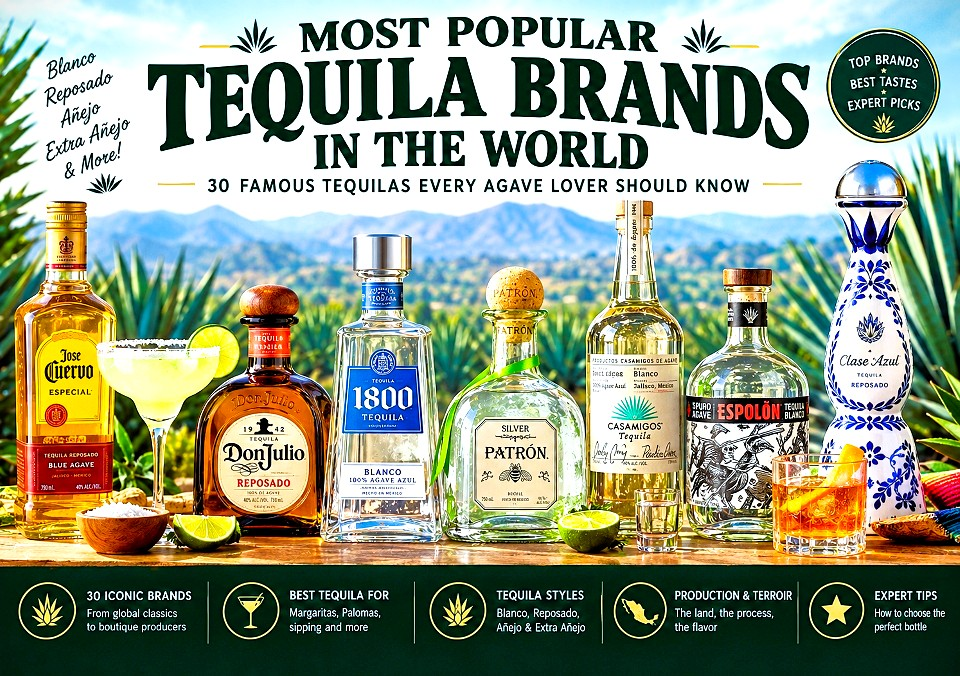
Discover the most popular tequila brands in the world, from José Cuervo, Don Julio, 1800 Tequila and Patrón to Espolòn, Casamigos, Hornitos, Lunazul, Ocho, Fortaleza and Clase Azul. Learn the difference between blanco, reposado and añejo tequila, explore the best bottles for Margaritas and sipping, and find out which tequila brands dominate global sales and the world’s best bars.
Tequila has become one of the most important spirits in the world.
What was once strongly associated with shots, salt and lime has evolved into a sophisticated category spanning premium sipping tequila, luxury bottles, classic cocktails, craft production and increasingly transparent agave-focused expressions.
Today, tequila appears everywhere from neighborhood bars to Michelin-starred restaurants. The category also has an extraordinary range of styles:
-
-
- A fresh blanco can taste intensely of cooked agave, pepper, citrus and herbs.
- A reposado can add vanilla, caramel, baking spice and gentle oak.
- An añejo can become richer, darker and more whiskey-like as barrel maturation increases.
-
And modern tequila producers increasingly distinguish themselves through:
-
-
- agave sourcing
- roasting methods
- water
- fermentation
- distillation
- barrel maturation
- terroirF
- transparency.
-
The global market remains enormous, although its growth has become more selective.
The latest Drinks International Millionaires’ Club 2026 ranking identifies José Cuervo as the world’s bestselling tequila brand, with 7.3 million nine-liter cases sold in 2025. Don Julio followed at 4.5 million, 1800 Tequila at 2.8 million, Patrón at 2.7 million, and Casamigos at 1.9 million.
But sales volume is only one measure of popularity.
At the top end of the cocktail industry, Don Julio was again the bestselling tequila in Drinks International’s 2026 survey of the world’s best bars, taking the top position for the 11th consecutive edition. It was the house pour or bestselling tequila in 18% of surveyed bars, just ahead of Patrón at 16%. Altos ranked third and Ocho fourth. That difference makes tequila particularly interesting.
-
-
- José Cuervo dominates global volume.
- Don Julio dominates premium-bar sales.
- Patrón remains one of the category’s most internationally recognizable premium brands.
-
And enthusiast-focused producers such as Ocho and Fortaleza have built powerful reputations around agave character, traditional production and provenance.
The industry is also changing. A 2026 analysis from Forbes describes tequila as entering a more mature stage, with slower growth, greater consumer scrutiny and increased interest in production transparency.
For consumers, that may be a good thing. It means today’s tequila buyer has more information—and more interesting bottles—to choose from.
Table of Contents
-
-
- What Is Tequila?
- What Makes Tequila Different From Other Spirits?
- 100% Agave Tequila vs. Tequila
- The Five Official Tequila Classes
- Blanco Tequila
- Reposado Tequila
- Añejo Tequila
- Extra Añejo Tequila
- Joven or Gold Tequila
- How Tequila Is Made
- 30 Most Popular Tequila Brands in the World
- José Cuervo
- Don Julio
- 1800 Tequila
- Patrón
- Casamigos
- Hornitos
- Espolòn
- Lunazul
- Cazadores
- El Jimador
- Olmeca Altos
- Herradura
- Teremana
- Ocho Tequila
- Fortaleza
- Clase Azul
- Milagro
- Cabo Wabo
- Don Ramón
- Corralejo
- Tequila Arette
- El Tesoro
- G4
- Lalo
- Cascahuín
- Siete Leguas
- Suerte
- Código 1530
- Best Tequila for Beginners
- Best Tequila for Margaritas
- Best Tequila for Palomas
- Best Tequila for Sipping
- Best Premium Tequila
- Blanco vs. Reposado vs. Añejo
- How to Choose Tequila
- Current Tequila Trends
- Tequila and Transparency
- Frequently Asked Questions
- Final Thoughts
-
What Is Tequila?
Tequila is a Mexican distilled spirit made from Agave tequilana Weber, blue variety, commonly called Blue Weber agave.
The Consejo Regulador del Tequila (CRT) explains that tequila is produced within Mexico’s protected designation of origin framework and distinguishes between Tequila 100% Agave and the broader category simply labeled Tequila.
One of the most important distinctions is the amount of agave sugar used.
Tequila 100% Agave
The CRT describes this category as tequila made entirely from the sugars of Blue Weber agave and bottled at origin.
Tequila
The broader legal category can be made with at least 51% Blue Weber agave sugars, with the remainder coming from other permitted reducing sugars, subject to the applicable standard.
For consumers looking for a more agave-focused premium experience, 100% agave tequila is usually the category to explore first.
What Makes Tequila Different From Other Spirits?
Tequila is an agricultural spirit. That means the raw material matters enormously. The plant itself spends years growing before harvest.
The producer’s choices then shape the spirit:
-
-
- Which agave?
- Where was it grown?
- How mature was it?
- How was it cooked?
- How was the juice extracted?
- How long did fermentation take?
- What still was used?
- Was the tequila matured in oak?
- How was it blended and bottled?
-
These decisions can create dramatically different flavor profiles:
-
-
- A tequila from the Highlands of Jalisco may taste different from one produced in the Lowlands.
- A traditionally cooked tequila may show more pronounced cooked-agave flavors.
- A heavily barrel-aged tequila may emphasize oak, vanilla and caramel.
- A powerful blanco may reveal the production method almost immediately.
-
That’s why tequila enthusiasts increasingly discuss terroir, fermentation and distillation, rather than simply saying one bottle is “smooth.”
100% Agave Tequila vs. Tequila
This is one of the most important distinctions when buying tequila.
100% Agave
All fermentable sugars come from Blue Weber agave.
Tequila
At least 51% of the fermentable sugars come from Blue Weber agave, with permitted other sugars making up the remainder. For many consumers, the simplest rule is:
Look for “100% Agave” when you want a premium tequila with a stronger emphasis on the agave itself.
That doesn’t mean every 100% agave tequila is automatically better than every other tequila. But it is an important starting point.
The Five Official Tequila Classes
The CRT identifies five recognized classes:
-
-
- Blanco
- Joven or Gold
- Reposado
- Añejo
- Extra Añejo
-
Understanding these categories makes shopping dramatically easier.
Blanco Tequila
Blanco is the freshest expression of tequila. The CRT describes Blanco as tequila coming directly from the still, with alcohol strength adjusted using water.
Typical flavors:
-
-
- Cooked agave
- Pepper
- Citrus
- Herbs
- Mineral notes
- Earth
-
Best for:
-
-
- Margaritas
- Palomas
- Ranch Waters
- Sipping
-
Blanco is also usually the best style for understanding the actual agave and production character.
Reposado Tequila
Reposado means the tequila has been rested in wood. The CRT specifies a minimum of two months in oak or holm-oak containers.
Typical flavors:
-
-
- Agave
- Vanilla
- Oak
- Caramel
- Baking spice
- Toast
-
Best for:
-
-
- Margaritas
- Old Fashioned variations
- Sipping
-
Reposado is a particularly good compromise between fresh agave flavor and barrel complexity.
Añejo Tequila
Añejo is aged for at least one year in oak or holm-oak barrels or containers of no more than 600 liters.
Typical flavors:
-
-
- Vanilla
- Caramel
- Toast
- Dark fruit
- Oak
- Spice
-
Best for:
-
-
- Sipping
- After-dinner drinking
-
Extra Añejo Tequila
Extra Añejo is the longest-matured standard tequila class. The CRT says Extra Añejo must mature in oak or holm-oak containers for at least three years.
Typical flavors:
-
-
- Deep oak
- Caramel
- Dried fruit
- Cocoa
- Vanilla
- Spice
-
Best for:
-
-
- Slow sipping
- Special occasions
- Collecting
-
Older doesn’t automatically mean better, however. The agave character can become increasingly obscured by the barrel.
Joven or Gold Tequila
Joven, also called Gold, is generally produced by blending Blanco tequila with rested, aged or extra-aged tequila, although the precise permitted processes are governed by the standard.
It is more common in mainstream tequila than among enthusiasts looking for terroir-driven production.
How Tequila Is Made
While individual distilleries vary, the general process includes:
-
-
- Growing Blue Weber agave: The plants take years to mature.
- Harvesting: Jimadores remove the leaves and harvest the piña.
- Cooking: The agave is cooked to convert carbohydrates into fermentable sugars.
- Extraction: The cooked agave is crushed or otherwise processed to extract juice.
- Fermentation: Yeast converts sugars into alcohol.
- Distillation: The fermented liquid is distilled.
- Maturation: Some tequila is bottled quickly as Blanco. Other expressions spend months or years in oak.
- Bottling: The tequila is filtered, adjusted if necessary and bottled according to the applicable standards. Each stage can change the flavor.
-
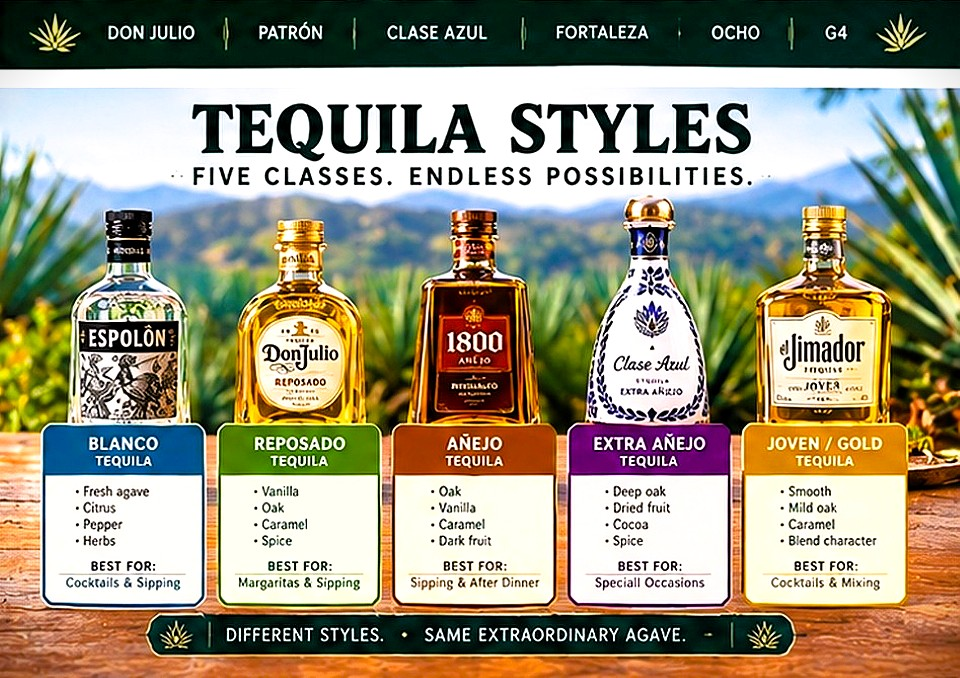
Tequila styles explained including Blanco, Reposado, Añejo and Extra Añejo with popular tequila bottles and agave
30 Most Popular Tequila Brands in the World
1. José Cuervo
Country: Mexico
Category: Tequila
José Cuervo is the world’s biggest tequila brand by global case volume. The brand sold approximately 7.3 million nine-liter cases in 2025, remaining comfortably ahead of Don Julio. It has been the No. 1 brand in the global Millionaires’ Club ranking for seven consecutive years.
The brand traces its tequila history back to 1758, making it one of the category’s most historically significant names.
Popular expressions:
-
-
- Especial
- Tradicional
- Reserva de la Familia
-
Best for:
-
-
- Margaritas
- Palomas
- Parties
- Large gatherings
-
José Cuervo’s greatest strength is range and global accessibility.
2. Don Julio
Country: Mexico
Producer: Diageo
Don Julio is arguably the world’s most important premium tequila brand. Global sales reached 4.5 million cases in 2025, up 2% according to Drinks International. At the premium-bar level, it is even more powerful.
Drinks International’s 2026 Brands Report says Don Julio remained the bestselling tequila in the world’s best bars, holding the top spot for the 11th consecutive edition.
Famous bottles:
-
-
- Don Julio Blanco
- Don Julio Reposado
- Don Julio Añejo
- Don Julio 1942
-
Best for:
-
-
- Premium cocktails
- Sipping
- Luxury gifting
-
Don Julio 1942 in particular has become one of the most recognizable luxury tequila bottles in the world.
3. 1800 Tequila
Country: Mexico
Producer: Proximo Spirits
1800 is one of the world’s biggest tequila brands. It sold approximately 2.8 million cases in 2025, making it the third-largest global tequila brand in Drinks International’s ranking.
The brand is associated with the Fábrica La Rojeña distillery, which is described as the oldest active distillery in the region in current industry coverage.
Popular expressions:
-
-
- 1800 Silver
- 1800 Reposado
- 1800 Añejo
- 1800 Cristalino
-
Best for:
-
-
- Margaritas
- Palomas
- Premium mixed drinks
-
4. Patrón
Country: Mexico
Owner: Bacardi
Patrón is one of the defining luxury tequila names. The brand sold around 2.7 million cases in 2025 but Patrón’s importance goes beyond volume. It helped redefine tequila as a premium spirit for upscale bars, restaurants and luxury consumers.
Famous expressions:
-
-
- Patrón Silver
- Patrón Reposado
- Patrón Añejo
- Gran Patrón
-
Best for:
-
-
- Margaritas
- Martinis
- Sipping
- Premium cocktails
-
Drinks International’s 2026 survey placed Patrón just behind Don Julio among the world’s best bars, with 16% naming it their bestselling tequila.
5. Casamigos
Country: Mexico
Owner: Diageo
Casamigos became famous through celebrity association and then developed into one of the world’s largest tequila brands but its recent sales demonstrate an important shift in consumer behavior. Casamigos sold around 1.9 million cases in 2025, down more than 20% according to Drinks International.
That decline doesn’t make the brand unimportant. It demonstrates that celebrity branding alone doesn’t guarantee permanent consumer loyalty.
Popular expressions:
-
-
- Blanco
- Reposado
- Añejo
- Mezcal
-
Best for:
-
-
- Margaritas
- Palomas
- Casual sipping
-
6. Hornitos
Country: Mexico
Producer: Suntory Global Spirits
Hornitos is one of the most recognized tequila brands in North America. Global sales were around 1.7 million cases in 2025.
Best for:
-
-
- Margaritas
- Palomas
- Ranch Water
- Cocktails
-
Popular styles:
-
-
- Blanco, Reposado and Añejo.
- Hornitos occupies a useful middle ground between mass-market accessibility and more premium tequila.
-
7. Espolòn
Country: Mexico
Owner: Campari
Espolòn has become one of the strongest modern tequila brands. VinePair’s 2026 analysis puts Espolòn at roughly 1.9 million cases in 2025, with modest growth from the previous year.
Best for:
-
-
- Margaritas
- Palomas
- Cocktail bars
-
The brand has become particularly popular among consumers seeking better-quality tequila without immediately entering ultra-premium pricing.
8. Lunazul
Country: Mexico
Producer: Heaven Hill
Lunazul is one of tequila’s strongest recent growth stories. Drinks International reported that it rose 35.3% to approximately 2.3 million cases in 2025, making it one of the biggest gainers among millionaire tequila brands.
Best for:
-
-
- Margaritas
- Highballs
- Everyday cocktails
-
Its growth demonstrates the importance of strong value in a maturing tequila market.
9. Cazadores
Country: Mexico
Owner: Bacardi
Cazadores remains one of the major tequila brands in the global marketplace. Industry data reported by Shanken News Daily put U.S. 2025 sales at roughly 983,000 nine-liter cases, while noting continued growth.
Best for:
-
-
- Margaritas
- Palomas
- Ranch Water
- Everyday tequila cocktails
-
10. El Jimador
Country: Mexico
El Jimador is one of the major value-oriented tequila brands. It is produced from 100% Blue Weber agave, according to current coverage.
Best for:
-
-
- Large gatherings
- Margaritas
- Palomas
-
Why try it?
It’s a useful example of how 100% agave tequila can remain accessible.
11. Olmeca Altos
Country: Mexico
Olmeca Altos has a particularly strong reputation among bartenders. Drinks International’s 2026 premium-bar report ranked Altos third among bestselling tequilas in leading bars, behind Don Julio and Patrón.
Best for:
-
-
- Margaritas
- Palomas
- Highballs
- Cocktail programs
-
It is one of the clearest examples of bartender popularity not necessarily matching supermarket volume.
12. Herradura
Country: Mexico
Herradura is one of Mexico’s historic tequila brands. It is particularly associated with traditional production and a strong range of aged expressions.
Famous expressions:
-
-
- Plata
- Reposado
- Añejo
- Ultra
-
Best for:
-
-
- Sipping
- Premium Margaritas
- Old Fashioned-style cocktails
-
13. Teremana
Founder: Dwayne Johnson
Category: Celebrity tequila
Teremana has become one of the most visible celebrity tequila brands.
But its current position is interesting because the broader market is becoming less tolerant of brands that rely entirely on celebrity association. Forbes identifies this as one of the major changes shaping tequila in 2026.
Popular expressions:
-
-
- Blanco
- Reposado
- Añejo
-
Best for:
-
-
- Margaritas
- Palomas
- Casual sipping
-
14. Ocho Tequila
Country: Mexico
Ocho is one of the most influential enthusiast-oriented tequila brands. It is particularly famous for emphasizing terroir and estate-specific production. Drinks International ranked Ocho fourth among the bestselling tequilas in leading bars in 2026.
Best for:
-
-
- Sipping
- Agave-focused tasting
-
Why it’s special?
Ocho makes the agricultural identity of tequila much more visible to the consumer.
15. Fortaleza
Country: Mexico
Fortaleza is one of the most coveted traditional-style tequila brands. It has developed an extraordinary reputation among enthusiasts for traditional production methods and limited availability.
The 2026 tequila market commentary from Forbes specifically identifies Fortaleza as an example of a brand that has resisted chasing volume and instead protected scarcity and traditional production.
Best for:
-
-
- Sipping
- Collectors
-
Why try it?
Fortaleza represents the enthusiast side of tequila culture.
16. Clase Azul
Country: Mexico
Clase Azul is one of the world’s most visually recognizable tequila brands. Its hand-decorated ceramic bottles have become synonymous with luxury tequila.
The brand has built a strong position in:
-
-
- Luxury gifting
- Fine dining
- Nightlife
- Collecting
-
Popular expressions:
-
-
- Plata
- Reposado
- Añejo
- Ultra
-
Best for: Special occasions and luxury gifting.
Important point: Clase Azul’s strength is as much luxury branding and presentation as it is spirit category positioning.
17. Milagro
Milagro is a recognizable premium tequila brand with strong cocktail credentials.
Best for:
-
-
- Margaritas
- Palomas
- Tequila Sours
- Sipping
-
It is especially useful for consumers looking for a modern premium bottle without entering the ultra-luxury segment.
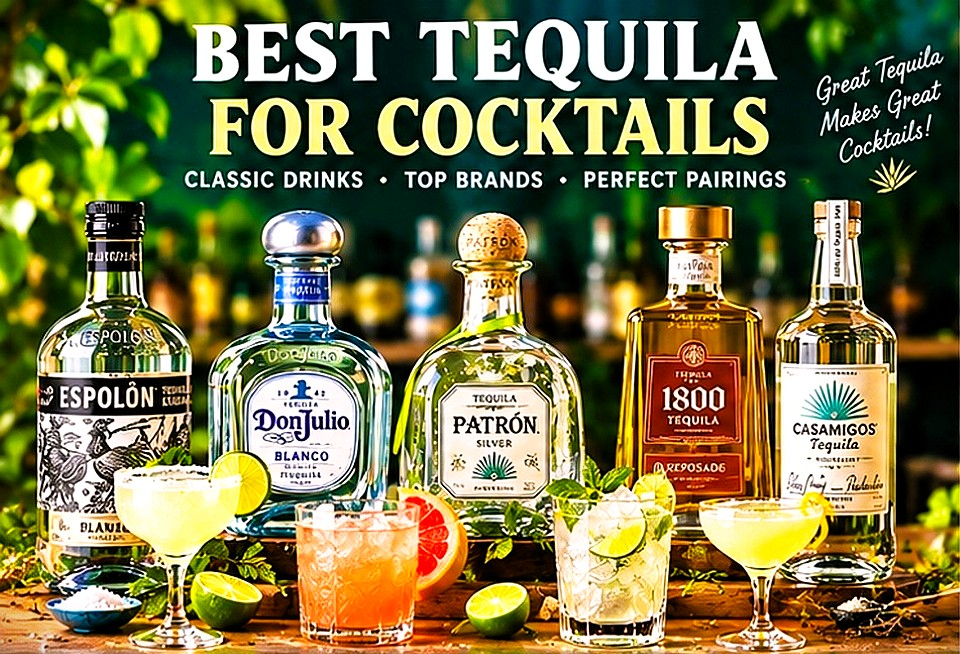
Best tequila for Margaritas, Palomas, Ranch Water and cocktails featuring Blanco, Reposado and premium tequila
18. Cabo Wabo
Founder: Sammy Hagar
Cabo Wabo became one of the early celebrity-associated tequila brands. It helped establish the idea that tequila could be marketed as a lifestyle and premium party spirit.
Best for:
-
-
- Margaritas
- Palomas
- Parties
-
19. Don Ramón
Don Ramón has built a strong identity around visually striking bottles and premium positioning.
Popular styles:
-
-
- Blanco
- Reposado
- Añejo
-
Best for:
-
-
- Gifting
- Celebrations
- Luxury tequila displays
-
20. Corralejo
Corralejo is one of the established tequila brands with deep roots in Guanajuato. Its portfolio spans multiple tequila classes.
Best for:
-
-
- Sipping
- Cocktails
- Exploration of regional tequila
-
21. Tequila Arette
Country: Mexico
Arette is particularly interesting to enthusiasts who want a more traditional and independent style. The brand is associated with Tequila El Llano, a family distillery with long production history.
Best for:
-
-
- Sipping
- Traditional tequila exploration
-
22. El Tesoro
Producer: Beam Suntory
El Tesoro occupies a special place among premium tequila enthusiasts. Its reputation is built heavily around preserving traditional production characteristics rather than masking the agave with aggressive additives or excessive barrel influence.
Best for:
-
-
- Sipping
- Tequila tastings
- Flavor
-
Expect:
-
-
- Cooked agave
- Pepper
- Earth
- Citrus
- Oak in aged expressions
-
23. G4
Producer: NOM 1579 / El Pandillo
G4 is one of the most respected modern enthusiast brands. It has become especially famous among consumers interested in production details.
Typical profile:
-
-
- Cooked agave
- Mineral
- Pepper
- Citrus
- Earth
-
Best for: Serious sipping
24. LALO
LALO is a relatively modern brand built around the idea of showing tequila’s agave character with minimal distraction. It has become increasingly visible among tequila enthusiasts.
Best for:
-
-
- Blanco tequila drinkers
- Agave-focused sipping
-
Why try it?
It represents the contemporary movement toward transparency and production-driven differentiation.
25. Cascahuín
Cascahuín is a historic tequila producer with a strong reputation among enthusiasts. Its range demonstrates the value of traditional methods and distinctive fermentation and distillation choices.
Best for: Traditional tequila enthusiasts
26. Siete Leguas
Siete Leguas is one of the historically important tequila producers in Jalisco. It is especially significant because of its production history and long-standing reputation.
Best for:
-
-
- Collectors
- Traditionalists
- Tequila history enthusiasts
-
27. Suerte
Suerte offers a more independent interpretation of tequila. It is particularly useful for drinkers exploring brands beyond multinational producers.
It offers: Blanco Tequila
Best for:
-
-
- Cocktails
- Sipping
-
28. Código 1530
Código 1530 is another premium tequila brand with an emphasis on luxury positioning.
It offers:
-
-
- Blanco
- Rosa
- Reposado
- Añejo
- Extra Añejo
-
Best for:
-
-
- Premium sipping
- Luxury gifting
-
29. Gran Centenario
Gran Centenario is one of Mexico’s historic tequila brands and an important part of the premium-mainstream category.
Best for:
-
-
- Margaritas
- Sipping
- Traditional tequila exploration
-
30. Arette Fuerte / Premium Extensions
Arette’s higher-proof and premium extensions are interesting for tequila enthusiasts looking for stronger expressions.
The broader movement toward high-proof and distilled-to-proof tequilas is one of the areas gaining attention as consumers become more knowledgeable, according to 2026 industry analysis.
Best for: Experienced tequila drinkers
Best Tequila Brands for Beginners
If you’re completely new to tequila, begin with an approachable 100% agave Blanco. Good starting points include:
-
-
- Espolòn
- Olmeca Altos
- Don Julio Blanco
- Patrón Silver
- 1800 Silver
- El Jimador These allow you to taste fresh agave before barrel maturation changes the character.
-
Best Tequila for Margaritas
The Margarita is the world’s most famous tequila cocktail. For a classic Margarita,
use:
-
-
- 50 ml tequila
- 25 ml fresh lime juice
- 20 ml orange liqueur
- Ice
-
Shake and strain over fresh ice or serve straight up.
Best tequilas:
-
-
- Patrón Silver
- Don Julio Blanco
- Espolòn Blanco
- Olmeca Altos Plata
- 1800 Silver
-
Best style: Blanco
You want fresh agave, citrus and pepper.
Best Tequila for Palomas
The Paloma usually combines:
tequila + grapefruit + lime + sparkling water or grapefruit soda
Blanco is generally ideal.
Excellent choices:
-
-
- Don Julio Blanco
- Espolòn Blanco
- Olmeca Altos
- Patrón Silver
- Garnish
-
Grapefruit wedge and optional salt.
Best Tequila for Ranch Water
Ranch Water has become an especially popular Texas-style highball. The basic formula is:
Blanco tequila + lime + sparkling mineral water
Use:
-
-
- Don Julio Blanco
- Espolòn Blanco
- LALO
- Ocho Plata
-
The cleaner the tequila, the more obvious the agave becomes.
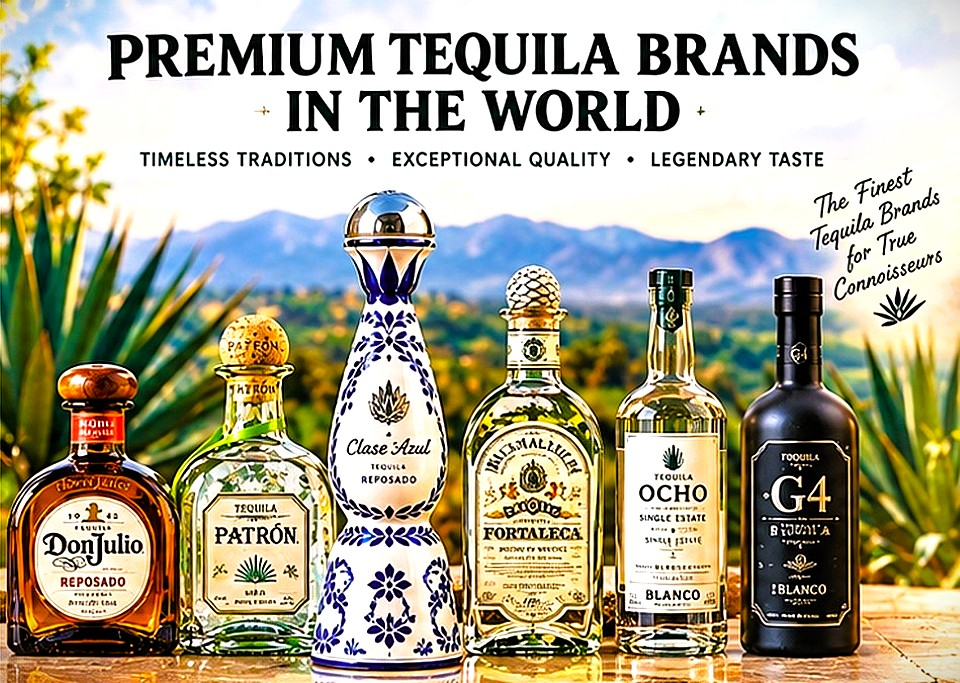
Premium tequila brands including Don Julio, Patrón, Clase Azul, Fortaleza, Ocho, El Tesoro and G4
Best Tequila for Sipping
If you’re drinking tequila neat, start with:
-
-
- Ocho: Great for exploring terroir.
- Fortaleza: Traditional and highly sought-after.
- El Tesoro: Agave-focused and traditional.
- G4: Mineral and production-driven.
- LALO: Clean, modern and agave-forward.
- Siete Leguas: Historically important and traditional.
-
Best Premium Tequila
There isn’t one objectively best premium tequila. Instead, consider what you value.
-
-
- Best for luxury presentation: Clase Azul
- Best for bartender prestige:Don Julio
- Best for traditional enthusiasts:Fortaleza
- Best for terroir: Ocho
- Best for agave-focused sipping: G4, El Tesoro, LALO
-
Blanco vs. Reposado vs. Añejo
Here’s the easiest way to choose:
| Style | Aging | Typical character | Best use |
|---|---|---|---|
| Blanco | Minimal/no barrel maturation | Fresh agave, citrus, pepper | Margaritas, Palomas, sipping |
| Reposado | At least 2 months | Agave + vanilla + oak | Cocktails, sipping |
| Añejo | At least 1 year | Oak, vanilla, caramel, spice | Sipping |
| Extra Añejo | At least 3 years | Deep oak, dried fruit, spice | Premium sipping |
| Joven/Gold | Blend/style dependent | Varies | Cocktails / mainstream |
The official CRT definitions support the minimum maturation requirements above.
How to Choose the Right Tequila
Start with your intended use.
For Margaritas
Choose: Blanco
For Palomas
Choose: Blanco
For sipping
Choose: Reposado or Añejo
although an excellent Blanco can also be exceptional neat.
For a luxury gift
Consider: Clase Azul, Don Julio 1942, Patrón, Código 1530
For enthusiasts
Consider: Ocho, Fortaleza, G4, El Tesoro, Cascahuín, Siete Leguas
Why the Agave Matters
Tequila starts with an agricultural crop. That makes agave one of the most important variables in the entire category. Blue Weber agave usually takes years to mature, which means producers must plan their supply far ahead.
Forbes’ 2026 tequila analysis emphasizes the importance of the agave cycle and notes that the industry has moved from periods of shortage and extremely high agave prices toward significant oversupply.
That economic cycle matters because agave isn’t like grain. You can’t instantly plant more and harvest tomorrow. A new agave crop takes years. That creates enormous challenges for producers trying to match supply with consumer demand.
Tequila and Terroir
Terroir is still a relatively new concept to many spirits drinkers. But tequila can have regional differences.
The two major broad areas often discussed are:
-
-
- Highlands
- Lowlands / Valley
-
Highland tequila is often described as:
-
-
- Fruity
- Floral
- Sweet
- Bright
-
Valley tequila is often associated with:
-
-
- Earth
- Pepper
- Vegetal notes
- Mineral character
-
These are broad generalizations, not guarantees. The actual flavor depends on:
-
-
- agave
- production method
- water
- fermentation
- distillation
- maturation.
-
Traditional vs. Industrial Production
This is one of tequila’s biggest current conversations. Large producers are capable of producing millions of bottles efficiently. Small producers may use:
-
-
- Stone tahonas
- Brick ovens
- Long fermentation
- Open fermentation
- Traditional copper pots
- Small batch production
-
Neither scale automatically determines quality. Industrial production can create consistency and accessibility. Traditional production can create distinctive flavors and deeper production transparency. The key is knowing what you are buying.
Tequila and the Additive Debate
One of the biggest developments in tequila culture is the rise of consumer interest in additives. The 2026 market is seeing increasing demand for information about:
-
-
- Glycerin
- Caramel coloring
- Sweeteners
- Oak extracts
- Flavoring compounds
-
Forbes describes transparency as one of the major themes shaping tequila in 2026. There is also a regulatory controversy surrounding “additive-free” claims.
The CRT has challenged third-party certification and marketing approaches, arguing that tequila certification and designation fall under its regulatory authority.
That means consumers should be careful about treating an “additive-free” badge as a universal quality certification. A better approach is:
-
-
- research the producer
- look at the NOM
- understand the production method
- taste the tequila
- consider whether the brand’s claims are independently supportable.
-
The market is increasingly rewarding brands whose identity is based on tangible production characteristics rather than vague luxury language.
What Is a NOM Number?
NOM stands for Norma Oficial Mexicana in the tequila context. The NOM number on a tequila bottle identifies the authorized producer/distillery associated with that product. For enthusiasts, it can be a useful research tool.
Two brands can come from the same NOM. A single NOM can produce multiple brands. So the NOM can sometimes tell you more about the actual production source than the front label alone.
Cristalino Tequila
Cristalino is a modern tequila style rather than one of the five primary legal classes listed by the CRT. It generally refers to aged tequila that has been filtered to create a clear appearance. The result aims to combine:
aged flavors + clear appearance
Cristalino has become highly popular in mainstream premium tequila.
Typical flavors:
-
-
- Vanilla
- Caramel
- Oak
- Sweet agave
-
Best for: Drinkers transitioning from aged tequila to lighter-looking styles.
Tequila and Cocktails
Tequila is exceptionally versatile. It’s the foundation of:
-
-
- Margarita
- Paloma
- Ranch Water
- Tequila Sunrise
- Tequila Sour
- Mexican Mule
- El Diablo
- Matador
- Tequila Old Fashioned
- Batanga
-
The right tequila depends heavily on the recipe. For fresh citrus drinks, Blanco is usually the easiest starting point. For spirit-forward cocktails, Reposado or Añejo can add depth.
Building a Tequila Home Bar
You don’t need 30 bottles. Start with:
1. Blanco: Espolòn or Olmeca Altos
2. Premium Blanco: Don Julio or Patrón
3. Reposado: Herradura or Don Julio
4. Añejo: El Tesoro or another premium producer
5. Enthusiast bottle: Ocho, G4 or Fortaleza
Add:
-
-
- Orange liqueur Fresh limes
- Grapefruit
- Bitters
- Sparkling water
- Agave syrup
- Salt
-
With that selection, you can build an impressive tequila cocktail menu.
Current Tequila Trends in 2026
Tequila is entering a new phase. The explosive growth of the last decade has slowed. That doesn’t mean the category is collapsing. It means tequila is becoming more mature.
Forbes describes 2026 as a period of stabilization, greater transparency and greater consumer selectivity. Several trends are particularly important.
1. Value matters more
Consumers are paying closer attention to price-to-quality.
2. Craft differentiation matters more
Small producers need a real reason to exist.
3. Transparency matters
Consumers increasingly want to know:
where, how and by whom the tequila was produced.
4. Celebrity brands face more scrutiny
Celebrity association can create awareness, but consumers increasingly want production substance too.
5. Blanco tequila remains important
Enthusiasts increasingly appreciate Blanco as the clearest way to taste agave and production method.
6. High-proof tequila is gaining attention
More drinkers are exploring stronger and distilled-to-proof expressions.
7. Terroir is becoming more important
Ocho is one of the clearest examples.
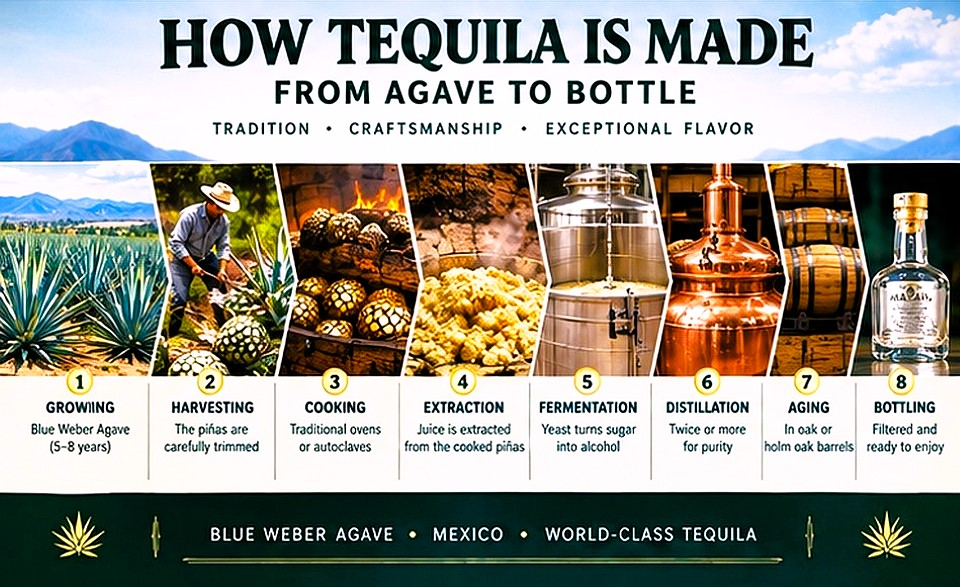
How tequila is made from Blue Weber agave through harvesting, cooking, extraction, fermentation, distillation and aging
The Global Tequila Market Is Becoming More Competitive
The Millionaires’ Club 2026 data show that combined sales among the millionaire tequila brands rose only slightly from 32.1 million to 32.3 million cases.
That is very different from the explosive growth tequila experienced earlier in the decade. At the same time, some brands continue to grow rapidly. Lunazul rose 35.3%. Olmeca rose 50%. while several major brands declined.
This suggests that the category is becoming increasingly competitive at the individual-brand level. In other words:
Tequila is still growing, but consumers are becoming more selective about which bottles win.
Frequently Asked Questions
What is the most popular tequila brand in the world?
José Cuervo is currently the global sales leader, with approximately 7.3 million nine-liter cases sold in 2025 according to Drinks International’s Millionaires’ Club 2026.
What is the second most popular tequila brand?
Don Julio, with about 4.5 million cases in 2025.
What is the best tequila in the world?
There is no universally agreed best tequila. Don Julio is exceptionally strong in premium bars, while Ocho, Fortaleza, G4 and El Tesoro have strong enthusiast reputations.
What is the best tequila for beginners?
Espolòn, Olmeca Altos, Don Julio Blanco, Patrón Silver and 1800 Silver are strong starting points.
What is the best tequila for Margaritas?
Blanco tequila is usually the best choice. Espolòn, Patrón Silver, Don Julio Blanco and Olmeca Altos work particularly well.
What is the best tequila for sipping?
Ocho, Fortaleza, El Tesoro, G4, LALO and Siete Leguas are excellent choices for exploring agave-focused sipping tequila.
Is 100% agave tequila better?
Not automatically, but it means all fermentable sugars come from Blue Weber agave rather than the broader legal tequila category.
What is Blanco tequila?
Blanco is the freshest tequila class, generally coming directly from distillation with alcohol adjusted using water.
What is Reposado tequila?
Reposado is tequila that has been matured in wood for at least two months.
What is Añejo tequila?
Añejo must mature for at least one year in oak or holm-oak containers meeting the applicable size requirements.
What is Extra Añejo tequila?
Extra Añejo must mature for at least three years in oak or holm-oak containers.
What is Cristalino tequila?
Cristalino generally refers to aged tequila that has been filtered to produce a clear appearance. It is not one of the five principal legal classes listed by the CRT.
What is the difference between tequila and mezcal?
Tequila is produced from Blue Weber agave under the tequila designation of origin. Mezcal is a separate Mexican agave-spirit category with different permitted agave species and production rules.
Is tequila made from cactus?
No. Tequila is made from Blue Weber agave, not cactus.
How long does agave take to mature?
The time varies, but agave can require several years to reach maturity. Forbes’ 2026 industry analysis describes a typical cycle of around six to eight years for Blue Weber agave.
What tequila is best for Palomas?
Blanco tequila works particularly well. Don Julio Blanco, Patrón Silver, Espolòn and Olmeca Altos are good options.
What tequila is best for Ranch Water?
A clean Blanco such as Don Julio, Espolòn, Ocho or LALO works well.
Is Reposado better than Blanco?
Not necessarily. Reposado offers oak and maturation character, while Blanco usually showcases fresh agave and production character more directly.
Is Añejo tequila like whiskey?
It can share flavors such as vanilla, caramel, oak and baking spice, but it still retains tequila’s distinctive agave character.
What tequila is the smoothest?
“Smooth” is subjective. Reposado and Añejo often feel softer because of maturation, while premium Blanco can be exceptionally clean without tasting heavily oaked.
Why is some tequila expensive?
Price can reflect agave costs, traditional production, low production volume, long maturation, packaging, scarcity, distribution and brand positioning.
Why is Clase Azul expensive?
Much of its premium positioning comes from luxury presentation, distinctive ceramic bottles, branding and the market for collectible premium tequila.
Why is Fortaleza expensive?
Limited supply, enthusiast demand and traditional production methods contribute to its premium pricing and scarcity.
What tequila brands are popular in bars?
Don Julio led Drinks International’s 2026 bestselling tequila survey among the world’s best bars, followed by Patrón, Altos and Ocho.
Is Casamigos still popular?
Yes, but its global volume declined sharply in 2025. Drinks International reported approximately 1.9 million cases, down 20.2%.
Is Espolòn good tequila?
Yes. Espolòn has become one of the strongest accessible premium tequila brands and remains important in cocktails.
Is Ocho good tequila?
Ocho is particularly respected among enthusiasts for its terroir-oriented and estate-focused approach.
Is Fortaleza good tequila?
Fortaleza is highly regarded among tequila enthusiasts for its traditional production and agave-forward character.
Is Don Julio worth the price?
That depends on the expression and your priorities. Its strength is consistent premium positioning, global availability and particularly strong bar recognition.
Is Patrón good for Margaritas?
Yes. Patrón Silver is a reliable premium Blanco choice for Margaritas.
Can tequila be drunk neat?
Absolutely. Premium Blanco, Reposado and Añejo can all be enjoyed neat.
Should tequila be chilled?
Usually not necessary. Premium tequila is often best tasted around cool room temperature so its aromas remain expressive.
How should tequila be stored?
Store it upright, away from sunlight and extreme temperature changes.
Does tequila go bad?
An unopened bottle stored properly can remain stable for a long time. Once opened, oxidation gradually changes the flavor, particularly when only a small amount remains.
What is the best tequila for cocktails?
For most classic drinks, a good Blanco is an excellent starting point because the agave character remains bright and fresh.
What is the most expensive tequila?
The answer varies dramatically by limited release, bottle design and auction market, and unusually expensive bottles are often collector items rather than benchmarks of drinking quality.
Is expensive tequila always better?
No. Price can reflect scarcity, packaging and branding as well as liquid quality.
What tequila has the strongest agave flavor?
Traditional, agave-forward Blanco expressions such as Ocho, G4, LALO, El Tesoro and certain Cascahuín bottlings are good places to explore that profile.
What is the best tequila for a home bar?
A practical collection could include one Blanco, one Reposado and one Añejo, plus a premium or enthusiast bottle.
Final Thoughts: The World’s Most Popular Tequila Brands
Tequila has changed dramatically. Not long ago, many consumers thought of tequila almost exclusively as a party shot. Today, it is one of the world’s most sophisticated spirits categories. The modern tequila shelf contains:
-
-
- affordable bottles for Margaritas
- premium bottles for entertaining
- aged expressions for sipping
- luxury bottles for gifting
- small-production tequilas for serious enthusiasts.
-
At the top of the global sales rankings sits José Cuervo, with approximately 7.3 million nine-liter cases in 2025.
Then comes Don Julio, which reached 4.5 million cases and continues to dominate the premium-bar world.
1800 Tequila and Patrón remain major global names.
Casamigos remains one of the world’s most recognizable celebrity-associated tequila brands, even though its recent volume decline demonstrates how quickly consumer preferences can change.
Hornitos, Espolòn, Lunazul, Cazadores and El Jimador demonstrate the power of the mainstream market.
And then the enthusiast category opens up.
-
-
- Ocho
- Fortaleza
- El Tesoro
- G4
- LALO
- Cascahuín
- Siete Leguas
-
These brands appeal to drinkers who want to understand tequila rather than simply consume it. They ask:
-
-
- Where was the agave grown?
- How was it cooked?
- How was it fermented?
- How was it distilled?
- What makes this tequila different?
-
That is a major change. The tequila industry is becoming a more educated marketplace.
Forbes’ 2026 reporting describes growing interest in transparency, production integrity and meaningful differentiation as the category moves beyond its rapid-growth phase. And that’s good news for consumers. It means the best brands increasingly need more than:
-
-
- a beautiful bottle
- a celebrity endorsement
- a premium price.
-
They need a compelling reason to exist. That might be:
-
-
- terroir
- traditiona production
- agave quality
- excellent blending
- exceptional maturation
- outstanding value.
-
So where should you start?
For Margaritas:
-
-
- Espolòn Blanco
- Patrón Silver
- Don Julio Blanco
- Olmeca Altos
-
For Palomas: Blanco tequila
For casual home use:
-
-
- José Cuervo
- Hornitos
- Lunazul
-
For premium sipping:
-
-
- Don Julio
- Patrón
- Herradura
-
For enthusiast exploration:
-
-
- Ocho
- Fortaleza
- G4
- El Tesoro
- LALO
-
Then compare styles.
-
-
- Try a Blanco.
- Try the same producer’s Reposado.
- Then taste an Añejo.
-
You’ll immediately see how oak transforms the spirit. But don’t assume aging always improves tequila. Sometimes the best bottle is a Blanco because that’s where the agave tastes clearest.
That is particularly important when comparing tequila with whiskey. Whiskey often derives enormous character from oak.
Tequila can be extraordinary because of what happens before the barrel. The agave itself can be the star. That is why Blanco tequila deserves much more respect than its simple appearance might suggest. At the same time, Reposado and Añejo demonstrate how beautifully tequila can interact with oak.
The result is one of the world’s most flexible spirits.
-
-
- It works in a Margarita.
- It works in a Paloma.
- It works in a highball.
-
And a great bottle can be enjoyed slowly, neat, with nothing more than a glass. The category is also entering a fascinating new phase. Global sales growth has slowed. Competition has intensified. Consumers are becoming more selective. Agave economics have shifted.
Transparency has become a major purchasing consideration. And small producers are finding new ways to stand out.
The Millionaires’ Club 2026 data show that the category’s major millionaire brands increased combined volume only slightly, while individual brands experienced dramatic differences in performance.
That means tequila’s next era probably won’t be about simply making more bottles. It will be about making more distinctive bottles. For tequila lovers, that’s an exciting future.
-
-
- More regional expressions.
- More traditional methods.
- More transparent production.
- More high-proof releases.
- More carefully made Blanco tequila.
- More consumers asking the right questions.
-
So the next time you’re standing in front of a tequila shelf, don’t just ask:
-
-
- “Which bottle is the most famous?”
- “What style do I want?”
- “Do I want fresh agave or oak?”
- “Do I want a cocktail tequila or a sipping tequila?”
- “Do I want mainstream convenience or a traditional producer?”
- “What do I know about the agave and the distillery?”
-
Those questions will take you much further than simply choosing the most expensive bottle. And that’s the real beauty of tequila. There is no single perfect bottle. There is only the perfect tequila for:
-
-
- your cocktail
- your palate
- your meal
- your celebration
- your budget.
-