
Blog
Most Popular Gin Cocktails in the World: 30 Classic Recipes Every Gin Lover Should Try

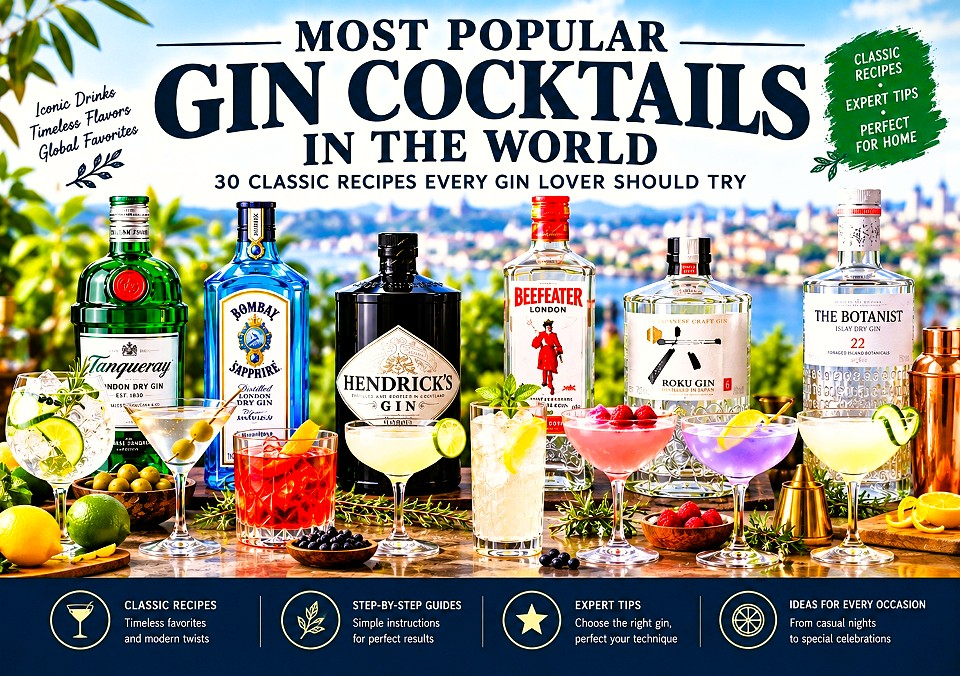
Discover the most popular gin cocktails in the world, from the Negroni and Dry Martini to the Gin & Tonic, Gimlet, Gin Fizz, Aviation, French 75, Clover Club, Last Word, Bee’s Knees and Bramble. Learn the recipes, ingredients, techniques, best gin styles, garnishes, variations and tips for making perfect gin cocktails at home.
Gin is one of the great foundations of cocktail culture.
Few spirits can move so easily between completely different styles of drinks. One bottle can produce a crisp Gin & Tonic, an elegant Dry Martini, a bitter Negroni, a bright Gimlet, a frothy Clover Club, a refreshing Tom Collins, or an intensely aromatic Last Word.
That versatility is a major reason gin remains so important in professional bars.
The latest Drinks International research gives us an excellent snapshot of what is happening at the top end of cocktail culture. Its 2026 Cocktail Report, based on a poll of 100 of the world’s most influential bars, places the Negroni at No. 1 among bestselling classic cocktails, while the Dry Martini ranks No. 4 and the Gimlet No. 13. The Gin Fizz is No. 25, while the Aviation, Last Word, Bee’s Knees, Gin Basil Smash, French 75, Clover Club, Southside and Bramble also appear in the 2026 top 50.
The numbers tell an interesting story. Classic gin cocktails remain remarkably resilient even as drinking trends change.
The Negroni has held the No. 1 position for five consecutive years, according to Drinks International, while the Dry Martini continues its long-running renaissance.
And gin itself continues to dominate premium cocktail bars. Drinks International’s 2026 Gin Brands Report named Tanqueray the bestselling gin for the 10th time, with the brand chosen as the number-one gin in 30% of surveyed bars. So what makes a great gin cocktail? Usually, it comes down to balance.
Gin contributes: juniper, citrus, herbs, spice and floral aromas.
The other ingredients provide the counterpoint: sweetness, acidity, bitterness, dilution, texture or carbonation.
The best gin cocktails aren’t necessarily complicated. Some of the world’s greatest recipes contain just two or three main ingredients.
-
-
- The Gin & Tonic is essentially gin, tonic and garnish.
- The Dry Martini can be gin and dry vermouth.
- The Negroni uses equal parts gin, bitter aperitivo and sweet vermouth.
- The Gimlet combines gin and lime.
- The genius is in the balance.
-
This guide brings together 30 of the world’s most popular and influential gin cocktails, combining current bar popularity, classic status, international recognition and practical home-bar appeal.
Table of Contents
-
-
- What Makes Gin So Good in Cocktails?
- Choosing the Best Gin for Cocktails
- 30 Most Popular Gin Cocktails in the World
- Negroni
- Dry Martini
- Gin & Tonic
- Gimlet
- Gin Fizz
- French 75
- Clover Club
- Last Word
- Aviation
- Bee’s Knees
- Gin Basil Smash
- Bramble
- Southside
- Tom Collins
- Ramos Gin Fizz
- Corpse Reviver No. 2
- White Lady
- Singapore Sling
- Hanky Panky
- Martinez
- Clover Club variations
- Gin Rickey
- Gin Sour
- Negroni variations
- Gin Punch
- Pink Gin
- Gin Martini variations
- Best Gin for Every Cocktail
- How to Make Better Gin Cocktails
- Gin Cocktail Garnishes
- Gin Cocktails for Beginners
- Gin Cocktails for Summer
- Gin Cocktails for Parties
- Current Gin Cocktail Trends
- Frequently Asked Questions
- Final Thoughts
-
What Makes Gin So Good in Cocktails?
Gin is unusually flexible because juniper provides a recognizable backbone while the remaining botanicals can push the spirit in completely different directions.
A classic London Dry gin might emphasize:
-
-
- Juniper
- Coriander
- Citrus peel
- Angelica
- Spice
-
A contemporary gin might emphasize:
-
-
- Rose
- Cucumber
- Tea
- Lavender
- Basil
-
A Japanese gin may feature:
-
-
- Yuzu
- Sansho pepper
- Green tea
- Sakura
-
A Mediterranean gin might emphasize:
-
-
- Olive
- Rosemary
- Thyme
- Lemon
-
This means the same cocktail can taste dramatically different depending on the gin.
-
-
- Consider the Negroni.
- A classic juniper-forward London Dry creates a traditional, structured drink.
- A floral gin produces something softer and more aromatic.
- A Mediterranean gin makes the drink more savory.
- A citrus-led gin creates a brighter Negroni.
-
That’s why choosing the right gin matters almost as much as the recipe.
Choosing the Best Gin for Cocktails
Before making any cocktail, consider the style of gin you’re using.
London Dry Gin
Best for:
-
-
- Martini
- Negroni
- Gimlet
- Tom Collins
- Gin Fizz
-
Examples include:
-
-
- Tanqueray
- Beefeater
- Gordon’s
- Fords
- Sipsmith
-
Floral Gin
Best for:
-
-
- Gin & Tonic
- Southside
- Clover Club
- Light summer cocktails
-
Example:
-
-
- Hendrick’s
-
Citrus Gin
Best for:
-
-
- Gimlet
- Gin Sour
- Gin Fizz
- Summer cocktails
-
Example:
-
-
- Malfy
-
Japanese Gin
Best for:
-
-
- Japanese Gin & Tonic
- Martini variations
- Highballs
- Contemporary cocktails
-
Examples:
-
-
- Roku
- Ki No Bi
- Nikka Coffey Gin
-
Complex Craft Gin
Best for:
-
-
- Martini
- Negroni
- Last Word
- Aviation
-
Examples:
-
-
- Monkey 47
- The Botanist
- Fords
-
30 Most Popular Gin Cocktails in the World
1. Negroni
Profile: Bitter, herbal, citrusy, complex
Ingredients:
-
-
- 30 ml gin
- 30 ml Campari
- 30 ml sweet red vermouth
- Orange slice
-
Method:
-
-
- Add all ingredients to a chilled Old Fashioned glass filled with ice.
- Stir gently.
- Garnish with an orange slice.
-
The Negroni is currently the world’s bestselling classic cocktail according to Drinks International’s 2026 Cocktail Report, holding the top position for the fifth consecutive year and it’s easy to understand why.
The formula is almost perfect:
-
-
- gin = botanical strength
- Campari = bitterness
- vermouth = sweetness and wine character
-
Best gin: Choose a classic London Dry.
Best occasion: Aperitif, dinner or evening cocktail.
Pro tip: Use fresh vermouth and keep it refrigerated after opening.
2. Dry Martini
Profile: Dry, crisp, botanical, elegant
IBA recipe:
-
-
- 60 ml gin
- 10 ml dry vermouth
-
Method:
-
-
- Stir with ice and strain into a chilled Martini glass.
- Finish with lemon peel or a green olive.
-
The Dry Martini is ranked No. 4 in Drinks International’s 2026 global classic-cocktail ranking. The Martini is also one of the best tests of gin quality. There are no fruit juices or heavy syrups to hide behind.
Best gin:
-
-
- Tanqueray
- Fords
- No. 3
- Sipsmith
- Plymouth
-
Garnish:
-
-
- Olive for savory character.
- Lemon twist for a brighter aromatic profile.
-
Pro tip: Chill both glass and ingredients thoroughly.
3. Gin & Tonic
Profile: Crisp, refreshing, bitter, botanical
The Gin & Tonic doesn’t require a complicated recipe.
Start with:
-
-
- 45–60 ml gin
- 120–180 ml tonic water
- Plenty of ice
- Lemon or lime
-
Method: Build in a large glass and gently stir. The exact ratio depends on your preferred intensity.
Best gin:
-
-
- Tanqueray for classic juniper.
- Hendrick’s for floral notes.
- Roku for Japanese botanicals.
- Malfy for citrus.
-
Best tonic: Choose a tonic that doesn’t overwhelm the gin.
Pro tip: se fresh, large ice cubes. Small melting ice can dilute the drink too quickly.
Drinks International’s 2025 gin report identified the G&T as the major driver of gin’s continuing importance in bars.
4. Gimlet
Profile: Tart, citrusy, refreshing
The Gimlet ranked No. 13 in Drinks International’s 2026 classic-cocktail report.
A modern recipe can use:
-
-
- 60 ml gin
- 30 ml fresh lime juice
- 15–20 ml simple syrup
-
Method: Shake with ice and strain into a chilled cocktail glass.
The IBA notes the drink’s historical connection to lime cordial while acknowledging that modern bartenders frequently use fresh lime and sugar for a brighter profile.
Best gin: London Dry.
Best garnish: Lime wheel or lime twist.
Pro tip: Fresh lime dramatically improves this drink.
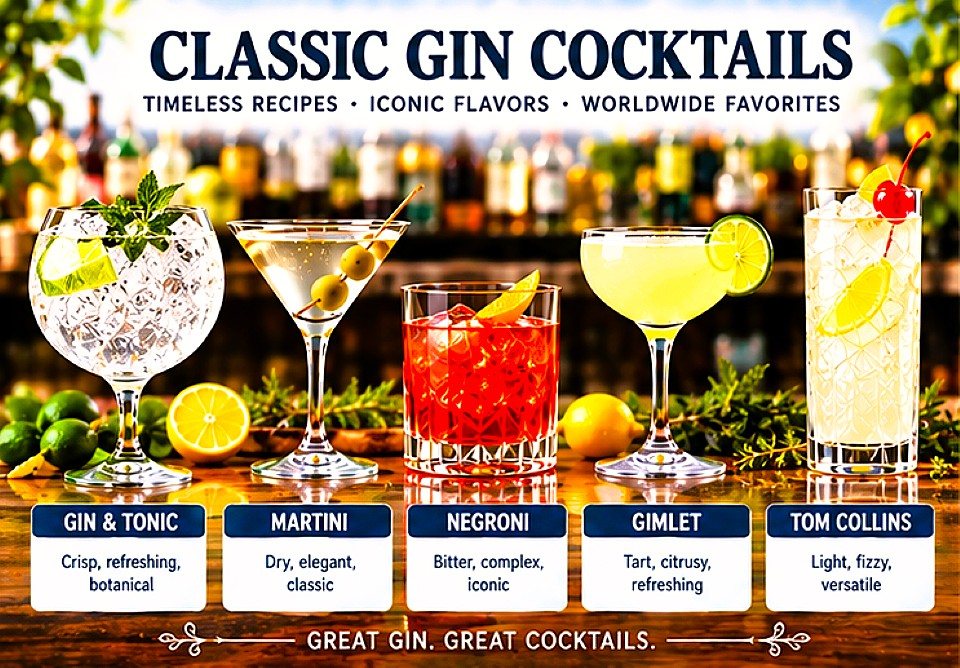
Classic gin cocktails including Gin and Tonic, Dry Martini, Negroni, Gimlet and Tom Collins with fresh citrus and botanical garnishes
5. Gin Fizz
Profile: Bright, citrusy, refreshing
Ingredients:
-
-
- 45 ml gin
- 30 ml fresh lemon juice
- 10 ml simple syrup
- Splash of soda water
-
Method:
-
-
- Shake everything except soda with ice.
- Strain into a tall glass.
- Add soda.
-
The official IBA version is served without ice and garnished with lemon. The Gin Fizz ranked No. 25 in the 2026 global classic cocktail list.
Best gin: Classic London Dry.
Pro tip: Use freshly squeezed lemon juice.
6. French 75
Profile: Bright, sparkling, citrusy, elegant
Ingredients:
-
-
- 30 ml gin
- 15 ml fresh lemon juice
- 15 ml sugar syrup
- 60 ml Champagne
-
Method:
-
-
- Shake the gin, lemon and syrup with ice.
- Strain into a flute.
- Top with Champagne.
-
The IBA specifies these proportions. The French 75 reached No. 23 in Drinks International’s 2026 classic ranking.
Best gin: Crisp London Dry.
Best occasion: Celebrations, brunch and dinner parties.
Pro tip: Don’t oversweeten it. The sparkling wine should remain bright and refreshing.
7. Clover Club
Profile: Fruity, silky, tart
Ingredients:
-
-
- 45 ml gin
- 15 ml raspberry syrup
- 15 ml fresh lemon juice
- A few drops egg white
-
Method:
-
-
- Shake well with ice and strain into a chilled cocktail glass.
- Garnish with fresh raspberries.
-
This is the IBA specification. The Clover Club ranked No. 22 in the 2026 list.
Best gin: Floral or classic London Dry.
Why it’s special: Egg white gives it a luxurious texture.
Pro tip: For a stronger foam, use a dry shake before shaking with ice.
8. Last Word
Profile: Herbal, tart, complex
The Last Word uses equal parts:
-
-
- 22.5 ml gin
- 22.5 ml Green Chartreuse
- 22.5 ml Maraschino liqueur
- 22.5 ml fresh lime juice
-
Method: Shake with ice and strain into a chilled cocktail glass.
The Last Word ranked No. 31 in Drinks International’s 2026 report.
Best gin: Dry, aromatic gin.
Best occasion: After-dinner cocktails and adventurous tasting.
Pro tip: The equal-parts structure means quality ingredients matter enormously.
9. Aviation
Profile: Floral, citrusy, sophisticated
Ingredients:
-
-
- 45 ml gin
- 15 ml Maraschino
- 15 ml lemon juice
- 1 bar spoon crème de violette
-
Method: Shake with ice and strain into a chilled cocktail glass.
The IBA lists these proportions and says a Maraschino cherry is optional. The Aviation ranked No. 35 in 2026.
Best gin: A clean London Dry
Best garnish: Maraschino cherry.
Pro tip: Crème de violette should be used carefully; too much can overpower the drink.
10. Bee’s Knees
Profile: Floral, citrusy, lightly sweet
Ingredients:
-
-
- 52.5 ml dry gin
- 2 teaspoons honey syrup
- 22.5 ml lemon juice
- 22.5 ml orange juice
-
Method:
-
-
- Stir honey with citrus until dissolved.
- Add gin.
- Shake with ice.
- Strain into a chilled cocktail glass.
-
The IBA includes optional lemon or orange zest. The cocktail ranked No. 29 in Drinks International’s 2026 list.
Best gin: Floral or citrus-led gin.
Pro tip: Use high-quality honey.
11. Gin Basil Smash
Profile: Herbal, green, citrusy
Ingredients:
-
-
- 60 ml gin
- 22.5 ml fresh lemon juice
- 22.5 ml sugar syrup
- 10 Italian basil leaves
-
Method: Shake vigorously with ice and strain into a chilled cocktail glass.
The drink ranked No. 27 in the 2026 global classics list.
Best gin: A botanical or contemporary gin.
Best garnish: Fresh basil.
Pro tip: Gently bruise the basil rather than pulverizing it into bitter green pulp.
12. Bramble
Profile: Citrus, berry, refreshing
The Bramble was created in London in the 1980s and combines gin, lemon, sugar and crème de mûre. Drinks International ranked it No. 40 in 2026.
Easy recipe
-
-
- 50 ml gin
- 25 ml lemon juice
- 15 ml simple syrup
- 15 ml crème de mûre
-
Method:
-
-
- Shake gin, lemon and syrup.
- Pour over crushed ice.
- Drizzle blackberry liqueur over the top.
-
Best garnish: Blackberries and lemon.
Best gin: London Dry.
13. Southside
Profile: Minty, citrusy, refreshing
IBA recipe:
-
-
- 60 ml London Dry gin
- 30 ml fresh lemon juice
- 15 ml simple syrup
- 5–6 mint leaves
- Optional egg white
-
Method: Shake with ice and double strain.
Drinks International placed Southside at No. 49 in its 2026 report.
Best gin: Crisp London Dry.
Pro tip: Don’t over-muddle the mint.
14. Tom Collins
Profile: Light, citrusy, fizzy
The modern Tom Collins can be made with:
-
-
- 45 ml gin
- 30 ml lemon juice
- 15 ml simple syrup
- Soda water
-
Method:
-
-
- Shake the gin, lemon and syrup.
- Strain over ice in a Collins glass.
- Top with soda.
-
IBA’s John Collins recipe uses these same core measurements and notes that Old Tom gin should be used for a Tom Collins.
Best gin:
-
-
- Old Tom for a sweeter traditional profile.
- London Dry for a drier modern version.
-
Garnish: Lemon slice and cherry.
15. Ramos Gin Fizz
Profile: Creamy, citrusy, floral
This is one of gin’s most theatrical cocktails.
IBA’s recipe includes:
-
-
- 45 ml gin
- 15 ml lime juice
- 15 ml lemon juice
- 30 ml sugar syrup
- 60 ml cream
- 30 ml egg white
- Orange flower water
- Vanilla extract
- Soda water
-
Method: It calls for an extended shaking process and topping with soda.
Best gin: Classic London Dry.
Best for: Weekend brunch and ambitious home bartenders.
Pro tip: Prepare everything before you start shaking.
16. Corpse Reviver No. 2
Profile: Bright, citrusy, herbal
A classic equal-parts family cocktail combining:
-
-
- Gin
- Cointreau
- Lillet Blanc
- Lemon juice
- A small amount of absinthe
-
Method: Shake with ice and strain into a chilled cocktail glass.
Best gin: Crisp London Dry.
Why it works:
-
-
- Orange liqueur provides sweetness.
- Lemon provides acidity.
- Lillet brings wine character.
- Absinthe adds a powerful herbal accent.
-
Pro tip: Absinthe should be restrained. A rinse can be enough.
17. White Lady
Profile: Crisp, citrusy, elegant
IBA recipe:
-
-
- 40 ml gin
- 30 ml triple sec
- 20 ml fresh lemon juice
-
Method: Shake with ice and strain into a chilled cocktail glass.
Best gin: London Dry.
Best garnish: Optional lemon twist.
Pro tip: Use fresh lemon rather than bottled juice.
18. Singapore Sling
Profile: Fruity, tropical, complex
The Singapore Sling is one of the world’s most famous long gin cocktails.
Classic versions can contain:
-
-
- Gin
- Cherry liqueur
- Lime
- Pineapple
- Orange liqueur
- Bénédictine
- Bitters
- Soda
-
Recipes vary significantly, which is part of the drink’s history.
Best gin: London Dry.
Best occasion: Summer parties and tropical-themed menus.
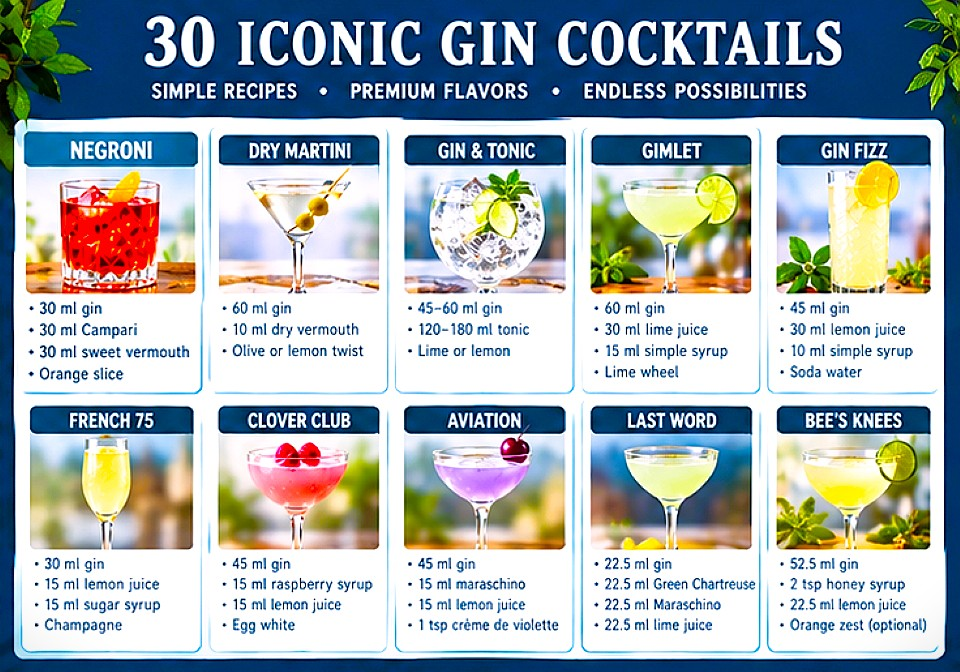
30 iconic gin cocktails including Negroni, Dry Martini, Gin and Tonic, Gimlet, Gin Fizz, French 75, Clover Club, Aviation and Bee’s Knees
19. Hanky Panky
Profile: Bitter, herbal, spirit-forward
Traditionally made with:
-
-
- Gin
- Sweet vermouth
- Fernet-Branca
-
The drink was created by Ada Coleman at the American Bar of the Savoy.
Best gin: Juniper-forward London Dry.
Best for: After-dinner drinking.
Pro tip: The Fernet should add complexity rather than dominate.
20. Martinez
Profile: Rich, herbal, lightly sweet
The Martinez is an important ancestor of the modern Martini.
IBA uses:
-
-
- 45 ml London Dry gin
- 45 ml sweet red vermouth
- 1 bar spoon Maraschino
- 2 dashes orange bitters
-
Method: Stir with ice and strain into a chilled cocktail glass.
Best gin: London Dry.
Why it’s important: It demonstrates the transition from sweeter 19th-century gin cocktails toward the drier Martini.
21. Gin Rickey
Profile: Dry, tart, refreshing
A classic Gin Rickey requires:
-
-
- Gin
- Fresh lime juice
- Soda water
-
Method: Build over ice and top with soda. Unlike a Gimlet, the Rickey usually has no added sugar.
Best for: Hot weather.
Best gin: Dry London style.
Pro tip: Choose a juicy, fresh lime.
22. Gin Sour
Profile: Tart, balanced, refreshing
Basic structure:
-
-
- 60 ml gin
- 30 ml lemon juice
- 20 ml simple syrup
- Optional egg white
-
Method: Shake vigorously.
Best gin: London Dry.
Variation: Replace lemon with grapefruit for a more aromatic sour.
23. Pink Gin
Profile: Bitter, spicy, simple
Pink Gin traditionally combines gin with aromatic bitters.
One simple version:
-
-
- 60 ml gin
- 2–3 dashes Angostura bitters
-
Method:
-
-
- Stir with ice.
- Serve straight or over ice.
-
Best gin: Classic London Dry.
Why try it?
It demonstrates how little of a modifier is required to transform gin.
24. Gin & Ginger Highball
Profile: Spicy, refreshing, aromatic
Try:
-
-
- 50 ml gin
- Ginger ale or ginger beer
- Lime wedge
- Ice
-
Method: Build in a highball glass.
Best gin: Juniper-forward gin.
Best for: Casual drinking and summer gatherings.
Pro tip: Use ginger beer if you want more spice.
25. Gin Mule
Profile: Spicy, citrusy, refreshing
Use:
-
-
- 50 ml gin
- 15–20 ml lime juice
- Ginger beer
- Ice
-
Method: Build in a copper mug or highball.
Best gin:
-
-
- Contemporary gin
- Classic London Dry.
-
Best garnish: Lime and mint.
26. French Gimlet
Profile: Floral, citrusy, elegant
A modern variation can use:
-
-
- Gin
- Elderflower liqueur
- Fresh lime
-
Method: Shake and serve straight up.
Best gin: Floral or citrus-forward gin.
Pro tip: Reduce the elderflower liqueur if your gin is already floral.
27. Negroni Sbagliato
Profile: Bitter, sparkling, lighter
The Sbagliato replaces gin with sparkling wine.
Basic structure:
-
-
- Campari
- Sweet vermouth
- Sparkling wine
-
Drinks International’s 2026 report placed it at No. 36, describing it as a lower-intensity, aperitivo-style evolution of the original Negroni.
Best occasion: Aperitivo and daytime entertaining.
Pro tip: Serve very cold.
28. Cardinale
Profile: Dry, bitter, elegant
IBA recipe:
-
-
- 40 ml gin
- 20 ml dry vermouth
- 10 ml Campari
-
Method: Stir with ice and strain into a chilled cocktail glass. Garnish with lemon zest.
Best gin: London Dry.
Why try it?
Think of it as a more bitter, drier cousin of the Martini.
29. Monkey Gland
Profile: Fruity, citrusy, herbal
IBA recipe:
-
-
- 45 ml dry gin
- 45 ml fresh orange juice
- 1 tablespoon absinthe
- 1 tablespoon grenadine
-
Method: Shake with ice and strain into a chilled cocktail glass.
Best gin: Dry London style.
Best for: Drinkers who enjoy unusual historical cocktails.
30. Angel Face
Profile: Fruity, rich, spirit-forward
IBA recipe:
-
-
- 30 ml gin
- 30 ml apricot brandy
- 30 ml Calvados
-
Method: Shake with ice and strain into a chilled cocktail glass.
Best gin: Dry, juniper-forward gin.
Why try it?
The equal-parts format produces a rich, fruit-driven cocktail that’s very different from a Martini or G&T.
Best Gin for Every Cocktail
Choosing your gin can transform a cocktail.
Best Gin for a Negroni
-
-
- Tanqueray
- Beefeater
- Fords
- Plymouth
-
Look for juniper, citrus and enough structure to stand against Campari.
Best Gin for a Martini
-
-
- Tanqueray
- Fords
- No. 3
- Sipsmith
-
Use a clean, elegant gin.
Best Gin for a Gin & Tonic
-
-
- Bombay Sapphire
- Hendrick’s
- Roku
- Tanqueray
-
Choose according to your garnish and preferred botanical style.
Best Gin for a Gimlet
-
-
- Tanqueray
- Fords
- Plymouth
-
Citrus and juniper work especially well.
Best Gin for a Gin Fizz
-
-
- Beefeater
- Gordon’s
- Tanqueray
-
Choose something fresh and aromatic.
Best Gin for an Aviation
-
-
- Fords
- Tanqueray
- Sipsmith
-
A clean gin prevents the floral elements from becoming muddy.
Best Gin for a Last Word
Use a dry, aromatic gin with enough character to stand against Chartreuse.
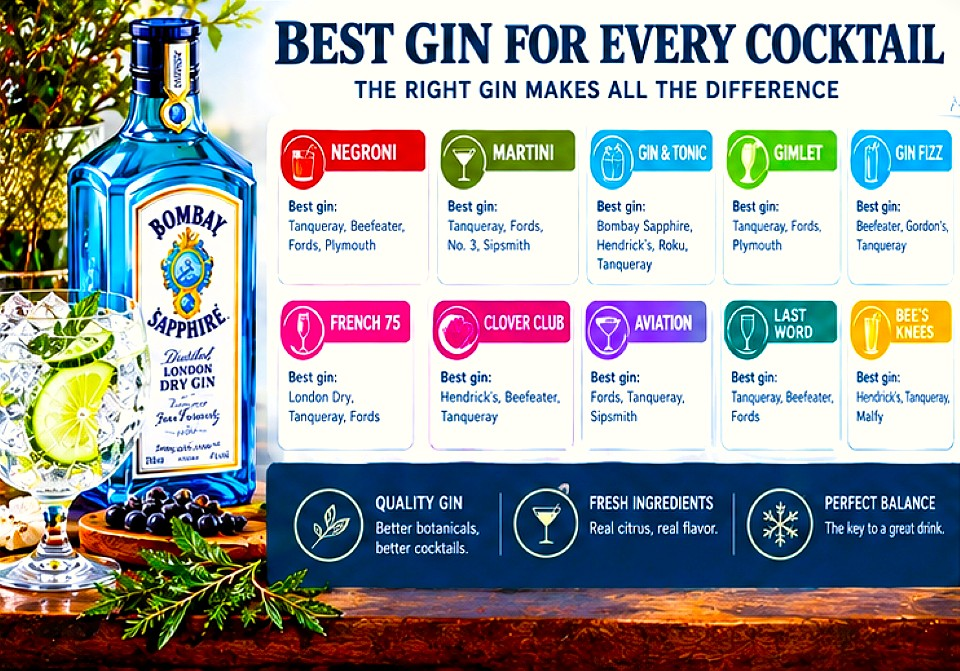
Best gin for Negroni, Martini, Gin and Tonic, Gimlet, Gin Fizz, French 75, Clover Club, Aviation, Last Word and Bee’s Knees
How to Make Better Gin Cocktails at Home
Great gin cocktails don’t require an expensive professional bar. They require a few fundamentals.
Use fresh citrus
Fresh lemon and lime make an enormous difference. Avoid pre-bottled juice whenever possible.
Use good ice
Large, dense cubes melt more slowly. That allows you to control dilution.
Chill your glassware
A cold Martini glass matters. So does a cold coupe.
Measure ingredients
Cocktails depend on ratios. A few extra milliliters can dramatically change the balance.
Stir when you should stir
Spirit-forward cocktails such as:
-
-
- Martini
- Negroni
- Martinez
-
are generally better stirred.
Shake when citrus is involved
Citrus cocktails typically benefit from shaking because shaking provides:
-
-
- Rapid chilling
- Aeration
- Dilution
- Integration
-
Don’t ignore vermouth
Dry vermouth is perishable after opening. Store it in the refrigerator.
The Importance of Dilution
Dilution isn’t a mistake. It is an ingredient. When you stir or shake, ice melts into the drink. That lowers alcohol intensity and changes texture.
-
-
- A Martini stirred for 10 seconds will taste different from one stirred for 30 seconds.
- A Negroni made with fresh ice will evolve differently from one made with partially melted ice.
-
This is why professional bartenders pay so much attention to:
ice + time + temperature.
Gin Cocktail Garnishes
The garnish isn’t merely decoration. It adds aroma.
Martini
-
-
- Lemon twist or
- Olive
-
Negroni
-
-
- Orange peel
-
Gin & Tonic
-
-
- Lime
- Lemon
- Grapefruit
- Cucumber
-
Gimlet
-
-
- Lime
-
Clover Club
-
-
- Raspberry
-
Aviation
-
-
- Maraschino cherry
-
Southside
-
-
- Mint
-
Choose a garnish that reinforces the cocktail’s existing botanicals.
Best Gin Cocktails for Beginners
Start with recipes that are easy to balance.
1. Gin & Tonic:
Simple and refreshing.
2. Gimlet
Only a few ingredients.
3. Tom Collins
Long, refreshing and forgiving.
4. Negroni
Simple equal-parts construction.
5. Gin Fizz
Fresh and approachable.
6. Bee’s Knees
Excellent for drinkers who prefer citrus and honey. Once you’re comfortable, move to:
Martini → Last Word → Aviation → Clover Club
Best Gin Cocktails for Summer
Summer cocktails usually benefit from:
citrus + carbonation + herbs + fresh fruit
Excellent choices include:
-
-
- Gin & Tonic
- Tom Collins
- Gin Fizz
- Southside
- Gimlet
- Bramble
- French 75
- Bee’s Knees
-
For hot weather, use plenty of cold ice and don’t make the drinks excessively sweet.
Best Gin Cocktails for Parties
Choose cocktails that are easy to scale.
Gin & Tonic
The easiest choice.
Tom Collins
Can be partially batched before service.
Negroni
Excellent for batching.
French 75
Prepare the gin, lemon and syrup in advance, then add sparkling wine when serving.
Bee’s Knees
Batch the gin, lemon and honey syrup, then shake individual portions with ice. Avoid complicated cocktails requiring unusual ingredients when serving a large group.
Batch a Negroni
The Negroni is particularly easy to batch because of its equal-parts construction.
For eight cocktails:
-
-
- 240 ml gin
- 240 ml Campari
- 240 ml sweet vermouth
-
Add a small amount of water to account for dilution, refrigerate thoroughly and serve over large ice. Keep refrigerated and use fresh vermouth.
Gin Cocktails and Food Pairing
Gin cocktails can pair surprisingly well with food.
Gin & Tonic
Excellent with:
-
-
- Seafood
- Sushi
- Salads
- Fried foods
-
Negroni
Excellent with:
-
-
- Charcuterie
- Pizza
- Grilled meats
- Rich appetizers
-
Martini
Excellent with:
-
-
- Oysters
- Seafood
- Smoked salmon
- Salty appetizers
-
Gimlet
Excellent with:
-
-
- Ceviche
- Grilled seafood
- Light appetizers
-
French 75
Excellent with:
-
-
- Brunch
- Seafood
- Soft cheeses
- Light desserts
-
Current Gin Cocktail Trends
The modern gin cocktail scene is changing without abandoning classic recipes.
Drinks International’s latest data show that classic cocktails remain surprisingly stable over time, even as individual rankings move gradually. The organization has tracked bestselling classics since 2015, and the same foundational recipes continue to dominate the global bar scene.
Three trends stand out.
1. The Negroni remains dominant
The Negroni has held the number-one position in the Drinks International ranking for five years. Its success comes from a formula that is:
-
-
- Easy to batch
- Easy to remember
- Distinctive
- Flexible
- Highly food-friendly
-
That makes it ideal for professional bars.
2. The Martini remains strong
The Dry Martini reached No. 4 in 2026, continuing its long-running comeback. The Martini also creates opportunities for premium gin brands because the spirit itself is so exposed.
3. Gin is becoming more regional
Modern producers increasingly use local ingredients. Japanese gins highlight:
yuzu + tea + sansho
Mediterranean gins highlight:
olive + rosemary + thyme
American craft gins may highlight:
local flowers + fruit + herbs
This gives consumers more ways to personalize classic cocktails.
The Return of Classic Cocktails
One of the most interesting aspects of the current cocktail market is how many older drinks continue to return.
The IBA maintains an official cocktail list that was originally created in 1961 as an international reference for popular drinks and continues to serve as a reference for bartenders and hospitality students. That list includes many gin classics:
-
-
- Dry Martini
- Aviation
- Clover Club
- Gimlet
- Gin Fizz
- Last Word
- Martinez
- Negroni
- Southside
- John Collins
-
The pattern is clear: classic doesn’t mean outdated. A well-built drink survives because its structure works.
What Makes a Great Gin Cocktail?
There are five basic elements.
1. Base spirit
Gin provides the identity.
2. Sweetness
Sugar, syrup, liqueur or vermouth can soften alcohol and acidity.
3. Acidity
Usually:
-
-
- lemon or
- lime
-
4. Bitterness
Bitters, Campari and botanical ingredients provide structure.
5. Dilution
Ice and water integrate everything. The best cocktails balance these five dimensions rather than emphasizing one ingredient too strongly.
How to Build a Home Gin Bar
You don’t need dozens of bottles. Start with three.
Classic London Dry
-
-
- Tanqueray or
- Beefeater
-
Contemporary Floral
-
-
- Hendrick’s
-
Japanese or Regional
-
-
- Roku
-
Then add:
-
-
- sweet vermouth
- dry vermouth
- Campari
- Maraschino
- orange liqueur
- bitters
- fresh citrus
- tonic water
-
With those ingredients, you can make a huge number of classic drinks.
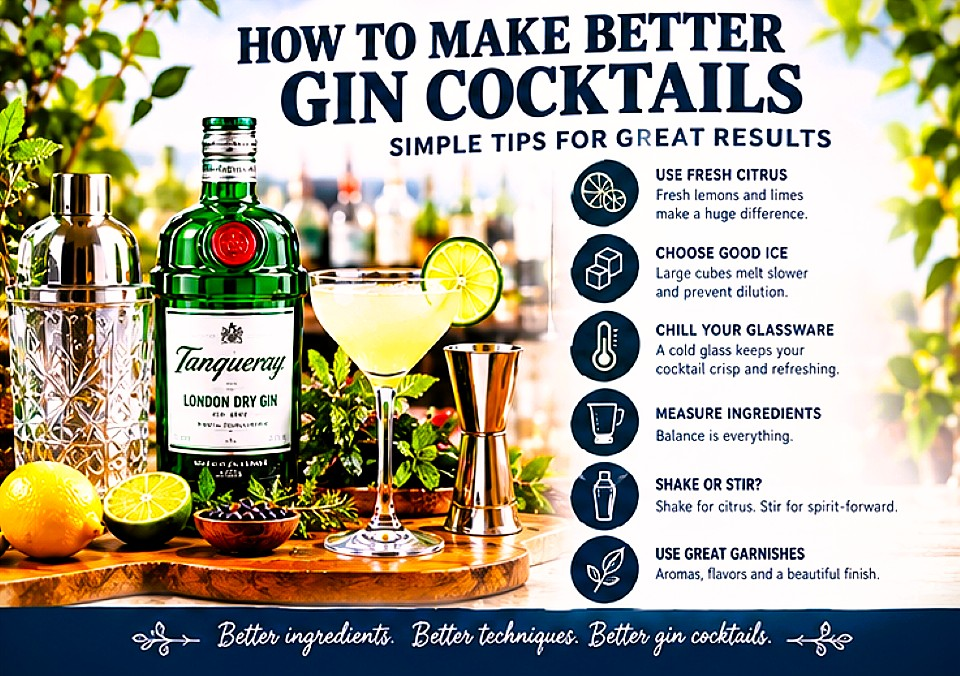
How to make better gin cocktails using fresh citrus, quality ice, chilled glassware, measured ingredients, proper shaking and stirring techniques
Frequently Asked Questions
What is the most popular gin cocktail in the world?
According to Drinks International’s 2026 Cocktail Report, the Negroni is currently the world’s bestselling classic cocktail in its survey of influential bars. It has held the number-one position for five consecutive years.
What is the second-most popular gin cocktail?
There isn’t a separate official global ranking of only gin cocktails. The Dry Martini is one of the highest-ranked gin-based classics overall, reaching No. 4 in the 2026 ranking.
What is the best gin cocktail for beginners?
The Gin & Tonic, Gimlet and Tom Collins are excellent starting points.
What is the best gin for a Negroni?
A classic London Dry such as Tanqueray, Beefeater or Fords works particularly well.
What is the best gin for a Martini?
Tanqueray, Fords, No. 3, Sipsmith and Plymouth are excellent options.
What is the best gin for a Gin & Tonic?
Bombay Sapphire, Tanqueray, Hendrick’s and Roku all work well, depending on your preferred botanical style.
What is the best gin for a Gimlet?
A dry London-style gin with strong citrus and juniper is ideal.
What is the best gin for a Negroni?
Choose a gin with enough botanical intensity to stand up to Campari and sweet vermouth.
What is the difference between a Gimlet and a Gin Rickey?
A Gimlet generally includes sweetness, traditionally through lime cordial or modernly through sugar syrup, while a Gin Rickey is usually gin, fresh lime and soda without added sugar.
What is the difference between a Martini and a Martinez?
The Martinez is generally sweeter and richer, using sweet vermouth and Maraschino. The Dry Martini uses dry vermouth and has a much drier structure.
What gin is best for summer cocktails?
Citrus and floral gins are particularly refreshing. Malfy, Hendrick’s, Bombay Sapphire and Roku are useful choices.
What gin works best in a Negroni?
London Dry gin remains the classic choice because juniper and citrus can stand up to the bitter and sweet components.
Can I use flavored gin in classic cocktails?
Yes, but choose the flavor carefully. A strongly flavored gin can completely change a classic recipe.
Can I use vodka instead of gin?
You can, but it changes the character dramatically. A Vodka Martini, for example, has a cleaner and less botanical profile than a Dry Martini made with gin.
Should a Negroni be shaken or stirred?
A classic Negroni is generally stirred with ice.
Should a Martini be shaken or stirred?
The IBA’s Dry Martini recipe calls for stirring the gin and dry vermouth with ice before straining.
Why should I stir a Negroni?
Stirring provides controlled chilling and dilution without the aeration produced by shaking.
Why are citrus cocktails usually shaken?
Shaking rapidly chills the drink and integrates juice, sugar and spirit.
What is the best tonic for gin?
A clean tonic with moderate sweetness and bitterness works well. The ideal tonic depends on the botanicals in your gin.
How much tonic should I use?
A practical starting point is roughly two to three parts tonic to one part gin, then adjust according to taste.
What garnish goes with a Gin & Tonic?
Lime is classic, while lemon, grapefruit, cucumber and herbs can work depending on the gin.
What garnish goes with a Negroni?
Orange is the classic choice.
What garnish goes with a Martini?
Either a lemon twist or green olive.
What makes gin different from vodka in cocktails?
Gin contributes juniper and botanical flavors, whereas vodka is intentionally much more neutral.
What is the world’s most famous gin cocktail?
The Negroni, Gin & Tonic and Dry Martini are arguably the three most internationally recognized gin cocktails. Current Drinks International data particularly support the Negroni and Dry Martini’s continued prominence in leading bars.
What gin cocktail is the most refreshing?
The Gin & Tonic, Tom Collins, Gin Fizz, Southside and Gimlet are excellent refreshing options.
What gin cocktail is the strongest?
Spirit-forward drinks such as the Dry Martini and Negroni can be relatively intense, depending on the recipe and dilution.
Can I make gin cocktails in advance?
Some can. Negronis and other spirit-forward drinks can be batched easily, while sparkling cocktails such as the French 75 should generally be topped with sparkling wine immediately before serving.
What is the best gin cocktail for dinner?
Negroni, Martini, French 75 and Gimlet all work well with food, depending on the menu.
What is the best gin cocktail for brunch?
French 75, Gin Fizz, Bee’s Knees and Gin & Tonic are excellent choices.
What is the best gin cocktail for a party?
Gin & Tonic is the simplest. Negroni and Tom Collins are also excellent for larger gatherings.
Is Hendrick’s good for cocktails?
Yes. Hendrick’s works particularly well in Gin & Tonics, floral cocktails and contemporary variations.
Is Tanqueray good for cocktails?
Yes. Tanqueray is one of the strongest all-purpose cocktail gins and was again named the bestselling gin in Drinks International’s 2026 leading-bar survey.
Final Thoughts: The World’s Most Popular Gin Cocktails
Gin cocktails are a lesson in balance. The spirit itself is complicated.
-
-
- Juniper creates the foundation.
- Coriander adds spice.
- Citrus adds brightness.
- Angelica adds earthiness.
- Flowers add fragrance.
- Tea adds depth.
- Pepper adds heat.
-
And then the bartender has to make all of those elements work with:
-
-
- sweetness
- acidity
- bitterness
- water
- temperature
- texture.
-
That’s why the world’s greatest gin cocktails have survived for decades—or centuries.
-
-
- Negroni uses three equal components to create a perfect meeting point between botanical gin, bitter Campari and sweet vermouth.
- Dry Martini strips the cocktail down to an almost minimalist expression of gin and vermouth.
- Gin & Tonic transforms the spirit into a long, refreshing drink.
- Gimlet turns gin and lime into a sharp, elegant sour.
- Gin Fizz adds carbonation.
- French 75 adds sparkling wine.
- Clover Club adds raspberry and texture.
- Last Word brings together gin, Chartreuse, Maraschino and lime in one of the modern world’s most recognizable equal-parts formulas.
- Aviation demonstrates the power of floral ingredients.
- Bee’s Knees combines gin, honey and citrus.
- Bramble uses blackberry to create a distinctly British modern classic.
- Gin Basil Smash proves that a handful of fresh basil can completely change the personality of a cocktail.
-
Current global bar data confirm that these classics aren’t merely surviving on nostalgia. The Negroni is No. 1, the Dry Martini No. 4, the Gimlet No. 13, and numerous other gin classics remain in Drinks International’s 2026 top 50.
At the same time, gin itself continues to be extremely important to top bars. Tanqueray’s 2026 victory as the bestselling gin for the tenth time demonstrates how enduring classic, cocktail-friendly gin styles remain. The exciting part is that you don’t need a professional cocktail bar to experience this a home bar with:
-
-
- one good gin
- fresh lemon and lime
- sweet vermouth
- dry vermouth
- Campari
- tonic water
- sugar syrup
- a bottle of sparkling wine
- a few liqueurs
- a good ice
-
can produce an extraordinary number of drinks.
-
-
- Start simple.
- Make a Gin & Tonic.
- Then make a Gimlet.
- Try a Negroni.
- Then make a Martini.
- Compare Tanqueray with Hendrick’s.
- Compare a classic London Dry with Roku.
- Use a citrus-forward gin in a Gimlet.
- Try a floral gin in a Gin & Tonic.
- Use a rich gin in a Negroni.
-
You’ll quickly discover that the recipe is only half the story.
-
-
- The gin matters.
- The tonic matters.
- The vermouth matters.
- The ice matters.
- The garnish matters.
- And perhaps most importantly, balance matters.
-
That’s why gin remains one of the world’s great cocktail spirits. It can be:
-
-
- classic
- modern
- simple
- complex
- bitter
- sweet
- dry
- floral
- citrusy
- or herbal.
-
And it can become something completely different simply by changing the ingredients around it. So build your home bar slowly. Learn five classics first:
-
-
- Gin & Tonic
- Martini
- Negroni
- Gimlet
- Tom Collins
-
Then add:
-
-
- French 75
- Gin Fizz
- Clover Club
- Last Word
- Aviation
-
Once those are comfortable, explore the more unusual recipes. The world of gin cocktails is enormous. And with new gin brands, new botanicals and new bartenders constantly experimenting with old formulas, it isn’t getting smaller.
It is getting more interesting.