
Blog
Most Popular Gin Brands in the World: 30 Famous Gins Every Gin Lover Should Know

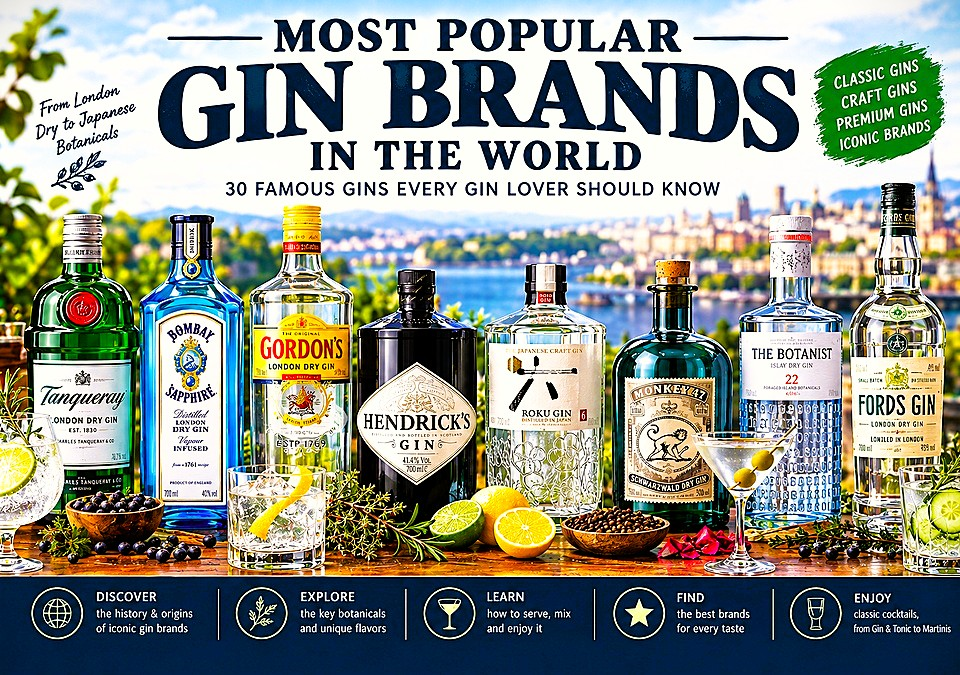
Discover the most popular gin brands in the world, from Gordon’s, Tanqueray, Bombay Sapphire and Beefeater to Ginebra San Miguel, Hendrick’s, Roku, Monkey 47, The Botanist, Fords and Sipsmith. Learn which gins lead global sales, which brands bartenders prefer, the main gin styles, the best gin for Martinis and Gin & Tonics, and how to choose the perfect bottle.
Gin is one of the world’s most versatile spirits.
It can be crisp and juniper-forward, floral and elegant, citrusy and refreshing, spicy and complex, or intensely aromatic with dozens of carefully selected botanicals.
Few spirits offer such a broad range of styles while remaining instantly recognizable.
The classic Gin & Tonic has become a global staple. The Dry Martini has experienced a major revival in premium cocktail bars. The Negroni remains one of the world’s essential classic cocktails. And modern gin producers continue to experiment with botanicals, distillation techniques, regional ingredients and new flavor profiles.
But which gin brands are actually the most popular? The answer depends on what “popular” means.
By global sales volume, Ginebra San Miguel is currently the giant of the category. Drinks International’s Millionaires’ Club reported that the Philippines-based brand grew from 39.8 million to 40.8 million nine-liter cases in 2025, accounting for well over half of the combined volume among the gin brands in the ranking.
Gordon’s followed with 7.2 million cases, Tanqueray with 4.5 million, Bombay Sapphire with 4.3 million, and Beefeater with 3.3 million. But premium-bar popularity tells a different story.
In Drinks International’s Brands Report, Tanqueray was named the bestselling gin in the world’s best bars for the 10th time, appearing as the number-one gin in 30% of the bars surveyed. Beefeater and Bombay were both close behind.
And bartender preference is different again. Fords Gin debuted at number one in Drinks International’s 2026 Bartenders’ Choice ranking, with 16% of surveyed bars naming it among their top three favorite brands. Tanqueray followed closely.
The report makes clear that Bartenders’ Choice is an opinion-based list rather than a sales ranking. That is why this guide looks beyond one number.
Here you’ll find 30 of the world’s most popular, famous and influential gin brands, considering global volume, international availability, cocktail-bar presence, bartender recognition, history, premium reputation and the distinctive style each bottle brings to the glass.
Table of Contents
- What Is Gin?
- What Makes Gin Different From Other Spirits?
- How Gin Is Made
- The Main Types of Gin
- London Dry Gin Explained
- The 30 Most Popular Gin Brands in the World
- Gordon’s
- Tanqueray
- Ginebra San Miguel
- Bombay Sapphire
- Beefeater
- Hendrick’s
- Seagram’s
- Gilbey’s
- Fords Gin
- Roku Gin
- Monkey 47
- Sipsmith
- Plymouth Gin
- The Botanist
- No. 3 London Dry Gin
- Malfy
- Gin Mare
- The Botanist Islay Dry Gin
- Aviation Gin
- Citadelle Gin
- Drumshanbo Gunpowder Irish Gin
- Nikka Coffey Gin
- Ki No Bi
- Hayman’s
- Boodles
- Martin Miller’s
- Silent Pool
- Edinburgh Gin
- The London No. 1
- Best Gin for Gin & Tonic
- Best Gin for Martinis
- Best Gin for Negronis
- Best Gin for Gimlets
- Best Gin for Cocktails
- Best Gin by Style
- How to Choose Gin
- Current Gin Trends
- Frequently Asked Questions
- Final Thoughts
- SEO Package
What Is Gin?
Gin is a juniper-forward spirit.
Under current European Union rules, gin is a juniper-flavoured spirit drink produced by flavouring agricultural ethyl alcohol with juniper berries, with a minimum alcoholic strength of 37.5% ABV and a taste that is predominantly juniper. The EU separately defines distilled gin and London gin, which have additional production requirements.
That definition is important because gin is not simply:
vodka + random botanicals.
Juniper is fundamental. The defining flavor should be recognizable as juniper even when other botanicals are used.
Common botanicals include:
- Juniper
- Coriander
- Angelica
- Orris root
- Citrus peel
- Cardamom
- Cassia
- Licorice
- Cubeb
- Grains of paradise
- Cucumber
- Rose
- Lavender
- Tea
Every gin producer creates a different botanical architecture. That is why a bottle of Gordon’s can taste completely different from Monkey 47, Roku or Hendrick’s.
What Makes Gin Different From Other Spirits?
Gin begins with a neutral alcohol base, but its personality comes from botanicals. Unlike whiskey, where much of the final character develops through grain, distillation and barrel maturation, gin is generally defined by the botanical recipe and distillation process. That gives gin extraordinary versatility.
Juniper-forward
Traditional London Dry styles emphasize:
- Pine
- Resin
- Herbs
- Citrus
- Pepper
Citrus-forward
Some gins focus heavily on:
- Lemon
- Grapefruit
- Orange
- Lime
Floral
Others emphasize:
- Rose
- Lavender
- Chamomile
- Violet
Herbal
Botanicals such as:
- Basil
- Rosemary
- Thyme
- Tea
- Coriander
can produce a greener, more savory profile.
Spiced
Some gins use:
- Cardamom
- Pepper
- Cinnamon
- Cassia
- Cubeb
The result can be warm and complex.
How Gin Is Made
While recipes vary, the basic process usually involves:
neutral spirit + botanicals + extraction/distillation + water + bottling
There are several ways producers can extract botanical flavors.
Maceration
Botanicals are soaked in alcohol before distillation.
Vapour infusion
Alcohol vapour passes through a chamber containing botanicals, extracting delicate aromas.
Distillation
The flavored spirit is distilled to concentrate and refine its botanical character.
Blending
Some producers combine different distillates to create a precise house profile. Diageo, for example, describes its gin portfolio as combining traditional London Dry methods with distinctive botanical profiles and modern flavor exploration.
The Main Types of Gin
London Dry Gin
London Dry is one of the best-known styles.
Under EU rules, London gin is a type of distilled gin whose flavor must come exclusively from the distillation process, with no added coloring and only tightly defined permitted additions. It must also meet the 37.5% minimum ABV requirement.
Classic examples include:
- Tanqueray
- Beefeater
- Gordon’s
- Fords
- Sipsmith
Distilled Gin
Distilled gin is also produced through distillation with botanicals, but the legal definition allows somewhat more flexibility than London gin.
Contemporary / New Western Gin
These gins place less emphasis on dominant juniper and more on unusual botanicals.
Examples include:
- Hendrick’s
- Roku
- Gin Mare
- Aviation
- Monkey 47
The term “New Western Gin” is widely used in the trade but is not a formal legal category.
The 30 Most Popular Gin Brands in the World
1. Gordon’s
Origin: England
Style: London Dry
Gordon’s is one of the world’s most recognizable gin brands.
Founded in London in 1769, it has built an enormous global business around a juniper-led style designed to work in simple mixed drinks and classic cocktails. Diageo describes Gordon’s as the world’s number-one best-selling international gin brand.
Current 2026 global data put Gordon’s at 7.2 million nine-liter cases in 2025, making it the world’s second-largest gin brand by the Millionaires’ Club measure.
Flavor profile
Expect:
- Juniper
- Citrus
- Pepper
- Coriander
- Herbal notes
Best for
- Gin & Tonic
- Tom Collins
- Negroni
- Simple highballs
Why try it?
It is one of the classic benchmarks for accessible London Dry gin.
2. Tanqueray
Origin: England
Style: London Dry
Tanqueray is one of the world’s most important premium gin brands. Its 2025 global sales reached 4.5 million nine-liter cases, up 3%, making it the third-largest brand in the global Millionaires’ Club ranking.
Its premium-bar performance is even stronger. Drinks International’s 2026 Brands Report named Tanqueray the bestselling gin in the world’s best bars for the 10th time, with 30% of surveyed bars naming it their number-one gin.
Flavor profile
- Juniper
- Coriander
- Citrus
- Spice
Best for
- Gin & Tonic
- Dry Martini
- Negroni
- Gimlet
Why try it?
Tanqueray is arguably the classic reference point for modern premium London Dry gin.
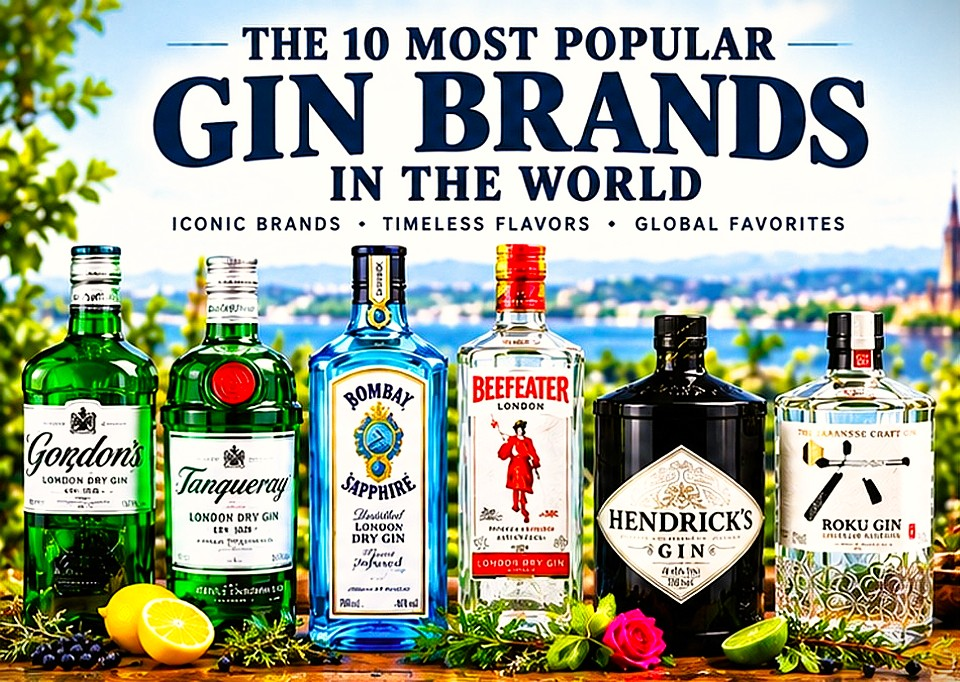
Most popular gin brands in the world including Gordon’s, Tanqueray, Bombay Sapphire, Beefeater, Hendrick’s and Roku Gin
3. Ginebra San Miguel
Origin: Philippines
Style: Mass-market gin
This brand may surprise readers who associate gin primarily with London. By global sales volume, however, Ginebra San Miguel is currently the category’s giant.
Drinks International reports that the brand sold 40.8 million nine-liter cases in 2025, accounting for well over half of the combined volume among gin’s million-case brands.
That makes it an essential inclusion in any serious discussion of the world’s most popular gins. Its extraordinary success is particularly strong in the Philippines and other Asian markets.
Best for
- Highballs
- Mixed drinks
- Regional drinking culture
Why try it?
It demonstrates just how different global gin consumption can look outside the traditional European premium-gin market.
4. Bombay Sapphire
Origin: England
Style: London Dry
Bombay Sapphire is one of the most recognizable gin bottles in the world. Its distinctive blue packaging has become almost synonymous with modern Gin & Tonic culture.
Global sales reached approximately 4.3 million cases in 2025, down 2.3%. Despite the slight decline, Bombay remains a global heavyweight.
Flavor profile
- Juniper
- Lemon
- Coriander
- Angelica
- Floral spice
Best for
- Gin & Tonic
- Martini
- Tom Collins
Why try it?
It is one of the most accessible introductions to botanical gin.
5. Beefeater
Origin: London
Style: London Dry
Beefeater is another classic London gin. The brand remained at approximately 3.3 million cases in 2025, according to Drinks International’s global ranking. Beefeater’s style is strongly rooted in juniper and citrus.
Flavor profile
- Juniper
- Lemon
- Orange
- Coriander
- Herbal spice
Best for
- Martini
- Gin & Tonic
- Negroni
Why try it?
Beefeater is one of the classic workhorse gins of the cocktail world.
6. Hendrick’s
Origin: Scotland
Style: Contemporary Gin
Hendrick’s revolutionized mainstream premium gin with its unusual combination of botanicals and its association with cucumber and rose. It is softer and more floral than many classic London Dry gins.
Flavor profile
- Cucumber
- Rose
- Juniper
- Citrus
- Floral notes
Best for
- Gin & Tonic
- Martini variations
- Floral cocktails
Hendrick’s has long been a fixture in premium cocktail culture and remains one of the world’s most famous contemporary gin brands. Drinks International’s 2026 Bartenders’ Choice report notes Hendrick’s as a regular in that list.
7. Seagram’s Gin
Origin: United States
Style: London Dry-style gin
Seagram’s is one of the major volume gins in the North American market. The latest 2026 Brand Champions data put it at 1.9 million cases in 2025, down 9.8%.
Best for
- Gin & Tonic
- Martinis
- Highballs
- Cocktails
Why try it?
Seagram’s demonstrates the importance of the North American mainstream gin market.
8. Gilbey’s
Origin: England
Style: London Dry
Gilbey’s has a long history in the gin category. Its global volume rebounded strongly in 2025, rising 40% to approximately 1.4 million cases, the strongest percentage gain among the gin brands in the Millionaires’ Club ranking.
Best for
Gin & Tonic and classic mixed drinks.
Why try it?
It is a historic brand with a surprising recent resurgence.
9. Fords Gin
Origin: England
Style: London Dry
Fords is especially popular among professional bartenders. Its biggest recent achievement came in Drinks International’s 2026 Bartenders’ Choice, where Fords debuted at number one—an unprecedented first-place debut in the history of the ranking.
The brand is produced in south London and has expanded strongly in the United States and Europe.
Best for
- Dry Martinis
- Gimlets
- Negronis
Why try it?
Fords is a particularly strong example of the modern bartender-focused London Dry.
10. Roku Gin
Origin: Japan
Style: Contemporary Japanese Gin
Roku is one of the world’s best-known Japanese gin brands. It combines juniper with Japanese botanicals associated with the country’s four seasons, including ingredients such as:
- Sakura flower
- Sakura leaf
- Sencha tea
- Gyokuro tea
- Yuzu
- Sansho pepper
Flavor profile
- Citrus
- Green tea
- Floral
- Pepper
- Herbal
Best for
- Japanese Gin & Tonic
- Highballs
- Martinis
Why try it?
Roku is one of the most compelling examples of regional botanical identity in modern gin.
11. Monkey 47
Origin: Germany
Style: Contemporary Gin
Monkey 47 is famous for its unusually complex botanical recipe. The brand has become synonymous with the idea that more botanicals can create a highly layered spirit.
It has been a frequent presence in premium-gin rankings over the years, although it missed Drinks International’s 2026 bestselling top 10 after a long run on the list.
Flavor profile
- Juniper
- Citrus
- Floral
- Spice
- Herbs
- Forest botanicals
Best for
- Martini
- Premium Gin & Tonic
- Sipping-style cocktails
12. Sipsmith
Origin: London
Style: London Dry
Sipsmith was one of the brands that helped ignite the modern craft-gin movement in London. Its traditional approach emphasizes:
- Juniper
- Coriander
- Citrus
- Angelica
- Herbal character
Best for
- Martinis
- Negronis
- Gin & Tonics
Why try it?
Sipsmith helped prove that craft gin could compete with global multinational brands.
13. Plymouth Gin
Origin: England
Style: Plymouth Gin
Plymouth Gin is one of gin’s historic names. It has a distinctive identity associated with the city of Plymouth and a somewhat earthier and softer botanical profile than many very dry London styles.
Flavor profile
- Juniper
- Coriander
- Citrus
- Earthy notes
- Root botanicals
Best for
- Martinis
- Gimlets
- Classic cocktails
Plymouth has retained a place in gin history even as hundreds of new craft brands have appeared.
14. The Botanist
Origin: Scotland
Distillery: Bruichladdich
Style: Contemporary Islay Gin
The Botanist is built around a large botanical roster, including many botanicals sourced from Islay.
Typical character
- Floral
- Herbal
- Citrus
- Earthy
- Juniper
Best for
- Gin & Tonic
- Martini
- Botanical cocktails
It is a strong choice for drinkers who prefer complexity over a strictly traditional London Dry profile.
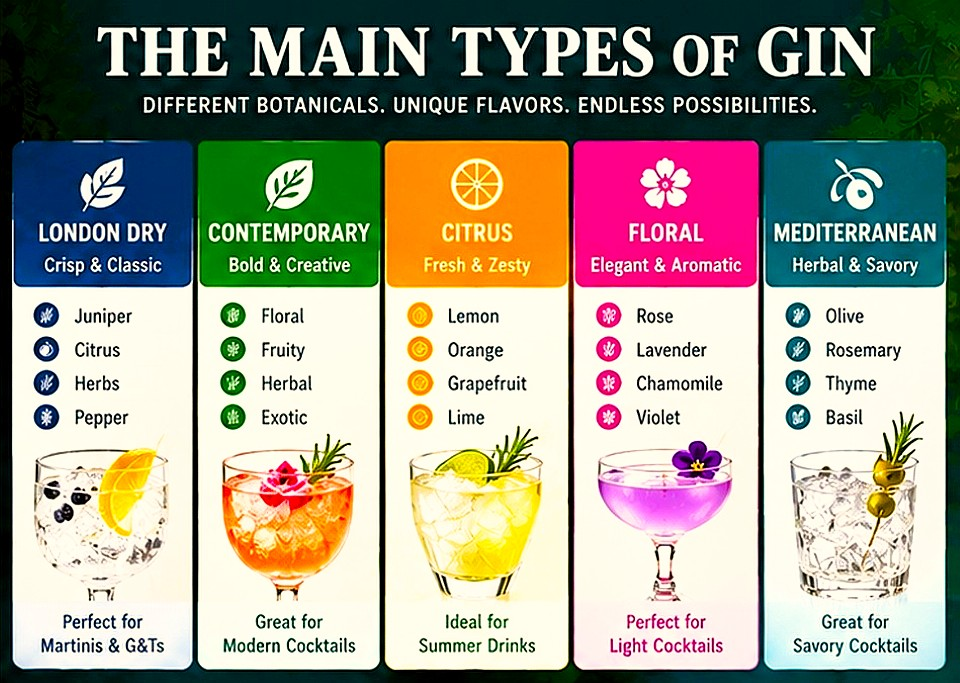
Main types of gin including London Dry, contemporary, citrus, floral and Mediterranean gin with their characteristic botanicals and flavors
15. No. 3 London Dry Gin
Origin: England
Style: London Dry
No. 3 was created with the Martini in mind. Its botanical profile emphasizes:
- Juniper
- Grapefruit
- Sweet orange
- Cardamom
Drinks International’s 2025 report highlighted No. 3’s growing association with the Martini and placed it among that year’s top 10 bestselling gins in leading bars.
Best for
- Dry Martinis
- Gimlets
- Negronis
Why try it?
It is one of the strongest gin choices for Martini lovers.
16. Malfy
Origin: Italy
Style: Contemporary citrus-led gin
Malfy is famous for putting Italian citrus at the center of the gin experience. Popular expressions include:
- Originale
- Con Limone
- Rosa
- Con Arancia
Flavor profile
Depending on the bottle:
- Lemon
- Orange
- Pink grapefruit
- Juniper
- Herbs
Best for
- Gin & Tonic
- Spritz-style drinks
- Summer cocktails
This is a particularly attractive category for people who find classic juniper-heavy London Dry too intense.
17. Gin Mare
Origin: Spain
Style: Mediterranean Gin
Gin Mare focuses heavily on Mediterranean botanicals. The style is often associated with:
- Olive
- Rosemary
- Thyme
- Basil
- Citrus
Best for
- Mediterranean Gin & Tonic
- Martini
- Savory cocktails
Why try it?
It demonstrates how gin can move beyond traditional British botanical conventions.
18. Aviation Gin
Origin: United States
Style: Contemporary Gin
Aviation Gin originated in Portland, Oregon. Diageo says the gin was crafted in 2006 and uses a unique maceration recipe in which botanicals are infused in grain spirit for 18 hours.
Typical profile
- Juniper
- Lavender
- Cardamom
- Anise
- Citrus
Best for
- Martinis
- Gin & Tonics
- Modern cocktails
19. Citadelle Gin
Origin: France
Style: French Gin
Citadelle is one of France’s most recognized gins. It is produced by Maison Ferrand and has helped establish French gin as a serious premium category.
Flavor profile
- Juniper
- Citrus
- Floral notes
- Spice
- Herbs
Best for
- Gin & Tonic
- Martini
- French-inspired cocktails
20. Drumshanbo Gunpowder Irish Gin
Origin: Ireland
Drumshanbo combines traditional gin botanicals with a modern Irish identity. The gin is famous for including gunpowder green tea alongside botanicals such as grapefruit, lemon and Oriental botanicals.
Flavor profile
- Citrus
- Tea
- Juniper
- Spice
- Herbal notes
Best for
- Gin & Tonic
- Highballs
- Contemporary cocktails
21. Nikka Coffey Gin
Origin: Japan
Nikka’s Coffey Gin uses Japanese botanicals alongside more traditional gin ingredients. The portfolio includes botanicals such as:
- Yuzu
- Kabosu
- Amanatsu
- Sansho pepper
- Apple
Flavor profile
- Citrus
- Pepper
- Fruit
- Juniper
- Japanese botanicals
Best for
- Japanese Gin & Tonic
- Martini
- Highballs
22. Ki No Bi
Origin: Japan
Style: Kyoto Dry Gin
Ki No Bi is one of the most influential premium Japanese craft gins. It was designed around botanicals associated with Kyoto and is organized conceptually around six botanical categories.
Typical profile
- Yuzu
- Hinoki
- Green tea
- Sansho
- Juniper
- Ginger
Best for
- Premium Gin & Tonic
- Martini
- Sipping cocktails
Why try it?
Ki No Bi demonstrates how local Japanese ingredients can create a distinctly regional gin identity.
23. Hayman’s
Origin: London
Style: Traditional London Dry
Hayman’s is one of the London families associated with historic gin production. The brand focuses on traditional London Dry techniques. It remains particularly relevant to cocktail bars and classic-gin enthusiasts.
Best for
- Martinis
- Negronis
- Gin & Tonics
24. Boodles
Origin: England
Boodles is a longstanding British gin brand with a softer botanical personality. It is particularly recognized for its suitability in classic cocktails.
Best for
- Martini
- Gin & Tonic
- Negroni
25. Martin Miller’s Gin
Origin: England / Icelandic water
Martin Miller’s became known for using exceptionally pure Icelandic water in the final blending process. The gin is generally described as smooth and balanced.
Typical notes
- Juniper
- Citrus
- Spice
- Floral character
Best for
- Gin & Tonic
- Martini
26. Silent Pool Gin
Origin: England
Silent Pool is known for elegant botanical character and distinctive packaging. It uses a complex recipe with floral and citrus elements.
Best for
- Premium Gin & Tonic
- Floral cocktails
- Martinis
27. Edinburgh Gin
Origin: Scotland
Edinburgh Gin has become one of Scotland’s recognizable modern gin producers. Its range includes multiple flavored and botanical expressions in addition to its core gin.
Best for
- Gin & Tonic
- Seasonal cocktails
- Modern mixed drinks
28. The London No. 1
Origin: England
Style: London Dry
The London No. 1 is notable for its distinctive blue-green color and relatively soft floral character.
Flavor profile
- Juniper
- Citrus
- Floral notes
- Spice
Best for
- Martinis
- Gin & Tonics
Why try it?
It’s a visually distinctive take on London Dry gin.
29. Bloom Gin
Origin: England
Bloom is designed around a softer, floral style. It is particularly approachable for drinkers who find traditional London Dry gins overly juniper-heavy.
Flavor profile
- Honeysuckle
- Chamomile
- Pomelo
- Juniper
- Floral notes
Best for
- Gin & Tonic
- Floral cocktails
- Summer drinks
30. Broker’s Gin
Origin: England
Style: London Dry
Broker’s is another classic London Dry with strong ties to traditional gin-making. Its characteristic bowler-hat branding has made it memorable on retail shelves.
Best for
- Martinis
- Negronis
- Gin & Tonics
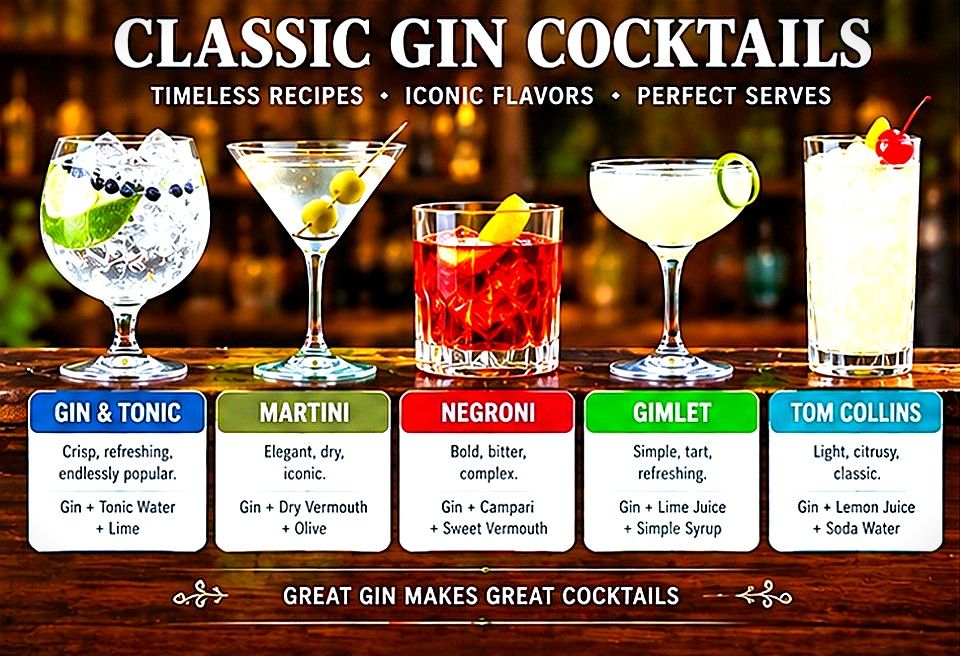
Classic gin cocktails including Gin and Tonic, Martini, Negroni, Gimlet and Tom Collins with popular serving styles
Best Gin for a Gin & Tonic
The Gin & Tonic is the world’s most recognizable gin drink, so choosing the right bottle matters.
Best traditional choices
- Tanqueray
- Beefeater
- Gordon’s
Best premium choices
- Hendrick’s
- The Botanist
- Roku
Best citrus-forward
- Malfy
For a classic G&T
Choose a juniper-forward London Dry.
For a softer G&T
Choose Hendrick’s or Bloom.
For a citrus-heavy G&T
Choose Malfy.
For a Japanese-inspired G&T
Choose Roku or Ki No Bi.
Best Gin for a Martini
The Martini rewards precision. A good Martini gin should have enough character to survive dilution while remaining elegant.
Excellent choices
- Tanqueray
- Fords
- No. 3
- Sipsmith
- Plymouth
- Nikka Coffey Gin
For a classic dry Martini, London Dry styles are particularly reliable. For something softer and more aromatic, try Roku. For a more floral Martini, Hendrick’s offers a very different experience.
Best Gin for a Negroni
A Negroni has three dominant components:
gin + bitter aperitif + sweet vermouth
The gin therefore needs enough botanical strength to remain visible.
Excellent choices:
- Tanqueray
- Beefeater
- Fords
- Hendrick’s
- Plymouth
- Citadelle
For a very classic Negroni, choose a traditional London Dry. For a more contemporary version, use a botanical-rich gin such as The Botanist.
Best Gin for a Gimlet
The Gimlet is beautifully simple. Its core ingredients are:
gin + lime
That means the gin’s balance matters.
Good choices:
- Tanqueray
- Fords
- No. 3
- Sipsmith
- Plymouth
Want more citrus?
Try: Malfy Con Limone
Want more floral character?
Try: Hendrick’s
Best Gin for Cocktails
A home bar does not need 30 different gins. Five bottles can cover a huge range.
1. Tanqueray
Classic London Dry.
2. Hendrick’s
Contemporary floral.
3. Fords
Professional cocktail gin.
4. Roku
Japanese botanical style.
5. Plymouth
Classic cocktail heritage.
Together, these give you options for:
- Martini
- Negroni
- Gimlet
- Gin & Tonic
- Tom Collins
- French 75 variations
- Southside
- Aviation
- Gin Fizz
Gin Styles Explained
London Dry
Expect:
- Juniper
- Citrus
- Herbs
- Pepper
- Dry finish
Best for:
Martinies and classic cocktails.
Contemporary gin
Expect:
- Floral
- Fruit
- Tea
- Cucumber
- Unusual herbs
Best for:
creative cocktails and premium G&Ts.
Citrus gin
Expect:
- Lemon
- Orange
- Grapefruit
- Lime
Best for:
summer drinks and refreshing highballs.
Floral gin
Expect:
- Rose
- Lavender
- Chamomile
- Violet
Best for:
light cocktails and aperitif-style drinks.
Mediterranean gin
Expect:
- Olive
- Rosemary
- Thyme
- Basil
- Citrus
Best for:
savory cocktails and Mediterranean food.
How to Choose the Right Gin
The easiest approach is to decide what you want the gin to do.
Want a classic cocktail gin?
Choose:
- Tanqueray
- Fords
- Beefeater
Want a smooth, approachable gin?
Choose:
- Hendrick’s
- Martin Miller’s
- Bloom
Want citrus?
Choose:
- Malfy
- Bombay Sapphire
Want floral notes?
Choose:
- Hendrick’s
- The Botanist
- Bloom
Want Japanese botanicals?
Choose:
- Roku
- Ki No Bi
- Nikka Coffey Gin
Want traditional London character?
Choose:
- Tanqueray
- Beefeater
- Gordon’s
- Sipsmith
- Plymouth
What Should a Good Gin Taste Like?
There is no single perfect flavor profile. A high-quality gin should, however, feel balanced.You should be able to identify: juniper
While also noticing secondary botanicals. The finish should not feel disjointed. The alcohol should support the botanicals rather than overwhelm them and when used in cocktails, the gin should retain enough personality to remain recognizable.
Gin and Tonic Garnishes
Garnish should complement the gin rather than simply decorate the glass.
Classic London Dry
Try:
- lemon
- grapefruit
- juniper berries
Hendrick’s
Try:
- cucumber
Roku
Try:
- grapefruit
- ginger
- or Japanese citrus.
Mediterranean gin
Try:
- rosemary
- olive
- lemon
Citrus gin
Try:
- orange
- grapefruit
- lemon
The best garnish is usually the simplest one that reinforces an existing botanical.
Is More Botanicals Better?
Not necessarily. A recipe with 47 botanicals sounds impressive, but complexity isn’t automatically quality. A great gin can have a relatively simple recipe. What matters is:
balance + extraction + distillation + integration.
Tanqueray’s success is a useful example. It doesn’t need dozens of exotic ingredients to remain one of the most popular premium gins in the world’s best bars. Drinks International’s 2026 survey placed it first among leading bars, demonstrating the continued appeal of a classic, balanced style.
The Current Global Gin Market
The global gin market is enormous, but its growth is uneven. The 2026 Millionaires’ Club reported that combined volume among gin brands selling more than one million cases rose only slightly from 68.8 million to 68.9 million cases in 2025.
The most striking feature is concentration. Ginebra San Miguel alone accounted for well over half of that combined volume. Meanwhile:
- Gordon’s declined 6.5%
- Bombay declined 2.3%
- Tanqueray grew 3%
- Beefeater was stable
- Gilbey’s rose 40% in the same ranking.
So the global market doesn’t have one simple story. Some regions prefer high-volume traditional brands. Other consumers are trading up to premium craft gins. And top bars remain highly interested in classic cocktail-friendly gins.
Gin Is Still Strong in the World’s Best Bars
Drinks International’s 2026 Brands Report found that Tanqueray was once again the bestselling gin in its survey of leading bars, topping the category for the 10th time.
That consistency is significant. It suggests that even in a market increasingly crowded with exotic botanical formulas, bartenders still value:
- Consistency
- Juniper structure
- Versatility
- Cocktail performance
- Familiarity
At the same time, Fords’ victory in the 2026 Bartenders’ Choice list demonstrates growing appreciation for brands that engage directly with the modern cocktail community.
The Martini Is Helping Gin
The Martini has become increasingly important to premium gin. Drinks International’s 2025 Gin Report noted that the Dry Martini renaissance was one of the reasons gin remained highly relevant in bars, alongside the enduring Gin & Tonic.
That’s especially important for brands such as:
- No. 3
- Fords
- Tanqueray
- Sipsmith
- Plymouth.
The Martini exposes the spirit directly. There is no fruit juice. There is no cola. There is no large amount of sugar. The gin has nowhere to hide. That’s why premium Martini culture can be so valuable to gin producers.
The Rise of Premium Craft Gin
One of the biggest changes in gin over the last decade has been the growth of smaller producers.
Consumers increasingly explore:
- Local botanicals
- Regional identity
- Organic ingredients
- Unusual distillation techniques
- Experimental flavors
- Sustainability
- Luxury packaging
Brands such as:
- Ki No Bi
- Roku
- The Botanist
- Monkey 47
- Gin Mare
- Fords
- Sipsmith
demonstrate how widely the category has expanded.
Japanese Gin Is Becoming More Important
Japan has developed a particularly distinctive premium-gin story.
Roku
Focuses on Japanese seasonal botanicals.
Ki No Bi
Builds a Kyoto-focused botanical identity.
Nikka Coffey Gin
Brings the technical and blending heritage of a major Japanese whisky producer into gin. This reflects a broader Japanese spirits philosophy:
local ingredients + precision + balance + presentation.
It is one reason Japanese gin has become particularly interesting to premium consumers.
Gin Beyond the Gin & Tonic
The Gin & Tonic gets most of the attention, but gin has one of the widest cocktail repertoires in the spirits world.
The major classics include:
- Martini
- Negroni
- Gimlet
- Tom Collins
- Gin Fizz
- Southside
- Aviation
- French 75
- Last Word
- Corpse Reviver No. 2
That versatility is one reason premium gin remains so important to cocktail bars. A bottle can be used across an entire cocktail menu.
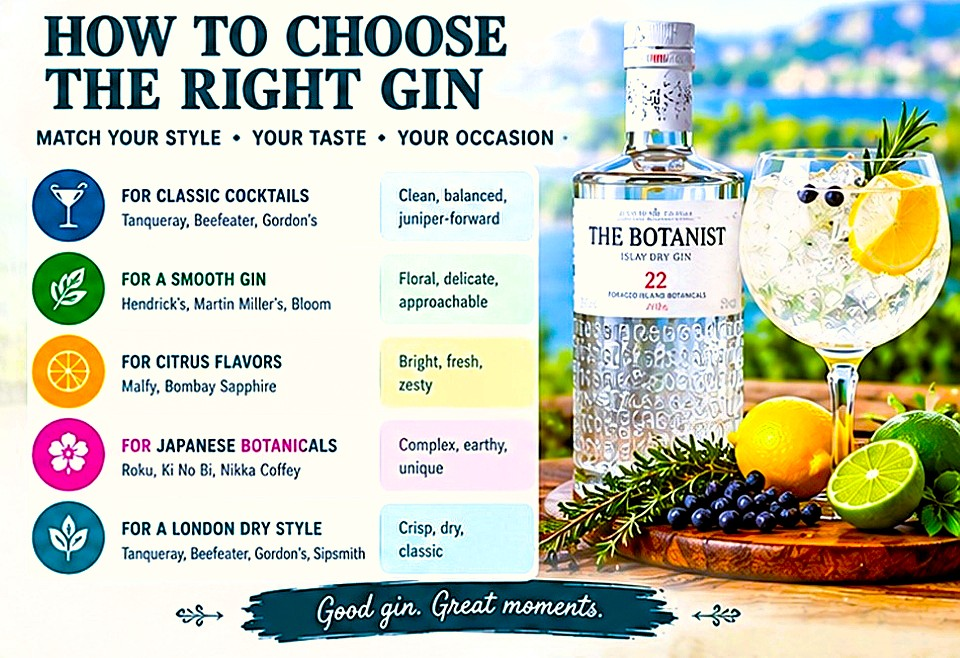
How to choose the right gin based on classic cocktails, smoothness, citrus flavors, Japanese botanicals and London Dry style
Building a 10-Bottle Gin Collection
You don’t need 30 bottles.
Try:
1. Gordon’s
Classic high-volume London Dry.
2. Tanqueray
Premium classic.
3. Beefeater
Traditional London style.
4. Hendrick’s
Floral and contemporary.
5. Fords
Bartender-focused cocktail gin.
6. Roku
Japanese botanical style.
7. Monkey 47
Complex craft gin.
8. Plymouth
Historic cocktail tradition.
9. Malfy
Citrus-forward style.
10. The Botanist
Herbal and botanical complexity. That gives you a remarkably broad range.
Frequently Asked Questions
What is the most popular gin brand in the world?
By global sales volume, Ginebra San Miguel is currently the world’s largest gin brand, with 40.8 million nine-liter cases sold in 2025 according to Drinks International’s Millionaires’ Club 2026.
What is the world’s second-biggest gin brand?
Gordon’s, with approximately 7.2 million nine-liter cases in 2025.
What is the most popular premium gin?
Among premium bars, Tanqueray is currently the strongest answer. Drinks International named it the bestselling gin in the world’s best bars in 2026, for the 10th time.
What is the best gin in the world?
There is no universally best gin. Tanqueray is a strong classic choice, Hendrick’s is famous for its floral profile, Roku showcases Japanese botanicals, and Fords is highly regarded among professional bartenders.
What is the best gin for Gin & Tonic?
Tanqueray, Bombay Sapphire, Hendrick’s, Roku and Gordon’s are excellent choices depending on whether you prefer classic juniper, floral or contemporary botanical flavors.
What is the best gin for a Martini?
Tanqueray, Fords, No. 3, Sipsmith and Plymouth are particularly strong options.
What is the best gin for a Negroni?
Tanqueray, Beefeater, Fords, Plymouth and Hendrick’s all work well.
What is the best gin for a Gimlet?
Tanqueray, Fords, No. 3, Sipsmith and Plymouth are excellent choices.
What is London Dry gin?
London Dry is a legally defined type of distilled gin in the EU. Its flavor must come from the distillation process, and the resulting gin cannot contain added coloring and is subject to strict rules concerning ingredients and sweetening.
Does London Dry gin have to be made in London?
No. “London Dry” is a style/legal designation, not a requirement that the gin be distilled in London. The relevant EU definition specifies production characteristics rather than a London geographic origin.
What is the main ingredient in gin?
Juniper is the defining botanical. EU regulations require the taste of gin to be predominantly juniper.
What botanicals are used in gin?
Common botanicals include juniper, coriander, angelica, citrus peel, cardamom, orris root, licorice, cassia, herbs, flowers, tea and spices.
Is gin stronger than vodka?
Not necessarily. Both can be bottled at similar or substantially different strengths. EU regulations set a 37.5% minimum ABV for gin.
Is gin sweet?
Classic dry gin is generally not sweet in the way a liqueur is. Modern flavored gins can have sweeter or fruitier profiles.
What is contemporary gin?
It’s an informal industry term for gins that place more emphasis on non-juniper botanicals and unusual flavor profiles.
Is Hendrick’s a London Dry gin?
Hendrick’s uses the gin category but has a more contemporary botanical identity centered on cucumber and rose rather than a strictly traditional London Dry profile.
Is Japanese gin good?
Yes. Roku, Ki No Bi and Nikka Coffey Gin offer highly distinctive Japanese approaches to botanical gin.
What is the smoothest gin?
Smoothness is subjective, but Hendrick’s, Martin Miller’s and some contemporary floral gins are often appealing to drinkers who prefer a softer profile.
What is the most juniper-forward gin?
Traditional London Dry gins such as Tanqueray and Beefeater are strong choices if juniper is your priority.
What gin is best for beginners?
Bombay Sapphire, Gordon’s, Hendrick’s and Roku are accessible starting points, depending on whether you prefer classic, floral or citrus-oriented flavors.
What gin is best for cocktails?
Tanqueray and Fords are especially versatile. Beefeater and Gordon’s are excellent value choices for classic drinks.
Why is gin popular?
Gin combines a relatively recognizable core flavor—juniper—with enormous botanical flexibility. That makes it extremely versatile in cocktails and mixed drinks.
Is expensive gin better?
Not necessarily. Premium gin often offers more complex botanicals, production methods and packaging, but a classic inexpensive gin can be excellent in cocktails.
What is the best gin for summer?
Citrus and floral gins are particularly refreshing in warm weather. Malfy, Hendrick’s, Bombay Sapphire and Roku all work well in light drinks.
What garnish should I use with gin?
Use a garnish that reinforces the gin’s existing botanicals. Lemon works well with classic London Dry; cucumber with Hendrick’s; citrus and seasonal Japanese ingredients with Roku.
Why does gin taste piney?
That is the natural character of juniper. Juniper contains aromatic compounds that give gin its characteristic pine, resin and herbal notes.
Final Thoughts: The World’s Most Popular Gin Brands
Gin is one of the few spirits where global scale, premium-bar prestige and craft influence can look completely different.
That’s exactly what makes the category so interesting. By global sales volume, Ginebra San Miguel dominates. At 40.8 million nine-liter cases in 2025, it dwarfed every other gin brand in Drinks International’s Millionaires’ Club ranking. Gordon’s followed with 7.2 million cases.
Then came:
- Tanqueray
- Bombay Sapphire
- Beefeater
The numbers demonstrate how powerful mainstream gin remains around the world but move from retail volume into the world’s best cocktail bars and the story changes.
Tanqueray is the current benchmark. It was named the bestselling gin in Drinks International’s 2026 Brands Report for the 10th time and was the number-one gin in 30% of the bars surveyed.
Move again into bartender opinion and another brand rises:
- Fords Gin.
It debuted at number one in the 2026 Bartenders’ Choice ranking, demonstrating the difference between actual sales and professional preference.
And somewhere between those worlds are brands such as:
- Hendrick’s
- Monkey 47
- Roku
- The Botanist
- Sipsmith
- Plymouth
- Ki No Bi
- Nikka Coffey Gin
- Gin Mare
- No. 3.
These brands may never match the enormous global volume of Ginebra San Miguel or Gordon’s. But they have enormous influence on what modern gin tastes like. That’s the real story of gin today. The category has become much larger than traditional London Dry.
Classic London Dry still matters enormously. Tanqueray, Beefeater, Gordon’s, Fords and Sipsmith demonstrate why juniper-forward gin remains the backbone of cocktail culture, but contemporary producers have expanded the category dramatically.
- Hendrick’s brought cucumber and rose into the mainstream.
- Roku made Japanese seasonal botanicals part of the global premium-gin conversation.
- Gin Mare demonstrated the potential of Mediterranean botanicals.
- Monkey 47 showed how a highly complex recipe could become a global luxury brand.
- The Botanist turned the botanical identity of Islay into a major gin story.
- Fords has demonstrated that professional bartenders still have a major role in determining where the category goes next.
For consumers, that means there has never been a better time to explore.
If you’re new to gin, start with a classic:
- Gordon’s
- Tanqueray
Then compare it with something contemporary:
- Hendrick’s
Then something regional:
- Roku
Then something more complex:
- Monkey 47
Then build a few classic cocktails:
- Make a Gin & Tonic.
- Make a Martini.
- Make a Negroni.
- Make a Gimlet.
Notice how the gin changes the drink. That is where the real education begins. A highly aromatic gin may be wonderful neat but too dominant in a delicate cocktail.
- A classic London Dry may be perfect in a Negroni.
- A floral gin may be spectacular with light tonic.
- A citrus gin can transform a summer highball.
- A Japanese gin may reveal entirely new flavors when paired with Japanese-inspired ingredients.
- And don’t assume the most expensive bottle is automatically the best.
- A great gin is the bottle that performs the way you want it to.
For a Martini, that’s often:
dry + juniper + elegant
For a Negroni:
bold + structured + aromatic
For a Gin & Tonic:
fresh + balanced + refreshing
For a summer cocktail:
citrus + floral + bright
Once you understand that, shopping becomes much easier. The most important thing is to explore different botanical styles rather than simply collecting famous labels.
- Try traditional.
- Try floral.
- Try citrus.
- Try Mediterranean.
- Try Japanese.
- Try craft.
- Try a high-juniper London Dry.
Then try something that barely resembles it. That contrast is where gin becomes fascinating. And that is why the world of gin continues to grow even when overall category volumes are relatively flat.
There will always be another botanical. Another distillation technique. Another regional ingredient. Another cocktail and another bottle waiting to become your favorite.