
Blog
The Best Islay Single Malt Scotch Whisky Brands: 20 Exceptional Whiskies to Discover


The Best Islay Single Malt Scotch Whisky Brands: 20 Exceptional Whiskies to Discover
Islay single malt Scotch whisky is famous for its distinctive combination of peat smoke, maritime character, earthy complexity and remarkable depth of flavour. Produced on the Scottish island of Islay, these whiskies range from intensely smoky, medicinal and powerful drams to elegant, unpeated single malts with notes of citrus, honey, nuts, dried fruit and coastal salt.
For whisky enthusiasts, Islay offers an extraordinary range of styles. Ardbeg, Laphroaig and Lagavulin are celebrated for powerful peat smoke, while Bowmore balances smoke with fruit and sweetness. Bunnahabhain is renowned for its unpeated and sherry-influenced expressions, and Bruichladdich demonstrates that Islay whisky can be fresh, fruity and barley-driven as well as intensely peated.
Other important names include Caol Ila, Kilchoman, Port Charlotte, Octomore and Ardnahoe, each offering a different perspective on the island’s whisky-making traditions.
In this guide, we explore 20 notable Islay single malt Scotch whisky brands and ranges, explain what makes each distinctive, compare their flavour profiles, and provide practical advice for choosing a bottle. Whether you are discovering peated whisky for the first time or expanding a collection of premium Scotch, understanding these producers can help you find a style that suits your preferences.
For readers in Toronto and the Greater Toronto Area, this guide also provides a useful starting point for exploring Scotch whisky selections and comparing options available through local retailers and delivery services.
Table of Contents
-
-
- What Makes Islay Single Malt Scotch Whisky Special?
- Understanding Peat Smoke and Islay Whisky Flavours
- The 20 Best Islay Single Malt Scotch Whisky Brands and Ranges
- Best Islay Whiskies for Beginners
- Best Islay Whiskies for Peat Lovers
- Best Unpeated and Lightly Peated Islay Whiskies
- Islay Whisky Compared With Other Scotch Regions
- How to Choose an Islay Single Malt
- How to Serve and Enjoy Islay Whisky
- Food Pairings for Islay Scotch
- Islay Whisky as a Gift
- Frequently Asked Questions
- Final Thoughts
-
1. What Makes Islay Single Malt Scotch Whisky Special?
Islay, pronounced approximately “EYE-luh,” is an island in Scotland’s Inner Hebrides, off the west coast of the mainland. It is one of the five traditional Scotch whisky regions recognised by the Scotch Whisky Association, alongside Highland, Lowland, Speyside and Campbeltown.
The island has an international reputation for whisky with pronounced peat smoke, but its distilleries produce a broader spectrum of styles than this reputation sometimes suggests. The Scotch Whisky Association describes Islay as particularly associated with fiery, heavily peated whiskies, while individual producers demonstrate how different production methods can create very different results within the same region.
Official regional guide: https://www.scotch-whisky.org.uk/discover-scotch/enjoying-scotch/scotch-whisky-regions/
The influence of peat
Peat is partially decomposed organic material that accumulates in waterlogged environments over long periods. In traditional whisky production, peat can be burned to dry malted barley. Smoke from this process deposits compounds that contribute to the distinctive smoky aromas found in many Islay whiskies.
Depending on the whisky, these aromas may evoke a wood fire, seaweed, smoked meat, damp earth, tar, medicinal notes or a coastal bonfire. The intensity and character vary according to the peat used, the malting process, fermentation, distillation and maturation.
Peat is not the only influence on flavour. The shape of the stills, spirit cut, cask type, maturation conditions and bottling strength also affect the finished whisky.
A maritime environment
Islay’s coastal setting forms an important part of its identity. Many distilleries sit close to the sea, and their surroundings contribute to the atmosphere and character associated with the island.
Some whiskies feature flavours commonly described as briny, mineral, coastal or sea-spray-like. These tasting descriptions are subjective sensory comparisons, however; they do not mean that seawater is an ingredient.
Why Islay whiskies taste different from one another
Islay is not a single flavour profile. A heavily peated Ardbeg, a medicinal Laphroaig, a rich Lagavulin, a balanced Bowmore and an unpeated Bunnahabhain can offer markedly different experiences.
Even within one distillery’s range, a standard bottling, an older age-stated whisky and a limited cask-finished release may differ substantially. For this reason, choosing an Islay whisky by brand alone is only the beginning. Understanding the specific expression is equally important.
2. Understanding Peat Smoke and Islay Whisky Flavours
Before comparing individual brands, it helps to understand the terms used to describe Islay whisky.
Peated whisky
Peated whisky is made using malted barley exposed to peat smoke during drying. The resulting spirit may have aromas of smoke, earth, ash, herbs, leather or medicinal compounds.
Peat intensity is sometimes measured in parts per million (ppm), generally referring to phenol levels associated with malted barley. However, a ppm figure is not a complete measure of how smoky a finished whisky will taste. Production and maturation can significantly influence the final impression.
Unpeated whisky
Unpeated whisky is produced without using peat smoke as the defining drying influence. It may still have complexity from fermentation, distillation and oak maturation, with flavours such as citrus, malt, vanilla, nuts, fruit and spice.
Bunnahabhain’s core style and Bruichladdich’s unpeated range are important examples of Islay’s diversity.
Light, medium and heavily peated styles
-
-
- Lightly peated: Smoke is present but often shares the stage with malt, fruit and sweetness.
- Moderately peated: Smoke is more obvious, with a balance of earthy, coastal, fruity or spicy flavours.
- Heavily peated: Strong smoke, medicinal notes, tar, ash or intense earthy character may dominate.
- Very heavily peated: Some bottlings deliver exceptional smoke intensity, although concentration does not automatically mean greater complexity or quality.
-
Cask influence
Many Scotch whiskies mature in oak casks that previously held bourbon, sherry or other wines and spirits. Ex-bourbon casks can contribute vanilla, coconut and sweet spice; sherry-seasoned or sherry casks can contribute dried fruit, nuts and richer spice. These are broad tendencies, not guarantees.
The interaction between peat and oak is one of the most compelling aspects of Islay whisky. Smoke may contrast with vanilla sweetness, complement dried fruit, or become more integrated as the whisky matures.

A selection of Islay single malt Scotch whisky bottles representing renowned distilleries and different whisky styles.
3. The 20 Best Islay Single Malt Scotch Whisky Brands and Ranges
The following selection includes established Islay distilleries, individual single malt brands and distinctive ranges. Some entries are expressions or sub-ranges from the same producer rather than separate distilleries; they are included because whisky buyers often compare them as distinct styles.
1. Ardbeg: Bold, Complex and Intensely Smoky
Ardbeg is one of Islay’s best-known names among enthusiasts of heavily peated single malt Scotch whisky. Its whiskies are often associated with assertive smoke, earthy intensity, citrus, pepper and a distinctive combination of sweetness and savoury character.
The distillery’s portfolio includes well-known expressions such as Ardbeg Ten, Uigeadail and Corryvreckan. Exact availability, age statements and bottling specifications vary by market and release.
Typical flavour profile: Peat smoke, citrus, black pepper, earthy notes, malt sweetness and, depending on the expression, dark fruit or richer oak-derived flavours.
Who should consider it? Drinkers who enjoy powerful smoke and complexity, and experienced peat enthusiasts looking for a whisky with intensity and depth.
Ardbeg Ten is a useful starting point for understanding the distillery’s characteristic style. Uigeadail is often explored by those interested in the interaction between smoke and richer cask influences, while Corryvreckan is associated with a particularly assertive profile. Ardbeg can be an excellent choice for someone who already enjoys smoky Scotch and wants a bottle with a strong personality.
Official website: https://www.ardbeg.com/
2. Laphroaig: Medicinal Smoke and Coastal Intensity
Laphroaig is famous for an unmistakable combination of peat smoke, medicinal aromas, earthy notes and maritime character. Some drinkers describe its profile as iodine-like, antiseptic, seaweed-like or reminiscent of a coastal bonfire.
These descriptions are subjective, but they help explain why Laphroaig can provoke strong reactions. Its distinctive character is precisely what many enthusiasts appreciate. The range includes Laphroaig 10 Year Old and other age-stated and special releases. Cask finishes and higher-strength bottlings can provide additional layers of flavour.
Typical flavour profile: Peat smoke, medicinal notes, seaweed-like aromas, earthy character, oak, vanilla and a long, smoky finish.
Who should consider it? Whisky drinkers who enjoy intense, unmistakably peated Scotch and want to experience one of Islay’s defining styles.
For a first bottle, a widely available core expression is generally a more practical choice than an expensive limited release. Experienced drinkers may wish to compare different age statements and cask treatments to see how maturation modifies the distillery’s distinctive spirit.
Official distillery information: https://www.laphroaig.com/distillery
3. Lagavulin: Rich, Deep and Smouldering
Lagavulin is another cornerstone of Islay whisky. It is frequently associated with deep peat smoke, rich malt, earthy flavours and a slow, persistent finish. Lagavulin 16 Year Old is among the best-known age-stated Islay single malts. Its reputation rests on a combination of smoke, mature oak influence and a rounded, substantial character. Other releases offer different strengths, ages and maturation profiles.
Typical flavour profile: Dense smoke, earthy peat, dried herbs, malt, oak, savoury notes and a lingering finish.
Who should consider it? Drinkers who want a substantial, mature-feeling smoky whisky with layers of flavour rather than smoke alone.
Lagavulin is often a rewarding comparison with Ardbeg and Laphroaig. All three are strongly associated with peat, but their individual balance of smoke, sweetness, texture and finish differs. An age statement is useful information, but it is not a universal quality ranking. A younger whisky can be excellent, while an older bottling may not suit every palate.
Official brand information: https://www.diageo.com/en/our-brands/scotch-whisky/lagavulin
4. Bowmore: Balanced Smoke, Fruit and Oak
Bowmore offers a style that can bridge the gap between forceful peat and more rounded, fruit-driven whisky. Its expressions often combine smoke with citrus, malt sweetness, dried fruit and oak-derived flavours.
The distillery has a long history on Islay, and its range includes age-stated bottlings as well as special releases. Different expressions vary considerably, so buyers should consult the individual bottle’s specifications rather than assuming that all Bowmore whiskies taste the same.
Typical flavour profile: Peat smoke, citrus, fruit, vanilla, oak, gentle spice and, in some releases, richer dried-fruit notes.
Who should consider it? Drinkers seeking an Islay whisky where smoke remains important but does not necessarily dominate every other flavour.
Bowmore can be a useful introduction for someone who wants to explore peat without immediately choosing the most aggressively smoky style. It is also worth considering for experienced enthusiasts interested in the interaction between coastal character, fruit and oak maturation.
Official website: https://www.bowmore.com/
5. Bruichladdich: Islay Whisky Beyond Peat
Bruichladdich is essential to any discussion of Islay single malt because it challenges the assumption that every whisky from the island must be smoky. Its core Bruichladdich range is unpeated, highlighting malt, fruit, texture and production choices rather than relying on peat smoke as the main flavour. The distillery also produces Port Charlotte and Octomore, two very different heavily peated ranges.
Typical flavour profile: The unpeated range may show citrus, orchard fruit, malt, floral notes and oak; other ranges offer much stronger smoke.
Who should consider it? Whisky enthusiasts interested in Islay’s diversity, especially those who enjoy comparing unpeated spirit with heavily peated alternatives.
Bruichladdich is also relevant to readers interested in provenance and barley. Its official materials discuss its island-based production philosophy and focus on raw materials.
A comparison of the unpeated Bruichladdich range with Port Charlotte can be particularly informative: it demonstrates how different approaches to malt preparation can create markedly different whisky profiles within one producer’s portfolio.
Official website: https://www.bruichladdich.com/
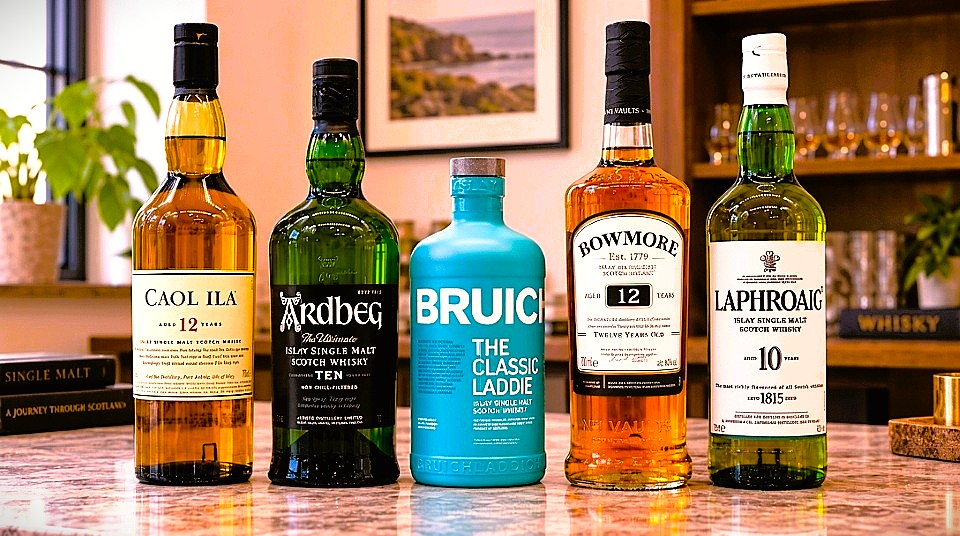
islay-single-malt-scotch-whisky-brands
6. Port Charlotte: Heavily Peated and Structured
Port Charlotte is Bruichladdich’s heavily peated Islay single malt range. It offers an alternative to the more fruit-forward, unpeated Bruichladdich expressions while retaining the same broad connection to the distillery and island.
Port Charlotte whiskies are often described in terms of dry smoke, earthy peat, maritime notes, malt and a firm structure. Individual releases may introduce additional complexity through age, cask selection and bottling strength.
Typical flavour profile: Dry peat smoke, earthy notes, coastal character, malt, oak and spice.
Who should consider it? Drinkers who want a serious peated whisky with depth, but who also enjoy exploring the differences between distilleries and production approaches.
Port Charlotte is worth comparing directly with Ardbeg, Laphroaig and Lagavulin. The smoke may be intense, but the balance of malt, texture and oak differs. Consult the specific release details when comparing alcohol strength, age statement and maturation.
Official range information: https://www.bruichladdich.com/
7. Octomore: An Exploration of Extreme Peat
Octomore is Bruichladdich’s highly peated single malt range. It is known for bottlings with exceptionally high stated peat levels, often attracting collectors and experienced whisky enthusiasts.
However, peat intensity is not a simple measure of quality. A high ppm figure does not automatically make a whisky more complex, balanced or enjoyable. The final sensory experience depends on the spirit, maturation, bottling strength and the drinker’s own preferences.
Typical flavour profile: Powerful smoke, earthy peat, malt, spice and a variety of fruit or oak-derived notes depending on the release.
Who should consider it? Experienced peat enthusiasts and collectors who want to explore the upper end of peat intensity.
Octomore releases are often numbered and differentiated by series and production details. Buyers should check the precise release rather than assuming that all Octomore bottlings share the same age, cask recipe or strength.
For someone new to peated whisky, a standard core-range Islay single malt is usually a more practical starting point. Octomore is better approached as a deliberate exploration of peat and whisky production.
Official information: https://www.bruichladdich.com/
8. Bunnahabhain: Richness Without Dominant Peat
Bunnahabhain is one of the most important examples of an unpeated or less overtly smoky Islay single malt. Its core style is often associated with malt richness, nuts, dried fruit, maritime character and sherry-cask influence, although its portfolio also includes peated expressions.
Typical flavour profile: Nuts, malt, dried fruit, gentle spice, oak and coastal notes; individual bottlings vary.
Who should consider it? Drinkers who want to explore Islay without making heavy smoke the central feature.
Bunnahabhain can appeal to fans of richer, sherry-influenced Scotch as well as those who prefer a less smoky dram. Some expressions provide a useful contrast with the island’s more famous peated brands. Its character also illustrates why regional labels should not be treated as a promise of one precise taste. Islay identifies geographical origin, not a requirement that every single malt be heavily peated.
Official distillery information: https://bunnahabhain.com/en-us/pages/about-us
9. Caol Ila: Clean, Maritime Smoke
Caol Ila is known for a peated style that many drinkers perceive as relatively clean, fresh and coastal. Smoke remains central to many of its expressions, but it may be accompanied by citrus, malt, herbs and a lighter-feeling structure.
Typical flavour profile: Peat smoke, citrus, maritime notes, herbs, malt and gentle sweetness.
Who should consider it? Drinkers who enjoy smoke but want to explore a style that can feel less dense or medicinal than some other Islay malts.
Caol Ila is particularly interesting when tasted alongside Laphroaig or Lagavulin. The comparison helps reveal how peat can be expressed differently even among distilleries on the same island. Independent bottlings may also offer different ages and cask treatments. When buying one, check the distillery attribution, age, cask information, bottling strength and whether the bottler has supplied reliable details.
Official brand information is available through Diageo: https://www.diageo.com/
10. Kilchoman: Farm-Connected, Modern Islay Whisky
Kilchoman is a comparatively modern Islay distillery that has become a notable name among enthusiasts. It is known for its farm-connected approach and for exploring how barley sourcing, malting, production and maturation affect the finished spirit.
Its range includes expressions such as Machir Bay and Sanaig, with different balances of peat and cask influence. Availability and exact specifications depend on the release and market.
Typical flavour profile: Peat smoke, citrus, malt, spice, fruit and oak; sherry-influenced bottlings may show richer dried-fruit character.
Who should consider it? Drinkers interested in contemporary Islay whisky, distinctive production choices and comparisons between bourbon- and sherry-influenced maturation.
Kilchoman can be a strong choice for enthusiasts who want to look beyond the most widely recognised legacy brands. It is also useful for learning how cask selection can change the way smoke and fruit interact. When comparing expressions, review the label for age statement, cask details, bottling strength and any special production information.
Official website: https://www.kilchomandistillery.com/
11. Ardnahoe: A Newer Name in Islay Whisky
Ardnahoe is a newer Islay distillery that adds another perspective to the island’s established whisky landscape. Its identity is connected to the tradition of peated Islay malt, while its relatively recent arrival means its long-term range and reputation will continue to develop as more whisky matures.
Typical flavour profile: The expected profile depends on the specific release; buyers should use published distillery tasting notes and bottling information rather than assume that every expression will resemble an established Islay classic.
Who should consider it? Whisky enthusiasts interested in exploring newer producers and following the development of an emerging distillery.
For newer distilleries, age statements and available releases may change over time. Before buying, verify the precise bottle, its maturation history and the producer’s current specifications.
Official website: https://ardnahoedistillery.com/
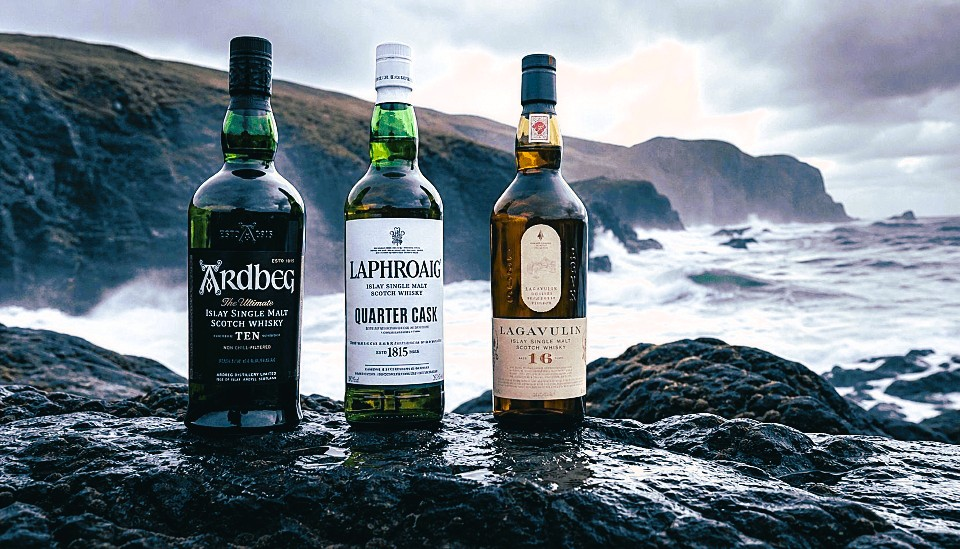
A selection of Islay single malt Scotch whisky
12. Bowmore Age-Stated Expressions: A Study in Maturation
Bowmore’s age-stated bottlings are worth considering as a separate point of comparison because maturation can alter the balance between smoke, fruit, sweetness and oak.
A younger release may present a more immediate smoky or citrus-led impression, while an older bottling may show more integrated flavours or additional oak influence. These are general possibilities, not rules: cask history and individual release characteristics matter as much as age alone.
Typical flavour profile: Smoke, citrus, fruit, vanilla, oak and spice, with the balance changing by expression.
Who should consider it? Drinkers who want to compare how maturation influences an established Islay distillery’s style.
When comparing age-stated bottles, look beyond the number on the label. Consider the cask type, alcohol strength, bottling date where available, and whether the whisky is part of a standard range or a limited release.
13. Laphroaig Cask-Strength and Special Releases
Beyond its widely known core bottlings, Laphroaig produces releases that allow drinkers to explore different strengths and maturation choices. Higher-strength or cask-strength bottlings can present more concentrated aromas and flavours. They may also benefit from careful dilution with a little water, which can change the way aromas emerge.
Typical flavour profile: Medicinal peat, smoke, earthy notes and oak, with differences driven by the particular release.
Who should consider it? Experienced drinkers who enjoy Laphroaig’s distinctive character and want to explore it in different formats.
Special releases can be harder to find and may vary substantially in price. Check the exact product information and compare prices for the same bottle rather than relying on the brand name alone.
14. Ardbeg Uigeadail: Smoke and Rich Cask Character
Ardbeg Uigeadail deserves attention for its association with intense peat and richer cask influences. It is often explored by enthusiasts who want smoke alongside darker, sweeter and more substantial flavours.
Typical flavour profile: Peat smoke, malt, spice, dark fruit and rich sweetness, depending on individual perception and bottle variation.
Who should consider it? Fans of bold Islay whisky who want to compare smoke with more concentrated, cask-driven character.
Uigeadail is a useful example of why cask influence matters. Peat does not exist in isolation: sweetness, fruit, oak and texture can alter the overall impression of smoke. For a meaningful comparison, taste it alongside Ardbeg Ten, noting differences in intensity, texture, sweetness and finish.
15. Lagavulin 16 Year Old: A Benchmark for Mature Islay Malt
Lagavulin 16 Year Old is a widely recognised reference point for mature, smoky Islay whisky. It combines a pronounced peated character with oak maturation and a substantial finish.
Typical flavour profile: Smoke, earthy peat, malt, oak, dried herbs and savoury depth.
Who should consider it? Drinkers who appreciate traditional Islay smoke and want a well-known age-stated expression to use as a benchmark.
It can be particularly useful in a comparative tasting with Bowmore, Laphroaig and Ardbeg. The aim is not to declare one universally superior, but to identify which balance of smoke, sweetness, texture and maturation suits your palate.
16. Bunnahabhain Sherry-Influenced Expressions
Bunnahabhain’s sherry-influenced expressions demonstrate how a less overtly smoky Islay single malt can develop rich, layered flavours. Depending on the bottle, sherry casks may contribute dried fruit, nuts, chocolate-like notes and warming spice. These flavours can complement malt richness and a coastal impression without requiring intense peat smoke.
Typical flavour profile: Dried fruit, nuts, spice, oak and malt, with individual bottlings varying in sweetness and intensity.
Who should consider it? Fans of sherry-cask Scotch and drinkers who want a richer Islay whisky without a strongly smoky profile.
Check the exact expression and cask information. A sherry-cask description alone does not tell you whether a whisky will be sweet, dry, heavily oaked or particularly rich.
17. Bruichladdich’s Unpeated Core Range: Fresh and Barley-Led
The unpeated Bruichladdich range deserves its own place in this guide because it offers a very different way to experience Islay single malt. Rather than making smoke the dominant feature, these whiskies can highlight malt, citrus, orchard fruit, floral impressions and the effects of fermentation and distillation.
Typical flavour profile: Malt, citrus, orchard fruit, floral notes and oak, depending on the release.
Who should consider it? Drinkers who want an Islay single malt but dislike heavy peat, as well as enthusiasts interested in comparing the influence of malt preparation.
This range is a useful reminder that the region’s identity is geographical and cultural, not a single prescribed flavour. It is entirely possible to explore Islay whisky without starting with a heavily peated dram.
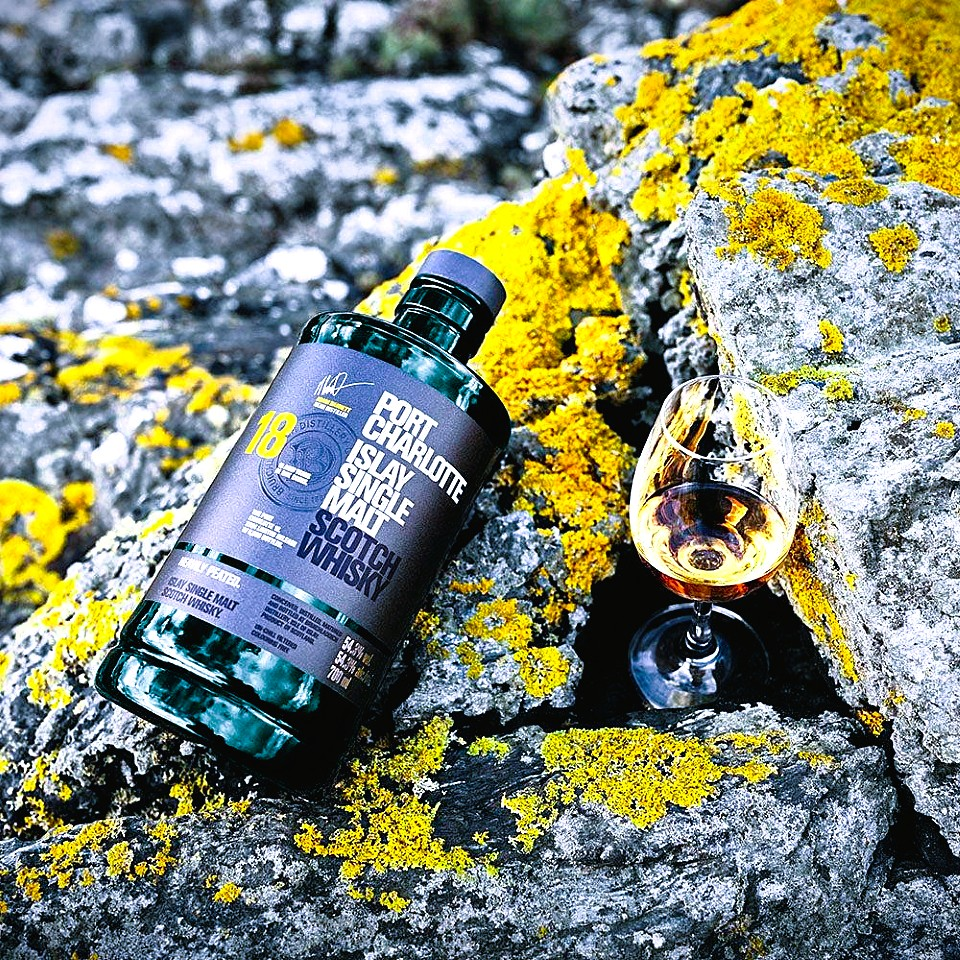
Port Charlotte-Islay single malt Scotch whisky bottle and tasting glass
18. Port Charlotte Age-Stated and Limited Releases
Port Charlotte’s various releases allow enthusiasts to explore how maturation, cask selection and bottling strength interact with a heavily peated spirit. Depending on the bottle, a release may place more emphasis on dry smoke, fruit, spice or oak. Always check the particular product rather than assuming a fixed flavour profile across the range.
Typical flavour profile: Peat smoke, earthy notes, malt, spice and cask-derived complexity.
Who should consider it? Drinkers who enjoy robust smoke and want to explore a range of peated Islay expressions beyond the most familiar labels.
Age statements can help buyers compare bottles, but they should be considered alongside cask history and strength. A higher price or older age does not automatically guarantee a better match for a particular palate.
19. Independent Bottlings of Islay Single Malt
Independent bottlers sometimes release Islay single malts with different ages, cask finishes and bottling strengths from the distillery’s standard range. Some bottles disclose the distillery; others may use more general descriptions, depending on the product and relevant labelling rules.
Typical flavour profile: Highly variable, ranging from medicinal and heavily peated to fruity, maritime or comparatively gentle.
Who should consider it? Enthusiasts who already understand several distillery styles and want to compare unusual casks or less common releases.
Independent bottlings can be rewarding, but they require careful research. Confirm the bottler, age statement, cask details, strength, release size and provenance. If the distillery is not named, do not assume its identity based on flavour alone. For collectors, bottle condition and authenticity are also important. Buy through reputable sellers and be cautious of unusually low prices for rare releases.
20. Islay Single Malt Distillery-Exclusive and Limited Editions
Distillery-exclusive and limited-edition bottlings can provide a different perspective on familiar producers. They may feature unusual cask combinations, special production details, higher bottling strengths or distinctive age statements.
Typical flavour profile: Depends on the distillery and release; it may emphasise peat, fruit, oak, maritime character or a combination of these.
Who should consider it? Experienced whisky drinkers, collectors and people looking for a special-occasion bottle.
Limited availability can create excitement, but scarcity is not the same as quality. Before paying a premium, compare the release’s specifications, independent reviews where available, and prices from reputable retailers. Choose a bottle because its flavour profile and provenance appeal to you, not simply because it is difficult to find.
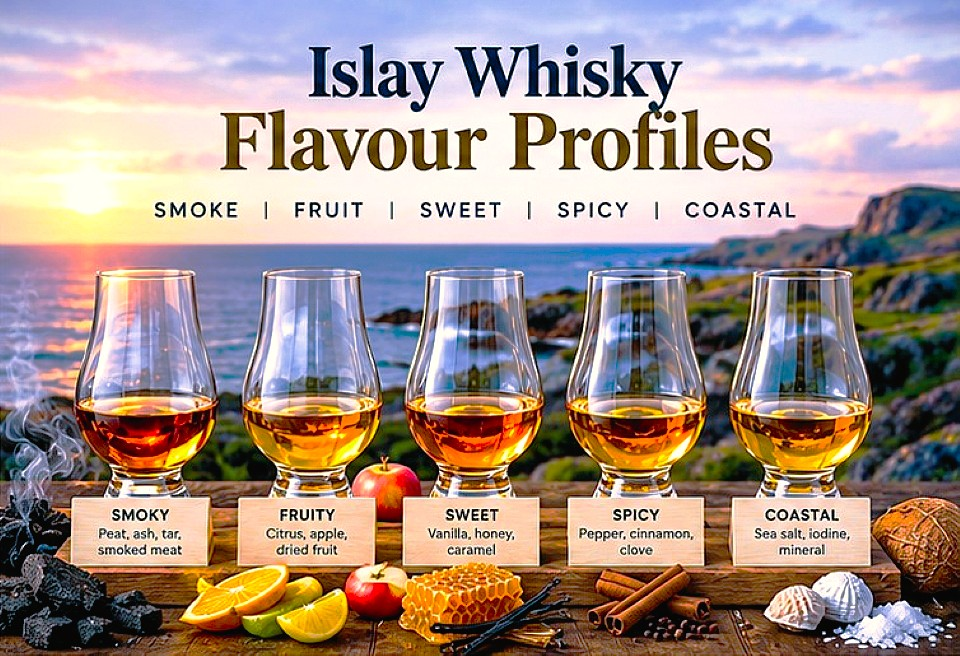
Whisky tasting glasses illustrating common Islay Scotch flavour profiles, including peat smoke, fruit, sweetness, spice and coastal notes.
4. Best Islay Whiskies for Beginners
If you are new to Islay whisky, the strongest smoke is not necessarily the best place to start. A gradual tasting can help you understand the range of flavours before moving toward more intense expressions.
For a gentle introduction
Consider a less overtly smoky style such as unpeated Bruichladdich or a suitable Bunnahabhain expression. These can help you become familiar with malt, fruit, oak and texture without intense peat dominating the experience.
For a balanced introduction to peat
Bowmore is worth exploring for a combination of smoke, fruit and sweetness. Some Caol Ila expressions may also appeal to drinkers looking for a cleaner-feeling smoky profile.
For a classic smoky experience
Laphroaig, Ardbeg and Lagavulin offer distinctive approaches to peat. Try a standard core expression from one producer before investing in a rare or expensive bottle.
A practical beginner tasting
Compare three small pours:
-
-
- An unpeated Islay single malt.
- A moderately smoky expression.
- A more intensely peated whisky.
-
Use the same glass style, pour small measures, and taste slowly. Note which aromas you enjoy and whether you prefer smoke balanced by fruit, sweetness, coastal notes or oak. This approach provides more useful information than choosing solely by a bottle’s reputation.
5. Best Islay Whiskies for Peat Lovers
For enthusiasts who specifically seek smoke, several producers are worth comparing.
-
-
- Ardbeg: Often favoured by drinkers who enjoy intense peat alongside citrus, pepper and complexity.
- Laphroaig: A distinctive option for medicinal, earthy and coastal notes.
- Lagavulin: A substantial style associated with deep smoke and mature character.
- Port Charlotte: Heavily peated whisky from Bruichladdich, offering a different balance of smoke and malt.
- Octomore: A range for enthusiasts exploring very high peat intensity.
- Kilchoman: A contemporary Islay producer offering different expressions and cask influences.
-
Do not assume that the highest peat measurement will deliver the most enjoyable whisky. Some drinkers prefer dry, sharp smoke, while others favour a rounder, sweeter or more maritime profile.
6. Best Unpeated and Lightly Peated Islay Whiskies
Islay is worth exploring even if you do not enjoy heavy smoke.
Bunnahabhain
Its core style is often a strong candidate for drinkers who favour malt richness, nuts, fruit and sherry-influenced flavours over dominant peat.
Bruichladdich
The unpeated range is useful for examining the island’s barley and distilling traditions without relying on peat smoke.
Bowmore
Some expressions offer a balance in which smoke is present but shares attention with fruit, sweetness and oak.
Individual releases matter
Distilleries can release peated and unpeated products, or bottlings with different levels of peat influence. Always check the exact product description. The distillery name alone may not tell you enough about the style of a particular bottle.
7. Islay Whisky Compared With Other Scotch Regions
Scotch whisky regions offer useful starting points for understanding flavour, although regional descriptions are broad tendencies rather than strict rules.
| Region | Common style tendencies | Often suits drinkers who enjoy |
|---|---|---|
| Islay | Peat smoke, maritime notes, earthy character; some unpeated styles | Smoke, savoury depth, coastal character and bold contrasts |
| Speyside | Fruit, honey, vanilla, malt and frequent sherry-cask influence | Fruity, rounded and often less smoky whisky |
| Highland | Highly varied, from light and fruity to rich, coastal or smoky | A broad range of styles and textures |
| Lowland | Often lighter, softer and more delicate | Gentle malt, floral notes and approachable profiles |
| Campbeltown | Frequently robust, with combinations of fruit, salt, smoke and spice | Distinctive, complex and sometimes oily whisky |
These comparisons are not absolute. A sherry-matured Islay whisky may be richer and fruitier than expected, while a Highland or Speyside expression may be heavily peated.
For authoritative regional definitions, consult the Scotch Whisky Association’s guide: https://www.scotch-whisky.org.uk/discover-scotch/enjoying-scotch/scotch-whisky-regions/

An Islay single malt Scotch whisky bottle and tasting glass overlooking a rugged Scottish coastal landscape.
8. How to Choose an Islay Single Malt
Choosing a bottle becomes easier when you consider flavour preference, maturation, age, alcohol strength and budget together.
Start with your preferred flavour
Ask yourself which profile sounds most appealing:
-
-
- Intense smoke: Explore Ardbeg, Laphroaig, Lagavulin, Port Charlotte or selected Octomore releases.
- Smoke with fruit and sweetness: Consider Bowmore or selected Kilchoman expressions.
- Rich, sherry-influenced character: Compare appropriate Bunnahabhain and other cask-influenced releases.
- Less smoke: Explore unpeated Bruichladdich or suitable Bunnahabhain expressions.
- Something unusual: Research independent bottlings and limited releases carefully.
-
Understand age statements
An age statement indicates the age of the youngest whisky in the bottle. It does not indicate the average age of the whisky, and it does not guarantee that a bottle will be better than a younger alternative.
Maturation changes the balance of spirit and oak over time, but its effects depend on cask history, warehouse conditions and the character of the spirit. Some whiskies are bottled without an age statement; this does not, by itself, establish either quality or inferiority.
Compare cask types
Ex-bourbon casks can contribute vanilla, coconut and sweet spice. Sherry casks may add dried fruit, nuts and richer spice. Other cask finishes can introduce additional influences. Cask descriptions should be read carefully. Terms such as “finished in” and “matured in” describe different production arrangements, and marketing language does not always provide the full technical detail.
Check alcohol strength
Many standard Scotch whiskies are bottled at 40% or 43% ABV, while some premium and special releases have higher strengths. Higher alcohol strength may produce a more concentrated experience, but it is not automatically preferable. A few drops of water can help open up a whisky or reduce the perceived intensity of alcohol.
Consider value rather than prestige alone
A sensible way to buy is to compare the exact expression, bottle size, age statement, cask information, alcohol strength and price. An expensive limited edition may appeal to collectors, but a core-range bottling may be better value for everyday enjoyment.
9. How to Serve and Enjoy Islay Whisky
Islay single malt is best enjoyed in a way that lets you notice its aroma and flavour without overwhelming your senses.
Choose an appropriate glass
A tulip-shaped whisky glass can concentrate aromas and make it easier to explore peat, fruit and oak. A standard tumbler is also suitable if you prefer a more casual serving style.
Use a modest pour
Start with a small measure. Allow the whisky to rest briefly after pouring, then smell gently rather than inhaling deeply. Strongly peated whiskies can be intense, particularly for beginners.
Add water if you prefer
A few drops of water can alter the aroma and soften the perception of alcohol. Add it gradually and compare the whisky before and after dilution. There is no universal correct amount.
Avoid assuming ice is wrong
Some enthusiasts prefer whisky neat, while others enjoy it with a little water or ice. Chilling can reduce the prominence of some aromas, but personal preference matters more than rigid rules.
Taste slowly
Notice the initial aroma, the first taste, the development across the palate and the finish. Look for changes between smoke, sweetness, fruit, spice and oak. Keep notes if you are comparing several bottles. Even a few words—“dry smoke,” “citrus,” “rich fruit” or “long finish”—can help you identify your preferred style.
10. Food Pairings for Islay Scotch Whisky
The intense flavour of some Islay whiskies makes them interesting partners for food. Pairing is subjective, so use the following suggestions as starting points rather than fixed rules.
Smoked salmon and seafood
A smoky Islay whisky can complement smoked salmon, grilled seafood or dishes with savoury, coastal flavours. Try a small sip between bites and observe whether the smoke reinforces or overwhelms the food.
Oysters
Some drinkers enjoy pairing coastal-style whisky with oysters. The contrast between the whisky’s intensity and the seafood’s briny character can be compelling, although a high-strength or heavily peated dram may dominate delicate oysters.
Aged cheese
Mature cheddar, blue cheese and other strongly flavoured cheeses can stand up to robust Scotch. A richer whisky may work particularly well with a cheese whose savoury intensity matches the spirit.
Dark chocolate
Dark chocolate can complement certain smoky whiskies, especially expressions with dried-fruit, oak or spice notes. Try small portions and compare different cocoa percentages.
Grilled meat
Grilled beef, lamb or other savoury dishes may work with a powerful peated whisky. The smoky character can echo the food’s charred notes, although sauce sweetness and spice can change the balance.
Nuts and dried fruit
Almonds, walnuts, dates and dried figs are useful accompaniments for richer, sherry-influenced Islay expressions. They can also provide a simple way to compare how sweetness and oak interact with peat. For tasting events, serve food and whisky in moderate quantities and provide water and non-alcoholic options.
11. Islay Whisky as a Gift
Islay single malt can make a thoughtful gift for whisky enthusiasts, but the recipient’s taste is more important than the price or prestige of the bottle.
For someone new to Islay
Choose a widely available core expression or a less intensely smoky style. An approachable bottle allows the recipient to explore the region without committing to an extreme peat profile.
For a peat enthusiast
Consider Ardbeg, Laphroaig, Lagavulin or Port Charlotte, depending on what the recipient already enjoys. If you know their favourite distillery, a different expression from the same producer may be more meaningful than an unrelated bottle.
For a collector
A limited release, older age-stated whisky or unusual cask bottling may appeal to a collector. Verify provenance, packaging, authenticity and market pricing before buying.
For a premium occasion
Presentation can add to the experience, particularly for birthdays, anniversaries or corporate gifts. Check whether the chosen retailer offers gift packaging and whether the specific bottle is available.
For customers in Toronto and the Greater Toronto Area, Always Dial A Bottle Toronto can be considered when exploring local alcohol delivery options. Product selection, delivery eligibility, pricing and applicable legal requirements should be verified directly before ordering.
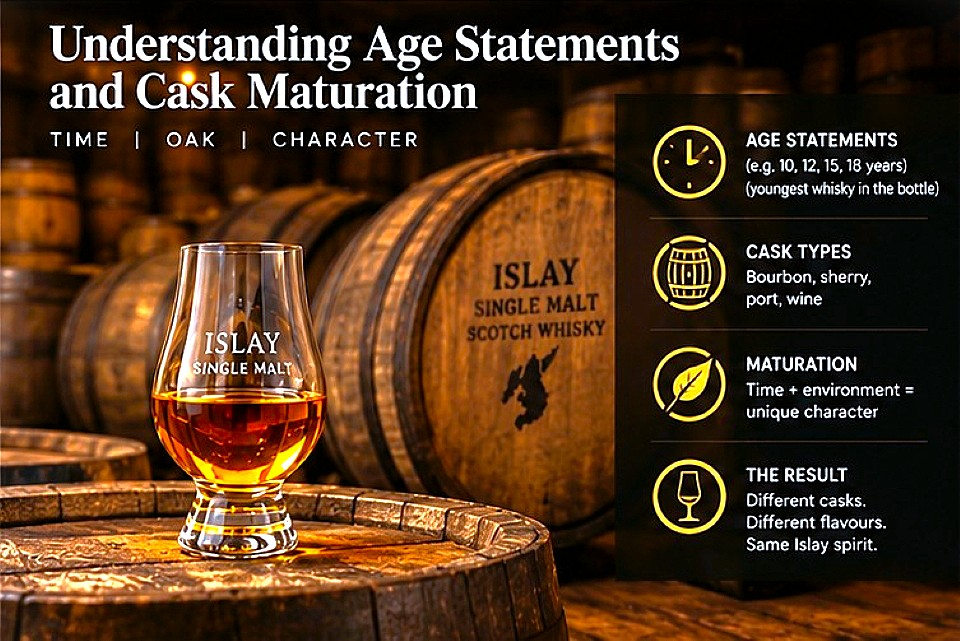
A glass of Islay single malt Scotch whisky beside oak maturation casks, illustrating the influence of ageing and cask selection.
12. Frequently Asked Questions About Islay Single Malt Scotch Whisky
What is the best Islay single malt Scotch whisky?
There is no universally best Islay whisky. Ardbeg, Laphroaig and Lagavulin are strong choices for enthusiasts of intense peat, while Bowmore offers a different balance of smoke and fruit. Bunnahabhain and unpeated Bruichladdich expressions are useful options for those who prefer less smoke.
Which Islay whisky is best for beginners?
A less heavily peated or unpeated expression can be a sensible introduction. Consider the unpeated Bruichladdich range, an appropriate Bunnahabhain bottling or a balanced Bowmore expression before moving toward more intensely peated whiskies.
Why is Islay whisky smoky?
Many Islay distilleries use peat smoke during the drying of malted barley. Compounds from the smoke contribute to the characteristic aromas and flavours of peated whisky. Not every Islay single malt is peated, however.
Is all Islay whisky heavily peated?
No. Islay is a geographical whisky region, not a guarantee of peat intensity. Bruichladdich produces unpeated single malt, and Bunnahabhain is well known for a core style that is not dominated by peat smoke. Individual distilleries may also offer different styles within their portfolios.
What is the difference between Ardbeg, Laphroaig and Lagavulin?
All three are closely associated with peated Islay single malt, but they have distinctive house styles. Ardbeg is often associated with assertive smoke, citrus and pepper; Laphroaig with medicinal and coastal notes; and Lagavulin with deep smoke and substantial, mature character. These are broad descriptions, and individual expressions differ.
Is older Islay whisky always better?
No. Age is one factor in a whisky’s development, but quality and personal preference depend on the spirit, casks, maturation and bottling. A younger whisky can be excellent, and an older whisky is not automatically better value.
What does “peated” mean?
Peated whisky is made using malted barley exposed to peat smoke during drying. The smoke contributes phenolic compounds associated with smoky, earthy and sometimes medicinal aromas.
What does ppm mean in peated whisky?
PPM means parts per million. In whisky discussions, it commonly refers to phenol levels associated with malted barley. It is a useful production reference but not a direct, universal measure of how smoky the finished whisky will taste.
What is the difference between Islay and Speyside whisky?
Islay is widely associated with peat smoke and maritime character, while Speyside is often associated with fruit, honey, vanilla and sherry-cask influence. Both regions produce varied styles, so these are general tendencies rather than strict rules.
Is Islay whisky good for cocktails?
Some Islay single malts can work in cocktails, particularly recipes designed to accommodate smoky flavours. Because peat can dominate other ingredients, start with small amounts and choose a recipe that suits the particular whisky. Many enthusiasts prefer to sip premium single malt neat or with a little water.
Should Islay whisky be served neat or with water?
Either is appropriate. Neat tasting allows you to experience the whisky at its bottled strength, while a few drops of water may soften the alcohol and reveal different aromas. Experiment gradually and choose the method you enjoy.
Where can I buy Islay single malt Scotch whisky in Toronto?
Check reputable local retailers and licensed delivery services for current selection, pricing and delivery coverage. Availability changes by bottle and release, so confirm the exact product before ordering. Always follow Ontario’s applicable alcohol purchase and delivery requirements.
13. Final Thoughts: Finding Your Favourite Islay Whisky
The best Islay single malt Scotch whisky is the one whose flavour profile matches your preferences. For some drinkers, that means the intense peat and citrus of Ardbeg, the medicinal coastal character of Laphroaig or the deep smoke of Lagavulin. Others prefer Bowmore’s balance, Kilchoman’s distinctive production approach, or the unpeated and richer expressions offered by Bruichladdich and Bunnahabhain.
Start with the style that interests you most, compare a few bottles at a time, and pay attention to the interaction between peat, fruit, sweetness, oak and texture. There is no need to begin with the most expensive or heavily peated release.
For whisky buyers in Toronto and the GTA, comparing exact bottle details and current availability is the most practical next step. A little research can help you choose a bottle for personal enjoyment, a tasting session or a special gift.
Explore Islay whisky with curiosity, compare producers thoughtfully, and enjoy each dram responsibly.