
Blog
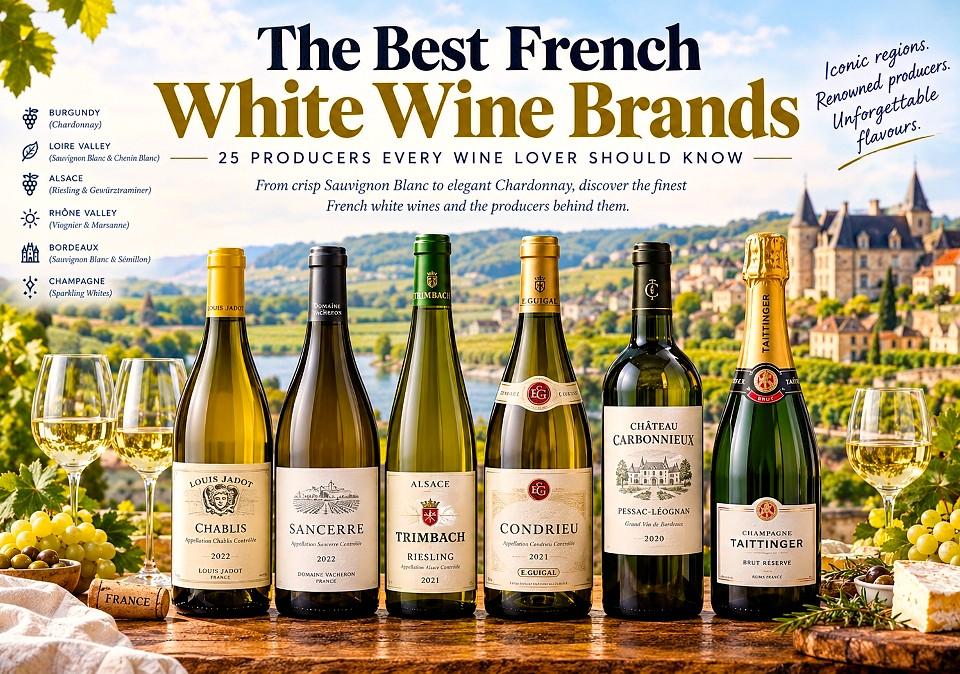
The Best French White Wine Brands: 25 Producers Every Wine Lover Should Know

The Best French White Wine Brands: 25 Producers Every Wine Lover Should Know
French white wine has earned a worldwide reputation for elegance, complexity, and remarkable diversity. From the crisp, mineral-driven Chardonnay of Chablis to the aromatic Riesling of Alsace, the citrus-scented Sauvignon Blanc of the Loire Valley, and the luxurious whites of Burgundy, France offers an extraordinary range of wines for every occasion.
Whether you are searching for an everyday bottle, a sophisticated wine for a dinner party, a special gift, or a premium bottle for a celebration, discovering the best French white wine brands is an excellent way to explore the country’s celebrated wine culture.
Some of France’s most respected producers focus on a single grape variety, while others craft distinctive wines shaped by particular vineyards, climates, and traditional winemaking methods. The result is a collection of wines that can be fresh and light, rich and creamy, floral and aromatic, or beautifully sweet.
In this guide, we explore 25 outstanding French white wine producers and brands, the regions they represent, their signature wines, and the food pairings that bring out their best qualities. We also explain how to choose French white wine, understand wine labels, compare grape varieties, and select bottles for different budgets and occasions.
For wine enthusiasts in Toronto and across the Greater Toronto Area, this guide from Always Dial A Bottle Toronto is designed to make discovering French white wine easier, whether you are building your wine collection or looking for inspiration for your next meal.
Table of Contents
-
-
- What Makes French White Wine Special?
- The 25 Best French White Wine Brands
- The Best French White Wine Regions
- The Most Popular French White Wine Grapes
- Best French White Wines for Different Occasions
- French White Wine and Food Pairings
- How to Choose a Good French White Wine
- How to Serve and Store French White Wine
- Frequently Asked Questions
- Discover French White Wine with Always Dial A Bottle Toronto
-
What Makes French White Wine Special?
France is one of the world’s most influential wine-producing countries, and its white wines demonstrate just how dramatically a wine’s character can change from one region to another.
French white wine is not a single style. It includes dry, refreshing wines for seafood, full-bodied Chardonnay for rich dishes, fragrant aromatic wines for spicy cuisine, sparkling wines for celebrations, and sweet wines for desserts or cheese courses.
The difference comes from several factors: grape variety, climate, soil, vineyard location, harvest conditions, and the winemaker’s choices.
The importance of terroir
The French concept of terroir refers to the combination of environmental and local factors that influence a wine’s character. These include soil, climate, vineyard exposure, topography, and regional winemaking traditions.
For example, Chardonnay from Chablis in northern Burgundy is often associated with crisp acidity, citrus flavours, and a mineral impression. Chardonnay from warmer or more southerly locations may show riper fruit and a fuller texture, depending on the site and winemaking.
In the Loire Valley, Sauvignon Blanc can produce lively wines with citrus, green fruit, and herbal aromas. Alsace, meanwhile, is known for expressive white wines made from varieties such as Riesling, Gewürztraminer, Pinot Gris, and Pinot Blanc.

Vins de Loire: This diversity is one reason French white wine appeals to both beginners and experienced wine collectors.
France’s most important white wine styles
French white wines can be grouped into several broad styles.
-
-
- Crisp and mineral: Fresh, lively wines with citrus flavours and refreshing acidity.
- Rich and full-bodied: Rounded wines with ripe fruit, texture, and sometimes notes of butter, toast, or vanilla.
- Aromatic and floral: Expressive wines featuring flowers, orchard fruit, stone fruit, or fragrant spices.
- Light and refreshing: Easy-drinking wines that work well as aperitifs or with simple meals.
- Sweet and luscious: Wines with concentrated fruit, honeyed flavours, and balanced acidity.
- Sparkling: Wines with bubbles, from traditional-method Crémant to prestigious Champagne.
-
Understanding these styles is often more useful than simply choosing a bottle based on its price or reputation.
French wine brands versus wine regions
When shopping for French white wine, it helps to understand the difference between a producer, a brand, a grape variety, and an appellation.
A producer is the winery or estate that makes the wine. A grape variety, such as Chardonnay or Sauvignon Blanc, identifies the type of grape used. An appellation, such as Chablis or Sancerre, identifies a legally defined wine-growing area with its own production rules.
Some French wine labels emphasize the producer’s name, while others make the region or appellation the most prominent information. This means that knowing a few important producers and appellations can make it much easier to identify wines that match your preferences.
The 25 Best French White Wine Brands
1. Louis Jadot — Classic Burgundy Chardonnay

Louis Jadot is one of Burgundy’s best-known wine names. Its range includes wines from several appellations, making the producer a useful introduction to the diversity of white Burgundy.
Chardonnay is the key grape behind the estate’s white wines. Depending on the appellation and bottling, the wines can offer citrus, apple, pear, subtle floral aromas, and a balanced mineral character. More concentrated examples may develop a broader texture and greater complexity.
Louis Jadot produces a range of white Burgundies, from accessible regional wines to bottles associated with distinguished village and premier cru vineyards.
-
-
- What to look for: Bourgogne Chardonnay, Mâcon-Villages, Pouilly-Fuissé, and selected Côte de Beaune appellations.
- Flavour profile: Apple, lemon, pear, white flowers, and sometimes gentle nutty or toasted notes.
- Best food pairings: Roast chicken, grilled fish, creamy pasta, scallops, and soft cheeses.
- Why choose it: Louis Jadot is a useful name to recognize when exploring Chardonnay from different parts of Burgundy.
-
2. Joseph Drouhin — Elegant and Refined White Burgundy

Joseph Drouhin is a historic Burgundy producer with a broad portfolio of wines from the region. Its white wines showcase Chardonnay across a range of appellations and styles.
The appeal of Burgundy lies partly in the way Chardonnay reflects its origin. A regional bottling can offer an accessible introduction to the grape, while wines from more specific vineyard sites may show greater concentration, structure, and complexity.
Joseph Drouhin is worth considering for drinkers who enjoy Chardonnay with freshness and a sense of place rather than relying solely on obvious oak flavours.
-
-
- What to look for: Chablis, Rully, Saint-Véran, Pouilly-Fuissé, and Côte de Beaune white wines, depending on the producer’s current range.
- Flavour profile: Citrus, orchard fruit, delicate floral notes, and a fresh, balanced finish.
- Best food pairings: Sea bass, roast turkey, mushroom risotto, lobster, and chicken in a light cream sauce.
- Why choose it: A strong option for exploring the different expressions of Chardonnay found throughout Burgundy.
-
3. William Fèvre — Benchmark Chablis Chardonnay

William Fèvre is a prominent name in Chablis, the northern part of Burgundy famous for Chardonnay-based white wines.
Chablis is particularly appealing to people who prefer white wine with lively acidity, citrus character, and a firm, refreshing structure. Compared with richer styles of Chardonnay, many Chablis wines emphasize lemon, green apple, wet-stone impressions, and a clean finish.
The region’s cool climate and distinctive limestone-rich geology help shape its recognizable style. However, individual wines vary according to vineyard location, vintage, and winemaking.
-
-
- What to look for: Petit Chablis, Chablis, Chablis Premier Cru, and Chablis Grand Cru.
- Flavour profile: Lemon, green apple, fresh pear, and mineral notes.
- Best food pairings: Oysters, shrimp, sushi, steamed mussels, grilled sole, and goat cheese.
-
Why choose it: William Fèvre is an excellent producer to explore when you want a Chardonnay that emphasizes freshness and precision.
4. Domaine Laroche — Fresh, Mineral-Driven White Wine

Domaine Laroche is another established Chablis name. Its portfolio provides a way to explore the area’s characteristic Chardonnay style, from approachable wines to more ambitious appellations.
Chablis is often a natural choice for people who enjoy seafood, particularly shellfish. Its acidity can refresh the palate, while its citrus flavours complement the delicate sweetness of shrimp, crab, and oysters.
The region also offers a useful alternative for Chardonnay drinkers who want complexity without an overtly buttery or heavily oaked style.
-
-
- What to look for: Chablis and higher-level vineyard-designated bottlings where available.
- Flavour profile: Lemon zest, apple, pear, and stony mineral character.
- Best food pairings: Oysters, crab, grilled trout, scallops, and light seafood pasta.
- Why choose it: A good name to remember for classic, food-friendly Chablis.
-
5. Olivier Leflaive — Premium Côte de Beaune Chardonnay

Olivier Leflaive is associated with premium white Burgundy, particularly wines from the Côte de Beaune, an area renowned for Chardonnay.
The region includes prestigious appellations such as Puligny-Montrachet, Chassagne-Montrachet, and Meursault. These wines can combine citrus and orchard fruit with floral aromas, texture, and complex savoury or nutty notes.
The exact character varies considerably by appellation and bottling. Some wines are taut and precise, while others are broader, richer, and more layered.
-
-
- What to look for: Bourgogne Blanc, Meursault, Puligny-Montrachet, and other Côte de Beaune wines in the producer’s range.
- Flavour profile: Lemon, pear, white flowers, hazelnut, and a textured finish.
- Best food pairings: Lobster, scallops, roast chicken, turbot, and refined cream-based dishes.
- Why choose it: An appealing direction for wine lovers looking to explore premium white Burgundy.
-
6. Domaine Leflaive — Collectible White Burgundy

Domaine Leflaive is a highly regarded Burgundy estate particularly associated with Puligny-Montrachet. Its wines are sought after by collectors and enthusiasts who appreciate the depth and subtlety that Chardonnay can achieve in exceptional vineyard sites.
Premium white Burgundy can be complex without being immediately powerful. Aromas may develop gradually in the glass, moving from citrus and white flowers toward stone fruit, nuts, and more savoury characteristics as the wine opens.
These wines are often purchased for special meals, important celebrations, or long-term cellaring when the specific wine and vintage are suitable.
-
-
- What to look for: Puligny-Montrachet and the estate’s more prestigious vineyard bottlings.
- Flavour profile: Citrus, orchard fruit, floral notes, mineral impressions, and layered texture.
- Best food pairings: Lobster, turbot, scallops, roast poultry, and delicate haute-cuisine preparations.
- Why choose it: A producer to explore when the goal is fine white Burgundy rather than an everyday bottle.
-
7. Domaine William Fèvre — Chablis for Serious Wine Enthusiasts
William Fèvre has already earned a place on this list for its Chablis range, but its higher-level wines deserve particular attention when exploring the region’s premium end.
Chablis Premier Cru and Grand Cru bottlings come from designated vineyard areas and can offer additional concentration and complexity. They may be excellent choices for a special seafood dinner or for comparing different expressions of Chardonnay.
When comparing bottles, look beyond the words “Premier Cru” or “Grand Cru” alone. The producer, vintage, storage history, and your preferred style remain important.
-
-
- What to look for: Premier Cru and Grand Cru Chablis.
- Flavour profile: Citrus, orchard fruit, pronounced freshness, and complex mineral and savoury notes.
- Best food pairings: Fine shellfish, lobster, scallops, and grilled white fish.
- Why choose it: A useful reference point for understanding how vineyard location can influence Chardonnay.
-
8. Domaine Huet — Exceptional Chenin Blanc from Vouvray

Domaine Huet is one of the names to know when exploring Chenin Blanc from Vouvray in the Loire Valley. Chenin Blanc is an extraordinarily versatile grape. Depending on the wine, it can produce dry, crisp whites, gently off-dry styles, and rich sweet wines.
Its naturally lively acidity helps many examples maintain freshness even when the fruit is ripe or the wine contains noticeable residual sugar. Vouvray offers an excellent opportunity to discover this range. Domaine Huet’s wines are particularly interesting for enthusiasts who want to move beyond Chardonnay and Sauvignon Blanc.
-
-
- What to look for: Dry Vouvray, off-dry styles, and sweet Vouvray from suitable vintages.
- Flavour profile: Apple, pear, quince, honey, flowers, and refreshing acidity.
- Best food pairings: Roast pork, poultry, goat cheese, Asian-inspired dishes, and fruit desserts for sweeter styles.
- Why choose it: One of the most rewarding producers to explore if you want to discover the range of Chenin Blanc.
-
9. Domaine des Baumard — Loire Valley Whites with Character

Domaine des Baumard is a Loire Valley producer known for Chenin Blanc wines across several styles. The estate is worth considering when exploring both dry whites and sweeter Loire wines. Savennières, in particular, is associated with dry Chenin Blanc that can be structured, concentrated, and suitable for development in bottle.
Other Loire appellations offer a different balance of fruit, acidity, and sweetness. For people who enjoy a white wine with more texture and complexity than a simple aperitif wine, Chenin Blanc is well worth discovering.
-
-
- What to look for: Savennières and the estate’s other Loire appellations.
- Flavour profile: Apple, quince, citrus, herbs, and complex savoury notes.
- Best food pairings: Roast chicken, freshwater fish, pork, mushrooms, and aged goat cheese.
- Why choose it: A strong option for discovering the depth and versatility of Loire Chenin Blanc.
-
10. Domaine Vacheron — Refined Sancerre Sauvignon Blanc

Domaine Vacheron is a respected Sancerre producer. Sancerre, in the eastern Loire Valley, is one of France’s best-known appellations for Sauvignon Blanc. The wines are often prized for their crisp acidity, citrus character, fresh herbs, and mineral impressions.
Some bottlings emphasize bright fruit and immediate appeal, while more concentrated examples can show additional texture and complexity. Sancerre is also a versatile choice at the dinner table. Its acidity and fresh flavours make it especially suitable for goat cheese, seafood, salads, and simply prepared fish.
-
-
- What to look for: Sancerre Blanc, including single-site bottlings where available.
- Flavour profile: Lemon, grapefruit, green apple, herbs, and mineral notes.
- Best food pairings: Crottin de Chavignol goat cheese, oysters, grilled fish, salads, and asparagus.
- Why choose it: A benchmark style for drinkers who enjoy fresh, expressive Sauvignon Blanc.
-
11. Pascal Jolivet — Modern Loire Sauvignon Blanc

Pascal Jolivet is a recognizable Loire Valley wine name, particularly for Sauvignon Blanc from Sancerre and Pouilly-Fumé. Although both appellations are strongly associated with Sauvignon Blanc, individual wines can differ in their balance of fruit, acidity, texture, and mineral character.
Soil, vineyard conditions, harvest timing, and winemaking all contribute to the final result. Pascal Jolivet is a useful producer to consider when comparing these neighbouring expressions of Sauvignon Blanc.
-
-
- What to look for: Sancerre Blanc and Pouilly-Fumé, depending on the available range.
- Flavour profile: Citrus, white flowers, green fruit, and fresh herbal notes.
- Best food pairings: Seafood, goat cheese, sushi, grilled vegetables, and light chicken dishes.
- Why choose it: A practical name for anyone building a shortlist of Loire Sauvignon Blanc producers.
-
12. Henri Bourgeois — Classic Loire Sauvignon Blanc
Henri Bourgeois is a family wine producer associated with Sancerre and Pouilly-Fumé. Its wines provide another route into the distinctive white wines of the eastern Loire Valley. Sauvignon Blanc from this area can be especially appealing when you want a white wine that is lively rather than heavy.
Citrus, green fruit, fresh herbs, and a mineral impression often make these wines natural companions for lighter meals. The range includes different levels and expressions, so it is worth checking the exact appellation and bottling rather than assuming every wine tastes the same.
-
-
- What to look for: Sancerre Blanc and Pouilly-Fumé.
- Flavour profile: Grapefruit, lemon, green apple, herbs, and mineral notes.
- Best food pairings: Goat cheese, seafood salads, oysters, grilled prawns, and white fish.
- Why choose it: A good producer for comparing classic Loire Sauvignon Blanc styles.
-
13. Domaine des Roches Neuves — A Different Side of the Loire
Domaine des Roches Neuves is associated with Saumur in the Loire Valley. While the region is widely known for its sparkling wines and Cabernet Franc reds, Chenin Blanc also deserves attention. Chenin Blanc can express both freshness and texture, with a balance of orchard fruit, acidity, and savoury complexity.
The specific profile depends on the appellation and the producer’s approach. For wine drinkers who already know Sancerre and want to discover another Loire style, Saumur and its neighbouring appellations are worth exploring.
-
-
- What to look for: White wines made from Chenin Blanc in the producer’s range.
- Flavour profile: Apple, pear, citrus, flowers, and mineral notes.
- Best food pairings: Grilled fish, pork, poultry, goat cheese, and vegetable dishes.
- Why choose it: An opportunity to discover Loire white wines beyond the region’s most familiar Sauvignon Blanc appellations.
-
14. Trimbach — Elegant Alsace Riesling

Trimbach is one of the most recognizable names in Alsace, a region famous for aromatic white wines. Riesling is particularly important here. Alsace Riesling often combines pronounced acidity with citrus, apple, floral, and mineral notes.
Many examples are dry, although sweetness levels vary across the region’s wider range of wines. Trimbach is a useful name for anyone who wants to explore Riesling outside Germany. French Riesling can be a wonderful partner for seafood, poultry, and dishes that benefit from freshness rather than heavy oak.
-
-
- What to look for: Alsace Riesling and more prestigious bottlings within the producer’s range.
- Flavour profile: Lemon, lime, green apple, white flowers, and mineral notes.
- Best food pairings: Seafood, roast chicken, pork, grilled trout, and aromatic dishes with ginger.
- Why choose it: A classic starting point for dry, food-friendly Alsace Riesling.
-
15. Hugel — Aromatic French White Wines

Hugel is a long-established Alsace producer with a broad range of white wines. Its portfolio is especially relevant to people who enjoy aromatic grape varieties. Gewürztraminer is known for its expressive perfume, which can include rose petals, lychee, ripe stone fruit, and spice.
Pinot Gris often offers a rounder, richer texture, while Riesling is generally associated with greater emphasis on freshness and acidity. This variety makes Hugel a good producer to explore when selecting wine for different meals or for guests with different preferences.
-
-
- What to look for: Riesling, Pinot Gris, Gewürztraminer, and other Alsace bottlings.
- Flavour profile: Depending on the grape, citrus, apple, pear, flowers, lychee, and spice.
- Best food pairings: Asian-inspired cuisine, pork, pâté, roast poultry, and aromatic cheeses.
- Why choose it: A versatile introduction to the diversity of Alsace white wine.
-
16. Domaine Zind-Humbrecht — Complex, Expressive Alsace Wines

Domaine Zind-Humbrecht is widely associated with high-quality Alsace wines, including Riesling, Pinot Gris, and Gewürztraminer. Its wines are interesting for enthusiasts who want to explore the relationship between grape variety, vineyard site, ripeness, and texture.
Depending on the bottling, the result can range from focused and mineral to rich, aromatic, and powerful. When selecting an Alsace wine, it is useful to pay attention to the individual cuvée and the producer’s description. Two wines made from different varieties or vineyard sites can offer quite different experiences.
-
-
- What to look for: Riesling, Pinot Gris, and Gewürztraminer bottlings.
- Flavour profile: Citrus, ripe pear, flowers, spice, and complex mineral or savoury notes.
- Best food pairings: Roast duck, pork, rich fish dishes, mushroom preparations, and aromatic cuisine.
- Why choose it: A producer to investigate when you want a more detailed exploration of Alsace terroir.
-
17. Domaine Weinbach — Premium Riesling and Pinot Gris
Domaine Weinbach is another respected Alsace estate with a portfolio that highlights the region’s aromatic white grape varieties. Riesling can be fresh and citrus-driven, while Pinot Gris can offer more body, ripe fruit, and a broader palate. Gewürztraminer is often the choice for drinkers who want an especially fragrant wine.
These differences make Alsace a useful region for entertaining. You can serve a dry Riesling with seafood, a richer Pinot Gris with poultry, or an aromatic Gewürztraminer alongside a dish with ginger and spice.
-
-
- What to look for: Riesling, Pinot Gris, and Gewürztraminer from the estate.
- Flavour profile: Varies by grape and bottling, from citrus and flowers to ripe stone fruit and spice.
- Best food pairings: Roast chicken, salmon, pork, mushroom dishes, and selected Asian-inspired meals.
- Why choose it: An excellent name to know when exploring premium Alsace whites.
-
18. Domaine Marcel Deiss — Terroir-Driven White Blends
Domaine Marcel Deiss is known for an approach to Alsace wine that places particular emphasis on vineyard identity and blends of grape varieties in selected bottlings. For drinkers accustomed to labels that feature a single grape variety, these wines offer another way to think about white wine.
Instead of focusing only on whether a wine is Riesling or Pinot Gris, the emphasis can be on the place where the grapes were grown and the character of the resulting blend. This style may appeal to adventurous wine drinkers who enjoy discovering unusual combinations and distinctive expressions of Alsace.
-
-
- What to look for: The estate’s regional, village, and vineyard-specific white wines.
- Flavour profile: Depends on the blend and vineyard, with potential notes of citrus, orchard fruit, flowers, and mineral character.
- Best food pairings: Poultry, freshwater fish, vegetable dishes, and regional cheeses.
- Why choose it: An interesting option for people ready to explore beyond varietal-labelled white wines.
-
19. Château Carbonnieux — Refined Bordeaux Blanc

Bordeaux is famous for red wine, but it also produces excellent white wines. Dry Bordeaux Blanc commonly relies on Sauvignon Blanc and Sémillon, with the exact blend varying by producer and appellation. Château Carbonnieux is an established Pessac-Léognan estate known for both red and white wine.
Its white wines illustrate how Sauvignon Blanc’s freshness can combine with Sémillon’s texture to create a more layered style than a straightforward aromatic Sauvignon Blanc. Depending on the bottling, dry white Bordeaux may show citrus, orchard fruit, floral notes, and more developed savoury or toasted characteristics.
-
-
- What to look for: Château Carbonnieux Blanc and other dry white wines from Pessac-Léognan.
- Flavour profile: Citrus, white peach, flowers, and sometimes nutty or toasted notes.
- Best food pairings: Roast chicken, grilled turbot, scallops, lobster, and creamy seafood dishes.
- Why choose it: A useful choice for discovering a more structured and complex style of French white wine.
-
20. Château Smith Haut Lafitte — Premium White Bordeaux

Château Smith Haut Lafitte is a prominent Pessac-Léognan estate whose portfolio includes a premium white Bordeaux. White Bordeaux can be a compelling alternative to Burgundy for drinkers seeking richness, structure, and complexity.
The balance between Sauvignon Blanc and Sémillon, combined with the producer’s winemaking choices, creates a different profile from a typical Loire Sauvignon Blanc. The wines can be suitable for a special dinner, particularly when served with seafood, poultry, or dishes with richer sauces.
-
-
- What to look for: The estate’s white Bordeaux bottling and other high-quality dry white wines from the appellation.
- Flavour profile: Citrus, stone fruit, floral notes, and a fuller, layered texture.
- Best food pairings: Lobster, scallops, roast poultry, grilled fish, and refined cream sauces.
- Why choose it: An option for wine enthusiasts who want a premium white Bordeaux with more depth than a simple aperitif wine.
-
21. Château Olivier — Balanced White Bordeaux
Château Olivier is another Bordeaux estate worth considering for dry white wine. Its white wines offer an opportunity to explore the Sauvignon Blanc and Sémillon combination in a traditional Bordeaux context.
Sauvignon Blanc often contributes freshness and aromatic lift, while Sémillon can add body and texture. The balance depends on the blend, vintage, and winemaking approach. White Bordeaux is particularly useful at the table because its structure can suit both delicate fish and richer dishes.
-
-
- What to look for: Château Olivier Blanc and other white wines from Pessac-Léognan.
- Flavour profile: Citrus, orchard fruit, flowers, and a rounded palate.
- Best food pairings: Grilled fish, roast chicken, seafood risotto, and soft cheeses.
- Why choose it: A good name to explore if you want to broaden your French white wine choices beyond Burgundy and the Loire.
-
22. E. Guigal — Northern Rhône White Wine

E. Guigal is a prominent Rhône Valley producer whose portfolio includes both red and white wines. Northern Rhône white wine is particularly interesting for its use of Viognier, Marsanne, and Roussanne in appropriate appellations. Viognier can produce aromatic, full-bodied wines with peach, apricot, and floral notes.
Marsanne and Roussanne can contribute texture and complexity in blends. Condrieu, one of the best-known appellations for Viognier, offers a very different experience from crisp Chablis or Sauvignon Blanc from Sancerre.
-
-
- What to look for: Condrieu and other Northern Rhône white wines in the producer’s range.
- Flavour profile: Apricot, peach, flowers, and a broad, aromatic texture.
- Best food pairings: Roast chicken, grilled prawns, creamy seafood, pork, and dishes with aromatic herbs.
- Why choose it: A great option for people who prefer expressive, fuller-bodied white wine.
-
23. M. Chapoutier — Rhône Valley Whites with Depth

M. Chapoutier is an established Rhône Valley wine producer with a broad range of wines, including white wines from important appellations.
White Rhône wines can be particularly appealing to people who enjoy texture and aromatic complexity. Depending on the appellation and grape blend, they may be richer and more rounded than many Loire whites.
Marsanne, Roussanne, and Viognier each contribute different qualities. Marsanne can provide body and subtle nutty flavours; Roussanne may add floral complexity and structure; Viognier is known for its pronounced perfume and ripe stone-fruit character.
-
-
- What to look for: White wines from Hermitage, Saint-Joseph, and other Rhône appellations, depending on availability.
- Flavour profile: Stone fruit, flowers, citrus, nuts, and a broad palate.
- Best food pairings: Roast poultry, grilled fish, lobster, creamy dishes, and roasted root vegetables.
- Why choose it: A producer worth exploring for a richer alternative to Chardonnay.
-
24. Château de Beaucastel — Distinctive White Rhône Blends
Château de Beaucastel is best known for its wines from Châteauneuf-du-Pape, including a distinctive white wine. White Châteauneuf-du-Pape can offer a rich and complex style, with a blend of permitted varieties that depends on the producer’s approach.
Such wines are often suited to substantial dishes rather than being served only as a light aperitif. Because production quantities and availability can vary, it is worth checking the exact bottling and vintage when looking for a bottle for a special occasion.
-
-
- What to look for: Château de Beaucastel Blanc.
- Flavour profile: Ripe orchard and stone fruit, flowers, herbs, and a rounded texture.
- Best food pairings: Lobster, roast chicken, veal, rich fish dishes, and creamy sauces.
- Why choose it: An interesting option for collectors and enthusiasts who want to explore the white wines of Southern Rhône.
-
25. Champagne Taittinger — Elegant French Sparkling White Wine

Champagne is one of France’s most famous wine styles and deserves a place in any broad guide to French white wines. Technically, Champagne is a sparkling wine rather than a still white wine, but it is an important choice for celebrations, aperitifs, and special meals. Taittinger is a well-known Champagne house with a range of sparkling wines.
The house’s style varies by cuvée, but Champagne commonly combines lively acidity and bubbles with citrus, apple, pear, and, depending on production and ageing, notes of brioche or toasted bread. For readers looking for French white wine for an anniversary, birthday, engagement, or dinner party, Champagne is a natural category to consider.
-
-
- What to look for: Brut Champagne and other cuvées suited to the occasion.
- Flavour profile: Citrus, apple, pear, delicate toast, and fine bubbles.
- Best food pairings: Oysters, smoked salmon, seafood canapés, fried appetizers, and mild cheeses.
- Why choose it: A classic option when the occasion calls for something celebratory.
-
The Best French White Wine Regions
1. Burgundy: The home of celebrated Chardonnay
Burgundy is a key region for Chardonnay. Its white wines range from accessible regional bottlings to sought-after wines from individual villages and vineyards.
-
-
- Look for: Chablis, Mâcon-Villages, Saint-Véran, Pouilly-Fuissé, Meursault, and Puligny-Montrachet.
- Typical style: Citrus, apple, pear, floral notes, and varying degrees of richness and mineral character.
- Best for: Seafood, poultry, special dinners, and wine enthusiasts who enjoy exploring differences between vineyard sites.
-
Chablis is particularly useful for people who like Chardonnay with freshness and a clean finish. Côte de Beaune wines can offer more texture and complexity, although the exact style varies by producer and vineyard.
2. Loire Valley: Sauvignon Blanc and Chenin Blanc
The Loire Valley is one of France’s most diverse regions for white wine. It is particularly known for Sauvignon Blanc from Sancerre and Pouilly-Fumé, Chenin Blanc from Vouvray and Savennières, and Melon de Bourgogne in Muscadet.
The region produces dry, semi-dry, sweet, and sparkling styles.
Vins de Loire
-
-
- Look for: Sancerre, Pouilly-Fumé, Vouvray, Savennières, and Muscadet Sèvre-et-Maine.
- Typical style: From crisp citrus-driven wines to textured Chenin Blanc and fresh, saline-influenced Muscadet.
- Best for: Seafood, goat cheese, light poultry, salads, and a wide range of everyday meals.
-
If you enjoy fresh Sauvignon Blanc, start with Sancerre or Pouilly-Fumé. If you want something with more textural variety, explore Chenin Blanc from Vouvray or Savennières.
3. Alsace: Aromatic and expressive whites
Alsace, in northeastern France, is especially important for white wines. Its grape varieties include Riesling, Gewürztraminer, Pinot Gris, Pinot Blanc, Muscat, and Sylvaner. The regional appellation’s wines are predominantly white.
Vins d’Alsace
-
-
- Look for: Alsace Riesling, Pinot Gris, Gewürztraminer, Pinot Blanc, and Alsace Grand Cru wines.
- Typical style: Aromatic, floral, and fruit-driven, with a range from crisp and dry to rich and sweet.
- Best for: Aromatic cuisine, roast poultry, pork, seafood, and cheeses.
-
Riesling is an excellent choice if you like acidity and freshness. Gewürztraminer is worth trying when you prefer a more perfumed wine with floral and spice notes.
4. Bordeaux: Structured dry white wines
Bordeaux is famous for its red blends, but its dry white wines deserve attention. Many are based on Sauvignon Blanc and Sémillon, sometimes with other permitted varieties depending on the appellation and wine.
-
-
- Look for: Pessac-Léognan Blanc, Graves Blanc, and other dry Bordeaux Blanc wines.
- Typical style: Citrus, orchard fruit, floral aromas, and sometimes a rounded texture or notes of oak and toast.
- Best for: Roast chicken, grilled fish, shellfish, and richer seafood dishes.
-
Dry white Bordeaux is particularly interesting for Chardonnay drinkers who want to try a different grape combination.
5. Rhône Valley: Full-bodied and aromatic whites
The Rhône Valley produces distinctive white wines, especially from Viognier, Marsanne, and Roussanne in appropriate appellations.
-
-
- Look for: Condrieu, white Hermitage, Saint-Joseph Blanc, and white Châteauneuf-du-Pape.
- Typical style: Stone fruit, flowers, herbs, and a fuller texture.
- Best for: Roast poultry, lobster, rich fish dishes, and meals with cream or aromatic herbs.
-
If you usually drink crisp Sauvignon Blanc, Rhône whites can be an enjoyable change of pace.
6. Champagne and French sparkling wines
Champagne is internationally famous, but France also produces sparkling wines under other appellations, including Crémant d’Alsace and Crémant de Loire. Crémant d’Alsace can be made from different grape varieties, including Pinot Blanc, Riesling, Pinot Gris, and Chardonnay for certain styles.
Vins d’Alsace appellation
-
-
- Look for: Champagne Brut, Blanc de Blancs Champagne, Crémant d’Alsace, and Crémant de Loire.
- Typical style: Fresh fruit, lively acidity, bubbles, and sometimes brioche or toasted notes.
- Best for: Celebrations, appetizers, seafood, and festive meals.
-
The Most Popular French White Wine Grapes
1. Chardonnay
Chardonnay is the dominant white grape in Burgundy and is used in many French regions and sparkling wines. Its flavour depends heavily on growing conditions and winemaking. Cooler-climate examples can emphasize lemon, apple, acidity, and mineral character. Other versions can be richer, with ripe pear, peach, cream, or toast.
Choose Chardonnay if you enjoy: Versatility, balanced acidity, and wines ranging from crisp to full-bodied.
2. Sauvignon Blanc
Sauvignon Blanc is especially associated with Sancerre and Pouilly-Fumé in the Loire Valley, though it is also important in Bordeaux. Typical aromas include lemon, grapefruit, green apple, fresh herbs, and sometimes tropical fruit.
Choose Sauvignon Blanc if you enjoy: Bright acidity, fresh flavours, and a refreshing finish.
3. Chenin Blanc
Chenin Blanc is a signature grape of the Loire Valley. It can be made into dry, off-dry, sweet, and sparkling wines. Its flavours may include apple, pear, quince, honey, flowers, and mineral notes. Its acidity can help balance both ripe fruit and sweetness.
Choose Chenin Blanc if you enjoy: Versatility, freshness, texture, and the opportunity to explore several sweetness levels.
4. Riesling
French Riesling is strongly associated with Alsace. It often features citrus, green apple, floral aromas, and lively acidity. Some bottlings are dry and precise; others can show more ripe fruit or sweetness. Reading the producer’s description and the wine’s label can help you choose the right style.
Choose Riesling if you enjoy: Aromatic whites with freshness and a food-friendly structure.
5. Gewürztraminer
Gewürztraminer is one of Alsace’s most expressive varieties. It is known for aromas that can include rose, lychee, ripe peach, and spice. Its perfume makes it an interesting pairing for dishes with aromatic herbs or gentle heat. Depending on the wine, it can be dry, off-dry, or sweet.
Choose Gewürztraminer if you enjoy: Floral aromas, exotic fruit, and a distinctive, fragrant style.
6. Pinot Gris
Pinot Gris from Alsace often offers more body and ripe fruit than the lightest white wine styles. Depending on the producer and vintage, it can be dry or have noticeable sweetness.
Choose Pinot Gris if you enjoy: A rounded texture, ripe orchard fruit, and a white wine with more weight.
7. Melon de Bourgogne
Melon de Bourgogne is the grape associated with Muscadet in the western Loire Valley. Muscadet is typically light, fresh, and dry, making it a particularly useful choice for seafood. Some wines are aged on their lees, which can add texture without making the wine heavy.
Choose Muscadet if you enjoy: Clean, crisp white wine with seafood and shellfish.
Best French White Wines for Different Occasions
The right bottle depends on more than the grape. Consider the food, the setting, and the kind of experience you want.
| Occasion | French white wine style to consider | Why it works |
|---|---|---|
| Casual lunch | Muscadet or regional Sauvignon Blanc | Fresh and easy to pair |
| Seafood dinner | Chablis or Sancerre | Acidity complements delicate seafood |
| Roast chicken | Burgundy Chardonnay or Chenin Blanc | Works with savoury flavours and richer textures |
| Spicy food | Alsace Riesling or Gewürztraminer | Aromatic fruit can complement spice |
| Elegant dinner party | Côte de Beaune Chardonnay or premium Bordeaux Blanc | Offers more texture and complexity |
| Summer gathering | Sauvignon Blanc or Pinot Blanc | Refreshing and versatile |
| Dessert course | Sweet Vouvray or a suitable sweet Alsace wine | Fruit and sweetness complement desserts |
| Anniversary or celebration | Champagne or Crémant | Bubbles make the occasion feel special |
| Gift for a wine enthusiast | A distinctive appellation or premium producer | Offers a chance to discover something new |
These are starting points rather than strict rules. Personal taste, preparation methods, and the specific wine all affect the best match.
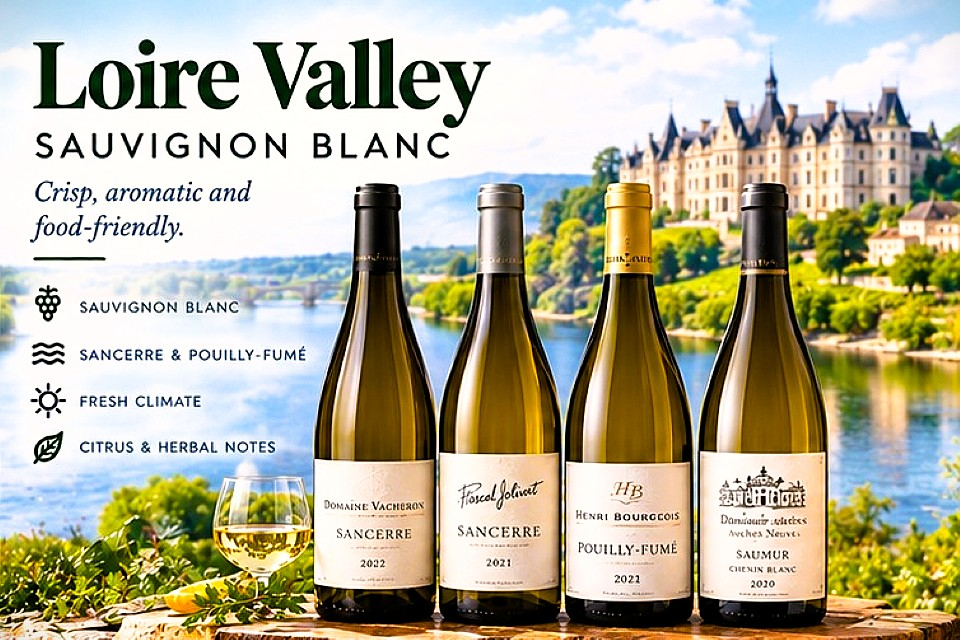
French Loire Valley Sauvignon Blanc wine bottles representing Sancerre and Pouilly-Fumé with vineyards and a château in the background.
French White Wine and Food Pairings
Food pairing is one of the best ways to appreciate the differences between French white wine styles.
Chardonnay with roast chicken and seafood
Burgundy Chardonnay can work beautifully with roast chicken, grilled fish, scallops, and creamy pasta. Lighter, fresher bottlings are especially good with delicate dishes, while fuller-bodied examples can stand up to richer sauces.
Try Chablis with oysters or simply grilled fish. Consider a more textured white Burgundy with roast chicken, lobster, or mushroom risotto.
Sauvignon Blanc with goat cheese and seafood
Sauvignon Blanc from Sancerre and Pouilly-Fumé is a classic partner for goat cheese. Its acidity and fresh flavours can balance the cheese’s creamy texture and tangy character. It also pairs well with oysters, grilled prawns, seafood salads, asparagus, and simply prepared white fish. For the best result, avoid overpowering a delicate Sauvignon Blanc with heavy sauces or very spicy food.
Chenin Blanc with pork and poultry
Chenin Blanc’s versatility makes it suitable for many dishes. Dry versions work with roast chicken, pork, fish, and vegetable dishes. Off-dry versions can complement mildly spicy food, while sweet examples can be served with fruit-based desserts or blue cheese. If you are unsure which style to choose, check the label or producer’s tasting notes for an indication of sweetness.
Riesling with aromatic cuisine
Alsace Riesling is a strong choice for dishes featuring ginger, herbs, citrus, and aromatic spices. Its acidity helps refresh the palate, while the wine’s fruit character can complement savoury flavours. It can also work with seafood, pork, roast poultry, and grilled trout.
Gewürztraminer with fragrant dishes
Gewürztraminer’s floral and spicy aromas can pair well with dishes that might overwhelm a more delicate white wine. Consider it with aromatic Asian-inspired cuisine, mildly spicy dishes, pork, pâté, or cheeses with a strong character. A wine with a touch of sweetness can be particularly useful when the food has noticeable heat.
White Bordeaux with richer meals
White Bordeaux can offer a balance of freshness and texture, especially in blends based on Sauvignon Blanc and Sémillon. Pair it with roast chicken, scallops, lobster, grilled fish, or seafood dishes with cream-based sauces.
Rhône whites with rich fish and poultry
White Rhône wines are often fuller-bodied and aromatic. They can complement roast poultry, grilled prawns, richer fish, and dishes with herbs or cream. A powerful white Rhône may overwhelm a very delicate dish, so consider the intensity of both the food and wine.
Sweet French white wine with dessert and cheese
Sweet Chenin Blanc and sweet Alsace wines can be excellent with fruit desserts, pastries, and selected cheeses. A useful principle is to ensure that the wine is at least as sweet as the dessert. If the dessert is much sweeter than the wine, the wine can taste sharp or thin by comparison.
How to Choose a Good French White Wine
A good French white wine does not have to be the most expensive bottle or come from the most prestigious appellation. The best choice is one that matches your preferences and the occasion.
1. Start with the style you like
Before choosing a producer, think about the kind of wine you enjoy.
-
-
- If you like crisp and refreshing, try Chablis, Sancerre, Muscadet, or a dry Alsace Riesling.
- If you like rich and rounded, explore Côte de Beaune Chardonnay or selected white Rhône wines.
- If you like aromatic and floral, consider Gewürztraminer or Riesling from Alsace.
- If you like fruity with some sweetness, look at selected Vouvray and Alsace wines.
- If you want bubbles, explore Champagne or Crémant.
-
This simple approach can narrow the options considerably.
2. Understand the appellation on the label
French wine labels often feature an appellation rather than the grape variety in large letters. For example, Chablis is made from Chardonnay, while Sancerre Blanc is typically Sauvignon Blanc. Vouvray is associated with Chenin Blanc, and Muscadet with Melon de Bourgogne.
Learning these connections helps you identify the likely style even when the grape variety is not prominently displayed.
3. Consider the producer
A recognized producer can be a useful starting point, but a name alone does not tell you everything about the bottle. Large producers may offer a wide range of wines at different price points. Individual estates may specialize in particular appellations or styles. Compare the specific wine, not just the brand name.
4. Match the wine to the meal
Think about the dish’s weight, seasoning, and sauce. A crisp white wine can refresh the palate when served with shellfish or grilled fish. A fuller wine can better match roast poultry, rich sauces, or lobster. Aromatic whites may be especially suitable for dishes with fragrant herbs or spices.
The goal is balance: neither the wine nor the food should completely overpower the other.
5. Choose your budget before shopping
French white wine spans a broad range of prices. Regional appellations and lesser-known producers can offer excellent value, while highly sought-after vineyards may command premium prices.
If you are buying for a casual dinner, a good regional Chardonnay, Sauvignon Blanc, or Muscadet may be all you need. For a special occasion, you might explore a more distinctive appellation or a premium producer.
6. Check the vintage and storage
Vintage matters because weather conditions differ from year to year. However, there is no universal rule that the newest or oldest bottle is best.
Fresh, simple white wines are often intended to be enjoyed relatively young. Some high-quality Burgundy, Chenin Blanc, Riesling, and sweet wines can develop complexity with age when the wine is suitable for cellaring and has been stored correctly. For older or expensive bottles, proper storage history is especially important.
7. Do not assume all white wine should taste the same
A dry Sauvignon Blanc, an aromatic Gewürztraminer, and a full-bodied Chardonnay can have dramatically different flavours and textures. If one style does not appeal to you, try another grape or region before concluding that French white wine is not for you.
How to Serve and Store French White Wine
Serving temperature can make a noticeable difference to how a wine tastes.
Recommended serving temperatures
| Wine style | Approximate serving temperature |
|---|---|
| Light, crisp whites | 7–10°C |
| Sauvignon Blanc and dry Riesling | 8–11°C |
| Chablis and other lean Chardonnay | 9–12°C |
| Fuller-bodied Chardonnay | 10–13°C |
| Rich white Rhône wines | 10–13°C |
| Sweet white wines | 6–10°C |
| Champagne and Crémant | 6–9°C |
These are general guidelines, not rigid rules. If a wine is served too cold, its aromas may seem muted. If it is too warm, it may feel less refreshing and more alcoholic.
Choose the right glass
A medium-sized white wine glass works well for most styles. Fuller-bodied Chardonnay can benefit from a slightly larger bowl, which allows aromas to develop. Sparkling wine can be served in a tulip-shaped glass that preserves bubbles while allowing the aromas to emerge.
Store bottles correctly
For longer-term storage, keep wine in a cool, dark place with a stable temperature and limited vibration. Avoid direct sunlight and repeated temperature changes.
For bottles sealed with natural cork, storing them on their side is a common practice when they are intended for extended storage. Once opened, most still white wines are best kept refrigerated and consumed within a few days, although their condition will depend on the wine and how it is sealed.
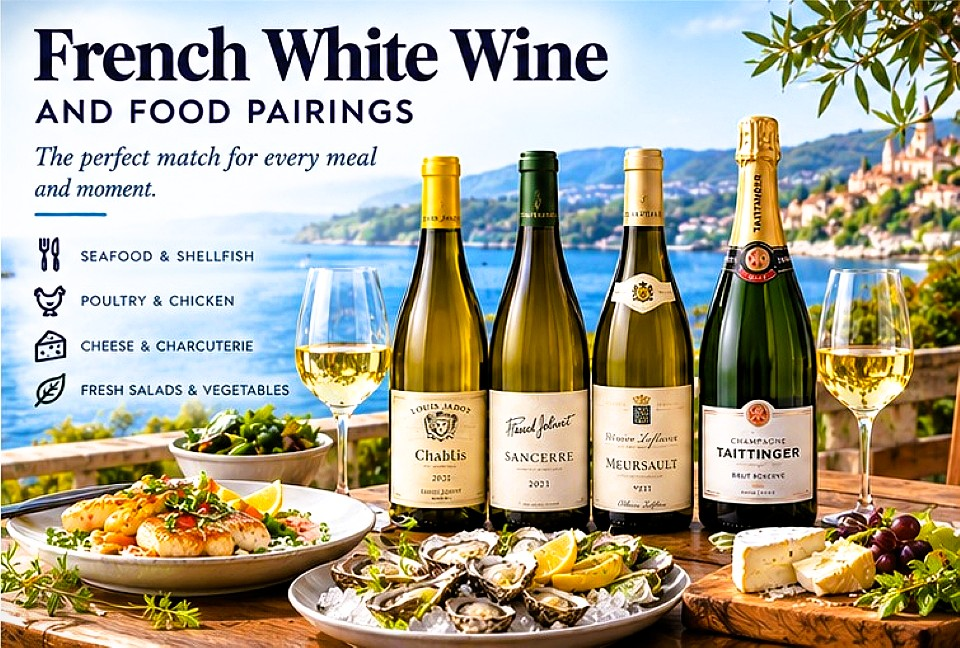
French white wine bottles served with seafood, oysters, shrimp, cheese and fresh food pairings overlooking a scenic French landscape.
Frequently Asked Questions
What are the best French white wine brands?
Some well-known French white wine producers include Louis Jadot, Joseph Drouhin, William Fèvre, Domaine Huet, Domaine Vacheron, Trimbach, Hugel, Domaine Zind-Humbrecht, Château Carbonnieux, E. Guigal, and M. Chapoutier.
The best choice depends on your preferred style. Burgundy is a good starting point for Chardonnay, the Loire Valley for Sauvignon Blanc and Chenin Blanc, and Alsace for aromatic Riesling and Gewürztraminer.
What is the most famous French white wine?
There is no single answer because France produces several internationally recognized white wine styles. Chablis and other white Burgundies are famous for Chardonnay, Sancerre is known for Sauvignon Blanc, Alsace is renowned for Riesling and Gewürztraminer, and Champagne is one of the world’s best-known sparkling wines.
What is the best French white wine for beginners?
A fresh Sauvignon Blanc from the Loire Valley, a regional Burgundy Chardonnay, or a crisp Muscadet can be a good starting point. If you prefer aromatic wines, try an Alsace Riesling. If you like fuller-bodied whites, explore Chardonnay from Burgundy or a white Rhône wine.
What is the difference between Chablis and Chardonnay?
Chardonnay is a grape variety, while Chablis is a French wine appellation. Chablis wines are made from Chardonnay grapes and are often associated with fresh acidity, citrus flavours, and a mineral character. Chardonnay from other regions can be richer, fruitier, or more influenced by oak, depending on the growing conditions and winemaking.
Is Sancerre a white wine?
Sancerre is best known internationally for its white wines made from Sauvignon Blanc. The appellation also produces red and rosé wines, but Sancerre Blanc is the classic choice for people looking for French Sauvignon Blanc.
Is French white wine always dry?
No. France produces dry, off-dry, sweet, and sparkling white wines. Many Chablis and Sancerre wines are dry. Chenin Blanc from the Loire Valley can range from dry to sweet, while Alsace offers a variety of styles depending on the grape, producer, and bottling.
Which French white wine is best with seafood?
Chablis, Sancerre, Muscadet, and dry Riesling are excellent starting points for seafood.
-
-
- Choose Chablis for oysters, scallops, and delicate fish.
- Choose Sancerre for grilled prawns, goat cheese, and seafood salads.
- Choose Muscadet for shellfish and simple fish dishes.
- Choose a fuller Chardonnay for lobster or seafood served with a rich sauce.
-
Which French white wine is best with chicken?
Burgundy Chardonnay, Chenin Blanc, and selected white Bordeaux wines can pair beautifully with chicken. For simply roasted chicken, choose a balanced Chardonnay or dry Chenin Blanc. For chicken with a creamy sauce, consider a fuller-bodied white Burgundy or white Bordeaux.
What is the best French white wine for a gift?
For a wine enthusiast, a distinctive Chablis, premium white Burgundy, Sancerre, or high-quality Alsace Riesling can make a thoughtful gift. For a celebration, Champagne is a classic option. If you know the recipient’s preferences, choose the style they enjoy rather than selecting a bottle based on prestige alone.
Are expensive French white wines always better?
No. Price can reflect vineyard location, rarity, production costs, producer reputation, and demand, but it does not guarantee that a wine will suit your taste. Many regional French white wines offer excellent value. A well-chosen bottle of Sancerre, Muscadet, or regional Chardonnay can be a better match for a particular meal than a much more expensive wine.
How long can French white wine be stored?
It depends on the wine. Many fresh, everyday white wines are intended to be enjoyed young. Some high-quality white Burgundy, Chenin Blanc, Riesling, and sweet wines can age well under appropriate storage conditions. Always consider the specific wine, vintage, producer’s recommendations, and storage history.
What is the difference between French Chardonnay and Sauvignon Blanc?
Chardonnay can range from crisp and mineral to rich and creamy. Sauvignon Blanc is usually more aromatic and refreshing, with flavours such as citrus, green fruit, and fresh herbs. For a fuller wine to accompany roast chicken or a rich seafood dish, consider Chardonnay. For a fresh aperitif or a pairing with goat cheese and seafood, Sauvignon Blanc is often a good choice.
Where can I find French white wine in Toronto?
If you are shopping in Toronto or the Greater Toronto Area, visit the Always Dial A Bottle Toronto website to review its current wine listings and delivery information. Product availability, brands, and delivery options can vary, so check the current catalogue before choosing a bottle.
Discover French White Wine with Always Dial A Bottle Toronto
French white wine offers something for almost every taste and occasion. From the mineral freshness of Chablis to the aromatic character of Alsace Riesling, the lively Sauvignon Blanc of Sancerre, and the complex Chardonnay of Burgundy, the country’s wine regions provide a remarkable range of styles to explore.
For a crisp, refreshing wine, start with Sancerre, Muscadet, or Chablis. For a richer experience, look to Burgundy Chardonnay or white wines from the Rhône Valley. If you enjoy floral aromas and expressive flavours, Alsace offers an exciting selection of Riesling, Gewürztraminer, and Pinot Gris. And when the occasion calls for bubbles, Champagne and Crémant bring a celebratory touch.
The best French white wine is ultimately the one that suits your palate, your meal, and your budget. Explore different grape varieties, compare producers, and try wines from several regions to discover your favourites.
Looking for wine in Toronto? Visit Always Dial A Bottle Toronto to check current product listings and delivery options. Whether you are planning a dinner party, choosing a gift, or selecting a bottle for a quiet evening at home, exploring French white wine is a wonderful way to bring a little French wine culture to your table.