
Blog
The Best French Rosé Wine Brands: 25 Producers and Bottles to Know


The Best French Rosé Wine Brands: 25 Producers and Bottles to Know
French rosé wine has become one of the world’s most recognizable wine styles, but the category is far more diverse than its famous pale-pink appearance suggests.
From the elegant, mineral-driven rosés of Provence to the fuller-bodied wines of Bandol, the distinctive Grenache-based rosés of Tavel, and refreshing styles from the Loire Valley, Languedoc and Bordeaux, France produces an extraordinary range of rosé wines.
Some names have become global icons. Whispering Angel, Château Minuty, Miraval and Domaines Ott are recognized around the world. Others, such as Domaine Tempier, Château Pibarnon, Château de Trinquevedel and other regional producers, appeal particularly to wine enthusiasts looking for more traditional expressions of French rosé.
So, what are the best French rosé wine brands? The answer depends on what you want from the bottle.
If you prefer an elegant, pale and dry Provence rosé, look toward Côtes de Provence. If you want more body and structure, Bandol can be fascinating. If you enjoy a richer, more gastronomic style, Tavel deserves attention. And if you want something affordable for a casual dinner or summer gathering, France offers countless excellent options beyond the famous luxury labels.
This guide explores 25 of the best French rosé wine brands and producers, explains the major French rosé regions and grape varieties, and shows you how to choose the right French rosé for seafood, grilled food, cheese, salads, spicy dishes and celebrations.
For wine lovers in Toronto and the Greater Toronto Area, French rosé is also one of the easiest wine styles to enjoy at home. Always Dial A Bottle Toronto currently lists a large selection of rosé wines, including French and Provençal examples. (ALWAYS DIAL A BOTTLE TORONTO)
Table of Contents
-
-
- What Makes French Rosé Wine Special?
- The Main French Rosé Wine Regions
- The Best French Rosé Wine Brands
- The Best Provence Rosé Brands
- The Best Bandol Rosé Producers
- The Best Tavel Rosé Producers
- French Rosé Grape Varieties
- Dry vs. Sweet French Rosé
- What Does French Rosé Taste Like?
- Best Food Pairings for French Rosé
- How to Serve French Rosé
- How to Choose the Best French Rosé
- Best French Rosé for Different Occasions
- French Rosé vs. Other Rosé Wines
- Frequently Asked Questions
- French Rosé Wine Delivery in Toronto
- Final Thoughts
-
What Makes French Rosé Wine Special?
French rosé has a reputation for elegance, freshness and balance. That reputation is particularly associated with Provence, where rosé dominates the production of the Côtes de Provence appellation. According to France’s official INAO appellation information, around 90% of Côtes de Provence production is rosé, with Grenache, Cinsault, Syrah, Mourvèdre and Tibouren among the principal grape varieties. (INAO)
But French rosé is not one single style. The colour can range from extremely pale salmon and onion skin to bright pink, raspberry and deeper ruby-pink. The aromas can include:
-
-
- Strawberry
- Raspberry
- Red currant
- Peach
- Apricot
- Grapefruit
- Lemon
- Orange zest
- White flowers
- Rose petals
- Herbs
- Spices
- Mineral and saline notes
-
The palate can be light and delicate or surprisingly substantial. This diversity is one of the reasons French rosé deserves more attention than simply being labelled a “summer wine.” A great rosé can accompany an entire meal.
The Main French Rosé Wine Regions
Before looking at individual producers, it helps to understand where France’s most important rosé wines come from.
1. Provence
Provence is the region most closely associated with premium French rosé. The combination of Mediterranean sunshine, coastal influence, diverse soils and traditional grape varieties has made Provence a benchmark for dry rosé worldwide.
The major appellation is Côtes de Provence, but other important areas include:
-
-
- Coteaux Varois en Provence
- Coteaux d’Aix-en-Provence
- Bandol
- Les Baux-de-Provence
- Sainte-Victoire
- Pierrefeu
-
The official Côtes de Provence appellation extends across a large part of southeastern France, with vineyards influenced by the Mediterranean and varied landscapes ranging from coastal areas to inland hills and mountains. (INAO)
Typical Provence rosé is:
-
-
- Dry
- Fresh
- Pale in colour
- Aromatic
- Mineral
- Citrus-driven
- Often subtly saline
-
2. Bandol
Bandol is one of the most exciting French appellations for serious rosé lovers. It is particularly associated with Mourvèdre, a grape that gives Bandol wines additional structure, concentration and complexity. Bandol rosé can therefore feel quite different from a delicate Provence rosé.
It may offer:
-
-
- More body
- More texture
- Greater intensity
- Red-fruit flavours
- Herbal notes
- Spicy characteristics
- Greater food-pairing ability
-
Some Bandol rosés can also develop with age. That makes Bandol especially interesting for wine enthusiasts who want a rosé that behaves more like a serious gastronomic wine.
3. Tavel
Tavel is located in the southern Rhône Valley and is one of France’s most famous rosé-only appellations. The appellation is unusual because Tavel produces rosé exclusively. Official Rhône sources describe Tavel as a complex, full-bodied and aromatic rosé, while INAO identifies Grenache as the foundation of its blends. (INAO)
Tavel rosé is generally deeper in colour and fuller-bodied than the classic pale Provence style. It can show flavours of:
-
-
- Red berries
- Stone fruit
- Herbs
- Spice
- Licorice
- Minerals
-
Tavel is an excellent choice when you want a rosé capable of standing up to substantial food.
4. Languedoc
The Languedoc produces an enormous variety of wines, including excellent rosé. Many Languedoc rosés provide an attractive combination of Mediterranean fruit, freshness and value.
Depending on the appellation and producer, you may find Grenache, Cinsault, Syrah, Mourvèdre, Carignan and other varieties. For shoppers looking for an affordable French rosé, Languedoc is a region worth exploring.
5. Loire Valley
The Loire Valley is better known for Sauvignon Blanc, Chenin Blanc and other white wines, but it also produces interesting rosé. Loire rosés can be particularly refreshing and food-friendly. Styles range from dry to off-dry, depending on appellation and producer.
6. Bordeaux
Bordeaux is famous for Cabernet Sauvignon, Merlot and Cabernet Franc, but it also produces rosé. Bordeaux rosé can offer a different expression of these familiar grapes, with fresh berry flavours and bright acidity.
25 Best French Rosé Wine Brands and Producers
1. Whispering Angel
Few French rosé brands have had as much influence on the modern global rosé market as Whispering Angel. Produced by Château d’Esclans in Provence, Whispering Angel has become one of the best-known premium rosés in the world.
Its style is based on grapes including Grenache, Cinsault, Rolle (Vermentino) and Syrah. The producer describes it as a dry, elegant and premium Provence rosé, typically served well chilled. (Château d’Esclans)
Expect:
-
-
- Pale colour
- Red and white fruit
- Citrus
- Fresh acidity
- Smooth texture
- Dry finish
-
Whispering Angel is an excellent introduction to premium Provence rosé.
2. Château d’Esclans
Beyond Whispering Angel, Château d’Esclans has established an entire portfolio of premium Provence rosés. Its wines demonstrate how rosé can move beyond simple summer refreshment into the premium and luxury wine category.
The estate’s Rock Angel, for example, offers a more structured and powerful style than Whispering Angel, with additional texture and mineral character. (Château d’Esclans) For someone who already enjoys Whispering Angel but wants something more substantial, exploring Château d’Esclans’ higher-end wines can be a logical next step.
3. Château Minuty
Château Minuty is one of the classic names of Provence rosé. Based on the Saint-Tropez peninsula, the estate has a long history in the Provençal wine landscape. Its portfolio includes M de Minuty, Minuty Prestige, Rose et Or and Château Minuty 281. (Minuty)
The wines tend to emphasize:
-
-
- Freshness
- Citrus
- White fruit
- Floral aromas
- Mineral character
- Elegance
-
M de Minuty is particularly recognizable and is an excellent starting point for anyone exploring Provence rosé.
4. Domaines Ott
For traditional premium Provence rosé, Domaines Ott deserves a place near the top of any list. The producer has roots going back more than a century and works across several important Provençal estates, including Château de Selle, Clos Mireille and Château Romassan. (Domaines Ott)
Domaines Ott’s wines are particularly interesting because they show different expressions of Provençal terroir. The producer currently describes its rosé portfolio across Côtes de Provence and Bandol, with organic-certified growing practices. (Domaines Ott)
Château de Selle Rosé
Château de Selle is a refined Côtes de Provence rosé characterized by fruit, freshness, mineral notes and a subtle spicy finish. (Domaines Ott) This is a strong choice for a special dinner rather than simply a casual patio wine.
5. Miraval
Miraval Rosé has become one of the most recognizable luxury French rosés. Produced in Provence by the Perrin family, Miraval emphasizes freshness, minerality and fruit. The current producer information describes Miraval Rosé as a blend involving Cinsault, Grenache, Rolle and Syrah, with clay-limestone terroir and significant day-night temperature variation. (Miraval)
Miraval’s current portfolio also includes more exclusive expressions such as Muse de Miraval, a long-aging rosé made from selected parcels and given additional maturation in concrete and demi-muids. (Miraval).
Miraval is therefore particularly interesting for consumers looking for:
-
-
- Premium packaging
- Fine dining compatibility
- Elegant fruit
- Mineral character
- Luxury Provençal style
-
6. Château de Berne
Château de Berne is another respected Provence producer. Its vineyard covers approximately 150 hectares and sits in the Haut-Var, where cooler nights can contribute to slower grape maturation. The estate produces Côtes de Provence red, white and rosé wines and farms organically. (Château Berne)
Its rosé wines can offer more structure than the lightest Provence styles. This makes Château de Berne an interesting choice with:
-
-
- Seafood
- Poultry
- Grilled vegetables
- Salads
- Mediterranean cuisine
-
7. Château Sainte Marguerite
Château Sainte Marguerite is another important name in Provence. The estate is particularly associated with premium Côtes de Provence rosé and is a useful name to know when exploring more sophisticated Provençal wines. Look for expressions emphasizing freshness, citrus, white fruit and Mediterranean character.
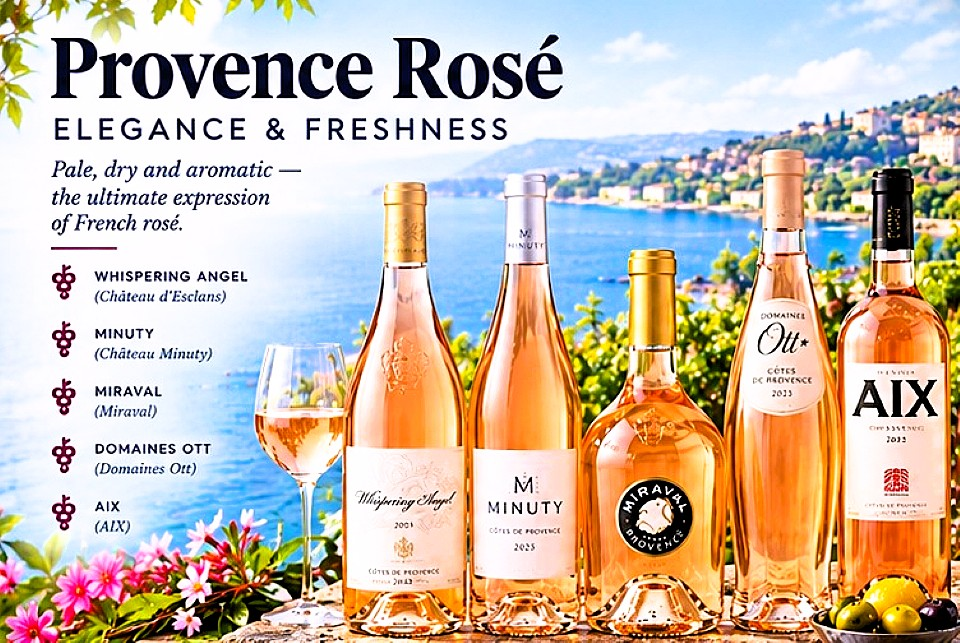
Provence rosé wine brands including Whispering Angel, Minuty, Miraval and Domaines Ott
8. Ultimate Provence
Ultimate Provence, often abbreviated as UP, represents the contemporary side of Provence wine. Its presentation is modern, but the wines remain rooted in the Côtes de Provence tradition. This is a useful brand for people who want a French rosé with a modern luxury aesthetic while retaining the freshness expected from Provence.
Importantly for Toronto shoppers, UP Ultimate Provence Rosé appears in Always Dial A Bottle Toronto’s Provence selection. (ALWAYS DIAL A BOTTLE TORONTO)
9. Saint Aix / AIX Rosé
AIX Rosé, from Provence, has become a highly recognizable modern French rosé brand. It is generally positioned as an approachable premium Provence rosé with a clean, fresh style. AIX is especially suitable for:
-
-
- Summer entertaining
- Patio dining
- Seafood
- Salads
- Mediterranean food
- Aperitifs
-
Always Dial A Bottle Toronto’s Provence listings have included Saint Aix Rosé. (ALWAYS DIAL A BOTTLE TORONTO)
10. Mirabeau
Mirabeau is another recognizable Provence rosé brand that has built its reputation around the modern Provençal lifestyle. Its wines typically emphasize freshness, red and citrus fruit and an elegant dry profile. Mirabeau is worth considering if you enjoy the pale, refined Provence style but want to explore brands beyond the most famous names.
11. Commanderie de Peyrassol
Commanderie de Peyrassol is one of the historic names associated with Provence. Its wines offer a more terroir-focused perspective on the region.
Rather than thinking of Provence only in terms of pale pink colour, Peyrassol demonstrates the potential for rosé to express vineyard site, texture and structure. For serious French wine enthusiasts, it is a producer worth exploring.
12. Château de Pibarnon
Moving toward Bandol, Château de Pibarnon is an important name for lovers of structured Provençal rosé. Bandol’s Mourvèdre-based tradition creates a distinctly different style from the delicate, pale rosés associated with coastal Provence.
A Bandol rosé can have enough body to work with:
-
-
- Grilled tuna
- Salmon
- Bouillabaisse
- Grilled chicken
- Mediterranean vegetables
- Herb-driven dishes
-
13. Domaine Tempier
Domaine Tempier is one of the legendary producers of Bandol. Its Bandol Rosé is built around Mourvèdre, complemented by Grenache and Cinsault. The producer describes the wine as combining complexity and freshness with structure but without tannin. (Domaine Tempier)
Unlike very light Provence rosé, Tempier’s rosé can be treated as a serious food wine. It is also an excellent example of how rosé can develop over time. The producer notes that its rosé can be kept for several years and may evolve toward flavours including candied citrus, melon and rose petal. (Domaine Tempier)
14. Château de Roquefort
Château de Roquefort is another producer associated with the characterful wines of Provence and Bandol. Its wines appeal to consumers who want something more terroir-driven and less standardized than mass-market rosé.
This is the sort of producer to explore when your interest moves from “I want a refreshing pink wine” to “I want to understand Provençal wine.”
15. Clos Cibonne
Clos Cibonne is particularly interesting because of its traditional Provençal identity and use of Tibouren, a grape closely associated with the region. Tibouren can provide distinctive aromatic complexity and texture.
For wine lovers who have already explored mainstream Provence rosé, Clos Cibonne can be a fascinating next step.
16. Tavel
Tavel itself is an appellation rather than a single brand, but it deserves its own position on any list of French rosé worth discovering. Unlike many pale Provence wines, Tavel tends to be:
-
-
- Fuller
- Deeper in colour
- More aromatic
- More structured
- More food-oriented
-
Tavel is made from blends based primarily on Grenache, with varieties such as Cinsault, Mourvèdre, Syrah and others also permitted. (INAO)
If you think you don’t like rosé because you find it too light, try Tavel. It may completely change your opinion.
17. Château de Trinquevedel
Château de Trinquevedel is a respected Tavel producer. Its style reflects the fuller, more gastronomic character that makes Tavel so distinctive. Pair it with dishes that would normally be difficult for a very light rosé.
Think:
-
-
- Charcuterie
- Grilled meats
- Mediterranean cuisine
- Tomato-based dishes
- Spiced foods
- Rich seafood
-
18. Château d’Aquéria
Another Tavel producer worth knowing is Château d’Aquéria. The estate is associated with classic Rhône Valley rosé and is a useful choice for wine drinkers looking for a deeper alternative to pale Provence rosé. Tavel’s Grenache-based blends can offer substantial fruit and a more serious palate structure.
19. Domaine Lafond
Domaine Lafond is another producer to explore if you want to discover the diversity of Tavel and the southern Rhône. This type of rosé is especially attractive for people who want a wine capable of accompanying food rather than simply serving as an aperitif.
20. Gérard Bertrand
Gérard Bertrand is one of the best-known modern wine producers in southern France. The producer has a broad portfolio spanning Languedoc and Mediterranean wine styles, including rosé. Gérard Bertrand is especially interesting for shoppers looking for French rosé with a balance between regional identity, modern presentation and accessibility.
21. La Vieille Ferme
La Vieille Ferme offers an approachable French alternative to premium Provence brands. Its wines come from southern France and are widely recognized for offering good value. Its rosé is particularly useful for casual occasions where you want a French bottle without paying luxury-Provence prices.
Always Dial A Bottle Toronto currently lists La Vieille Ferme Rosé Ventoux AOC. (ALWAYS DIAL A BOTTLE TORONTO)
22. Triennes
Triennes Rosé is another southern French option worth exploring. The brand provides an interesting bridge between everyday French rosé and more serious regional wines.
Always Dial A Bottle Toronto’s Provence listings have included Triennes Rosé. (ALWAYS DIAL A BOTTLE TORONTO)
23. Roseline
Roseline is another Provence name to know. The producer’s rosé wines represent the approachable, elegant side of Provençal wine and can work particularly well for casual summer dining.
Always Dial A Bottle Toronto’s Provence category has included Roseline Prestige Rosé. (ALWAYS DIAL A BOTTLE TORONTO)
24. L’Ostal
L’Ostal represents another expression of southern French wine. Languedoc producers such as L’Ostal demonstrate why French rosé should not be limited to Provence in your search. The region can offer excellent value, Mediterranean fruit and refreshing acidity.
Always Dial A Bottle Toronto has listed L’Ostal Rosé among its rosé selections. (ALWAYS DIAL A BOTTLE TORONTO)
25. Château de la Négly
Château de la Négly is a Languedoc producer worth knowing when exploring French wines outside the traditional Provence category. Its wines illustrate the broader diversity of southern France, where Mediterranean grape varieties can create expressive and food-friendly wines.
For anyone building a French rosé discovery list, Languedoc is an important region not to overlook.
Provence vs. Bandol vs. Tavel: Which French Rosé Is Best?
One of the easiest ways to choose French rosé is to compare the major styles.
| Style | Typical Character | Best For |
|---|---|---|
| Côtes de Provence | Pale, dry, fresh, elegant | Aperitif, seafood, salads |
| Bandol | Fuller, structured, complex | Dinner, grilled fish, Mediterranean food |
| Tavel | Richer, aromatic, powerful | Grilled meats, spicy food, substantial meals |
| Languedoc | Fruity, fresh, excellent value | Casual dining, parties |
| Loire Rosé | Fresh, bright, often fruit-driven | Light meals, salads, Asian cuisine |
| Bordeaux Rosé | Crisp, berry-driven | Casual meals and entertaining |
The Most Important French Rosé Grapes
Understanding the grapes can help you choose a bottle even when you have never tasted the producer before.
1. Grenache
Grenache is one of the most important grapes in southern French rosé. It contributes:
-
-
- Red fruit
- Strawberry
- Raspberry
- Texture
- Alcohol
- Warmth
-
It is particularly important in Provence, Tavel and southern Rhône blends.
2. Cinsault
Cinsault is closely associated with Provençal rosé. It can provide:
-
-
- Freshness
- Floral aromas
- Delicate red fruit
- Elegance
-
Cinsault is one of the reasons many Provence rosés feel light and graceful.
3. Syrah
Syrah contributes:
-
-
- Colour
- Blackberry and red-fruit character
- Spice
- Structure
-
In rosé blends, it can give additional depth without making the wine heavy.
4. Mourvèdre
Mourvèdre is especially important in Bandol. It contributes:
-
-
- Structure
- Savoury character
- Darker fruit
- Spice
- Complexity
-
If you want a more substantial rosé, look for Mourvèdre.
5. Tibouren
Tibouren is strongly associated with Provence and is less familiar to many international wine drinkers. It can contribute aromatic complexity and distinctive Provençal character.
6. Rolle / Vermentino
Rolle is the Provençal name for Vermentino. Although associated primarily with white wine, it can be included in Provençal rosé blends and contribute:
-
-
- Citrus
- Floral aromas
- Freshness
- Salinity
- Mineral character
-
Whispering Angel and several other Provence producers use Rolle in their blends. (Château d’Esclans)
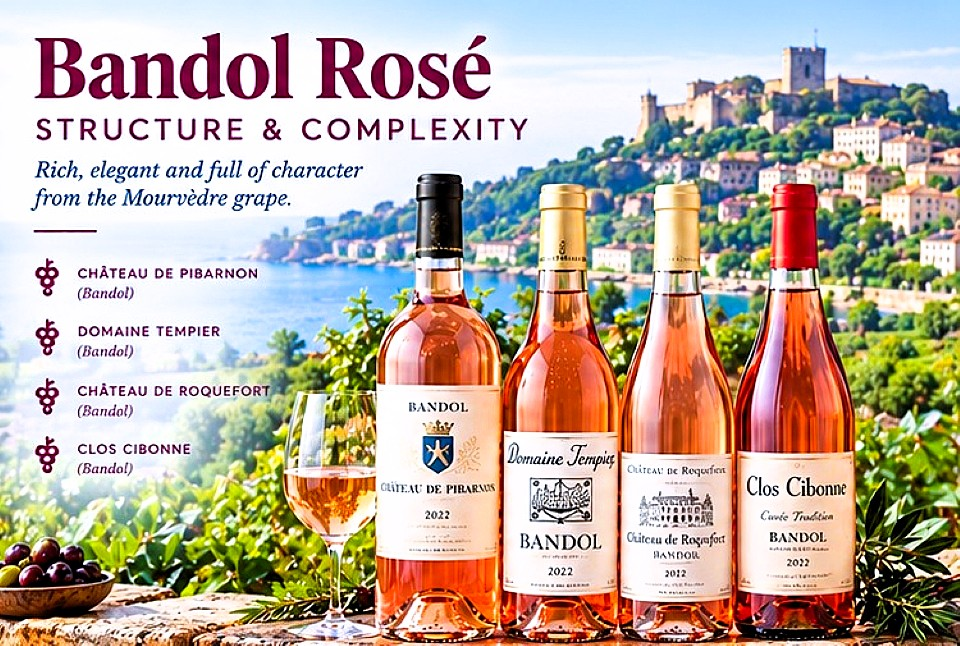
Bandol rosé wine bottles featuring Château de Pibarnon, Domaine Tempier, Château de Roquefort and Clos Cibonne
How Is French Rosé Made?
Rosé wine can be produced in several ways, but two techniques are particularly important.
1. Direct Pressing
With direct pressing, red grapes are pressed relatively gently. The resulting juice has limited contact with the grape skins. This can produce the pale colour commonly associated with Provence rosé.
2. Saignée
“Saignée” means “bleeding.” In this method, some juice is removed from a red-wine fermentation shortly after the grapes and juice have had contact. This can result in a more deeply coloured and sometimes more concentrated rosé.
Different producers use different techniques, and some wines combine approaches. For example, Miraval’s current production information describes direct pressing for Cinsault, Grenache and Rolle and saignée for part of the Syrah. (Miraval)
Is French Rosé Sweet or Dry?
Most premium French rosé is dry. This is particularly true of Provence, Bandol and Tavel. However, “dry” does not mean flavourless. A dry rosé can have abundant fruit aromas while still finishing without noticeable sweetness.
If you want:
-
-
- Crisp and dry: Choose Provence.
- Dry and structured: Try Bandol.
- Full-bodied and aromatic: Try Tavel.
- Fruit-forward and approachable: Explore Languedoc.
- Sweeter: Look outside the classic dry Provençal category and check the wine’s residual-sugar information.
-
What Does French Rosé Taste Like?
There is no single flavour profile. But classic Provence rosé often combines:
Fruit + citrus + floral notes + acidity + mineral character.
You might taste:
-
-
- White peach
- Strawberry
- Raspberry
- Grapefruit
- Lemon
- Red currant
- Melon
- Rose
- White flowers
- Herbs
- Saline/mineral notes
-
Bandol can add more structure and savoury complexity. Tavel can bring deeper fruit, spice and a fuller palate. Languedoc can offer ripe Mediterranean fruit and excellent value.
Best French Rosé Food Pairings
One of the greatest strengths of French rosé is its versatility at the table.
French Rosé and Seafood
Try Provence rosé with:
-
-
- Oysters
- Shrimp
- Lobster
- Grilled fish
- Mussels
- Crab
- Salmon
- Tuna
-
The wine’s acidity refreshes the palate while its fruit complements seafood.
French Rosé and Sushi
Dry Provence rosé can be surprisingly good with sushi. Choose a wine with:
-
-
- High freshness
- Moderate alcohol
- Little sweetness
- Mineral character
-
Miraval itself recommends sushi among its food pairings. (Miraval)
French Rosé and Grilled Chicken
This is one of the easiest pairings. The wine’s fruit works with grilled flavours, while acidity keeps the combination refreshing. Try: Côtes de Provence rosé + grilled chicken + herbs + lemon.
French Rosé and Steak
For a very light Provence rosé, steak may be too powerful. Instead, try a fuller Bandol or Tavel rosé. The additional structure gives the wine enough weight to work with grilled meat.
French Rosé and Spicy Food
Rosé can be excellent with spicy cuisine. Try it with:
-
-
- Thai food
- Indian dishes
- Mexican cuisine
- Moroccan food
- Spicy seafood
- Korean dishes
-
For very spicy food, avoid extremely high-alcohol wines and consider a rosé with generous fruit.
French Rosé and Cheese
Rosé works beautifully with:
-
-
- Goat cheese
- Brie
- Camembert
- Feta
- Fresh mozzarella
- Soft Mediterranean cheeses
-
A crisp Provence rosé is particularly attractive with fresh goat cheese and salads.
Best French Rosé for Summer
If you’re looking for a classic summer rosé, Provence is the obvious place to start. Look for:
-
-
- Pale colour
- Dry finish
- Bright acidity
- Citrus
- Peach
- Red berries
- Moderate alcohol
-
Great candidates include:
-
-
- Whispering Angel
- M de Minuty
- Miraval
- AIX Rosé
- Domaines Ott
- Ultimate Provence
-
Best French Rosé for Dinner
For dinner, don’t automatically choose the palest bottle.
Consider:
-
-
- Domaines Ott
- Château de Berne
- Miraval
- Bandol producers
- Domaine Tempier
- Tavel producers
-
The more structured styles can handle substantial dishes.
Best French Rosé for a Party
For a larger gathering, look for an approachable wine that is:
-
-
- Dry
- Fresh
- Easy to recognize
- Food-friendly
- Not overly complex
-
Good styles include Côtes de Provence, Languedoc and accessible southern French rosés. For a more premium event, recognizable names such as Whispering Angel, Minuty, Miraval or Domaines Ott can add a luxury touch.
Best French Rosé for a Romantic Dinner
For a special dinner, presentation can matter almost as much as flavour.
Consider:
-
-
- Miraval
- Château Minuty
- Domaines Ott
- Château d’Esclans
- Château de Berne
-
These wines combine attractive presentation with a polished Provençal style.
How to Serve French Rosé
Temperature is important.
Ideal Serving Temperature
Most dry French rosé is best served chilled, generally around: 8–12°C
Whispering Angel, for example, recommends serving at 8–12°C. (Château d’Esclans) Do not over-chill a serious rosé, however. If the wine becomes extremely cold, its aromas can disappear and its flavour may seem muted.
Should French Rosé Be Decanted?
Usually, no.
Most rosé is designed to be opened and enjoyed relatively soon after chilling. However, some serious Bandol rosés and other age-worthy examples may benefit from a little time in the glass. This is another reason why serious rosé should not automatically be treated as a disposable summer wine.
Does French Rosé Age?
Most rosé is made for relatively early consumption.
But there are exceptions. Tavel can age better than many consumers expect, and some serious Bandol rosés can develop complexity over several years. Domaine Tempier specifically notes that its Bandol Rosé can be kept for several years and may develop additional mature flavours. (Domaine Tempier)
Miraval also produces Muse de Miraval, specifically described by the producer as a long-aging rosé. (Miraval)
So the answer is:
-
-
- Most rosé: drink young.
- Serious rosé: investigate the producer and vintage before deciding.
-
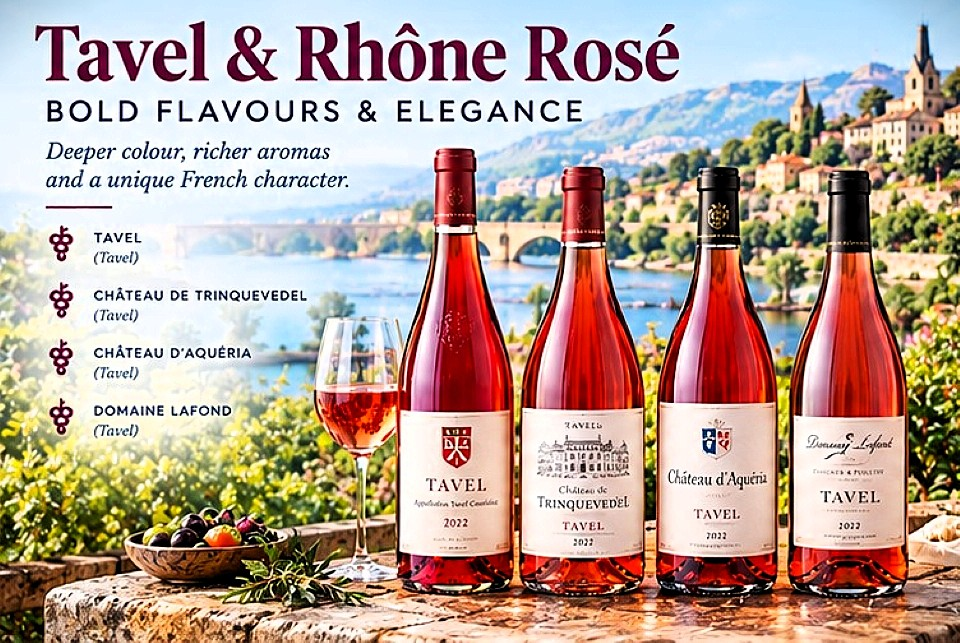
Tavel and Rhône rosé wine bottles featuring Château de Trinquevedel, Château d’Aquéria and Domaine Lafond
French Rosé vs. Italian Rosato
French rosé is usually associated with elegance, freshness and Mediterranean terroir.
Italian rosato can be more varied, with regional grape varieties creating everything from delicate to intensely coloured wines.
Neither is automatically better. If you like pale, dry and mineral wines, Provence may be your preferred style. If you want more regional grape diversity, Italian rosato offers a huge field for exploration.
French Rosé vs. Spanish Rosado
Spanish rosado can often be darker and more fruit-driven. Tempranillo and Garnacha-based examples can provide greater colour and body.
French Provence rosé generally emphasizes delicacy, freshness and refinement. Tavel and Bandol, however, can narrow that stylistic gap.
French Rosé vs. California Rosé
California produces many different styles of rosé. Some are fruit-forward and generous, while French Provence tends to emphasize dryness, acidity and elegance. If you enjoy a clean, dry and restrained style, French rosé is an excellent starting point.
How to Choose the Best French Rosé
When choosing a bottle, consider five things.
1. Region
-
-
- Provence: elegant and dry.
- Bandol: structured and serious.
- Tavel: rich and full-bodied.
- Languedoc: Mediterranean and often excellent value.
-
2. Grape Variety
Look for:
-
-
- Grenache for fruit and texture
- Cinsault for freshness
- Syrah for colour and spice
- Mourvèdre for structure
- Tibouren for Provençal character
- Rolle for citrus and freshness
-
3. Occasion
A casual patio lunch does not require the same wine as a seven-course dinner. For everyday drinking, value-oriented southern French rosé can be excellent. For a celebration, consider premium Provence.
4. Food
Think about what you are eating.
-
-
- Seafood: Provence.
- Grilled fish: Provence or Bandol.
- Steak: Bandol or Tavel.
- Spicy food: fruity, fresh rosé.
- Salad: crisp Provence.
- Cheese: dry, aromatic rosé.
-
5. Budget
French rosé exists at virtually every price level. You can find approachable southern French bottles for casual drinking, while prestige producers can command substantially higher prices.
The most expensive bottle is not necessarily the best bottle for your meal.
French Rosé Wine in Toronto
For wine lovers in Toronto, exploring French rosé does not have to mean limiting yourself to one famous brand.
Always Dial A Bottle Toronto currently has a dedicated Rosé Wine category with hundreds of listings, including wines from France and other major wine-producing countries. (ALWAYS DIAL A BOTTLE TORONTO)
The site’s Provence selection has included wines such as:
-
-
- Roseline Prestige Rosé
- S de La Sablette Coteaux Varois Rosé
- Saint Aix Rosé
- Triennes Rosé
- Ultimate Provence Rosé
- Whispering Angel
- Villa Aix-en-Provence Rosé (ALWAYS DIAL A BOTTLE TORONTO)
-
The broader rosé catalogue also includes M de Minuty, among other international rosé wines. (ALWAYS DIAL A BOTTLE TORONTO)
For Toronto residents looking for French rosé, this makes it possible to compare different styles rather than simply choosing the first pink bottle available.
French Rosé Wine Delivery Toronto
If you’re planning a dinner, summer gathering, birthday, wedding, anniversary or weekend at home, rosé is particularly convenient because it works as both an aperitif and a food wine.
Always Dial A Bottle Toronto offers wine delivery across Toronto and the GTA, including same-day and scheduled delivery options. Its wine-delivery service covers wine, Champagne and other alcohol categories. (ALWAYS DIAL A BOTTLE TORONTO)
You can explore the available Rosé Wine selection and choose according to producer, region, style and price. (ALWAYS DIAL A BOTTLE TORONTO)
For special occasions, French rosé can also work particularly well as a wine gift. The company’s gift-delivery service includes rosé and sparkling wines alongside imported wines and wine gift options. (ALWAYS DIAL A BOTTLE TORONTO)
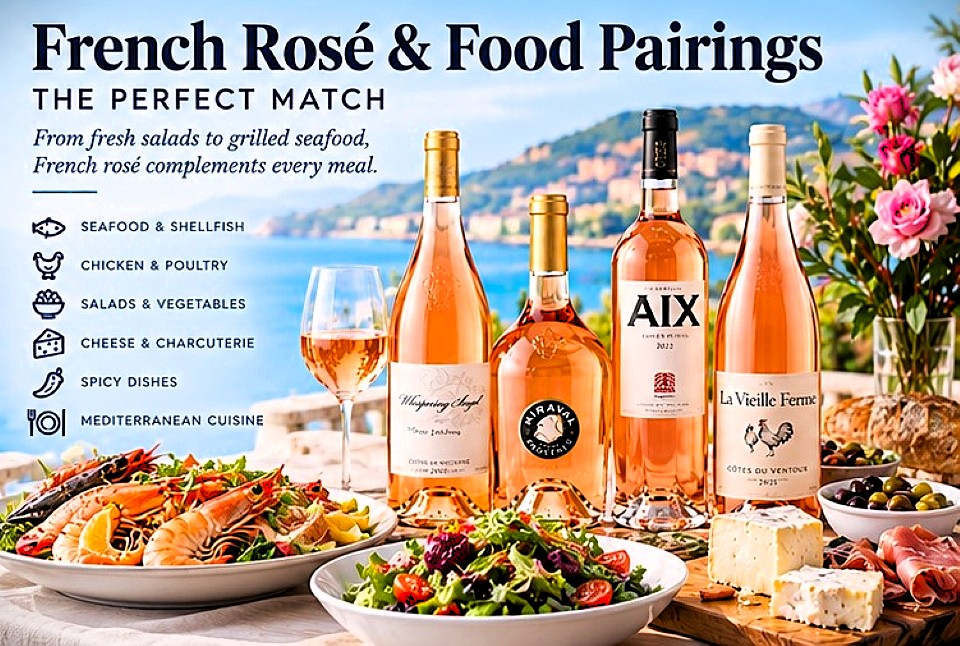
French rosé wine bottles paired with seafood, salad, cheese, charcuterie and Mediterranean food
Frequently Asked Questions About French Rosé
What is the best French rosé wine?
There is no single best French rosé for everyone. Whispering Angel, Château Minuty, Miraval and Domaines Ott are among the best-known premium Provence names, while Domaine Tempier and other Bandol producers are excellent choices for a more structured style.
What is the most famous French rosé?
Whispering Angel is one of the world’s most recognizable French rosé brands and is widely associated with the modern global popularity of premium Provence rosé. (Château d’Esclans)
Is Provence rosé always dry?
Most premium Provence rosé is dry. Côtes de Provence is particularly associated with pale, fresh, dry rosé styles. (INAO)
Is French rosé sweet?
Usually not. Most classic French rosé, particularly from Provence, Bandol and Tavel, is dry. However, fruit aromas can make a dry rosé taste fruity without actually being sweet.
What is the difference between Provence rosé and Tavel?
Provence rosé is generally lighter, paler and more delicate. Tavel is typically deeper in colour, fuller-bodied and more structured. Tavel is one of France’s distinctive rosé-only appellations. (INAO)
What is the difference between Provence rosé and Bandol rosé?
Bandol is particularly associated with Mourvèdre and tends to offer more structure and depth. Provence rosé, especially classic Côtes de Provence, is generally more delicate and refreshing.
Is Bandol rosé worth trying?
Absolutely. If you already enjoy Provence rosé and want something with greater structure and gastronomic potential, Bandol is one of the most interesting French regions to explore. Domaine Tempier is an excellent example of the style. (Domaine Tempier)
Can French rosé be aged?
Most French rosé is best enjoyed young. However, serious examples from producers and appellations such as Bandol and Tavel can develop with age. Some prestige rosés are specifically designed for longer aging. (Domaine Tempier)
What food goes best with French rosé?
French rosé is exceptionally versatile. Try it with:
-
-
- Seafood
- Sushi
- Grilled fish
- Chicken
- Salads
- Mediterranean dishes
- Goat cheese
- Charcuterie
- Spicy foods
- Grilled vegetables
-
What temperature should French rosé be served at?
Most French rosé is best served chilled, generally around 8–12°C. (Château d’Esclans)
Is French rosé good for summer?
Yes, but don’t limit it to summer. The combination of acidity, fruit, freshness and moderate body makes French rosé useful throughout the year. It can accompany everything from seafood to roast chicken and spicy dishes.
Final Thoughts: The Best French Rosé Wine Brands
The world of French rosé is much bigger than a pale pink bottle on a sunny patio. Provence remains the benchmark for elegant, dry and refreshing rosé. Brands such as Whispering Angel, Château Minuty, Miraval, Domaines Ott, Château de Berne, AIX Rosé and Ultimate Provence represent the modern premium side of the region.
But serious wine lovers should go further.
Explore Bandol for structure and Mourvèdre. Discover Tavel for fuller-bodied Rhône rosé. Look to the Languedoc for Mediterranean character and value. And don’t overlook lesser-known producers that can deliver remarkable quality without the same international marketing profile.
The best French rosé depends on your palate.
-
-
- If you want something elegant and refreshing, choose Provence.
- If you want something richer, try Tavel.
- If you want a serious dinner wine, explore Bandol.
- If you want value, investigate southern France beyond the most famous luxury brands.
-
And if you’re in Toronto, French rosé is only one part of a much larger selection of wines available for delivery.
Whether you’re opening a bottle with oysters, serving it alongside grilled fish, enjoying a Mediterranean dinner, hosting friends or simply looking for a dry and refreshing wine, French rosé remains one of the most versatile categories in the wine world.
The best bottle is ultimately the one that matches your food, occasion, taste and budget.