
Blog
The Best French Red Wine Brands: 30 Famous Producers and Estates to Discover

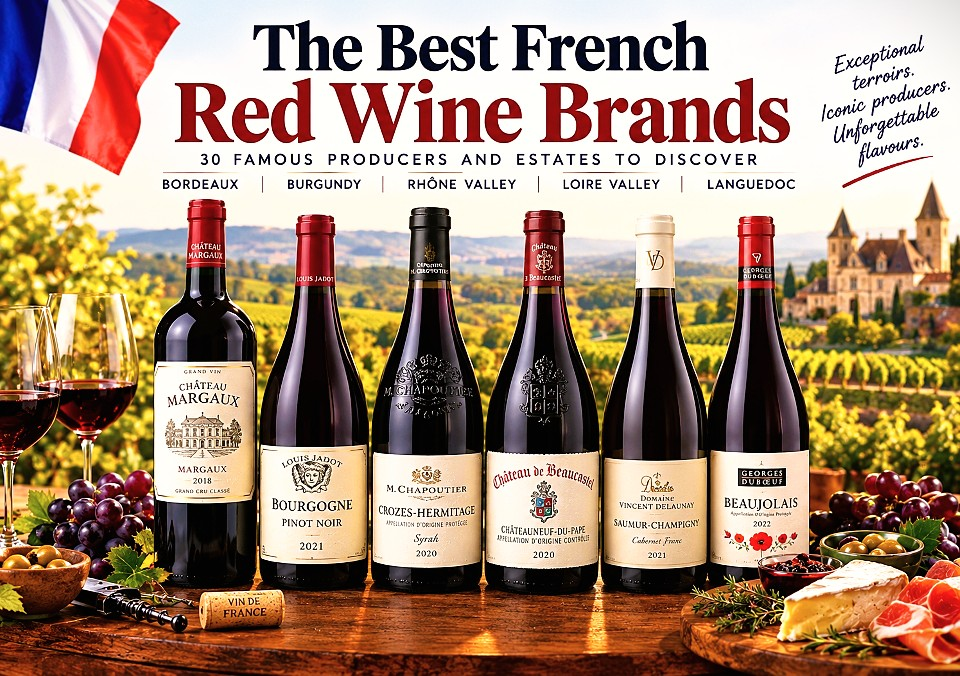
The Best French Red Wine Brands: 30 Famous Producers and Estates to Discover
French red wine has shaped the way the world understands wine. From the celebrated châteaux of Bordeaux to the elegant Pinot Noir vineyards of Burgundy, the spice-filled Syrah wines of the Rhône Valley and the exceptional-value reds of southern France, the country offers an extraordinary variety of flavours, styles and winemaking traditions.
For wine enthusiasts, discovering the best French red wine brands means exploring more than famous labels. It means understanding the regions, grape varieties, terroirs and producers responsible for each bottle’s distinctive character.
Some French red wines are powerful, structured and suitable for long-term cellaring. Others are fragrant, silky and fruit-driven, designed to complement everyday meals. There are prestigious collectible wines, approachable bottles for casual dinners and excellent alternatives for wine lovers who want French character without paying luxury prices.
In this guide, we explore 30 notable French red wine producers and estates, explain what makes their wines distinctive, and help you choose a bottle for your preferences, budget and occasion.
Whether you are looking for a classic Bordeaux, an elegant Burgundy Pinot Noir, a bold Châteauneuf-du-Pape or an affordable red from Languedoc, this guide will help you navigate the fascinating world of French red wine.
Table of Contents
-
-
- What Makes French Red Wine Special?
- The Main French Red Wine Regions
- The 30 Best French Red Wine Brands and Producers
- French Red Wine Grape Varieties Explained
- How to Choose the Right French Red Wine
- French Red Wine and Food Pairing Guide
- How to Serve and Store French Red Wine
- Frequently Asked Questions
- Final Thoughts
- SEO Package and Link Recommendations
-
1. What Makes French Red Wine Special?
French red wine is renowned for its diversity, regional identity and long-established winemaking traditions. Rather than relying exclusively on grape names or a single house style, many French wines are identified primarily by their geographical origin and appellation.
This approach reflects the French concept of terroir: the combination of soil, climate, landscape, vineyard location and human decisions that influence a wine’s character.
For example, a Cabernet Sauvignon-dominant red from Bordeaux can taste markedly different from a Pinot Noir from Burgundy or a Syrah from the northern Rhône. Each region has its own climate, traditions and preferred grape varieties.
France also offers several distinct styles of red wine:
-
-
- Structured and powerful: Cabernet Sauvignon-led Bordeaux and some southern French blends.
- Elegant and aromatic: Pinot Noir from Burgundy.
- Peppery and savoury: Syrah from the northern Rhône.
- Rich and Mediterranean: Grenache-based wines from the southern Rhône.
- Fresh and food-friendly: Cabernet Franc from the Loire Valley.
- Fruit-forward and approachable: Many wines from Languedoc and other southern regions.
-
Another attraction is the range of producers. Large négociant houses offer wines sourced from several vineyards or appellations, while independent domaines and individual estates focus on their own vineyards and local terroirs.
It is also important to distinguish a wine brand from a wine estate. A château or domaine may produce several labels, while a négociant house may offer wines from multiple regions. The names in this guide include both established producers and individual estates.
There is no single wine that suits every drinker. The right bottle depends on whether you prefer bold tannins, delicate red fruit, earthy complexity, peppery spice or generous ripe fruit.
For an introduction to French wine regions and grape varieties, France’s official tourism resource offers a useful overview: France.fr — A Beginner’s Guide to Understanding French Wines.
2. The Main French Red Wine Regions
Before exploring individual producers, it helps to understand the regions behind France’s best-known red wines.
Bordeaux: Classic, Structured Red Wine
Bordeaux, in southwestern France, is internationally famous for red wines made from blends of grape varieties, particularly Cabernet Sauvignon, Merlot and Cabernet Franc. Petit Verdot, Malbec and Carménère may also appear in certain blends. Bordeaux is commonly discussed in terms of its Left Bank and Right Bank.
The Left Bank, including the Médoc and Haut-Médoc, is associated with Cabernet Sauvignon-led blends, often showing blackcurrant, cedar, graphite and firm tannins.
The Right Bank, especially Saint-Émilion and Pomerol, is generally more associated with Merlot and Cabernet Franc. Depending on the wine and vintage, these wines can emphasize plum, dark cherry, floral notes and a rounded texture.
Pessac-Léognan, within the broader Graves area, is known for both red and white wines. Its reds can combine dark fruit with earthy, smoky or mineral characteristics.
Bordeaux includes famous collectible estates, but it also produces numerous regional and appellation wines intended for everyday drinking.
Burgundy: Pinot Noir and Terroir
Burgundy, or Bourgogne, is the classic French region for red Pinot Noir. Burgundy reds often feature cherry, raspberry, strawberry, forest-floor, floral and savoury notes. Their body, acidity, tannin and ageing potential vary significantly according to appellation, vineyard, producer and vintage.
The region’s appellation system distinguishes wines from broad regional designations through village and vineyard-specific categories. A regional Bourgogne Rouge can provide an accessible introduction, while premier cru and grand cru wines often command substantially higher prices.
Burgundy is particularly attractive to wine drinkers who appreciate aromatic complexity and a more delicate expression of red fruit rather than sheer weight or power.
The French national origin and quality institute, INAO, provides information about the Bourgogne Rouge appellation.
Rhône Valley: Spice, Structure and Mediterranean Fruit
The Rhône Valley produces two broad families of red wine. In the Northern Rhône, Syrah is the principal red grape. Appellations such as Côte-Rôtie, Hermitage, Cornas, Crozes-Hermitage and Saint-Joseph offer different expressions of the variety. Typical notes can include blackberry, black pepper, violet, olive and savoury herbs.
In the Southern Rhône, Grenache plays a central role in many blends, often accompanied by Syrah and Mourvèdre. Châteauneuf-du-Pape, Gigondas, Vacqueyras and Côtes du Rhône are among the best-known appellations.
Southern Rhône reds can feature ripe cherry, plum, black fruit, herbs, pepper and warming spice. Their richness and alcohol level depend on the blend, vineyard conditions and vintage. The Inter Rhône organisation provides regional information and wine education.
Loire Valley: Freshness and Cabernet Franc
The Loire Valley is known for a broad range of wines, including red wines made from Cabernet Franc and Pinot Noir.
Chinon, Bourgueil and Saumur-Champigny are important Cabernet Franc appellations. These reds often show raspberry, red cherry, herbs, floral aromas and fresh acidity. Some are light and easy-drinking; others are structured enough to develop additional complexity with age.
Loire Cabernet Franc is worth exploring if you enjoy red wine with freshness, moderate weight and a strong connection to food.
Languedoc and Roussillon: Variety and Value
The Mediterranean regions of Languedoc and Roussillon offer many of France’s most diverse red wines. Grenache, Syrah, Mourvèdre, Carignan, Cinsault and other grapes contribute to a broad range of styles. Some wines are generous and ripe, while others are earthy, savoury, concentrated or influenced by old-vine vineyards.
These regions can offer appealing alternatives to famous Bordeaux, Burgundy and Rhône labels, especially for shoppers seeking character at more accessible prices.
Beaujolais: Gamay and Vibrant Fruit
Beaujolais, located south of Burgundy, is best known for red wines made from Gamay.
Beaujolais and Beaujolais-Villages wines are often fruit-forward, with red cherry, raspberry and floral notes. The ten Beaujolais crus, including Morgon, Moulin-à-Vent, Fleurie and Brouilly, offer more specific expressions of local terroir and can vary considerably in body and ageing potential.
Beaujolais is an excellent region to consider if you want a red wine that can be served slightly chilled and enjoyed with casual meals.
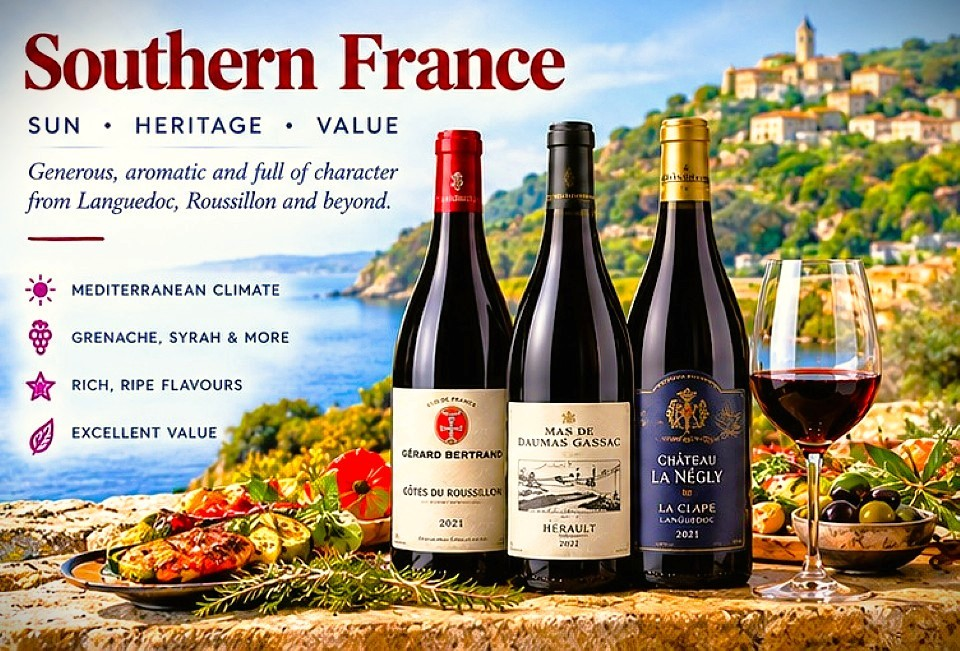
Southern French red wine bottles from Languedoc and Roussillon, showcasing Grenache and Syrah varieties against a Mediterranean landscape.
3. The 30 Best French Red Wine Brands and Producers
The following selection brings together famous château estates, respected Burgundy houses, Rhône specialists and producers from other French regions. It is not a strict ranking: the producers make different styles of wine at different price levels, and individual bottles can vary substantially.
1. Château Margaux — Bordeaux
Region: Margaux, Médoc, Bordeaux
Principal grapes: Cabernet Sauvignon, Merlot, Cabernet Franc and Petit Verdot
Château Margaux is one of Bordeaux’s most recognizable historic wine estates. Its wines are associated with refinement, aromatic complexity and the ability to develop over time under suitable storage conditions.
Cabernet Sauvignon is central to the grand vin, supported by other permitted varieties in proportions that vary by vintage. Depending on the year, the wine may reveal cassis, black cherry, violet, cedar, tobacco and finely structured tannins.
The estate is particularly relevant to collectors and enthusiasts interested in classic Left Bank Bordeaux. Its top wine is generally a major investment, so it is not necessarily the most practical starting point for someone exploring French red wine for the first time.
Best for: Special occasions, collectors and lovers of structured Bordeaux.
Official website: Château Margaux
2. Château Lafite Rothschild — Pauillac, Bordeaux
Region: Pauillac, Médoc
Principal grape: Cabernet Sauvignon
Château Lafite Rothschild is another celebrated Bordeaux estate with a long history and a strong association with age-worthy red wine.
Its grand vin is generally Cabernet Sauvignon-led, although the precise blend changes with the vintage. Blackcurrant, cedar, pencil shavings, floral nuances and refined tannins are among the characteristics often associated with mature examples.
Young bottles can be firm and reserved, while well-stored mature vintages may show greater aromatic development and a more integrated texture.
Lafite is particularly well known in the fine-wine market, but its prestige and price mean that availability and affordability can be significant barriers.
Best for: Collectors, milestone celebrations and enthusiasts of classic Pauillac.
Official website: Domaines Barons de Rothschild Lafite
3. Château Latour — Pauillac, Bordeaux
Region: Pauillac, Médoc
Principal grape: Cabernet Sauvignon
Château Latour is known for powerful, structured Bordeaux wines that can develop over extended periods in the cellar.
The estate’s grand vin often emphasizes dark fruit, firm tannins and a concentrated structure. With maturity, additional savoury, earthy and tobacco-like notes may emerge.
Its style makes it a useful reference point for understanding traditional Cabernet Sauvignon-led Bordeaux, although bottle age, vintage and storage conditions are crucial when evaluating an individual wine.
Latour’s top bottling is aimed primarily at the fine-wine market rather than casual everyday drinking.
Best for: Collectors and drinkers who appreciate powerful, long-lived Bordeaux.
Official website: Château Latour
4. Château Mouton Rothschild — Pauillac, Bordeaux
Region: Pauillac, Médoc
Principal grape: Cabernet Sauvignon
Château Mouton Rothschild combines Bordeaux winemaking with a distinctive history of artistic bottle labels. Its wines are frequently associated with richness, dark fruit, structure and complexity.
Cabernet Sauvignon usually forms the backbone of the grand vin, while supporting varieties contribute balance and texture. Depending on the vintage, aromas can include blackcurrant, blackberry, cedar, spice and toasted notes.
Mouton is particularly recognizable to collectors because of its labels and reputation in the fine-wine market.
Best for: Fine-wine enthusiasts, collectors and memorable gifts.
Official website: Château Mouton Rothschild
5. Château Haut-Brion — Pessac-Léognan, Bordeaux
Region: Pessac-Léognan, Graves
Principal grapes: Merlot and Cabernet Sauvignon, with Cabernet Franc and Petit Verdot
Château Haut-Brion stands apart among major Bordeaux estates because of its association with the Graves area and its distinctive red-wine profile.
Its wines can combine dark fruit with earthy, smoky, mineral and tobacco-like nuances. Merlot contributes texture, while Cabernet Sauvignon and the other varieties help shape the structure and complexity.
Haut-Brion is an interesting choice for wine drinkers who want to explore Bordeaux beyond the Médoc’s most famous appellations.
Best for: Collectors and enthusiasts interested in complex, distinctive Bordeaux.
Official website: Château Haut-Brion
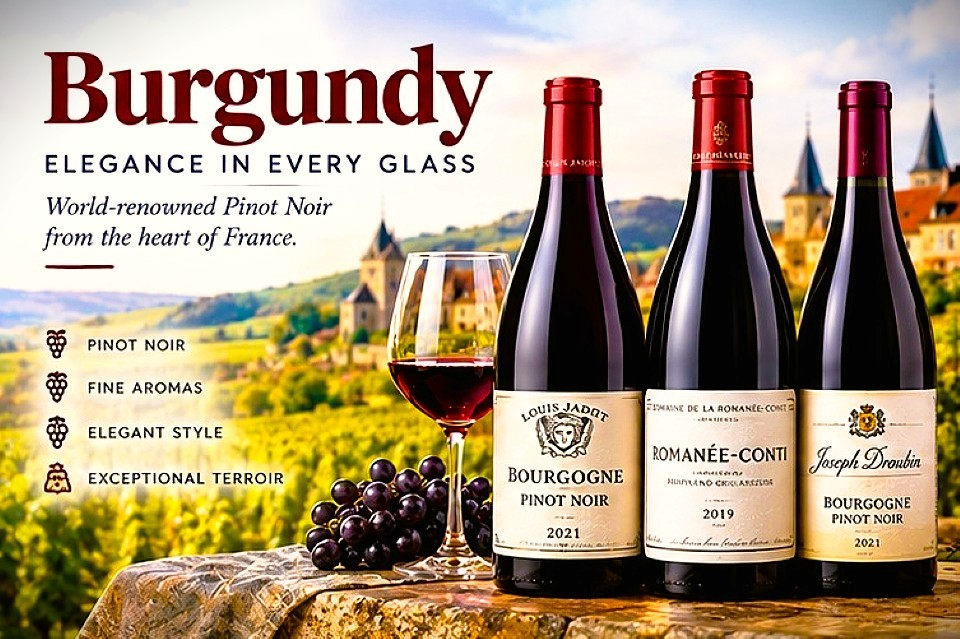
French Burgundy red wine bottles featuring Pinot Noir wines from renowned producers, with scenic vineyards in the background.
6. Château Pichon Baron — Pauillac, Bordeaux
Region: Pauillac, Médoc
Principal grape: Cabernet Sauvignon
Château Pichon Baron is a prominent Pauillac estate known for structured red blends and classic Left Bank characteristics.
Its wines often emphasize cassis, dark berries, cedar and a firm tannic framework. Merlot contributes additional texture, while the overall blend reflects the vintage and estate’s winemaking choices.
Pichon Baron can be a useful reference for readers who want to learn about prestigious Pauillac beyond the most globally famous first-growth estates.
Best for: Cabernet Sauvignon enthusiasts and special-occasion Bordeaux drinkers.
Official website: Château Pichon Baron
7. Château Lynch-Bages — Pauillac, Bordeaux
Region: Pauillac, Médoc
Principal grape: Cabernet Sauvignon
Château Lynch-Bages has a strong following among lovers of structured Bordeaux. Its red wines are often associated with concentrated black fruit, cedar, spice and a substantial tannic framework.
Although vintage conditions influence the balance between fruit, acidity and tannin, Lynch-Bages generally appeals to drinkers who enjoy a more powerful Left Bank style.
It is worth considering when exploring the breadth of Pauillac producers and comparing the different expressions of Cabernet Sauvignon-led Bordeaux.
Best for: Steak dinners, cellar collections and fans of robust Bordeaux.
Official website: Château Lynch-Bages
8. Château Léoville Las Cases — Saint-Julien, Bordeaux
Region: Saint-Julien, Médoc
Principal grape: Cabernet Sauvignon
Château Léoville Las Cases is known for serious, structured wines with a strong connection to the classic Médoc style.
Its reds can show cassis, blackberry, graphite, cedar and savoury complexity. The tannins and acidity often support extended ageing, although the ideal drinking window varies by vintage.
For enthusiasts comparing Bordeaux appellations, Saint-Julien offers a useful middle ground between the distinctive profiles of neighbouring Pauillac and Margaux, while individual estates retain their own character.
Best for: Experienced Bordeaux drinkers and collectors.
Official website: Domaines Delon
9. Château Palmer — Margaux, Bordeaux
Region: Margaux, Médoc
Principal grapes: Cabernet Sauvignon and Merlot
Château Palmer is admired for wines that combine aromatic complexity with a distinctive sense of texture. Its blends can show dark berries, floral aromas, spice and savoury notes. Merlot plays an important role in the estate’s style, while Cabernet Sauvignon contributes structure and depth.
Palmer is an interesting name for wine enthusiasts who want to explore Margaux beyond Château Margaux itself.
Best for: Fans of aromatic, complex Bordeaux and special occasions.
Official website: Château Palmer
10. Château Pétrus — Pomerol, Bordeaux
Region: Pomerol, Right Bank
Principal grape: Merlot
Château Pétrus is one of the best-known estates in Pomerol and one of the most sought-after names in Bordeaux.
Merlot dominates the wine, producing a different expression of Bordeaux from the Cabernet Sauvignon-led reds of Pauillac. Depending on vintage and maturity, Pétrus can show black cherry, plum, dark berries, earthy nuances and a dense, polished texture.
Its reputation and limited production make it exceptionally expensive and difficult to access. It is best viewed as a fine-wine reference rather than an everyday recommendation.
Best for: Serious collectors and enthusiasts of premium Merlot-based Bordeaux.
11. Château Cheval Blanc — Saint-Émilion, Bordeaux
Region: Saint-Émilion, Right Bank
Principal grapes: Cabernet Franc and Merlot
Château Cheval Blanc is known for a distinctive Right Bank approach that gives Cabernet Franc a particularly important role alongside Merlot. The resulting wines can combine ripe fruit, floral aromas, spice, freshness and considerable complexity. The balance changes by vintage, but the estate is often associated with a refined yet substantial style.
It is a useful name for readers exploring how Merlot and Cabernet Franc behave differently from the more Cabernet Sauvignon-focused blends of the Left Bank.
Best for: Collectors and lovers of complex Saint-Émilion wines.
Official website: Château Cheval Blanc
12. Domaine de la Romanée-Conti — Burgundy
Region: Côte de Nuits, Burgundy
Principal grape: Pinot Noir
Domaine de la Romanée-Conti, commonly known as DRC, is among the most famous names in Burgundy and the international fine-wine world. The domaine is particularly associated with vineyard-specific Pinot Noir from prestigious sites in the Côte de Nuits. The wines are valued for their aromatic detail, texture, complexity and expression of individual vineyards.
Burgundy’s focus on specific vineyard origins means that wines from different parcels can show distinct personalities even when they use the same grape variety. DRC bottles are extremely expensive and scarce. Burgundy enthusiasts can still explore the region’s style through less costly appellations and producers.
Best for: Collectors and dedicated Burgundy enthusiasts.
13. Maison Louis Jadot — Burgundy
Region: Burgundy
Principal red grape: Pinot Noir
Louis Jadot is an established Burgundy house offering a broad portfolio of wines from regional appellations to more specific village and vineyard designations.
Its range makes the producer useful for exploring Pinot Noir at different levels of complexity and price. Depending on the appellation and bottling, wines can feature cherry, raspberry, red plum, earth, floral notes and varying degrees of structure.
For readers new to Burgundy, a regional Bourgogne Rouge or an accessible village-level wine may be a more practical starting point than a rare grand cru bottle.
Best for: Burgundy newcomers and Pinot Noir drinkers seeking a range of styles.
Official website: Maison Louis Jadot
14. Joseph Drouhin — Burgundy
Region: Burgundy
Principal red grape: Pinot Noir
Maison Joseph Drouhin is a historic Burgundy producer with wines from numerous appellations. The portfolio offers opportunities to compare different expressions of Pinot Noir, from accessible regional bottlings to wines from well-known villages and vineyards.
Burgundy’s charm lies in the detail: a wine’s origin, vineyard exposure, soil, vintage and producer can all influence the final character. Joseph Drouhin is a useful name for exploring that diversity across the region.
Best for: Pinot Noir enthusiasts and drinkers interested in Burgundy’s village and vineyard distinctions.
Official website: Maison Joseph Drouhin
15. Domaine Faiveley — Burgundy
Region: Burgundy
Principal red grape: Pinot Noir
Domaine Faiveley is another respected Burgundy name, with wines from several parts of the region. Its range includes reds that can illustrate the differences between the Côte de Nuits, Côte de Beaune and other Burgundy areas. Depending on the wine, flavours may include red cherry, black cherry, spice and savoury earthy notes.
The producer is worth considering when comparing Burgundy wines across appellations rather than treating all French Pinot Noir as a single style.
Best for: Burgundy exploration and food-focused Pinot Noir drinking.
Official website: Domaine Faiveley
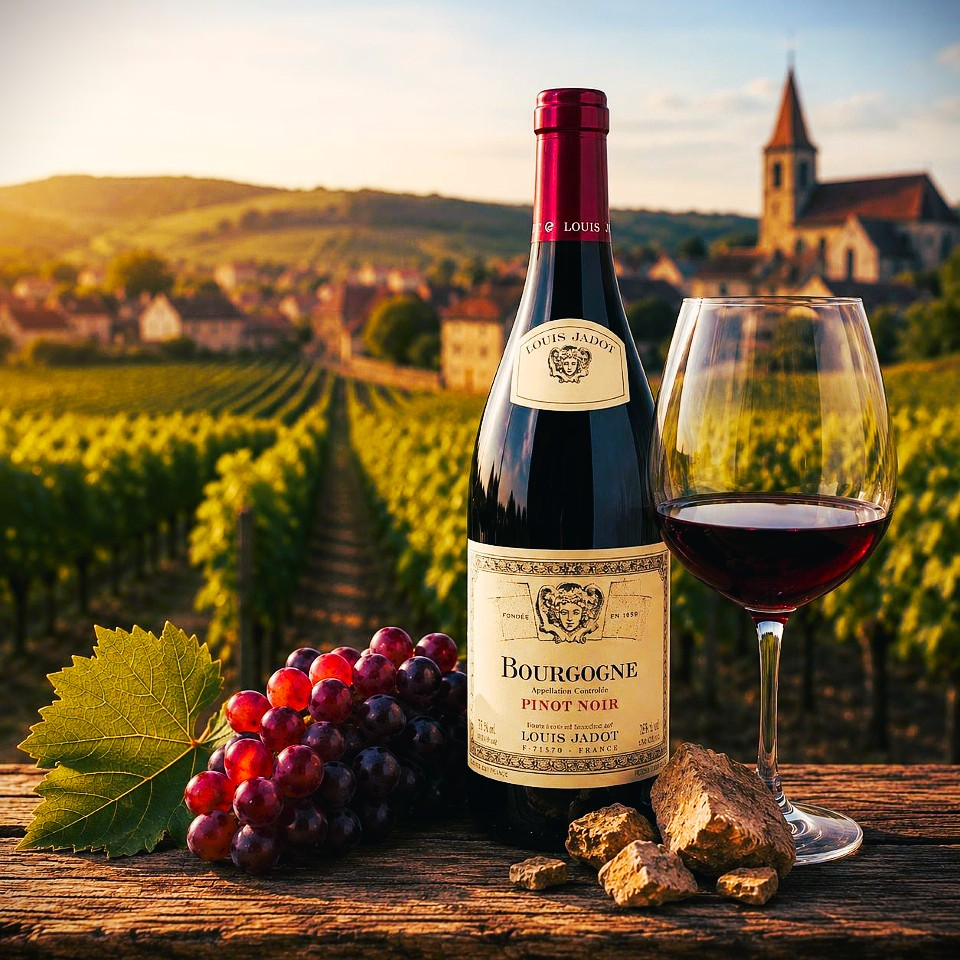
French Burgundy Pinot Noir wine bottles with a vineyard-inspired background, highlighting the region’s elegant red wines.
16. Bouchard Père & Fils — Burgundy
Region: Burgundy
Principal red grape: Pinot Noir
Bouchard Père & Fils is a historic Burgundy house associated with wines from a broad range of regional and vineyard origins. Its portfolio provides another route into Burgundy’s appellation system. A basic regional wine, a village bottling and a premier cru wine may differ in intensity, aromatic complexity and structure, depending on the vineyards and vintage.
When choosing a bottle, check the precise appellation and vineyard designation rather than relying on the producer’s name alone.
Best for: Burgundy drinkers who want to compare appellations and vineyard origins.
Official website: Bouchard Père & Fils
17. E. Guigal — Rhône Valley
Region: Northern and Southern Rhône
Principal red grapes: Syrah and Grenache-based blends, depending on appellation
E. Guigal is one of the Rhône Valley’s best-known producers, with wines ranging from approachable Côtes du Rhône to prestigious northern Rhône bottlings.
Its northern Rhône wines highlight Syrah, with possible notes of blackberry, black pepper, violet, olive and savoury herbs. Its broader range allows drinkers to explore different appellations without changing producers.
Guigal is particularly useful for understanding how Syrah changes with origin, from regional wines to the more distinctive expressions of appellations such as Côte-Rôtie and Hermitage.
Best for: Syrah enthusiasts and readers exploring Rhône wines.
Official website: E. Guigal
18. M. Chapoutier — Rhône Valley
Region: Rhône Valley
Principal red grapes: Syrah, Grenache and other varieties according to appellation
M. Chapoutier produces wines from several Rhône appellations and is associated with a strong emphasis on vineyard origin. Its portfolio includes Syrah-based northern Rhône wines as well as southern Rhône blends. The styles range from fresh and approachable to concentrated, structured and suited to cellaring.
Because the portfolio is broad, it is important to choose by specific appellation and bottling rather than assuming that every wine from the producer has the same character.
Best for: Exploring Rhône diversity and comparing different expressions of Syrah and Grenache.
Official website: M. Chapoutier
19. Paul Jaboulet Aîné — Rhône Valley
Region: Northern Rhône
Principal red grape: Syrah
Paul Jaboulet Aîné is a long-established Rhône producer associated with appellations including Hermitage and Crozes-Hermitage. Its red wines illustrate the depth and savoury character that Syrah can achieve in the northern Rhône. Depending on the bottling, expect possible notes of blackberry, pepper, smoke, dark olive and herbs.
The range includes wines at different levels, allowing drinkers to compare accessible regional expressions with more prestigious northern Rhône examples.
Best for: Fans of peppery Syrah and savoury, structured red wine.
Official website: Paul Jaboulet Aîné
20. Château de Beaucastel — Châteauneuf-du-Pape
Region: Southern Rhône
Principal red grapes: Grenache, Mourvèdre and other traditional Rhône varieties
Château de Beaucastel is a prominent estate in Châteauneuf-du-Pape, an appellation known for full-flavoured red blends. Its wines can combine ripe red and dark fruit with herbs, spice, earthy notes and substantial texture. The blend is shaped by the estate’s approach and the characteristics of each vintage.
For wine lovers accustomed to Bordeaux, Châteauneuf-du-Pape offers a different kind of complexity: Mediterranean fruit, herbal notes and a broader range of grape varieties.
Best for: Roast lamb, grilled meats and fans of rich Rhône reds.
Official website: Château de Beaucastel
21. Domaine du Vieux Télégraphe — Châteauneuf-du-Pape
Region: Southern Rhône
Principal red grapes: Grenache-led traditional Rhône varieties
Domaine du Vieux Télégraphe is a respected Châteauneuf-du-Pape estate associated with wines of depth and structure. The wines often combine dark cherry, red plum, herbs and spice, with tannins and acidity that can support further development in suitable vintages.
Its style makes it a compelling option for readers interested in traditional southern Rhône wines and the influence of vineyard location on Grenache-based blends.
Best for: Enthusiasts of structured Châteauneuf-du-Pape and Mediterranean food pairings.
Official website: Domaine du Vieux Télégraphe
22. Gérard Bertrand — Languedoc
Region: Languedoc and southern France
Principal red grapes: Vary by wine, including Grenache, Syrah and Mourvèdre
Gérard Bertrand is a widely recognized producer with a portfolio that spans several southern French appellations and wine styles. The range includes wines intended for everyday drinking as well as more premium selections. Southern French reds can offer ripe berry fruit, herbs, spice and a generous texture, although each bottling has its own blend and profile.
The producer is worth exploring for readers who want to move beyond Bordeaux and Burgundy and discover the diversity of Mediterranean French wine.
Best for: Exploring southern French reds and a broad range of styles.
Official website: Gérard Bertrand
23. Mas de Daumas Gassac — Languedoc
Region: Aniane, Languedoc
Principal red grape: Cabernet Sauvignon, alongside other varieties
Mas de Daumas Gassac became well known for a distinctive approach to red wine in the Languedoc, using a blend that differs from the region’s more typical Mediterranean combinations.
Its red wine is often discussed in connection with Cabernet Sauvignon, aromatic complexity and the expression of its particular site. The blend and character should be checked for the specific vintage.
The estate demonstrates that southern France cannot be reduced to one style: its reds can differ markedly from the Grenache- and Syrah-led wines often associated with the region.
Best for: Wine enthusiasts interested in distinctive, age-worthy southern French reds.
Official website: Mas de Daumas Gassac
24. Domaine Gauby — Roussillon
Region: Roussillon
Principal red grapes: Depending on the wine, Grenache, Carignan, Syrah and other regional varieties
Domaine Gauby is associated with distinctive wines from Roussillon, a Mediterranean area near the Spanish border. Its red wines can emphasize savoury herbs, dark berries, spice and earthy complexity. Old-vine fruit and the estate’s particular vineyard sites contribute to the range of styles.
For wine drinkers interested in less familiar French regions, Gauby is a useful producer to explore beyond the better-known Bordeaux, Burgundy and Rhône appellations.
Best for: Adventurous wine drinkers and enthusiasts of Mediterranean reds.
25. Château Musar — Bekaa Valley, Lebanon (A Useful Comparison, Not a French Wine)
Château Musar is sometimes mentioned in discussions of classic French-influenced red wine, but it is not a French producer. It is based in Lebanon. It does not belong in a definitive list of French red wine brands. However, readers interested in comparing traditional, age-worthy blends may find it useful as a separate point of reference after exploring French wines.
For SEO accuracy and geographical relevance, keep Château Musar out of the main French producer list and consider featuring it in a separate article about French-inspired wines from around the world.
25. Domaine Charles Joguet — Loire Valley
Region: Chinon, Loire Valley
Principal red grape: Cabernet Franc
Domaine Charles Joguet is associated with Chinon, an important appellation for Cabernet Franc. Chinon reds can show red cherry, raspberry, herbs, floral notes and lively acidity. Depending on the vineyard, vintage and winemaking approach, the wines may be light and fresh or more structured and suitable for ageing.
Cabernet Franc from Chinon can be a refreshing alternative to the richer, more tannic reds of Bordeaux.
Best for: Roast chicken, charcuterie, mushrooms and lighter meat dishes.
26. Domaine Bernard Baudry — Loire Valley
Region: Chinon, Loire Valley
Principal red grape: Cabernet Franc
Domaine Bernard Baudry is another notable Chinon producer whose wines demonstrate the versatility of Cabernet Franc.
Its range can illustrate differences in vineyard origin, fruit expression, structure and ageing potential. Fresh red fruit and herbal notes are common reference points for the region, although each bottling should be considered individually.
For readers who enjoy food-friendly wines with freshness and moderate weight, Chinon deserves a place on the shortlist.
Best for: Everyday dining, grilled vegetables and roast poultry.
27. Château de Pibarnon — Bandol, Provence
Region: Bandol, Provence
Principal red grapes: Mourvèdre and Grenache
Provence is best known internationally for rosé, but Bandol also produces notable red wines, often with a strong role for Mourvèdre. Château de Pibarnon is a useful estate to explore for a more structured Mediterranean red. Depending on the vintage and bottling, the wines may offer dark fruit, herbs, spice and firm tannins.
Mourvèdre-based wines can be particularly rewarding with grilled meats, slow-cooked dishes and robust Mediterranean cuisine.
Best for: Fans of savoury, structured reds and Provençal food.
Official website: Château de Pibarnon
28. Château La Négly — Languedoc
Region: La Clape, Languedoc
Principal red grapes: Vary by cuvée, often including Syrah, Grenache and Mourvèdre
Château La Négly is a producer to consider when exploring the Mediterranean character of Languedoc reds. Its wines can combine ripe dark fruit with spice, herbs and a generous texture. Individual cuvées vary, so the specific label and blend are important when selecting a bottle.
La Clape and nearby appellations offer an alternative to the most famous French wine regions, with wines that can suit hearty meals and outdoor dining.
Best for: Grilled meats, Mediterranean dishes and lovers of southern French blends.
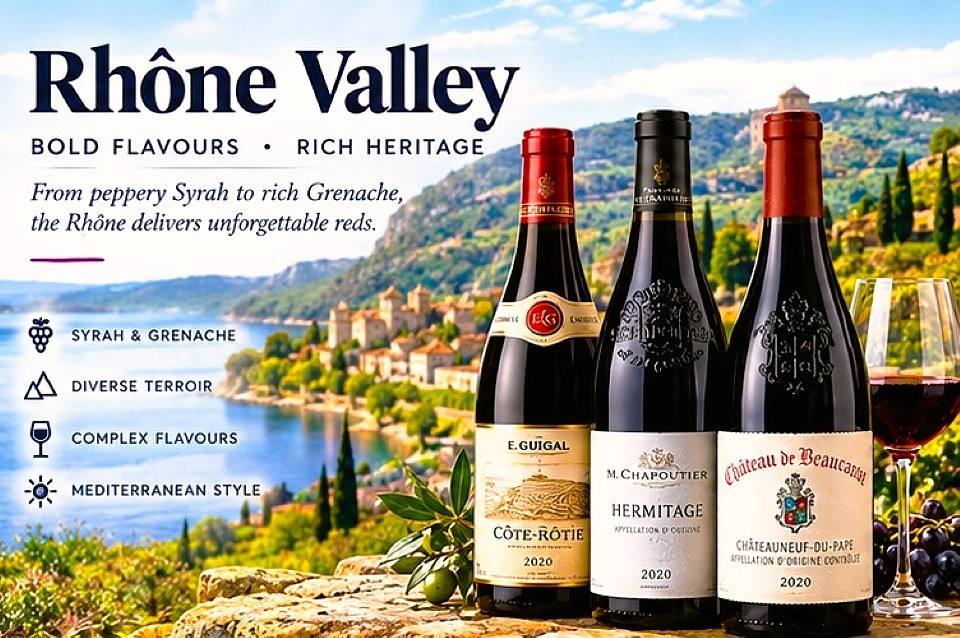
French Rhône Valley red wine bottles representing Syrah and Grenache wines from renowned regional appellations.
29. Famille Perrin — Rhône Valley
Region: Southern Rhône and other French regions, depending on the wine
Principal red grapes: Often Grenache, Syrah and Mourvèdre in southern Rhône blends
Famille Perrin is a family-owned wine producer associated with a range of Rhône wines, including wines from Châteauneuf-du-Pape and other southern appellations. The portfolio includes different price levels and styles, making it possible to explore southern Rhône wines without beginning with the most expensive estates.
Expect the potential for ripe berry fruit, spice and herbal notes in many of the red blends, while the exact character depends on the appellation and bottling.
Best for: Exploring southern Rhône blends and pairing red wine with roast meats.
Official website: Famille Perrin
30. Georges Duboeuf — Beaujolais
Region: Beaujolais
Principal red grape: Gamay
Georges Duboeuf is one of the best-known names associated with Beaujolais and Gamay-based red wine. Beaujolais wines often emphasize fresh red fruit, including cherry and raspberry, and can be approachable when served slightly chilled. The region also produces cru wines with more structure and complexity than the simplest youthful styles.
Georges Duboeuf is a useful entry point for people who want a red wine that is less heavy than many Cabernet Sauvignon-led blends.
Best for: Casual dinners, charcuterie, picnic food and light poultry dishes.
Official website: Georges Duboeuf
4. French Red Wine Grape Varieties Explained
Understanding grape varieties makes it easier to choose a French red wine that suits your taste.
Cabernet Sauvignon
Cabernet Sauvignon is especially important in Bordeaux’s Left Bank. It often produces wines with blackcurrant, blackberry, cedar and firm tannins. Its structure can support ageing, particularly in well-made wines from suitable vintages.
Choose Cabernet Sauvignon-led Bordeaux if you enjoy concentrated fruit, a firm structure and a red wine that works well with beef or lamb.
Merlot
Merlot is central to many Right Bank Bordeaux wines and is also grown in other French regions. It can produce flavours of plum, black cherry and other ripe fruit, with a texture that may feel rounder than a Cabernet Sauvignon-dominant wine. Structure and richness still vary with region and vintage.
Merlot-led wines can be a good choice for people who enjoy generous fruit and a softer impression of tannin.
Pinot Noir
Pinot Noir is the signature red grape of Burgundy. It commonly produces aromas of cherry, raspberry and strawberry, with possible floral, earthy and savoury notes. Acidity and tannin vary by origin and producer.
Pinot Noir is worth exploring if you prefer aromatic complexity and a lighter-to-medium-bodied red rather than a very powerful wine.
Syrah
Syrah is the leading red grape of the northern Rhône and also appears in southern French blends. Its characteristic flavours can include blackberry, black pepper, violet, olive and smoky or savoury notes. Some examples are powerful and structured; others are more approachable when young.
Choose Syrah if you enjoy spice, dark fruit and a distinctive savoury character.
Grenache
Grenache is central to many southern Rhône blends and widely planted across southern France. It can contribute ripe red fruit, warmth, body and spice. In blends, it is often combined with Syrah, Mourvèdre or other regional varieties to build additional structure and complexity.
Grenache-based wines can be particularly appealing with grilled meats, herbs and Mediterranean dishes.
Cabernet Franc
Cabernet Franc is important in the Loire Valley and also plays a role in Bordeaux blends. It can produce fresh red-fruit flavours with herbal, floral and peppery nuances. Its acidity makes it versatile at the table.
Try Cabernet Franc from Chinon or Saumur-Champigny if you want a French red that is aromatic, food-friendly and often less heavy than a rich southern Rhône wine.
Gamay
Gamay is the principal red grape of Beaujolais. It is known for bright red fruit and approachable styles, although the region’s cru wines can offer additional structure, depth and ageing potential. Gamay is an excellent choice for casual meals and can often be served slightly cooler than fuller-bodied reds.
Mourvèdre
Mourvèdre plays an important role in Bandol and some southern French blends. It can contribute dark fruit, savoury complexity, firm tannins and a robust structure. Its character makes it a natural match for slow-cooked meat and grilled dishes.
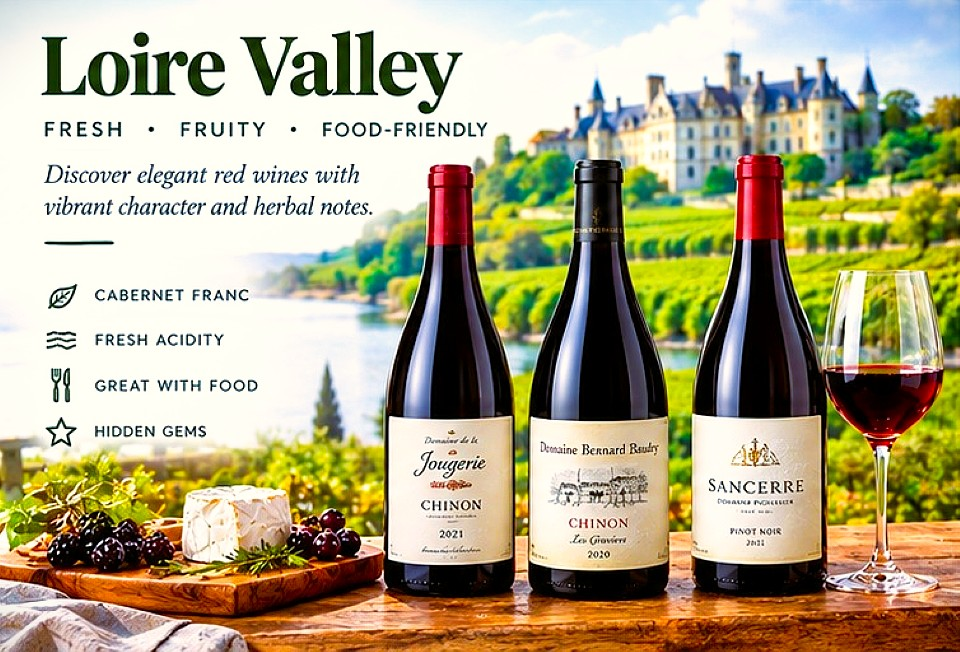
Loire Valley red wine bottles highlighting Cabernet Franc and Chinon wines beside a scenic French château and river landscape.
5. How to Choose the Right French Red Wine
There is no need to memorize every appellation before buying French red wine. Start with your preferred taste, then use the region and grape variety as a guide.
If You Prefer Bold, Full-Bodied Red Wine
Explore Cabernet Sauvignon-led Bordeaux, structured Rhône Syrah, Châteauneuf-du-Pape and selected Languedoc blends. Look for words such as Cabernet Sauvignon, Pauillac, Saint-Estèphe, Hermitage or Châteauneuf-du-Pape on the label. These are useful starting points, not guarantees of a particular body or intensity.
If You Prefer Smooth, Fruit-Forward Wine
Consider Merlot-led Bordeaux, approachable southern Rhône reds and selected wines from Languedoc. Remember that “smooth” is subjective. A wine’s tannins, acidity, alcohol, ripeness and serving temperature all affect how it feels on the palate.
If You Prefer Elegant and Aromatic Reds
Look at Burgundy Pinot Noir, Beaujolais and Loire Cabernet Franc. These styles can emphasize red fruit, floral aromas and freshness rather than sheer concentration. They also offer versatile food-pairing options.
If You Prefer Peppery and Savoury Wine
Northern Rhône Syrah is an excellent region to investigate. Certain southern Rhône wines and Languedoc blends can also offer spice and herbal complexity. Consider whether you prefer the firmer structure of a northern Rhône Syrah or the riper fruit often found in southern French blends.
If You Want to Explore French Wine on a Budget
Start with regional appellations and lesser-known producers rather than the most famous château names.
Useful categories to investigate include:
-
-
- Bourgogne Rouge.
- Beaujolais and Beaujolais-Villages.
- Côtes du Rhône.
- Crozes-Hermitage.
- Chinon and Saumur-Champigny.
- Languedoc red blends.
- Bordeaux Supérieur.
-
Prices and availability vary by market, producer, vintage and retailer. A well-chosen regional wine can offer a satisfying introduction to French wine without requiring a collector’s budget.
If You Are Buying a Gift
Consider the recipient’s usual preferences first. A person who loves powerful Cabernet Sauvignon may not be as enthusiastic about delicate Pinot Noir, even if the latter is more expensive. For a gift, you might choose a recognizable Bordeaux estate, a Burgundy Pinot Noir, a Rhône blend or a bottle from an appellation associated with a meaningful year or celebration.
For collectible bottles, confirm the vintage, provenance, storage history and bottle condition. A prestigious name alone cannot guarantee that a bottle has been stored properly.
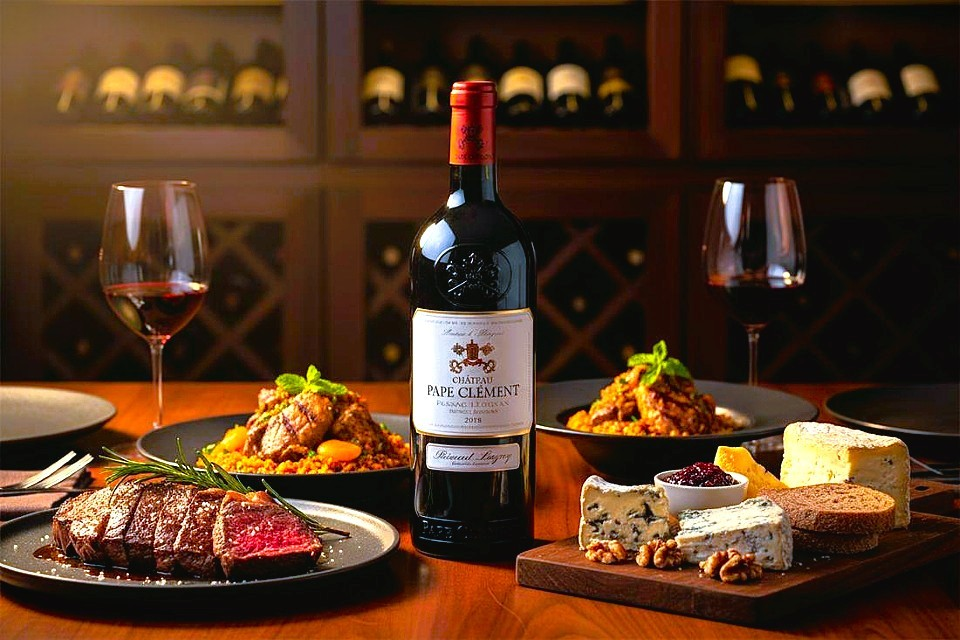
French red wine bottles served with a selection of food pairings, illustrating wines suitable for steak, cheese and French cuisine.
6. French Red Wine and Food Pairing Guide
French red wine is especially rewarding when its acidity, tannins, fruit and body complement the food.
| French red wine style | Food pairings | Why it works |
|---|---|---|
| Cabernet Sauvignon-led Bordeaux | Steak, roast beef, lamb | Protein and fat can soften the perception of tannins |
| Merlot-led Bordeaux | Roast pork, duck, meat lasagne | Fruit and texture complement savoury dishes |
| Burgundy Pinot Noir | Roast chicken, duck, mushrooms | Aromatic detail and acidity suit delicate flavours |
| Northern Rhône Syrah | Lamb, grilled beef, sausage | Peppery and savoury notes complement charred flavours |
| Châteauneuf-du-Pape | Roast lamb, beef stew, herbed dishes | Rich fruit and spice suit robust food |
| Chinon Cabernet Franc | Roast poultry, lentils, charcuterie | Fresh acidity and herbal notes add balance |
| Beaujolais Gamay | Roast chicken, charcuterie, burgers | Bright fruit works well with casual dishes |
| Bandol red | Grilled lamb, Mediterranean vegetables | Structure and savoury flavours match grilled food |
| Languedoc red blend | Barbecue, braised beef, tomato-based dishes | Ripe fruit and herbs complement bold flavours |
French Red Wine with Steak
A structured Bordeaux is a classic option for steak. Cabernet Sauvignon’s tannins can interact pleasantly with the protein and fat in beef, while dark-fruit and savoury flavours complement grilled or roasted notes. For a leaner cut, a less tannic red may be more comfortable. The sauce, seasoning and cooking method also matter.
French Red Wine with Lamb
Bordeaux, northern Rhône Syrah and southern Rhône blends can all work well with lamb. Herbs such as rosemary and thyme can complement the savoury character of Rhône wines. A roast leg of lamb may suit a structured red, while slow-cooked lamb can work with a generous, spice-driven blend.
French Red Wine with Chicken
Roast chicken does not always need a white wine. Burgundy Pinot Noir, Beaujolais and Loire Cabernet Franc can be excellent options. Choose lighter reds when the dish is simply seasoned. Rich sauces, mushrooms or roasted vegetables can support a more structured wine.
French Red Wine with Cheese
Pairing depends on the cheese’s intensity, saltiness, fat and texture.
-
-
- Comté: Try a mature Pinot Noir or a lighter Bordeaux.
- Brie: Consider a fresh, fruit-forward red with moderate tannins.
- Aged hard cheese: A structured red may work, depending on the cheese’s salt and intensity.
- Goat cheese: Loire wines can be interesting, although some fresh goat cheeses may pair more naturally with white wine.
- Blue cheese: The salt and intensity can make sweet wine a better match than many dry reds.
-
Cheese and red wine are not automatically perfect partners. High tannins can make some cheeses taste bitter or metallic, so experimenting with different combinations is worthwhile.
French Red Wine with Vegetarian Food
French reds can pair beautifully with vegetarian dishes. Try Pinot Noir or Cabernet Franc with mushroom risotto, lentil dishes, roasted root vegetables and herb-seasoned meals. A southern French blend can suit ratatouille, grilled aubergine or bean stews.
When pairing with vegetables, consider the seasoning and cooking method. Charred, roasted and slow-cooked flavours often work differently from fresh, lightly seasoned ingredients.
7. How to Serve and Store French Red Wine
Serving temperature and storage can make a meaningful difference to the experience of a French red wine.
What Temperature Should French Red Wine Be Served At?
The phrase “room temperature” can be misleading, particularly in a warm modern home.
As a general starting point:
-
-
- Light-bodied reds: Approximately 12–15°C.
- Medium-bodied reds: Approximately 14–17°C.
- Full-bodied reds: Approximately 16–18°C.
-
These are guidelines rather than rigid rules. The ideal temperature depends on the wine’s structure and your preferences. If a red wine seems overly alcoholic or heavy, try serving it slightly cooler. If it seems muted or closed, allowing it to warm gradually in the glass may help.
Should French Red Wine Be Decanted?
Some wines benefit from decanting, but not every bottle requires it. Young, structured Bordeaux and some Rhône reds may open up after exposure to air. Decanting can also separate mature wine from sediment.
Older Burgundy and other delicate mature reds can be more fragile. Extended aeration may cause their aromas to fade rather than improve. If you are unsure, pour a small glass first and taste it over time before deciding whether to decant.
How Should French Red Wine Be Stored?
For long-term storage, keep bottles in a cool, dark and stable environment, away from direct sunlight, vibration and large temperature changes.
A wine refrigerator or properly maintained cellar can help protect bottles intended for ageing. Cork-sealed bottles are commonly stored on their sides so the cork remains in contact with the wine, although storage requirements depend on the closure.
Not every French red wine improves with age. Many regional reds and fruit-forward styles are made to be enjoyed relatively young, while selected wines from Burgundy, Bordeaux and the Rhône can develop complexity over time.
8. Frequently Asked Questions About French Red Wine
What are the best French red wine brands?
Well-known French wine producers and estates include Château Margaux, Château Lafite Rothschild, Château Latour, Château Mouton Rothschild, Château Haut-Brion, Château Pétrus, Château Cheval Blanc, Domaine de la Romanée-Conti, Louis Jadot, Joseph Drouhin, E. Guigal and M. Chapoutier.
These producers make different styles and operate at very different price levels. The best choice for an individual drinker depends on taste, budget, occasion and availability.
What is the most famous French red wine region?
Bordeaux and Burgundy are two of the most internationally recognized French red wine regions. Bordeaux is particularly associated with Cabernet Sauvignon and Merlot blends, while Burgundy is famous for Pinot Noir. The Rhône Valley, Beaujolais, Loire Valley, Languedoc and Provence also produce distinctive red wines.
Which French red wines are made from Pinot Noir?
Burgundy is the principal French region associated with red Pinot Noir. Producers such as Domaine de la Romanée-Conti, Louis Jadot, Joseph Drouhin, Faiveley and Bouchard Père & Fils offer examples from different appellations and price levels. Pinot Noir is also grown elsewhere in France, so check the appellation and label when selecting a bottle.
Which French red wines are made from Cabernet Sauvignon?
Cabernet Sauvignon is particularly important in Bordeaux, especially in the Médoc and Left Bank appellations such as Pauillac, Margaux and Saint-Julien. Many wines blend it with Merlot, Cabernet Franc and other permitted varieties. The exact blend varies by estate and vintage.
Which French red wine is best for beginners?
There is no single best option for everyone, but Beaujolais, Beaujolais-Villages, approachable Côtes du Rhône, regional Bourgogne Rouge and many Languedoc reds can be useful starting points. Choose according to whether you prefer fresh red fruit, softer texture, earthy complexity or richer flavours.
Which French red wine is best with steak?
A structured Bordeaux is a traditional choice, particularly one with a significant proportion of Cabernet Sauvignon. Northern Rhône Syrah can also work well with grilled steak, especially when the dish includes pepper, herbs or a smoky crust. The cut of meat, sauce and preparation method should influence the final choice.
Is Bordeaux better than Burgundy?
Bordeaux and Burgundy have different identities, and neither is universally better. Bordeaux is often associated with blended wines and structured tannins. Burgundy is famous for Pinot Noir and the detailed expression of individual vineyard sites. Personal preference, vintage, producer and price all influence which wine someone enjoys more.
What is the difference between Bordeaux and Rhône red wine?
Bordeaux reds are often blends centred on Cabernet Sauvignon and Merlot, while Rhône reds commonly feature Syrah in the north and Grenache-based blends in the south. Bordeaux can emphasize cassis, cedar and structured tannins. Rhône reds often offer dark or red fruit, pepper, herbs and Mediterranean spice, although individual wines vary.
Are French red wines expensive?
French red wine spans a wide price range. Rare Burgundy grand crus and prestigious Bordeaux estates can be very expensive, while many regional Bordeaux, Beaujolais, Côtes du Rhône and Languedoc wines offer more accessible options. A famous name is not a requirement for finding a wine you enjoy.
Which French red wine is best for a gift?
Consider a well-known Bordeaux estate for someone who enjoys structured reds, Burgundy Pinot Noir for someone who appreciates aromatic wines, or a Rhône blend for a drinker who likes richer fruit and spice. For collectors, vintage, provenance, bottle condition and storage history matter as much as the producer’s reputation.
Can French red wine be served slightly chilled?
Yes. Lighter reds such as Beaujolais and some Pinot Noir can be enjoyable slightly chilled, especially in warm weather. A modest chill can make the fruit feel fresher and the wine more refreshing. Avoid serving every red wine at the same temperature. Very cold temperatures can mute aromas and make tannins seem more prominent.
What does AOC or AOP mean on a French wine label?
AOC stands for Appellation d’Origine Contrôlée, while AOP is the corresponding protected designation of origin used in the European framework.
These designations connect a product to a defined geographical area and production rules. They do not mean that every wine from an appellation will taste identical or that every bottle will suit every consumer.
For more information about official French origin designations, visit the French National Institute of Origin and Quality (INAO).
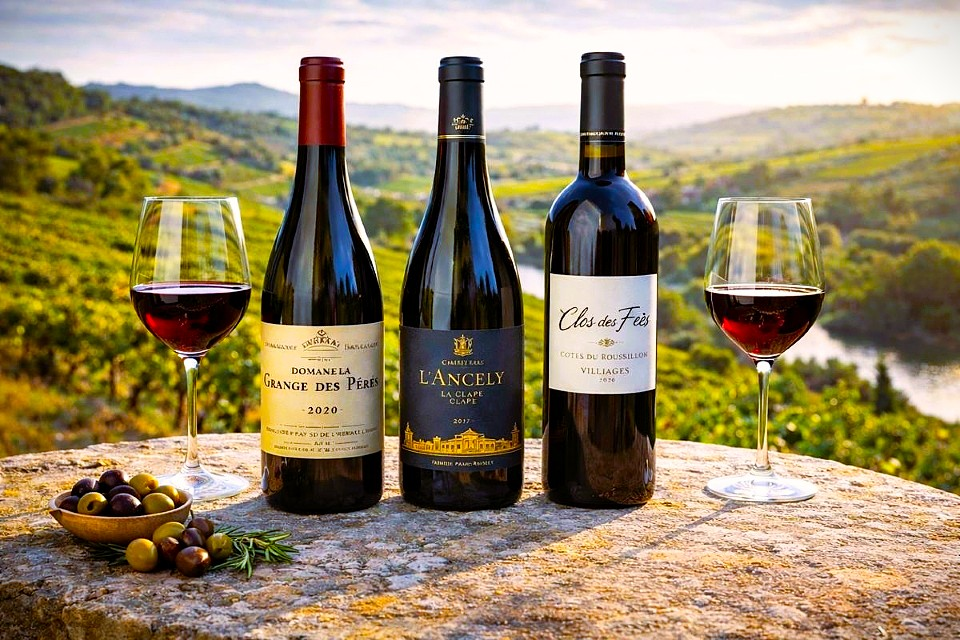
Southern France red wine bottles from Languedoc and Roussillon, showcasing Grenache and Syrah varieties against a Mediterranean landscape.
9. Final Thoughts: Discovering the Best French Red Wines
The best French red wine is not necessarily the rarest, oldest or most expensive bottle. It is the wine that fits your palate, meal, budget and occasion.
Bordeaux offers structure, depth and a remarkable variety of Cabernet Sauvignon- and Merlot-based blends. Burgundy rewards exploration of Pinot Noir and vineyard-specific expression. The Rhône Valley offers everything from peppery northern Syrah to generous southern blends. The Loire Valley brings freshness through Cabernet Franc, while Beaujolais offers lively Gamay wines and Languedoc provides an extensive range of Mediterranean reds.
Start by identifying the flavours you enjoy most. If you like firm tannins and blackcurrant, explore Bordeaux. If you prefer red cherry, floral aromas and subtle earthy notes, investigate Burgundy. If pepper, herbs and dark fruit appeal to you, try Rhône Syrah. For a lighter, refreshing red, consider Beaujolais or Loire Cabernet Franc.
You can then explore individual producers, appellations and vintages with greater confidence.
For readers in Toronto and the Greater Toronto Area, Always Dial A Bottle Toronto can use this guide as a starting point for exploring French wine categories and checking the availability of specific bottles. Product selection, vintages and delivery options can vary, so confirm current listings and local requirements before ordering.
French red wine is a world of discovery. Whether you are opening your first bottle of Côtes du Rhône or exploring a celebrated Bordeaux château, every region offers a different way to appreciate France’s long winemaking heritage