
Blog
The Best Aged Rum Brands in the World: 25 Exceptional Rums Every Rum Lover Should Know

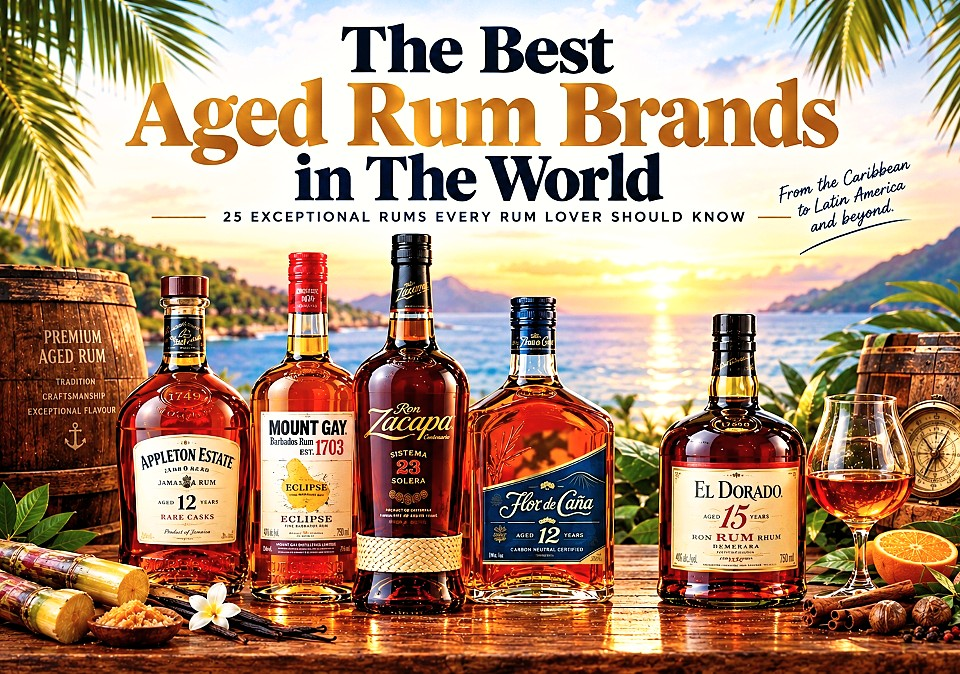
The Best Aged Rum Brands in the World: 25 Exceptional Rums Every Rum Lover Should Know
Aged rum is one of the most diverse and rewarding categories in the world of spirits. From the rich, oak-influenced rums of Barbados to the fruit-forward expressions of Jamaica, the elegant blends of Guatemala, and the distinctive Demerara rums of Guyana, aged rum offers an extraordinary range of aromas, flavours, production traditions, and drinking experiences.
The best aged rum brands in the world combine quality sugarcane-derived spirits, thoughtful distillation, careful cask maturation, and expert blending. Depending on the producer and expression, a glass may reveal vanilla, caramel, toasted oak, tropical fruit, dried banana, orange peel, coffee, cocoa, tobacco, nuts, or baking spices.
But what makes an aged rum genuinely exceptional? Is it the number of years printed on the bottle, the origin of the spirit, the barrels used for maturation, or the skill of the master blender?
The answer is a combination of factors. An older rum is not automatically better than a younger one, and the most expensive bottle is not necessarily the best choice for every drinker. Some aged rums are designed for slow sipping, while others deliver outstanding results in premium cocktails.
In this guide, Always Dial A Bottle Toronto explores 25 of the best-known aged rum brands and their notable expressions, explains what distinguishes different rum-producing regions, and offers practical advice for choosing aged rum for sipping, gifting, entertaining, or cocktail making.
Whether you are discovering aged rum for the first time or expanding an established spirits collection, this guide will help you understand the styles, producers, and bottles worth exploring.
Table of Contents
-
-
- What Is Aged Rum?
- How We Selected These Aged Rum Brands
- The 25 Best Aged Rum Brands in the World
- Aged Rum Comparison Table
- What Makes an Aged Rum Exceptional?
- Understanding Rum Age Statements
- How to Choose the Best Aged Rum
- Best Aged Rum for Different Occasions
- How to Taste and Serve Aged Rum
- Classic Cocktails Made with Aged Rum
- Buying Aged Rum in Toronto and the GTA
- Frequently Asked Questions About Aged Rum
- Final Thoughts: Finding Your Favourite Aged Rum
-
What Is Aged Rum?
Aged rum is rum that has been matured, usually in wooden barrels or casks, to develop additional aroma, flavour, colour, and texture. The spirit begins with sugarcane juice, sugarcane syrup, or molasses, which is fermented and distilled before being matured or blended according to the producer’s style.
During maturation, the spirit interacts with the wood and the environment. Depending on the cask and ageing conditions, it may develop flavours associated with vanilla, caramel, toasted oak, dried fruit, spices, nuts, and chocolate.
The finished character also depends on the original distillate. A light-bodied column-distilled rum can develop a very different profile from a heavier rum produced using a pot still. Blending can bring these components together to create balance and complexity.
What does aged rum taste like?
There is no single flavour profile for aged rum. Common characteristics include:
-
-
- Vanilla and caramel: Often associated with maturation in previously used American oak barrels.
- Oak and baking spices: May include cinnamon, nutmeg, clove, and toasted wood.
- Tropical fruit: Banana, pineapple, mango, and citrus may be prominent in some rum styles.
- Dried fruit: Raisins, dates, figs, and prunes can appear in richer aged expressions.
- Coffee and cocoa: Often found in fuller-bodied rums with pronounced oak or roasted notes.
- Nuts and toffee: Almond, hazelnut, butterscotch, and caramel-like impressions may develop with maturation and blending.
-
These are tasting possibilities, not guaranteed characteristics of every bottle. The same rum may also taste different depending on serving temperature, glassware, and whether it is tasted neat or with a little water.
Aged rum versus white rum
White rum is often associated with fresh, clean flavours and cocktails such as the Daiquiri or Mojito. Some white rums are aged and then filtered to remove most of their colour, so appearance alone does not reveal the entire production history. Aged rum generally retains more of the character acquired during maturation, although the extent varies considerably by brand.
Aged rum versus dark rum
Dark rum describes a colour or broad commercial style, not one universal production method. Dark colour can come from barrel maturation, blending, or colouring permitted under the applicable rules. A dark rum is not necessarily older than a gold or amber rum.
Aged rum versus spiced rum
Spiced rum is typically flavoured with spices or other ingredients. Some spiced rums use an aged rum as their base, but a spiced expression should not automatically be treated as equivalent to an unflavoured, barrel-aged sipping rum.
For readers comparing bottles, the most useful details are the producer’s maturation information, the stated age where provided, the ingredients and production approach where disclosed, and the intended drinking style.
How We Selected These Aged Rum Brands
This guide is an editorial selection of 25 established or noteworthy aged rum producers and their representative expressions. It is not a verified worldwide sales ranking, a laboratory assessment, or a claim that one rum is objectively superior to every other rum.
The selection considers several factors:
-
-
- Producer reputation and heritage: Established rum-making traditions and recognizable regional identities.
- Range of aged expressions: Availability of bottles that demonstrate the producer’s approach to maturation and blending.
- Regional diversity: Representation of Caribbean, Central American, South American, and other important rum-producing traditions.
- Style and versatility: Examples suitable for sipping, collecting, gifting, or making cocktails.
- Production transparency: Useful information about origin, maturation, distillation, and blending when the producer publishes it.
- Accessibility and recognition: Brands that help readers understand the major styles of aged rum, while also including producers worth exploring beyond the most familiar names.
-
Product ranges, labels, age statements, and availability can change by country and over time. Always check the current bottle and the producer’s official information before purchasing.
The 25 Best Aged Rum Brands in the World
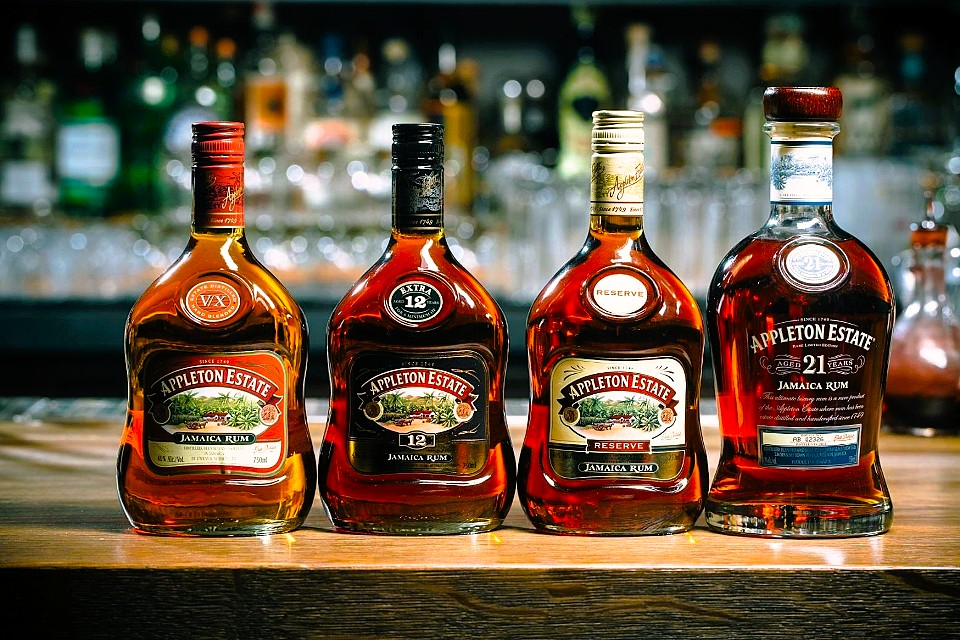
Appleton Estate aged rum
1. Appleton Estate — Jamaica
Best for: Characterful Jamaican rum, balanced sipping, and premium cocktails.
Appleton Estate is one of Jamaica’s most recognizable rum producers. Its identity is closely connected with the Nassau Valley, where the estate’s rum-making tradition combines Jamaican raw materials, distillation, maturation, and blending.
Jamaican rum can be especially appealing to people who enjoy expressive flavours. Depending on the expression, it may offer fruit, citrus, molasses, oak, spice, and a distinctive aromatic character that separates it from lighter, more neutral styles.
Appleton Estate’s range includes Signature, 8 Year Old Reserve, 12 Year Old Rare Casks, 15 Year Old Black River Casks, and 21 Year Old Nassau Valley Casks. Availability varies by market.
The 12-year-old and 21-year-old expressions are particularly relevant to readers interested in sipping aged rum. Appleton Estate describes its 21 Year Old Nassau Valley Casks as a blend whose components have all matured for at least 21 years in Jamaica’s tropical climate. The producer identifies notes including vanilla, orange peel, nutmeg, coffee, and cocoa.
Explore the producer’s current range at Appleton Estate’s official rum collection.
Why it stands out: Appleton Estate demonstrates how Jamaican rum can combine fruit-driven character with oak, spice, and mature complexity.
Serving suggestion: Enjoy an older expression neat in a tulip-shaped glass. For cocktails, use a younger or more versatile expression rather than an expensive limited release.
2. Mount Gay — Barbados
Best for: Balanced Barbados rum with vanilla, fruit, and oak.
Mount Gay is one of the most historically established names in rum, associated with Barbados and a long tradition of rum production. Its portfolio includes accessible aged expressions as well as more mature and limited releases.
Barbados rum is often appreciated for balance. Depending on the expression, drinkers may encounter a combination of fruit, vanilla, caramel, spice, and wood rather than one dominant flavour.
Mount Gay Eclipse is a widely recognized reference point in the range, while XO and other mature releases offer different ways to explore the brand’s style. Availability and current product names can differ between markets.
Mount Gay also announced an Exceptionally Aged Collection in 2026, featuring 15-year-old and 25-year-old expressions. These are limited, premium examples rather than everyday bottles, so buyers should check local availability and current specifications.
Official producer information is available at Mount Gay Rum.
Why it stands out: Mount Gay is a strong starting point for exploring the traditional Barbados style and understanding how maturation can add depth without overwhelming the original spirit.
Serving suggestion: Try an aged expression neat or with a few drops of water. A balanced Barbados rum can also work well in a premium rum Old Fashioned.
3. El Dorado — Guyana
Best for: Rich, full-bodied rum with Demerara character.
El Dorado is closely associated with Demerara rum from Guyana. Its range includes younger aged rums and mature expressions such as 12, 15, and 21 Year Old bottlings, depending on the market.
Demerara rum is often associated with rich molasses character, dried fruit, caramel, spice, and a substantial texture. Some of the region’s historic distillation equipment has contributed to the distinctive identity of its rums.
El Dorado is especially interesting for drinkers who prefer a more robust, dessert-like profile. Mature expressions can offer a layered combination of dark sugar, dried fruit, oak, spice, and roasted flavours, although the exact profile varies by bottle.
The 15-year-old and 21-year-old expressions are common reference points for exploring the brand’s more mature side. They can be served neat, with a little water, or in carefully chosen cocktails where their richness has room to show.
Explore the current collection at El Dorado Rum.
Why it stands out: El Dorado offers an accessible introduction to the distinctive character of Demerara rum and the importance of regional distillation traditions.
Serving suggestion: Pair a mature expression with dark chocolate, roasted nuts, or a simple dessert. Avoid overcomplicating the glass with too many mixers.
4. Foursquare — Barbados
Best for: Serious rum enthusiasts interested in transparent production and cask influence.
Foursquare is a Barbados producer respected by many rum enthusiasts for its emphasis on distillation, blending, and cask-driven character. Its portfolio includes core releases and limited editions, including the Exceptional Cask Selection series.
Foursquare expressions can vary considerably. Some emphasize a more traditional, balanced rum profile; others explore particular casks, maturation strategies, or blends of different distillates.
For experienced drinkers, this variety makes Foursquare an especially interesting brand. Instead of assuming every bottle will taste the same, enthusiasts can compare expressions and look at the producer’s information about casks, age, and blend composition.
Limited editions can be difficult to find and may command prices well above core-range bottles. For that reason, a collector should confirm the exact release and its details rather than buying solely because a bottle has a high age number or a special label.
Why it stands out: Foursquare rewards curiosity. It is a good producer to explore if you want to learn how distillation choices, blending, and cask maturation influence rum.
Serving suggestion: Taste one expression at a time, noting the aroma, sweetness, oak, spice, and finish. Compare two releases side by side when possible.
5. Flor de Caña — Nicaragua
Best for: Dry, polished aged rum with a clear age-statement approach.
Flor de Caña is a well-known Nicaraguan rum brand with a range of aged expressions. Depending on the market, its portfolio includes bottles carrying age statements such as 12, 18, and 25 years.
The brand is often associated with a comparatively dry, restrained profile, although flavour and texture differ by expression. Mature bottlings may present notes of oak, caramel, vanilla, dried fruit, and spice.
Flor de Caña can be a useful alternative for people who find some richer, sweeter-tasting rums too heavy. The key is to compare the individual bottle rather than assuming all Central American rums share the same character. A stated age is only one part of the decision. Consider the expression’s proof, maturation details, and flavour description, along with your preferred balance of wood, sweetness, and spirit character.
Why it stands out: Flor de Caña offers a different point of comparison from the fruitier Jamaican style or the fuller-bodied Demerara profile.
Serving suggestion: Try a mature expression neat, then with a small amount of water. A drier rum may also suit a simple cocktail that does not depend on heavy sweetness.
Official information: Flor de Caña.
6. Ron Zacapa — Guatemala
Best for: Smooth, rounded rum with a rich, dessert-like profile.
Ron Zacapa is one of the most internationally recognized premium rum names from Guatemala. Its portfolio includes Zacapa No. 23 and the more mature XO expression, though availability and presentation vary by market.
Zacapa is associated with a solera-style maturation and blending approach. This matters when interpreting its label: a solera number should not automatically be read as the minimum age of every rum in the bottle.
The brand’s style is often described as rounded and rich, with impressions of caramel, dried fruit, vanilla, spice, and oak. Its accessible texture has helped make it a familiar choice for drinkers moving from standard rum into premium sipping spirits.
Zacapa can appeal to people who enjoy a smooth, generous profile, but it is worth comparing it with drier or more oak-forward rums before deciding which style you prefer.
Why it stands out: Zacapa is a useful example of how blending and a solera-style system can create a consistent house character without relying on a simple youngest-component age statement.
Serving suggestion: Serve neat in a small glass. If you enjoy richer flavours, try it alongside dark chocolate or toasted nuts.
7. Diplomático — Venezuela
Best for: Rich, approachable rum with pronounced caramel and dessert-like notes.
Diplomático has a strong following among drinkers who prefer a round, rich rum profile. Its portfolio includes Reserva Exclusiva and other expressions designed for different preferences and occasions.
Reserva Exclusiva is often associated with caramel, dried fruit, vanilla, and sweet spice. It is commonly enjoyed neat or over ice, although its rich character can also work in certain cocktails.
One important point for buyers: not every premium rum with a mature flavour carries a straightforward age statement. Read the producer’s current information rather than assuming a brand’s signature number or name represents a minimum age.
Diplomático is a useful comparison against drier styles such as some Flor de Caña bottlings or more assertive, oak-focused expressions. It is particularly appealing to people who want a generous, rounded rum rather than an intensely dry finish.
Why it stands out: Diplomático offers an accessible route into richer premium rum, with a flavour profile many drinkers find easy to appreciate.
Serving suggestion: Try it neat first. If serving over ice, use a large cube to slow dilution.
8. Santa Teresa — Venezuela
Best for: Mature Venezuelan rum with a traditional, versatile profile.
Santa Teresa is a historic Venezuelan producer known internationally for its 1796 rum. The brand’s mature expressions offer another perspective on Venezuelan rum, with blending and maturation contributing to a rounded, developed profile.
Santa Teresa 1796 is associated with solera-style maturation. As with other solera-influenced products, buyers should distinguish the production method from a claim that every component has spent a specific minimum number of years in a barrel.
The finished rum is often described in terms of caramel, wood, spice, dried fruit, and a balanced finish. It can appeal to drinkers who enjoy a more mature character without necessarily seeking the most intense or heavily oaked expression available.
Why it stands out: Santa Teresa is worth considering for its established Venezuelan identity and its place in the broader discussion of solera-style rum.
Serving suggestion: Serve neat or with a small amount of water. A simple rum Old Fashioned can also showcase the rum without hiding its character.
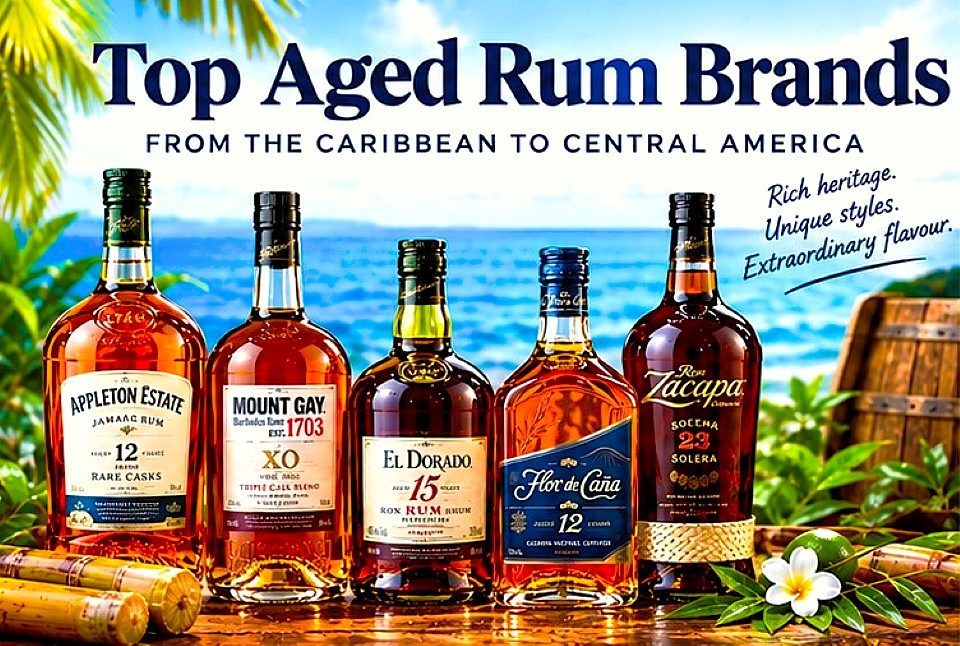
A collection of amber rum bottles representing aged rum styles from the Caribbean and Central America.
9. Ron Abuelo — Panama
Best for: Versatile aged rum with accessible oak and caramel notes.
Ron Abuelo is a Panamanian brand with a portfolio of aged expressions. Its range includes bottles such as 7 Años, 12 Años, and higher-tier releases, depending on the market.
The style offers a useful middle ground for drinkers exploring aged rum: enough barrel influence to create a mature profile, while remaining versatile for sipping or mixed drinks.
Depending on the expression, the flavour may include vanilla, caramel, oak, dried fruit, and baking spice. As with all rum brands, the profile and intensity should be assessed bottle by bottle. Ron Abuelo can be a sensible option for people who want to explore an aged rum from Panama without immediately moving to a rare or high-priced collector bottle.
Why it stands out: It offers a practical entry point into aged rum from Panama, with several expressions that allow drinkers to compare maturation levels.
Serving suggestion: Start with a mid-range aged expression neat or over a large ice cube. Use it in a rum sour if you prefer a brighter, citrus-led drink.
10. Brugal — Dominican Republic
Best for: Clean, polished aged rum with a relatively dry impression.
Brugal is one of the best-known rum producers from the Dominican Republic. Its range includes aged expressions such as Añejo and premium releases such as 1888, depending on the market. Brugal’s house style is often associated with a comparatively dry, structured character. Mature expressions may reveal vanilla, toasted oak, caramel, and spice, with the intensity depending on the specific bottle.
The 1888 expression is particularly useful for drinkers who want to explore a premium rum with a more pronounced barrel influence. It can be enjoyed neat or used in a simple cocktail where oak and spice complement the other ingredients.
Why it stands out: Brugal provides a useful contrast with richer, sweeter-tasting rum styles and broadens the picture of aged rum in the Dominican Republic.
Serving suggestion: Taste neat before adding ice. A simple highball can work when you want a lighter drink that still retains some aged-rum character.
11. Havana Club — Cuba
Best for: Cuban-style aged rum and classic rum cocktails.
Havana Club is an internationally recognized rum brand associated with Cuba. Its aged range includes expressions such as Añejo Reserva and Selección de Maestros, although products and legal availability vary by country. Cuban-style rum is often associated with a relatively elegant, balanced profile. Depending on the expression, you may find vanilla, caramel, oak, gentle spice, and subtle fruit.
Aged Havana Club can be enjoyed neat, but the brand is also relevant to cocktail enthusiasts. Mature rum can add depth to drinks such as the Old Cuban or other rum-forward recipes when the recipe calls for an aged style.
Why it stands out: Havana Club illustrates how aged rum can remain versatile rather than being reserved exclusively for slow sipping.
Serving suggestion: Use a premium expression neat or in a cocktail designed to showcase rum. Check local availability and the specific country of origin shown on the bottle.
12. Angostura — Trinidad and Tobago
Best for: Balanced aged rum for sipping and mixed drinks.
Angostura is widely known for aromatic bitters, but it also produces rum. Its aged portfolio includes expressions such as Angostura 7 Year Old and other premium releases, depending on the market.
Aged Angostura rum can be useful for people who want a balanced spirit with notes of vanilla, caramel, oak, and spice. The individual character depends on the expression, so the label and current producer information should guide your choice.
The brand’s rum range can serve both cocktail enthusiasts and drinkers who want to explore a mature rum without committing to a rare, expensive release.
Why it stands out: Angostura demonstrates the range of Trinidad and Tobago rum beyond the country’s best-known bitters.
Serving suggestion: Try a mature expression in a rum Old Fashioned or a simple rum-and-soda drink. Use a more expensive bottle neat if you want to focus on its aroma and finish.
13. Chairman’s Reserve — Saint Lucia
Best for: Layered island rum with fruit, spice, and oak.
Chairman’s Reserve is a respected rum brand from Saint Lucia. Its range includes aged blends and special releases that reflect the island’s rum-making tradition. Depending on the expression, the style can offer fruit, spice, vanilla, caramel, and oak. Some releases emphasize blending and the combination of different distillates to create a more complex final spirit.
Chairman’s Reserve is worth exploring for drinkers who already know the most familiar Jamaican and Barbados brands and want to broaden their understanding of Caribbean rum. The exact blend, age details, and maturation approach vary by product, so use the producer’s official specifications when comparing bottles.
Why it stands out: It brings Saint Lucia into the conversation and offers a different regional perspective from the larger international brands.
Serving suggestion: Choose a core aged expression for cocktails and a more mature release for sipping. Compare its spice and fruit character with a Barbados rum.
14. Rhum Barbancourt — Haiti
Best for: A distinctive Haitian rum made from sugarcane juice.
Rhum Barbancourt offers a different perspective on aged rum because its traditional production is based on sugarcane juice rather than the molasses used by many rum producers. The brand’s portfolio includes aged expressions such as Five Star 8 Year Old and other releases, depending on the market. The style can show a combination of fruit, spice, wood, and a character that differs from many molasses-based rums.
Sugarcane-juice rum is sometimes compared with agricultural rum traditions, though terminology and legal definitions depend on the product and jurisdiction. Do not assume all cane-juice spirits are interchangeable; production methods and regional identity matter.
Why it stands out: Barbancourt is an important choice for drinkers who want to compare raw materials and regional traditions rather than focusing on age alone.
Serving suggestion: Taste neat to appreciate the base spirit and maturation. Pair it with mild cheese, roasted nuts, or a lightly sweet dessert.
15. Pusser’s — British Virgin Islands and the British Caribbean tradition
Best for: Traditional, full-bodied rum with maritime associations.
Pusser’s is closely connected with the historical British Navy rum tradition. Its portfolio has included expressions such as Gunpowder Proof and aged rums, with specific offerings varying by market and time. Pusser’s is often associated with a robust, traditional profile that works well in rum-forward drinks. Some expressions may deliver molasses, caramel, spice, and a substantial mouthfeel.
When shopping, distinguish the brand’s different expressions. A higher-proof rum is not automatically older, and a historical association does not mean every product follows the same recipe or maturation process.
Why it stands out: Pusser’s connects aged rum with the maritime history of rum drinking and offers a fuller style for drinkers who prefer intensity.
Serving suggestion: Choose the expression according to its proof and intended use. For a high-proof bottle, measure carefully and use a recipe designed for that strength.
16. Doorly’s — Barbados
Best for: Value-conscious exploration of Barbados aged rum.
Doorly’s is associated with Barbados and offers several aged expressions, including bottles bearing age statements such as 5, 8, and 12 years in markets where these are available.
The range is particularly useful for drinkers who want to compare different maturation levels without starting with rare collector bottlings. Depending on the expression, the flavour may include vanilla, oak, caramel, spice, and fruit. Doorly’s also gives enthusiasts an opportunity to explore how an individual producer’s house style changes across age statements and blends.
Why it stands out: It can be a practical choice for comparing aged-rum expressions and understanding the relationship between age, flavour, and price.
Serving suggestion: Compare two age-stated expressions side by side, if possible. Note whether the older bottle offers more oak, a longer finish, or simply a different balance.
17. Rhum J.M — Martinique
Best for: Cane-juice rum with a distinctive agricultural-rum identity.
Rhum J.M is a Martinique producer known for agricole rum, which is traditionally made from fresh sugarcane juice. Its portfolio includes aged expressions that combine cane character with the influence of oak maturation.
Martinique has a distinctive rum tradition and a protected geographical framework for its AOC agricultural rum. Not every bottle from the region should be assumed to meet the same specifications, so check the label and producer details. Aged Rhum J.M can be particularly interesting for people who enjoy aromatic spirits with grassy, herbal, vegetal, or fresh-cane notes alongside vanilla, spice, and wood.
Why it stands out: It offers a different flavour vocabulary from many molasses-based rums and helps demonstrate the breadth of the category.
Serving suggestion: Start with a small neat pour. If you are accustomed to sweeter-tasting rums, take time to notice the cane, herbal, and oak characteristics.
18. Clément — Martinique
Best for: Aged agricole rum with a French Caribbean heritage.
Clément is another important name in Martinique’s agricultural-rum tradition. Its aged expressions can provide a bridge between fresh sugarcane character and the rounded flavours developed in wood. Depending on the bottle, you may encounter vanilla, spice, dried fruit, toasted oak, and distinctive cane-derived aromas. The producer’s portfolio and age statements can vary by market.
Clément is worth comparing with Rhum J.M because even within the same broad regional tradition, distillation, blending, maturation, and house style can produce different results.
Why it stands out: Clément is a valuable reference for anyone exploring aged agricole rum and the influence of sugarcane juice on the finished spirit.
Serving suggestion: Serve neat in a small tulip-shaped glass. Compare it with a molasses-based aged rum to explore differences in aroma and finish.
19. Dictador — Colombia
Best for: Modern Colombian rum with rich, mature flavour profiles.
Dictador is a Colombian rum brand with a portfolio of aged expressions. Product lines and maturation descriptions vary, so buyers should verify the details of the specific release rather than applying one description to the entire range.
The brand is often associated with rich flavours that can include caramel, coffee, vanilla, spice, and oak. Individual bottles differ in their balance and intensity.
Dictador can appeal to drinkers looking for a rum that sits comfortably alongside other premium sipping spirits. It is also a useful example of the range of rum styles produced outside the most frequently discussed Caribbean islands.
Why it stands out: Dictador brings a Colombian perspective to aged rum and offers another point of comparison for drinkers exploring richer profiles.
Serving suggestion: Taste neat first and consider a few drops of water if the alcohol feels intense. Use a large ice cube only if you prefer a cooler, gradually diluted drink.
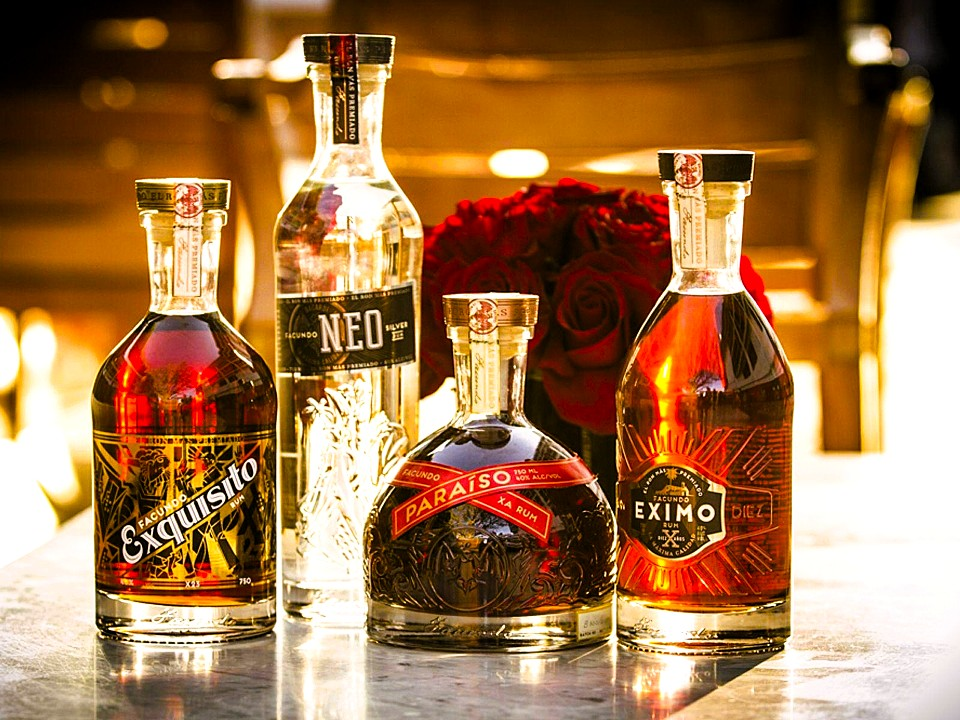
Premium aged rum bottles
20. Ron Medellín — Colombia
Best for: Exploring Colombian rum beyond the best-known international names.
Ron Medellín is a Colombian producer with aged rum offerings that can differ by market. Its portfolio provides an additional example of the country’s rum tradition and the variety of flavour profiles available to consumers.
Depending on the expression, aged Colombian rum may show caramel, vanilla, spice, wood, and dried-fruit notes. These characteristics are not unique to Colombia, but their balance can vary with production choices and maturation.
When comparing Ron Medellín with Dictador or other producers, focus on the actual expression, age information, proof, and flavour description. Country of origin alone is not enough to predict taste.
Why it stands out: It helps broaden a rum collection beyond the most internationally marketed brands.
Serving suggestion: Try an aged expression neat before deciding whether it is better suited to sipping or mixing.
21. Ron Barceló — Dominican Republic
Best for: Approachable Dominican aged rum and versatile premium bottles.
Ron Barceló is a widely recognized Dominican rum brand. Its portfolio includes aged and premium expressions, with availability varying across countries. The brand is useful for drinkers who want to compare Dominican rum with other regional styles. Depending on the bottle, the flavour can include vanilla, caramel, oak, spice, and dried fruit.
As with other producers, avoid assuming that all expressions have the same age or maturation history. Check the exact product name and current specifications, especially when buying a bottle for a gift or collection.
Why it stands out: Ron Barceló adds another established Dominican producer to the range of brands worth exploring.
Serving suggestion: A core aged expression can work over ice or in a simple highball. Reserve a premium release for a slower tasting if its flavour and price justify it.
22. Brugal 1888 — Dominican Republic
Best for: A more mature, barrel-influenced style from Brugal.
Brugal 1888 is listed separately here as a specific expression rather than a separate producer. It offers readers a concrete example of how one brand’s premium bottling can differ from its more accessible aged rum.
The expression is associated with layered barrel character, including vanilla, caramel, oak, and spice. Its maturation and finishing details should be checked against current official product information for the market where it is sold. A bottle like Brugal 1888 is useful for people who enjoy exploring the influence of different casks and comparing premium rum with whisky or brandy.
Why it stands out: It illustrates how a particular release can have a more focused, premium identity within a broader brand portfolio.
Serving suggestion: Serve neat or with a few drops of water. If using it in a cocktail, choose a recipe that allows its oak character to remain noticeable.
23. Ron Abuelo Centuria — Panama
Best for: A special-occasion Panamanian rum.
Ron Abuelo Centuria is a premium expression associated with the Ron Abuelo brand. It is a useful option for drinkers looking for a more elevated bottling than a standard aged rum, although product details and availability should be verified locally.
Premium blends may combine components of different ages and styles. A label’s designation does not always mean every component has matured for that exact period, so consult the producer’s description before drawing conclusions.
Centuria can appeal to collectors and gift buyers interested in a presentation bottle from an established Panamanian producer. As with any premium spirit, the value depends on flavour preference, price, and the transparency of the product details.
Why it stands out: It provides an example of a premium tier within a broader rum range and shows how blending can shape a special-occasion bottle.
Serving suggestion: Pour a small amount into a tasting glass and allow it a few minutes to open before assessing the aroma.
24. El Dorado 21 Year Old — Guyana
Best for: Mature Demerara rum with depth and a long, developed flavour profile.
El Dorado 21 Year Old deserves a closer look as a specific aged expression from Guyana. It is often considered by enthusiasts who appreciate rich rum with a substantial influence from maturation and blending.
Its style is associated with dark sugar, dried fruit, caramel, oak, and spice, though tasting impressions can vary by palate and bottling. The brand’s wider range makes it possible to compare the 21-year-old with younger expressions and consider how maturation changes the balance.
An older rum can offer more developed wood influence and a longer finish, but it may also be more expensive and more oak-driven. The right bottle depends on whether you prefer richness, fruit, freshness, or restraint.
Why it stands out: It is a useful benchmark for exploring mature Demerara rum and comparing a high-age-statement expression with younger bottles.
Serving suggestion: Serve neat in a small glass. Avoid strong mixers that would obscure the rum’s more delicate aromas.
25. Appleton Estate 21 Year Old Nassau Valley Casks — Jamaica
Best for: A special-occasion Jamaican rum with a clear minimum-age statement.
Appleton Estate 21 Year Old Nassau Valley Casks is worth highlighting separately as a specific premium expression. According to the producer, the rums in the blend have all been aged for a minimum of 21 years in Jamaica’s tropical climate.
Appleton Estate describes a mature, nutty bouquet with notes including vanilla, orange peel, nutmeg, coffee, and cocoa, supported by a long, dry finish with subtle sweetness.
This expression is an excellent example of why age should be considered alongside origin, distillation, and blending. The rum’s Jamaican identity remains part of its character, while the extended maturation adds further layers of wood and spice. Because premium aged rum can vary significantly in price and availability, compare the current retail price and bottle details before purchasing.
Why it stands out: It combines a clearly stated minimum age with a distinctive Jamaican profile and is particularly suitable for a considered sipping experience.
Serving suggestion: Serve neat in a tulip-shaped glass, ideally without strong food or fragrances competing with the aroma.
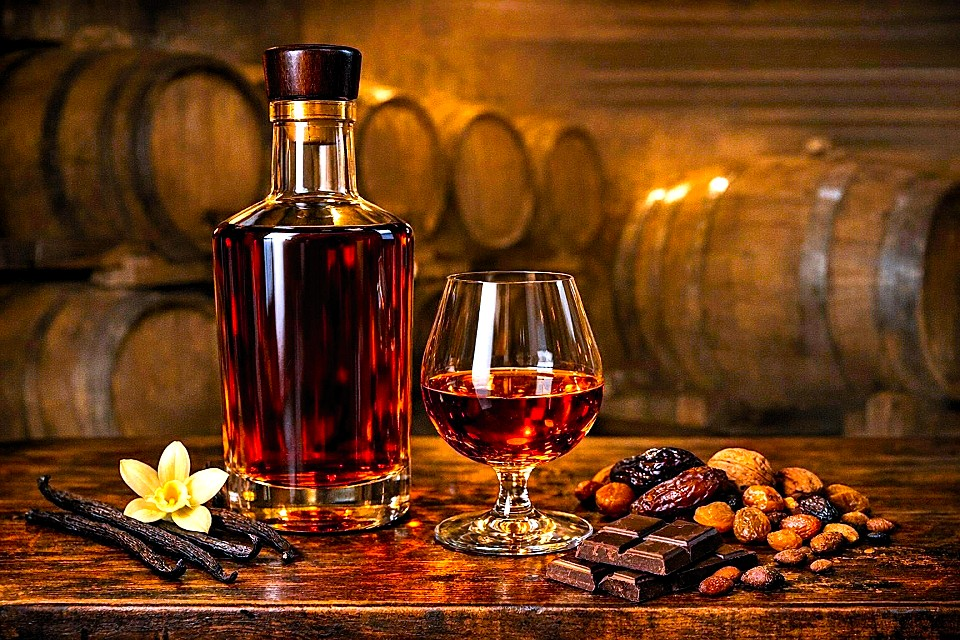
top-aged-rum
Aged Rum Comparison Table
The following table is a quick guide to the styles represented in this article. It is not a numerical ranking, and tasting notes are general descriptions rather than guarantees.
| Brand or expression | Origin | General style | Best suited for |
|---|---|---|---|
| Appleton Estate 12 Year Old | Jamaica | Fruit, oak, spice | Sipping and premium cocktails |
| Appleton Estate 21 Year Old | Jamaica | Mature, nutty, layered | Special occasions |
| Mount Gay XO | Barbados | Balanced, oak-led | Sipping |
| El Dorado 12 or 15 Year Old | Guyana | Rich, molasses-led | Sipping and rum-forward cocktails |
| Foursquare Exceptional Cask Selection | Barbados | Cask-driven, varied | Enthusiasts and collectors |
| Flor de Caña 18 | Nicaragua | Dry, mature, polished | Sipping |
| Ron Zacapa No. 23 | Guatemala | Rounded, rich | Sipping and gifting |
| Diplomático Reserva Exclusiva | Venezuela | Rich, caramel and dried fruit | Sipping |
| Santa Teresa 1796 | Venezuela | Mature, blended | Sipping |
| Ron Abuelo 12 Años | Panama | Balanced, oak and spice | Sipping and mixing |
| Brugal 1888 | Dominican Republic | Barrel-influenced | Sipping |
| Havana Club Selección de Maestros | Cuba | Balanced, mature | Sipping and cocktails |
| Angostura 7 Year Old | Trinidad and Tobago | Versatile, spice and oak | Cocktails and sipping |
| Chairman’s Reserve aged expressions | Saint Lucia | Fruit, spice, oak | Sipping and mixing |
| Rhum Barbancourt 8 Year Old | Haiti | Cane-derived, mature | Sipping |
| Doorly’s 12 Year Old | Barbados | Balanced, oak-led | Sipping |
| Rhum J.M aged expressions | Martinique | Cane-forward, aromatic | Sipping |
| Clément aged expressions | Martinique | Agricultural rum, oak | Sipping |
| Dictador aged expressions | Colombia | Rich, mature | Sipping |
| Ron Barceló aged expressions | Dominican Republic | Accessible, balanced | Mixing and sipping |
Shopping tip: Confirm the exact expression, bottle size, proof, age information, and current price. A brand’s range can contain very different products, and availability differs by market.
What Makes an Aged Rum Exceptional?
Age is important, but it is only one part of quality. Several factors influence the character and value of a bottle.
1. The quality of the original distillate
Rum starts with sugarcane-derived material. Molasses, sugarcane syrup, and fresh sugarcane juice can produce different base spirits.
Fermentation also matters. Yeast selection, fermentation time, and production choices affect the compounds carried into distillation. Distillation then influences the weight, aroma, and character of the spirit. The barrel cannot erase every characteristic of the original rum. A well-made aged rum brings together the base spirit and the influence of maturation.
2. Distillation method
Pot stills and column stills can produce different styles, although neither method guarantees a particular level of quality. Pot-distilled rums may be heavier and more aromatic, while column-distilled rums can be lighter and more restrained. Many producers use blends of different distillates to achieve a particular house style.
These are broad tendencies, not fixed rules. The producer, equipment, fermentation, and blending choices all influence the result.
3. Barrel selection
The type and previous use of a barrel can significantly influence aged rum. Previously used American whiskey or bourbon barrels may contribute vanilla, caramel, coconut, and toasted-oak impressions. Other casks may introduce different combinations of fruit, spice, wood, or wine-derived characteristics.
The cask is only one factor. The condition of the barrel, the strength of the spirit entering it, and the length of maturation also affect the finished rum.
4. Climate and maturation conditions
A rum aged in a tropical climate can mature differently from a spirit stored in a cooler environment. Temperature and humidity influence the interaction between spirit and wood, as well as evaporation.
The West Indies Rum & Spirits Producers’ Association explains that tropical ageing can progress differently from ageing in cooler climates. This is one reason a simple comparison between the age numbers on rum and whisky bottles can be misleading. Read more in its overview of rum ageing.
Tropical maturation does not automatically make a rum better or worse. It changes the process and the balance of characteristics that the blender must manage.
5. Blending expertise
Many aged rums are blends. A master blender may combine rums with different distillation profiles, maturation histories, or ages to achieve a consistent flavour.
Younger components can contribute freshness and fruit, while older components may contribute oak, depth, and mature flavours. A successful blend depends on how these parts work together, not simply on the age of its oldest component.
6. Balance and finish
An exceptional rum should make sense as a complete spirit. Aroma, sweetness, alcohol strength, oak, spice, texture, and finish should work together.
A rum that tastes strongly of wood but lacks balance may not be as enjoyable as a younger expression with a more harmonious profile. The finish—the flavours and sensations that remain after swallowing—can also influence how satisfying a rum feels.
7. Transparency
Clear information helps buyers make better decisions. Look for the producer’s explanation of age statements, cask types, origin, blending, and any added ingredients where these are disclosed. A premium label or a high price is not proof of quality. Product information, reputable sourcing, and your own tasting preferences are more useful guides.
Understanding Rum Age Statements
Age statements are among the most confusing parts of buying aged rum. The number on a bottle may have a different meaning depending on the producer’s blending method and the rules applicable to the product.
Does a 12-year-old rum contain only 12-year-old rum?
Not necessarily across every rum category worldwide. Under rules applied to Authentic Caribbean Rum in relevant markets, an age statement refers to the youngest rum in the blend. Other systems and markets can treat age declarations differently, so consumers should check the specific producer’s explanation and the applicable rules.
For example, if a blend is labelled 12 years old under a youngest-component system, the components may include older rum, but none should be younger than 12 years. This is different from a statement that a blend contains rum aged for an average of 12 years.
What is solera ageing?
Solera is a fractional blending and maturation system associated with the movement of spirit through a series of casks. A portion of older spirit may be drawn from one stage, with younger spirit introduced as part of the system.
A number displayed on a solera-style rum should not automatically be interpreted as a guarantee that every component has spent that exact number of years in a barrel. Check the producer’s explanation of the system. This distinction is relevant when comparing products such as Ron Zacapa and Santa Teresa with rums that use a clear minimum-age statement.
Is older rum always better?
No. Longer maturation can develop complexity, but it can also introduce more oak. The ideal balance depends on the original spirit, barrel, climate, blending, and personal taste. A well-made younger aged rum can be more enjoyable than an older bottle if it has the balance and flavour you prefer.
What age should a beginner choose?
A rum with a clearly described style and a moderate age statement can be a sensible starting point. Expressions around 5 to 12 years are often useful for exploring the effect of maturation, but the age number alone should not determine your choice.
If possible, compare a younger and older expression from the same producer. That comparison will teach you more than assuming the older bottle is automatically superior.
How to Choose the Best Aged Rum
Choosing the right aged rum becomes easier when you consider how you plan to drink it, what flavours you enjoy, and how much you want to spend.
1. Choose according to flavour preference
Use the following as a starting point:
-
-
- For fruit and lively character: Explore Jamaican producers such as Appleton Estate.
- For balanced oak and vanilla: Compare Barbados expressions from Mount Gay, Foursquare, and Doorly’s.
- For rich molasses and dried-fruit character: Explore El Dorado from Guyana.
- For rounded, dessert-like flavours: Consider expressions from Ron Zacapa or Diplomático.
- For a drier profile: Compare selected Flor de Caña and Brugal expressions.
- For cane-juice character: Explore Rhum J.M, Clément, or Rhum Barbancourt.
-
These are broad style guides, not guarantees. Individual bottlings can differ significantly.
2. Decide whether you want to sip or mix
For sipping, look for a rum whose aroma, texture, and finish appeal to you without a mixer. A more complex bottle may justify a higher price if you enjoy tasting it slowly.
For cocktails, choose a rum with enough character to remain noticeable alongside citrus, sugar, bitters, or other ingredients. A well-balanced mid-range aged rum can be more practical than using a rare collector’s bottle in a mixed drink.
3. Set a budget
Prices depend on age, production, rarity, bottle size, import costs, taxes, and local availability. A higher price does not guarantee a better match for your preferences.
A practical way to shop is to compare three options:
-
-
- A versatile aged rum for everyday use.
- A more mature expression for sipping.
- A premium or limited release for a special occasion, if your budget allows.
-
This approach helps you explore the category without treating every purchase as a collector’s investment.
4. Check the age information carefully
Read the front and back labels, and check the producer’s official website. Distinguish a clear minimum-age statement from a solera number, a blend designation, or a reference to the oldest component. If the label does not explain the age system, avoid assuming that the largest number represents the minimum age of every rum in the bottle.
5. Consider the proof
Alcohol by volume (ABV) affects intensity and how a rum behaves in a cocktail. Higher-proof rums may deliver stronger aromas and a more pronounced alcohol sensation, while lower-proof expressions may feel gentler. Proof is not a direct measure of quality. Choose the strength that suits your palate and the way you intend to serve the rum.
6. Buy from a reputable retailer
Purchase from a reputable seller and check the bottle’s condition, label, seal, and storage history where possible. For premium or collectible bottles, provenance and authenticity matter. If buying online, verify the product name, size, availability, delivery conditions, and applicable local rules before completing your purchase.
Best Aged Rum for Different Occasions
Different bottles suit different occasions. The following recommendations are starting points rather than definitive rankings.
Best aged rum for beginners
Appleton Estate 8 Year Old Reserve, Doorly’s aged expressions, and approachable bottles from Ron Abuelo can be useful places to start, depending on availability and price. The goal is to find a rum with enough oak and complexity to demonstrate maturation without overwhelming your palate.
Best aged rum for sipping neat
Consider Appleton Estate 12 or 21 Year Old, Mount Gay XO, selected Foursquare releases, El Dorado’s mature expressions, or Flor de Caña’s older bottlings. For neat sipping, focus on balance, aroma, texture, and finish rather than the age number alone.
Best aged rum for cocktails
A versatile aged expression from Appleton Estate, Mount Gay, Doorly’s, or Angostura can be a useful choice. A rum with identifiable fruit, spice, or oak character can add depth to a cocktail without requiring an expensive limited release.
Best aged rum for gifting
A premium bottle from a recognizable producer may suit birthdays, anniversaries, holidays, corporate gifts, and other celebrations. Appleton Estate, Mount Gay, El Dorado, Zacapa, and Diplomático offer recognizable names with a range of styles. For a more personal gift, consider the recipient’s preference: dry or rich, fruity or oak-forward, cocktail-friendly or intended for sipping.
Best aged rum for collectors
Collectors may be interested in limited releases, single-cask bottlings, special cask finishes, or older expressions from producers such as Foursquare, Appleton Estate, and Mount Gay.
However, collectability is not a guarantee of future value. Before buying a bottle as an investment, research the release, provenance, storage requirements, and resale market. For most drinkers, the best bottle is one they genuinely enjoy.
How to Taste and Serve Aged Rum
You do not need specialist equipment to appreciate aged rum, but a few simple practices can make tasting more informative.
Use a suitable glass
A small tulip-shaped tasting glass helps concentrate aromas near the nose. A short tumbler also works, particularly if you prefer to drink with a large ice cube. Pour a modest serving. A small amount is enough to assess the aroma, flavour, and finish without rushing.
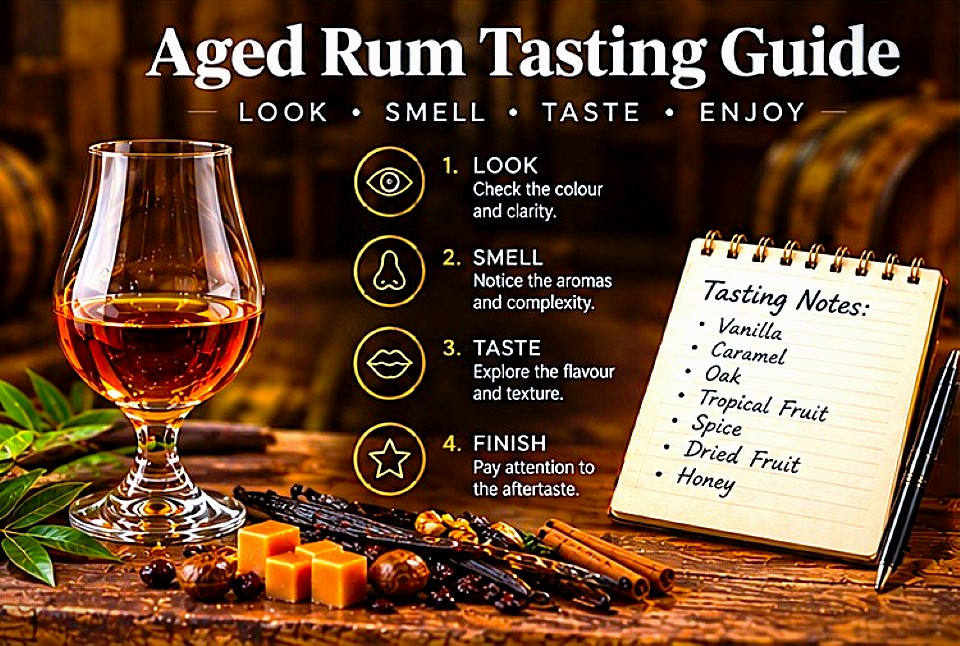
Step 1: Observe the appearance
Look at the rum’s colour and clarity. Aged rum can range from pale gold to deep mahogany, but colour alone does not prove age or quality. Colour may be influenced by several production factors, including any permitted colouring.
Step 2: Smell gently
Bring the glass toward your nose without inhaling too deeply. Look for broad aroma families such as:
-
-
- Fruit: banana, orange, raisin, or dried fruit.
- Sweet aromas: vanilla, caramel, toffee, or molasses.
- Wood and spice: oak, cinnamon, nutmeg, or clove.
- Roasted aromas: coffee, cocoa, or toasted nuts.
-
Do not worry about identifying every note. A useful tasting note is one that describes what you actually perceive.
Step 3: Take a small sip
Let a small amount of rum coat your palate. Notice its texture, sweetness, alcohol intensity, oak, fruit, and spice. Consider whether the flavours are balanced or whether one characteristic dominates. Compare the experience with your preferred style rather than assuming a particular profile is correct.
Step 4: Evaluate the finish
After swallowing, notice what remains. The finish may be short, medium, or long, with flavours that become drier, sweeter, spicier, or more oak-driven. A long finish can be enjoyable, but length alone does not determine quality.
Step 5: Try a little water
A few drops of water can sometimes open up the aromas or soften the alcohol sensation. Add it gradually and compare the result with the original pour. You can also try the rum over a large ice cube if you prefer a colder, slower-drinking experience. Cooling and dilution change the flavour, so this is a matter of preference rather than a rule.
Food pairings for aged rum
Aged rum can pair well with foods that complement its flavour profile.
-
-
- Dark chocolate: Often works with rums that show cocoa, coffee, caramel, or dried fruit.
- Roasted nuts: Can complement oak, vanilla, and toffee notes.
- Aged cheese: May work with fuller-bodied rums, depending on the cheese’s saltiness and intensity.
- Dried fruit: Raisins, dates, and figs can echo the fruit character of richer rums.
- Caramel or vanilla desserts: Can suit rums with similar flavour impressions, though very sweet desserts may overwhelm a drier expression.
-
Pairing is subjective. Start with small portions and let the rum remain the focus.
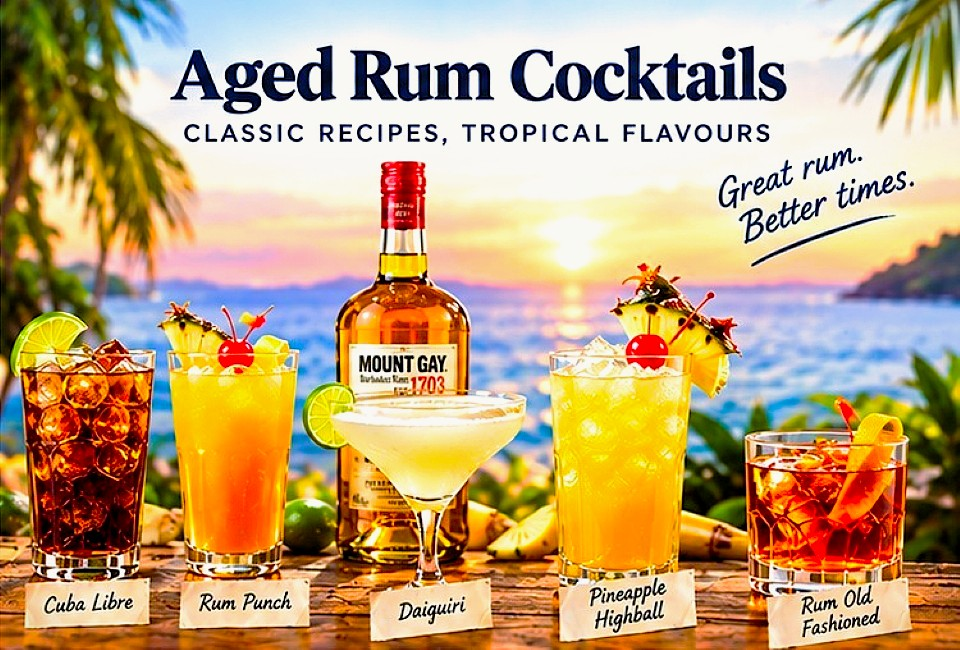
Classic aged rum cocktails, including a Cuba Libre, rum punch, Daiquiri and rum Old Fashioned, arranged on a tropical bar.
Classic Cocktails Made with Aged Rum
Although premium aged rum can be enjoyed neat, it also brings complexity to classic cocktails. Use a versatile aged expression for mixing and reserve rare or expensive bottles for sipping if that is how you most enjoy them.
1. Aged Rum Old Fashioned
Ingredients
-
-
- 60 ml aged rum
- 5–10 ml simple syrup, to taste
- 2 dashes aromatic bitters
- Orange peel
- Ice
-
Method: Add the rum, syrup, and bitters to a mixing glass with ice. Stir until chilled, then strain over a large ice cube. Express an orange peel over the drink and use it as garnish.
Best style: A balanced aged rum with vanilla, spice, and oak.
2. Aged Rum Daiquiri
Ingredients
-
-
- 60 ml aged rum
- 25 ml fresh lime juice
- 15–20 ml simple syrup, adjusted to taste
- Ice
-
Method: Shake the ingredients with ice until well chilled. Fine-strain into a chilled coupe glass.
Best style: A rum with enough character to balance the citrus without overwhelming it.
3. Rum Sour
Ingredients
-
-
- 60 ml aged rum
- 25 ml fresh lemon or lime juice
- 15–20 ml simple syrup
- Ice
- Optional egg white, if appropriate and safely handled
-
Method: Shake the rum, citrus, and syrup with ice. If using egg white, follow a trusted recipe and appropriate food-safety guidance. Strain into a suitable glass.
Best style: A versatile aged rum with a balanced profile.
4. Aged Rum Highball
Ingredients
-
-
- 45–60 ml aged rum
- Chilled soda water
- Ice
- Lime or orange garnish
-
Method: Fill a tall glass with ice, add the rum, and top with soda water. Stir gently and garnish.
Best style: A rum with a clear, enjoyable flavour that remains noticeable after dilution.
5. Mai Tai
The Mai Tai is a rum-forward cocktail whose flavour depends on the rum blend, citrus, orange liqueur, and orgeat. It can be made with aged rum or a blend of rum styles, depending on the recipe.
Best style: A characterful aged rum or carefully chosen blend. Avoid assuming the oldest rum is always the best choice; balance matters.
For more cocktail ideas, connect this article to the Always Dial A Bottle Toronto guide to Most Popular Rum Cocktails in the World.
Responsible serving note: Measure spirits carefully, follow the applicable legal drinking age, and never drink and drive.
Buying Aged Rum in Toronto and the GTA
For readers in Toronto and the Greater Toronto Area, the best aged rum to buy depends on local availability, budget, flavour preference, and intended use.
A useful starting point is to decide whether you want an approachable aged rum for cocktails, a more mature bottle for sipping, or a premium rum for gifting. Then compare the exact expression, age statement, bottle size, ABV, and current price.
What should Toronto buyers compare?
-
-
- Origin: Jamaica, Barbados, Guyana, Guatemala, Nicaragua, Venezuela, and other regions produce distinct styles worth exploring.
- Age and maturation: Check whether the bottle carries a minimum-age statement or uses a different blending or solera system.
- Flavour: Read the producer’s tasting notes, but treat them as guidance rather than a guarantee of your own experience.
- Price and availability: Premium and limited-edition bottles may not be consistently available. Verify current stock and price before planning a purchase.
- Intended use: A mid-range aged rum may be ideal for cocktails, while a more complex or limited expression may be better suited to sipping or gifting.
-
Always Dial A Bottle Toronto can use this topic to connect readers with relevant rum, spirits, cocktail, and gift pages on its website. Internal links should point to current, relevant product or category pages rather than to a page simply because it contains the word “rum.”
Explore the Always Dial A Bottle Toronto website for current information about available products and services. Product availability, delivery coverage, minimum orders, age verification, and delivery terms should be confirmed directly before placing an order.
A practical shopping checklist
Before choosing an aged rum, ask yourself:
-
-
- Do I prefer dry, balanced, fruity, or rich flavours?
- Will I drink it neat, over ice, or in cocktails?
- Is a clear minimum-age statement important to me?
- What is my budget?
- Is this bottle for personal enjoyment or a gift?
- Can I verify the exact expression and current availability?
-
Answering these questions will often lead to a better purchase than choosing a bottle based solely on its age number or packaging.
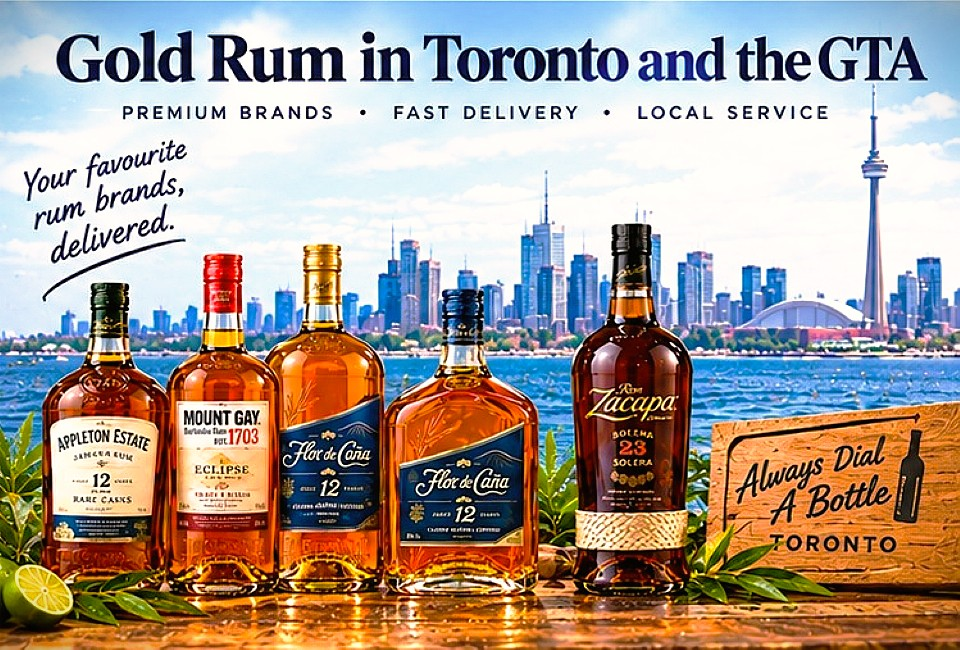
Premium aged rum bottles displayed against the Toronto skyline and waterfront, illustrating aged rum in Toronto and the GTA.
Frequently Asked Questions About Aged Rum
What is the best aged rum brand in the world?
There is no single best aged rum brand for every drinker. Appleton Estate, Mount Gay, El Dorado, Foursquare, Flor de Caña, Ron Zacapa, Diplomático, and other producers offer different styles. The best choice depends on your preferred flavour profile, budget, and how you plan to drink the rum.
What are the top 10 aged rum brands?
A useful starting shortlist includes Appleton Estate, Mount Gay, El Dorado, Foursquare, Flor de Caña, Ron Zacapa, Diplomático, Santa Teresa, Ron Abuelo, and Brugal. This is an editorial shortlist, not a verified worldwide sales ranking.
Is 12-year-old rum better than 8-year-old rum?
Not automatically. An older rum may show more developed oak and maturation character, but quality also depends on the original spirit, barrel, climate, and blending. An 8-year-old rum may be more enjoyable if you prefer its balance or flavour.
What does a rum age statement mean?
The meaning depends on the product and the rules under which it is sold. In relevant Authentic Caribbean Rum markets, an age statement refers to the youngest rum in the blend. Other products may use different systems. Always check the producer’s explanation and the applicable regulations.
Is solera-aged rum really the age printed on the bottle?
Not necessarily. Solera is a fractional blending and maturation system, and a number associated with a solera-style product should not automatically be interpreted as the minimum age of every component. Consult the producer’s official information for the specific expression.
Which aged rum is best for sipping neat?
Appleton Estate 12 or 21 Year Old, Mount Gay XO, mature El Dorado expressions, selected Foursquare releases, and Flor de Caña’s older bottlings are all worth considering. Personal preference is decisive: taste matters more than reputation alone.
Which aged rum is best for cocktails?
A versatile aged rum from Appleton Estate, Mount Gay, Doorly’s, or Angostura can be a practical choice. Select the bottle according to the recipe and the intensity you want in the finished drink.
Is dark rum the same as aged rum?
No. Dark rum describes a broad style or colour, while aged rum refers to maturation. Some dark rums are aged, but colour alone does not establish the age or production method.
Is gold rum aged rum?
Sometimes. Gold or amber rum may have been matured in wood, but colour alone does not prove a specific age. Check the label and producer’s description.
What is the difference between agricole rum and molasses-based rum?
Agricole rum is traditionally made from fresh sugarcane juice, while many other rums are made from molasses. The raw material affects the base spirit’s character, but fermentation, distillation, maturation, and blending also matter.
Does older rum contain more alcohol?
Age does not automatically determine the alcohol percentage. ABV depends on production, maturation, blending, and bottling decisions. Check the bottle label for the actual strength.
How should aged rum be stored?
Keep the bottle upright, tightly sealed, and away from direct sunlight, heat, and major temperature changes. Unlike wine, spirits generally do not need to be stored horizontally. Once opened, minimize prolonged exposure to air and keep the cap securely closed.
Does aged rum improve in the bottle?
Rum generally does not continue to mature in the same way it does in a wooden cask. Once bottled, it is not undergoing the same wood interaction that creates maturation character. Storage conditions can still affect its quality over time.
Is expensive aged rum worth the price?
It can be, if you enjoy the flavour and value the production, rarity, or presentation. However, a higher price does not guarantee a better match for your preferences. Compare the bottle’s style, producer information, and price before buying.
Can aged rum be given as a gift?
Yes. Aged rum can make a thoughtful gift for a person who enjoys spirits, especially when the bottle suits their preferred style. Consider the recipient’s taste, budget, and whether they enjoy sipping rum or making cocktails.
Where can I buy aged rum in Toronto?
Check reputable local retailers and current online listings for the exact bottle and age statement. Always Dial A Bottle Toronto’s website is a starting point for checking available products and services. Confirm current stock, delivery terms, and legal age-verification requirements before ordering.
Final Thoughts: Finding Your Favourite Aged Rum
The best aged rum brands in the world demonstrate the extraordinary diversity of rum-making traditions. Appleton Estate showcases the distinctive character of Jamaica, Mount Gay and Foursquare represent important Barbados styles, and El Dorado highlights the richness associated with Demerara rum.
Flor de Caña, Ron Zacapa, Diplomático, Santa Teresa, Brugal, Barbancourt, and the agricultural-rum producers of Martinique each offer different ways to explore maturation, blending, and regional identity. The most useful lesson is that age alone does not define quality. The original spirit, distillation, cask selection, climate, blending, transparency, and your own taste all matter.
If you are new to aged rum, start with a versatile bottle from an established producer. Compare a few regional styles, taste them slowly, and keep notes on the flavours you enjoy. If you already collect rum, consider exploring less familiar regions, agricultural rum, limited releases, and producers with clear information about their maturation methods.
Whether you are buying a bottle for a quiet evening, a cocktail gathering, a special celebration, or a gift, the right aged rum is the one that fits the occasion and your palate.
Explore different styles, compare producers carefully, and enjoy the journey of discovering your own favourite aged rum.