
Blog
20 Most Popular Port Wine Brands: Best Port Wines to Try

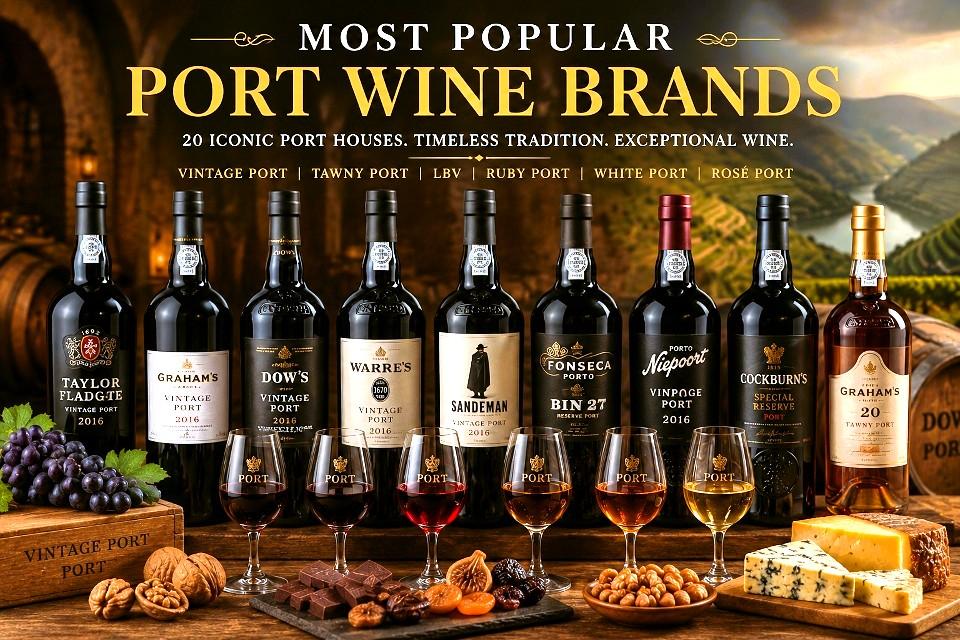
Port wine is one of the world’s most famous fortified wines, celebrated for its richness, sweetness, remarkable aging potential and extraordinary diversity. From powerful Vintage Port and fruit-driven Ruby Port to elegant Tawny Port, refreshing White Port and increasingly popular Rosé Port, there is a style for almost every wine lover.
But with so many producers and bottles available, choosing the best Port wine brands can be difficult.
Should you buy Taylor Fladgate, Graham’s, Dow’s, Warre’s, Sandeman or Fonseca? Is Vintage Port better than Tawny Port? What is the best Port for beginners? Which Port goes best with chocolate and cheese? And which Port brands are worth adding to a wine collection?
This guide explores 20 of the most popular and respected Port wine brands and houses, explains their signature styles and recommends the types of Port worth seeking out.
Whether you’re looking for the best Port wine brands in the world, popular Port brands, best Vintage Port, best Tawny Port, affordable Port wine or Port wine for dessert, this guide is designed to help you find the right bottle.
What Is Port Wine?
Port is a fortified wine produced in Portugal’s Douro Demarcated Region.
During production, fermentation is stopped by adding grape spirit. This preserves some of the grape’s natural sugar while increasing the wine’s alcohol level. The result is a rich, concentrated wine that can range from dry to intensely sweet.
According to the Instituto dos Vinhos do Douro e Porto (IVDP), Port generally contains approximately 19–22% alcohol by volume, and its sweetness can range from extra dry to very sweet.
Port is not one single style.
The major categories include:
- Ruby Port
- Ruby Reserve
- Late Bottled Vintage Port
- Vintage Port
- Tawny Port
- Tawny Reserve
- 10-Year-Old Tawny
- 20-Year-Old Tawny
- 30-Year-Old Tawny
- 40-Year-Old Tawny
- Colheita Port
- White Port
- Rosé Port
- Crusted Port
- Single Quinta Vintage Port
The IVDP broadly divides Port into Ruby-style and Tawny-style wines according to their aging approach. Ruby styles aim to preserve youthful fruit and color, while Tawny styles develop more oxidative, dried-fruit and nutty characteristics through wood aging.
The 20 Most Popular Port Wine Brands
There is no single official ranking of the world’s most popular Port brands. The following selection instead highlights historic Port houses, widely recognized producers and brands with strong reputations across major Port styles.
1. Taylor Fladgate
Taylor Fladgate Port is one of the most recognizable names in premium Port.
The house is particularly associated with Vintage Port, but its range also includes Late Bottled Vintage, Ruby, Tawny, White Port and aged Tawny styles. Its current portfolio includes 10-, 20-, 30- and 40-year-old Tawnies as well as highly aged and limited-release bottlings.
Best Taylor Fladgate styles to explore
- Vintage Port
- Late Bottled Vintage
- 10-Year-Old Tawny
- 20-Year-Old Tawny
- 30-Year-Old Tawny
- 40-Year-Old Tawny
- Chip Dry White Port
Taylor Fladgate is an excellent choice for collectors and anyone looking for a classic expression of premium Port.
Best for: Vintage Port collectors, special occasions and traditional Port lovers.
2. Graham’s
Graham’s Port is another major name in the Port world.
The house was founded in 1820, and its history is closely connected with the Douro Valley. Today, Graham’s produces a broad range of Vintage, Tawny, Reserve Ruby, LBV, White and other Port styles.
Its current portfolio includes 10-, 20-, 30-, 40-, 50- and 80-year-old Tawnies, as well as Vintage Port and Late Bottled Vintage.
Graham’s Vintage Port is particularly notable for its concentration, depth and ability to develop with bottle age. The producer states that Vintage Port is made only in exceptional years.
Best Graham’s wines to explore
- Graham’s Vintage Port
- Graham’s 10-Year-Old Tawny
- Graham’s 20-Year-Old Tawny
- Graham’s 30-Year-Old Tawny
- Graham’s 40-Year-Old Tawny
- Graham’s Six Grapes Reserve Ruby
- Graham’s LBV
Best for: Luxury Port, collectors and rich Tawny Port.
3. Sandeman
Sandeman Port is among the most recognizable Port brands internationally.
Its distinctive branding and long history have helped make Sandeman one of the best-known names associated with Port.
Sandeman produces a wide range of styles, including Ruby, Tawny, LBV and Vintage Ports.
Its aged Tawny wines are particularly interesting for consumers who enjoy nutty, dried-fruit and caramel flavors.
Sandeman has also highlighted extensive success in international wine competitions, including awards for its aged Tawny and Vintage Port bottlings.
Best for
- Accessible premium Port
- Tawny Port
- Vintage Port
- Gift bottles
- Port beginners
Best for: A recognizable, widely available Port brand with a broad portfolio.
4. Dow’s
Dow’s Port has been associated with the Douro Valley for more than two centuries.
Dow’s is part of the Symington family group and is particularly known for Vintage Port and its distinctive style.
The house describes its Ports as having a distinctively drier profile compared with some other Port producers. Its vineyards include Quinta do Bomfim and Quinta da Senhora da Ribeira.
That drier impression can make Dow’s particularly attractive to wine drinkers who enjoy structured, less overtly sweet wines.
Best Dow’s styles
- Vintage Port
- Late Bottled Vintage
- 10-Year-Old Tawny
- 20-Year-Old Tawny
- Reserve Port
Best for: Structured Port and drinkers who prefer a slightly drier style.
5. Warre’s
Warre’s Port is one of the historic Port houses.
Warre’s was established in 1670 and describes itself as the oldest British Port company.
Its range includes Vintage Port, Tawny, LBV and other styles.
One especially notable bottling is Warre’s Warrior, which the producer describes as the world’s oldest continuously shipped Port brand, dating back to the 1750s.
Warre’s is particularly appealing to people who want a Port with a strong historical connection to the Douro.
Best for: Traditionalists, collectors and historic Port enthusiasts.
6. Fonseca
Fonseca Port is famous among Port enthusiasts for its Vintage Ports, but its most widely recognizable bottle may be Fonseca Bin 27.
Bin 27 is a reserve Port made from selected reserve wines. Fonseca describes it as rich, fruity, full-bodied and designed to deliver a consistent house style.
Its flavor profile includes:
- Blackberry
- Cassis
- Cherry
- Plum
- Spice
- Dark fruit
Bin 27 is ready to drink and does not require decanting, making it particularly approachable for Port newcomers.
Best Fonseca wines
- Fonseca Bin 27
- Fonseca 10-Year-Old Tawny
- Fonseca 20-Year-Old Tawny
- Fonseca LBV
- Fonseca Vintage Port
Best for: Beginners looking for a rich, fruit-forward Port.
7. Niepoort
Niepoort Port has developed an especially strong reputation among wine enthusiasts interested in artisanal and terroir-driven Port.
The house produces a wide range of styles, from traditional Vintage Port and Tawny to LBV and other expressions.
Niepoort is particularly interesting for experienced wine drinkers who want to explore Port beyond the most commercial labels.
Its wines often demonstrate the balance between fruit, acidity, structure and age that makes Douro Port so compelling.
Best for: Wine enthusiasts, collectors and people looking for distinctive Port.
8. Croft
Croft Port has one of the longest histories among active Port producers.
Croft traces its origins to 1588 and is particularly associated with Vintage Port and Quinta da Roêda.
Its portfolio includes:
- Classic Vintage
- Quinta da Roêda Vintage
- 10-Year-Old Tawny
- 20-Year-Old Tawny
- Reserve Tawny
- LBV
- Reserve Ruby
- Fine Ruby
- White Port
- Croft Pink
Croft also helped pioneer modern Rosé Port through Croft Pink.
Its Vintage Ports are known for lush fruit and a distinctive aromatic character, while its Tawny range offers a more oxidative style.
Best for: Traditional Port lovers who also want to explore Rosé Port.
9. Cockburn’s
Cockburn’s Port is another historic Port name with a broad portfolio.
The brand produces:
- Fine Ruby
- Fine Tawny
- Fine White
- Special Reserve
- LBV
- 10-Year-Old Tawny
- 20-Year-Old Tawny
- Vintage Port
Cockburn’s Special Reserve is particularly well known as a style that bridges the gap between young Port and Vintage Port. The producer says the wine was originally introduced in 1969 and is matured in oak vats for up to four years.
Cockburn’s is also notable for its modern approach to White Port, including Port & Tonic serves.
Best for: Casual drinking, Port cocktails and accessible Reserve Port.
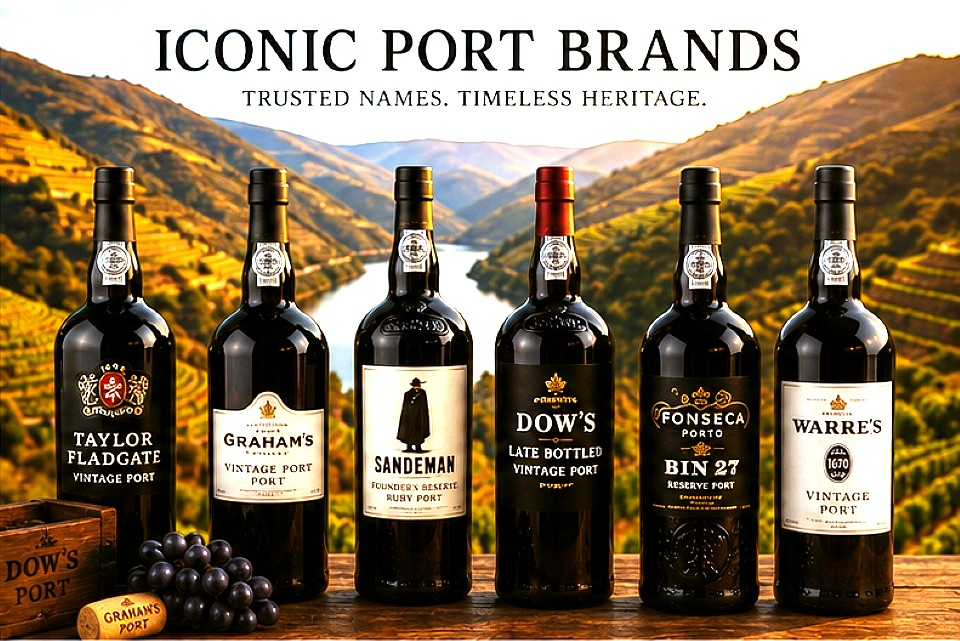
Most popular Port wine brands and styles including Ruby, Vintage, Tawny, Colheita and White Port
10. Quinta do Noval
Quinta do Noval is one of the most prestigious names in the Douro.
The producer’s portfolio includes:
- Fine Ruby
- Black Ruby Reserve
- LBV
- LBV Unfiltered
- Tawny
- 10-Year-Old Tawny
- 20-Year-Old Tawny
- 40-Year-Old Tawny
- Colheita
- Vintage Port
- Nacional Vintage Port
- White Port
The house is particularly famous for Quinta do Noval Nacional Vintage Port, one of the most coveted names in the category.
For collectors, Nacional represents the luxury end of Port.
Best for: Collectors, luxury wine and serious Vintage Port.
11. Ramos Pinto
Ramos Pinto is a major Portuguese producer with a strong connection to the Douro.
Ramos Pinto produces both red and white Port and has a portfolio spanning traditional and aged expressions.
Its wines can offer an interesting combination of Douro fruit, structure and aging character.
The producer’s recent harvest reporting highlights varieties such as Touriga Nacional, Touriga Franca, Tinta Barroca and Tinto Cão in its red Port production, while Viosinho and Rabigato are among the varieties used in its White Port production.
Best for: Exploring the diversity of Douro grapes and modern Portuguese Port.
12. Kopke
Kopke Group represents one of the major historic names associated with Port.
Kopke is especially interesting for wine lovers who enjoy aged Tawny and Colheita Port.
Colheita is a single-vintage Tawny-style Port aged in wood, unlike standard Tawny blends that combine wines from different years.
The IVDP explains that Colheita is a single-year wine that develops in cask and can resemble an aged Tawny of comparable maturity.
Best for: Colheita lovers and aged Tawny enthusiasts.
13. Ferreira
Ferreira is one of Portugal’s classic Port houses and an important name for anyone exploring traditional Portuguese wine.
The brand is particularly interesting for consumers looking for a combination of heritage, approachable Port and premium aged styles.
Its range spans several categories, making Ferreira a useful producer to explore when comparing Ruby, Tawny and Vintage expressions.
Best for: Traditional Portuguese Port and classic styles.
14. Burmester
Burmester is another historic Port brand associated with the Douro and Vila Nova de Gaia.
The producer is particularly interesting for its combination of Ruby, Tawny and aged expressions.
Burmester is part of the broader Kopke Group portfolio, alongside brands including Kopke, Cálem and others.
Best for: Tawny Port and traditional Portuguese styles.
15. Quinta do Crasto
Quinta do Crasto is one of the notable Douro estate producers.
Its name is especially associated with high-quality Douro wines, including Port.
For wine enthusiasts, estate-produced Port provides an opportunity to explore how vineyard location and grape composition influence the final wine.
Best for: Estate-focused Douro wine enthusiasts.
16. Quinta de la Rosa
Quinta de la Rosa is an important Douro estate with a strong reputation for estate-grown wines.
Its Port production provides another perspective on the region beyond the traditional large Port houses.
For consumers who enjoy wines with a strong connection to vineyard origin, Quinta de la Rosa is worth investigating.
Best for: Estate-driven Port and terroir-focused wine lovers.
17. Churchill’s
Churchill’s is a relatively modern Port house compared with some of the centuries-old names in the region.
It has developed a strong reputation for elegant, balanced Port styles.
The producer is particularly interesting for wine drinkers who enjoy a more contemporary interpretation of traditional Douro Port.
Best for: Modern Port styles and wine enthusiasts.
18. Ramos Pinto
Ramos Pinto deserves another look for consumers interested in the diversity of Douro production.
Its combination of Port and Douro table wines demonstrates how the same region can produce very different expressions from similar grape varieties.
Its white Port program is especially worth exploring for people who want something different from the traditional red dessert styles.
Best for: White Port and modern Douro exploration.
19. Messias
Messias is a historic Portuguese wine producer whose portfolio includes Port and other Portuguese wines.
The brand is useful for consumers looking for traditional Port styles without automatically moving into the most expensive collector bottles.
Its range can provide an approachable introduction to different Port categories.
Best for: Exploring traditional Port at accessible price points.
20. Taylor Port
It is important to distinguish Taylor Port Wine in the United States from the historic Portuguese house Taylor Fladgate.
Taylor Port Wine is a separate American sweet-wine brand.
Its flagship Taylor Port is an 18% ABV sweet wine with rich, fruity and smooth characteristics, and the company markets it as a casual dessert and social-drinking wine.
This distinction is important for readers searching online for “Taylor Port.”
Best for: Sweet, casual dessert wine.
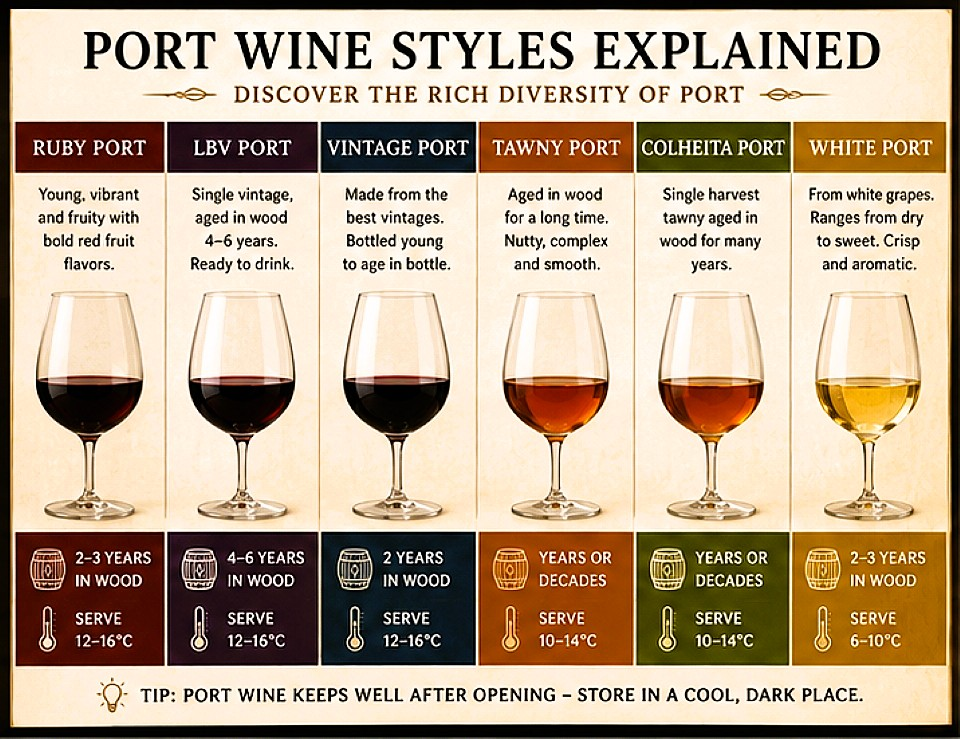
Port wine styles and serving guide featuring Ruby, Vintage, Tawny, Colheita, White and Rosé Port
Best Port Wine Styles to Know
Choosing a Port brand is only half the decision.
The style of Port is equally important.
Ruby Port
Ruby Port is youthful, fruity and deeply colored.
Expect:
- Blackberry
- Cherry
- Plum
- Raspberry
- Chocolate
It is one of the easiest styles for beginners.
Ruby Reserve
Reserve Ruby is generally richer and more concentrated than standard Ruby.
It can offer more complexity while retaining youthful fruit.
Excellent with:
- Chocolate
- Cheesecake
- Blue cheese
- Berry desserts
Late Bottled Vintage Port
LBV Port comes from a single vintage and is aged in wood for approximately four to six years before bottling, according to the IVDP. Most are ready to drink when purchased.
LBV is an excellent compromise between:
Vintage Port quality and everyday accessibility.
For many consumers, it is the best place to start exploring serious Port.
Vintage Port
Vintage Port is the prestige category.
It comes from a single declared vintage and is bottled relatively young so that it can develop in bottle.
The IVDP describes Vintage Port as the “jewel” of the Port category and notes that it can develop for decades in bottle.
Vintage Port can deliver:
- Black fruit
- Blackberry
- Plum
- Violet
- Chocolate
- Spice
- Floral notes
- Complex tertiary aromas
The finest examples can age for many decades.
Best for: Collecting, anniversaries, major celebrations and serious wine enthusiasts.
Tawny Port
Tawny Port is fundamentally different from Ruby-style Port.
Instead of emphasizing youthful fruit and deep color, Tawny Port develops through wood aging.
This creates flavors of:
- Walnut
- Almond
- Hazelnut
- Dried fruit
- Caramel
- Orange peel
- Vanilla
- Spice
Tawny Port is often a wonderful choice for consumers who don’t enjoy intensely fruity wines.
10-Year-Old Tawny
10-Year-Old Tawny is one of the best entry points into aged Port.
It offers a combination of:
fresh fruit + dried fruit + nuts + wood aging.
It is generally easier to understand than very old Tawny because it still retains some youthful fruit.
20-Year-Old Tawny
20-Year-Old Tawny moves toward greater complexity.
Expect:
- Toasted nuts
- Dried apricot
- Orange peel
- Vanilla
- Caramel
- Spice
The IVDP describes 20-Year-Old Tawny as having developed, concentrated flavors associated with extended wood aging.
30-Year-Old and 40-Year-Old Tawny
These are luxury wines.
As Tawny ages, oxidative development produces increasingly complex flavors.
Older examples can display:
- Hazelnut
- Walnut
- Honey
- Dried peach
- Vanilla
- Spice
- Caramel
- Orange peel
A 40-Year-Old Tawny is an outstanding gift for a serious wine lover.
Colheita Port
Colheita is one of the most interesting styles for people who enjoy aged Tawny.
Unlike a standard Tawny blend, a Colheita comes from a single vintage and is aged in wood.
This means you can experience the character of a particular harvest alongside the complexity of extended oxidative aging.
Best for: Wine collectors and Tawny enthusiasts.
White Port
White Port is one of the most underrated Port styles.
It can range from dry to sweet.
Flavors can include:
- Citrus
- Apple
- Pear
- Almond
- Honey
- Dried fruit
Dry White Port is increasingly popular in cocktails, particularly the Port & Tonic.
The IVDP specifically recommends chilled White Port with foods such as almonds, smoked salmon, prunes and dried dates.
Rosé Port
Rosé Port is a modern and approachable category.
It tends to be:
- Fruity
- Aromatic
- Light
- Fresh
- Berry-driven
It can be served chilled and can work well in cocktails.
Croft’s Croft Pink is one of the best-known examples of modern Rosé Port.
Best Port Wine Brands for Beginners
If you’re buying your first bottle, you don’t necessarily need an expensive Vintage Port.
Start with:
1. Fonseca Bin 27
Rich, fruity and approachable.
2. Graham’s Six Grapes
A fruit-forward Reserve Ruby style.
3. Sandeman Ruby or Tawny
An accessible introduction to the classic categories.
4. Cockburn’s Special Reserve
A fuller, richer Reserve style.
5. Graham’s 10-Year-Old Tawny
Excellent for learning what wood aging does to Port.
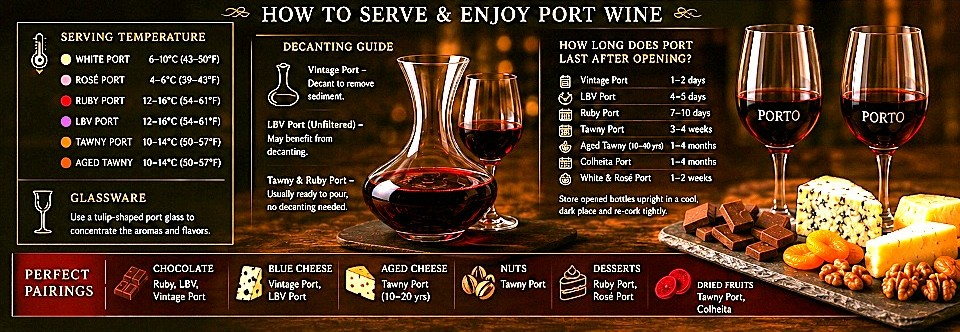
Port wine styles and serving guide
Best Port Wine for Chocolate
Port and chocolate are a classic combination.
For dark chocolate, consider:
- Vintage Port
- LBV
- Ruby Reserve
- Fonseca Bin 27
- Tawny Port
Vintage Port is particularly good with intense dark chocolate desserts because its fruit, tannin and sweetness can match the bitterness of cocoa.
Best Port Wine for Cheese
Port and cheese are among the most famous wine-and-food combinations.
Try:
Blue cheese
Vintage Port or LBV
Cheddar
Ruby Reserve or Bin 27
Aged hard cheese
20-Year-Old Tawny
Nutty cheeses
Tawny or Colheita
The IVDP specifically recommends Ruby Reserve or LBV with cheesecake and medium-intensity soft cheeses, while older Tawny styles work particularly well with harder, more intense cheeses.
Best Port for Christmas and Holiday Dinner
Port is an excellent holiday wine because its richness works with:
- Christmas pudding
- Fruitcake
- Chocolate
- Nuts
- Cheese
- Caramel
- Dried fruit
A 10- or 20-Year-Old Tawny is particularly versatile.
For a major celebration, Vintage Port makes an impressive finale.
How to Serve Port Wine
Serving temperature makes a significant difference.
The IVDP recommends approximately:
- White Port: 6–10°C
- Ruby-style Port: 12–16°C
- Tawny-style Port: 10–14°C
- Rosé Port: approximately 4°C
Avoid serving Port excessively warm.
High temperatures can make the alcohol feel dominant and suppress the wine’s freshness.
Does Port Need to Be Decanted?
It depends on the style.
Vintage Port
Often yes.
Vintage Port can develop sediment during bottle aging and is generally decanted to separate the wine from the deposit.
Unfiltered LBV
May also benefit from decanting.
Tawny Port
Usually does not require decanting because it has already been aged in wood and is generally bottled ready to drink.
Ruby Port
Usually does not require decanting.
How Long Does Port Last After Opening?
One of Port’s biggest advantages is its ability to remain enjoyable after opening.
The IVDP provides approximate preservation periods depending on the category. Its guidance suggests roughly:
- Vintage: 1–2 days
- LBV: 4–5 days
- Ruby/Reserve Ruby: 8–10 days
- Tawny/Reserve Tawny: 3–4 weeks
- 10-, 20-, 30- and 40-Year-Old Tawny: approximately 1–4 months depending on the wine
- Colheita: approximately 1–4 months
These are useful guidelines rather than rigid expiration dates.
Storage after opening is important.
Keep the bottle sealed and away from heat and direct sunlight.
Is Vintage Port Better Than Tawny Port?
Not necessarily.
They’re simply different.
Vintage Port is about:
- Fruit
- Power
- Tannin
- Structure
- Bottle aging
- Vintage character
Tawny Port is about:
- Oxidative aging
- Nuts
- Dried fruit
- Caramel
- Spice
- Blending
- Wood-aged complexity
If you love powerful red wines, Vintage Port may be your favorite.
If you prefer mature Burgundy-like complexity, nuts and dried fruit, Tawny Port may be more appealing.
What Is the Best Port Wine Brand?
There is no universal answer.
For Vintage Port, Taylor Fladgate, Graham’s, Fonseca, Dow’s, Warre’s and Quinta do Noval are excellent names to investigate.
For Tawny Port, Graham’s, Taylor Fladgate, Sandeman, Kopke and Warre’s offer particularly interesting choices.
For beginner-friendly Reserve Port, Fonseca Bin 27, Graham’s Six Grapes and Cockburn’s Special Reserve are worth exploring.
For luxury collecting, Quinta do Noval Nacional, Taylor Fladgate Vintage, Graham’s Vintage and other top single-vintage bottlings are among the most prestigious options.
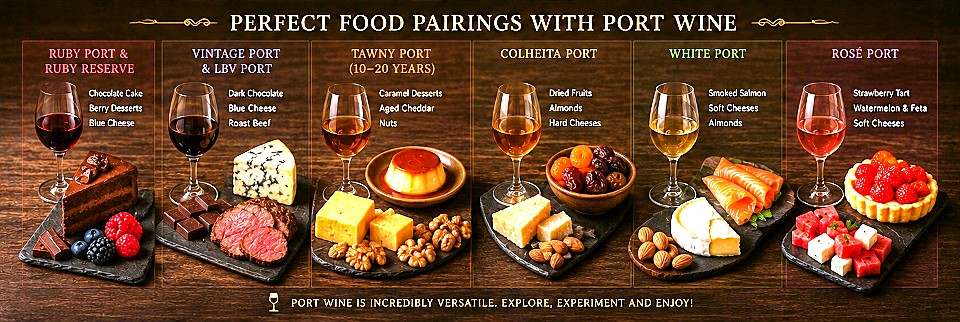
Port wine food pairings with chocolate, blue cheese, aged cheese, desserts, nuts and fruit
Frequently Asked Questions About Port Wine Brands
What are the most popular Port wine brands?
Some of the most internationally recognized Port houses include Taylor Fladgate, Graham’s, Sandeman, Dow’s, Warre’s, Fonseca, Niepoort, Croft, Cockburn’s and Quinta do Noval.
What is the best Port wine brand?
The best brand depends on the style you prefer. Taylor Fladgate and Graham’s are particularly strong for premium Vintage and Tawny Port, while Fonseca Bin 27 is a popular choice for a rich, fruit-forward Reserve Port.
What is the best Port wine for beginners?
Start with Ruby Reserve, LBV or 10-Year-Old Tawny. These styles provide complexity without requiring decades of bottle aging.
What is the best Port wine for chocolate?
Vintage Port, LBV, Ruby Reserve and rich Ruby Ports are excellent with dark chocolate.
What is the best Port wine with cheese?
Vintage Port and LBV are excellent with blue cheese, while aged Tawny works beautifully with harder, nutty cheeses.
What is the difference between Ruby and Tawny Port?
Ruby Port emphasizes youthful fruit, color and concentration. Tawny Port is aged in wood and develops dried-fruit, nutty, caramelized and oxidative characteristics.
What is LBV Port?
Late Bottled Vintage Port is made from a single vintage and aged in wood for approximately four to six years before bottling. Most LBV Port is ready to drink when purchased.
What is Vintage Port?
Vintage Port is a premium style from a single vintage that is bottled relatively young and intended to mature in the bottle. It can develop for decades.
What is Tawny Port?
Tawny Port is a wood-aged style that develops flavors of dried fruit, nuts, caramel and spice.
What is Colheita Port?
Colheita is a single-vintage Tawny-style Port aged in wood.
Is Port always sweet?
No. Port can range from extra dry through very sweet. Sweetness is determined partly by when fermentation is stopped through the addition of grape spirit.
Final Thoughts: Exploring the World’s Most Popular Port Wine Brands
The world of Port is far more diverse than the familiar bottle of sweet red wine many people associate with the category.
The best Port wine brands offer an extraordinary spectrum of styles.
For bright fruit and approachability, explore Ruby Port.
For greater richness, try Reserve Ruby.
For single-vintage character without the long wait associated with Vintage Port, LBV is an excellent choice.
For collectors and major celebrations, Vintage Port represents one of the world’s great fortified wines.
For nutty, mature and complex flavors, explore 10-, 20-, 30- and 40-Year-Old Tawny Port.
For something especially distinctive, try Colheita Port.
And don’t overlook White Port and Rosé Port, which can introduce an entirely different side of the Douro.
Among the producers, Taylor Fladgate, Graham’s, Sandeman, Dow’s, Warre’s, Fonseca, Niepoort, Croft, Cockburn’s and Quinta do Noval are excellent places to begin.
Ultimately, the “best” Port is the one that matches your palate, occasion and budget.
A young Ruby Port may be perfect for an informal dessert.
A 20-Year-Old Tawny can make an elegant after-dinner drink.
A Vintage Port can turn an anniversary or holiday into a memorable occasion.
And a beautifully aged Colheita can be an unforgettable bottle for a serious wine lover.
The best way to discover your favorite is simple: try several Port styles from different houses and compare them side by side.