
Blog
Most Popular Fortified and Dessert Wine Varieties: 30+ Wines to Discover


Fortified and dessert wines are among the most fascinating styles in the world of wine. From rich Vintage Port and Tawny Port to nutty Sherry, Madeira and Marsala, and from honeyed Sauternes and Tokaji to intensely concentrated Icewine, these wines offer some of the most complex and memorable flavors a wine lover can experience.
Yet many consumers are unfamiliar with the incredible variety available.
What are the most popular fortified wines? What are the best dessert wines? What is the difference between Port and Sherry? Is Madeira a dessert wine? What is Icewine? Which sweet wine is best with chocolate, cheese or fruit desserts?
This guide answers those questions and explores more than 30 of the world’s most popular fortified and dessert wine varieties, including classic wines from Portugal, Spain, France, Italy, Hungary, Germany, Canada, Australia and beyond.
Whether you’re searching for the best dessert wine, popular fortified wine varieties, sweet red wine, sweet white wine, Port, Sherry, Madeira, Marsala, Sauternes, Tokaji or Canadian Icewine, this guide will help you understand the major styles and choose the right bottle for any occasion.
What Are Fortified Wines?
A fortified wine is a wine to which additional distilled grape spirit is added during or after fermentation.
Fortification increases the alcohol level and can dramatically influence the wine’s flavor, sweetness, texture and aging potential.
The most famous fortified wines include:
- Port
- Sherry
- Madeira
- Marsala
- Madeira-style wines
- Moscatel de Setúbal
- Vin Doux Naturel
- Some styles of Vermouth
Port, Sherry, Madeira and Marsala are among the world’s best-known fortified wine categories.
Fortified wines aren’t necessarily sweet.
This is an important distinction.
Fino Sherry can be extremely dry. Sercial Madeira is dry. Dry Marsala can be savory and refreshing. White Port can be dry or sweet.
At the other end of the spectrum, Vintage Port, Pedro Ximénez Sherry and some Madeira styles can be intensely rich and sweet.
That enormous stylistic range is one of the reasons fortified wines deserve a much larger place in the modern wine conversation.
What Is Dessert Wine?
“Dessert wine” is a broad term rather than one specific winemaking category.
Dessert wines are generally wines that have noticeable sweetness, although some are balanced by high acidity and therefore don’t taste as sweet as their sugar level might suggest.
Sweet wines can be produced in many different ways.
Common methods include:
- Late-harvesting grapes
- Noble rot or botrytis
- Freezing grapes naturally on the vine
- Drying grapes after harvest
- Stopping fermentation
- Fortification
- Concentrating grape juice
This creates an enormous range of styles.
Some dessert wines are:
- Light and floral
- Fresh and acidic
- Rich and honeyed
- Nutty and oxidative
- Concentrated and syrupy
- Dark and fruity
- Spicy and caramelized
The best dessert wines usually depend on a crucial balance between sweetness, acidity, alcohol and concentration.
The Difference Between Fortified Wine and Dessert Wine
Fortified wine and dessert wine are not interchangeable terms.
A fortified wine is defined primarily by the addition of distilled spirit.
A dessert wine is generally defined by its sweet style and traditional role as an after-dinner wine.
Therefore, some wines can be both fortified and dessert wines.
For example:
- Port — fortified and commonly sweet
- Sweet Sherry — fortified and sweet
- Sweet Madeira — fortified and sweet
- Marsala Dolce — fortified and sweet
- Moscatel de Setúbal — fortified and sweet
But other fortified wines can be dry:
- Fino Sherry
- Manzanilla Sherry
- Sercial Madeira
- Dry White Port
- Dry Marsala
Likewise, many dessert wines aren’t fortified at all.
Examples include:
- Sauternes
- Tokaji Aszú
- German Beerenauslese
- Canadian Icewine
- Moscato d’Asti
- Late-harvest Riesling
Understanding this distinction makes it much easier to explore the world of sweet wine.
30+ Most Popular Fortified and Dessert Wine Varieties
There is no single official worldwide ranking of the “most popular” fortified and dessert wines. Popularity also varies considerably by country and market.
The following list therefore focuses on internationally recognized, historically important and widely sought-after styles.
1. Port Wine
Country: Portugal
Region: Douro Valley
Port is probably the world’s most famous fortified dessert wine.
Produced in Portugal’s Douro Valley, Port is made from a variety of indigenous Portuguese grapes and fortified during fermentation.
The addition of grape spirit stops fermentation, leaving residual sugar in the wine while increasing alcohol.
Port comes in several major styles.
Popular Port styles include:
- Ruby Port
- Tawny Port
- Vintage Port
- Late Bottled Vintage Port
- White Port
- Rosé Port
Port can range from youthful and intensely fruity to extraordinarily complex and mature.
Ruby Port emphasizes vibrant fruit flavors such as:
- Blackberry
- Black cherry
- Plum
- Raspberry
- Chocolate
It is generally youthful and fruit-driven.
Tawny Port
Tawny Port spends significant time aging in wood.
It develops flavors of:
- Dried fruit
- Caramel
- Walnut
- Almond
- Orange peel
- Spice
Older Tawny Ports can be remarkably complex.
Vintage Port
Vintage Port is one of the great collectible wine styles.
It is produced from exceptional vintages and is designed for long-term aging.
A mature Vintage Port can display extraordinary layers of fruit, spice, chocolate, tobacco and dried fruit.
2. Sherry
Country: Spain
Region: Andalusia
Sherry is one of the world’s most misunderstood wine categories.
Many consumers associate Sherry exclusively with sweet wine.
In reality, Sherry ranges from extremely dry to intensely sweet.
The traditional Sherry-producing area is associated with Jerez de la Frontera, Sanlúcar de Barrameda and El Puerto de Santa María in southwestern Spain. Sherry production includes several grape varieties, with Palomino playing a central role in many dry styles.
Major styles include:
- Fino
- Manzanilla
- Amontillado
- Oloroso
- Palo Cortado
- Pedro Ximénez
- Cream Sherry
3. Fino Sherry
Fino is one of the driest styles of Sherry.
It is typically pale, crisp and savory, with aromas and flavors that can include:
- Almond
- Green apple
- Salinity
- Yeast
- Herbs
- Citrus
Fino is excellent with tapas.
Try it with:
- Olives
- Almonds
- Jamón
- Anchovies
- Seafood
- Fried fish
Served chilled, Fino can be one of the most refreshing fortified wines available.
4. Manzanilla
Manzanilla is closely related to Fino but is produced specifically around Sanlúcar de Barrameda.
Its maritime environment contributes to its distinctive personality.
Manzanilla can be:
- Dry
- Salty
- Floral
- Nutty
- Fresh
- Mineral
It is an exceptional pairing for seafood and tapas.
Try Manzanilla with oysters, shrimp, anchovies, olives and Spanish cured meats.
5. Amontillado Sherry
Amontillado occupies an interesting position between biologically aged and oxidative styles of Sherry.
It can offer:
- Toasted nuts
- Hazelnut
- Almond
- Dried fruit
- Leather
- Spice
It is usually dry, although sweetened versions also exist.
Amontillado is an outstanding wine for complex savory food.
Try it with:
- Mushroom dishes
- Roast poultry
- Pork
- Nut-based sauces
- Aged cheese
6. Oloroso Sherry
Oloroso is a richer and more oxidative style of Sherry.
It tends to be fuller-bodied than Fino or Manzanilla.
Typical flavors include:
- Walnut
- Toast
- Dried fruit
- Caramel
- Spice
- Leather
Oloroso can be dry or sweetened.
Its richness makes it especially interesting with hearty foods and aged cheeses.
7. Pedro Ximénez Sherry
Pedro Ximénez, often abbreviated PX, is one of the world’s richest sweet wines.
It is made from the Pedro Ximénez grape and can have an extremely concentrated character.
Expect flavors such as:
- Raisin
- Fig
- Date
- Molasses
- Caramel
- Chocolate
- Coffee
PX is intensely sweet and should generally be served in relatively small quantities.
It is spectacular with:
- Vanilla ice cream
- Chocolate desserts
- Blue cheese
- Chocolate cake
- Caramel desserts
8. Cream Sherry
Cream Sherry is a sweetened style created by blending or producing richer Sherry wines and adjusting the final profile for sweetness.
Cream Sherry can provide flavors of:
- Raisin
- Caramel
- Dried fruit
- Toast
- Nuts
- Spice
It is often approachable for consumers who are new to fortified wines.
9. Madeira
Country: Portugal
Region: Madeira
Madeira is one of the world’s most distinctive fortified wines.
It comes from the Portuguese island of Madeira and is famous for its unusual production and aging process.
Unlike many wines, Madeira is deliberately exposed to heat and oxygen during maturation.
This creates remarkable stability and complex flavors.
Madeira can show:
- Caramel
- Toast
- Dried citrus
- Nuts
- Coffee
- Spice
- Raisin
- Burnt sugar
The major traditional Madeira grape styles include:
- Sercial
- Verdelho
- Bual
- Malvasia
10. Sercial Madeira
Sercial is traditionally the driest major style of Madeira.
It is ideal for people who enjoy dry wines but want something with unusual depth and complexity.
Expect:
- Lemon
- Citrus peel
- Almond
- Herbs
- Salinity
- Bright acidity
Sercial is excellent as an aperitif.
11. Verdelho Madeira
Verdelho occupies a middle position in the traditional Madeira sweetness spectrum.
It combines acidity with a richer texture.
Expect flavors of:
- Citrus
- Dried fruit
- Nuts
- Spice
- Caramel
It is versatile enough for both savory dishes and moderately sweet desserts.
12. Bual Madeira
Bual, also known as Boal, produces a richer and sweeter style.
Typical characteristics include:
- Raisin
- Caramel
- Dried fig
- Toast
- Walnut
- Spice
Bual Madeira is an outstanding match for desserts, particularly chocolate and nut-based desserts.
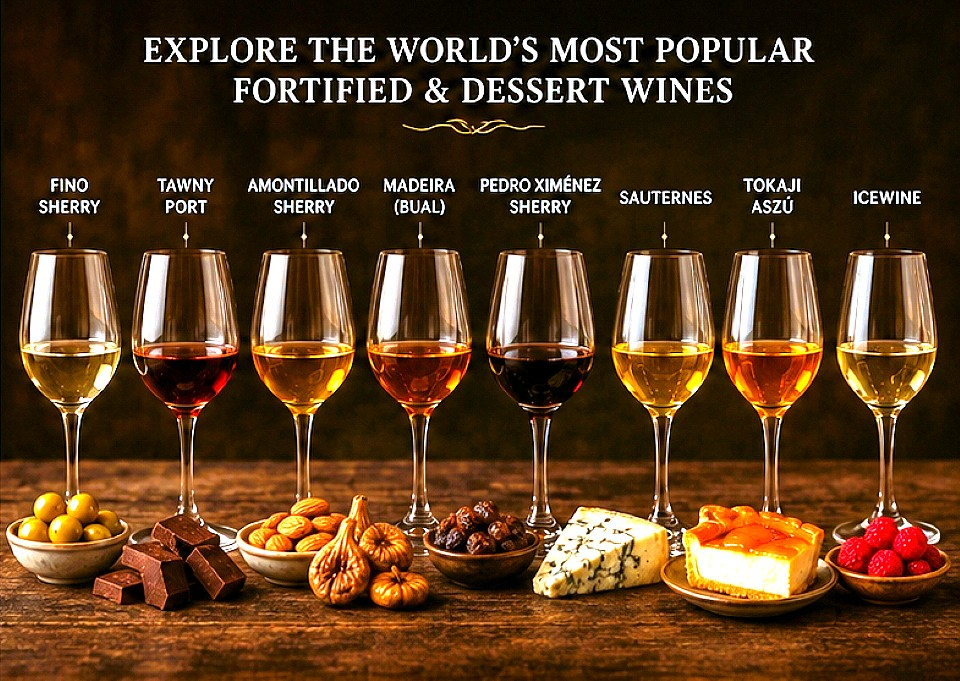
Fortified and dessert wine varieties including Port, Sherry, Madeira, Sauternes, Tokaji and Icewine
13. Malvasia Madeira
Malvasia, often called Malmsey, traditionally represents one of the richest and sweetest Madeira styles.
It can display intense flavors of:
- Raisin
- Fig
- Caramel
- Chocolate
- Orange peel
- Spice
Old Malmsey Madeira can be an extraordinary dessert wine.
14. Marsala
Country: Italy
Region: Sicily
Marsala is one of Italy’s most famous fortified wines.
It originates in Sicily and is available in several styles and sweetness levels.
Marsala is often unfairly associated exclusively with cooking.
High-quality drinking Marsala can be a sophisticated and complex wine.
Styles include:
- Fine
- Superiore
- Superiore Riserva
- Vergine
- Soleras
- Stravecchio
Marsala can be dry, semi-dry or sweet depending on the style.
15. Sweet Marsala
Sweet Marsala can display:
- Dried fruit
- Caramel
- Vanilla
- Nuts
- Spice
- Brown sugar
It is particularly good with desserts containing caramel, nuts or chocolate.
16. Dry Marsala
Dry Marsala is much more savory.
It can work surprisingly well as an aperitif or with food.
High-quality dry Marsala can pair with:
- Seafood
- Grilled fish
- Salty appetizers
- Aged cheese
- Pasta dishes
Dry fortified wines such as Marsala, Sercial Madeira and Fino Sherry are excellent examples of how fortified wine does not necessarily mean sweet wine.
17. Moscatel de Setúbal
Country: Portugal
Region: Setúbal
Moscatel de Setúbal is a Portuguese fortified dessert wine made primarily from Muscat grapes.
It is intensely aromatic.
Expect:
- Orange peel
- Apricot
- Raisin
- Honey
- Floral aromas
- Caramel
Its aromatic profile makes it a fascinating alternative to Port.
It pairs beautifully with:
- Orange desserts
- Almond pastries
- Cream desserts
- Fruit tarts
- Blue cheese
18. Sauternes
Country: France
Region: Bordeaux
Sauternes is one of the world’s most famous naturally sweet white wines.
It is especially associated with noble rot, caused by the fungus Botrytis cinerea under suitable climatic conditions.
Botrytis can reduce the water content of grapes while concentrating their sugars, acids and flavors.
Classic Sauternes can develop extraordinary flavors of:
- Honey
- Apricot
- Peach
- Citrus
- Saffron
- Vanilla
- Marmalade
The wine’s high acidity provides essential balance.
Sauternes is one of the world’s classic partners for foie gras and blue cheese, and it can also be spectacular with fruit-based desserts.
19. Barsac
Barsac is another sweet wine appellation in Bordeaux.
It is often discussed alongside Sauternes and can produce wines with:
- Citrus
- Honey
- Apricot
- Floral aromas
- Spice
- Mineral character
For wine lovers looking for alternatives to famous Sauternes estates, Barsac offers plenty of fascinating bottles.
20. Tokaji Aszú
Country: Hungary
Region: Tokaj
Tokaji Aszú is one of Europe’s great sweet wines.
It is made using grapes affected by noble rot, producing intensely concentrated berries.
Tokaji is famous for its combination of sweetness and acidity.
Classic flavors include:
- Apricot
- Honey
- Orange peel
- Dried fruit
- Spice
- Marmalade
Tokaji has a long history and remains one of the most important dessert wines in the world.
Recent international wine competitions continue to recognize Tokaji among the world’s leading sweet wines; the 2026 Decanter World Wine Awards, for example, highlighted Oremus Aszú among its top sweet and fortified wines.
21. German Riesling Dessert Wine
Germany produces some of the world’s finest sweet Rieslings.
The grape’s naturally high acidity is particularly important because it prevents sweetness from becoming heavy.
German sweet Riesling can range from delicately sweet to intensely concentrated.
Important Prädikat categories include:
- Kabinett
- Spätlese
- Auslese
- Beerenauslese
- Trockenbeerenauslese
- Eiswein
Beerenauslese and Trockenbeerenauslese can be extraordinarily concentrated dessert wines.
22. German Eiswein
Eiswein is made from grapes that naturally freeze on the vine.
The frozen grapes are harvested and pressed while frozen, concentrating sugars, acids and flavor components.
This technique is highly dependent on suitable weather conditions.
Eiswein can offer:
- Apple
- Pear
- Citrus
- Honey
- Tropical fruit
- Floral aromas
It is an exceptional partner for fruit desserts and blue cheese.
23. Canadian Icewine
Canada is one of the world’s best-known producers of Icewine.
Ontario is particularly famous for Icewine, with Vidal playing an important role in the category.
VQA Ontario states that Icewine grapes must be naturally frozen on the vine and harvested when temperatures reach -8°C or lower, while the grapes must produce juice measuring at least 35 degrees Brix.
Canadian Icewine can be made from:
- Vidal
- Riesling
- Cabernet Franc
- Other approved varieties
Vidal Icewine
Vidal produces intensely aromatic wines with flavors of:
- Peach
- Apricot
- Honey
- Tropical fruit
- Citrus
Riesling Icewine
Riesling adds vibrant acidity and citrus character.
This can produce a particularly elegant and long-lived style.
24. Moscato d’Asti
Country: Italy
Region: Piedmont
Moscato d’Asti is a lightly sparkling, aromatic wine made from Moscato Bianco.
It is much lower in alcohol than most fortified wines and is usually sweet.
Typical aromas include:
- Peach
- Apricot
- Orange blossom
- Grape
- Honeysuckle
Moscato d’Asti is excellent with:
- Fresh fruit
- Light pastries
- Panettone
- Fruit tarts
- Cream desserts
It is also a popular introduction to sweet wine because of its freshness and relatively low alcohol.
25. Vin Santo
Country: Italy
Region: Tuscany and other Italian regions
Vin Santo is a traditional Italian dessert wine.
Grapes are traditionally dried before fermentation, concentrating their sugars and flavors.
Vin Santo can develop:
- Dried apricot
- Almond
- Caramel
- Honey
- Raisin
- Spice
One of the classic pairings is with cantucci, the famous Tuscan almond biscuits.
26. Recioto della Valpolicella
Country: Italy
Region: Veneto
Recioto della Valpolicella is a sweet red wine made using partially dried grapes.
It is closely related to the production tradition behind Amarone.
Instead of fermenting the sugars almost completely, fermentation is stopped while substantial residual sugar remains.
The result is a rich wine with flavors such as:
- Cherry
- Raspberry
- Plum
- Chocolate
- Spice
- Dried fruit
It is excellent with chocolate and fruit-based desserts.
27. Recioto di Soave
This is the sweet counterpart to the famous dry Soave wines of Veneto.
It is generally produced from Garganega grapes.
Expect:
- Apricot
- Honey
- Almond
- Citrus
- Floral aromas
Its acidity helps balance the sweetness.
28. Vin Doux Naturel
France produces a number of naturally sweet fortified wines known as Vin Doux Naturel.
They are commonly associated with regions such as Roussillon.
Examples include:
- Banyuls
- Maury
- Rivesaltes
- Muscat de Rivesaltes
These wines can range from floral and citrus-driven to rich, dark and chocolate-like.
Banyuls
Banyuls is especially famous for pairing with chocolate.
Its rich red-fruit character can work beautifully with dark chocolate desserts.
29. Late-Harvest Riesling
Late-harvest Riesling is produced from grapes allowed to remain on the vine longer than normal.
As the grapes lose water and gain sugar, flavors become more concentrated.
The result can range from lightly sweet to richly sweet.
Late-harvest Riesling can offer:
- Peach
- Apricot
- Citrus
- Honey
- Tropical fruit
It is particularly good with spicy Asian cuisine.
30. Late-Harvest Gewürztraminer
Gewürztraminer is naturally aromatic, making it particularly well suited to late-harvest wine.
Expect:
- Lychee
- Rose
- Tropical fruit
- Honey
- Spice
It is a fantastic pairing for:
- Spicy Thai food
- Indian cuisine
- Fruit desserts
- Soft cheeses
31. Passito Wines
Italy’s Passito tradition involves drying grapes to concentrate sugars and flavors.
The resulting wines can be intensely sweet and aromatic.
One famous example is Passito di Pantelleria, made from Zibibbo, the local name for Muscat of Alexandria.
Expect flavors of:
- Dried apricot
- Orange peel
- Honey
- Raisin
- Tropical fruit
- Mediterranean herbs
32. Malvasia Dessert Wine
Malvasia is a family of grape varieties used across Europe and the Mediterranean.
It can produce wines ranging from dry to sweet.
Sweet Malvasia wines can be highly aromatic, showing:
- Peach
- Apricot
- Honey
- Orange blossom
- Tropical fruit
The grape is particularly interesting for consumers who enjoy floral dessert wines.
33. Muscat Dessert Wine
Muscat is one of the world’s most versatile aromatic grape families.
Sweet Muscat wines can be made in many countries and styles.
Popular examples include:
- Muscat de Beaumes-de-Venise
- Moscatel de Setúbal
- Muscat d’Alexandrie
- Australian Rutherglen Muscat
Rutherglen Muscat, in particular, can become extremely rich and concentrated with age.
Expect flavors of:
- Raisin
- Caramel
- Orange peel
- Toffee
- Dried fruit
- Coffee
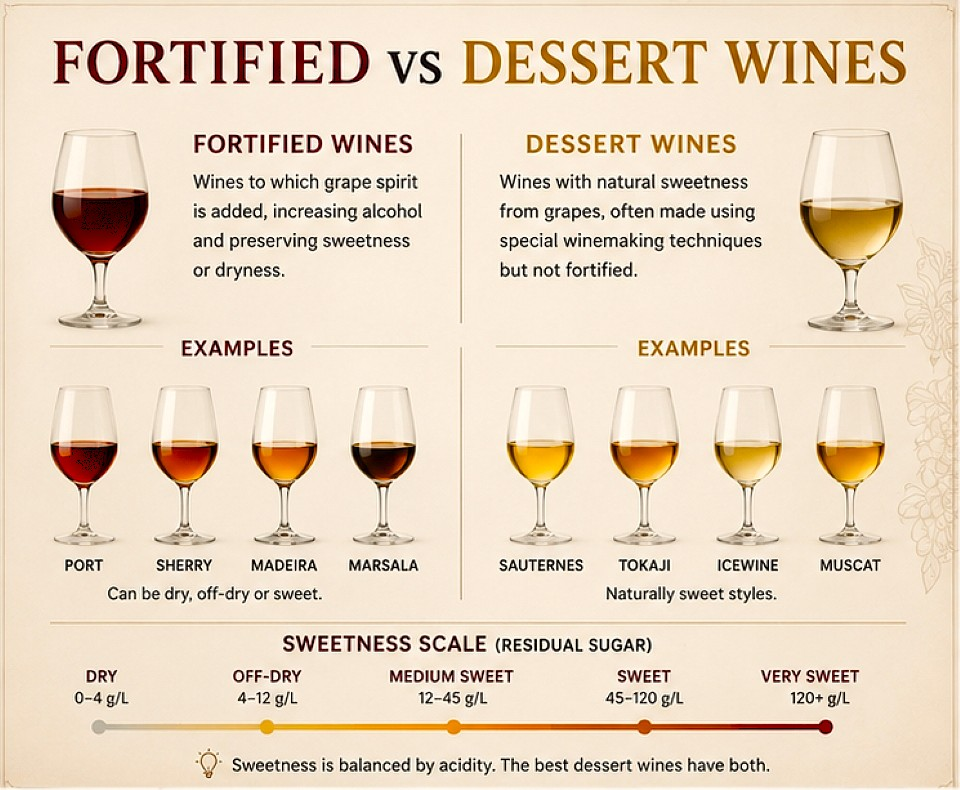
Popular fortified and dessert wines including Port, Sherry, Madeira, Tokaji, Sauternes and Pedro Ximénez
Best Dessert Wines for Beginners
If you’re new to sweet wine, start with a style that combines sweetness and acidity.
Good introductory choices include:
Moscato d’Asti
Light, aromatic and gently sparkling.
Canadian Icewine
Rich but balanced by acidity.
Sauternes
Complex and luxurious.
Tokaji
Sweet but refreshing due to high acidity.
Late-Harvest Riesling
A versatile introduction to sweet wine.
Ruby Port
Fruit-driven and approachable.
Best Fortified Wines for Beginners
If you’re new to fortified wines, these are excellent starting points:
Ruby Port — fruity and rich.
Tawny Port — nutty, smooth and mature.
Fino Sherry — dry and refreshing.
Madeira — complex and remarkably stable.
Moscatel de Setúbal — aromatic and sweet.
Cream Sherry — approachable and rich.
Best Dessert Wines for Chocolate
Chocolate and dessert wine can be an incredible combination.
Try:
- Banyuls
- Vintage Port
- Ruby Port
- Pedro Ximénez
- Recioto della Valpolicella
- Sweet Madeira
For dark chocolate, wines with concentrated fruit and oxidative complexity often work particularly well.
A rich Tawny Port can be particularly effective with milk chocolate and caramel desserts.
Best Dessert Wines for Cheese
Sweet wine and cheese create one of the great contrasts in wine pairing.
Blue cheese
Try:
- Sauternes
- Port
- Tokaji
- Pedro Ximénez
Goat cheese
Try:
- Sauternes
- Late-harvest Riesling
- Icewine
Aged hard cheese
Try:
- Tawny Port
- Madeira
- Vin Santo
The combination of salty cheese and sweet wine can create an extraordinarily balanced bite.
Best Dessert Wines for Fruit Desserts
Fruit-based desserts generally work beautifully with wines that have matching acidity and fruit intensity.
Try:
- Moscato d’Asti
- Sauternes
- Tokaji
- Riesling Auslese
- Icewine
- Muscat
Apple and pear desserts are particularly good with Riesling-based sweet wines.
Stone-fruit desserts can be excellent with Sauternes, Moscato and Icewine.
Best Dessert Wine for Christmas and Holiday Dinner
Holiday meals often include rich desserts, dried fruit, nuts and spices.
Excellent choices include:
- Tawny Port
- Vintage Port
- Madeira
- Vin Santo
- Tokaji
- Icewine
Tawny Port is particularly good with nuts, caramel and dried-fruit desserts.
Madeira is incredibly versatile and can work with both savory holiday dishes and desserts.
How to Serve Fortified and Dessert Wine
Serving temperature can dramatically affect the experience.
Dry Fino and Manzanilla
Serve well chilled.
Port
Ruby Port can be served slightly cool.
Tawny Port is often excellent around cellar temperature or slightly chilled.
Madeira
Madeira is relatively flexible and can be served cool or around cellar temperature depending on style.
Sauternes
Serve chilled but not excessively cold.
Icewine
Serve chilled enough to preserve freshness while allowing the aromas to develop.
For Ontario Icewine, Destination Ontario recommends approximately 10–12°C for serving.
How Long Do Dessert Wines Last After Opening?
One major advantage of many fortified wines is their durability.
Port
Tawny Port generally lasts longer after opening than young Ruby Port.
Madeira
Madeira is exceptionally stable because of its production and aging process.
Sherry
Dry Sherry should generally be consumed relatively quickly after opening, while richer styles can last longer.
Icewine
Once opened, Icewine should be refrigerated and consumed relatively promptly. Destination Ontario advises that an opened bottle can last up to about a week in the refrigerator.
Sauternes
High-quality sweet wines can remain enjoyable for several days or longer when properly refrigerated and sealed.
Are Dessert Wines Always Very Sweet?
No.
This is one of the biggest misconceptions about dessert wine.
Some sweet wines have extremely high acidity.
That acidity can make them taste much fresher and less heavy than expected.
For example, a high-quality Icewine can contain substantial residual sugar while still tasting vibrant because of its acidity.
The same principle applies to Tokaji and many German Rieslings.
Sweetness and freshness can coexist.
Why Are Fortified Wines So Complex?
Fortified wines develop complexity through several factors:
Fortification
The addition of spirit changes alcohol, fermentation and texture.
Oxidative aging
Exposure to oxygen can produce flavors of nuts, caramel, dried fruit and spice.
Biological aging
Flor yeast plays an important role in styles such as Fino and Manzanilla Sherry.
Bottle aging
Some Port and other fortified wines develop extraordinary complexity over many years.
Concentration
Drying grapes, botrytis and freezing can concentrate sugars and flavor compounds.
This combination of techniques makes fortified and dessert wines among the most diverse categories in the wine world.
The Best Fortified and Dessert Wines to Buy
If you’re building a collection, consider choosing bottles from several categories rather than buying multiple versions of the same wine.
A strong starter collection might include:
- Ruby Port — youthful fruit
- 10-Year Tawny Port — nutty maturity
- Fino Sherry — dry and savory
- Pedro Ximénez Sherry — intensely sweet
- Sercial Madeira — dry and complex
- Bual Madeira — rich and sweet
- Sauternes — classic French sweet wine
- Tokaji Aszú — Hungarian botrytis wine
- Canadian Icewine — concentrated and vibrant
- Moscato d’Asti — light and aromatic
This selection provides a remarkable overview of the world’s major sweet and fortified wine styles.
Frequently Asked Questions
What are the most popular fortified wines?
The most internationally recognized fortified wines include Port, Sherry, Madeira, Marsala and Moscatel de Setúbal. Vermouth and other fortified or aromatized wines are also important categories.
What are the most popular dessert wines?
Popular dessert wines include Sauternes, Tokaji Aszú, Icewine, German sweet Riesling, Moscato d’Asti, Vin Santo, Recioto, Muscat and late-harvest wines.
What is the best dessert wine?
There is no single best dessert wine. Sauternes is one of the world’s most famous, while Tokaji, Icewine, Port and German Riesling offer very different styles.
What is the sweetest wine?
Some of the world’s sweetest wines include Pedro Ximénez Sherry, certain Tokaji wines, Icewine, Trockenbeerenauslese, very sweet Madeira and concentrated Muscat wines.
Is Port a dessert wine?
Most sweet Port styles are commonly enjoyed as dessert wines, although Port can also be served with cheese, chocolate and savory foods.
Is Sherry sweet?
Sherry can be either dry or sweet. Fino and Manzanilla are dry, while Pedro Ximénez is extremely sweet.
Is Madeira a dessert wine?
Some Madeira styles are sweet dessert wines, while others are dry or semi-dry. Sercial is traditionally the driest major style, while Malmsey is among the richest and sweetest.
Is Marsala a dessert wine?
Marsala can be dry, semi-dry or sweet. Sweet Marsala can work beautifully with desserts, while dry Marsala can be enjoyed with savory foods.
What is Icewine?
Icewine is made from grapes that naturally freeze on the vine. In Ontario, VQA regulations specify that Icewine grapes are harvested while the air temperature is -8°C or lower and are pressed immediately after picking.
What is the best dessert wine with chocolate?
Excellent choices include Banyuls, Vintage Port, Ruby Port, Pedro Ximénez, Recioto della Valpolicella and rich Madeira.
What is the best dessert wine with cheese?
Blue cheese is particularly good with Sauternes, Port, Tokaji and Pedro Ximénez.
What is the best dessert wine for beginners?
Moscato d’Asti, late-harvest Riesling, Canadian Icewine and Ruby Port are approachable starting points.
Should dessert wine be served cold?
Many dessert wines benefit from chilling, although the ideal temperature varies by style. Avoid serving complex wines excessively cold because very low temperatures can suppress their aromas.
Final Thoughts: Exploring the World’s Best Fortified and Dessert Wines
The world of fortified and dessert wines is far larger than many wine drinkers realize.
There is no single definition of what a great sweet or fortified wine should taste like.
Port can be powerful, fruity and chocolate-rich.
Tawny Port can be silky, nutty and complex.
Sherry can be bone-dry, salty and savory or intensely sweet and raisiny.
Madeira can combine extraordinary acidity with caramelized, nutty and dried-fruit flavors.
Marsala can be dry and savory or rich and sweet.
Sauternes offers honey, citrus and botrytis complexity.
Tokaji combines sweetness with remarkable acidity.
Icewine delivers concentrated fruit and vibrant freshness.
Moscato d’Asti offers a lighter, floral and gently sparkling alternative.
The best way to explore the category is to try different styles rather than assuming that all sweet wines taste alike.
If you prefer dry wines, begin with Fino Sherry, Manzanilla or Sercial Madeira.
If you enjoy fruit-driven wines, try Ruby Port or Recioto.
If you want rich and nutty flavors, explore Tawny Port, Amontillado, Oloroso and Madeira.
If you love honeyed and concentrated white wines, try Sauternes, Tokaji, Icewine or late-harvest Riesling.
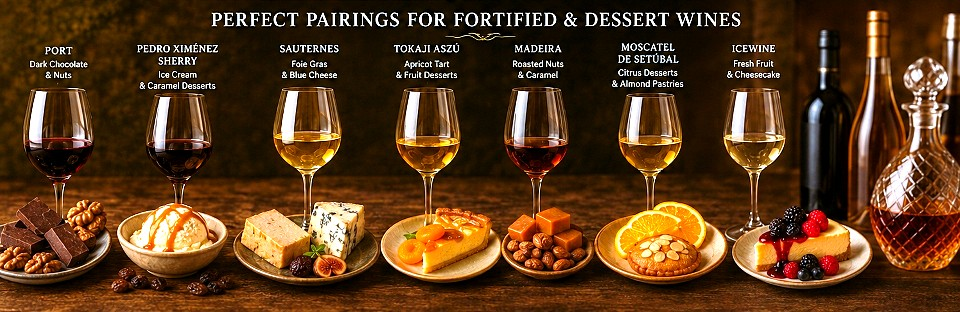
And if you are looking for the ultimate dessert pairing, experiment with Port and chocolate, Sauternes and blue cheese, Icewine and fruit desserts, or Madeira with nuts and caramel.
Most importantly, don’t think of dessert wine as something reserved exclusively for the final course.
Many fortified and sweet wines are outstanding with appetizers, cheese, spicy food, seafood and savory dishes.
The category is remarkably versatile—and once you begin exploring it, you may discover an entirely new side of the wine world.