
Blog
The Best Italian Red Wine Brands

The Best Italian Red Wine Brands: 15 Famous Italian Wine Producers You Should Know
Italy is one of the world’s most celebrated wine-producing countries, with a remarkable heritage of vineyards, indigenous grape varieties and internationally recognised wineries. From the rolling hills of Tuscany and the prestigious vineyards of Piedmont to the sun-drenched landscapes of Puglia and Sicily, Italian red wines offer an extraordinary variety of flavours, styles and winemaking traditions.
Some Italian red wines are famous for their elegance, structure and exceptional ageing potential. Others are loved for their rich fruit flavours, smooth textures and versatility with food. Whether you prefer the refined character of Barolo, the cherry-driven personality of Chianti Classico, the depth of Brunello di Montalcino or the generous richness of Primitivo, Italy has a red wine to suit almost every preference.
The country’s wine heritage is also closely connected to its individual producers. Historic family wineries, internationally recognised estates and innovative modern winemakers have helped establish Italy’s reputation as one of the world’s leading wine destinations.
Among the most famous Italian red wine producers are Marchesi Antinori, Gaja, Frescobaldi, Castello Banfi, Allegrini, Masi, Tenuta San Guido, Ornellaia, Vietti, Pio Cesare, Produttori del Barbaresco, Planeta, Donnafugata, Feudi di San Gregorio and Tormaresca.
These producers represent different regions, grape varieties, winemaking philosophies and price categories. Some specialise in traditional wines such as Barolo and Brunello, while others have become internationally famous for modern Super Tuscan blends, Amarone, Nero d’Avola and Primitivo.
In this comprehensive guide, we explore 15 of the best Italian red wine brands, their histories, signature wines, regional identities and distinctive characteristics. We also explain the most important Italian red wine grapes, compare famous wine regions, recommend food pairings and provide practical advice for choosing the right Italian red wine.
Whether you are a wine enthusiast, an occasional wine drinker or someone searching for a premium bottle for a special occasion, this guide will help you discover some of the finest names in Italian red wine.
Table of Contents
-
-
- Why Italian Red Wines Are Famous Around the World
- Understanding Italian Wine Classifications
- The Best Italian Red Wine Brands
- Marchesi Antinori
- Gaja
- Frescobaldi
- Castello Banfi
- Allegrini
- Masi
- Tenuta San Guido
- Ornellaia
- Vietti
- Pio Cesare
- Produttori del Barbaresco
- Planeta
- Donnafugata
- Feudi di San Gregorio
- Tormaresca
- The Most Famous Italian Red Wine Regions
- The Most Important Italian Red Wine Grapes
- Italian Red Wines by Style and Flavour
- Best Italian Red Wines for Different Occasions
- Italian Red Wine and Food Pairing Guide
- How to Choose a Good Italian Red Wine
- How to Serve and Store Italian Red Wine
- Frequently Asked Questions
- Final Thoughts
-
1. Why Italian Red Wines Are Famous Around the World
Italian red wines have earned an international reputation through a combination of history, regional diversity, distinctive grape varieties and generations of winemaking expertise. Italy has an extraordinary number of native grape varieties. Many are closely associated with particular regions and cannot easily be separated from the local wine culture.
For example, Nebbiolo is the defining grape of Barolo and Barbaresco in Piedmont. Sangiovese is central to Tuscany’s most famous red wines, including Chianti Classico and Brunello di Montalcino. Corvina is an important variety in Valpolicella and Amarone, while Nero d’Avola is one of Sicily’s best-known red grapes.
This regional identity is one of the most appealing aspects of Italian wine.
A Remarkable Variety of Wine Regions
Italy produces wine in all 20 of its administrative regions. The country’s vineyards stretch from the Alpine foothills in the north to the Mediterranean islands in the south. The climate, elevation, soil composition and proximity to the sea create significant differences between regions.
Northern Italy is particularly famous for Nebbiolo-based wines, Valpolicella reds and elegant mountain-region varieties. Central Italy is dominated by Tuscany’s Sangiovese wines, while southern Italy offers rich and expressive wines made from grapes such as Primitivo, Negroamaro and Aglianico.
Sicily adds another dimension with Nero d’Avola and the distinctive wines of Mount Etna.
A Strong Connection Between Wine and Food
Italian red wines are closely connected to the country’s culinary traditions. Many have the acidity and structure needed to complement tomato-based pasta dishes, grilled meats, roasted vegetables, cured meats and mature cheeses.
A Chianti Classico can be an excellent partner for tomato-based pasta and Tuscan cuisine. Barolo is particularly suitable for rich meat dishes, mushrooms and truffle preparations. Primitivo and Negroamaro can complement grilled meats and hearty southern Italian recipes.
Traditional and Modern Winemaking
Italy’s wine industry combines centuries-old practices with contemporary technology. Some producers continue to emphasise traditional fermentation and ageing methods, while others have introduced modern vineyard management, temperature-controlled fermentation and carefully selected oak maturation.
This combination has allowed Italian wineries to maintain regional traditions while appealing to an international audience.
2. Understanding Italian Wine Classifications
When shopping for Italian red wine, you will frequently see abbreviations such as DOCG, DOC and IGT on wine labels. These classifications provide information about geographical origin and production regulations.
DOCG – Denominazione di Origine Controllata e Garantita
DOCG is Italy’s highest traditional designation for controlled wine origin. Wines carrying this classification must comply with the regulations established for their appellation. These may specify permitted grape varieties, production areas, vineyard practices, minimum ageing periods and other requirements.
Famous DOCG red wines include:
-
-
- Barolo
- Barbaresco
- Brunello di Montalcino
- Chianti Classico
- Amarone della Valpolicella
- Vino Nobile di Montepulciano
-
A DOCG designation indicates that a wine belongs to a regulated geographical category. It does not automatically mean that every bottle will be better than every DOC or IGT wine.
DOC – Denominazione di Origine Controllata
DOC wines also follow geographical and production regulations. Italy has many respected DOC appellations producing excellent red wines. Examples include Valpolicella DOC, Rosso di Montalcino DOC, Montepulciano d’Abruzzo DOC and numerous regional wines.
IGT – Indicazione Geografica Tipica
IGT is a geographical designation that generally allows producers greater flexibility in grape selection and blending than many traditional DOC and DOCG appellations. Some internationally celebrated wines are associated with the IGT category, including certain Super Tuscan wines.
The classification is useful, but it should not be treated as a simple quality ranking. Producer reputation, vineyard location, vintage conditions and winemaking decisions are also important.
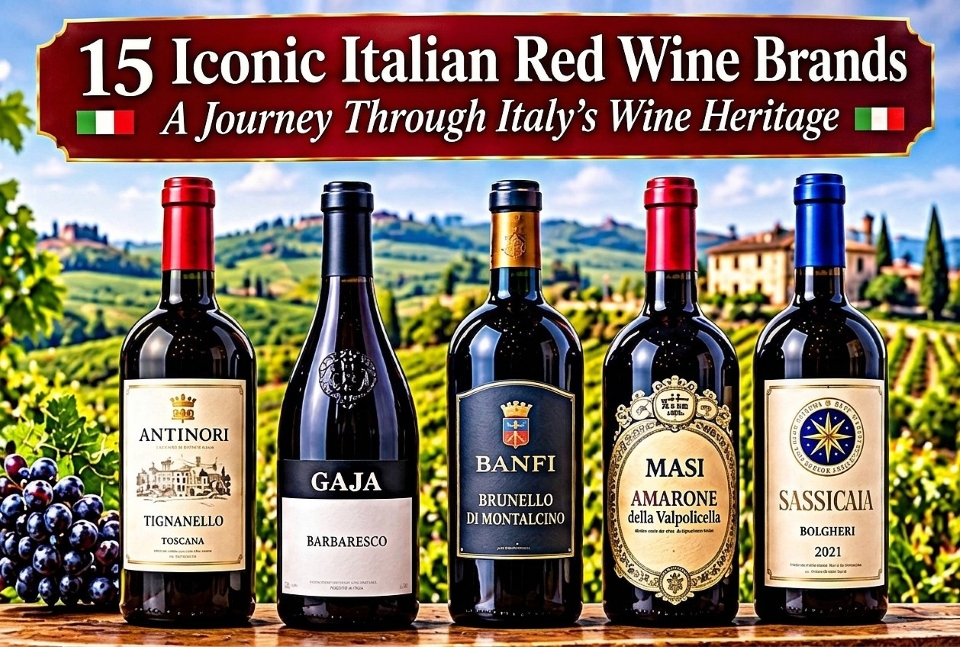
Italian red wine brands featuring Antinori, Gaja, Banfi, Masi and Sassicaia wines against a beautiful Tuscan vineyard backdrop.
3. The Best Italian Red Wine Brands
The following 15 producers represent some of the most recognised names in Italian red wine. The selection includes historic estates, influential family wineries and internationally respected producers.
It is not a definitive ranking based on a single tasting competition. Instead, it is an editorial selection based on reputation, regional significance, signature wines and international recognition.
1. Marchesi Antinori – Tuscany
Marchesi Antinori is one of Italy’s most historic and internationally recognised wine families. The Antinori family’s documented winemaking history dates back to 1385, making it one of the most enduring names in Italian wine.
Based in Tuscany, the company has played an important role in the development of modern Italian winemaking while maintaining a strong connection to regional traditions. Antinori is particularly famous for its influential Super Tuscan wines, including Tignanello and Solaia.
Tignanello
Tignanello is one of the wines most closely associated with the modern Super Tuscan movement. It is based primarily on Sangiovese, with Cabernet Sauvignon and Cabernet Franc also forming part of the blend. The wine helped demonstrate that Tuscan producers could create internationally competitive premium wines while exploring blending approaches outside traditional appellation rules.
Its flavour profile commonly includes:
-
-
- Dark and red cherry
- Blackcurrant
- Spice
- Tobacco
- Oak-derived notes
- A structured, persistent finish
-
Solaia
Solaia is another prestigious Antinori wine. It is generally based on Cabernet Sauvignon, with other varieties used according to the blend and vintage. It is known for its concentration, structure and ageing potential.
Other notable wines
-
-
- Villa Antinori Rosso
- Marchese Antinori Chianti Classico Riserva
- Guado al Tasso Bolgheri Superiore
- Badia a Passignano Chianti Classico Gran Selezione
-
Why choose Marchesi Antinori?
Antinori is an excellent producer to explore if you enjoy premium Tuscan wines, sophisticated blends and internationally recognised labels. Its portfolio also includes wines at different price levels, making the brand accessible to a wider range of wine enthusiasts.
Official website: https://www.antinori.it/
2. Gaja – Piedmont
Gaja is one of the most influential names in Italian fine wine. Founded in 1859 in Barbaresco, Piedmont, the family-owned producer has played a major role in establishing international appreciation for high-quality wines from the region.
The Gaja name is particularly associated with Nebbiolo and the prestigious appellations of Barbaresco and Barolo. The winery is known for combining respect for Piedmontese tradition with innovative vineyard and cellar practices.
Barbaresco
Gaja’s Barbaresco is one of its most recognised wines. Made primarily from Nebbiolo, it displays the variety’s distinctive combination of aromatic complexity, acidity and tannic structure.
Typical characteristics include:
-
-
- Red cherry
- Raspberry
- Rose petals
- Violet
- Liquorice
- Earth and spice
- Firm but refined tannins
-
Nebbiolo wines can appear relatively pale in colour despite their considerable structure and flavour intensity.
Sperss
Sperss is one of Gaja’s celebrated Barolo wines. It offers the concentrated character and ageing potential associated with high-quality Nebbiolo from the Langhe.
Other notable wines
-
-
- Costa Russi
- Sorì Tildìn
- Conteisa
- Dagromis Barolo
-
Why choose Gaja?
Gaja is an outstanding name for enthusiasts who appreciate elegant, structured and age-worthy Italian reds. Its wines are particularly interesting for collectors and people exploring the finest expressions of Nebbiolo.
Official website: https://www.gaja.com/
3. Frescobaldi – Tuscany
The Frescobaldi family has a long history in Tuscan wine production and is one of the region’s most recognisable wine families. The company manages several estates across Tuscany, each associated with different vineyard environments and wine styles.
Its portfolio includes Chianti, Brunello di Montalcino, Super Tuscan blends and wines from other prestigious Tuscan appellations.
CastelGiocondo Brunello di Montalcino
CastelGiocondo is one of Frescobaldi’s best-known estates. Its Brunello di Montalcino is made from Sangiovese grown in the Montalcino area. Brunello is recognised for its structure, concentrated cherry fruit, savoury complexity and ability to develop with bottle ageing.
Luce
Luce is a premium wine produced through the Luce della Vite project. It combines Merlot and Sangiovese, creating a distinctive Tuscan blend.
Other notable wines
-
-
- Nipozzano Chianti Rufina Riserva
- CastelGiocondo Brunello di Montalcino Riserva
- Mormoreto
- Lamaione
-
Why choose Frescobaldi?
Frescobaldi is an excellent producer for exploring different Tuscan appellations through one wine family. Its portfolio offers a useful introduction to the diversity of Sangiovese-based wines and modern Tuscan blends.
Official website: https://www.frescobaldi.com/
4. Castello Banfi – Tuscany
Castello Banfi is one of the best-known international names associated with Brunello di Montalcino. Established in 1978, the estate has helped promote Montalcino wines internationally and has invested extensively in vineyard research, winemaking technology and hospitality.
The winery produces several styles of Tuscan red wine, with Brunello di Montalcino among its most important offerings.
Brunello di Montalcino
Brunello di Montalcino is made from Sangiovese grown within the designated Montalcino production area. Castello Banfi’s interpretation is associated with ripe fruit, structure and carefully managed maturation.
Typical Brunello characteristics include:
-
-
- Red cherry
- Plum
- Dried herbs
- Tobacco
- Earthy notes
- Firm tannins
- Long finish
-
Poggio alle Mura
Poggio alle Mura is a notable Banfi Brunello expression associated with the estate’s historic castle and vineyards.
Other notable wines
-
-
- Castello Banfi Rosso di Montalcino
- Summus
- Excelsus
- Belnero
-
Why choose Castello Banfi?
Banfi is a useful name to explore if you want to discover Brunello and other Tuscan reds from an established international producer. Its range includes wines suitable for both everyday enjoyment and special occasions.
Official website: https://www.banfi.it/
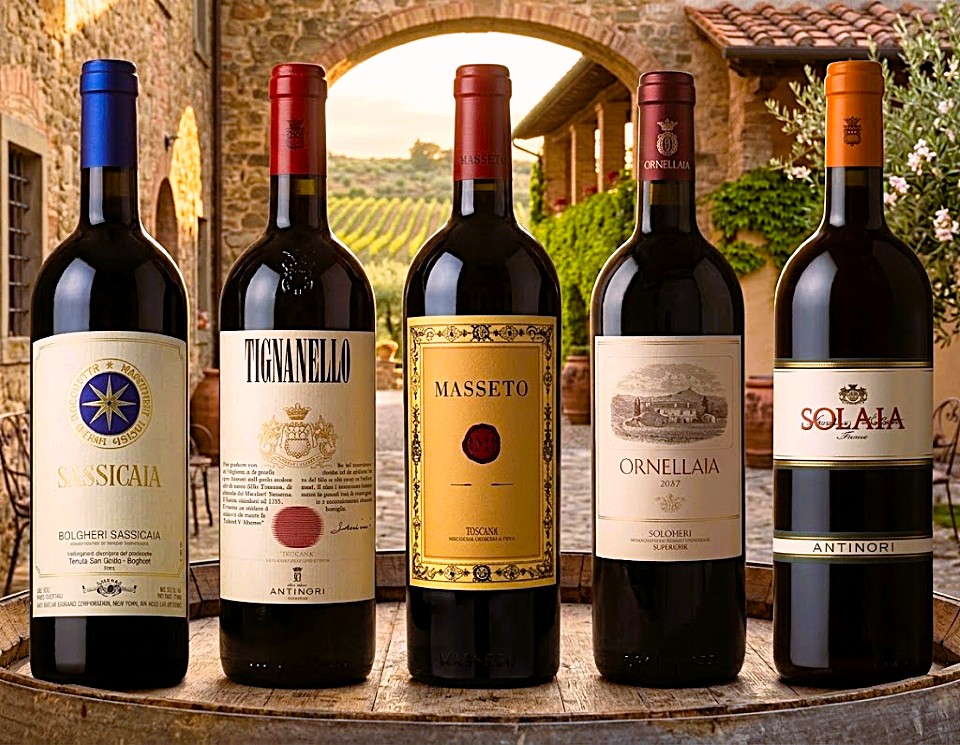
Italy’s Best Red Wine
5. Allegrini – Veneto
Allegrini is one of the most respected wine producers in Veneto and an important name in the Valpolicella region. The family has a long history of winemaking in the area surrounding Verona. Its wines have helped establish the international reputation of Valpolicella and Amarone.
The producer is particularly associated with Corvina-based wines and the distinctive appassimento method used in Amarone production.
Amarone della Valpolicella Classico
Amarone is one of Italy’s most distinctive red wine styles. It is made using grapes that are partially dried after harvest. This traditional technique, known as appassimento, reduces the grapes’ water content and concentrates their flavours before fermentation. Allegrini’s Amarone is recognised for its rich fruit, depth and structured character.
Typical flavour characteristics include:
-
-
- Dried cherry
- Black plum
- Raisin
- Dark chocolate
- Baking spices
- Dried herbs
-
Palazzo della Torre
Palazzo della Torre is one of Allegrini’s best-known wines. It is associated with the estate’s distinctive interpretation of the Valpolicella region.
Other notable wines
-
-
- La Grola
- La Poja
- Valpolicella Classico
- Amarone della Valpolicella
-
Why choose Allegrini?
Allegrini is an excellent producer for anyone interested in the richness and complexity of Veneto red wines, particularly Amarone and Valpolicella.
Official website: https://www.allegrini.it/
6. Masi – Veneto
Masi is another internationally recognised producer from Veneto, particularly famous for Amarone and other wines made using traditional grape-drying techniques. The company has a long history in the Valpolicella region and has helped introduce appassimento-style wines to international consumers.
Costasera Amarone della Valpolicella Classico
Costasera is one of Masi’s best-known wines. It is associated with the classic Amarone style and is produced using partially dried grapes. Its flavour profile commonly features concentrated dark fruit, dried cherry, spice and savoury complexity.
Campofiorin
Campofiorin is one of Masi’s signature wines and is associated with the producer’s interpretation of the Ripasso-inspired winemaking approach. It offers a richer and more concentrated style than many straightforward Valpolicella reds.
Other notable wines
-
-
- Masi Brolo Campofiorin
- Masi Costasera Riserva
- Masi Valpolicella Classico
- Masi Osar
-
Why choose Masi?
Masi is a strong choice for wine enthusiasts who enjoy fuller-bodied Italian reds with concentrated fruit and a distinctive regional identity.
Official website: https://www.masi.it/
7. Tenuta San Guido – Tuscany
Tenuta San Guido is one of Italy’s most famous premium wine estates. Located in Bolgheri on the Tuscan coast, the estate is internationally recognised as the home of Sassicaia.
Sassicaia helped establish the reputation of the Super Tuscan movement and demonstrated the potential of Cabernet Sauvignon-based wines from coastal Tuscany. The wine was originally produced for private consumption before becoming one of Italy’s most celebrated international labels.
Sassicaia
Sassicaia is primarily based on Cabernet Sauvignon, with Cabernet Franc also included. Its character differs from traditional Sangiovese-based Tuscan wines. It is generally associated with:
-
-
- Blackcurrant
- Blackberry
- Dark cherry
- Cedar
- Tobacco
- Herbs
- Structured tannins
- Long ageing potential
-
Guidalberto
Guidalberto is another well-known Tenuta San Guido wine. It offers an alternative expression of the estate’s coastal Tuscan winemaking.
Le Difese
Le Difese provides a more accessible introduction to the producer’s style.
Why choose Tenuta San Guido?
Tenuta San Guido is an important name for anyone exploring premium Super Tuscan wines. Sassicaia is particularly interesting for collectors and enthusiasts who appreciate Cabernet-based wines with Italian identity.
Official website: https://www.tenutasanguido.com/
8. Ornellaia – Tuscany
Ornellaia is one of the leading premium wine estates in Bolgheri, on Tuscany’s Mediterranean coast. Established in the 1980s, the estate has become internationally recognised for its elegant and structured Bordeaux-inspired blends.
Its wines are associated with Cabernet Sauvignon, Merlot, Cabernet Franc and Petit Verdot, with the proportions depending on the particular wine and vintage.
Ornellaia Bolgheri Superiore
Ornellaia’s flagship wine is a prestigious example of the Super Tuscan style. It typically combines dark fruit concentration with structured tannins, oak influence and a long finish.
Common flavour characteristics include:
-
-
- Blackcurrant
- Blackberry
- Plum
- Cedar
- Tobacco
- Dark chocolate
- Mediterranean herbs
-
Le Serre Nuove dell’Ornellaia
Le Serre Nuove is the estate’s second wine and offers an opportunity to explore the Ornellaia style through a different selection of grapes and vineyard lots.
Le Volte dell’Ornellaia
Le Volte is a more approachable wine from the estate.
Why choose Ornellaia?
Ornellaia is an excellent producer for people who enjoy sophisticated Cabernet and Merlot-based wines. Its portfolio is particularly interesting for those exploring premium coastal Tuscan reds.
Official website: https://www.ornellaia.com/
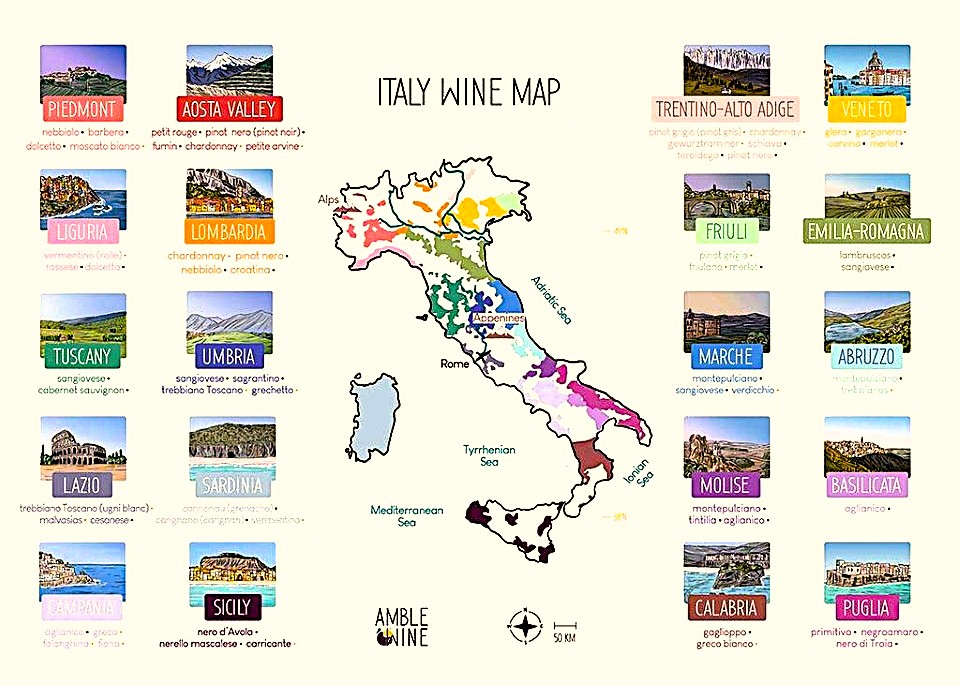
Best Italy’s Red Wines – Regions
9. Vietti – Piedmont
Vietti is one of Piedmont’s most respected family wine producers, with a long history in the Langhe region.
The winery is particularly famous for its Barolo wines, which express the character of individual vineyard sites and the Nebbiolo grape. Vietti has also earned recognition for Barbera, Dolcetto and other traditional Piedmontese wines.
Barolo
Vietti produces several Barolo wines, including bottlings associated with specific vineyard sites. Barolo is made entirely from Nebbiolo and is famous for its aromatic complexity, acidity and powerful tannins.
Typical characteristics include:
-
-
- Cherry
- Raspberry
- Rose
- Violet
- Liquorice
- Tar
- Truffle
- Earthy and savoury notes
-
Barolo Ravera and Barolo Brunate
These vineyard-designated wines are examples of Vietti’s attention to individual terroirs and the differences between vineyard sites.
Barbera d’Asti
Vietti also produces notable Barbera wines. Barbera is generally more approachable in youth than Nebbiolo, with bright acidity and juicy fruit.
Why choose Vietti?
Vietti is an excellent producer for discovering the diversity of Piedmont. It is particularly suitable for wine enthusiasts interested in Barolo, Barbera and traditional northern Italian reds.
Official website: https://www.vietti.com/
10. Pio Cesare – Piedmont
Pio Cesare is a historic family winery established in Alba in 1881. The producer is closely associated with the traditional wines of Piedmont and has earned international recognition for its Barolo and Barbaresco.
Its portfolio includes several important expressions of Nebbiolo, along with Barbera and other regional wines.
Barolo
Pio Cesare’s Barolo is a traditional expression of Nebbiolo. It offers the aromatic character and structure expected from one of Italy’s most prestigious appellations.
Barbaresco
Barbaresco is another celebrated Nebbiolo wine from Piedmont. Compared with Barolo, it is often described as having a somewhat more approachable structure in certain vintages, although both wines can be highly age-worthy.
Other notable wines
-
-
- Barbera d’Alba
- Langhe Nebbiolo
- Barolo Ornato
- Barbaresco Il Bricco
-
Why choose Pio Cesare?
Pio Cesare is an excellent option for people who want to explore classic Piedmontese winemaking through a producer with a long family history.
Official website: https://www.piocesare.it/
11. Produttori del Barbaresco – Piedmont
Produttori del Barbaresco is one of Italy’s best-known wine cooperatives and an important institution in the Barbaresco region. Founded in 1958, the cooperative brings together growers who produce Nebbiolo from vineyards around Barbaresco. Its reputation is built on consistency, regional identity and a commitment to producing high-quality wines from local grapes.
Barbaresco DOCG
The cooperative’s standard Barbaresco is an excellent introduction to the region. It displays the characteristic aromatic profile of Nebbiolo, with red fruit, floral notes, spice and structured tannins.
Barbaresco Riserva
The cooperative is particularly respected for its single-vineyard Riserva bottlings, produced when conditions and quality justify them. These wines allow enthusiasts to explore the differences between vineyard sites.
Why choose Produttori del Barbaresco?
This producer is especially interesting for wine lovers who want to explore Barbaresco and understand how different vineyard locations can influence Nebbiolo.
Official website: https://www.produttoridelbarbaresco.com/
12. Planeta – Sicily
Planeta is one of Sicily’s most recognised modern wine producers. The family has played an important role in promoting the island’s wine quality and demonstrating the potential of its varied vineyard environments. Planeta produces wines from several Sicilian regions, including areas associated with Nero d’Avola and other indigenous varieties.
Santa Cecilia
Santa Cecilia is one of Planeta’s signature red wines. It is made from Nero d’Avola, Sicily’s best-known red grape. The wine offers an expression of the variety that combines ripe fruit with structure and regional character.
Typical flavours include:
-
-
- Black cherry
- Plum
- Dark berries
- Mediterranean herbs
- Spice
- Earthy notes
-
Burdese
Burdese is another important Planeta wine, associated with international varieties grown in Sicily.
Other notable wines
-
-
- La Segreta Rosso
- Maroccoli
- Cerasuolo di Vittoria-related regional expressions
-
Why choose Planeta?
Planeta is an excellent producer for discovering modern Sicilian red wines and the potential of indigenous varieties such as Nero d’Avola.
Official website: https://www.planeta.it/
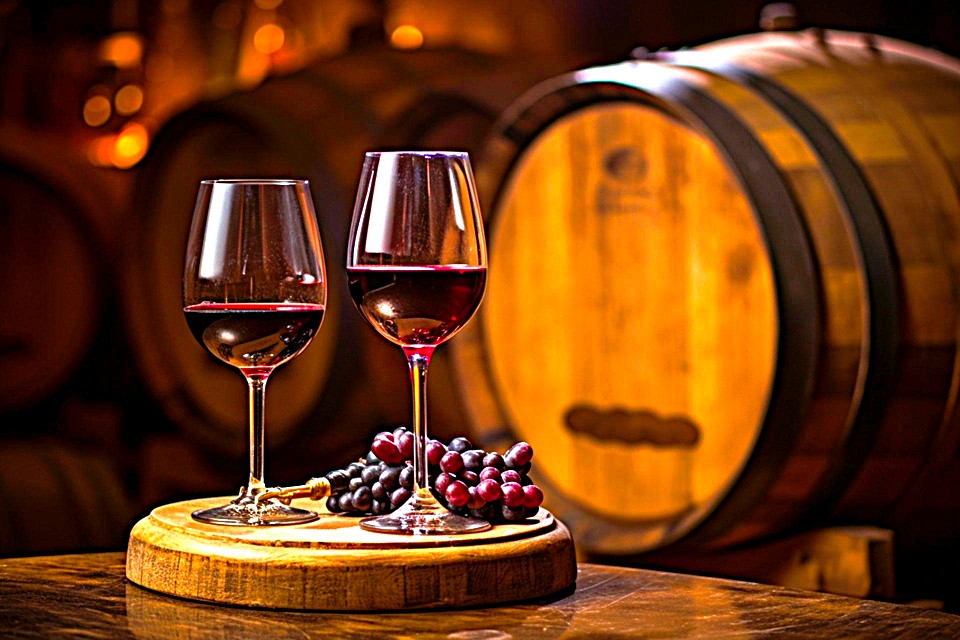
How to serve Italian Red Wine and Food Pairings
13. Donnafugata – Sicily
Donnafugata is one of Sicily’s most internationally recognised wine brands. The company has helped promote the island’s diverse wine regions and is known for combining regional traditions with modern presentation and winemaking. Its portfolio includes wines from different Sicilian environments, including the volcanic slopes of Mount Etna and the island of Pantelleria.
Mille e Una Notte
Mille e Una Notte is one of Donnafugata’s best-known premium red wines. It is associated with a rich and complex style, with a blend based on Nero d’Avola and other varieties depending on the wine’s specification.
Typical characteristics may include:
-
-
- Dark cherry
- Blackberry
- Plum
- Spices
- Mediterranean herbs
- Oak-derived complexity
-
Tancredi
Tancredi is another recognised red wine from the producer, combining Sicilian identity with international grape varieties.
Why choose Donnafugata?
Donnafugata is an excellent brand for exploring the modern identity of Sicilian wine. It offers a range of red wines that demonstrate the island’s diversity and winemaking potential.
Official website: https://www.donnafugata.it/
14. Feudi di San Gregorio – Campania
Feudi di San Gregorio is one of Campania’s leading wine producers and an important name in the revival of southern Italian indigenous grape varieties. The winery is located in Irpinia, an area known for its hills, volcanic influences and distinctive wine-growing conditions. Its red wines are particularly associated with Aglianico, one of southern Italy’s most important red grape varieties.
Taurasi
Taurasi is one of Campania’s most prestigious red wine appellations and is based on Aglianico. Aglianico produces wines with substantial tannins, acidity and ageing potential.
Typical flavour characteristics include:
-
-
- Black cherry
- Plum
- Dark berries
- Tobacco
- Leather
- Earth
- Spice
-
Serpico
Serpico is one of Feudi di San Gregorio’s recognised Aglianico wines. It offers a concentrated interpretation of the variety and is particularly interesting for people who enjoy structured southern Italian reds.
Why choose Feudi di San Gregorio?
It is a strong choice for discovering Aglianico and the wines of Campania. The producer is especially interesting for enthusiasts who want to explore beyond the more familiar Tuscan and Piedmontese labels.
Official website: https://www.feudi.it/
15. Tormaresca – Puglia
Tormaresca is an important modern wine producer in Puglia and part of the wider Antinori wine group. The company operates across different areas of the region and focuses on expressing the potential of southern Italian grapes and vineyard environments. Its wines include examples made from Primitivo, Negroamaro and other varieties associated with Puglia.
Torcicoda Primitivo
Torcicoda is one of Tormaresca’s best-known red wines. Made from Primitivo, it represents the generous, ripe and fruit-forward character associated with Puglia.
Typical flavour characteristics include:
-
-
- Blackberry
- Ripe plum
- Black cherry
- Sweet spices
- Chocolate-like notes
- A rounded finish
-
Masseria Maìme
Masseria Maìme is a recognised Tormaresca wine associated with Negroamaro and the Salento area. Negroamaro generally offers a darker and more savoury profile than many Primitivo wines.
Neprica
Neprica is a more accessible red wine range associated with the producer.
Why choose Tormaresca?
Tormaresca is a useful brand for exploring Puglia’s red wine identity. Its portfolio includes wines that can appeal to people who enjoy ripe, generous and fruit-driven Italian reds.
Official website: https://www.tormaresca.it/
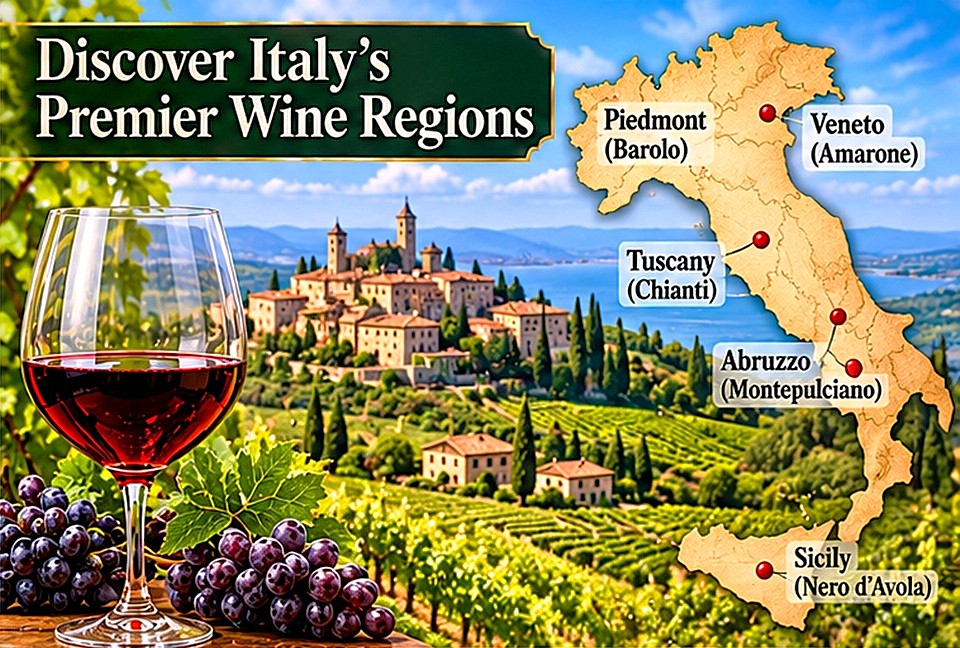
Italian red wine regions including Piedmont, Veneto, Tuscany, Abruzzo and Sicily, famous for producing outstanding Italian wines.
4. The Most Famous Italian Red Wine Regions
Italy’s red wine identity is closely connected to its regional geography. Understanding the major wine regions makes it easier to recognise the styles and grape varieties associated with different bottles.
Tuscany
Tuscany is one of the world’s most famous wine regions and the home of Sangiovese-based classics. Its most important red wines include:
-
-
- Chianti
- Chianti Classico
- Brunello di Montalcino
- Vino Nobile di Montepulciano
- Carmignano
- Bolgheri Superiore
- Super Tuscan wines
-
Sangiovese is the defining red grape of much of the region.
Tuscan reds commonly display cherry, red plum, herbs, earthy notes and refreshing acidity. Their tannin levels vary according to the grape, appellation, producer and ageing. Tuscany is also the home of internationally celebrated Super Tuscan wines, including Sassicaia, Ornellaia, Tignanello and Solaia.
Piedmont
Piedmont, in northwestern Italy, is particularly famous for Nebbiolo. The region produces Barolo and Barbaresco, two of Italy’s most prestigious red wine appellations.
Nebbiolo wines are known for:
-
-
- Red cherry
- Rose petals
- Violet
- Tar
- Liquorice
- Earthy complexity
- Pronounced tannins
- High natural acidity
-
Piedmont is also famous for Barbera and Dolcetto. Barbera is generally more fruit-forward and acidic, while Dolcetto often offers darker fruit and a softer overall impression.
Veneto
Veneto is one of Italy’s most important wine regions and the home of Valpolicella. Its famous red wines include:
-
-
- Valpolicella
- Valpolicella Ripasso
- Amarone della Valpolicella
- Recioto della Valpolicella
-
Corvina is the principal grape in many Valpolicella blends, with Rondinella and other permitted varieties also playing important roles. Amarone is produced using partially dried grapes, a technique that creates a concentrated and powerful wine.
Puglia
Puglia, located in southern Italy, is famous for ripe, generous red wines. Its most important red varieties include Primitivo and Negroamaro. Primitivo often produces wines with ripe blackberry, plum, dark cherry and sweet spice. Negroamaro can be darker and more savoury, with notes of dried herbs, plum and earth.
Puglia is particularly interesting for wine drinkers looking for full-bodied Italian reds at a range of price levels.
Sicily
Sicily has become one of Italy’s most exciting wine regions.
Nero d’Avola is the island’s best-known red grape, producing wines with dark fruit, spice and Mediterranean character. The Mount Etna region is especially interesting for its Nerello Mascalese wines, which can be lighter in colour, more aromatic and more structured than many people expect from southern Italy.
Campania
Campania is particularly famous for Aglianico.
The Taurasi appellation produces structured red wines that can develop considerable complexity with bottle ageing. Aglianico is sometimes described as one of southern Italy’s most important fine-wine grapes because of its combination of tannin, acidity and concentration.
Abruzzo
Abruzzo is famous for Montepulciano d’Abruzzo, a red wine made from the Montepulciano grape.
These wines can offer generous fruit, dark cherry, plum and moderate to firm tannins. It is important not to confuse Montepulciano d’Abruzzo with Vino Nobile di Montepulciano. The first is made primarily from the Montepulciano grape in Abruzzo, while the Tuscan Vino Nobile is based on Sangiovese.
5. The Most Important Italian Red Wine Grapes
Italian red wine producers work with a remarkable variety of grapes. The following varieties are especially important when exploring the country’s most famous bottles.
Sangiovese
Sangiovese is Tuscany’s signature red grape and the foundation of many famous Italian wines. It is particularly associated with Chianti Classico, Brunello di Montalcino and Vino Nobile di Montepulciano.
Common flavour characteristics include:
-
-
- Sour cherry
- Red plum
- Cranberry
- Dried herbs
- Earth
- Tobacco
- Refreshing acidity
- Firm tannins
-
Sangiovese is highly versatile and can produce wines ranging from approachable everyday reds to complex, age-worthy bottles.
Nebbiolo
Nebbiolo is the defining grape of Barolo and Barbaresco.
Despite often having relatively pale colour, Nebbiolo produces wines with considerable structure and aromatic intensity. Typical characteristics include rose, violet, cherry, tar, liquorice and earthy notes. Its tannins and acidity make it particularly suitable for ageing.
Corvina
Corvina is an important grape in Veneto and is central to many Valpolicella wines. It is associated with cherry fruit, freshness and a distinctive regional character. When used in Amarone, the concentration from partially dried grapes creates a much richer style.
Primitivo
Primitivo is one of Puglia’s most famous red grapes. It generally produces generous wines with ripe fruit, moderate to substantial body and warming alcohol. Typical flavours include blackberry, plum, black cherry and sweet spice. Primitivo is genetically identical to Zinfandel, although growing conditions and winemaking can produce very different wine styles.
Negroamaro
Negroamaro is an important red grape in Puglia. It is associated with dark fruit, earthy notes, dried herbs and a distinctive savoury character. It is often used in blends but can also produce impressive single-variety wines.
Nero d’Avola
Nero d’Avola is Sicily’s best-known red grape. It can produce rich and deeply coloured wines with dark cherry, plum, blackberry and spice. The style varies according to location, vineyard conditions and winemaking.
Aglianico
Aglianico is one of southern Italy’s most important red grape varieties. It is particularly associated with Taurasi and Aglianico del Vulture. Its wines are known for firm tannins, refreshing acidity, dark fruit and considerable ageing potential.
Montepulciano
Montepulciano is an important red grape in central Italy, particularly Abruzzo. It commonly produces wines with dark fruit, plum, blackberry and a generous texture. It should not be confused with the town of Montepulciano in Tuscany.
6. Italian Red Wines by Style and Flavour
Italian red wines cover a broad range of styles. The following guide can help you identify a wine that matches your preferences.
| Preferred style | Recommended wines |
|---|---|
| Elegant and aromatic | Barbaresco, Etna Rosso |
| Structured and age-worthy | Barolo, Brunello di Montalcino, Taurasi |
| Medium-bodied and food-friendly | Chianti Classico, Barbera |
| Rich and concentrated | Amarone, Primitivo |
| Dark and fruit-forward | Nero d’Avola, Montepulciano d’Abruzzo |
| Premium modern blends | Sassicaia, Ornellaia, Tignanello |
| Savoury and earthy | Aglianico, Nebbiolo, Negroamaro |
| Smooth and approachable | Rosso di Montalcino, Valpolicella, selected Primitivo |
Best Italian Red Wines for Beginners
If you are new to Italian red wine, consider starting with Chianti, Barbera, Valpolicella or Montepulciano d’Abruzzo. These styles can provide an accessible introduction to Italian grapes and regional characteristics.
Best Italian Red Wines for Experienced Enthusiasts
For more experienced drinkers, Barolo, Barbaresco, Brunello di Montalcino and Taurasi are excellent wines to explore. They offer greater structural complexity and can develop interesting flavours with bottle age.
Best Italian Red Wines for Full-Bodied Wine Lovers
If you enjoy powerful, ripe and concentrated wines, consider Amarone, Primitivo, selected Nero d’Avola and some Super Tuscan blends. These wines can be particularly suitable for grilled meats, rich sauces and mature cheeses.
7. Best Italian Red Wines for Different Occasions
The ideal Italian red wine depends not only on personal taste but also on the occasion.
Everyday Italian Red Wine
For casual meals and everyday drinking, consider:
-
-
- Chianti
- Valpolicella
- Barbera d’Asti
- Montepulciano d’Abruzzo
- Nero d’Avola
-
These wines offer a variety of styles and can be enjoyable without requiring a special occasion.
Dinner Parties
For dinner parties, choose a versatile red that complements the menu. Chianti Classico, Rosso di Montalcino and Barbera can be excellent options for a variety of dishes.
Special Occasions
For anniversaries, celebrations and important dinners, consider:
-
-
- Brunello di Montalcino
- Barolo
- Barbaresco
- Amarone della Valpolicella
- Super Tuscan wines
-
The choice depends on the food, the guests’ preferences and the available budget.
Collecting and Cellaring
Collectors often focus on wines from prestigious producers and appellations. Barolo, Barbaresco, Brunello di Montalcino, Sassicaia and Ornellaia are among the names that attract international interest. Not every vintage or bottle is intended for long-term storage. Check the producer’s recommendations and vintage characteristics before cellaring.
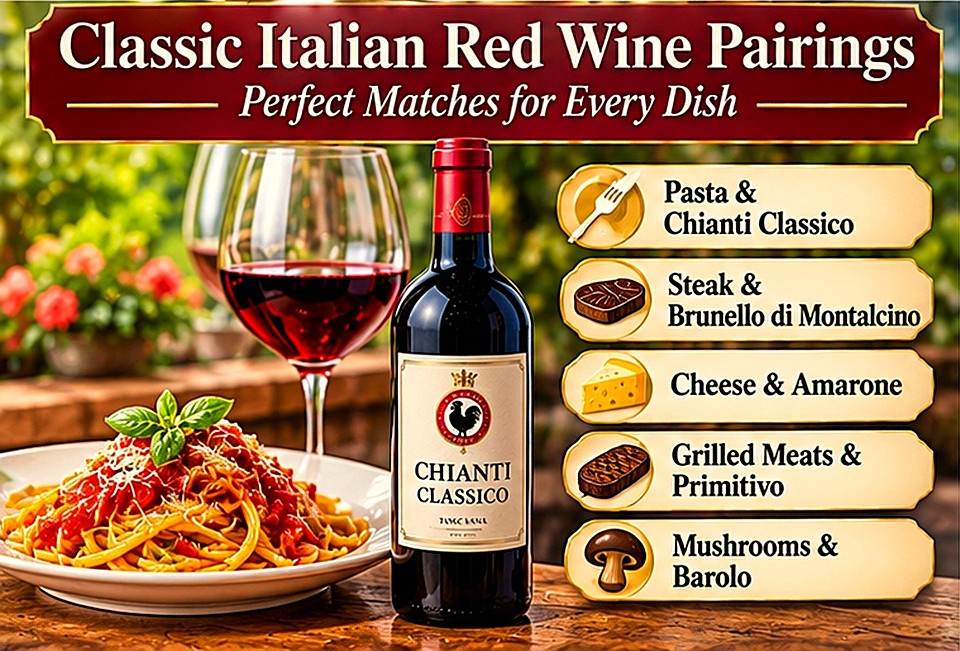
Italian red wine and food pairings featuring Chianti Classico with pasta, Brunello with steak, Amarone with cheese and Primitivo with grilled meats.
8. Italian Red Wine and Food Pairing Guide
One of the greatest pleasures of Italian red wine is its relationship with food. The country’s traditional red wines have developed alongside regional dishes, and many are naturally suited to Italian cuisine.
Chianti Classico and Tomato-Based Pasta
Chianti Classico is an excellent partner for tomato-based pasta dishes. Its acidity can complement tomato sauces, while its tannins and fruit work well with meat, herbs and cheese.
Try it with:
-
-
- Spaghetti Bolognese
- Lasagna
- Penne all’arrabbiata
- Pasta with sausage and tomato sauce
- Tomato-based meat ragù
-
Barolo and Braised Beef
Barolo’s structure and aromatic complexity make it a natural partner for rich dishes. Consider serving it with:
-
-
- Braised beef
- Beef short ribs
- Wild boar ragù
- Mushroom risotto
- Truffle pasta
- Aged cheeses
-
The wine’s tannins can complement the richness of meat, while its acidity helps maintain balance.
Brunello di Montalcino and Grilled Steak
Brunello can be an excellent match for grilled and roasted meats.
Try it with:
-
-
- Bistecca alla Fiorentina
- Grilled ribeye
- Roasted lamb
- Beef tenderloin
- Aged pecorino
-
Its structure and concentrated fruit make it particularly suitable for rich meat dishes.
Amarone and Mature Cheese
Amarone’s concentrated fruit and full-bodied character work well with rich food. Consider pairing it with:
-
-
- Parmigiano Reggiano
- Aged Asiago
- Mature Pecorino
- Braised beef
- Game
- Slow-cooked pork
-
Primitivo and Barbecue
Primitivo is an excellent option for grilled food and barbecue.
Try it with:
-
-
- Barbecued ribs
- Grilled sausages
- Beef burgers
- Roasted pork
- Spicy meat dishes
- Mature cheddar
-
Nero d’Avola and Mediterranean Cuisine
Nero d’Avola is versatile with Mediterranean dishes.
It can work well with:
-
-
- Grilled lamb
- Eggplant dishes
- Tomato-based pasta
- Roasted vegetables
- Italian sausages
- Hard cheeses
-
Aglianico and Slow-Cooked Meat
Aglianico’s tannins and structure can complement slow-cooked dishes.
Consider:
-
-
- Braised lamb
- Beef stew
- Game
- Rich mushroom dishes
- Aged cheeses
-
9. How to Choose a Good Italian Red Wine
With so many producers, grape varieties and appellations, choosing an Italian red wine can initially seem complicated. The following considerations can make the process easier.
Start with Your Preferred Wine Style
Think about the wines you already enjoy. If you like Cabernet Sauvignon, you may enjoy Sassicaia, Ornellaia or other Super Tuscan wines. If you prefer Pinot Noir, explore lighter and more aromatic styles such as certain Etna Rosso wines or elegant Nebbiolo. If you enjoy rich Malbec or Zinfandel, Primitivo and selected Nero d’Avola wines may be worth exploring.
Consider the Grape Variety
The grape provides useful information about the likely character of a wine. Sangiovese generally offers freshness, cherry fruit and structure. Nebbiolo is more aromatic and tannic. Primitivo tends to be richer and more fruit-forward, while Aglianico is known for its firm structure and ageing potential.
Look at the Region
The region can help identify the wine style.
-
-
- Tuscany: Sangiovese, Brunello, Chianti and Super Tuscan wines.
- Piedmont: Nebbiolo, Barolo, Barbaresco and Barbera.
- Veneto: Valpolicella, Ripasso and Amarone.
- Puglia: Primitivo and Negroamaro.
- Sicily: Nero d’Avola and Etna Rosso.
- Campania: Aglianico and Taurasi.
- Abruzzo: Montepulciano d’Abruzzo.
-
Consider the Producer
A respected producer can be a useful starting point when choosing a bottle. However, a famous brand does not guarantee that every wine in its range will match your preferences. Explore the producer’s entry-level wines as well as its premium labels. Many wineries offer excellent value in their regional and village-level selections.
Check the Vintage
Vintage conditions can influence the character, concentration and structure of a wine. Weather, rainfall, temperature and harvest timing all play a role. For expensive or collectible wines, it is worth checking vintage-specific information rather than assuming that every year is identical.
Match the Wine to Your Budget
Italian red wine is available across a wide range of prices. You do not need to buy an expensive Barolo or Brunello to enjoy a good Italian red. Chianti, Barbera, Valpolicella, Nero d’Avola and Montepulciano d’Abruzzo can provide enjoyable options at more accessible prices. For special occasions, premium Brunello, Amarone, Barolo and Super Tuscan wines may be worth considering.
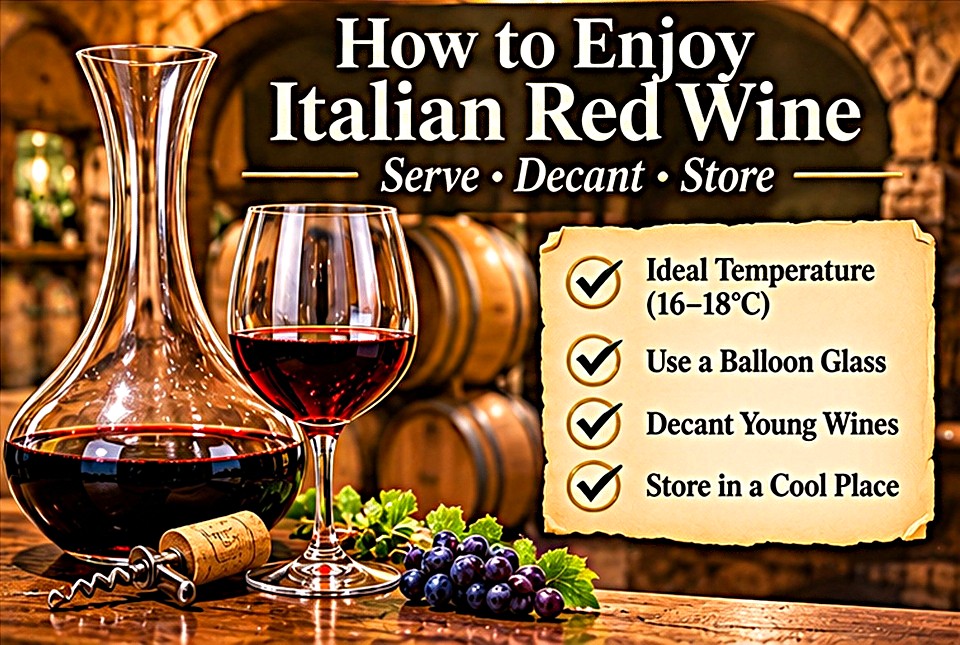
How to serve Italian red wine, including recommended serving temperatures, decanting, proper wine glasses and storage.
10. How to Serve and Store Italian Red Wine
Serving temperature, glassware and storage can make a meaningful difference to the enjoyment of Italian red wine.
Serving Temperature
Different red wine styles benefit from slightly different serving temperatures.
| Wine style | Suggested serving temperature |
|---|---|
| Light-bodied reds | 12–14°C |
| Medium-bodied reds | 14–16°C |
| Full-bodied reds | 16–18°C |
| Structured aged reds | 16–18°C |
Avoid serving red wine excessively warm. A wine served too warm can seem more alcoholic and less balanced.
Choosing the Right Glass
A large wine glass can help release the aromas of structured reds such as Barolo and Brunello. Medium-sized red wine glasses are suitable for Chianti, Barbera and many other Italian reds. The glass does not need to be expensive. A clean, well-shaped glass is more important than a particular brand.
Decanting
Some young, structured wines benefit from decanting. Barolo, Brunello and certain Super Tuscan wines may become more expressive after exposure to air. Older wines require greater care. Extended aeration can sometimes reduce delicate aromas, so it is sensible to assess an older bottle gradually.
Storing Wine
For bottles intended for ageing, stable storage conditions are important. Recommended practices include:
-
-
- Keep bottles away from direct sunlight.
- Avoid large temperature fluctuations.
- Store wine in a cool, stable environment.
- Maintain suitable humidity for cork-sealed bottles.
- Avoid unnecessary vibration.
- Store bottles horizontally when appropriate for traditional cork closures.
-
Not every Italian red wine needs to be aged. Many wines are made to be enjoyed relatively young.
11. Frequently Asked Questions About Italian Red Wine Brands
What are the best Italian red wine brands?
Some of the best-known Italian red wine producers include Marchesi Antinori, Gaja, Frescobaldi, Castello Banfi, Allegrini, Masi, Tenuta San Guido, Ornellaia, Vietti, Pio Cesare, Produttori del Barbaresco, Planeta, Donnafugata, Feudi di San Gregorio and Tormaresca. The best producer for you depends on your preferred wine style, budget and occasion.
What is the most famous Italian red wine?
Barolo, Brunello di Montalcino, Chianti Classico and Amarone della Valpolicella are among the most internationally recognised Italian red wines. Sassicaia and other Super Tuscan wines are also highly regarded.
What is the best Italian red wine for beginners?
Chianti, Valpolicella, Barbera and Montepulciano d’Abruzzo are good starting points. They introduce different Italian grapes and regions without necessarily requiring the structure or ageing potential of more prestigious wines.
What is the best Italian red wine for special occasions?
Brunello di Montalcino, Barolo, Barbaresco, Amarone and premium Super Tuscan wines are excellent options for special occasions. The best selection depends on the menu and the preferences of the people sharing the bottle.
What is the difference between Barolo and Brunello di Montalcino?
Barolo comes from Piedmont and is made from Nebbiolo. Brunello di Montalcino comes from Tuscany and is made from Sangiovese. Both are prestigious, structured Italian red wines, but they have different aromatic profiles and regional identities. Barolo is often associated with rose, tar, cherry and firm tannins, while Brunello is commonly associated with cherry, dried herbs, earth and structured acidity.
What is the difference between Chianti and Chianti Classico?
Chianti and Chianti Classico are separate appellations in Tuscany with different geographical boundaries and production regulations. Chianti Classico comes from its designated historic production area between Florence and Siena and is identified by the Black Rooster emblem. Both are based primarily on Sangiovese, but the appellations have distinct rules and regional identities.
What is a Super Tuscan wine?
Super Tuscan is an informal term for premium Tuscan wines that developed outside or beyond certain traditional appellation rules. Many use international varieties such as Cabernet Sauvignon, Merlot and Cabernet Franc, sometimes blended with Sangiovese. Sassicaia, Ornellaia, Tignanello and Solaia are among the most famous examples.
What is the best Italian red wine for steak?
Brunello di Montalcino, Barolo, Amarone and premium Super Tuscan wines can all be excellent with steak. For a more casual grilled steak dinner, Chianti Classico and selected Primitivo wines are also good choices.
What Italian red wine goes best with pasta?
Chianti Classico is a classic match for tomato-based pasta dishes. Barbera is another versatile option, while Montepulciano d’Abruzzo and Nero d’Avola can work well with richer sauces.
Which Italian red wines are full-bodied?
Amarone, many Primitivo wines, selected Nero d’Avola wines and some Super Tuscan blends are generally full-bodied. Barolo and Brunello can also be powerful and structured, although their character is often defined as much by acidity and tannin as by body.
Is Italian red wine good for ageing?
Some Italian red wines have excellent ageing potential. Barolo, Barbaresco, Brunello di Montalcino, Taurasi and premium Super Tuscan wines can develop considerable complexity over time. However, ageing potential depends on the producer, vintage, wine structure and storage conditions.
What are the most popular Italian red wine grapes?
Important Italian red grapes include Sangiovese, Nebbiolo, Corvina, Primitivo, Negroamaro, Nero d’Avola, Aglianico and Montepulciano. Each has a distinctive regional identity and flavour profile.
Is Primitivo the same grape as Zinfandel?
Yes. Primitivo and Zinfandel are genetically the same grape variety. However, wines made from the grape can taste different depending on climate, vineyard location, harvest conditions and winemaking choices.
Is Montepulciano d’Abruzzo made from Sangiovese?
No. Montepulciano d’Abruzzo is made primarily from the Montepulciano grape. It is different from Vino Nobile di Montepulciano, the Tuscan wine based on Sangiovese.
Which Italian red wine is best with cheese?
Many Italian reds work well with cheese. Chianti Classico is a versatile option for aged cheeses, while Amarone can complement stronger and richer varieties. Barolo and Brunello are also interesting partners for mature hard cheeses.
Where can I buy Italian red wine in Toronto?
Consumers in Toronto can explore Italian red wine selections through licensed wine retailers and authorised provincial retail channels. Always check current product availability, bottle size and local purchasing requirements.
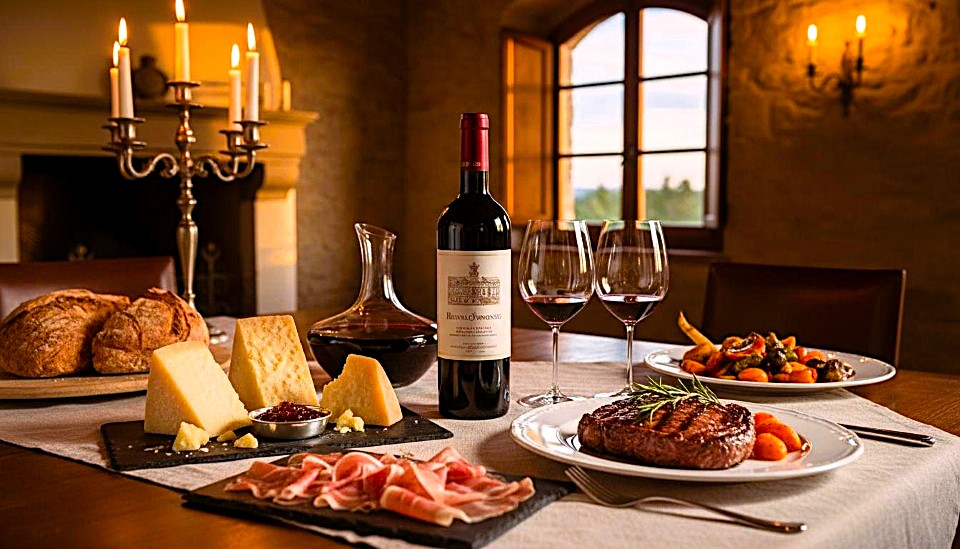
Best Italian Red Wine and Food Pairings
12. Final Thoughts: Discover the Best Italian Red Wine Brands
Italian red wine is one of the most diverse and rewarding categories in the international wine world. From the elegant Nebbiolo wines of Piedmont to the Sangiovese classics of Tuscany, the rich Amarone wines of Veneto and the generous Primitivo reds of Puglia, Italy offers a remarkable collection of regional specialities.
The country’s most respected producers have helped bring these wines to international audiences while preserving the traditions and identities of their individual regions.
Marchesi Antinori, Gaja, Frescobaldi, Castello Banfi, Allegrini, Masi, Tenuta San Guido, Ornellaia, Vietti, Pio Cesare, Produttori del Barbaresco, Planeta, Donnafugata, Feudi di San Gregorio and Tormaresca are excellent names to know when exploring Italian red wine.
-
-
- For newcomers, Chianti: Barbera, Valpolicella and Montepulciano d’Abruzzo offer accessible introductions to the country’s wine traditions.
- For experienced enthusiasts: Barolo, Barbaresco, Brunello di Montalcino, Amarone and premium Super Tuscan wines provide opportunities to explore greater structure, complexity and ageing potential.
-
The best Italian red wine is ultimately the one that suits your taste, complements your meal and makes the occasion more enjoyable.
At Always Dial A Bottle Toronto, we celebrate the diversity of wines from around the world, including Italy’s outstanding red wine traditions. Explore our wine selection, discover new favourites and enjoy the remarkable flavours of Italian winemaking.
Always Dial A Bottle Toronto – Your Destination for Wine, Beer, Liquor and Alcohol Delivery in Toronto and the Greater Toronto Area.