
Blog
Most Popular Cava Sparkling Wine Brands: 20 Best Cava Producers to Try

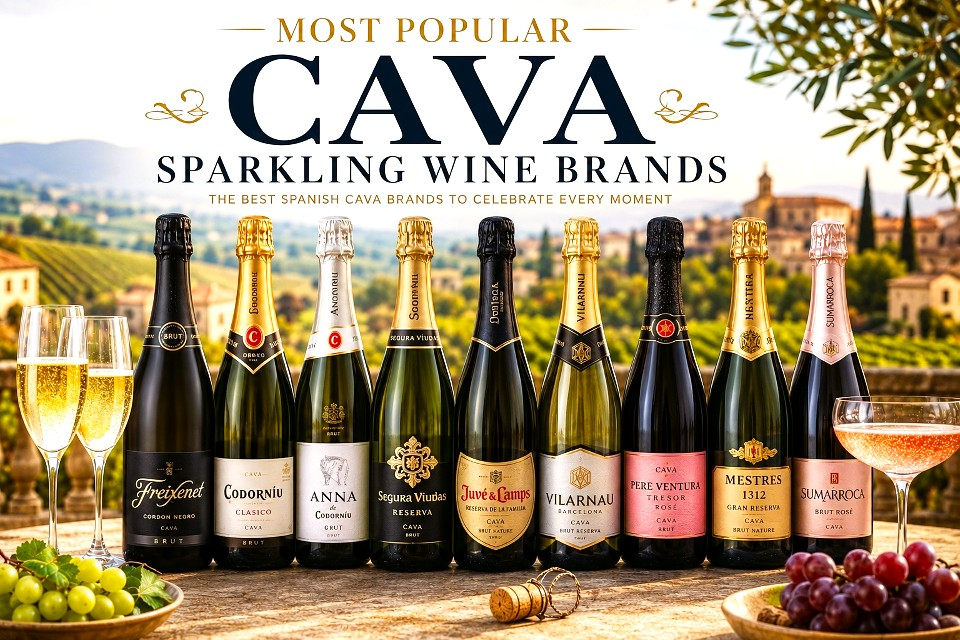
Cava is one of Spain’s most famous sparkling wines and one of the world’s most interesting alternatives to Champagne and Prosecco. Made using the traditional method, Cava combines fine bubbles, refreshing acidity, Mediterranean character and, in its more mature expressions, remarkable complexity.
For years, Cava was sometimes viewed simply as an inexpensive alternative to Champagne. That reputation no longer tells the whole story. Today, Cava ranges from fresh, affordable bottles for casual celebrations to long-aged Cava Reserva, Gran Reserva and Cava de Paraje Calificado wines capable of competing with much more expensive traditional-method sparkling wines.
But with hundreds of bottles and producers available, choosing the right one can be difficult.
What are the most popular Cava brands? Which Cava is best? What should you look for on the label? And which bottles are best for weddings, dinner parties, brunch or special occasions?
This guide explores 20 popular and notable Cava brands and producers, including internationally recognized names such as Freixenet, Codorníu and Segura Viudas, as well as respected producers such as Juvé & Camps, Vilarnau, Gramona’s former Cava legacy, Agustí Torelló Mata, Mestres, Pere Ventura and others.
Whether you are looking for the best affordable Cava, premium Cava, Cava Reserva, Gran Reserva, Brut Nature or Spanish sparkling wine for a special occasion, this guide will help you understand what to buy.
What Is Cava?
Cava is a quality Spanish sparkling wine produced under the D.O. Cava designation.
One of the most important characteristics of Cava is its production method.
Unlike many inexpensive sparkling wines produced by simpler carbonation or tank processes, Cava is made using the traditional method, in which the second fermentation takes place inside the individual bottle that ultimately reaches the consumer. The D.O. Cava Regulatory Council describes this bottle fermentation as one of the defining characteristics of the category.
This is the same broad winemaking technique used for Champagne and many of the world’s finest traditional-method sparkling wines.
Cava is especially associated with Catalonia and the Penedès, although the official denomination includes different production areas.
The traditional varieties historically associated with Cava include:
- Macabeo
- Xarel·lo
- Parellada
Other authorized grape varieties are also used, including Chardonnay, Pinot Noir and several regional varieties.
The combination of Mediterranean climate, native Spanish grapes and traditional-method production gives Cava its distinctive personality.
What Does Cava Taste Like?
The flavor of Cava depends heavily on the grape varieties, producer, vintage, sweetness level and length of aging.
A young Cava may show:
- Green apple
- Pear
- Lemon
- Citrus
- White flowers
- Fresh herbs
- Light mineral notes
Longer-aged Cava can develop much richer aromas and flavors, including:
- Toasted almonds
- Hazelnuts
- Brioche
- Baked apple
- Dried fruit
- Butter
- Pastry
- Smoke
- Toasted bread
This is one reason Cava is such an interesting category.
A young bottle can be bright and refreshing, while a well-aged Gran Reserva can become a complex gastronomic wine.
How Is Cava Made?
Cava is produced using the traditional method.
The basic process begins with a base wine. A second fermentation then takes place in the bottle, producing the carbon dioxide responsible for the wine’s bubbles.
The wine remains in contact with the lees during aging, which can contribute texture, complexity and characteristic bakery or nutty aromas.
The official D.O. Cava classification now places considerable emphasis on aging.
The principal categories are:
- Cava de Guarda – minimum 9 months
- Cava Reserva – minimum 18 months
- Cava Gran Reserva – minimum 30 months
- Cava de Paraje Calificado – minimum 36 months
These aging periods are part of the official D.O. Cava classification.
As the wine spends more time aging in bottle, its character generally moves from fresh fruit toward greater complexity, texture and secondary aromas.
Cava vs Champagne
Cava and Champagne have an important similarity:
Both are traditionally made with a second fermentation in the bottle.
However, they come from different regions and use different grape varieties and production rules.
Champagne comes exclusively from the Champagne region of France.
Cava is Spanish and is produced under the D.O. Cava designation.
Traditional Cava grapes include Macabeo, Xarel·lo and Parellada, while Champagne is primarily associated with Chardonnay, Pinot Noir and Meunier.
In flavor terms, Champagne often shows pronounced citrus, orchard fruit, toast and brioche characteristics, particularly with age.
Cava can offer similar traditional-method complexity while often showing a distinctly Mediterranean and Spanish personality.
For consumers seeking traditional-method sparkling wine at a more accessible price, Cava is one of the most interesting categories to explore.
Cava vs Prosecco
Cava and Prosecco are both enormously popular sparkling wines, but their production methods differ.
Most Prosecco is produced using the tank method, while Cava is produced using the traditional method.
This difference can be noticeable in the glass.
Prosecco
Often emphasizes:
- Pear
- Apple
- Peach
- Floral aromas
- Fresh fruit
Cava
Can emphasize:
- Citrus
- Green apple
- Almond
- Toast
- Brioche
- Mineral notes
Young Cava can still be fresh and fruity, but extended aging can give it a more complex, savory and textured profile.
If you enjoy Prosecco and want to explore a more traditional-method sparkling wine, Cava is an excellent next step.
The 20 Most Popular Cava Brands and Producers
There is no single official worldwide ranking of Cava brands by popularity. The following list therefore focuses on widely recognized, established and notable Cava producers, including large international brands and respected specialist wineries.
1. Freixenet
Origin: Catalonia, Spain
Style: Fresh, versatile and widely accessible
Best for: Parties, weddings and everyday celebrations
Freixenet is arguably the most internationally recognizable Cava name.
The brand has played a major role in bringing Spanish sparkling wine to consumers around the world. Freixenet Group describes itself as a leading Spanish wine company and says its Freixenet brand is the world’s leading international sparkling-wine brand according to IWSR.
Freixenet offers a broad range of Cava styles, from approachable bottles designed for celebrations to more sophisticated expressions.
Its wines can show the classic combination of:
- Citrus
- Apple
- Pear
- Floral aromas
- Fresh acidity
- Fine bubbles
Why choose Freixenet?
It is an excellent choice when you want a recognizable Spanish sparkling wine that is easy to find and suitable for entertaining.
Best occasions:
Weddings, New Year’s Eve, brunches, parties and large gatherings.
2. Codorníu
Origin: Catalonia, Spain
Style: Traditional, elegant and diverse
Best for: Celebrations and premium Cava
Codorníu is one of Spain’s historic names in Cava.
The winery traces its Cava history back to the creation of the first Cava by Josep Raventós in 1872 and describes itself as Spain’s oldest wine and Cava producer, with more than 450 years of history as a winery.
One of the brand’s most recognizable expressions is Anna de Codorníu, which has become a familiar name in international markets.
Codorníu also produces premium and prestige Cavas for consumers looking for greater complexity.
Best for:
Dinner parties, anniversaries, weddings and sophisticated celebrations.
3. Segura Viudas
Origin: Catalonia, Spain
Style: Fresh to premium
Best for: Value and food pairing
Segura Viudas is one of the best-known Cava brands internationally.
The producer’s portfolio includes Brut Reserva, Brut Reserva Heredad, Brut Rosé and organic Cava.
Its Brut Reserva is described by the producer as combining fruitiness, freshness and complexity, while the Heredad is one of the winery’s signature wines.
Segura Viudas is particularly interesting because it offers different styles across several quality levels.
Best for:
- Seafood
- Pasta
- Chicken
- Cheese
- Spanish tapas
- Celebrations
4. Juvé & Camps
Origin: Sant Sadurní d’Anoia, Catalonia
Style: Premium and traditional
Best for: Serious Cava enthusiasts
Juvé & Camps is one of the most respected names in premium Cava.
The producer is particularly associated with long-aged sparkling wines and traditional Cava craftsmanship.
For consumers who want to move beyond inexpensive supermarket Cava, Juvé & Camps is an excellent name to know.
Its wines can demonstrate:
- Fine bubbles
- Citrus
- Apple
- Toast
- Nuts
- Creamy texture
Best for:
Fine dining, seafood, special occasions and sophisticated wine lovers.
5. Vilarnau
Origin: Penedès, Catalonia
Style: Modern, elegant and versatile
Best for: Food pairing and celebrations
Vilarnau is an established Cava producer from the Penedès.
The winery offers a range of Cavas designed around different styles and occasions.
Vilarnau is a particularly interesting option for consumers who want to explore the relationship between traditional Cava production and modern winemaking.
Its wines can work particularly well with:
- Seafood
- Tapas
- Sushi
- Soft cheeses
- Mediterranean cuisine
6. Roger Goulart
Origin: Catalonia, Spain
Style: Traditional and value-oriented
Best for: Affordable premium Cava
Roger Goulart is another recognizable name for consumers looking for quality Spanish sparkling wine without necessarily moving into the highest price brackets.
The producer offers Cavas with different aging levels and styles.
For someone searching for affordable Cava with traditional-method character, Roger Goulart can be an excellent category to explore.
Best with:
Tapas, seafood, fried appetizers and light Mediterranean dishes.
7. Agustí Torelló Mata
Origin: Penedès, Catalonia
Style: Artisanal, structured and premium
Best for: Wine enthusiasts
Agustí Torelló Mata is a respected Cava producer known for wines that showcase the character of the Penedès and traditional Cava varieties.
The winery has been included among the producers highlighted in specialist tastings of premium Cava.
This is a producer worth exploring if you want to discover Cava beyond the major supermarket brands.
Best for:
Fine dining, seafood, aged cheeses and serious tasting.
8. Mestres
Origin: Sant Sadurní d’Anoia, Catalonia
Style: Traditional and mature
Best for: Premium Cava
Mestres is a historic Cava name with a strong emphasis on traditional production.
The wines are particularly interesting for people who enjoy the more mature side of sparkling wine.
Expect potential notes of:
- Toast
- Nuts
- Dried fruit
- Citrus
- Pastry
- Apple
Long-aged Cava can be an outstanding match for food, and Mestres is one of the producers worth considering when exploring this style.
9. Pere Ventura
Origin: Penedès, Catalonia
Style: Elegant and versatile
Best for: Celebrations and premium Cava
Pere Ventura is another established Cava producer with a diverse portfolio.
Its wines span approachable sparkling wines through more ambitious expressions.
Pere Ventura has also been included among wineries represented in tastings highlighting premium Cava.
Best for:
Weddings, seafood, appetizers and Spanish cuisine.
10. Sumarroca
Origin: Penedès, Catalonia
Style: Fresh, modern and premium
Best for: Mediterranean food
Sumarroca is a respected Penedès producer with an important presence in the Cava category.
The winery’s approach combines the traditional identity of Cava with modern vineyard and winemaking practices.
Its wines can be particularly attractive alongside Mediterranean food.
Try with:
- Seafood
- Paella
- Tapas
- Grilled vegetables
- Soft cheese
- Poultry
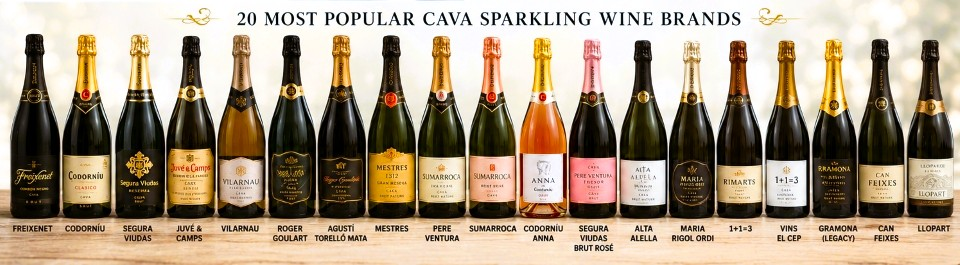
Popular Cava sparkling wine brands from Spain including Freixenet, Codorníu and Segura Viudas
11. Vilarnau Brut Reserva
Although Vilarnau deserves recognition as a producer, its Brut Reserva style is particularly worth highlighting for consumers interested in moving up from basic Cava.
Reserva Cava requires a minimum of 18 months of aging, compared with the minimum 9 months required for Cava de Guarda.
That additional aging can contribute greater aromatic depth and complexity.
For a dinner party, a Reserva is often a better choice than the youngest category.
12. Codorníu Anna
Anna de Codorníu deserves individual attention because it has become one of the most recognizable expressions associated with the Codorníu name.
Its distinctive presentation and accessible style make it popular for:
- Weddings
- Brunch
- Birthday celebrations
- Cocktails
- Dinner parties
It is a particularly useful bottle when you want something that feels celebratory without requiring the complexity of a premium vintage Cava.
13. Freixenet Cordon Negro
Cordon Negro is one of the most recognizable Cava labels internationally.
Its distinctive black bottle has become almost synonymous with Spanish sparkling wine in many markets.
The style is generally suited to casual drinking and celebrations.
Best for:
- Parties
- Cocktails
- Brunch
- Mimosas
- Large gatherings
It is an excellent example of how packaging, consistency and international availability can contribute to a sparkling-wine brand’s global popularity.
14. Segura Viudas Brut Reserva
Segura Viudas Brut Reserva is worth highlighting separately because it illustrates how a widely available Cava can still deliver more complexity through aging.
The producer describes its Brut Reserva as complex, elegant and versatile, with fruitiness, freshness and complexity as key characteristics.
It is particularly versatile at the table.
Try it with:
- Seafood
- White fish
- Pasta
- Ham
- Cheese
- Poultry
15. Segura Viudas Brut Rosé
Rosé Cava has become increasingly attractive to consumers who want sparkling wine with more visible red-fruit character.
Segura Viudas produces a Brut Rosé described by the winery as fresh and sophisticated, with pronounced fruitiness.
Expect a style that can complement:
- Strawberries
- Raspberries
- Red berries
- Citrus
Best for:
Summer parties, Valentine’s Day, weddings and outdoor entertaining.
16. Alta Alella
Origin: Catalonia, Spain
Style: Estate-focused and modern
Best for: Wine enthusiasts
Alta Alella is a notable Catalan producer associated with sparkling wine and Mediterranean vineyard character.
The producer has appeared among the Cava wineries highlighted in specialist premium tastings.
It is a good name to investigate if your interest goes beyond mainstream Cava.
Best for:
Wine tastings, seafood and Mediterranean cuisine.
17. Maria Rigol Ordi
Maria Rigol Ordi is a smaller producer that illustrates the depth of the Cava category.
While large brands dominate international shelves, smaller wineries can provide a very different experience.
The producer has been included among Cava wineries selected for premium tastings.
This type of producer is particularly interesting for wine enthusiasts who want to explore beyond the most familiar labels.
18. Rimarts
Rimarts is another specialist producer associated with traditional Cava.
Its wines appeal particularly to consumers who want to discover more artisanal expressions of Spanish sparkling wine.
Rimarts has been included in specialist selections of premium Cava producers.
Best for:
Wine lovers, tasting menus and special dinners.
19. 1+1=3
The unusual name makes this producer particularly memorable.
1+1=3 is associated with the Penedès and produces Cava in a range of styles.
It has also appeared among the wineries featured in specialist selections of premium Cava.
This is a good example of the diversity of Cava producers beyond the biggest international names.
20. Vins El Cep
Vins El Cep is another respected Penedès producer with Cava in its portfolio.
The producer has appeared among the wineries included in specialist tastings of premium Cava.
For consumers interested in exploring more distinctive Spanish sparkling wine, it is a name worth remembering.
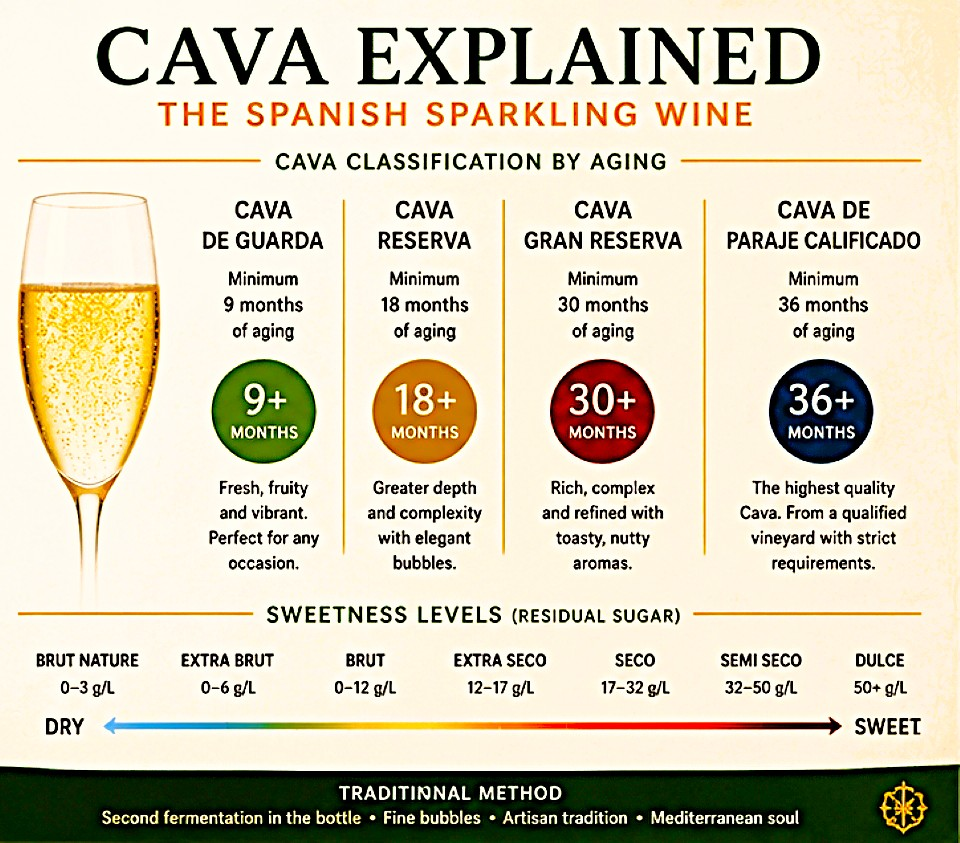
Cava aging classifications and sweetness levels from Brut Nature to Dulce
Best Cava Brands for Different Occasions
Choosing the best Cava depends heavily on the occasion.
Best Cava for Weddings
For large weddings, recognizable brands such as:
- Freixenet
- Codorníu
- Segura Viudas
- Vilarnau
can be practical choices.
They are familiar, versatile and available in a range of styles.
For a smaller luxury wedding, consider:
- Juvé & Camps
- Agustí Torelló Mata
- Mestres
- Pere Ventura
Best Cava for Brunch
For brunch, choose a young, fresh Cava.
Good choices include approachable expressions from:
- Freixenet
- Codorníu
- Segura Viudas
- Roger Goulart
The combination of citrus, orchard fruit and acidity makes Cava excellent with brunch foods.
It also works beautifully in Mimosas.
Best Cava for Seafood
Cava and seafood are an excellent combination.
Try Brut or Brut Nature Cava with:
- Oysters
- Shrimp
- Crab
- Lobster
- Scallops
- Grilled fish
- Sushi
The acidity refreshes the palate while the bubbles help cut through richer textures.
Best Cava for Tapas
Cava is almost made for Spanish tapas.
Try it with:
- Jamón
- Manchego
- Croquetas
- Patatas bravas
- Fried seafood
- Olives
- Marinated vegetables
A fresh Brut Cava is particularly versatile.
Best Premium Cava
If you’re looking for premium Cava, focus less on the brand name alone and more on the classification and aging period.
Look for:
Reserva
At least 18 months aging.
Gran Reserva
At least 30 months aging.
Cava de Paraje Calificado
At least 36 months, with substantially stricter vineyard and production requirements.
The D.O. Cava describes Paraje Calificado as a top category associated with a particularly defined vineyard location and strict production requirements.
What Is Cava Reserva?
Cava Reserva is part of the Cava de Guarda Superior category.
It must spend at least 18 months aging in bottle.
The additional aging gives the wine more opportunity to develop complexity.
Compared with a young Cava, Reserva may show more:
- Toast
- Nuts
- Dried fruit
- Pastry
- Creaminess
The official D.O. Cava describes Reserva as a wine with greater depth, aroma and complexity resulting from its minimum 18 months of aging.
Best for:
Dinner, seafood, poultry, aged cheese and special occasions.
What Is Cava Gran Reserva?
Gran Reserva takes the aging concept even further.
It requires a minimum of 30 months of bottle aging.
The result can be significantly more complex than a young Cava.
Official tasting descriptions for Gran Reserva include baked apple, dried apricot, nuts, brioche, butter, smoky and toasted notes.
This is the category to explore if you enjoy mature Champagne or other aged traditional-method sparkling wines.
Best for:
Fine dining, holiday dinners, tasting menus and luxury celebrations.
What Is Cava de Paraje Calificado?
This is one of the most prestigious categories in Cava.
The term refers to Cava produced from a specially qualified vineyard site.
Requirements include:
- Vines at least 10 years old
- Manual harvesting
- Maximum yield of 8,000 kg per hectare
- Production and bottling at the winery
- Minimum 36 months of aging
- Single-vintage Cava
- Full traceability
The D.O. Cava identifies these wines as expressions of particularly distinctive vineyard locations and terroir.
For serious wine enthusiasts, this is one of the most exciting parts of modern Cava.
Understanding Cava Sweetness Levels
The word “Brut” is important when buying Cava.
Cava sweetness categories include:
- Brut Nature: 0–3 g/L
- Extra Brut: 0–6 g/L
- Brut: maximum 12 g/L
- Extra Seco: 12–17 g/L
- Seco: 17–32 g/L
- Semi Seco: 32–50 g/L
- Dulce: more than 50 g/L
These classifications are defined by the D.O. Cava.
Which should you choose?
If you prefer very dry sparkling wine:
Brut Nature
If you want dry but slightly more rounded:
Extra Brut
For the most versatile everyday choice:
Brut
For a noticeably sweeter style:
Semi Seco or Dulce
What Is Brut Nature Cava?
Brut Nature is one of the driest Cava styles.
It contains 0–3 grams of sugar per liter under the D.O. Cava classification.
This makes it especially attractive to people who prefer:
- Crisp acidity
- Mineral character
- Dry finishes
- Less perceived sweetness
Brut Nature can be outstanding with oysters, shellfish, sushi and savory appetizers.
How to Serve Cava
Cava should generally be served well chilled.
Young Cava can be served around 7–8°C, while more mature categories such as Reserva and Gran Reserva can be served slightly warmer to reveal their aromas.
The D.O. Cava recommends tulip-shaped glasses for maximizing aromatic expression.
Avoid serving high-quality Cava extremely cold, because very low temperatures can suppress the wine’s aromas and texture.
How Long Does Cava Last?
Unopened Cava does not all age in the same way.
A young Cava is generally designed for relatively early enjoyment.
Reserva and Gran Reserva wines, particularly from strong producers, can have greater aging potential.
However, once you open the bottle, sparkling wine should be consumed relatively quickly.
A quality sparkling-wine stopper can help preserve the bubbles for a short period after opening.
Is Cava Good for Cocktails?
Yes.
Cava is particularly effective in sparkling cocktails because its acidity and bubbles provide structure.
Cava Mimosa
Combine Cava with fresh orange juice.
Cava Bellini
Combine Cava with peach purée.
Cava Spritz
Use Cava as the sparkling base for an aperitif-style cocktail.
Cava with Elderflower
Combine Cava with elderflower liqueur and soda for a refreshing summer drink.
For cocktails, you generally don’t need the most expensive Cava.
An affordable Brut is usually sufficient.
Cava and Food Pairing
One of Cava’s greatest strengths is its ability to work with food.
Because of its acidity, carbonation and range of styles, Cava can accompany an entire meal.
Cava and Oysters
Dry Brut Nature or Extra Brut is an excellent match.
Cava and Fried Foods
The acidity and bubbles help refresh the palate after rich or fried dishes.
Try Cava with:
- Fried calamari
- Croquettes
- Tempura
- Fried shrimp
Cava and Seafood
Cava works beautifully with:
- Shrimp
- Lobster
- Crab
- Mussels
- Scallops
- White fish
Cava and Cheese
Try Brut or Reserva Cava with:
- Manchego
- Brie
- Goat cheese
- Soft cheeses
- Aged Spanish cheese
Cava and Spanish Tapas
This is perhaps the most natural combination.
Cava and tapas offer an authentic Spanish pairing that works from casual meals to sophisticated dining.
Why Is Cava So Popular?
Cava has several advantages that have helped establish it as one of the world’s major sparkling-wine categories.
Traditional-method production
Cava is made using bottle fermentation, giving it the technical foundation associated with premium sparkling wine.
Variety
Cava comes in everything from young, fruity wines to extremely complex Gran Reserva and Paraje Calificado expressions.
Food friendliness
The acidity and bubbles make Cava exceptionally versatile with food.
Value
Cava often provides traditional-method complexity at a price below many comparable Champagne bottles.
Spanish identity
Cava has a distinctive Mediterranean personality and a strong connection to Spanish cuisine and culture.
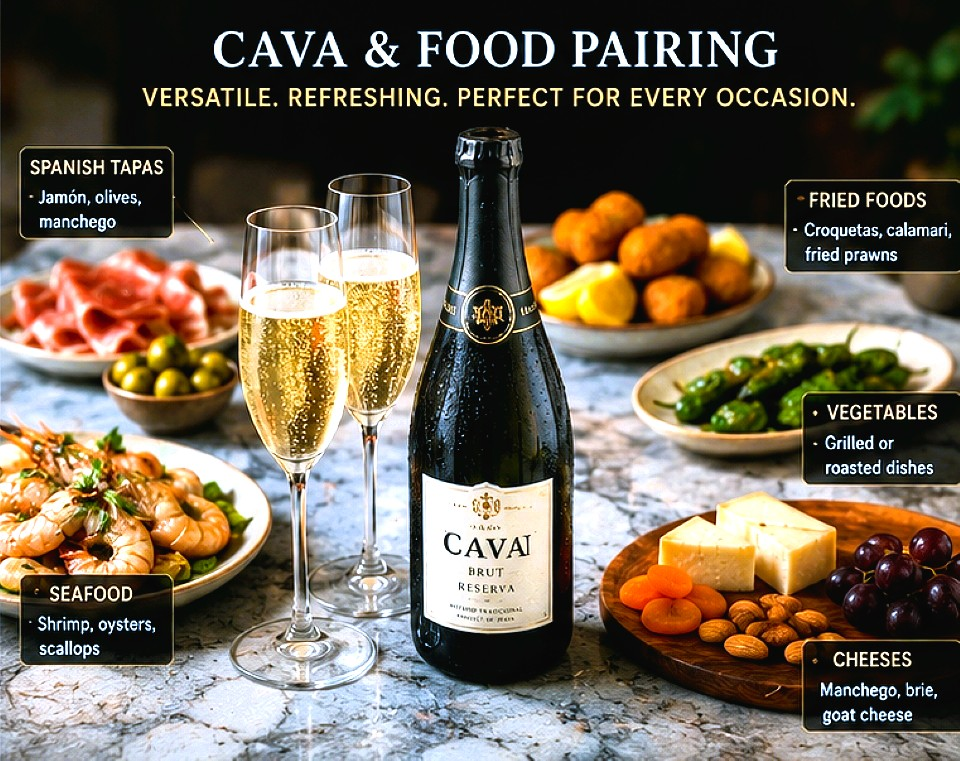
Cava sparkling wine paired with Spanish tapas, seafood, fried foods and cheese
Frequently Asked Questions About Cava Brands
What are the most popular Cava brands?
Some of the most widely recognized and notable Cava brands and producers include Freixenet, Codorníu, Segura Viudas, Juvé & Camps, Vilarnau, Roger Goulart, Agustí Torelló Mata, Mestres, Pere Ventura and Sumarroca.
What is the best Cava brand?
There is no single best Cava brand for everyone. Freixenet and Codorníu are excellent choices for accessibility and recognition, while Juvé & Camps, Agustí Torelló Mata and Mestres are interesting choices for premium Cava enthusiasts.
Is Cava Champagne?
No. Cava is Spanish sparkling wine, while Champagne comes from the Champagne region of France. Both are traditionally produced using a second fermentation in the bottle.
Is Cava better than Prosecco?
Neither is universally better. Cava and Prosecco use different grapes, regions and production methods. Cava is traditionally made in the bottle, while most Prosecco is produced using the tank method.
Is Cava sweet?
Cava can range from extremely dry Brut Nature to sweet Dulce. Brut Nature contains 0–3 g/L of sugar, while Brut contains a maximum of 12 g/L.
What is the best Cava for a wedding?
For large weddings, Freixenet, Codorníu, Segura Viudas and Vilarnau are practical choices. For a smaller premium wedding, consider Juvé & Camps, Mestres or Agustí Torelló Mata.
What is Cava Reserva?
Cava Reserva is a Cava de Guarda Superior aged for a minimum of 18 months. The additional bottle aging can provide greater depth and complexity.
What is Cava Gran Reserva?
Cava Gran Reserva must be aged for a minimum of 30 months. It can develop flavors including baked fruit, nuts, brioche and toasted notes.
What is Cava de Paraje Calificado?
It is a highly qualified Cava category produced from specially recognized vineyard sites under strict requirements, including manual harvesting, low yields and at least 36 months of aging.
What grapes are used in Cava?
Traditional Cava varieties include Macabeo, Xarel·lo and Parellada. Other authorized varieties are also used.
Is Cava good with seafood?
Yes. Dry Cava is particularly good with oysters, shrimp, crab, lobster, scallops and grilled fish.
What is the best Cava for brunch?
A young Brut Cava from a recognizable producer such as Freixenet, Codorníu or Segura Viudas works well for brunch.
What is the best Cava for cocktails?
Choose an affordable Brut or Extra Brut. There is little reason to use an expensive Gran Reserva in a Mimosa or cocktail.
What is the difference between Cava Reserva and Gran Reserva?
Reserva requires at least 18 months of aging, while Gran Reserva requires at least 30 months.
Final Thoughts: The Best Cava Brands to Try
Cava deserves far more attention than its reputation as simply an inexpensive alternative to Champagne.
The category offers an impressive range of styles, from young and vibrant sparkling wines to mature, complex bottles that can stand alongside some of the world’s finest traditional-method wines.
For an easy introduction, Freixenet, Codorníu and Segura Viudas are excellent starting points.
If you want to explore more premium expressions, consider Juvé & Camps, Vilarnau, Agustí Torelló Mata, Mestres and Pere Ventura.
If you’re interested in mature sparkling wine, look for Reserva and Gran Reserva classifications.
And if you want to explore the highest level of Cava, investigate Cava de Paraje Calificado, where individual vineyard sites, low yields, manual harvesting and extended aging play a much greater role.
The beauty of Cava is its versatility.
You can open a fresh Brut with a plate of tapas, serve a Reserva with seafood at dinner, enjoy a Rosé Cava at a summer celebration or choose a mature Gran Reserva for an elegant special occasion.
So when you’re looking for the most popular Cava sparkling wine brands, don’t stop at the biggest names.
Look at the aging period.
Try different grape combinations.
Compare Brut Nature with Brut.
And, most importantly, taste wines from different producers.
Cava is not one single style. It is an entire world of Spanish sparkling wine waiting to be explored.