
Blog
Most Popular Rum Brands in the World: 25 Famous Rums Every Rum Lover Should Know

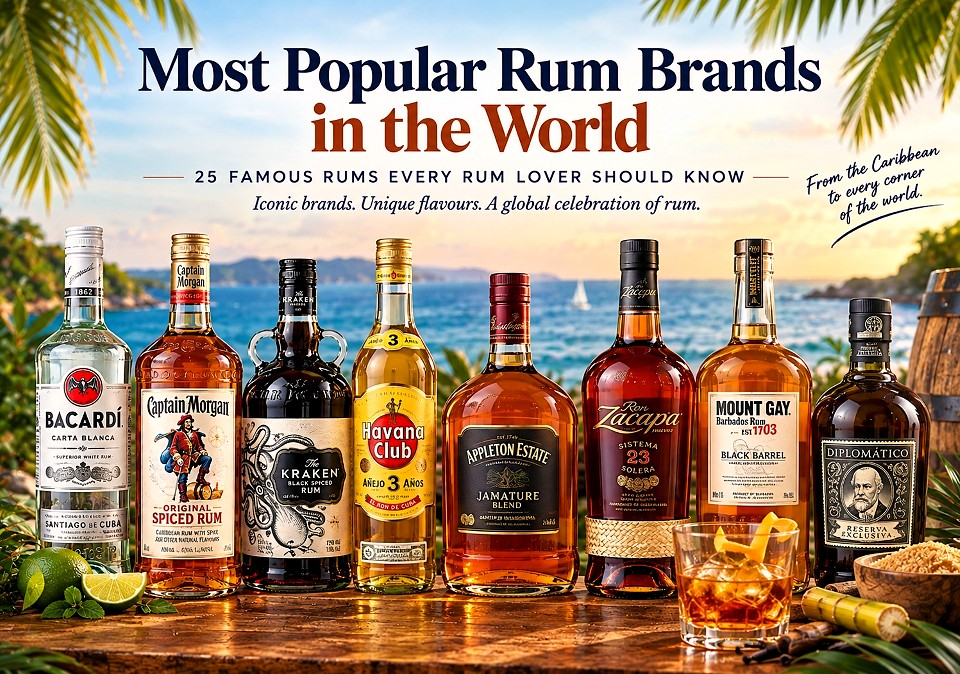
Most Popular Rum Brands in the World: 25 Famous Rums Every Rum Lover Should Know
Rum is one of the world’s most diverse spirits. Made from sugar-cane-derived ingredients, including molasses and fresh sugar-cane juice, rum ranges from crisp, light-bodied spirits designed for cocktails to richly aged bottles with layers of vanilla, caramel, tropical fruit, oak and spice.
Its international appeal comes from this versatility. A bottle of white rum can be the foundation of a refreshing Mojito or a classic Daiquiri, while an aged rum can be enjoyed slowly in a tasting glass. Spiced rum brings warm flavours to mixed drinks, and premium blends offer a more complex experience for people who enjoy exploring spirits neat or over ice.
Rum also has a remarkable geographical identity. The Caribbean remains central to the category, but rum is produced and enjoyed in many parts of the world. Different climates, ingredients, fermentation methods, distillation equipment, maturation conditions and blending traditions contribute to the distinctive character of individual brands. The West Indies Rum & Spirits Producers’ Association describes this diversity as one of the defining characteristics of Caribbean rum. Read about rum production and regional traditions.
So, which rum brands are the most popular in the world?
The answer depends on what popularity means. Global sales volumes reveal the brands that sell the most bottles. Bartender surveys show which rums professionals choose for their bars. Premium and enthusiast lists tend to focus on flavour, craftsmanship, heritage and sipping quality rather than total sales.
Whether you are discovering rum for the first time or expanding a collection, these names provide an excellent starting point.
Table of Contents
-
-
- How We Selected These Popular Rum Brands
- The 25 Most Popular Rum Brands in the World
- Popular Rum Brands at a Glance
- The Main Types of Rum
- How to Choose the Right Rum Brand
- Which Rum Brands Are Best for Cocktails?
- How to Taste and Serve Rum
- Frequently Asked Questions About Rum Brands
- Discover Rum and Spirits in Toronto
-
How We Selected These Popular Rum Brands
There is no single universally accepted ranking of the world’s best rum brands. A brand may be a global sales leader without being a specialist’s first choice for sipping, while a smaller distillery may be highly respected by enthusiasts without having the distribution or production volume of an international giant.
For this reason, this article uses a broad editorial approach rather than claiming that every brand appears in a definitive numbered ranking. The selection considers several factors:
-
-
- International recognition: Brands with a significant presence in their home markets or broader international spirits market.
- Sales and market visibility: Large-volume brands and names recognised in industry reporting.
- Bartender relevance: Rums associated with classic cocktails, contemporary bars or professional recommendations.
- Distinctive style: Brands that illustrate different rum-making traditions, flavour profiles and serving occasions.
- Heritage and production: Established producers and labels with a recognisable connection to a rum-producing region.
- Range and accessibility: Brands that help readers explore white, gold, dark, spiced, aged and premium rum styles.
-
Industry reporting illustrates why it is useful to separate popularity by measure. Drinks International’s 2026 global volume report placed Tanduay first, Bacardi second and Captain Morgan third among the leading rum brands by volume. Its 2025 bartender-focused Brands Report, by contrast, listed Bacardi as the leading bestseller among surveyed bars, with Havana Club second, Planteray third and Appleton Estate fourth. These are different rankings measuring different things—not contradictory versions of one universal list.
The 25 Most Popular Rum Brands in the World
1. Bacardi: One of the World’s Best-Known Rum Brands
Country and heritage: Founded in Cuba in 1862; the company is now headquartered in Bermuda.
Known for: White rum, gold rum, aged rum and cocktail-friendly expressions.
Bacardi is one of the most internationally recognisable names in rum. Its familiar white rum is widely associated with classic cocktails, making the brand a natural starting point for anyone exploring the category.
The brand’s history began when Don Facundo Bacardí Massó established a distillery in Santiago de Cuba in 1862. Over time, Bacardi developed an extensive international presence and a portfolio that includes light, gold and aged styles. Its heritage and cocktail education are featured on the official Bacardi website.
Bacardi’s popularity is closely connected to versatility. A light expression can work well in a Mojito, Daiquiri or Cuba Libre, where the rum must combine with citrus, sugar, mint or cola without overwhelming the drink. More mature expressions offer a different route for drinkers interested in a rum with additional depth.
Flavour and style: Depending on the expression, expect relatively light, clean flavours or richer notes of vanilla, oak, caramel and spice.
Best for: Mojitos, Daiquiris, Cuba Libres and versatile home bars.
Why it stands out: Bacardi is a strong example of how a rum brand can achieve international recognition through consistency, accessibility and a deep connection with classic cocktails.
2. Tanduay: A Global Sales Leader from the Philippines
Country: Philippines.
Known for: Large-scale production and a broad range of rum products.
Tanduay is a major name in the Philippine spirits market and an important brand in the global rum business. It deserves particular attention because its popularity is not limited to the traditional Caribbean rum-producing regions.
In Drinks International’s 2026 global volume reporting, Tanduay ranked first among the leading rum brands, ahead of Bacardi and Captain Morgan. That makes it an important inclusion in a guide focused on international popularity.
Its significance also illustrates a common misconception: rum is not exclusively a Caribbean spirit. Sugar-cane-derived spirits have developed distinct identities in different countries, shaped by local tastes, production traditions and drinking occasions.
Tanduay’s broad market presence makes it especially relevant when discussing rum by sales volume rather than only by premium reputation or bartender preference.
Flavour and style: The flavour depends on the specific bottling. The brand’s range is designed for different uses and preferences, so readers should consult the individual product label rather than assume every Tanduay rum has the same profile.
Best for: Exploring a major Asian rum producer and understanding the global scale of the category.
Why it stands out: Tanduay demonstrates that the world’s rum market is geographically broader than many consumers realise.
3. Captain Morgan: A Famous Name in Spiced Rum
Country and brand heritage: A globally distributed rum brand associated with the Caribbean.
Known for: Original Spiced Rum, spiced expressions and cocktail-friendly blends.
Captain Morgan is one of the best-known rum brands for casual entertaining and mixed drinks. Its Original Spiced Rum is particularly recognisable among people who enjoy rum with cola or other simple mixers.
Spiced rum differs from many traditional unflavoured rums because its finished flavour profile is built around spices and other flavouring ingredients. Vanilla, cinnamon and baking-spice notes are common in the style, although the exact ingredients and character depend on the product.
Captain Morgan has built a strong identity around approachable flavours, informal gatherings and easy-to-make drinks. It is not necessarily the first choice for someone seeking an intensely dry, complex sipping rum, but it has a clear place in the broader rum market.
Flavour and style: Warm spice, vanilla and sweet-toned notes, with the exact profile varying by expression.
Best for: Rum and cola, simple highballs, party drinks and approachable mixed cocktails.
Why it stands out: Captain Morgan makes spiced rum familiar to a broad audience and remains one of the most visible rum brands internationally.
4. Havana Club: A Distinctive Name in Cuban Rum
Country and heritage: Cuba.
Known for: Cuban-style rum, white rum and aged expressions.
Havana Club is closely associated with Cuban rum-making heritage and the cocktails that helped bring rum to international attention. Its portfolio spans light expressions used in mixing and aged rums intended for more flavour-forward drinks or sipping.
Cuban-style rums are often associated with a balanced profile that works particularly well in cocktails where freshness and integration matter. The Mojito and Daiquiri are two of the most famous examples of drinks in which a light rum can play a central role.
Havana Club’s official brand information highlights the influence of Cuba’s climate, geography, people and traditions on its identity. Its range includes expressions such as Añejo 3 Años and Añejo 7 Años. Explore Havana Club through Pernod Ricard.
Flavour and style: Generally ranges from light and cocktail-oriented to deeper, oak-influenced aged styles.
Best for: Mojitos, Daiquiris, Cuban-inspired cocktails and exploring aged Cuban rum styles.
Why it stands out: Havana Club connects rum with one of the world’s most influential rum cultures and cocktail traditions.
5. Appleton Estate: A Leading Name in Jamaican Rum
Country: Jamaica.
Known for: Jamaican rum, blended aged rum and expressive character.
Appleton Estate is one of the most recognised names in Jamaican rum. Its range is especially relevant for drinkers interested in how a rum’s place of production can influence its flavour.
Jamaican rum can exhibit a distinctive character shaped by fermentation and distillation choices. Depending on the producer and expression, drinkers may encounter tropical fruit, citrus, spice, molasses and a fuller aromatic profile than they would expect from a very light mixing rum.
Appleton Estate offers a range of blends and aged expressions. The Signature Blend is a useful starting point for exploring the brand, while more mature bottlings offer additional complexity.
Flavour and style: Often associated with tropical-fruit notes, warm spice, caramel and oak, with differences between expressions.
Best for: Rum Punch, flavourful Daiquiris, aged-rum cocktails and sipping selected aged bottlings.
Why it stands out: Appleton Estate is a strong introduction to Jamaican rum and its distinctive regional character.
6. Planteray Rum: A Modern Name with a Broad International Range
Country and heritage: A rum brand built around sourcing, ageing and blending rums from different producing regions.
Known for: Regional rum expressions, blends and aged bottlings.
Planteray, previously known as Plantation Rum, is notable for highlighting the differences between rum-producing regions. The brand’s portfolio includes rums from several origins, allowing drinkers to compare different approaches to fermentation, distillation, ageing and blending.
Its presence in Drinks International’s 2025 bar-focused report is also a useful sign of its visibility among professional bartenders. The report ranked Planteray third in the rum bestseller category surveyed.
For readers who want to move beyond a single familiar white or spiced rum, Planteray provides an opportunity to explore how origin affects flavour. Individual bottlings may differ substantially, so the label and producer’s tasting notes are important.
Flavour and style: Varies by origin and bottling, with profiles ranging from fruit-forward and lively to rich, mature and oak-influenced.
Best for: Exploring regional rum styles, cocktails and selected sipping expressions.
Why it stands out: Planteray is especially useful for curious drinkers who want to compare rums from different countries and production traditions.
7. Ron Zacapa: A Recognised Premium Rum from Guatemala
Country: Guatemala.
Known for: Premium aged rum and rich, dessert-like flavour profiles.
Ron Zacapa is one of the most familiar names in the premium rum category. Its presentation and aged expressions have helped establish it as a bottle often considered for gifting, special occasions and slow sipping.
The brand’s Sistema Solera range is associated with blending rums of different ages through a solera-style process. It is important to understand that a solera age statement or designation should not automatically be interpreted as the age of every drop in the bottle. Always read the product’s exact description.
Zacapa is often chosen by people who enjoy a rounder, richer spirit rather than a very light rum intended mainly for mixing. Its premium positioning also makes it a common point of comparison in discussions about luxury rum.
Flavour and style: Depending on the expression, drinkers may find caramel, vanilla, dried fruit, cocoa, baking spice and oak.
Best for: Sipping neat, enjoying over a large ice cube and gifting to an adult rum enthusiast.
Why it stands out: Ron Zacapa illustrates the appeal of premium rum and the role of maturation and blending in creating a richer drinking experience.
8. Mount Gay: A Historic Rum Producer from Barbados
Country: Barbados.
Known for: Traditional Barbadian rum, blended rums and aged expressions.
Mount Gay is a historic name in the rum world and an important representative of Barbados. The island’s rum tradition is closely connected with the development of Caribbean rum production and the refinement of distillation and ageing techniques.
Mount Gay’s range includes expressions suitable for cocktails as well as bottlings designed to be enjoyed more slowly. This makes it a useful brand for readers who want one producer to explore across different serving styles.
Barbadian rum is not a single flavour category, and each producer has its own methods. Mount Gay’s range allows drinkers to explore how blending and maturation can create different balances of fruit, spice, oak and sweetness.
Flavour and style: Varies by expression; expect a range of light, balanced, oak-influenced and spice-forward profiles.
Best for: Rum cocktails, aged-rum exploration and comparing Caribbean traditions.
Why it stands out: Mount Gay offers a direct connection to Barbados, one of the regions most closely associated with rum’s history.
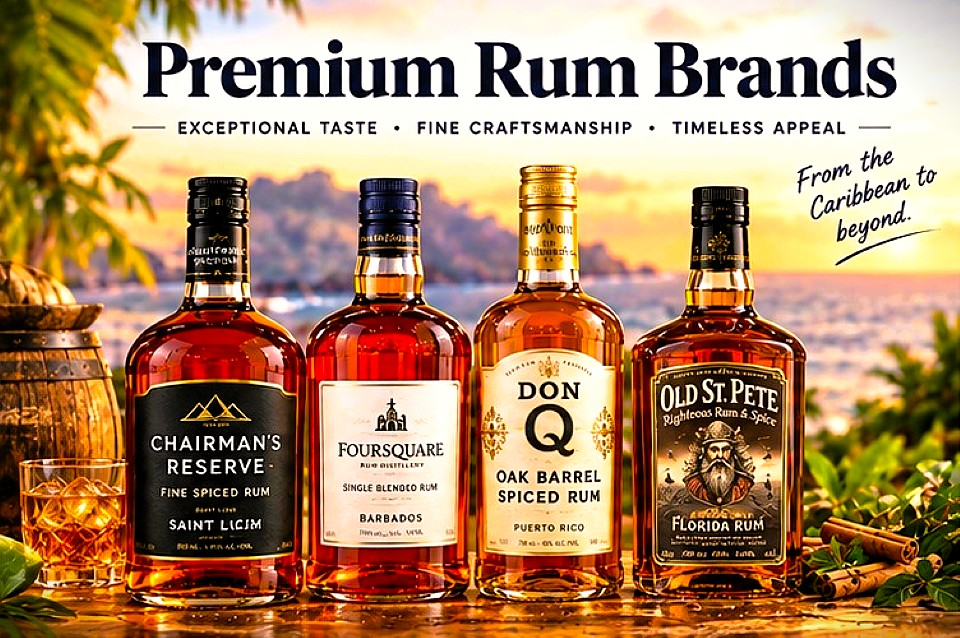
Premium rum bottles including Chairman’s Reserve, Foursquare, Don Q and Old St. Pete
9. Diplomático: A Popular Premium Rum from Venezuela
Country: Venezuela.
Known for: Premium blends and rich, smooth-tasting aged rum.
Diplomático has developed a strong following among drinkers who prefer a fuller, rounded rum profile. Its portfolio includes blends that appeal to both new premium-rum drinkers and people interested in exploring more complex bottlings.
The brand is often discussed in the context of sipping rum because its well-known expressions can deliver a rich combination of sweet-toned, roasted and oak-influenced flavours. However, taste is subjective, and the best bottle depends on whether the drinker prefers sweetness, dryness, spice or a stronger wood influence.
Diplomático is also a useful brand for understanding the difference between a rum’s perceived sweetness and its actual composition. A spirit can taste sweet because of aromas such as vanilla, caramel and dried fruit; the sensory impression alone does not establish whether sugar has been added.
Flavour and style: Depending on the bottling, notes may include caramel, vanilla, dried fruit, cocoa, spice and oak.
Best for: Sipping, slow tasting and premium-rum gifts.
Why it stands out: Diplomático is a recognisable choice for people exploring richer, more rounded rum styles.
10. Flor de Caña: A Recognised Rum Brand from Nicaragua
Country: Nicaragua.
Known for: Aged rum, dry-leaning styles and a range of mature expressions.
Flor de Caña is an established Central American rum brand with a portfolio that includes white, gold and aged expressions. It can appeal to drinkers who want to explore rum outside the most familiar Caribbean labels.
The range offers different options for mixing and sipping. Lighter expressions can work in cocktails, while older bottlings may bring more oak, dried-fruit and spice character.
When comparing aged rums, it is worth looking beyond the number on the label. The maturation environment, barrel type, blending and production method can all affect flavour, and an age statement does not guarantee that every rum with the same number will taste alike.
Flavour and style: Varies by expression, from relatively light and clean to deeper notes of vanilla, wood, caramel and spice.
Best for: Cocktail-making, exploring aged rum and comparing Central American producers.
Why it stands out: Flor de Caña broadens the picture of rum beyond a handful of Caribbean islands.
11. Brugal: A Major Dominican Rum Name
Country: Dominican Republic.
Known for: Dry-leaning rum styles and aged expressions.
Brugal is an important name in Dominican rum and a useful choice for readers exploring the diversity of Spanish-speaking Caribbean rum traditions.
The brand offers different expressions, including rums for mixing and aged bottlings. The exact character varies by product, but Brugal is often considered by people who prefer a rum that can work in a cocktail without making the drink excessively sweet.
The Dominican Republic has a significant rum industry, and Brugal is one of the labels that helps bring the country’s rum-making identity to international audiences.
Flavour and style: Depends on the expression, with some bottlings emphasising a cleaner profile and others showing more oak, spice and caramel.
Best for: Rum highballs, mixed drinks and exploring Dominican rum.
Why it stands out: Brugal is a useful reference point for people who want to compare the styles of different Caribbean rum-producing countries.
12. Don Q: A Puerto Rican Rum with Cocktail Heritage
Country: Puerto Rico.
Known for: White rum, gold rum, aged rum and cocktail-friendly expressions.
Don Q is a familiar Puerto Rican rum brand with a broad range of expressions. It is particularly relevant to cocktail enthusiasts because Puerto Rican rum has a long association with the modern cocktail bar. A light expression can serve as a base for drinks where citrus, sugar and other ingredients are meant to remain prominent. More mature bottlings allow drinkers to explore oak and richer flavour development.
Don Q also demonstrates why rum colour alone is not a reliable guide to quality. White rum can be carefully produced and suitable for premium cocktails, while dark rum can vary from relatively simple mixing spirits to complex aged bottlings.
Flavour and style: Ranges from light and clean to richer, more oak-influenced profiles.
Best for: Daiquiris, Mojitos, rum punches and exploring Puerto Rican rum.
Why it stands out: Don Q is a versatile brand for cocktail drinkers who want to explore a rum tradition beyond the most heavily marketed international labels.
13. The Kraken: A Recognisable Black Spiced Rum
Brand style: Black spiced rum.
Known for: Bold packaging, dark colour and pronounced spice character.
The Kraken Black Spiced Rum has one of the most recognisable identities in the spiced-rum category. It is particularly popular with drinkers who prefer a darker-looking spirit and a more assertive flavour profile.
The brand’s official product information describes notes including caramel, toffee and spice, with cinnamon, vanilla and nutmeg among the flavours associated with its Original expression. Explore The Kraken’s official product page.
The Kraken is often used in mixed drinks because its strong flavour can stand up to cola, ginger beer and other mixers. Its dark appearance should not be taken as proof of age or quality, however. Colour can be influenced by the production process and, where permitted, colouring.
Flavour and style: Pronounced spice, caramel-like notes and a bold, lingering finish.
Best for: Rum and cola, ginger-beer cocktails and flavour-forward mixed drinks.
Why it stands out: The Kraken combines a distinctive visual identity with a recognisable dark-spiced-rum style.
14. Sailor Jerry: A Classic Spiced Rum Name
Brand style: Spiced rum.
Known for: Vanilla-forward flavours, warm spice and a bold character.
Sailor Jerry is another widely recognised name in spiced rum. Its flavour profile makes it suitable for people who enjoy a fuller, warmer rum in mixed drinks.
Spiced rum can be particularly approachable because vanilla and baking-spice aromas often create a familiar sensory profile. That does not mean all spiced rums are interchangeable: their sweetness, spice intensity, alcohol strength and finish can differ significantly.
Sailor Jerry can work in a simple highball or a cocktail that benefits from a pronounced rum character. For a more accurate comparison, taste it alongside a traditional aged rum and a lighter white rum. The contrast helps demonstrate how flavouring and maturation create different styles.
Flavour and style: Warm spice, vanilla and sweet-toned notes, with product-specific differences.
Best for: Cola-based drinks, simple rum cocktails and informal entertaining.
Why it stands out: Sailor Jerry has a clear identity in the spiced-rum category and is a useful comparison with Captain Morgan and The Kraken.
15. Pusser’s Rum: A Maritime Rum Tradition
Brand heritage: Associated with British naval rum history and traditional rum blends.
Known for: Full-flavoured rum and the connection with the classic Painkiller cocktail.
Pusser’s is known for its maritime associations and its role in the modern history of rum culture. Its identity appeals to people who enjoy the historical stories surrounding spirits as well as the drink itself.
The brand is often linked with the Painkiller, a tropical cocktail made with rum, pineapple juice, orange juice and cream of coconut. The drink demonstrates how a rum with a strong character can provide a backbone for rich, fruit-forward ingredients.
As with any rum brand, the profile depends on the particular expression. Readers should consult the current product description for alcohol strength, origin and flavour notes.
Flavour and style: Full-bodied profiles vary by expression, with molasses, spice and richer rum notes often central to the style.
Best for: Painkillers, tropical cocktails and rum-history enthusiasts.
Why it stands out: Pusser’s connects traditional rum culture with a recognisable modern cocktail.
16. Rhum Clément: A Leading Name in Martinique Agricole Rum
Country and region: Martinique, in the French Caribbean.
Known for: Rhum agricole made from fresh sugar-cane juice.
Rhum Clément provides a useful introduction to a style that differs from many rums made primarily from molasses.
Rhum agricole is associated with the use of fresh sugar-cane juice rather than molasses as the principal fermentable ingredient. In Martinique, agricole rum is closely connected to a regional production tradition and its own rules of origin and production.
This ingredient difference can create a different flavour profile. Depending on the expression, drinkers may encounter grassy, herbal, vegetal, floral or fresh-cane notes alongside fruit and spice. Rhum Clément offers both unaged and aged expressions, making it possible to explore the impact of maturation on an agricole base.
Flavour and style: Fresh cane, grassy or herbal notes in some expressions; more oak and spice in aged bottlings.
Best for: Ti’ Punch, agricole-style cocktails and exploring a different rum-making tradition.
Why it stands out: Rhum Clément shows that rum can be defined by fresh cane character as well as the richer molasses profiles familiar to many consumers.
17. Rhum J.M: An Agricole Rum Producer with Distinctive Character
Country and region: Martinique.
Known for: Agricole rum and aged expressions.
Rhum J.M is another important name for people interested in the French Caribbean’s agricole tradition. Its range includes rums that can be used in cocktails as well as mature bottlings for more focused tasting.
The use of fresh sugar-cane juice creates a different starting point from molasses-based rum. Fermentation and distillation then influence the spirit’s aroma and texture, while ageing can add vanilla, toasted wood, spice and dried-fruit notes.
Agricole rum is not automatically better or more complex than molasses rum. It is a different style, and the choice comes down to the flavour profile a drinker enjoys.
Flavour and style: Can include fresh cane, herbal notes, citrus, fruit and oak depending on the expression.
Best for: Ti’ Punch, cane-forward cocktails and comparative rum tastings.
Why it stands out: Rhum J.M is a strong choice for discovering the distinctive character of Martinique rum.
18. El Dorado: A Well-Known Guyanese Rum Brand
Country: Guyana.
Known for: Aged rum and blends associated with Guyana’s rum-making heritage.
El Dorado is an established name for drinkers exploring rum from Guyana. Its range includes different aged expressions, and the brand is often discussed by enthusiasts interested in the effect of distillation equipment, blending and maturation on flavour.
Rum produced in the same country can differ substantially depending on the distillery and method. Historic stills, fermentation choices and blending decisions can contribute distinctive textures and aromas.
El Dorado’s aged rums can be interesting for drinkers who enjoy richer spirits with notes of caramel, dried fruit, spice and oak. The individual expression matters, so check the specific bottle rather than assuming that all rums in the range have the same flavour.
Flavour and style: Often associated with fuller, mature notes, though the profile varies by bottling.
Best for: Sipping selected aged expressions and exploring Guyanese rum.
Why it stands out: El Dorado offers a way to discover a rum-producing country with a distinctive place in Caribbean spirits history.
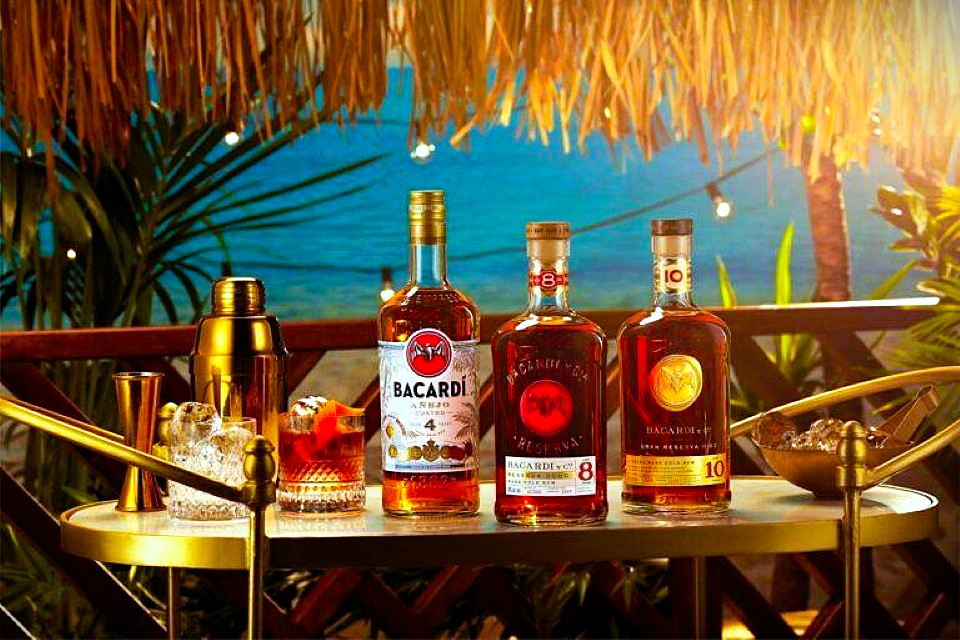
Best rum brands from around the world including white, dark, spiced and aged rum bottles
19. Santa Teresa 1796: A Venezuelan Premium Rum
Country: Venezuela.
Known for: Premium aged rum and a more contemplative sipping style.
Santa Teresa 1796 is a recognised premium rum brand that appeals to people looking for a spirit to enjoy slowly rather than simply mix with cola or juice.
Its signature expression is associated with a solera-style ageing and blending approach. As with any solera rum, consumers should read the producer’s explanation carefully: a solera designation is not necessarily equivalent to a straightforward statement that every drop has spent the same number of years in a barrel.
Premium rum is often judged by balance rather than intensity alone. A successful sipping rum may combine fruit, oak, spice and sweetness in a way that feels integrated, with the finish remaining pleasant rather than dominated by alcohol heat.
Flavour and style: Rich, rounded notes can include dried fruit, caramel, spice and oak, depending on the expression.
Best for: Sipping neat, slow tasting and premium gifting.
Why it stands out: Santa Teresa 1796 represents the premium end of Venezuelan rum and offers a useful comparison with Zacapa and Diplomático.
20. Angostura: A Trinidadian Rum Producer
Country: Trinidad and Tobago.
Known for: Rum and the wider Angostura bitters and cocktail tradition.
Angostura is internationally recognised for aromatic bitters, but it also has a significant rum portfolio. The brand is useful for readers who want to explore Trinidadian rum and its role in classic and contemporary cocktails.
The rum range includes expressions suited to mixing as well as aged styles. As with other large producers, each bottling should be assessed individually: colour, age, sweetness and alcohol strength can differ across the range.
Angostura’s connection with cocktail culture makes it especially relevant to people building a home bar. A well-chosen rum can be used in a variety of recipes, from straightforward highballs to more elaborate drinks that call for a spirit with greater depth.
Flavour and style: Varies across the range, from light and mixable to richer, aged profiles.
Best for: Cocktail-making and exploring rum from Trinidad and Tobago.
Why it stands out: Angostura brings together a recognisable cocktail heritage and a rum-producing tradition.
21. Wray & Nephew: Jamaica’s Famous Overproof White Rum
Country: Jamaica.
Known for: Overproof white rum and a powerful, expressive character.
Wray & Nephew is a prominent Jamaican rum name and an important example of how different a rum can be from the light, lower-strength spirits commonly used in casual cocktails. Overproof rum has a higher alcohol concentration than many standard bottlings. Its strength can intensify aroma and flavour, but it also means that it must be measured and handled carefully when making drinks.
Wray & Nephew is often associated with Jamaican rum punch and other recipes in which a small amount of high-strength rum contributes a strong, distinctive character. It is not a direct substitute for every white rum in a recipe: adjusting the quantity may be necessary to maintain the intended balance.
Flavour and style: Bold, aromatic and expressive, with the exact profile shaped by the product’s production style.
Best for: Selected Jamaican cocktails and recipes specifically designed for overproof rum.
Why it stands out: Wray & Nephew demonstrates the importance of alcohol strength and regional style when choosing a rum.
22. Myers’s Rum: A Familiar Jamaican Dark Rum
Country: Jamaica.
Known for: Dark rum and traditional mixed drinks.
Myers’s is a long-established name associated with dark Jamaican rum. It is often used in recipes that benefit from a richer, more pronounced rum flavour.
Dark rum can contribute notes associated with molasses, caramel, spice and wood, although a spirit’s colour alone does not tell the full story of how it was made. Some dark rums are aged; others may derive their colour from permitted colouring methods. Product details matter.
Myers’s can be useful in tropical drinks and recipes where the rum needs to stand alongside fruit juice, syrups or other assertive ingredients. It can also be used in selected baking recipes, where dark rum’s flavour works with ingredients such as brown sugar, vanilla and dried fruit.
Flavour and style: Richer, molasses-forward notes, with the exact profile depending on the expression.
Best for: Dark-rum cocktails, tropical punches and some dessert recipes.
Why it stands out: Myers’s is a recognisable option for readers who want a dark rum with a clear place in classic mixed drinks.
23. Goslings: The Rum Name Behind the Dark ‘n Stormy
Country and heritage: Bermuda.
Known for: Dark rum and the Dark ‘n Stormy cocktail tradition.
Goslings is one of Bermuda’s best-known rum brands. Its dark rum has a strong association with the Dark ‘n Stormy, a cocktail traditionally combining dark rum and ginger beer.
The drink’s appeal comes from contrast: the rum brings rich, molasses-like notes, while ginger beer contributes spice and carbonation. A squeeze of lime can add freshness, depending on the recipe and personal preference.
Goslings is a useful brand for anyone who enjoys simple cocktails with a recognisable flavour profile. It also illustrates that rum culture extends beyond the largest Caribbean islands to other places with their own long-standing traditions.
Flavour and style: Dark, robust and suited to bold mixers, depending on the expression.
Best for: Dark ‘n Stormy-style drinks and ginger-beer highballs.
Why it stands out: Goslings is closely associated with a classic cocktail and offers a straightforward entry point to Bermuda’s rum heritage.
24. Bumbu: A Modern, Flavour-Forward Rum Brand
Brand style: A modern rum brand known for a sweet-toned, dessert-like profile.
Known for: Distinctive packaging and approachable sipping or mixed-drink occasions.
Bumbu has attracted attention among drinkers looking for a rum with a rich, rounded profile and strong visual identity. It is often compared with other sweet-toned or spiced rum styles, although its products should be assessed individually rather than treated as interchangeable.
A flavour-forward rum can be appealing to people who are new to sipping spirits because vanilla, caramel and fruit-like notes may feel familiar. However, anyone comparing products should check the label for the exact category, ingredients and production details instead of assuming that all similarly styled rums are made in the same way.
Bumbu can be enjoyed according to the recommendations for the particular expression, whether neat, over ice or in a simple mixed drink.
Flavour and style: Often associated with sweet-toned, rounded flavours; the precise profile depends on the bottle.
Best for: Drinkers who enjoy approachable, flavour-forward rum and distinctive bottles for gifting.
Why it stands out: Bumbu illustrates the modern market for rums with a strong lifestyle identity and a rich sensory profile.
25. Foursquare: A Respected Barbados Rum Producer
Country: Barbados.
Known for: Distinctive rum production, aged expressions and blends.
Foursquare is especially relevant to drinkers who want to explore rum beyond the most widely advertised mass-market brands. Its releases have earned attention among enthusiasts for their production detail, blending and range of flavour profiles.
Barbados has a long-standing place in rum history, and Foursquare provides a contemporary example of the island’s contribution to the category. Depending on the expression, drinkers may encounter a combination of fruit, spice, oak, vanilla and other mature flavours.
For serious rum exploration, Foursquare is a reminder that the category includes both international household names and producers whose appeal is strongest among people who enjoy comparing distillation methods, cask choices and blending decisions.
Flavour and style: Varies by release, with aged expressions often showing more developed oak and spice notes.
Best for: Enthusiast tastings, exploring Barbadian rum and selected sipping occasions.
Why it stands out: Foursquare offers a deeper route into Barbados rum for people who want to look beyond entry-level bottles.
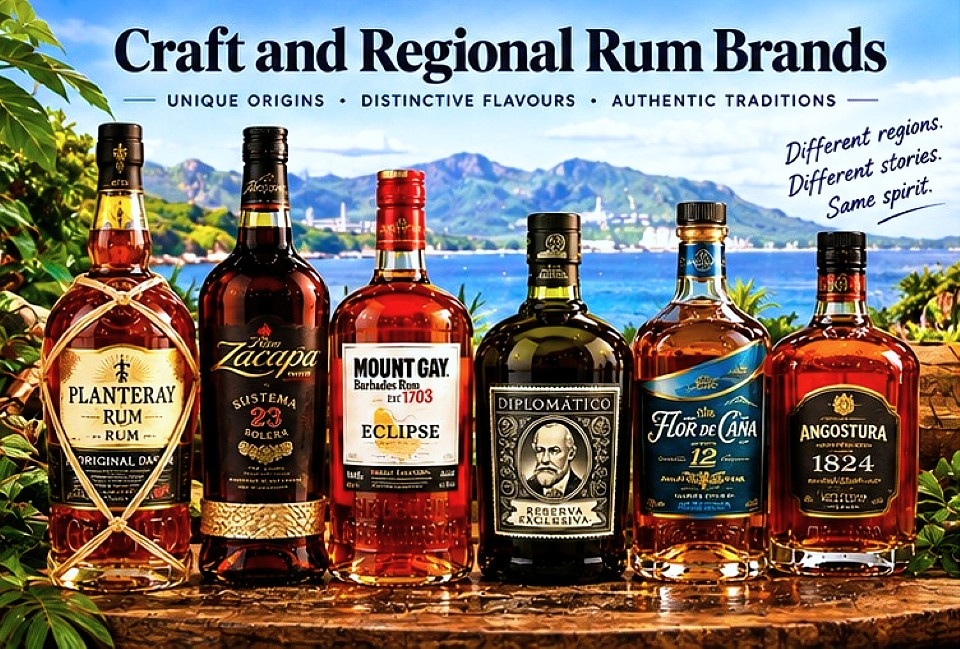
Regional rum brands including Planteray, Ron Zacapa, Mount Gay, Diplomático, Flor de Caña and Angostura
Popular Rum Brands at a Glance
The following table summarises the general role each brand can play. These are broad starting points, not claims that every expression in a brand’s portfolio tastes the same.
| Rum brand | Country or regional association | Style to explore | Common use |
|---|---|---|---|
| Bacardi | Cuban heritage; international | White and aged rum | Mojitos and Daiquiris |
| Tanduay | Philippines | Multiple styles | Exploring Asian rum |
| Captain Morgan | Caribbean-associated brand | Spiced rum | Rum and cola |
| Havana Club | Cuba | White and aged rum | Cuban-style cocktails |
| Appleton Estate | Jamaica | Blended and aged rum | Cocktails and sipping |
| Planteray | Multiple origins | Regional blends and aged rum | Comparing origins |
| Ron Zacapa | Guatemala | Premium aged rum | Sipping and gifting |
| Mount Gay | Barbados | Blended and aged rum | Cocktails and tastings |
| Diplomático | Venezuela | Premium blends | Sipping |
| Flor de Caña | Nicaragua | White, gold and aged rum | Mixing and sipping |
| Brugal | Dominican Republic | White and aged rum | Highballs and cocktails |
| Don Q | Puerto Rico | White, gold and aged rum | Mojitos and Daiquiris |
| The Kraken | Caribbean-associated brand | Black spiced rum | Bold mixed drinks |
| Sailor Jerry | Spiced-rum category | Spiced rum | Rum and cola |
| Pusser’s | British maritime rum tradition | Full-flavoured blends | Painkiller-style cocktails |
| Rhum Clément | Martinique | Agricole rum | Ti’ Punch and tastings |
| Rhum J.M | Martinique | Agricole rum | Cane-forward cocktails |
| El Dorado | Guyana | Aged rum | Sipping |
| Santa Teresa 1796 | Venezuela | Premium aged rum | Sipping and gifting |
| Angostura | Trinidad and Tobago | White and aged rum | Cocktails |
| Wray & Nephew | Jamaica | Overproof white rum | Selected Jamaican cocktails |
| Myers’s | Jamaica | Dark rum | Tropical cocktails |
| Goslings | Bermuda | Dark rum | Dark ‘n Stormy-style drinks |
| Bumbu | Modern flavour-forward category | Rich, sweet-toned rum styles | Sipping or simple mixing |
| Foursquare | Barbados | Aged rum and blends | Tastings and sipping |
The Main Types of Rum
Understanding rum styles makes it much easier to choose a bottle. Terms such as white, gold, dark, spiced and aged describe different aspects of a rum’s appearance, production or flavour profile; they are not a universal quality ladder.
1. White Rum
White rum is generally light in colour and is widely used in cocktails. Some expressions are unaged, while others are matured and then filtered to remove much of the colour.
White rum is popular in the Mojito and Daiquiri because it can provide the spirit’s character without overwhelming citrus, sugar or mint. Bacardi, Don Q and Havana Club are examples of brands with white-rum expressions, although the precise flavour varies by bottle.
Choose white rum when: You want a versatile base for fresh, citrus-led cocktails.
2. Gold Rum
Gold rum typically has a golden colour, often associated with some degree of maturation or the production choices used to achieve the finished appearance. Its flavour can be light or relatively rich depending on the rum. Gold rum can work in highballs, punches and cocktails where a little more body is welcome.
Choose gold rum when: You want something between a very light white rum and a richer dark or aged expression.
3. Dark Rum
Dark rum is associated with a deeper colour and often a fuller flavour. However, dark colour alone does not prove that a rum has spent a long time in oak barrels. Production practices and permitted colouring methods vary.
Dark rums are commonly used in tropical cocktails, punches and drinks where the spirit needs to stand up to strong flavours.
Choose dark rum when: You want a pronounced rum character for bold mixed drinks.
4. Spiced Rum
Spiced rum has a flavour profile built around spices and other flavouring ingredients. Vanilla, cinnamon and baking-spice notes are common, but each producer has its own approach.
Captain Morgan, The Kraken and Sailor Jerry are well-known names in this segment.
Choose spiced rum when: You prefer warm, aromatic flavours in simple highballs or mixed drinks.
5. Aged Rum
Aged rum is matured in wooden casks or barrels, which can contribute notes of vanilla, oak, toasted wood, spice and dried fruit. The influence of ageing depends on the rum’s starting character, barrel history, climate, time and blending.
Some aged rums are designed primarily for mixing; others are intended for sipping. The word “aged” by itself does not establish a single quality level.
Choose aged rum when: You want to explore more developed flavours or enjoy a spirit slowly.
6. Rhum Agricole
Rhum agricole is associated with rum made from fresh sugar-cane juice rather than molasses. Martinique is a particularly important region for this style. Agricole rum can have fresh, grassy, herbal or vegetal notes, although aged examples can also develop oak and spice characteristics.
Choose agricole rum when: You want to discover a cane-forward style that tastes different from many molasses-based rums.
How to Choose the Right Rum Brand
With so many brands and styles available, the best way to select a rum is to begin with the drinking occasion rather than the label alone.
1. Decide Whether You Want Cocktails or Sipping
If you mainly make Mojitos, Daiquiris or Cuba Libres, a versatile white rum is a sensible starting point. You do not necessarily need an expensive bottle for a cocktail with several ingredients. If you want to sip rum neat, consider an aged expression whose flavour profile appeals to you. Look for producer tasting notes that describe fruit, spice, oak, vanilla or other characteristics you enjoy.
2. Consider the Flavour You Prefer
Different drinkers enjoy different rum profiles:
-
-
- Light and fresh: Look at white-rum expressions from established cocktail brands.
- Warm and aromatic: Consider a spiced rum.
- Rich and dark: Explore dark rum and fuller-bodied blends.
- Oak and dried fruit: Compare aged expressions.
- Fresh sugar-cane character: Explore agricole rum.
- Bold and intense: Look at higher-strength expressions, taking care to measure and serve them appropriately.
-
Flavour descriptions are helpful, but they are not substitutes for tasting. When possible, compare a few different styles rather than buying several bottles that taste similar.
3. Look at the Country of Origin
Origin can provide useful context, but it should not be treated as a guarantee of a particular flavour.
Jamaica is known for distinctive rum traditions, Barbados has a long history of rum production, Martinique is associated with agricole rum, and countries such as Guatemala, Guyana, Nicaragua, the Dominican Republic, Trinidad and Tobago, and the Philippines contribute their own styles.
The West Indies Rum & Spirits Producers’ Association describes rum as a spirit whose diversity is shaped by regional traditions, distillation, ageing and blending. Learn more about rum-making traditions.
4. Read the Label Carefully
Check the following details before purchasing:
-
-
- The exact expression and rum category.
- Alcohol by volume (ABV).
- Any age statement and how the producer explains it.
- The origin and producer information.
- Whether the rum is flavoured or spiced.
- The producer’s suggested serving style.
- The bottle size and local availability.
-
Age statements, sweetness and production methods can differ across the category. Avoid assuming that a darker rum is necessarily older, or that a more expensive rum will automatically suit your taste better.
5. Match the Bottle to Your Budget
A good rum does not have to be the most expensive one on the shelf. For cocktail-making, a reliable, versatile bottle may be the most practical option. For sipping, some drinkers may prefer to spend more on a carefully selected aged expression.
If you are buying a gift, consider the recipient’s preferences. A person who loves tropical cocktails may appreciate a different rum from someone who enjoys comparing aged spirits neat.
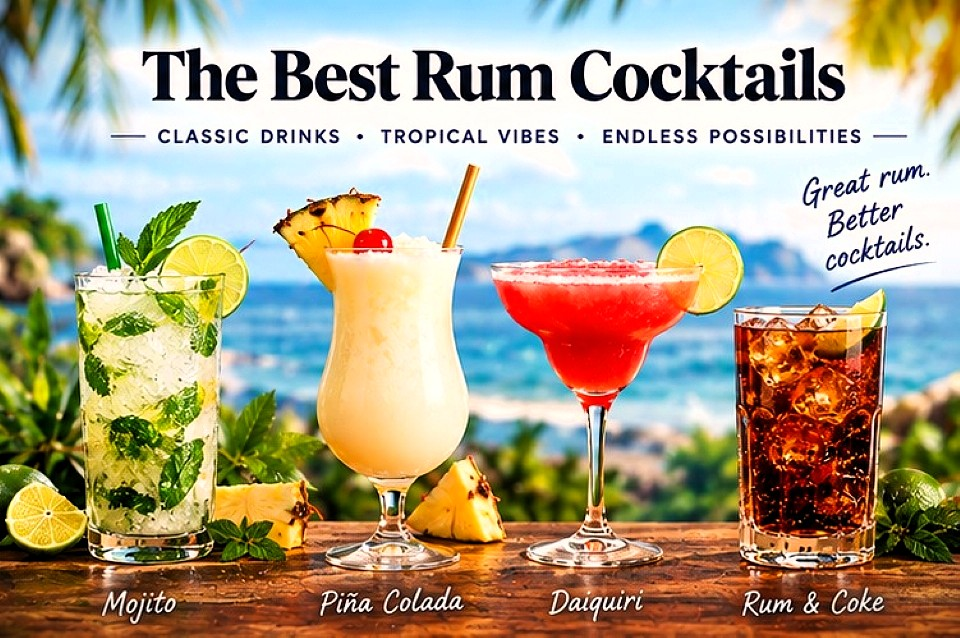
Classic rum cocktails including a Mojito, Piña Colada, Daiquiri and rum and cola
Which Rum Brands Are Best for Cocktails?
There is no single best rum for every cocktail. A Daiquiri needs a different profile from a Dark ‘n Stormy, and a spiced-rum highball has different requirements from a slow-sipping pour.
1. Best Rum Brands for Mojitos
A Mojito combines rum, lime, mint, sugar and soda water. A light rum that integrates well with citrus and mint is a sensible choice. Brands with white-rum expressions, including Bacardi, Havana Club and Don Q, are worth exploring. Choose according to availability and your preferred balance of flavour.
2. Best Rum Brands for Daiquiris
A classic Daiquiri is made with rum, fresh lime juice and sugar. Because the recipe is simple, the rum’s character is easy to notice.
A clean, balanced white rum is a traditional starting point. If you enjoy more pronounced flavour, compare the result with a rum that has a little more body. Adjust the sugar and lime to taste rather than assuming one rum works identically in every recipe.
3. Best Rum Brands for Rum and Cola
Rum and cola is a simple highball, but different rums produce noticeably different results. Captain Morgan and Sailor Jerry are common starting points for people who like spiced-rum flavours. Bacardi and other unspiced expressions offer a different profile. The Kraken can appeal to drinkers who prefer a darker, bolder taste.
Serve with plenty of ice, add cola to taste and consider a lime wedge for freshness.
4. Best Rum Brands for Tropical Cocktails
Tropical drinks often combine rum with pineapple, citrus, coconut or other fruit flavours. The right rum depends on the recipe.
For lighter, fresh drinks, consider a white or gold rum. For fuller recipes, an aged or dark rum may add more depth. Pusser’s is associated with the Painkiller, while Myers’s and Goslings are familiar names in dark-rum drinks.
5. Best Rum Brands for More Complex Cocktails
Some cocktails benefit from rums with distinctive flavour, including Jamaican expressions, aged blends and selected overproof bottlings. Appleton Estate, El Dorado and Wray & Nephew can help illustrate different styles.
High-strength rum should be measured carefully. Do not substitute an overproof rum for a standard-strength rum in equal quantities without considering how the change affects the drink’s alcohol content and balance.
For more cocktail inspiration, read Most Popular Rum Cocktails in the World.
How to Taste and Serve Rum
Rum can be enjoyed in a variety of ways. The most suitable serving method depends on the bottle and the drinker’s preferences.
1. Neat
Pour a modest serving into a clean tasting glass. Take time to notice the aroma before tasting. Look for fruit, spice, vanilla, caramel, herbs, oak or other notes. Avoid expecting every flavour described by a producer to be obvious to every drinker. Taste perception varies, and a tasting note is a guide rather than a test.
2. With a Little Water
A small amount of water may change how a rum’s aromas and alcohol intensity are perceived. Start with a few drops, taste again and decide whether you prefer the result.
3. Over Ice
Ice lowers the temperature and gradually dilutes the spirit. This can soften the perceived intensity and make some rums more refreshing. A large ice cube usually melts more slowly than several small cubes, although the actual dilution depends on the ice, glass and serving conditions.
4. In a Highball
A highball combines a spirit with a longer mixer, commonly served over ice. Rum with cola, ginger beer or soda water can be a simple way to explore a bottle without preparing a complicated cocktail.
5. In a Classic Cocktail
Classic cocktails provide a structured way to compare rums. A Mojito, Daiquiri or Cuba Libre can highlight different aspects of a spirit, while dark-rum and tropical cocktails can demonstrate how a fuller profile interacts with fruit and spice.
How to Store Rum
Rum should generally be stored upright in a cool, dry place away from direct sunlight and major temperature changes. Keep the cap or cork securely closed to limit evaporation and unwanted changes in aroma.
Unlike wine, a sealed bottle of distilled rum does not normally continue ageing in the bottle in the same way that it matures in a wooden cask. Once opened, a bottle can gradually change as air enters and the remaining spirit becomes exposed to oxygen. The speed and extent of those changes vary.
For the best experience:
-
-
- Keep bottles away from direct sunlight.
- Close the bottle securely after pouring.
- Avoid unnecessary exposure to heat.
- Store the bottle upright.
- Use clean glassware and suitable measuring tools when serving.
-
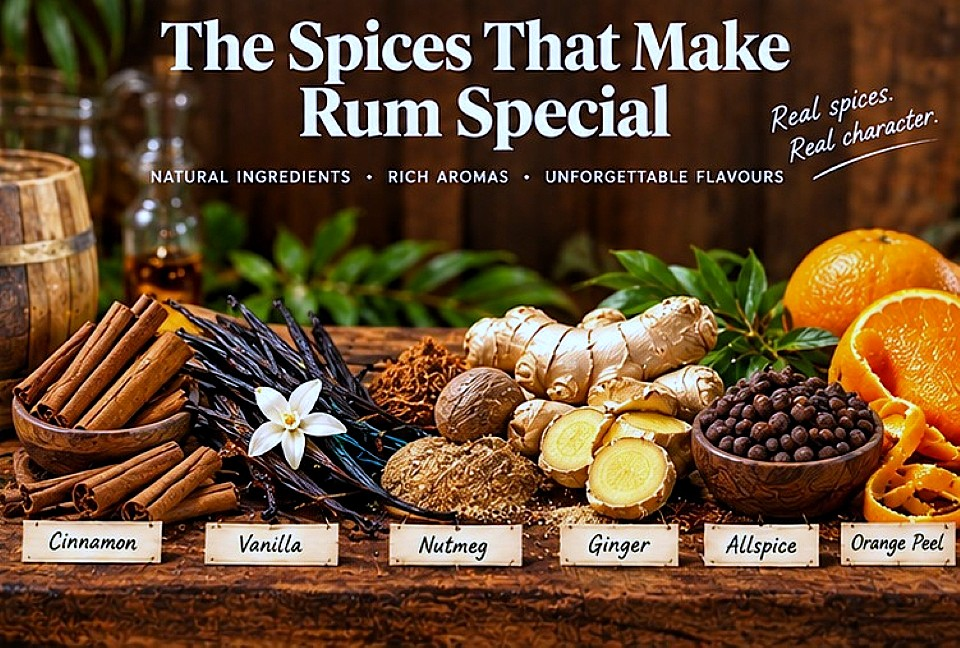
Spiced rum ingredients including cinnamon, vanilla, nutmeg, ginger, allspice and orange peel
Frequently Asked Questions About Rum Brands
What are the most popular rum brands in the world?
Well-known international rum brands include Bacardi, Tanduay, Captain Morgan, Havana Club, Appleton Estate, Planteray, Ron Zacapa, Mount Gay, Diplomático, Flor de Caña and Brugal. Which brands rank highest depends on the measure used, such as worldwide sales volume, bartender popularity or premium-market reputation.
What is the number-one rum brand in the world?
There is no single answer for every ranking. In Drinks International’s 2026 global bestselling-rum volume report, Tanduay ranked first, followed by Bacardi and Captain Morgan. In its 2025 bartender-focused Brands Report, Bacardi led the rum bestseller category surveyed. These rankings use different measures and should not be treated as interchangeable.
Which rum brand is best for beginners?
A versatile white rum or an approachable spiced rum can be a good starting point. White rum is useful for learning classic cocktails, while spiced rum may appeal to people who prefer vanilla and warm spice flavours. The best choice depends on whether you intend to mix cocktails or sip rum on its own.
Which rum is best for sipping?
There is no universal winner. Premium aged expressions from brands such as Ron Zacapa, Diplomático, Santa Teresa 1796, El Dorado, Appleton Estate and Foursquare are worth exploring, depending on the bottle and your taste preferences. Look for a profile you enjoy rather than choosing by price or age statement alone.
What is the difference between white rum and dark rum?
White rum is generally light in colour and commonly used in cocktails. Dark rum has a deeper colour and is often associated with a fuller flavour. However, colour alone does not establish how long a rum has aged or how it was produced. Always check the individual bottle’s details.
What is the difference between spiced rum and aged rum?
Spiced rum has a flavour profile created using spices and other flavouring ingredients. Aged rum is matured in wooden casks or barrels, which can contribute oak, vanilla and other developed notes. These categories are not necessarily mutually exclusive, so check how the producer classifies the particular product.
Is expensive rum always better?
No. Price can reflect factors such as production scale, ageing, packaging, rarity and brand positioning, but it does not guarantee that a rum will suit your palate. A moderately priced rum may be ideal for a cocktail, while a premium bottle may be more appropriate for slow sipping or gifting.
Which rum is best for Mojitos?
A light rum is a common choice for a classic Mojito because it works with lime, mint, sugar and soda water. Bacardi, Havana Club and Don Q have white-rum expressions worth considering. The best option depends on local availability and your preferred balance of flavours.
Which rum is best for rum and cola?
Spiced rum brands such as Captain Morgan and Sailor Jerry are popular options for a flavour-forward rum and cola. A white or gold rum gives the drink a different character. Start with a measured pour and adjust the mixer to suit your preference.
What is agricole rum?
Agricole rum is associated with rum made from fresh sugar-cane juice rather than molasses. Martinique is particularly well known for this style. Agricole rum may offer fresh cane, grassy, herbal or vegetal notes, depending on the expression.
Is rum made only in the Caribbean?
No. The Caribbean is central to rum history and production, but rum is also made in countries across Asia, Central America, South America and other regions. Tanduay’s prominence in global volume reporting is one example of the category’s international reach.
How should rum be stored after opening?
Store rum upright in a cool, dry place away from sunlight and heat. Keep the bottle tightly closed after each use. A sealed bottle generally does not continue ageing like rum in a barrel, although the contents of an opened bottle can gradually change over time.
Where can I find rum in Toronto?
For shoppers in Toronto and the Greater Toronto Area, Always Dial A Bottle Toronto provides an online starting point for exploring available alcohol and spirits products. Product availability, delivery areas, ordering conditions and legal requirements should be checked directly with the retailer.
Visit Always Dial A Bottle Toronto to explore the site’s current selection and delivery information.
Discover Rum and Spirits in Toronto
Exploring the world’s most popular rum brands is a way to discover more than familiar labels. It introduces different countries, production methods, cocktail traditions and flavour profiles—from crisp white rum and aromatic spiced rum to aged blends and cane-forward agricole expressions.
For cocktail enthusiasts, a versatile white rum can be a useful first purchase. People who enjoy warmer flavours may prefer spiced rum, while drinkers interested in comparing oak, fruit and spice can explore aged expressions from different regions.
There is no need to choose a rum solely because it appears at the top of a popularity list. Consider how you plan to serve it, what flavours you enjoy, the bottle’s exact specifications and the occasion for which you are buying it.
If you are shopping locally, Always Dial A Bottle Toronto is a relevant place to explore the available rum and spirits selection. Start with the Toronto alcohol delivery website, review the current product listings and confirm local availability before placing an order.
For further reading, continue with Most Popular Rum Cocktails in the World to discover how different rum styles work in classic drinks.
Final Thoughts: Finding Your Favourite Rum Brand
The world’s rum market includes global sales leaders, iconic cocktail brands, traditional Caribbean producers and premium labels appreciated by enthusiasts. Bacardi, Tanduay and Captain Morgan illustrate the scale of international rum consumption, while Havana Club, Appleton Estate, Mount Gay and other established producers demonstrate the range of regional traditions. Premium names such as Ron Zacapa, Diplomático, Santa Teresa 1796 and Foursquare offer further avenues for exploration.
The most useful approach is to think of popularity as a starting point—not a guarantee that one bottle will be right for everyone.
Try comparing a light white rum with a spiced expression and an aged rum. Notice how each behaves in a cocktail and, where appropriate, how it tastes in a small neat pour. Read the label, learn about the producer and choose according to your own preferences.
With so many styles available, the best rum for you is the one that suits your taste, occasion and intended use.