
Blog
Best Kosher Wine Brands in the World: 20 Top Producers

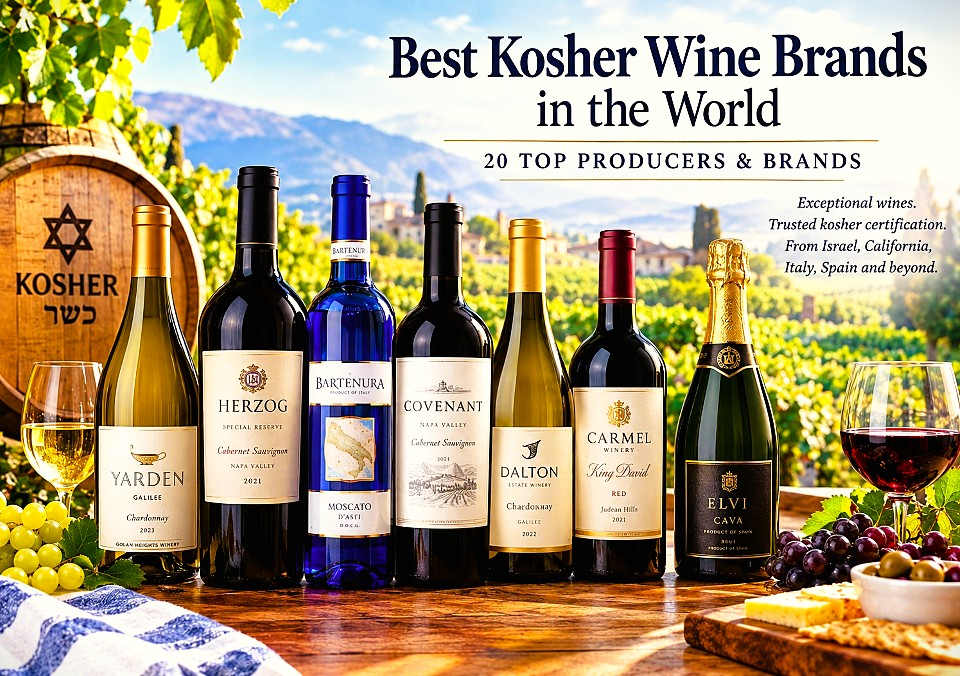
Best Kosher Wine Brands in the World: 20 Exceptional Kosher Wine Producers & Brands
Kosher wine has changed dramatically over the last several decades. What was once associated primarily with sweet sacramental wines is now a remarkably diverse category that includes serious Cabernet Sauvignon, elegant Chardonnay, expressive Sauvignon Blanc, dry rosé, sparkling wine, dessert wine and age-worthy red blends.
Today, some of the most interesting kosher wines come from Israel, California, Italy, Spain and other major wine-producing regions. Modern kosher winemaking combines traditional kashrut requirements with contemporary viticulture, temperature-controlled fermentation, oak aging, vineyard selection and the same broad range of grape varieties found throughout the international wine world.
For wine lovers looking for the best kosher wine brands in the world, there is now an impressive selection to explore.
This guide looks at 20 notable kosher wine brands and producers, including established names such as Herzog Wine Cellars, Baron Herzog, Covenant, Hagafen, Yarden, Dalton, Carmel and Bartenura, as well as internationally interesting producers such as Celler de Capçanes, Elvi Wines, Psagot and Tura.
Rather than treating kosher wine as one single style, this guide explores what makes each producer distinctive, what types of wines they are associated with, and what to consider when choosing a bottle.
Important: Kosher certification can apply to a specific wine, vintage, production run or facility rather than automatically applying to every wine made by a producer. Always check the current kosher certification and the bottle label before purchasing, particularly for Passover and when mevushal status matters.
Table of Contents
-
-
- What Is Kosher Wine?
- Why Kosher Wine Is Different
- Mevushal vs. Non-Mevushal Kosher Wine
- How to Read a Kosher Wine Label
- The 20 Best-Known Kosher Wine Brands and Producers
- Herzog Wine Cellars
- Baron Herzog
- Covenant Wines
- Hagafen Cellars
- Yarden and Golan Heights Winery
- Dalton Winery
- Carmel Winery
- Bartenura
- Kedem
- Teperberg Winery
- Psagot Winery
- Tura Winery
- Celler de Capçanes
- Elvi Wines
- Weinstock
- Other Kosher Wine Producers Worth Exploring
- Best Kosher Red Wine Styles
- Best Kosher White Wine Styles
- Best Kosher Rosé and Sparkling Wines
- Best Kosher Wines for Passover
- How to Choose the Right Kosher Wine
- Kosher Wine and Food Pairing
- Kosher Wine for Shabbat and Celebrations
- Kosher Wine for Gifts
- Buying Kosher Wine in Toronto and the GTA
- Frequently Asked Questions
- Final Thoughts
-
What Is Kosher Wine?
Kosher wine is wine produced according to Jewish dietary laws, known as kashrut.
The distinction is important because wine has a unique status within Jewish tradition. Kosher requirements for wine go beyond simply checking whether the grapes themselves are permitted.
Grapes are naturally kosher, but the production and handling of wine are subject to specific requirements. Kosher supervision can therefore involve the vineyard, winery, fermentation, cellar operations, bottling and handling of the finished wine.
According to STAR-K, natural grape products have special kosher considerations because of the religious significance historically associated with wine. Kosher wine therefore requires supervision from the appropriate stages of production.
This is one reason why the kosher wine industry has developed specialized production procedures and certification systems.
Modern kosher wine, however, is not defined by sweetness.
A kosher Cabernet Sauvignon can be completely dry. A kosher Chardonnay can be crisp and mineral-driven. A kosher Sauvignon Blanc can be refreshing and aromatic. A kosher sparkling wine can be suitable for celebrations, while kosher dessert wines can offer a sweeter alternative.
In other words:
Kosher describes how the wine is produced and supervised, not a single flavor profile.
Why Kosher Wine Is Different
The most important difference between kosher and non-kosher wine is the handling and supervision of the wine during production.
STAR-K explains that once grapes are crushed, kosher wine production requires specific supervision and that non-mevushal wine requires Shomrei Shabbos personnel for relevant handling. Mevushal wine follows different handling rules after it has undergone the required cooking/pasteurization process.
The process can involve:
-
-
- Kosher-certified ingredients
- Supervised grape processing
- Specialized winery procedures
- Kosher-certified processing aids
- Supervised fermentation
- Supervised aging
- Controlled bottling
- Appropriate sealing procedures
- Kosher certification
- Special requirements for mevushal and non-mevushal wine
-
These requirements do not prevent modern winemaking. In fact, today’s kosher wine market demonstrates just how sophisticated kosher wine production can become.
Mevushal vs. Non-Mevushal Kosher Wine
One of the most important terms to understand when shopping for kosher wine is mevushal. The Hebrew term mevushal is commonly translated as “cooked,” although modern production methods can involve rapid heating and cooling rather than traditional cooking.
The distinction matters because the handling requirements for mevushal wine differ from those for non-mevushal wine.
The Orthodox Union explains that mevushal wine can be handled and poured by a non-Jew or by a non-Shomer Shabbos Jew, whereas non-mevushal wine has stricter handling requirements once opened.
For a dinner at home where all handling is performed according to the relevant requirements, non-mevushal wine can be perfectly appropriate.
For a large catered event, restaurant or wedding where many people may be handling or pouring the wine, mevushal wine may be particularly convenient.
Why does this matter?
Imagine a wedding with several servers.
-
-
- If the wine is mevushal, it can generally be handled under the applicable less restrictive handling rules.
- If the wine is non-mevushal, additional precautions may be necessary.
-
Therefore, the best kosher wine for a particular occasion is not always the same as the best kosher wine for another occasion.
How to Read a Kosher Wine Label
When buying kosher wine, don’t simply look at the word “kosher.” Look carefully at the certification symbol and any additional information.
Depending on the wine, you may see information relating to:
-
-
- Kosher certification
- Kosher for Passover
- Mevushal
- Non-mevushal
- Mifustar
- Supervising organization
- Vintage
- Country of origin
- Grape variety
- Alcohol percentage
-
For Passover in particular, consumers should verify the specific certification on the bottle. The Orthodox Union notes that while most kosher wine is also kosher for Passover, there can be exceptions, making it important to check the label carefully.
20 Best Kosher Wine Brands and Producers to Know
1. Herzog Wine Cellars
Country: United States
Region: California
Known for: Cabernet Sauvignon, Chardonnay, Pinot Noir, Sauvignon Blanc, premium California wines
Herzog Wine Cellars is one of the most important names in modern American kosher wine. The Herzog family has a long winemaking history stretching back generations, and the family’s California operation has become a major force in premium kosher wine.
Herzog’s current portfolio includes numerous collections, including Special Reserve, Single Vineyard, Lineage, Variations, Weinstock, Jeunesse and Baron Herzog.
The winery states that its California operation offers more than 25 grape varieties, reflecting the diversity of California’s wine regions.
For serious red-wine drinkers, the Herzog Special Reserve and limited-production collections are particularly interesting.
Herzog also produces vineyard-specific wines that explore differences in California terroir. Its portfolio demonstrates an important change in kosher wine:
Kosher wine can be vineyard-driven, premium and highly focused on terroir.
The winery’s current portfolio includes small-production Single Vineyard wines and limited editions, alongside more accessible bottles.
Why explore Herzog?
Choose Herzog when you want:
-
-
- California Cabernet Sauvignon
- Premium kosher red wine
- Vineyard-specific wines
- Chardonnay
- California white wine
- Limited-production bottles
- Gift-worthy kosher wine
-
For someone building a serious kosher wine collection, Herzog is a natural producer to investigate.
2. Baron Herzog
Country: United States
Region: California
Known for: Cabernet Sauvignon, Chardonnay, Merlot, Sauvignon Blanc and approachable California wines
Baron Herzog is one of the best-known names in American kosher wine. The brand traces its history to the Herzog family and was introduced in California in 1985.
Herzog describes Baron Herzog as a premium but moderately priced California range designed to offer broad accessibility.
This makes Baron Herzog especially useful for consumers who want recognizable California wine without immediately moving into ultra-premium pricing.
The portfolio covers several familiar grape varieties, making the brand accessible to people who already understand conventional California wine.
Best occasions for Baron Herzog
Baron Herzog works well for:
-
-
- Friday-night dinners
- Family celebrations
- Holiday meals
- Casual entertaining
- Corporate gifts
- Kosher wine beginners
- Everyday drinking
-
Its combination of recognizable California varieties and kosher certification makes it one of the brands worth knowing when building a versatile kosher wine list.
3. Covenant Wines
Country: United States / Israel
Region: California and Israel
Known for: Cabernet Sauvignon, Chardonnay, Sauvignon Blanc and premium fine wine
Covenant occupies a different part of the kosher wine landscape. The winery was founded around the idea of bringing modern fine-wine techniques to kosher production, with a strong emphasis on California terroir.
Today, Covenant’s portfolio includes its flagship Covenant wines, Black Label, Landsman, Red C and other wines.
Covenant’s current website describes its flagship Covenant label as both winery and wine, while its Black Label range focuses on premium celebration wines.
The brand has also attracted considerable wine-world attention. Its press page currently highlights recognition from publications including Food & Wine and Decanter, and lists a 100-point rating for its 2023 Covenant Solomon Lot 70, Napa Valley.
That makes Covenant particularly interesting for wine enthusiasts who want to explore the upper end of kosher California wine.
Look for Covenant when you want:
-
-
- Napa Valley Cabernet Sauvignon
- Sonoma Chardonnay
- Premium kosher wine
- Fine-dining wine
- Special occasion bottles
- Serious collector-oriented wines
-
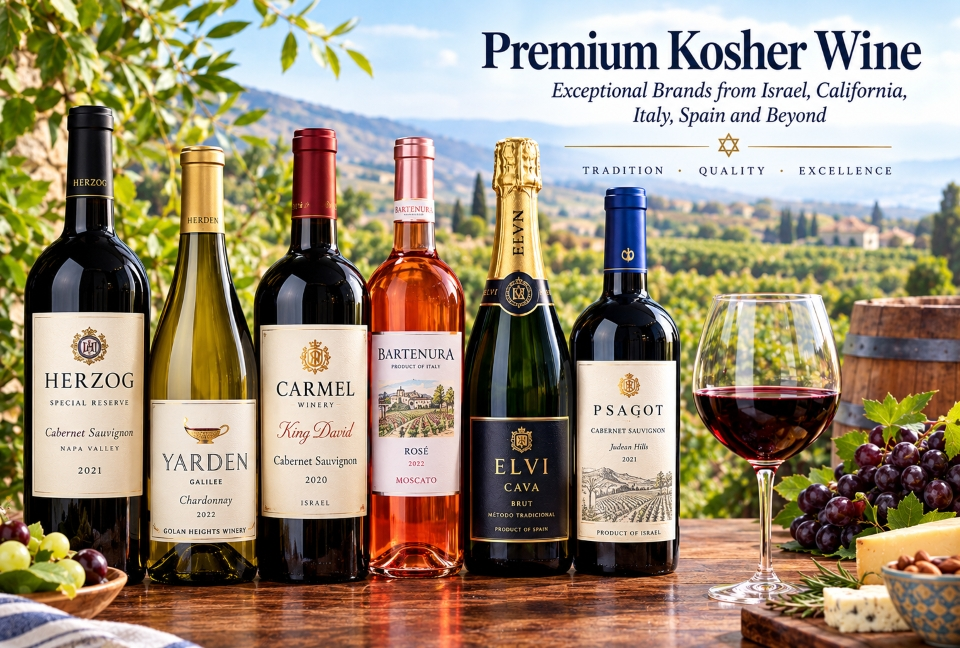
Premium Kosher Wine Brands in the World
4. Hagafen Cellars
Country: United States
Region: Napa Valley, California
Known for: Cabernet Sauvignon, Chardonnay, Pinot Noir, Sauvignon Blanc, sparkling wine
Hagafen Cellars is another major name in California kosher wine. The winery is based in Napa Valley and produces wines under several labels, including Hagafen Cellars, Prix Vineyards and Don Ernesto.
Hagafen’s own kashrut page states that wines from all three brands carry Orthodox Union certification as Kosher for Passover and are also yayin mevushal through flash pasteurization.
That combination makes Hagafen particularly useful for consumers who want premium California wine while also paying attention to kosher handling requirements.
Why Hagafen stands out
Hagafen is particularly interesting because it connects: Napa Valley wine culture + kosher winemaking + broad varietal selection.
For consumers looking for a sophisticated kosher California wine, Hagafen deserves a place on the shortlist.
5. Yarden and Golan Heights Winery
Country: Israel
Region: Golan Heights
Known for: Cabernet Sauvignon, Chardonnay, Sauvignon Blanc, Gewürztraminer, Pinot Noir, sparkling wine and dessert wine
Yarden is one of the best-known Israeli wine brands in international kosher wine. The wines come from Golan Heights Winery, whose vineyards benefit from the region’s high elevation and cool climate.
The winery’s current website identifies varieties including Gewürztraminer, Riesling, Sauvignon Blanc, Chardonnay, Pinot Noir, Pinot Gris and Cabernet Sauvignon.
Yarden has also built an international reputation for premium Israeli wine. The winery’s history records the launch of Yarden Sauvignon Blanc in 1983 and subsequent recognition for Yarden Cabernet Sauvignon and Yarden Blanc de Blancs.
Why Yarden matters?
Yarden is important because it helped demonstrate that Israeli kosher wine could compete seriously on the international wine stage.
-
-
- For red-wine drinkers, Cabernet Sauvignon is a natural starting point.
- For white-wine lovers, Chardonnay, Sauvignon Blanc and aromatic varieties provide a different side of Israeli wine.
-
The cooler high-altitude conditions of the northern Golan Heights can also produce wines with freshness and structure.
6. Dalton Winery
Country: Israel
Region: Galilee
Known for: Cabernet Sauvignon, Shiraz, Chardonnay, white wines and premium Israeli wines
Dalton Winery is another important Israeli kosher producer. The winery’s vineyards are located in the Galilee, and its portfolio includes both approachable wines and more serious estate bottlings.
Dalton’s current product information states that its wines are Kosher Le Mehadrin and Kosher for Passover under multiple supervising authorities, including the Orthodox Union. Specific wines can also be designated mevushal or non-mevushal, so the bottle should always be checked.
For example, Dalton Estate Shiraz is described by the winery as a concentrated red with black fruit, plum, berry and black-pepper notes, while its Estate Chardonnay emphasizes citrus and tropical fruit characteristics.
Dalton is especially appealing for:
-
-
- Israeli Cabernet Sauvignon
- Shiraz
- Chardonnay
- Full-bodied red wine
- Food-friendly white wine
- Kosher wine for dinner
-
7. Carmel Winery
Country: Israel
Region: Israel
Known for: Cabernet Sauvignon, Merlot, Shiraz, Chardonnay, dessert wines, Kiddush wines
Carmel Winery is one of Israel’s historic wine producers. The winery states that it has been producing wine continuously for approximately 140 years and exports its wines to multiple international markets.
Its portfolio ranges from everyday wines to premium bottlings. Carmel is also strongly associated with traditional Jewish celebrations and Kiddush wine.
Its current portfolio includes table wines, sweet wines and grape juice, while its King David range is positioned specifically for Kiddush and celebrations.
The winery describes its King David line as a leading Israeli Kiddush wine series suitable for Kiddush, Havdalah and chilled dessert-style service.
Why Carmel is worth knowing?
Carmel represents the connection between:
-
-
- Israeli wine history
- Modern winemaking
- Kosher tradition
- Kiddush wine
- Everyday table wine
- Premium Israeli wine
-
For someone searching for a broad kosher wine selection rather than one specific style, Carmel offers plenty of territory to explore.
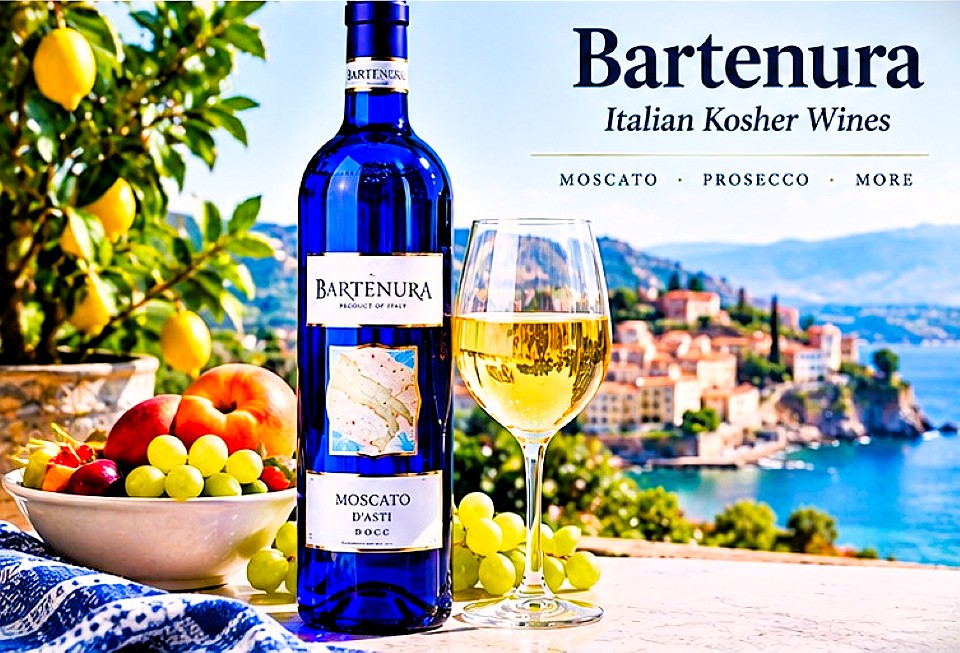
8. Bartenura
Country: Italy
Known for: Moscato, sparkling wines, Pinot Grigio, Prosecco, Rosso d’Italia
Bartenura is one of the most recognizable kosher wine brands in the American market. The brand is particularly famous for its blue-bottle Moscato, but its current portfolio is significantly broader.
Bartenura’s official portfolio includes:
-
-
- Moscato d’Asti
- Pinot Grigio
- Prosecco Brut
- Prosecco Rosé Brut
- Rosso d’Italia
- Rosso Toscano
- Brachetto
- Malvasia
- Sparkling Moscato
- Sparkling Asti
- Rosato
- Other contemporary wine products
-
The brand describes its wines as being made in Italy using grapes from Italy’s wine regions.
Why Bartenura is popular?
Bartenura is especially attractive to people who prefer:
-
-
- Sweet white wine
- Moscato
- Light sparkling wine
- Fruit-forward wine
- Italian wine
- Easy-drinking bottles
- Celebration wines
-
The blue bottle has also become one of the most recognizable visual identities in kosher wine.
9. Kedem
Country: United States
Region: New York
Known for: Concord grape wine, grape juice and traditional kosher wines
Kedem occupies an important place in the history of American kosher wine. The Herzog family developed Kedem in New York after arriving in the United States following World War II. The brand became associated with American Concord grape wines and grape juice.
Royal Wine’s historical catalog identifies Kedem Concord Grape as a sweet, red, mevushal wine with OU and Tzelem Rav supervision.
Kedem is therefore particularly relevant to consumers who want a traditional Jewish-American wine experience rather than a Napa-style dry Cabernet.
Kedem is especially appropriate for:
-
-
- Traditional celebrations
- Kiddush
- Holiday tables
- Consumers who enjoy sweet wine
- Concord grape wine
- Grape juice
- Familiar kosher classics
-
Kedem also provides an important reminder that kosher wine culture encompasses far more than premium dry table wine.
10. Teperberg Winery
Country: Israel
Region: Israel
Known for: Cabernet Sauvignon, Merlot, Shiraz, Chardonnay, dessert wines and Israeli blends
Teperberg is another established Israeli producer with a long connection to kosher wine. The winery’s history and portfolio include multiple ranges designed for different price points and occasions.
Teperberg is worth exploring when you want to compare Israeli wine styles across Cabernet Sauvignon, Merlot, Shiraz, white varieties and blends.
As with any kosher producer, certification can depend on the specific bottle, vintage and production circumstances, so current labels should be checked before purchase.
11. Psagot Winery
Country: Israel
Region: Judean Mountains / Binyamin
Known for: Cabernet Sauvignon, Bordeaux blends and premium Israeli reds
Psagot is a modern Israeli winery with a strong premium-wine identity. The winery says it was founded in 2003 and now produces approximately 25 types of wine, with more than 70% of its production exported to dozens of countries.
Its kosher supervision page states that, since the 2016 harvest, Psagot wines have been certified kosher under the supervision of Badatz HaEda HaChareidis, excluding wines produced during the Sabbatical/Shemitah year.
Psagot also produces wines in different formats, including mevushal variations for particular uses. For example, Psagot Edom is a Bordeaux-style blend aged for 12 months in French oak and is available in a mevushal variation.
Psagot is especially interesting for:
-
-
- Israeli Bordeaux blends
- Premium kosher red wine
- Judean Hills wine
- Full-bodied wines
- Special occasions
- Collectors
-
12. Tura Winery
Country: Israel
Region: Samaria
Known for: Cabernet Sauvignon, Cabernet Franc, Merlot, Shiraz, Petit Verdot and white varieties
Tura Winery was founded by Vered and Erez Ben-Saadon. The winery began with vineyards planted in the late 1990s and later developed into a winery producing a wide variety of wines.
Its current website lists Cabernet Sauvignon, Cabernet Franc, Merlot, Shiraz, Petit Verdot, Pinot Noir, Chardonnay, Sauvignon Blanc, Gewürztraminer and Viognier among its varieties.
Tura states that its wines have kosher certificates issued by several authorities, including the OU.
The winery is especially interesting for consumers who enjoy exploring boutique Israeli producers rather than only the largest commercial brands.
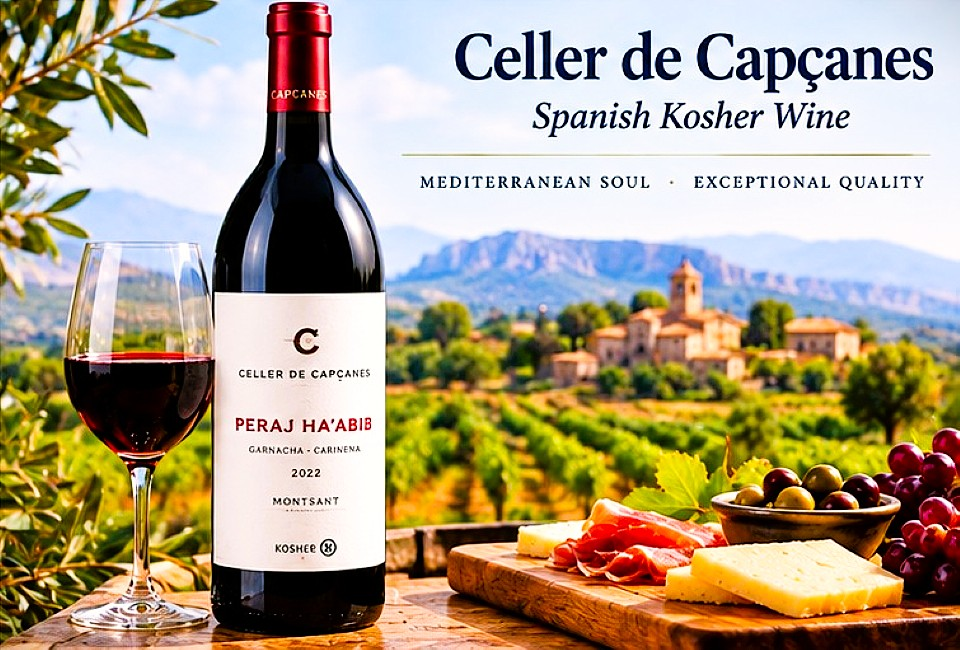
13. Celler de Capçanes
Country: Spain
Region: Montsant, Catalonia
Known for: Peraj Ha’abib / Flor de Primavera and other kosher wines
Celler de Capçanes is one of the most fascinating examples of European kosher wine. The winery is located in Catalonia’s Montsant region and produces a dedicated family of kosher wines.
Its portfolio includes:
-
-
- Peraj Ha’abib / Flor de Primavera
- Peraj Petita
- Flor del Flor
- Peraj Ha’abib Pinot Noir
- Other kosher wines
-
The winery’s current information identifies its kosher portfolio and provides detailed production information.
Its flagship Peraj Ha’abib combines varieties such as Garnacha, Cariñena and Cabernet Sauvignon, depending on vintage.
The current 2023 wine is listed as 40% Garnacha, 35% Cariñena and 25% Cabernet Sauvignon. The wine is produced under kosher supervision and is identified as Lo Mevushal and Kosher for Passover.
Why Celler de Capçanes is exciting?
This producer proves that kosher wine can express a distinctive Mediterranean terroir. For adventurous wine drinkers, it is a fascinating alternative to the more familiar California and Israeli categories.
14. Elvi Wines
Country: Spain
Regions: Spain’s major wine regions
Known for: Rioja, Priorat, Montsant, La Mancha, Cava and Mediterranean wines
Elvi Wines is another important Spanish kosher producer. The winery describes itself as a 100% kosher winery in Spain and works across several Spanish wine regions.
Its current portfolio and terroir information includes:
-
-
- La Mancha
- Rioja
- Alella
- Montsant
- Priorat
- Cava
-
This gives Elvi an unusually broad geographic identity within the kosher wine world.
For consumers interested in Spanish wine, Elvi is an excellent brand to investigate because it allows kosher wine drinkers to explore familiar Spanish appellations and grape styles.
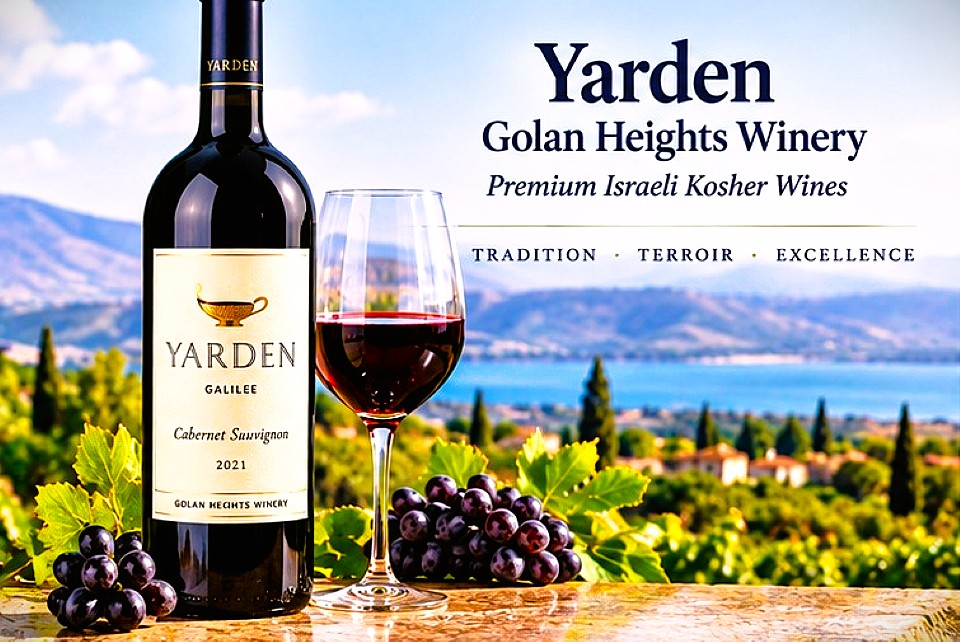
Yarden Israeli kosher wine from Golan Heights with Cabernet Sauvignon bottle and vineyard landscape
15. Weinstock
Country: United States
Region: California
Known for: California whites and reds
Weinstock is part of the Herzog family of brands. The current Herzog portfolio includes Weinstock wines made from grapes sourced from California growing regions. The brand emphasizes fresh, fruit-forward California expressions.
For example, the current Weinstock California Chenin Blanc is described with pear, green apple, citrus blossom, peach and melon characteristics, supported by crisp acidity.
Weinstock is a useful option when you want a more approachable California kosher wine rather than an ultra-premium collector bottle.
16. Capio
Country: United States
Region: Napa Valley
Known for: Luxury kosher Cabernet Sauvignon and premium Napa wine
Capio is one of the newer luxury-oriented names associated with Herzog. Herzog describes Capio as a new “icon-tier” kosher wine project developed with Morris Family Cellars and winemaker Russell Bevan. The stated goal is to create luxury kosher wines from highly regarded Napa Valley vineyards.
This category is important because it reflects how far kosher wine has moved into the luxury-wine market. For collectors searching for high-end kosher Cabernet Sauvignon, Capio is a producer to watch.
17. Psagot’s Premium Israeli Wines
Although Psagot has already been discussed as a producer, its premium category deserves additional attention.
Modern Israeli kosher wine increasingly focuses on vineyard location, elevation, oak aging and grape selection. Psagot’s wines demonstrate this evolution particularly well.
A bottle such as Psagot Edom can offer a more structured Bordeaux-inspired profile, while other wines in the portfolio provide different expressions of Israeli terroir. This makes Psagot useful for consumers who are moving from sweet kosher wine into dry premium reds.
18. Premium Herzog Single-Vineyard Wines
Herzog’s Single Vineyard collection deserves separate consideration because it represents the small-lot side of California kosher wine. The winery describes these wines as vineyard-focused and produced in quantities of fewer than 500 cases. That is a very different proposition from mass-market kosher wine.
Single-vineyard wines are particularly interesting for:
-
-
- Wine collectors
- Anniversary gifts
- Business gifts
- Wine dinners
- Special occasions
- Serious Cabernet Sauvignon enthusiasts
-
19. Israeli Boutique Kosher Wineries
Beyond the largest names, Israel has a substantial boutique-winery culture.
Consumers interested in premium kosher wine can explore smaller wineries from regions such as:
-
-
- Galilee
- Golan Heights
- Judean Hills
- Jerusalem Hills
- Negev
- Samaria
-
The appeal of boutique producers is that they often experiment with grape varieties, vineyard sites and small production runs.
When shopping, however, always verify current kosher certification for the exact bottle.
20. Traditional Kiddush and Sweet Kosher Wine Brands
The final category deserves attention because sweet kosher wine remains an important part of Jewish celebrations.
Traditional sweet wines and grape-based beverages are particularly associated with:
-
-
- Shabbat
- Passover
- Rosh Hashanah
- Purim
- Weddings
- Bar and Bat Mitzvah celebrations
- Havdalah
- Family gatherings
-
Brands such as Kedem and Carmel’s King David range remain relevant to this traditional side of kosher wine. Not every wine drinker wants a dry Cabernet Sauvignon.
Sometimes the right wine is the bottle that fits the ritual, meal and people around the table.
Best Kosher Red Wine Styles
If you normally drink dry red wine, kosher wine offers plenty of options.
Cabernet Sauvignon
Cabernet Sauvignon is arguably one of the most important grapes in premium kosher wine.
Look toward:
-
-
- California
- Israel
- Napa Valley
- Galilee
- Judean Hills
- Golan Heights
-
Cabernet works particularly well with:
-
-
- Steak
- Lamb
- Brisket
- Roast beef
- Grilled meats
- Rich stews
-
Premium examples can show blackberry, cassis, plum, cedar, tobacco, herbs and spice.
Merlot
Merlot tends to be softer and rounder than Cabernet Sauvignon.
It can be an excellent choice when you want:
-
-
- Medium-to-full body
- Softer tannins
- Plum and cherry flavors
- Easy food pairing
-
Merlot works particularly well with poultry, brisket, roast vegetables and pasta dishes.
Shiraz / Syrah
Israeli producers make several interesting Shiraz wines.
Expect possible notes of:
-
-
- Blackberry
- Blueberry
- Plum
- Black pepper
- Spice
- Herbs
-
Shiraz is particularly good with grilled meats and barbecued food.
Red Blends
Red blends are among the most versatile kosher wines.
Many Israeli and California producers combine varieties such as:
-
-
- Cabernet Sauvignon
- Merlot
- Cabernet Franc
- Syrah
- Petit Verdot
- Carignan
- Grenache
-
Celler de Capçanes demonstrates how Mediterranean varieties such as Garnacha and Cariñena can be combined with Cabernet Sauvignon in a kosher wine.
Best Kosher White Wine Styles
Kosher wine is not only about red wine.
Chardonnay
Chardonnay is particularly interesting from California and Israel.
Styles range from:
-
-
- Crisp and unoaked
- Citrus-driven
- Tropical
- Creamy
- Oak-aged
- Full-bodied
-
Chardonnay works with chicken, fish, salmon, creamy pasta and roasted vegetables.
Sauvignon Blanc
For something lighter and fresher, Sauvignon Blanc is a natural choice.
Look for:
-
-
- Citrus
- Green apple
- Fresh herbs
- Grapefruit
- Mineral notes
-
Serve it chilled with fish, salads, goat cheese and lighter meals.
Riesling and Gewürztraminer
Aromatic white grapes can be particularly useful when you want a wine with pronounced floral or fruit character.
Gewürztraminer can work beautifully with:
-
-
- Spicy dishes
- Asian cuisine
- Fruit-based desserts
- Soft cheeses
-
Yarden and other Israeli producers have helped establish aromatic varieties as part of the modern kosher wine landscape.
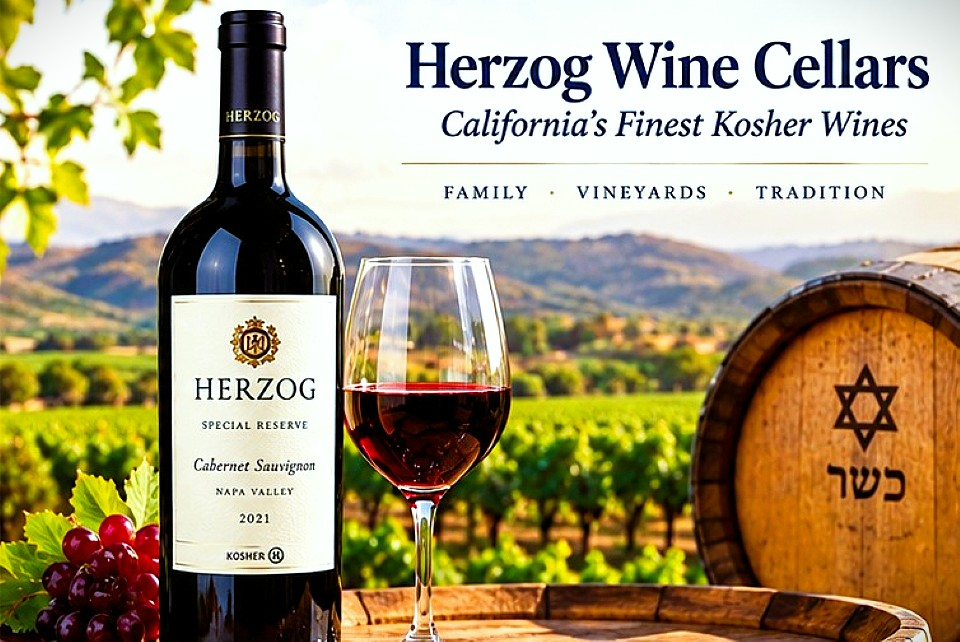
Herzog Wine Cellars California kosher Cabernet Sauvignon with vineyard and wine glass
Best Kosher Rosé Wine
Rosé is one of the easiest styles for entertaining.
It can be:
-
-
- Dry
- Fruity
- Light
- Crisp
- Refreshing
-
-
-
- Grilled chicken
- Salmon
- Salads
- Mediterranean food
- Cheese
- Summer appetizers
-
It is particularly useful for large gatherings because it appeals to both red- and white-wine drinkers.
Best Kosher Sparkling Wine
Sparkling wine is ideal for celebrations.
Look for kosher versions of:
-
-
- Prosecco
- Cava
- Moscato
- Sparkling rosé
- Traditional-method sparkling wine
-
Bartenura offers several sparkling options, while Spanish producers such as Elvi explore kosher Cava.
Sparkling wine is particularly suitable for:
-
-
- Weddings
- Anniversaries
- Engagements
- New Year’s celebrations
- Corporate events
- Birthday dinners
-
Best Kosher Wines for Passover
Passover wine shopping requires extra attention. Do not assume that every bottle from a kosher winery is automatically suitable for your particular Passover requirements. Look for the appropriate Kosher for Passover certification on the bottle.
The Orthodox Union specifically recommends checking labels for the appropriate OUP designation when purchasing kosher wine for Passover.
Depending on your observance and certification requirements, you may also want to consider:
-
-
- Mevushal status
- Non-mevushal status
- Certification authority
- Vintage
- Winery
- Specific production run
-
When in doubt, ask your rabbi or preferred kosher certification authority.
How to Choose the Right Kosher Wine
The easiest way to choose kosher wine is to start with the occasion.
For Friday Night Dinner
Try:
-
-
- Cabernet Sauvignon
- Merlot
- Chardonnay
- Sauvignon Blanc
- Dry rosé
-
For a Large Party
Look for:
-
-
- Mevushal wine
- Easy-drinking reds
- Sauvignon Blanc
- Rosé
- Sparkling wine
-
For a Formal Dinner
Consider:
-
-
- Premium Cabernet Sauvignon
- Bordeaux-style blends
- Napa Valley kosher wine
- Premium Israeli reds
- Chardonnay
-
For Dessert
Consider:
-
-
- Moscato
- Brachetto
- Sweet Kiddush wine
- Dessert wine
-
For a Gift
Choose:
-
-
- Premium California Cabernet
- Luxury Israeli red
- Single-vineyard wine
- Limited edition bottle
- Elegant sparkling wine
-
Kosher Wine and Food Pairing
The best kosher wine is ultimately the wine that works with your meal.
-
-
- Steak: Choose Cabernet Sauvignon.
- Brisket: Try Cabernet Sauvignon, Merlot or a Bordeaux-style blend.
- Lamb: Shiraz, Cabernet Sauvignon or a structured Israeli red works beautifully.
- Roast Chicken: Chardonnay, Merlot or lighter red blends are good choices.
- Salmon: Chardonnay, Sauvignon Blanc or dry rosé.
- Spicy Food: Gewürztraminer, Riesling or slightly sweet Moscato can work well.
- Cheese: Cabernet, Merlot, Chardonnay or sparkling wine depending on the cheese.
- Chocolate Dessert: A sweet red or dessert-style kosher wine can complement chocolate particularly well.
-
Bartenura Italian kosher Moscato wine bottle with white wine glass and Italian coastal landscape
Kosher Wine for Shabbat and Celebrations
Wine plays an important role in Jewish celebrations and family traditions. For Shabbat and holidays, many households want a wine that satisfies both the religious requirements and the preferences of the people around the table.
That can mean choosing:
-
-
- A traditional sweet wine
- A dry Israeli Cabernet
- A premium California wine
- A sparkling wine
- A family-friendly grape beverage
-
The key is to choose according to the specific requirements of your household and community. For large gatherings, mevushal status can also be an important practical consideration.
Kosher Wine as a Gift
A premium kosher wine can make an excellent gift.
Consider a high-quality bottle for:
-
-
- Weddings
- Anniversaries
- Bar and Bat Mitzvahs
- Corporate gifts
- Rosh Hashanah
- Passover
- Hanukkah
- Birthdays
- Housewarmings
- Dinner invitations
-
For a wine enthusiast, a premium Israeli or California Cabernet can make a particularly impressive gift. For someone who enjoys sweeter wines, Bartenura Moscato or a traditional sweet kosher wine may be more appropriate.
The best gift is not necessarily the most expensive bottle. It is the bottle that matches the recipient.
Buying Kosher Wine in Toronto and the GTA
For shoppers in Toronto and the Greater Toronto Area, availability can vary considerably between stores and neighborhoods. If you are looking for kosher wine delivery in Toronto, it is useful to search by both brand and wine style.
For example:
-
-
- Kosher Cabernet Sauvignon Toronto
- Kosher wine delivery Toronto
- Israeli kosher wine Toronto
- Kosher red wine delivery
- Kosher white wine Toronto
- Kosher wine for Passover Toronto
- Kosher wine gift delivery Toronto
-
When ordering, check the exact bottle, vintage and certification rather than assuming that every wine from a particular producer has identical kosher status.
For local delivery, Always Dial A Bottle Toronto can be a convenient option for customers looking for alcohol, wine and liquor delivery in Toronto and surrounding GTA communities, subject to current product availability and applicable delivery requirements.
Frequently Asked Questions About Kosher Wine
Is all kosher wine sweet?
No. Kosher wine can be completely dry.
There are kosher Cabernet Sauvignons, Merlots, Syrahs, Chardonnays, Sauvignon Blancs, Pinot Noirs, rosés and sparkling wines. Sweet kosher wine is only one part of the category.
Is kosher wine better than regular wine?
“Better” depends on the wine, not simply whether it is kosher. Kosher wine is produced according to specific religious requirements. Quality depends on grape quality, vineyard location, winemaking, vintage, aging and the producer.
Modern kosher wineries produce wines across virtually every quality and price level.
Is Cabernet Sauvignon kosher?
Yes, many Cabernet Sauvignon wines are kosher. However, kosher status applies to the specific product and production process, so check the certification on the bottle.
Is kosher wine always mevushal?
No. Some kosher wines are mevushal and some are non-mevushal. The bottle should indicate the relevant status when applicable.
What does mevushal mean?
Mevushal refers to wine that has undergone a qualifying cooking/pasteurization process under the applicable halachic standards.
Its practical significance relates primarily to how the wine can be handled after production.
Can kosher wine be aged?
Absolutely. Kosher wine can be aged in stainless steel, oak barrels or other appropriate vessels.
Premium kosher wineries produce wines designed for short-term drinking as well as bottles that can benefit from cellaring.
Is Israeli wine always kosher?
No assumption should be made solely because a wine comes from Israel. Look for the appropriate kosher certification on the specific bottle.
Is California wine kosher?
California produces many kosher wines, including wines from producers such as Herzog, Baron Herzog, Covenant and Hagafen. Again, verify the certification of the specific wine.
Is kosher wine suitable for Passover?
Many kosher wines are Kosher for Passover, but consumers should verify the appropriate certification on the bottle. The Orthodox Union specifically advises consumers to check the label because exceptions can exist.
What is the best kosher wine for Shabbat?
That depends on your household’s requirements and personal taste. Options range from traditional sweet wine to dry Cabernet Sauvignon, Chardonnay and other modern kosher wines.
If mevushal status is important for your particular gathering, check the bottle before buying.
What is the best kosher wine for a wedding?
For a large wedding, a wine that suits the food and guest preferences is important. Mevushal status may also be a practical consideration for large catered events.
Popular categories include:
-
-
- Cabernet Sauvignon
- Merlot
- Chardonnay
- Sauvignon Blanc
- Rosé
- Sparkling wine
- Moscato
-
Celler de Capçanes Spanish kosher wine with Peraj Ha’abib red wine bottle and Mediterranean vineyard
The Future of Kosher Wine
The most exciting thing about kosher wine today is its diversity. Kosher wine is no longer limited to a narrow range of styles.
The category now includes:
-
-
- Napa Cabernet Sauvignon
- Israeli Cabernet
- Spanish Garnacha blends
- Italian Moscato
- Israeli Chardonnay
- California Chardonnay
- Spanish Cava
- Sparkling rosé
- Boutique vineyard wines
- Organic kosher wines
- Limited-production wines
- Luxury collector bottles
-
Herzog, Covenant, Hagafen, Yarden, Dalton, Psagot, Tura, Celler de Capçanes and other producers demonstrate how broad the category has become.
Even within one producer, consumers can move from inexpensive everyday wine to small-production premium bottles. That is a sign of a mature wine category.
Final Thoughts: Exploring the Best Kosher Wine Brands in the World
The world of kosher wine has never been more diverse.
From California Cabernet Sauvignon to Israeli Shiraz, from Italian Moscato to Spanish Garnacha, today’s kosher wine market offers something for almost every palate.
-
-
- For premium California wine, explore Herzog Wine Cellars, Baron Herzog, Covenant and Hagafen.
- For Israeli wine, consider Yarden, Dalton, Carmel, Teperberg, Psagot and Tura.
- For Italian-style kosher wine, Bartenura is one of the most recognizable names.
- For traditional sweet wine and grape products, Kedem and Carmel’s traditional ranges remain important.
- For European kosher wine, Celler de Capçanes and Elvi Wines offer particularly interesting Spanish alternatives.
- And for luxury California kosher wine, newer projects such as Capio illustrate how far the category has evolved.
-
Most importantly, remember that kosher wine is not one taste or one style. It is a production and certification category that now encompasses an extraordinary range of wine traditions.
Whether you’re shopping for Shabbat, Passover, a holiday dinner, a wedding, a corporate gift or simply an excellent bottle for dinner, the best place to begin is with the wine style you enjoy—and then find a kosher producer making that style well.
Always check the current certification, mevushal status and Passover status of the exact bottle before purchasing.
For Toronto and GTA wine lovers, exploring kosher wine can be an excellent way to discover new Israeli, California, Italian and Spanish wines while finding bottles suited to both traditional celebrations and modern wine appreciation.
Cheers to discovering your next favorite kosher wine.