
Blog
Most Popular Prosecco Brands: 20 Best Prosecco Producers to Try

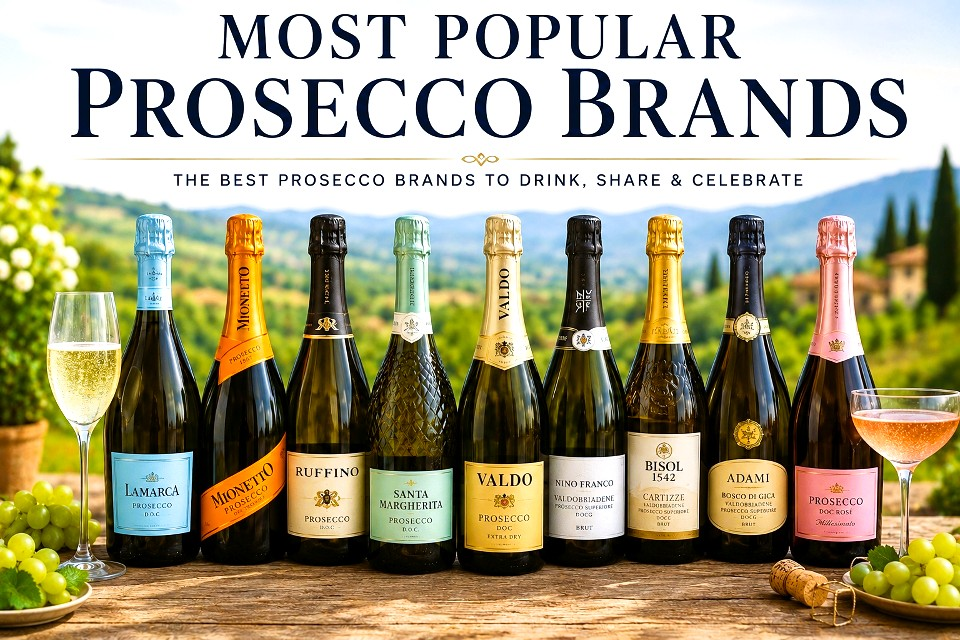
Prosecco has become one of the world’s most popular sparkling wines, loved for its fresh fruit character, lively bubbles, approachable style and excellent value. From casual brunches and summer parties to weddings, cocktails and elegant dinners, Prosecco has earned a place among the most recognizable sparkling wines in the world.
But with so many bottles available, an obvious question arises:
What are the most popular Prosecco brands, and which bottles are actually worth trying?
The answer depends on what you are looking for.
Some Prosecco brands are famous for their widespread availability and consistent style. Others are known for premium Prosecco Superiore DOCG from the hills of Conegliano Valdobbiadene. Some focus on organic production, while others specialize in elegant Rosé Prosecco or more traditional expressions.
This guide explores 20 of the most popular and notable Prosecco brands and producers, from internationally recognized names such as La Marca, Mionetto, Ruffino and Santa Margherita to respected producers including Nino Franco, Bisol, Adami and Valdo.
Whether you are searching for the best Prosecco for a wedding, the best affordable Prosecco, a premium bottle for a special occasion, or a fresh Prosecco for brunch, this guide will help you understand the differences and choose the right style.
What Is Prosecco?
Prosecco is an Italian sparkling wine associated primarily with northeastern Italy, particularly the Veneto and Friuli-Venezia Giulia regions.
The official Prosecco DOC production area covers nine provinces across these two regions. The principal grape variety is Glera, which must account for at least 85% of the grapes used for Prosecco DOC. Up to 15% can come from other permitted varieties.
Prosecco is available in several forms, including:
- Prosecco Spumante – fully sparkling
- Prosecco Frizzante – lightly sparkling
- Prosecco Tranquillo – still
- Prosecco DOC Rosé – pink sparkling Prosecco
The sparkling style is by far the most internationally recognizable.
One of the reasons Prosecco has become so successful is its approachable character. Compared with many traditional-method sparkling wines, Prosecco often emphasizes fresh fruit and floral aromas rather than strong toast and brioche notes.
Typical Prosecco flavors include:
- Green apple
- Pear
- White peach
- Citrus
- Melon
- Acacia
- Floral aromas
- Light mineral notes
How Is Prosecco Made?
One of the biggest differences between Prosecco and Champagne is the way the wine is produced.
Most Prosecco DOC is produced using the Martinotti-Charmat tank method, in which the second fermentation takes place in a pressurized tank rather than inside each individual bottle.
This approach helps preserve the fresh and aromatic character of Glera and also allows producers to make sparkling wine efficiently at significant scale.
Prosecco DOC regulations recognize sparkling, semi-sparkling and still styles, while Prosecco DOC Rosé uses Glera and Pinot Nero under specific production rules.
This production method is one reason Prosecco can offer an attractive combination of:
Freshness + fruitiness + bubbles + affordability
Prosecco DOC vs Prosecco Superiore DOCG
Not every Prosecco comes from the same geographical classification.
Two terms you will frequently see are:
Prosecco DOC
The broad Prosecco denomination covers a large area of northeastern Italy and represents the majority of Prosecco production.
Prosecco Superiore DOCG
The Conegliano Valdobbiadene Prosecco Superiore DOCG appellation covers a more specific hilly area in Veneto.
The hills around Conegliano and Valdobbiadene are particularly associated with premium Prosecco.
Within this premium category, you may also encounter:
Cartizze
Cartizze is a prestigious subzone associated with highly regarded Prosecco Superiore.
If you want to explore premium Prosecco, looking beyond the word “Prosecco” and checking the classification on the label can be worthwhile.
The 20 Most Popular Prosecco Brands and Producers
1. La Marca Prosecco
Origin: Veneto, Italy
Style: Fresh, fruity and approachable
Best for: Parties, brunch and cocktails
La Marca is one of the most recognizable Prosecco brands internationally.
Its distinctive blue-label presentation has helped make it especially recognizable on restaurant wine lists, at celebrations and in retail stores.
La Marca Prosecco typically emphasizes the characteristics many consumers expect from approachable Prosecco:
- Green apple
- Pear
- Citrus
- White peach
- Floral aromas
- Fresh acidity
One of La Marca’s biggest advantages is consistency and accessibility.
It is an easy choice for consumers who want a familiar bottle for a gathering without spending a premium price.
Why choose La Marca?
Choose La Marca if you want a widely recognized, easy-drinking Prosecco that works well for casual entertaining.
Best pairing:
Brunch, fruit appetizers, light seafood, salads and appetizers.
2. Mionetto
Origin: Veneto, Italy
Style: Fresh, elegant and versatile
Best for: Aperitifs, cocktails and celebrations
Mionetto is another internationally recognized Prosecco producer with a long history in the Veneto region.
The brand’s portfolio includes several expressions, from approachable Prosecco to premium wines.
Mionetto Prosecco is generally characterized by freshness and bright fruit.
Look for flavors such as:
- Apple
- Pear
- Citrus
- White peach
- Floral notes
Mionetto is particularly versatile because it works equally well as an aperitif and in cocktails.
Best for:
Aperol Spritz, Bellinis, brunch and casual celebrations.
3. Ruffino Prosecco
Origin: Italy
Style: Crisp, fresh and fruit-forward
Best for: Everyday celebrations and entertaining
Ruffino is a major Italian wine name with a broad portfolio extending well beyond sparkling wine.
Its Prosecco is widely recognized as an accessible option for consumers looking for fresh Italian bubbles.
Typical characteristics include:
- Green apple
- Pear
- Citrus
- Floral notes
- Light sweetness impression
Ruffino is particularly useful when you are serving several guests and want a recognizable Italian wine brand.
Best pairing:
Antipasti, seafood, fried appetizers, pasta salads and light cheeses.
4. Santa Margherita Prosecco
Origin: Italy
Style: Crisp, polished and refreshing
Best for: Elegant entertaining
Santa Margherita is one of the most recognizable Italian wine brands in international markets.
The brand’s Prosecco is particularly associated with a clean, fresh and approachable style.
It works beautifully as an aperitif and alongside lighter foods.
Expect:
- Citrus
- Apple
- Pear
- Floral aromas
- Refreshing acidity
Santa Margherita is a strong choice for consumers who want a recognizable Italian brand with an elegant presentation.
Best for:
Brunch, seafood, weddings and sophisticated gatherings.
5. Nino Franco
Origin: Valdobbiadene, Veneto
Style: Premium, elegant and complex
Best for: Serious Prosecco drinkers
Nino Franco is a respected producer from the heart of the Prosecco Superiore region.
For consumers interested in moving beyond mass-market Prosecco, this is an important name to know.
The producer is particularly associated with Valdobbiadene Prosecco Superiore DOCG.
Premium Prosecco from this area can demonstrate more complexity, texture and mineral character than simple entry-level sparkling wine.
Why try Nino Franco?
It is an excellent choice for someone who wants to discover how refined Prosecco can become.
Best pairing:
Seafood, shellfish, sushi, risotto and delicate appetizers.
6. Bisol
Origin: Valdobbiadene, Veneto
Style: Premium and refined
Best for: Luxury occasions
Bisol is one of the historic names associated with the Conegliano Valdobbiadene Prosecco Superiore region.
The producer’s wines can offer more complexity and structure than many inexpensive Prosecco options.
Bisol is particularly appealing to wine enthusiasts interested in premium Italian sparkling wine.
Typical characteristics:
- White flowers
- Pear
- Apple
- Citrus
- Mineral notes
- Fine bubbles
For a special dinner or elegant gift, a premium Bisol bottle can be a strong choice.
7. Adami
Origin: Valdobbiadene, Veneto
Style: Elegant, dry and refined
Best for: Fine dining
Adami is another highly regarded producer from the Prosecco Superiore DOCG area.
The winery’s wines demonstrate why Prosecco should not be thought of only as a simple party wine.
High-quality Prosecco Superiore can have:
- Fine acidity
- Mineral character
- Floral aromas
- Citrus
- Pear
- Apple
- More layered texture
Adami is a good producer to explore when you want a more serious expression of Prosecco.
8. Valdo
Origin: Veneto, Italy
Style: Fresh to premium
Best for: Celebrations and gifting
Valdo is an established Italian sparkling-wine brand with a broad range of Prosecco styles.
The brand is particularly useful for consumers looking for a combination of:
Italian heritage + attractive presentation + approachable pricing
Valdo offers options suitable for casual celebrations as well as more premium occasions.
Best for:
Weddings, anniversaries, parties, brunch and gifts.
9. Zardetto
Origin: Veneto, Italy
Style: Crisp, aromatic and refreshing
Best for: Value-conscious Prosecco lovers
Zardetto is another recognizable name in the Prosecco category.
Its wines tend to emphasize the classic fresh and aromatic profile associated with Glera.
Expect:
- Pear
- Apple
- Citrus
- Floral notes
- Fresh acidity
Zardetto can be a good option for consumers who want to step beyond the biggest mainstream labels.
10. La Gioiosa
Origin: Veneto, Italy
Style: Fresh, fruity and elegant
Best for: Aperitifs and parties
La Gioiosa is a well-known Italian producer offering a range of Prosecco wines.
The name is particularly interesting for consumers exploring Prosecco from the Veneto region.
Its wines can show the approachable fruit-driven character that makes Prosecco so popular.
Best for:
Aperitifs, appetizers, brunch and summer gatherings.
The producer also offers expressions from the premium Conegliano Valdobbiadene area.
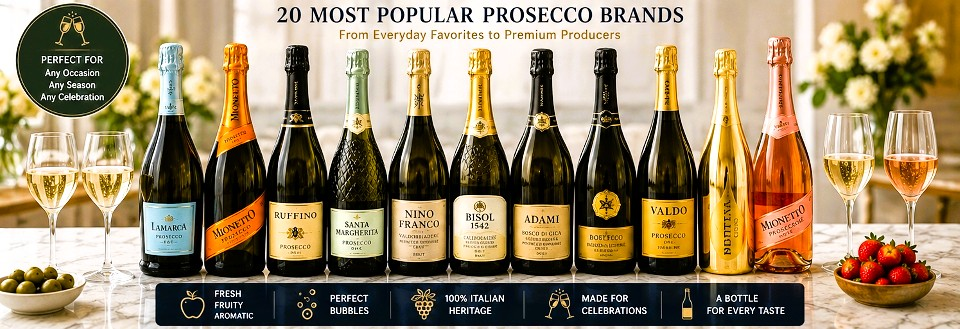
Most popular Prosecco brands and Italian sparkling wines for celebrations
11. Ruggeri
Origin: Valdobbiadene, Veneto
Style: Premium and elegant
Best for: Prosecco enthusiasts
Ruggeri is a respected Prosecco Superiore producer from Valdobbiadene.
Its wines are particularly interesting for consumers who want to explore the premium side of the category.
Valdobbiadene Prosecco can show greater freshness, minerality and structural complexity.
Best for:
Seafood, fine dining, celebrations and sophisticated aperitifs.
12. Val de Cune
Origin: Veneto, Italy
Style: Fresh and approachable
Best for: Everyday drinking
Val de Cune is a Prosecco brand worth considering when looking for an accessible Italian sparkling wine.
Its approachable character makes it suitable for casual entertaining and everyday occasions.
Best with:
Light appetizers, seafood, salads and fruit-based dishes.
13. Bottega Prosecco
Origin: Veneto, Italy
Style: Stylish, fresh and aromatic
Best for: Gifts and celebrations
Bottega has become particularly recognizable because of its distinctive bottle designs.
The brand combines Italian sparkling wine with strong visual presentation, making it especially popular for gifting and celebrations.
Bottega Prosecco can deliver the expected fresh fruit profile associated with Glera while standing out visually.
Best for:
- Gifts
- Weddings
- Birthdays
- Corporate celebrations
- Dinner parties
If presentation matters as much as the wine itself, Bottega is an interesting option.
14. Maschio
Origin: Veneto, Italy
Style: Fresh, fruity and approachable
Best for: Casual celebrations
Maschio is a familiar name in the Italian sparkling wine category.
Its Prosecco expressions are designed around accessibility and freshness.
Typical notes may include:
- Apple
- Pear
- Citrus
- Floral aromas
Maschio can be a practical choice for larger gatherings where you want an easy-drinking Italian sparkling wine.
15. Zonin
Origin: Veneto, Italy
Style: Fresh and approachable
Best for: Parties and aperitifs
Zonin is one of Italy’s best-known wine companies and produces a wide range of wines.
Its Prosecco offers a straightforward introduction to the style.
It is particularly appropriate when you want:
- Fresh fruit
- Light body
- Crisp acidity
- Easy drinking
Best pairing:
Antipasti, seafood, salads, soft cheeses and appetizers.
16. Freixenet Prosecco
Origin: Italy
Style: Fresh, fruity and visually distinctive
Best for: Parties and gifting
Freixenet is traditionally associated with Spanish Cava, but the brand also produces Prosecco.
Its distinctive black packaging has made it highly recognizable.
This is a useful example of how major international wine companies have expanded their sparkling-wine portfolios to meet consumer demand for Prosecco.
Best for:
Parties, gifting, cocktails and casual entertaining.
17. Ruffino Prosecco Rosé
Style: Pink, fresh and fruit-driven
Best for: Summer parties and celebrations
Prosecco Rosé has become an important style within the Prosecco category.
Under Prosecco DOC regulations, Prosecco Rosé is produced using 85–90% Glera and 10–15% Pinot Nero, with the Pinot Nero vinified in red. The wine must also be labeled “Millesimato” with a vintage indication.
The result is a pink sparkling wine with a different visual and aromatic profile from classic white Prosecco.
Expect:
- Strawberry
- Raspberry
- Red berries
- Citrus
- Floral aromas
Best for:
Weddings, Valentine’s Day, bridal showers and summer entertaining.
18. Mionetto Prosecco Rosé
Mionetto’s presence in the Prosecco Rosé category gives consumers another option for pink Italian sparkling wine.
Rosé Prosecco is especially attractive to people who want the freshness of Prosecco combined with red-fruit aromas and a striking appearance.
Best with:
- Salmon
- Prosciutto
- Fruit salads
- Soft cheese
- Light pasta
- Summer appetizers
19. Bottega Prosecco Rosé
Bottega’s emphasis on distinctive packaging makes its Rosé expressions particularly appealing for parties and gifting.
The pink color and fruit-forward profile make Prosecco Rosé an excellent choice when presentation is part of the experience.
Best for:
Romantic dinners, weddings, birthdays and summer celebrations.
20. Villa Sandi
Origin: Veneto, Italy
Style: Fresh, elegant and premium
Best for: Fine dining and special occasions
Villa Sandi is an important name in the Veneto sparkling-wine scene.
The producer offers Prosecco from different classifications and levels, making it an interesting brand for exploring the range between accessible Prosecco and more premium expressions.
For consumers interested in Prosecco Superiore DOCG, Villa Sandi is worth exploring.
Top Prosecco Brands at a Glance
| Prosecco Brand | Style | Best For |
|---|---|---|
| La Marca | Fresh & approachable | Parties |
| Mionetto | Fresh & versatile | Aperitifs |
| Ruffino | Crisp & fruity | Everyday celebrations |
| Santa Margherita | Elegant & fresh | Brunch |
| Nino Franco | Premium & complex | Special occasions |
| Bisol | Refined & premium | Fine dining |
| Adami | Elegant & structured | Wine enthusiasts |
| Valdo | Fresh to premium | Gifts |
| Zardetto | Crisp & aromatic | Value |
| La Gioiosa | Fruity & elegant | Summer |
| Ruggeri | Premium | Fine dining |
| Val de Cune | Approachable | Everyday drinking |
| Bottega | Stylish & aromatic | Gifts |
| Maschio | Fresh & accessible | Parties |
| Zonin | Crisp & easy-drinking | Aperitifs |
| Freixenet | Fresh & distinctive | Parties |
| Ruffino Rosé | Fruity & pink | Celebrations |
| Mionetto Rosé | Fresh & berry-driven | Summer |
| Bottega Rosé | Stylish & fruity | Gifting |
| Villa Sandi | Elegant & premium | Special occasions |
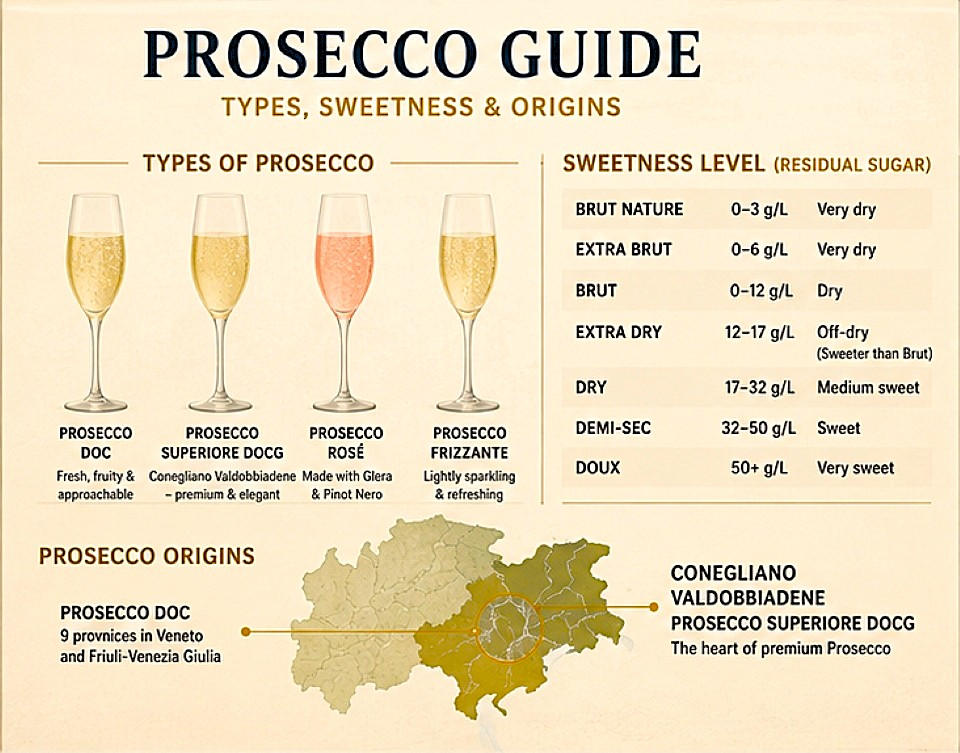
Prosecco sweetness levels, Valdobbiadene DOCG vineyards and popular Prosecco brands
What Are the Best Prosecco Brands?
There is no single Prosecco brand that is objectively the best for everyone.
Instead, think about what you want from the bottle.
Best widely recognized Prosecco
La Marca
An approachable and highly recognizable choice.
Best Prosecco for cocktails
Mionetto
Fresh enough to work beautifully in spritzes and other sparkling cocktails.
Best premium Prosecco
Nino Franco
An excellent place to begin exploring Valdobbiadene Prosecco Superiore.
Best Prosecco for fine dining
Adami or Bisol
Both are worth considering when you want a more sophisticated expression.
Best Prosecco for gifting
Bottega
Distinctive presentation makes it especially attractive as a gift.
Best Prosecco for weddings
La Marca, Mionetto, Ruffino or Santa Margherita
The right choice depends heavily on budget, availability and the style of celebration.
Best Prosecco Rosé
Explore established producers such as Mionetto, Ruffino and Bottega for a stylish pink sparkling wine.
Prosecco Brut vs Extra Dry: What’s the Difference?
This is one of the most confusing parts of Prosecco for new consumers.
The word “Extra Dry” does not mean drier than Brut.
In fact, Extra Dry Prosecco contains more residual sugar than Brut.
The main categories include:
- Brut Nature – very dry
- Extra Brut – very dry
- Brut – dry
- Extra Dry – slightly sweeter
- Dry – sweeter
- Demi-Sec – sweet
So if you want a crisp, dry Prosecco, Brut is generally a better starting point than Extra Dry.
What Does Prosecco Taste Like?
The typical Prosecco flavor profile is fresh, fruity and aromatic.
Common flavors include:
Green Apple
One of the classic characteristics associated with fresh Prosecco.
Pear
A soft, juicy pear note is common in Glera-based sparkling wine.
White Peach
Some Prosecco has a distinctly peachy character.
Citrus
Lemon and citrus acidity help keep the wine refreshing.
Floral Notes
Higher-quality Prosecco can have attractive white-flower and acacia aromas.
Mineral Character
Premium Prosecco Superiore can develop a more noticeable mineral character.
Best Prosecco for Brunch
Prosecco is one of the world’s most popular brunch sparkling wines.
Why?
Because it is:
- Fresh
- Fruity
- Refreshing
- Versatile
- Usually affordable
It also works exceptionally well in classic brunch cocktails.
Prosecco Mimosa
Combine Prosecco with fresh orange juice.
Bellini
Combine Prosecco with peach purée.
Prosecco Spritz
Combine Prosecco with an aperitif and soda water.
For brunch, approachable bottles from La Marca, Mionetto, Ruffino and Santa Margherita can work particularly well.
Best Prosecco for Weddings
Weddings require a slightly different approach.
If you’re serving sparkling wine to dozens or hundreds of guests, consistency and availability can be more important than choosing an extremely rare bottle.
For large wedding receptions, consider:
- La Marca
- Mionetto
- Ruffino
- Santa Margherita
- Valdo
For a smaller luxury wedding, consider:
- Nino Franco
- Bisol
- Adami
- Ruggeri
- Villa Sandi
For a romantic summer wedding, Prosecco Rosé can be particularly attractive.
Best Prosecco for Food Pairing
Prosecco is more versatile with food than many people realize.
Prosecco and Seafood
Try Brut Prosecco with:
- Shrimp
- Oysters
- Crab
- Scallops
- Fried seafood
The bubbles and acidity help refresh the palate.
Prosecco and Cheese
Try it with:
- Goat cheese
- Brie
- Mozzarella
- Burrata
- Mild soft cheeses
Prosecco and Italian Food
Prosecco works beautifully with:
- Antipasti
- Prosciutto
- Pizza
- Light pasta
- Risotto
- Fried appetizers
Prosecco and Spicy Food
The fruitiness and refreshing acidity of Prosecco can also work well with spicy dishes.
Try it with:
- Thai food
- Vietnamese food
- Mild Indian dishes
- Spicy seafood
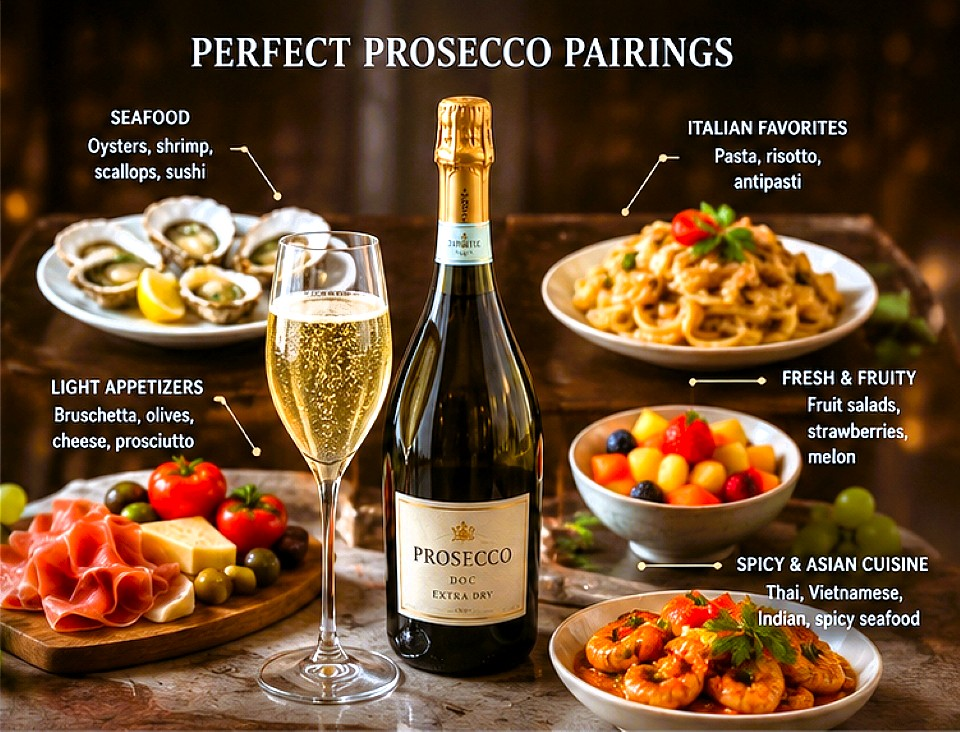
Prosecco guide showing popular styles, food pairings and Prosecco brands
How to Choose a Premium Prosecco
If you want to move beyond basic entry-level Prosecco, look for the following terms.
Prosecco Superiore DOCG
This indicates the premium Conegliano Valdobbiadene denomination.
Valdobbiadene
Look for wines from the hills around Valdobbiadene.
Cartizze
A highly prestigious Prosecco subzone.
Brut Nature / Extra Brut
Excellent options if you prefer very dry sparkling wine.
Millesimato
A vintage-dated Prosecco.
Prosecco DOC Rosé regulations require “Millesimato” and a vintage year on the label.
Is Prosecco Better Than Champagne?
This is the wrong question.
Prosecco and Champagne are different wines.
Champagne generally emphasizes traditional-method complexity, with characteristics that can develop from extended bottle aging.
Prosecco generally emphasizes:
- Fresh fruit
- Floral aromas
- Pear
- Apple
- Peach
- Accessibility
Champagne is often chosen for luxury and complexity.
Prosecco is often chosen for freshness, versatility and value.
Neither is universally better.
The best choice depends on your occasion, food, budget and personal taste.
Prosecco vs Cava
Cava and Prosecco are both internationally popular sparkling wines, but their production methods are different.
Prosecco DOC is primarily associated with the tank method.
Cava is traditionally produced using the traditional method.
As a result, Cava often has more similarities to Champagne in terms of production technique, while Prosecco generally emphasizes the fresh aromatic character of Glera.
If you want:
Fresh + fruity + floral → Prosecco
Traditional-method + crisp + toasty → Cava
Is Prosecco Sweet?
Prosecco can be dry, off-dry or sweet depending on its residual sugar category.
The most common styles encountered by consumers include:
- Brut
- Extra Dry
- Dry
Despite its name, Extra Dry is sweeter than Brut.
If you prefer a dry sparkling wine, look for Brut, Extra Brut or Brut Nature.
If you enjoy a softer, fruitier style, Extra Dry can be an excellent choice.
Is Prosecco Good for Cocktails?
Absolutely.
Prosecco is one of the most versatile sparkling wines for cocktails.
Popular options include:
Aperol Spritz
Prosecco + Aperol + soda water.
Bellini
Prosecco + peach purée.
Mimosa
Prosecco + orange juice.
Hugo Spritz
Prosecco + elderflower + soda + mint.
Because Prosecco is usually aromatic and fruit-forward, it can integrate well into sparkling cocktails.
How Should Prosecco Be Served?
Prosecco is best served chilled.
A temperature around 6–8°C (43–46°F) works well for many bottles.
Don’t overchill premium Prosecco for too long, because extremely cold temperatures can suppress aromas.
Use a sparkling-wine glass that gives the bubbles enough room to develop while preserving the wine’s aromas.
Open the bottle carefully and avoid pointing the cork toward people or fragile objects.
Why Is Prosecco So Popular?
There are several reasons for Prosecco’s extraordinary global success.
1. Accessibility
Prosecco is generally approachable even for consumers who are new to wine.
2. Fresh Fruit
Its pear, apple and peach character appeals to a broad audience.
3. Versatility
Prosecco works as:
- An aperitif
- A dinner wine
- A brunch wine
- A cocktail ingredient
- A celebration wine
4. Value
Many bottles offer sparkling-wine enjoyment without the price associated with prestigious Champagne.
5. Social Appeal
Prosecco is strongly associated with celebrations, weddings, brunches and entertaining.
The scale of the category is enormous. The Prosecco DOC Consortium reported annual production of around 660 million bottles, describing the denomination as the leading Italian appellation in volume and value.
Frequently Asked Questions About Prosecco Brands
What are the most popular Prosecco brands?
Some of the most widely recognized and notable Prosecco brands and producers include La Marca, Mionetto, Ruffino, Santa Margherita, Nino Franco, Bisol, Adami, Valdo, Zardetto, La Gioiosa, Ruggeri, Bottega and Villa Sandi.
What is the best Prosecco brand?
There is no single best Prosecco brand. La Marca and Mionetto are strong choices for accessibility, while Nino Franco, Bisol and Adami are excellent producers to explore for premium Prosecco Superiore.
What is the best affordable Prosecco?
La Marca, Mionetto, Ruffino and Zardetto are useful starting points for consumers looking for approachable Prosecco at a more accessible price.
What is the best luxury Prosecco?
For premium Prosecco, look toward respected producers from the Conegliano Valdobbiadene Prosecco Superiore DOCG region, including Nino Franco, Bisol, Adami and Ruggeri.
What Prosecco is best for a wedding?
For large weddings, widely distributed brands such as La Marca, Mionetto, Ruffino and Santa Margherita can be practical. For smaller luxury weddings, consider Nino Franco, Bisol, Adami or Ruggeri.
What is the difference between Prosecco DOC and Prosecco DOCG?
Prosecco DOC covers a broad production area in northeastern Italy, while Prosecco Superiore DOCG refers to the higher geographical classification associated with Conegliano Valdobbiadene and Asolo.
Is Prosecco Champagne?
No. Champagne comes from the Champagne region of France, while Prosecco is Italian sparkling wine primarily associated with northeastern Italy.
Is Prosecco sweeter than Champagne?
It depends on the specific bottle. Both can be made in different sweetness levels, although Prosecco’s fruit-forward style can sometimes taste sweeter even when the actual sugar level is relatively low.
What is the best Prosecco for Mimosas?
Choose a fresh, dry-to-off-dry Prosecco such as La Marca, Mionetto, Ruffino or Santa Margherita. A Brut or Extra Dry style works particularly well.
What is the best Prosecco for an Aperol Spritz?
A fresh, crisp and affordable Prosecco is ideal. Mionetto, La Marca, Ruffino and other classic Brut or Extra Dry expressions can work well.
Is Prosecco good with seafood?
Yes. Dry Prosecco works particularly well with oysters, shrimp, crab, scallops, fried seafood and lighter fish dishes.
What does Brut Prosecco mean?
Brut is a relatively dry sparkling-wine category. It contains less residual sugar than Extra Dry Prosecco.
Is Extra Dry Prosecco sweet?
Extra Dry is sweeter than Brut, despite the name. It is generally fruitier and softer on the palate.
What grape is used in Prosecco?
Glera is the principal grape variety. Prosecco DOC regulations require Glera to account for at least 85% of the grapes, with permitted varieties making up the remainder.
What is Prosecco Rosé?
Prosecco DOC Rosé is a pink sparkling style made from Glera and Pinot Nero under specific regulations. It must contain 85–90% Glera and 10–15% Pinot Nero and carry a vintage indication.
What is the difference between Prosecco and Prosecco Superiore?
Prosecco Superiore generally refers to wines from the Conegliano Valdobbiadene DOCG or Asolo DOCG areas, which are more geographically specific than Prosecco DOC.
Final Thoughts: The Best Prosecco Brands to Try
The popularity of Prosecco is easy to understand.
It combines the excitement of sparkling wine with the freshness of Italian white wine, approachable fruit flavors and an enormous range of price points and styles.
For an easy introduction, La Marca, Mionetto, Ruffino and Santa Margherita are recognizable choices.
For consumers interested in premium Prosecco, look toward Nino Franco, Bisol, Adami, Ruggeri and Villa Sandi, particularly their expressions from the Conegliano Valdobbiadene Prosecco Superiore DOCG region.
For a stylish gift or celebration, Bottega offers distinctive presentation.
And for a summer gathering, wedding or brunch, Prosecco Rosé provides a colorful alternative to traditional white sparkling wine.
The most important lesson is that Prosecco is not one single style.
The category includes inexpensive everyday bottles, premium DOCG wines, dry Brut expressions, softer Extra Dry wines, vintage-dated Millesimato bottles and Rosé Prosecco.
So the next time you reach for a bottle, don’t simply ask:
“Which Prosecco is the most popular?”
Ask:
“Which Prosecco is best for me?”
For brunch, choose a fresh and fruit-forward bottle.
For seafood, look for dry, crisp Prosecco.
For cocktails, choose an approachable Brut or Extra Dry.
For a wedding, consider a recognizable brand with reliable availability.
For a special dinner, explore Prosecco Superiore DOCG.
And for a luxury gift, look toward premium producers such as Nino Franco, Bisol or Adami.
With so many excellent choices available, exploring the most popular Prosecco brands is only the beginning. The real fun comes from tasting different producers, regions, sweetness levels and classifications to discover which bottle best matches your own palate and occasion.