
Blog
World’s Most Popular Sparkling Wine Varieties: The Ultimate Guide to 25 Types of Sparkling Wine

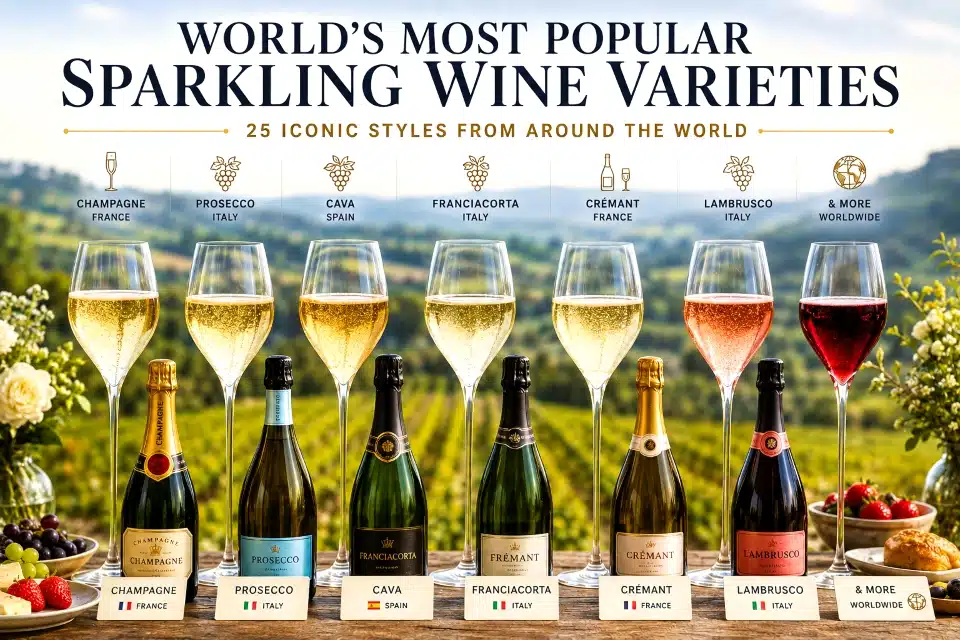
Sparkling wine is no longer reserved for New Year’s Eve, weddings and champagne toasts. Today, sparkling wines are enjoyed year-round, from casual brunches and summer gatherings to fine dining, romantic dinners and major celebrations.
But how many different types of sparkling wine are there?
Far more than most people realize.
Champagne, Prosecco, Cava, Franciacorta, Crémant, Asti, Lambrusco, Sekt, English sparkling wine and Cap Classique are just some of the world’s best-known sparkling wine styles. Each comes from a different region, uses different grape varieties and may be produced using a different winemaking method.
Some are crisp and citrusy. Others are creamy, toasty and complex. Some are dry and mineral-driven, while others are fruity and noticeably sweet. There are also sparkling rosé wines, sparkling red wines and naturally sparkling wines such as Pét-Nat.
This guide explores the world’s most popular sparkling wine varieties
and styles, explaining where they come from, what they taste like, how they are made, what foods they pair with and which type may be right for you.
Whether you’re searching for the best sparkling wine for a celebration, an affordable alternative to Champagne, a sparkling wine for dinner, or simply want to understand the difference between Champagne and Prosecco, this guide has you covered.
What Is Sparkling Wine?
Sparkling wine is wine containing significant levels of dissolved carbon dioxide, which produces its characteristic bubbles.
The bubbles can be created in different ways. Some sparkling wines undergo a second fermentation inside the bottle, while others use a tank-based fermentation process. Some naturally sparkling wines use a less conventional approach.
The production method has a major influence on the final wine.
For example:
- Champagne is traditionally produced using bottle fermentation.
- Cava is also produced using the traditional method.
- Prosecco DOC is primarily produced using tank fermentation.
- Pét-Nat generally relies on a natural fermentation process that leaves carbon dioxide in the wine.
These differences can influence aroma, texture, bubble size, freshness, complexity and price.
The result is a category of wine with extraordinary diversity.
The 25 Most Popular Sparkling Wine Varieties and Styles
1. Champagne
Country: France
Region: Champagne
Main grapes: Chardonnay, Pinot Noir, Meunier
Typical style: Dry, refined, complex
Champagne is arguably the world’s most famous sparkling wine.
True Champagne comes specifically from the Champagne region of France and is governed by strict appellation regulations. The three principal grape varieties are Chardonnay, Pinot Noir and Meunier.
Champagne is traditionally produced using the traditional method, in which the second fermentation occurs inside the bottle.
This lengthy production process can contribute aromas and flavors associated with:
- Brioche
- Toast
- Citrus
- Green apple
- Pear
- Almond
- Mineral notes
- Creamy texture
Champagne ranges from inexpensive non-vintage Brut wines to extremely prestigious vintage and prestige cuvées.
Best Champagne for:
- Weddings
- Anniversaries
- Luxury gifts
- Fine dining
- Oysters
- Caviar
- Seafood
Popular styles: Brut, Extra Brut, Blanc de Blancs, Blanc de Noirs and Rosé Champagne.
2. Prosecco
Country: Italy
Main region: Veneto and Friuli-Venezia Giulia
Main grape: Glera
Typical style: Fresh, fruity and aromatic
Prosecco has become one of the world’s most popular sparkling wines.
The principal grape is Glera, which must make up at least 85% of Prosecco DOC according to its production regulations. Other permitted varieties can account for the remaining percentage.
Unlike Champagne, Prosecco DOC is primarily associated with tank fermentation.
This production approach helps preserve the fresh, aromatic character of Glera.
Typical Prosecco flavors include:
- Green apple
- Pear
- White peach
- Citrus
- Melon
- Floral notes
Prosecco is generally more fruit-forward and approachable than many traditional-method sparkling wines.
Its popularity is enormous. Prosecco DOC reported 667 million bottles bottled in 2025, describing it as the world’s best-selling Italian sparkling wine.
Best Prosecco for:
- Brunch
- Aperitifs
- Mimosas
- Parties
- Summer entertaining
- Light appetizers
Popular styles: Brut, Extra Dry, Dry and Prosecco DOC Rosé.
3. Cava
Country: Spain
Main region: Catalonia
Traditional grapes: Macabeo, Xarel·lo and Parellada
Typical style: Crisp, dry and refreshing
Cava is Spain’s famous traditional-method sparkling wine.
Its classic grape blend is based on Macabeo, Xarel·lo and Parellada, although other authorized varieties are also permitted.
The traditional production method gives Cava a closer stylistic relationship to Champagne than Prosecco, although the wines can taste very different.
Cava often offers:
- Citrus
- Green apple
- Pear
- Almond
- Herbal notes
- Toast
- Mineral character
One of its biggest attractions is value.
High-quality Cava can provide the complexity of traditional-method sparkling wine at a price that is often considerably lower than Champagne.
Best Cava for:
- Tapas
- Seafood
- Fried foods
- Spanish cuisine
- Parties
- Affordable celebrations
4. Franciacorta
Country: Italy
Region: Lombardy
Main grapes: Chardonnay, Pinot Noir and Pinot Blanc
Typical style: Elegant, creamy and refined
Franciacorta is one of Italy’s most prestigious sparkling wines.
Produced in Lombardy, it is made using the traditional method and can deliver a Champagne-like combination of fine bubbles, acidity and complexity.
Chardonnay and Pinot Noir are particularly important.
Franciacorta can show:
- Citrus
- White flowers
- Apple
- Pear
- Toast
- Almond
- Creamy texture
It is an excellent choice for wine lovers who enjoy traditional-method sparkling wines but want to explore beyond Champagne.
Best Franciacorta for:
- Fine dining
- Seafood
- Italian cuisine
- Special occasions
- Wine enthusiasts
5. Crémant
Country: France
Regions: Alsace, Burgundy, Loire, Limoux and others
Grapes: Varies by region
Typical style: Fresh, elegant and versatile
Crémant is a category of French sparkling wines produced outside Champagne.
There are several major regional Crémant appellations, including:
- Crémant d’Alsace
- Crémant de Bourgogne
- Crémant de Loire
- Crémant de Limoux
- Crémant de Bordeaux
- Crémant de Die
- Crémant de Savoie
The grape varieties and flavor profiles differ significantly from one region to another.
Crémant is particularly attractive to consumers who want French sparkling wine at a more approachable price than Champagne.
Best Crémant for:
- Aperitifs
- Seafood
- Cheese
- Brunch
- Everyday celebrations
6. Asti
Country: Italy
Region: Piedmont
Main grape: Moscato Bianco
Typical style: Sweet, aromatic and fruity
Asti is one of the world’s best-known sweet sparkling wines.
Made primarily from Moscato Bianco, Asti is famous for intense aromas of:
- Peach
- Grape
- Orange blossom
- Apricot
- Pear
- Honeysuckle
It is typically lower in alcohol than many dry sparkling wines and has a distinctly sweet profile.
Asti is especially popular with consumers who don’t enjoy dry wine.
Best Asti for:
- Fruit desserts
- Birthday celebrations
- Brunch
- Light desserts
- Sweet wine lovers
7. Moscato d’Asti
Country: Italy
Region: Piedmont
Main grape: Moscato Bianco
Typical style: Lightly sparkling and sweet
Moscato d’Asti is related to Asti but has a different style.
It is typically lightly sparkling rather than fully sparkling and is celebrated for its intensely aromatic character.
Expect flavors such as:
- Fresh grapes
- Peach
- Apricot
- Orange blossom
- Pear
- Citrus
Moscato d’Asti is particularly good with fruit-based desserts.
Best pairing:
Try it with peaches, strawberries, fruit tarts, panna cotta and light pastries.
8. Lambrusco
Country: Italy
Region: Emilia-Romagna
Grape family: Lambrusco varieties
Typical style: Sparkling red, rosé or white
Lambrusco is one of the world’s most distinctive sparkling wine categories.
Unlike most famous sparkling wines, Lambrusco is often red.
Depending on the style, it can be dry, off-dry, fruity or sweet.
Common characteristics include:
- Blackberry
- Cherry
- Raspberry
- Plum
- Violet
- Spice
Dry Lambrusco is an especially interesting food wine.
It pairs exceptionally well with rich Italian dishes because its acidity and bubbles refresh the palate.
Best Lambrusco for:
- Pizza
- Pasta
- Salumi
- Parmigiano-Reggiano
- Burgers
- Barbecue
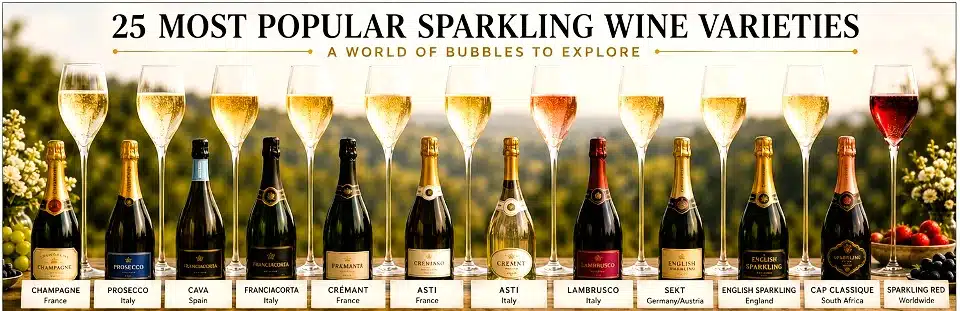
Champagne and Prosecco bottles showcasing popular sparkling wine varieties
9. Sekt
Country: Germany and Austria
Main grapes: Riesling and others
Typical style: Fresh, aromatic and diverse
Sekt is the broad term used for sparkling wine in German-speaking countries.
Quality varies considerably, from simple sparkling wines to high-quality traditional-method wines.
German Riesling Sekt can be particularly impressive.
It combines:
- High acidity
- Citrus
- Green apple
- Peach
- Floral aromas
- Mineral character
For wine lovers who enjoy aromatic white wine, Riesling-based Sekt is worth exploring.
Best for:
- Seafood
- Brunch
- Sushi
- Light appetizers
10. English Sparkling Wine
Country: England
Main regions: Southern England
Main grapes: Chardonnay, Pinot Noir, Meunier
Typical style: Crisp, mineral and refined
English sparkling wine has become one of the world’s most exciting emerging sparkling-wine categories.
Southern England’s cool climate and chalk-rich soils can provide conditions particularly well suited to traditional-method sparkling wine.
Many English producers use the same three major grape varieties associated with Champagne:
- Chardonnay
- Pinot Noir
- Meunier
The wines often show:
- High acidity
- Citrus
- Green apple
- Mineral character
- Toast
- Fine bubbles
English sparkling wine is no longer merely an alternative to Champagne—it has developed an identity of its own.
The category’s growing prestige was highlighted in 2025 when Nyetimber’s 2016 Blanc de Blancs Magnum won the International Wine Challenge’s Champion Sparkling Wine award.
Best for:
- Oysters
- Seafood
- Weddings
- Fine dining
- Celebrations
11. Cap Classique
Country: South Africa
Main grapes: Chardonnay, Pinot Noir and Chenin Blanc
Typical style: Fresh, fruity and traditional-method
South African Methode Cap Classique, commonly called MCC, is traditional-method sparkling wine.
It can provide outstanding quality across a wide range of styles.
Chardonnay and Pinot Noir are particularly important in premium examples, while Chenin Blanc also plays a role in South African sparkling wine.
MCC can offer:
- Citrus
- Apple
- Tropical fruit
- Toast
- Cream
- Mineral notes
It is an excellent choice for wine lovers looking for a sparkling wine from the Southern Hemisphere.
12. Sparkling Rosé
Sparkling rosé is not limited to a single country.
It can be produced in:
- Champagne
- Italy
- Spain
- California
- England
- Australia
- South Africa
- Other wine regions
The color ranges from pale salmon to vibrant pink.
Typical flavors include:
- Strawberry
- Raspberry
- Cherry
- Watermelon
- Citrus
- Floral notes
Sparkling rosé is especially popular for weddings, romantic dinners and summer celebrations.
- Salmon
- Tuna
- Duck
- Prosciutto
- Soft cheese
- Berry desserts
13. Blanc de Blancs Sparkling Wine
Blanc de Blancs means “white of whites” and generally refers to sparkling wine made exclusively from white grapes.
The most famous example is Chardonnay-based Blanc de Blancs Champagne.
These wines often emphasize:
- Lemon
- Green apple
- White flowers
- Mineral notes
- Fresh acidity
Blanc de Blancs is ideal for people who enjoy elegant, crisp sparkling wine.
Best pairing:
Oysters, sushi, shellfish, goat cheese and delicate seafood.
14. Blanc de Noirs Sparkling Wine
Blanc de Noirs means “white of blacks.”
It refers to a white sparkling wine produced from dark-skinned grape varieties.
Pinot Noir and Meunier are the most familiar examples.
Blanc de Noirs wines often have more:
- Body
- Texture
- Structure
- Red-fruit character
- Breadth
Compared with Blanc de Blancs, Blanc de Noirs can feel richer and more substantial.
Best pairing:
Roast chicken, salmon, duck, mushrooms and richer seafood dishes.
15. Pét-Nat
Full name: Pétillant Naturel
Style: Naturally sparkling
Pét-Nat has become increasingly popular among wine enthusiasts interested in natural and low-intervention winemaking.
Instead of following the classic Champagne method, Pét-Nat is generally bottled while fermentation is still underway.
The remaining fermentation produces carbon dioxide inside the bottle.
Pét-Nat can be:
- Cloudy
- Fresh
- Fruity
- Earthy
- Floral
- Slightly funky
Some bottles are completely dry while others retain noticeable fruitiness.
Because the style is less standardized than Champagne or Prosecco, Pét-Nat can be highly individual.
Best for:
Adventurous wine drinkers, natural-wine fans and casual gatherings.
16. Sparkling Riesling
Riesling is best known as a still white wine, but it can also produce excellent sparkling wines.
Sparkling Riesling is particularly associated with Germany.
Its high natural acidity makes it extremely refreshing.
Expect:
- Lime
- Lemon
- Green apple
- White peach
- Floral notes
- Mineral character
Some versions are bone dry, while others have residual sweetness.
Best food pairings:
- Sushi
- Spicy Asian food
- Seafood
- Thai cuisine
- Fresh salads
17. Sparkling Chenin Blanc
Chenin Blanc can produce outstanding sparkling wine, particularly in France’s Loire Valley and South Africa.
Its natural acidity gives sparkling Chenin Blanc excellent freshness.
It can display:
- Apple
- Pear
- Lemon
- Honey
- Quince
- Floral notes
In the Loire Valley, sparkling Chenin is particularly associated with traditional-method wines.
Best with:
Goat cheese, seafood, poultry and light appetizers.
18. Sparkling Pinot Noir
Pinot Noir is one of the world’s most important sparkling-wine grapes.
It provides:
- Structure
- Body
- Red-fruit flavors
- Texture
Pinot Noir is a major grape in Champagne and is also widely used in traditional-method sparkling wines around the world.
Sparkling Pinot Noir can range from very pale and delicate to fuller-bodied rosé and Blanc de Noirs styles.
Best with:
Salmon, duck, roast chicken and mushroom dishes.
19. Sparkling Chardonnay
Chardonnay is another global superstar of sparkling wine.
It contributes:
- Acidity
- Citrus
- Green apple
- Floral character
- Mineral notes
- Aging potential
It is essential to Champagne and important in sparkling wine regions throughout the world.
Chardonnay-based sparkling wines can be exceptionally elegant and refreshing.
Best with:
Oysters, shellfish, sushi and creamy seafood dishes.
20. Australian Sparkling Wine
Australia produces a wide range of sparkling wines, from inexpensive fresh styles to serious traditional-method wines.
Sparkling Shiraz is particularly distinctive.
Unlike Champagne-style sparkling wines, Sparkling Shiraz is a red sparkling wine made from Shiraz.
It can show:
- Blackberry
- Plum
- Cherry
- Spice
- Chocolate
- Pepper
This makes it an exciting pairing with grilled meats and barbecue.
Best with:
Steak, burgers, barbecue, lamb and smoked meats.
21. Californian Sparkling Wine
California has become an important producer of sparkling wine, particularly in cooler coastal regions.
Many premium producers work with:
- Chardonnay
- Pinot Noir
- Pinot Meunier
Traditional-method sparkling wine from California can deliver aromas and textures reminiscent of Champagne while expressing a distinctly New World fruit profile.
Typical flavors include:
- Apple
- Lemon
- Pear
- Stone fruit
- Toast
- Cream
Best for:
Seafood, brunch, celebrations and fine dining.
22. New Zealand Sparkling Wine
New Zealand is famous for Sauvignon Blanc and Pinot Noir, but the country also produces sparkling wine.
The cool climate can help retain acidity and freshness.
Sparkling wines may show:
- Citrus
- Apple
- Pear
- Floral notes
- Mineral character
New Zealand sparkling wine is particularly interesting for consumers who enjoy crisp, refreshing styles.
23. Austrian Sparkling Wine
Austria’s Sekt category includes increasingly sophisticated sparkling wines.
Austrian sparkling wine can be made from grapes including:
- Grüner Veltliner
- Welschriesling
- Riesling
- Chardonnay
- Pinot Noir
Grüner Veltliner-based sparkling wine can offer a distinctive combination of citrus, green apple, herbs and mineral freshness.
Best with:
Austrian cuisine, seafood, salads and light appetizers.
24. Sparkling Moscato
Sparkling Moscato is one of the world’s most aromatic sparkling wine styles.
It can range from lightly sparkling Moscato d’Asti to fully sparkling Asti.
Its signature character comes from the grape’s intensely aromatic profile.
Expect:
- Grape
- Peach
- Apricot
- Orange blossom
- Honeysuckle
- Pear
This is one of the best sparkling wine categories for consumers who prefer sweet, fruit-forward wines.
Best with:
Fresh fruit, pastries, cakes and light desserts.
25. Sparkling Red Wine
Sparkling red wine deserves special recognition because it challenges the assumption that sparkling wine must be white or rosé.
Major examples include:
- Lambrusco
- Sparkling Shiraz
- Brachetto d’Acqui
- Other regional sparkling reds
These wines can range from dry and savory to sweet and fruity.
Dry sparkling reds are particularly versatile with food because acidity, bubbles and tannins can work together to refresh the palate.
Best with:
Pizza, barbecue, cured meats, burgers, pasta and rich cheese.
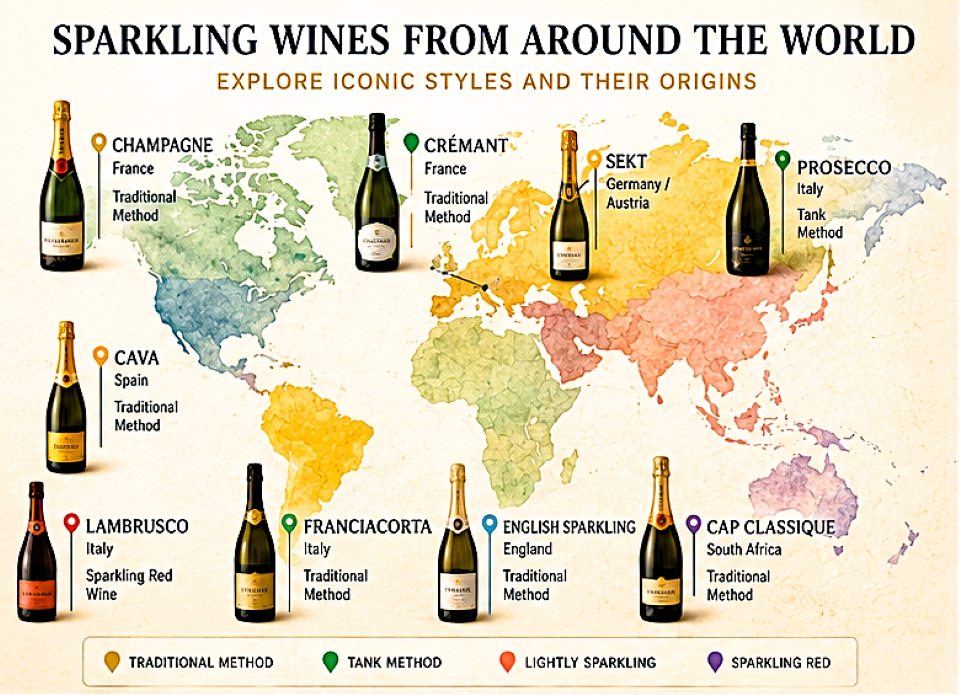
Popular sparkling wine varieties from vineyards around the world
Sparkling Wine Varieties at a Glance
| Sparkling Wine | Country | Typical Style | Main Characteristics |
|---|---|---|---|
| Champagne | France | Dry / complex | Toast, citrus, mineral |
| Prosecco | Italy | Fresh / fruity | Apple, pear, floral |
| Cava | Spain | Dry / crisp | Citrus, apple, toast |
| Franciacorta | Italy | Refined / creamy | Citrus, brioche, mineral |
| Crémant | France | Fresh / elegant | Fruit, citrus, floral |
| Asti | Italy | Sweet / aromatic | Peach, grape, floral |
| Moscato d’Asti | Italy | Lightly sparkling / sweet | Peach, pear, flowers |
| Lambrusco | Italy | Red / rosé / dry to sweet | Cherry, berry, spice |
| Sekt | Germany/Austria | Dry to sweet | Citrus, apple, floral |
| English Sparkling | England | Dry / refined | Citrus, mineral, toast |
| Cap Classique | South Africa | Dry / traditional method | Fruit, citrus, toast |
| Pét-Nat | Various | Natural / fresh | Fruity, earthy, lively |
| Sparkling Riesling | Germany | Dry to sweet | Lime, apple, mineral |
| Sparkling Chenin | France/South Africa | Dry | Apple, lemon, honey |
| Sparkling Pinot Noir | Global | Dry / structured | Red fruit, body |
| Sparkling Chardonnay | Global | Dry / elegant | Citrus, apple, mineral |
| Sparkling Shiraz | Australia | Red / dry to sweet | Plum, blackberry, spice |
| Californian Sparkling | USA | Dry / fruit-driven | Apple, citrus, toast |
| New Zealand Sparkling | New Zealand | Dry / crisp | Citrus, apple, mineral |
| Austrian Sekt | Austria | Dry / aromatic | Citrus, herbs, apple |
| Sparkling Moscato | Italy/global | Sweet / aromatic | Peach, grape, floral |
| Sparkling Red | Global | Dry to sweet | Berry, spice, fruit |
Champagne vs. Prosecco: What’s the Difference?
This is one of the most common sparkling wine questions.
Champagne
- Comes from Champagne, France
- Primarily uses Chardonnay, Pinot Noir and Meunier
- Traditional bottle fermentation
- Often shows toast and brioche
- Usually more expensive
Prosecco
- Comes primarily from northeastern Italy
- Based on Glera
- Usually tank fermented for Prosecco DOC
- Typically more floral and fruit-driven
- Often more affordable
Neither is automatically better.
If you want complexity, extended lees aging and traditional-method character, Champagne may be your preference.
If you want fresh fruit, floral aromas and an easy-drinking style, Prosecco may be the better choice.
Cava vs. Champagne
Cava and Champagne share an important characteristic: both can be produced using the traditional method.
However, their grape varieties and regions differ.
Cava’s classic blend of Macabeo, Xarel·lo and Parellada gives it a distinctive Mediterranean identity.
Champagne, meanwhile, is primarily associated with Chardonnay, Pinot Noir and Meunier.
Cava can therefore be an excellent choice when you want traditional-method bubbles without necessarily paying Champagne prices.
What Is the Best Sparkling Wine for a Wedding?
For weddings, consider:
Champagne
Best for luxury and tradition.
Prosecco
Excellent for larger groups and casual receptions.
Cava
A strong value option with traditional-method credentials.
Crémant
Excellent for French style without Champagne pricing.
Franciacorta
Ideal for an Italian luxury celebration.
English Sparkling Wine
A distinctive premium choice.
For a large wedding, price per bottle becomes particularly important, so Prosecco, Cava and Crémant can offer excellent value.
What Is the Best Sparkling Wine for Brunch?
For brunch, Prosecco is one of the most popular choices.
Its fruit-forward character works beautifully in:
- Mimosas
- Bellinis
- Spritz-style drinks
- Fruit cocktails
Cava and Crémant are also excellent choices.
For a more luxurious brunch, Champagne is hard to beat.
Best Sparkling Wine for Seafood
Sparkling wine and seafood are a classic combination.
Oysters
Choose Blanc de Blancs or Brut Champagne.
Lobster
Try Champagne, Franciacorta or a rich traditional-method sparkling wine.
Sushi
Sparkling Riesling, Champagne or dry Prosecco can work beautifully.
Smoked Salmon
Try Brut Champagne, Cava or sparkling Chardonnay.
Fried Seafood
Cava and Prosecco can provide refreshing acidity and bubbles.
Best Sparkling Wine for Cheese
Sparkling wine’s acidity and bubbles can cut through rich, creamy cheese.
Excellent combinations include:
Brie + Champagne
Goat cheese + Crémant
Parmesan + Lambrusco
Blue cheese + sweeter sparkling wine
Triple-cream cheese + Blanc de Blancs
Best Sparkling Wine for Dessert
The basic rule is simple:
The wine should generally be at least as sweet as the dessert.
For sweet desserts, consider:
- Asti
- Moscato d’Asti
- Brachetto d’Acqui
- Demi-Sec Champagne
- Sweet sparkling Moscato
For lighter fruit desserts, Moscato d’Asti can be particularly refreshing.
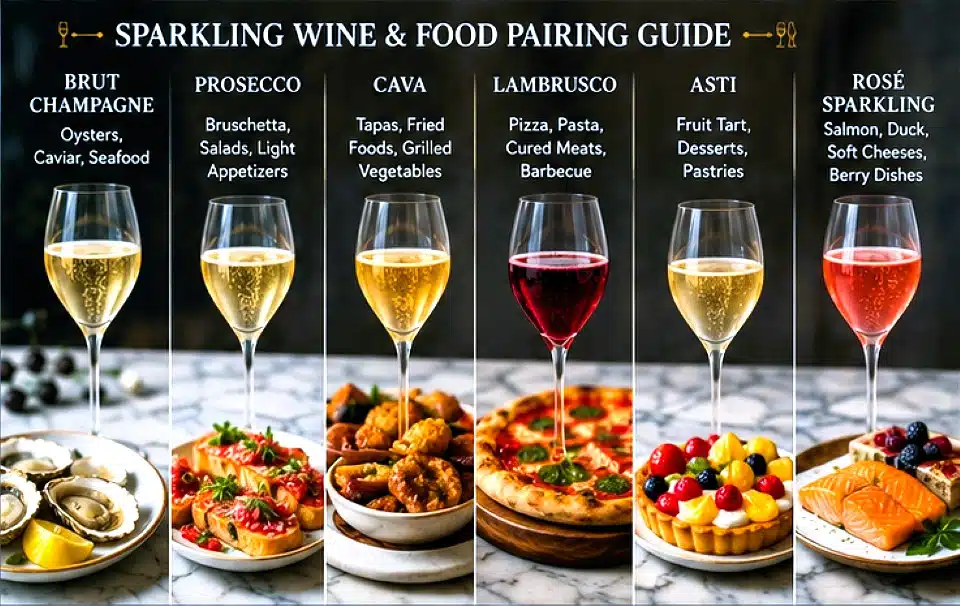
Sparkling wine served with seafood and gourmet food pairing
How to Choose the Best Sparkling Wine
Choosing the right bottle doesn’t have to be complicated.
1. Decide How Sweet You Want It
Look for terms such as:
- Brut Nature
- Extra Brut
- Brut
- Extra Dry
- Dry
- Demi-Sec
- Doux
Interestingly, Extra Dry is sweeter than Brut.
If you want a dry sparkling wine, Brut is usually the safest starting point.
2. Consider the Production Method
Traditional-method sparkling wines often have more:
- Bread
- Toast
- Biscuit
- Nut
- Cream
- Complexity
Tank-method wines such as many Proseccos often emphasize:
- Fresh fruit
- Floral aromas
- Freshness
- Accessibility
Neither method is inherently better.
They simply produce different styles.
3. Consider Your Food
For seafood, choose high-acid sparkling wine.
For rich meat dishes, consider structured Blanc de Noirs or sparkling reds.
For dessert, select a sparkling wine with sufficient sweetness.
4. Consider Your Budget
Sparkling wine exists at almost every price level.
You can find excellent value in:
- Prosecco
- Cava
- Crémant
- Lambrusco
- Regional sparkling wines
For premium occasions, consider:
- Champagne
- Franciacorta
- Prestige English sparkling wine
- Premium Cap Classique
What Are the Best Affordable Alternatives to Champagne?
If Champagne is outside your budget, don’t assume you have to sacrifice quality.
Consider:
Cava
Traditional-method Spanish sparkling wine with excellent value.
Crémant
French traditional-method sparkling wine from outside Champagne.
Prosecco
Fresh, aromatic Italian sparkling wine.
Franciacorta
Premium Italian traditional-method sparkling wine.
Cap Classique
South African traditional-method sparkling wine.
English Sparkling Wine
A premium alternative with increasing international recognition.
How Should Sparkling Wine Be Served?
Most sparkling wine is best served chilled.
A general serving range of approximately 6–10°C (43–50°F) works well, with richer and more complex wines often benefiting from being served slightly warmer.
Avoid serving every sparkling wine ice-cold.
Excessive chilling can suppress aromas and make a complex wine taste less expressive.
Use a suitable sparkling-wine glass that preserves bubbles while allowing enough room for aromas.
How to Open a Sparkling Wine Safely
Never point a sparkling wine bottle toward a person, window or valuable object.
Remove the foil and loosen the wire cage while keeping your hand over the cork.
Hold the cork securely and slowly rotate the bottle—not the cork—while maintaining control.
The ideal opening is a controlled release rather than a dramatic explosion.
This preserves more wine and reduces the risk of accidents.
Does Sparkling Wine Have to Be Champagne?
No.
Champagne is one specific type of sparkling wine.
The broader category includes hundreds of styles made around the world.
Think of it this way:
All Champagne is sparkling wine, but not all sparkling wine is Champagne.
This is one of the most important distinctions for anyone beginning to explore sparkling wine.
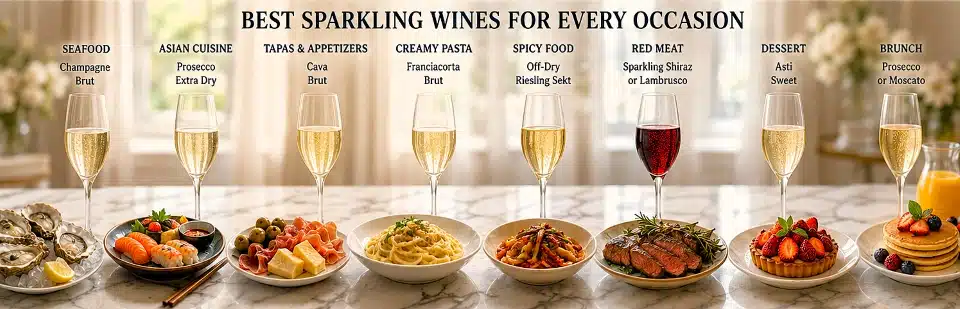
best-sparkling-wine-for-every-occasion
Frequently Asked Questions About Sparkling Wine
What are the most popular sparkling wine varieties?
The most popular and recognizable categories include Champagne, Prosecco, Cava, Franciacorta, Crémant, Asti, Lambrusco, Sekt, English sparkling wine and Cap Classique.
What is the most popular sparkling wine in the world?
There is no single universal global ranking covering every sparkling-wine category, but Prosecco has enormous global production and distribution. Prosecco DOC reported 667 million bottles bottled in 2025.
What is the difference between sparkling wine and Champagne?
Sparkling wine is the broad category. Champagne is a protected sparkling wine from France’s Champagne region.
Is Prosecco Champagne?
No. Prosecco is an Italian sparkling wine primarily made from Glera, while Champagne comes from the Champagne region of France and follows its own appellation rules.
Is Cava Champagne?
No. Cava is Spanish sparkling wine, primarily associated with Catalonia. However, traditional Cava production uses the traditional method, like Champagne.
What is the best sparkling wine?
There is no universally best sparkling wine. Champagne may be ideal for complexity and prestige, Prosecco for fresh fruit and accessibility, Cava for value, and Franciacorta for premium Italian traditional-method character.
What is the sweetest sparkling wine?
Asti, Moscato d’Asti and other sweet sparkling Moscato styles are among the best-known sweet sparkling wines. Dessert-style Champagne can also be sweet.
What is the driest sparkling wine?
Brut Nature and some Zero Dosage sparkling wines are among the driest styles. They contain little or no added dosage.
What does Brut mean in sparkling wine?
Brut is a dryness category indicating a relatively low sugar level. It is one of the most common styles of sparkling wine.
What is Blanc de Blancs?
Blanc de Blancs means sparkling wine made exclusively from white grapes. Chardonnay is the most famous example.
What is Blanc de Noirs?
Blanc de Noirs means a white sparkling wine made exclusively from dark-skinned grapes such as Pinot Noir or Meunier.
What sparkling wine is best for mimosas?
Prosecco is a popular choice because it is fresh, fruity and generally affordable. Cava and Crémant are also excellent options.
What sparkling wine is best for weddings?
The answer depends on budget and style. Champagne is ideal for luxury weddings, while Prosecco, Cava and Crémant can be excellent for larger celebrations.
What sparkling wine pairs best with oysters?
Dry, high-acid sparkling wines such as Blanc de Blancs Champagne, Crémant and traditional-method sparkling Chardonnay are excellent with oysters.
What is Lambrusco?
Lambrusco is a family of Italian sparkling wines that can be red, rosé or white and range from dry to sweet.
What is Pét-Nat?
Pét-Nat, short for Pétillant Naturel, is naturally sparkling wine generally bottled while fermentation is still underway. It often has a fresh, rustic and individual character.
Is sparkling rosé a type of Champagne?
Sparkling rosé is a broad style. Rosé Champagne is one specific type, but sparkling rosé can also be produced in Italy, Spain, England, the United States, Australia, South Africa and many other regions.
What is the best sparkling wine for seafood?
Dry, high-acid styles such as Champagne, Cava, Franciacorta, Crémant and sparkling Chardonnay are excellent with seafood.
What is the best sparkling wine for dessert?
Sweet sparkling wines such as Asti, Moscato d’Asti and Brachetto d’Acqui are excellent with fruit desserts and pastries.
Can sparkling wine be red?
Yes. Lambrusco and Sparkling Shiraz are two well-known examples of red sparkling wine.
Final Thoughts: Exploring the World’s Most Popular Sparkling Wine Varieties
The world of sparkling wine is far larger and more diverse than Champagne alone.
Champagne remains the benchmark for luxury and traditional-method sparkling wine, but it is only one part of a much bigger category.
Prosecco offers fresh, fruity and approachable Italian bubbles.
Cava delivers traditional-method Spanish sparkling wine with excellent value.
Franciacorta demonstrates how sophisticated Italian sparkling wine can be.
Crémant offers a wide range of French regional styles.
Asti and Moscato d’Asti are ideal for consumers who enjoy aromatic and sweeter wines.
Lambrusco proves that sparkling wine can be red, savory and remarkably food-friendly.
English sparkling wine and South African Cap Classique demonstrate how sparkling wine continues to expand beyond its traditional European heartlands.
And styles such as Pét-Nat, sparkling Riesling, sparkling Chenin Blanc and Sparkling Shiraz show just how creative the category has become.
The best sparkling wine ultimately depends on what you’re looking for.
Want elegance and complexity? Try Champagne or Franciacorta.
Want fruit-forward freshness? Choose Prosecco.
Want traditional-method value? Explore Cava or Crémant.
Want something sweet? Try Moscato d’Asti or Asti.
Want something adventurous? Open a Pét-Nat or dry Lambrusco.
Want something different for dinner? Try Sparkling Shiraz.
There is no single “best” sparkling wine for every occasion.
There is, however, a perfect sparkling wine for almost every occasion.
From an elegant wedding toast to a casual weekend brunch, a seafood dinner, a summer patio gathering or a romantic evening, sparkling wine brings freshness, energy and celebration to the table.
And that’s precisely why sparkling wine remains one of the world’s most exciting and versatile wine categories.