Blog
World’s Most Popular Champagne Brands: 25 Best Champagne Houses to Know

Champagne is one of the world’s most famous wines—and one of the most recognizable symbols of celebration, luxury and special occasions.
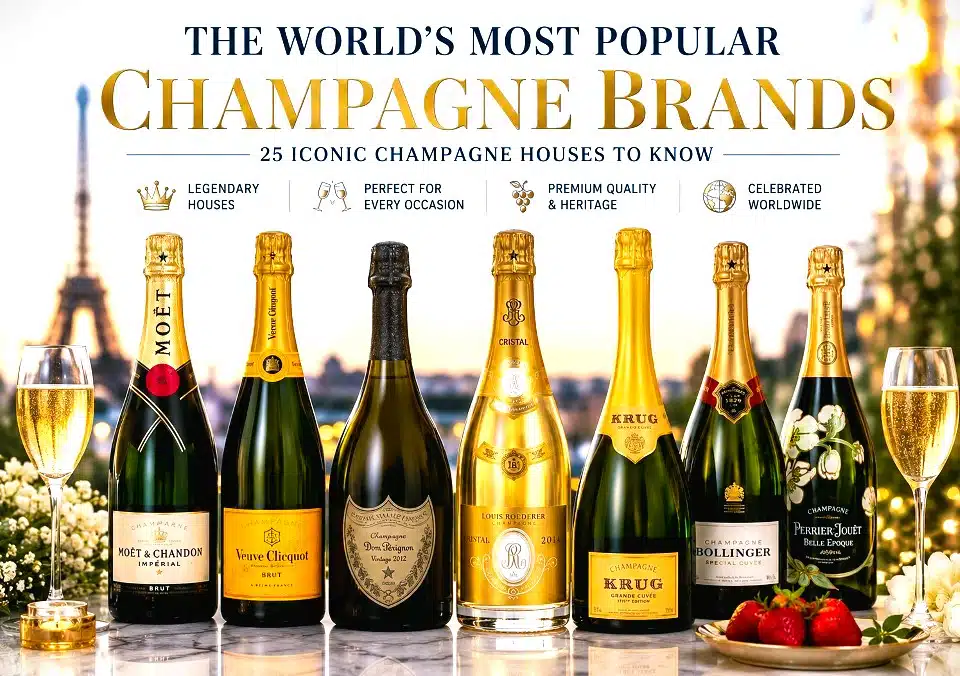
From Moët & Chandon and Veuve Clicquot to Dom Pérignon, Louis Roederer, Krug and Bollinger, the world’s most popular Champagne brands have built reputations that extend far beyond France. Their bottles appear at weddings, anniversaries, corporate celebrations, luxury restaurants, New Year’s Eve parties and milestone events around the globe.
But what makes a Champagne brand popular? Is it global sales, heritage, availability, prestige, wine quality, celebrity recognition, or a combination of all these factors?
There is no single official worldwide ranking that answers the question. Popularity varies by country and market. For example, current U.S. market data places Veuve Clicquot and Moët & Chandon at the top of the leading Champagne brands by 2025 case depletions, while brands such as Laurent-Perrier, Nicolas Feuillatte, Perrier-Jouët, Dom Pérignon, Piper-Heidsieck and Taittinger also have significant market presence.
This guide brings together 25 of the world’s most popular, recognizable and influential Champagne brands and houses, from widely available Brut Champagne to prestige cuvées sought after by collectors and wine enthusiasts.
Whether you’re looking for the best Champagne for a wedding, the best luxury Champagne, a popular Champagne for a gift, or a bottle to enjoy with dinner, this guide will help you understand the names worth knowing.
What Is Champagne?
Before exploring the brands, it is important to understand what makes Champagne different from other sparkling wines.
Champagne is produced in the Champagne region of France, located roughly 90 miles east of Paris. The Champagne appellation is legally defined and includes 319 villages across approximately 34,300 hectares of vineyards.
The name Champagne is protected. In other words, sparkling wine made in California, Italy, Spain or another country is not technically Champagne.
Those wines can be excellent, but they belong to different categories such as:
- Prosecco
- Cava
- Crémant
- Franciacorta
- American sparkling wine
- English sparkling wine
The Comité Champagne states the principle very clearly: Champagne comes only from Champagne, France.
This distinction is important when searching for the world’s best or most popular Champagne brands.
Why Is Champagne So Popular?
Champagne occupies a unique position in the wine world because it combines craftsmanship, history, scarcity, terroir, brand recognition and celebration.
Champagne’s global reach is enormous. In 2024, approximately 271.4 million bottles were shipped, with exports accounting for 56.4% of total shipments.
The United States was the largest export market in 2024, followed by the United Kingdom and Japan.
The category is also highly concentrated around major Champagne Houses. The Comité Champagne reports that Houses account for a large majority of Champagne’s turnover and are particularly visible internationally.
This helps explain why certain names—Moët & Chandon, Veuve Clicquot, Dom Pérignon, Ruinart and others—are so recognizable around the world.
The 25 Most Popular Champagne Brands in the World
-
Moët & Chandon
Country: France
Region: Champagne
Style: Brut, Rosé, Vintage and prestige Champagne
Known for: Global recognition and enormous international presence
Moët & Chandon is one of the most recognizable Champagne brands in the world.
The house has become almost synonymous with Champagne itself, particularly among consumers who want a classic bottle for celebrations, weddings, birthdays and special dinners.
Moët Impérial Brut is one of the brand’s best-known expressions, while its portfolio also includes rosé and vintage wines.
Its popularity is not simply based on luxury branding. Moët & Chandon has an enormous international distribution network and is one of the leading Champagne brands in the U.S. market.
According to 2025 U.S. market data, Moët & Chandon ranked second among the leading Champagne brands with approximately 366,000 nine-liter cases of depletions.
Best for: Weddings, celebrations, gifts and classic Champagne occasions.
-
Veuve Clicquot
Country: France
Region: Reims, Champagne
Style: Brut, Rosé and prestige cuvées
Known for: Iconic yellow label
Few wine bottles are as immediately recognizable as Veuve Clicquot’s distinctive yellow-label Champagne.
The house has become one of the world’s strongest luxury Champagne brands, combining a long history with powerful international recognition.
Veuve Clicquot Yellow Label Brut is its signature expression, offering the accessible, recognizable style that has made the brand so successful.
Its position in the global Champagne market is enormous. In 2025 U.S. data, Veuve Clicquot ranked first among the leading Champagne brands, with approximately 589,000 nine-liter cases of depletions.
Best for: Celebrations, gifts, parties and luxury entertaining.
-
Dom Pérignon
Country: France
Region: Champagne
Style: Prestige Champagne
Known for: Luxury, vintage wines and exceptional brand recognition
Dom Pérignon represents the luxury end of Champagne.
Unlike non-vintage Champagne, Dom Pérignon is produced only as a vintage wine, meaning each release represents a specific harvest year.
The brand is one of the world’s most famous luxury Champagne names and has become strongly associated with fashion, music, art, fine dining and celebrity culture.
Although Dom Pérignon sells substantially fewer bottles than mass-market Champagne brands, its brand recognition and prestige are enormous.
In 2025 U.S. data, Dom Pérignon ranked among the top eight Champagne brands by case depletions.
Best for: Luxury gifts, anniversaries, milestone celebrations and collectors.
-
Louis Roederer
Country: France
Region: Reims, Champagne
Style: Brut, vintage and prestige Champagne
Known for: Cristal and high-quality Champagne
Louis Roederer is one of the most respected Champagne Houses in the world.
Its most famous wine is Cristal, one of the world’s best-known prestige Champagne cuvées.
Cristal was originally created for the Russian imperial court and has since become a global luxury icon.
But Louis Roederer is more than Cristal. Its broader Champagne portfolio offers a range of wines that showcase the house’s focus on vineyard quality, blending and long-term maturation.
Best for: Luxury occasions, collectors and serious Champagne enthusiasts.
-
Cristal
Producer: Louis Roederer
Country: France
Region: Champagne
Style: Prestige Champagne
Known for: Luxury and distinctive clear bottle
Cristal deserves separate attention because it has developed into a global luxury brand in its own right.
Its distinctive bottle and high-end reputation make it immediately recognizable.
Cristal is generally associated with richness, precision, texture and long aging potential.
It is particularly popular with collectors and consumers looking for one of the world’s most prestigious Champagne labels.
Best for: Luxury gifting, milestone events and collectors.
-
Ruinart
Country: France
Region: Reims, Champagne
Style: Premium Champagne
Known for: Historic heritage and Blanc de Blancs
Ruinart is one of Champagne’s most prestigious historic names.
The house is particularly famous for Chardonnay-driven wines and its elegant Blanc de Blancs.
Ruinart’s presentation is also unmistakable, with its distinctive bottle shape and strong luxury identity.
For consumers who prefer refined Champagne with citrus, floral and mineral characteristics, Ruinart is an excellent house to explore.
Best for: Fine dining, sophisticated gifts and special occasions.
-
Krug
Country: France
Region: Reims, Champagne
Style: Prestige Champagne
Known for: Complexity and craftsmanship
Krug occupies an elite position among Champagne Houses.
The brand is particularly associated with depth, complexity, long maturation and meticulous blending.
Krug Grande Cuvée is the house’s signature expression and is designed to provide a consistent style through the blending of wines from different years.
Krug is especially popular among serious wine enthusiasts who want Champagne to be treated as a fine wine rather than simply a celebratory drink.
Best for: Wine collectors, fine dining and connoisseurs.
-
Bollinger
Country: France
Region: Aÿ, Champagne
Style: Brut, vintage and prestige Champagne
Known for: Pinot Noir, richness and James Bond association
Bollinger is one of the world’s most famous traditional Champagne Houses.
The brand is strongly associated with Pinot Noir, structure and richness.
Its Special Cuvée is internationally recognized, while the prestige R.D. and La Grande Année wines appeal to more serious Champagne enthusiasts.
Bollinger also has a strong cultural association with James Bond, making it one of the most recognizable luxury Champagne names in popular culture.
Best for: Steak, rich seafood, celebrations and luxury entertaining.
-
Laurent-Perrier
Country: France
Region: Champagne
Style: Brut, Rosé and prestige Champagne
Known for: Rosé Champagne and elegant style
Laurent-Perrier is another internationally recognized Champagne House.
Its Cuvée Rosé is particularly famous and is often chosen for its vibrant fruit character, elegant appearance and versatility.
The house also produces Brut and prestige wines.
Laurent-Perrier has a significant international market presence. In 2025 U.S. data, it ranked third among the leading Champagne brands by case depletions, with approximately 67,000 nine-liter cases.
Best for: Romantic dinners, celebrations and rosé Champagne lovers.
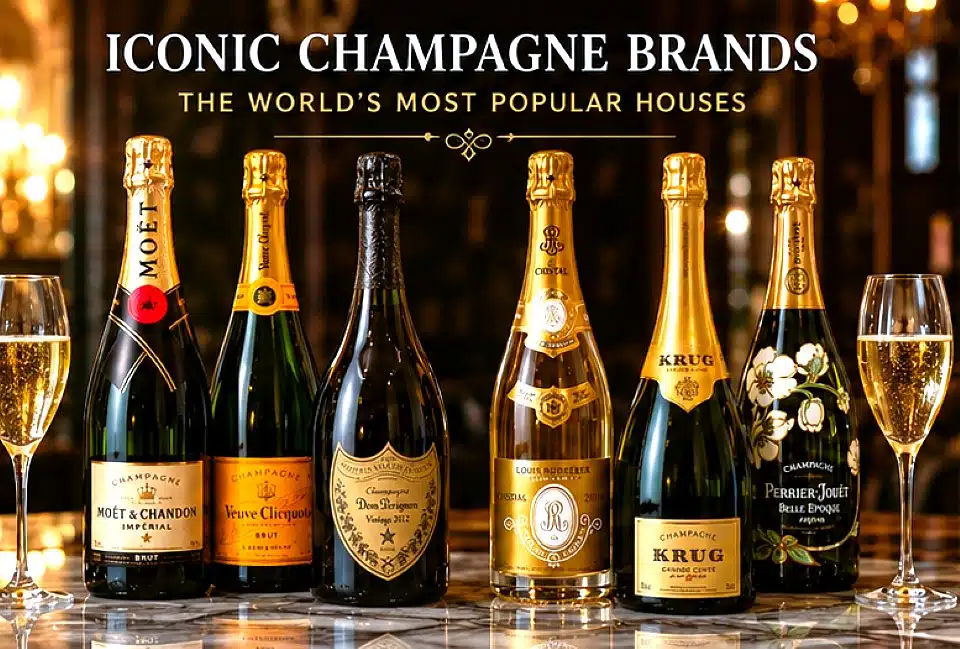
Luxury Champagne bottles featuring some of the world’s most popular Champagne brands
-
Nicolas Feuillatte
Country: France
Region: Champagne
Style: Brut and Rosé Champagne
Known for: Strong value and broad distribution
Nicolas Feuillatte is particularly interesting because it combines Champagne credentials with broad consumer accessibility.
The brand has a strong presence in international retail markets and is frequently available at a more approachable price than some luxury prestige brands.
In the U.S. market, Nicolas Feuillatte ranked among the leading Champagne brands in 2025.
For consumers who want authentic Champagne without necessarily entering the ultra-luxury segment, it can be an excellent choice.
Best for: Parties, gifts, weddings and value-conscious Champagne buyers.
-
Perrier-Jouët
Country: France
Region: Épernay, Champagne
Style: Premium and prestige Champagne
Known for: Belle Époque bottle and floral style
Perrier-Jouët is instantly recognizable because of its beautiful Belle Époque bottle.
The house has a long history and is particularly associated with Chardonnay and elegant floral characteristics.
Its prestige cuvée, Belle Époque, is one of the world’s most visually distinctive luxury Champagne bottles.
Perrier-Jouët also experienced strong growth in U.S. 2025 market data, with case depletions increasing significantly compared with 2024.
Best for: Weddings, luxury gifts and elegant celebrations.
-
Taittinger
Country: France
Region: Reims, Champagne
Style: Brut and prestige Champagne
Known for: Chardonnay-forward style
Taittinger is one of the major independent Champagne Houses and is particularly respected for Chardonnay.
Its Brut Réserve is widely recognized, while Comtes de Champagne represents the house’s prestige level.
Taittinger can be a particularly good choice for consumers who enjoy Champagne with freshness, elegance and refined citrus and floral characteristics.
Best for: Aperitifs, seafood and elegant dinners.
-
Piper-Heidsieck
Country: France
Region: Reims, Champagne
Style: Brut, Rosé and vintage Champagne
Known for: Long history and international recognition
Piper-Heidsieck is one of Champagne’s historic Houses.
Its wines combine fruit, freshness and structure, making them suitable for both casual celebrations and formal occasions.
The brand also has strong international distribution and remains a familiar name on Champagne menus around the world.
In 2025 U.S. data, Piper-Heidsieck ranked among the top eight Champagne brands.
Best for: Parties, cocktails, appetizers and celebrations.
-
G.H. Mumm
Country: France
Region: Reims, Champagne
Style: Brut, Rosé and prestige Champagne
Known for: Cordon Rouge and global recognition
G.H. Mumm is another internationally recognized Champagne brand.
Its Cordon Rouge is particularly famous for its red ribbon, which has become one of the most distinctive visual elements in the Champagne category.
Mumm’s style tends toward freshness, fruit and approachable structure.
The brand is an excellent choice for consumers seeking recognizable Champagne for entertaining.
Best for: Parties, celebrations and aperitifs.
-
Pommery
Country: France
Region: Reims, Champagne
Style: Brut, Rosé and prestige Champagne
Known for: Elegant style and historic identity
Pommery is one of the classic names of Champagne.
The house played an important historical role in the development and popularity of modern dry Champagne styles.
Today, Pommery offers a broad range of wines, including its recognizable Brut Royal.
Best for: Aperitifs, celebrations and traditional Champagne occasions.
-
Armand de Brignac
Country: France
Region: Champagne
Style: Luxury Champagne
Known for: Gold bottle and celebrity culture
Armand de Brignac, often nicknamed “Ace of Spades,” is one of the most visually recognizable luxury Champagne brands.
Its metallic bottles and strong connection with music and celebrity culture have helped establish the brand as a contemporary symbol of luxury.
The brand focuses heavily on premium and prestige positioning.
Best for: Luxury parties, VIP events and high-end gifts.
-
Billecart-Salmon
Country: France
Region: Mareuil-sur-Aÿ, Champagne
Style: Premium Champagne
Known for: Elegant, refined style
Billecart-Salmon is a favorite among Champagne enthusiasts who value finesse and balance.
The house’s Brut Rosé is particularly famous and has helped establish Billecart-Salmon as a benchmark for elegant rosé Champagne.
Unlike some highly commercial brands, Billecart-Salmon is especially associated with wine lovers and fine-dining culture.
Best for: Fine dining, romantic dinners and serious Champagne enthusiasts.
-
Pol Roger
Country: France
Region: Épernay, Champagne
Style: Brut, vintage and prestige Champagne
Known for: Traditional style and British connection
Pol Roger is one of Champagne’s most respected traditional Houses.
The brand has a long association with Britain and is famously connected to Winston Churchill, who was known to be a devoted admirer of Pol Roger.
The house produces Champagne with structure, elegance and excellent food-pairing ability.
Best for: Fine dining, formal occasions and traditional Champagne lovers.
-
Charles Heidsieck
Country: France
Region: Reims, Champagne
Style: Premium Champagne
Known for: Richness and complexity
Charles Heidsieck is particularly appreciated by wine enthusiasts who enjoy richer, more mature Champagne styles.
The house’s Brut Réserve is known for its depth and complexity, while its vintage and prestige wines offer additional sophistication.
This is a particularly interesting brand for consumers who want to explore Champagne beyond the most heavily marketed names.
Best for: Fine dining and Champagne enthusiasts.
-
Canard-Duchêne
Country: France
Region: Champagne
Style: Brut and Rosé Champagne
Known for: Accessible Champagne and recognizable branding
Canard-Duchêne offers a useful middle ground between major luxury names and smaller grower Champagne producers.
The house has an established presence in France and international markets.
Its wines are suitable for consumers seeking authentic Champagne for celebrations without necessarily paying prestige-cuvée prices.
Best for: Weddings, parties and casual celebrations.
-
Lanson
Country: France
Region: Reims, Champagne
Style: Brut and Rosé Champagne
Known for: Freshness and recognizable branding
Lanson is one of Champagne’s historic Houses.
Its wines tend to emphasize freshness and lively acidity, making them particularly suitable as aperitifs.
The house is also known for its Black Label Brut and rosé expressions.
Best for: Aperitifs, seafood and celebrations.
-
Deutz
Country: France
Region: Aÿ, Champagne
Style: Premium Champagne
Known for: Elegant, balanced wines
Champagne Deutz is a refined House with a strong reputation among Champagne enthusiasts.
Its wines often emphasize elegance, balance and fine bubbles.
For consumers who want to move beyond the most obvious supermarket Champagne brands, Deutz is an excellent House to investigate.
Best for: Seafood, appetizers and fine dining.
-
Ruinart Rosé
Producer: Ruinart
Country: France
Region: Champagne
Style: Rosé Champagne
Known for: Luxury presentation and fruit-driven elegance
Ruinart Rosé deserves separate attention because it represents one of the most recognizable premium rosé Champagne styles.
Its combination of red-fruit character, freshness and the distinctive Ruinart identity makes it especially attractive for celebrations and romantic occasions.
Best for: Anniversaries, Valentine’s Day, weddings and luxury gifts.
-
Delamotte
Country: France
Region: Le Mesnil-sur-Oger, Champagne
Style: Blanc de Blancs and premium Champagne
Known for: Chardonnay and refined character
Delamotte is particularly interesting for Chardonnay lovers.
The house is closely associated with the Côte des Blancs and produces wines with the freshness, minerality and citrus character associated with high-quality Chardonnay from Champagne.
It is an excellent brand to explore if you enjoy Blanc de Blancs Champagne.
Best for: Oysters, seafood, sushi and sophisticated appetizers.
-
Salon
Country: France
Region: Le Mesnil-sur-Oger, Champagne
Style: Prestige Blanc de Blancs
Known for: Exclusivity and Chardonnay
Salon represents one of the most exclusive names on this list.
The house is famous for producing a highly distinctive Blanc de Blancs Champagne from Chardonnay.
Unlike large-volume Champagne brands, Salon releases wines selectively and focuses heavily on exceptional vintages.
This rarity contributes significantly to its prestige.
Best for: Collectors, serious wine enthusiasts and milestone celebrations.
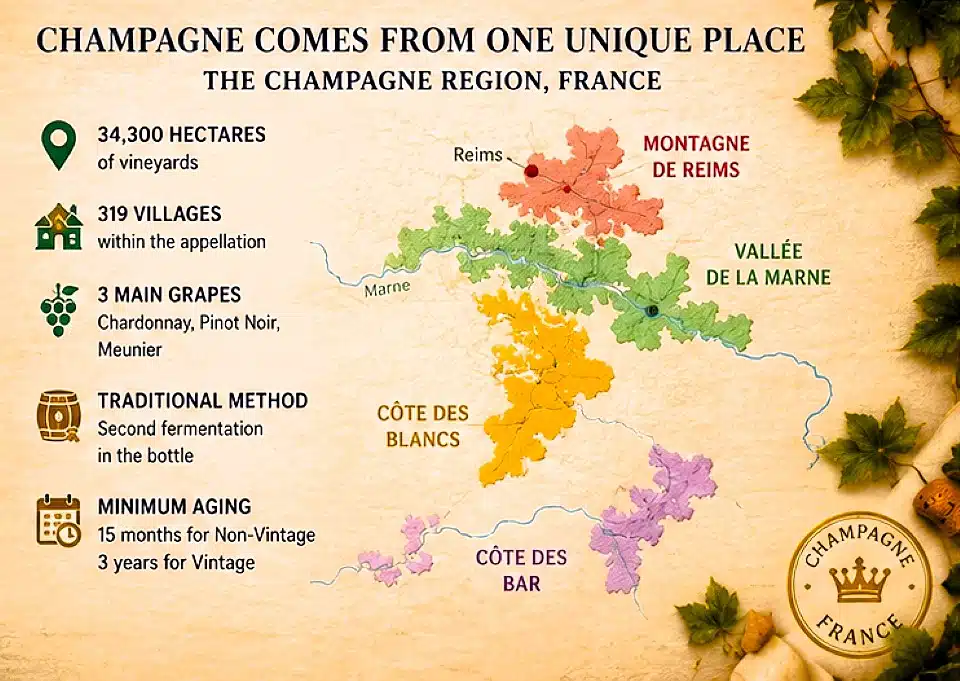
Champagne bottles and vineyards in France’s famous Champagne wine region
World’s Most Popular Champagne Brands at a Glance
| Champagne Brand | Style | Best Known For |
| Moët & Chandon | Brut / Rosé | Global popularity |
| Veuve Clicquot | Brut / Rosé | Yellow Label |
| Dom Pérignon | Prestige | Luxury |
| Louis Roederer | Premium / Prestige | Cristal |
| Cristal | Prestige | Luxury |
| Ruinart | Premium | Blanc de Blancs |
| Krug | Prestige | Complexity |
| Bollinger | Premium / Prestige | Pinot Noir & James Bond |
| Laurent-Perrier | Brut / Rosé | Cuvée Rosé |
| Nicolas Feuillatte | Brut / Rosé | Value |
| Perrier-Jouët | Premium / Prestige | Belle Époque |
| Taittinger | Brut / Prestige | Chardonnay |
| Piper-Heidsieck | Brut / Vintage | International popularity |
| G.H. Mumm | Brut | Cordon Rouge |
| Pommery | Brut / Prestige | Historic heritage |
| Armand de Brignac | Luxury | Gold bottle |
| Billecart-Salmon | Premium | Rosé |
| Pol Roger | Premium | Tradition |
| Charles Heidsieck | Premium | Complexity |
| Canard-Duchêne | Brut / Rosé | Accessibility |
| Lanson | Brut / Rosé | Freshness |
| Deutz | Premium | Elegance |
| Ruinart Rosé | Rosé | Luxury rosé |
| Delamotte | Blanc de Blancs | Chardonnay |
| Salon | Prestige | Exclusive Blanc de Blancs |
What Makes a Champagne Brand Popular?
Popularity can mean different things.
Global Availability
Brands with extensive international distribution are naturally more visible.
Moët & Chandon and Veuve Clicquot are examples of brands with extraordinary international reach.
Brand Recognition
Some Champagne bottles are instantly recognizable.
The yellow label of Veuve Clicquot, the red ribbon of Mumm, the gold bottle of Armand de Brignac and the distinctive Perrier-Jouët Belle Époque bottle all contribute to strong visual recognition.
Heritage
Champagne has centuries of history, and many major Houses have been established for generations.
Heritage can contribute to consumer trust and brand prestige.
Wine Quality
Popularity alone does not determine wine quality.
A mass-market Champagne can be extremely popular while a tiny grower Champagne may be less well known but highly respected by wine professionals.
This distinction is important when deciding which Champagne is “best.”
The Three Main Champagne Grapes
Champagne is primarily based on three grape varieties:
- Chardonnay
- Pinot Noir
- Meunier
The Comité Champagne identifies these as the three principal varieties used in the appellation.
Chardonnay
Chardonnay contributes:
- Freshness
- Citrus
- Floral aromas
- Minerality
- Aging potential
Chardonnay is particularly important in the Côte des Blancs.
Pinot Noir
Pinot Noir contributes:
- Body
- Structure
- Red-fruit character
- Power
It is particularly important in areas such as Montagne de Reims and Côte des Bar.
Meunier
Meunier tends to contribute:
- Fruitiness
- Roundness
- Softness
- Apple and pear character
It is particularly important in the Marne Valley.
What Does Brut Champagne Mean?
“Brut” describes the wine’s dosage or sugar level—not the Champagne brand.
According to the Comité Champagne, Brut Champagne contains less than 12 grams of sugar per litre.
Other categories include:
- Brut Nature
- Extra Brut
- Brut
- Extra Dry
- Sec
- Demi-Sec
- Doux
Despite the name “Extra Dry,” it is actually sweeter than Brut.
For most consumers, Brut is the standard starting point.
What Is Blanc de Blancs Champagne?
Blanc de Blancs means Champagne made exclusively from white grapes.
Most commonly, that means Chardonnay.
Blanc de Blancs Champagne tends to emphasize:
- Citrus
- Floral aromas
- Minerality
- Freshness
- Elegance
It is particularly good with seafood and oysters.
Ruinart, Taittinger, Delamotte and Salon are among the famous names to explore in this style.
What Is Blanc de Noirs Champagne?
Blanc de Noirs is Champagne made exclusively from dark-skinned grapes.
That generally means Pinot Noir, Meunier or both.
These wines often have more:
- Body
- Structure
- Red-fruit character
- Texture
They can be excellent with richer dishes.
Non-Vintage vs. Vintage Champagne
One of the most important distinctions when buying Champagne is whether it is vintage or non-vintage.
Non-Vintage Champagne
Non-vintage Champagne combines wines from multiple harvest years.
This allows the house to maintain a recognizable house style year after year.
It is usually the most common Champagne style.
Vintage Champagne
Vintage Champagne comes from a single harvest year.
The wine is generally produced when the house considers the vintage worthy of special recognition.
Vintage Champagne often receives longer aging and can offer greater complexity.
Dom Pérignon, for example, is exclusively a vintage Champagne.
How Champagne Is Made
Champagne’s production method is central to its identity.
After the initial wine is produced and blended, a second fermentation takes place inside the bottle.
The Comité Champagne describes this as the “prise de mousse,” when the wine gains its characteristic effervescence. Yeast and sugar are added before the bottle is sealed and the second fermentation begins.
The bottles then undergo extended maturation on lees.
During this period, yeast autolysis contributes additional aromas and texture. Champagne regulations require at least 15 months of maturation for non-vintage Champagne, while vintage Champagne must mature for at least three years.
This extended process helps explain why authentic Champagne can command a higher price than many other sparkling wines.
Best Champagne Brands for Weddings
For weddings, consider:
Moët & Chandon
A recognizable and versatile choice.
Veuve Clicquot
Excellent for a fashionable luxury celebration.
Nicolas Feuillatte
A useful option when serving larger groups.
Perrier-Jouët
Ideal for an elegant wedding reception.
Taittinger
Excellent for sophisticated dinners and toasts.
Laurent-Perrier
Particularly attractive if rosé Champagne is part of the celebration.
Best Champagne Brands for Gifts
For gifting, brand recognition matters.
Some excellent choices include:
Classic luxury: Veuve Clicquot or Moët & Chandon
Prestige: Dom Pérignon
Ultra-luxury: Cristal or Krug
Elegant: Ruinart
Romantic: Laurent-Perrier Cuvée Rosé or Ruinart Rosé
Traditional: Bollinger or Pol Roger
The best choice depends on the recipient’s taste and your budget.
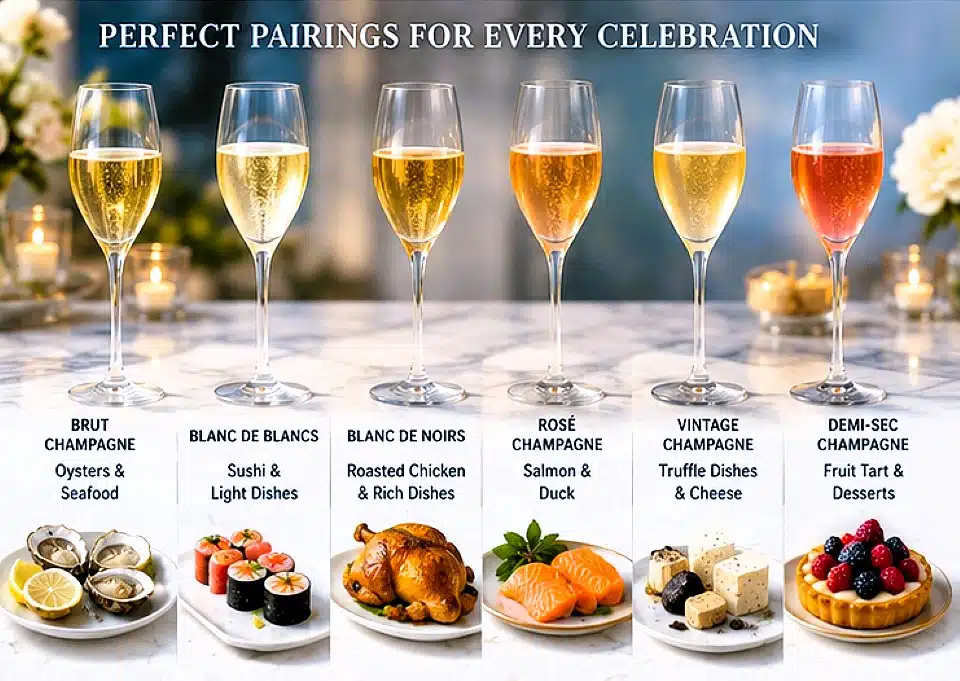
Champagne & Food Pairing
Best Champagne for Seafood
Champagne’s acidity and bubbles make it a natural partner for seafood.
Try Champagne with:
- Oysters
- Lobster
- Shrimp
- Crab
- Scallops
- Sushi
- Smoked salmon
- Caviar
For oysters, a fresh Blanc de Blancs can be especially appealing.
For richer seafood dishes, a fuller-bodied Blanc de Noirs can work beautifully.
Best Champagne for Cheese
Champagne can pair surprisingly well with cheese.
Try it with:
- Brie
- Camembert
- Goat cheese
- Comté
- Parmesan
- Triple-cream cheeses
The acidity can refresh the palate between bites, while the bubbles provide contrast with creamy textures.
Best Champagne for Dessert
Sweetness matters when pairing Champagne with dessert.
If the dessert is very sweet, a Brut Champagne can taste excessively dry or acidic.
Consider sweeter Champagne styles such as Demi-Sec for desserts.
The Comité Champagne classifies Demi-Sec as containing 32–50 grams of sugar per litre.
How to Choose the Best Champagne Brand
Don’t choose Champagne solely by price or bottle design.
Instead, consider:
-
Your Budget
Champagne ranges from relatively accessible non-vintage bottles to extremely expensive prestige cuvées.
-
Your Taste
Do you prefer:
- Fresh and citrusy?
- Rich and powerful?
- Fruity?
- Mineral?
- Toasty and mature?
-
The Occasion
A wedding may call for a recognizable major House.
A serious wine dinner might justify a grower Champagne or prestige cuvée.
-
The Food
Blanc de Blancs is excellent with delicate seafood.
Blanc de Noirs can work with richer food.
Rosé Champagne is particularly versatile with salmon, duck and fruit-driven dishes.
-
Non-Vintage or Vintage?
Non-vintage is generally the most versatile choice.
Vintage is ideal when you’re celebrating a specific year or want a more mature, complex style.
Is Expensive Champagne Better?
Not necessarily.
Price can reflect:
- Vineyard costs
- Production
- Aging
- Scarcity
- Brand reputation
- Packaging
- Distribution
- Demand
A $60 bottle can be fantastic, while a $300 prestige Champagne may not suit your personal taste.
The “best Champagne” is ultimately subjective.
For many occasions, a well-made Brut from a reputable Champagne House is all you need.
How Should Champagne Be Served?
Champagne is best served chilled but not excessively cold.
A temperature around 8–10°C (46–50°F) works well for many styles.
Use a proper Champagne flute or, increasingly, a white-wine glass designed to allow the wine’s aromas to develop.
Pour gently to preserve the bubbles and avoid filling the glass to the top.
How to Store Champagne
Store unopened Champagne:
- Away from direct sunlight
- At a stable temperature
- Away from heat
- Away from vibration
- In a suitable wine-storage environment
For long-term storage, consistency is more important than chasing a specific temperature.
Once opened, keep the bottle refrigerated with a Champagne stopper.
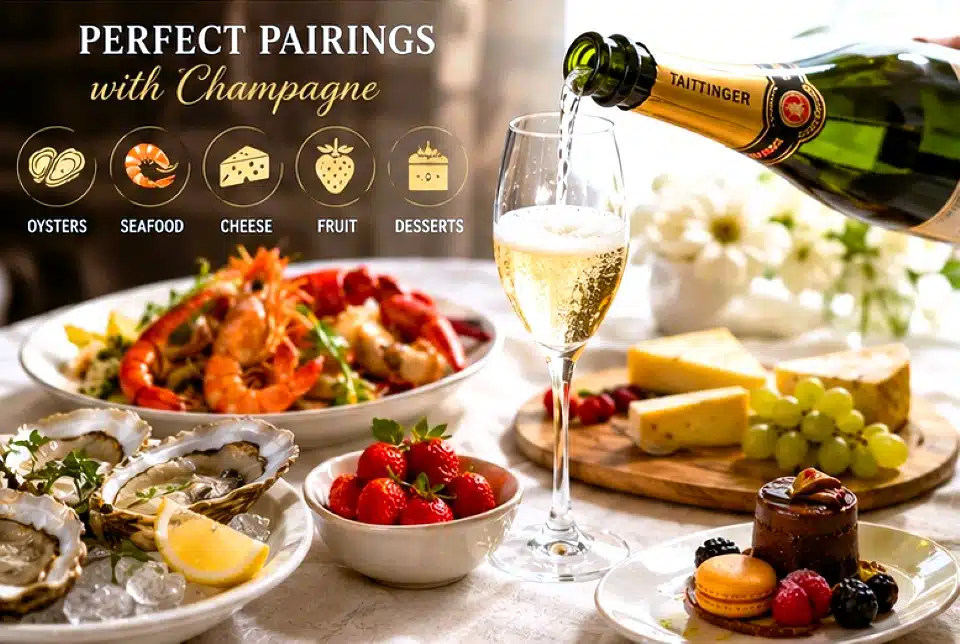
Premium Champagne served with elegant seafood and gourmet food in a luxury restaurant
Frequently Asked Questions About Champagne Brands
What is the most popular Champagne brand in the world?
There is no single official worldwide ranking, but Moët & Chandon and Veuve Clicquot are among the world’s most recognizable and widely distributed Champagne brands. Current U.S. data shows Veuve Clicquot leading Moët & Chandon by 2025 case depletions.
What are the top Champagne brands?
Some of the world’s most popular and prestigious names include Moët & Chandon, Veuve Clicquot, Dom Pérignon, Louis Roederer, Ruinart, Krug, Bollinger, Laurent-Perrier, Perrier-Jouët, Taittinger and Pol Roger.
What is the best Champagne brand?
There is no universally accepted best Champagne brand. Moët & Chandon and Veuve Clicquot are excellent for broad appeal, while Dom Pérignon, Krug, Cristal and Salon appeal more to luxury buyers and collectors.
Is Dom Pérignon Champagne?
Yes. Dom Pérignon is a prestige Champagne produced in France’s Champagne region.
Is Veuve Clicquot good Champagne?
Veuve Clicquot is one of the world’s best-known Champagne Houses and its Yellow Label Brut is one of the most recognizable Champagne wines internationally.
Is Moët & Chandon good Champagne?
Yes. Moët & Chandon is one of the world’s largest and most internationally recognized Champagne Houses, offering a broad portfolio from accessible Brut to more premium expressions.
What is the most expensive Champagne brand?
Prices vary considerably by vintage, bottle size, rarity and market. Prestige names such as Salon, Krug, Dom Pérignon and Louis Roederer Cristal can command very high prices, particularly for rare or older releases.
What Champagne is best for a wedding?
Moët & Chandon, Veuve Clicquot, Nicolas Feuillatte, Taittinger and Perrier-Jouët are all strong options depending on budget, guest count and desired style.
What is the difference between Champagne and Prosecco?
Champagne comes specifically from the Champagne region of France and is generally produced using the traditional bottle-fermentation method. Prosecco is an Italian sparkling wine made primarily from Glera and typically produced using a different tank-fermentation method.
What is Brut Champagne?
Brut refers to a Champagne with less than 12 grams of sugar per litre. It is the most common style and is generally considered dry.
What is Blanc de Blancs Champagne?
Blanc de Blancs is Champagne made exclusively from white grapes, most commonly Chardonnay. It generally emphasizes freshness, citrus, floral and mineral characteristics.
What is Blanc de Noirs Champagne?
Blanc de Noirs is Champagne made exclusively from dark-skinned grapes, generally Pinot Noir and/or Meunier. It tends to offer more body and structure.
What Champagne is best with oysters?
Fresh, dry Blanc de Blancs Champagne is an excellent choice with oysters because its acidity and mineral character complement the briny seafood.
What Champagne is best for a gift?
Veuve Clicquot and Moët & Chandon are excellent recognizable choices. For a more luxurious gift, consider Dom Pérignon, Cristal, Krug or Ruinart.
Can Champagne be stored for years?
Yes. Many Champagnes can age, especially vintage and prestige cuvées. However, not every bottle is intended for long-term cellaring, and storage conditions are critical.
Does Champagne get better with age?
Some Champagne develops additional complexity with age, including toast, brioche, dried fruit and nutty characteristics. However, whether older Champagne is “better” depends on individual preference.
What grapes are used in Champagne?
The three principal Champagne grape varieties are Chardonnay, Pinot Noir and Meunier. Each contributes different characteristics to the final blend.
Why is Champagne expensive?
Champagne can be expensive because of land costs, grape production, labor, traditional production requirements, extended cellar aging, brand reputation, scarcity and international demand.
Final Thoughts: The World’s Most Popular Champagne Brands
The world of Champagne combines tradition, craftsmanship, luxury and celebration in a way few other wines can match.
From the global recognition of Moët & Chandon and Veuve Clicquot to the prestige of Dom Pérignon, Cristal and Krug, there is a Champagne brand for virtually every type of celebration.
For consumers who enjoy elegant Chardonnay-driven wines, Ruinart, Taittinger, Delamotte and Salon are worth exploring.
For those who prefer fuller, structured Champagne, Bollinger, Louis Roederer and Pol Roger are excellent choices.
For rosé lovers, Laurent-Perrier and Ruinart Rosé provide two internationally recognized options.
And if you’re searching for a Champagne for a large celebration, Nicolas Feuillatte, Moët & Chandon, Veuve Clicquot and Piper-Heidsieck offer recognizable styles that are well suited to parties and events.
The most important thing to remember is that popularity and quality are not exactly the same thing. A famous Champagne brand may be popular because it is widely distributed and instantly recognizable, while a lesser-known producer may offer extraordinary wine that appeals more strongly to experienced enthusiasts.
The best Champagne for you is the one that matches your taste, occasion, food and budget.
Whether you’re celebrating a wedding, anniversary, birthday, promotion, holiday or simply an unforgettable evening, Champagne has a way of turning an ordinary moment into something special.
For wine and Champagne lovers in Toronto and the Greater Toronto Area, Always Dial A Bottle Toronto makes it convenient to explore Champagne, sparkling wine and other wine selections and have your choices delivered.
So the next time you’re choosing a bottle, look beyond the label. Consider the House, grape varieties, dosage, vintage, style and food pairing. You may discover that the world’s most popular Champagne brands offer far more variety than you expected.
Cheers to discovering your next favorite Champagne.