
Blog
World’s Most Popular White Wine Varieties: The Ultimate Guide to 25 Famous White Wines

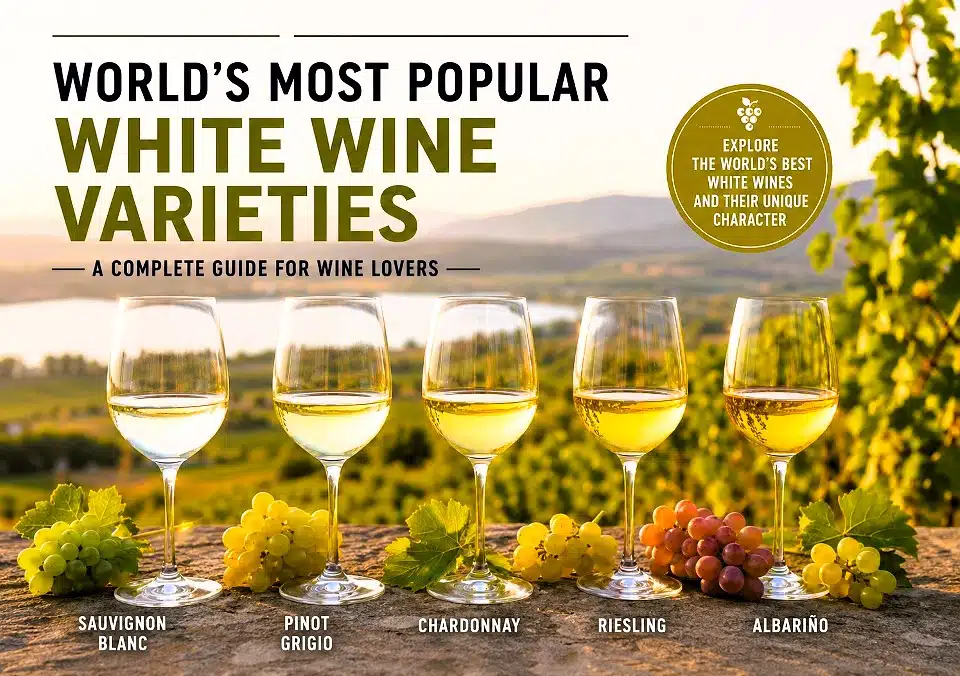
Discover the World’s Most Popular White Wine Varieties
White wine is one of the world’s most diverse and enjoyable wine styles, offering everything from crisp, refreshing citrus flavors to rich, buttery textures and beautifully aromatic bouquets. Whether you prefer a dry Sauvignon Blanc, an elegant Chardonnay, a floral Riesling, or a refreshing Pinot Grigio, there is a white wine variety to suit every taste and occasion.
Today, white wine is produced in virtually every major wine-producing country. France, Italy, Spain, Germany, Austria, Portugal, the United States, Canada, Australia, New Zealand, Chile, Argentina, and South Africa all cultivate exceptional white grape varieties that have earned worldwide recognition.
But what are the world’s most popular white wine varieties?
In this complete guide, we’ll explore the 25 most famous white wine grapes, their flavor profiles, ideal food pairings, best wine regions, serving temperatures, and buying tips. Whether you’re just beginning your wine journey or expanding your knowledge as an enthusiast, this guide will help you discover the remarkable diversity of white wines.
What Is a White Wine Variety?
A white wine variety refers to a specific type of grape used to produce white wine. While many white wines are made from green or yellow grapes, some white wines are produced from red grapes using minimal skin contact during winemaking.
Every grape variety has its own characteristics, including:
- Aroma
- Flavor
- Acidity
- Sweetness
- Body
- Mineral character
- Aging potential
Climate, soil, vineyard location, and winemaking techniques all influence the final style of the wine.
For example, Chardonnay from Burgundy, France tastes quite different from Chardonnay grown in California or Australia. Likewise, Sauvignon Blanc from New Zealand offers a distinctly different expression than examples from France’s Loire Valley.
These regional differences make exploring white wine both fascinating and rewarding.
Why White Wine Is So Popular
White wine continues to grow in popularity around the world for several reasons:
- Refreshing and versatile
- Excellent with seafood
- Easy to pair with many cuisines
- Available in dry, off-dry, and sweet styles
- Wide range of prices
- Ideal for warm-weather entertaining
- Increasing availability of premium bottles
Modern consumers also appreciate white wine’s ability to complement lighter meals, vegetarian cuisine, sushi, salads, and Mediterranean dishes.
Understanding White Wine Styles
Before choosing a bottle, it’s helpful to understand the major white wine styles.
Dry White Wines
Dry wines contain very little residual sugar and typically emphasize freshness and acidity.
Popular dry varieties include:
- Sauvignon Blanc
- Chardonnay
- Pinot Grigio
- Albariño
- Grüner Veltliner
- Vermentino
These wines are ideal for seafood, poultry, salads, and lighter dishes.
Off-Dry White Wines
Off-dry wines contain a small amount of residual sugar that softens acidity without making the wine noticeably sweet.
Common examples include:
- Riesling
- Chenin Blanc
- Pinot Gris
- Gewürztraminer
These wines pair especially well with spicy foods and Asian cuisine.
Sweet White Wines
Sweet white wines contain higher levels of natural grape sugar and are often enjoyed as dessert wines or paired with blue cheeses and fruit-based desserts.
Popular sweet styles include:
- Moscato
- Sauternes
- Icewine
- Late Harvest Riesling
- Tokaji
The World’s 25 Most Popular White Wine Varieties
-
Chardonnay
Chardonnay is widely regarded as the world’s most famous white wine grape. It is grown successfully in almost every major wine-producing country and is prized for its versatility.
Depending on where it is grown and how it is made, Chardonnay can range from crisp and mineral-driven to rich, buttery, and oak-aged.
Typical Chardonnay Flavors
- Apple
- Pear
- Lemon
- Peach
- Pineapple
- Vanilla
- Butter
- Toast
- Hazelnut
Unoaked Chardonnay highlights fresh fruit and minerality, while oak-aged styles develop creamy textures and notes of vanilla, caramel, and toasted nuts.
Best Regions
- Burgundy (France)
- California
- Australia
- Oregon
- Ontario
- Chile
Food Pairings
Chardonnay pairs beautifully with:
- Roast chicken
- Lobster
- Salmon
- Cream sauces
- Pasta Alfredo
- Brie
- Camembert
Best for: Elegant dinners, seafood, poultry, creamy dishes, and special occasions.
-
Sauvignon Blanc
Sauvignon Blanc is one of the world’s most refreshing white wine varieties. It is especially famous in France’s Loire Valley and New Zealand‘s Marlborough region.
This variety is celebrated for its bright acidity and vibrant citrus character.
Typical Sauvignon Blanc Flavors
- Lime
- Grapefruit
- Gooseberry
- Green apple
- Passion fruit
- Kiwi
- Fresh herbs
- Grass
New Zealand expressions often showcase tropical fruit and pronounced aromatics, while French examples tend to be more restrained and mineral-driven.
Best Regions
- Marlborough (New Zealand)
- Loire Valley (France)
- California
- Chile
- South Africa
Food Pairings
Excellent with:
- Oysters
- Shrimp
- Sushi
- Goat cheese
- Salads
- Asparagus
- Grilled vegetables
Best for: Summer meals, seafood, salads, and fresh cheeses.
-
Riesling
Riesling is one of the world’s most aromatic and versatile white grape varieties. It can produce wines ranging from bone dry to intensely sweet while maintaining remarkable acidity.
Germany is traditionally associated with Riesling, but excellent examples are also produced in Alsace, Australia, Austria, Canada, and the United States.
Typical Riesling Flavors
- Green apple
- Peach
- Apricot
- Lime
- Lemon
- Honey
- Jasmine
- Mineral notes
As Riesling ages, it may develop distinctive petrol-like aromas that many enthusiasts consider a hallmark of mature examples.
Best Regions
- Germany
- Alsace (France)
- Clare Valley (Australia)
- Ontario
- Washington State
Food Pairings
Perfect with:
- Thai food
- Indian cuisine
- Spicy Asian dishes
- Pork
- Duck
- Soft cheeses
Best for: Spicy cuisine, versatile food pairings, and collectors seeking wines with aging potential.
-
Pinot Grigio / Pinot Gris
Known as Pinot Grigio in Italy and Pinot Gris in France, this grape produces refreshing wines with bright acidity and approachable fruit flavors.
Italian Pinot Grigio is typically crisp and light-bodied, while Alsatian Pinot Gris is often richer and fuller in style.
Typical Flavors
- Pear
- Green apple
- Lemon
- Peach
- White flowers
- Almond
Best Regions
- Italy
- Alsace
- Oregon
- New Zealand
Food Pairings
Excellent with:
- Seafood
- Chicken
- Caesar salad
- Light pasta
- Fresh cheeses
Best for: Everyday drinking and warm-weather entertaining.
-
Chenin Blanc
Originally from France’s Loire Valley, Chenin Blanc is now also widely grown in South Africa, where it has become one of the country’s signature white grapes.
This adaptable variety can produce sparkling, dry, off-dry, sweet, and dessert wines.
Typical Flavors
- Apple
- Quince
- Pear
- Honey
- Chamomile
- Lemon
- Tropical fruit
Best Regions
- Loire Valley
- South Africa
Food Pairings
Pairs well with:
- Roast chicken
- Pork
- Seafood
- Mild curries
- Soft cheeses
Best for: Versatility and food-friendly dining.
-
Moscato (Muscat)
Moscato is famous for its fragrant aromas and naturally sweet, fruity style.
It is particularly popular among new wine drinkers and those who enjoy lighter alcohol levels.
Typical Flavors
- Peach
- Orange blossom
- Grapes
- Pear
- Honey
- Citrus
Food Pairings
Ideal with:
- Fruit desserts
- Cheesecake
- Blue cheese
- Brunch
- Fresh berries
Best for: Celebrations, desserts, and casual entertaining.
-
Gewürztraminer
Gewürztraminer is one of the world’s most aromatic white wines, recognized for its intensely floral bouquet and exotic fruit character.
Typical Flavors
- Lychee
- Rose petals
- Ginger
- Peach
- Apricot
- Spice
Best Regions
- Alsace
- Germany
- New Zealand
- Northern Italy
Food Pairings
Outstanding with:
- Thai cuisine
- Indian food
- Chinese dishes
- Spicy seafood
Best for: Aromatic wine lovers and spicy meals.
-
Viognier
Viognier is prized for its luxurious texture and expressive floral aromas.
Typical Flavors
- Apricot
- Peach
- Honeysuckle
- Orange blossom
- Pear
- Mango
Best Regions
- Rhône Valley (France)
- California
- Australia
Food Pairings
Excellent with:
- Roast chicken
- Lobster
- Cream sauces
- Grilled seafood
Best for: Rich seafood dishes and elegant dinners.
-
Albariño
Albariño is Spain’s premier white grape from Galicia and is increasingly popular worldwide.
Known for its vibrant acidity and saline minerality, it’s a favorite alongside seafood.
Typical Flavors
- Lemon
- Lime
- Peach
- Nectarine
- Citrus blossom
- Sea breeze minerality
Food Pairings
- Oysters
- Mussels
- Crab
- Grilled fish
- Sushi
Best for: Coastal cuisine and seafood lovers.
-
Grüner Veltliner
Austria’s flagship white grape produces crisp, peppery wines with lively acidity.
Typical Flavors
- Green apple
- Lime
- White pepper
- Citrus
- Herbs
Food Pairings
- Schnitzel
- Salads
- Vegetables
- Seafood
- Asian cuisine
Best for: Fresh, food-friendly wines with unique character.
White Wine Comparison Table
| Variety | Body | Acidity | Sweetness | Best With |
| Chardonnay | Medium-Full | Medium | Dry | Chicken, Lobster |
| Sauvignon Blanc | Light | High | Dry | Seafood, Salads |
| Riesling | Light | High | Dry to Sweet | Asian Cuisine |
| Pinot Grigio | Light | High | Dry | Fish, Pasta |
| Chenin Blanc | Medium | High | Dry to Sweet | Pork, Chicken |
| Moscato | Light | Low | Sweet | Desserts |
| Gewürztraminer | Medium | Medium | Off-Dry | Spicy Foods |
| Viognier | Full | Medium | Dry | Lobster |
| Albariño | Light | High | Dry | Shellfish |
| Grüner Veltliner | Light | High | Dry | Seafood, Vegetables |
Why Learning White Wine Varieties Matters
Understanding grape varieties helps you confidently select wines for every occasion. Instead of choosing based solely on labels or price, you’ll be able to match wines to your favorite foods, discover new regions, and appreciate the unique characteristics each grape brings to the glass.
Whether you enjoy crisp Sauvignon Blanc on a summer patio, a rich Chardonnay with roasted chicken, or an aromatic Riesling alongside spicy cuisine, exploring different white wine varieties is one of the most rewarding aspects of wine appreciation.
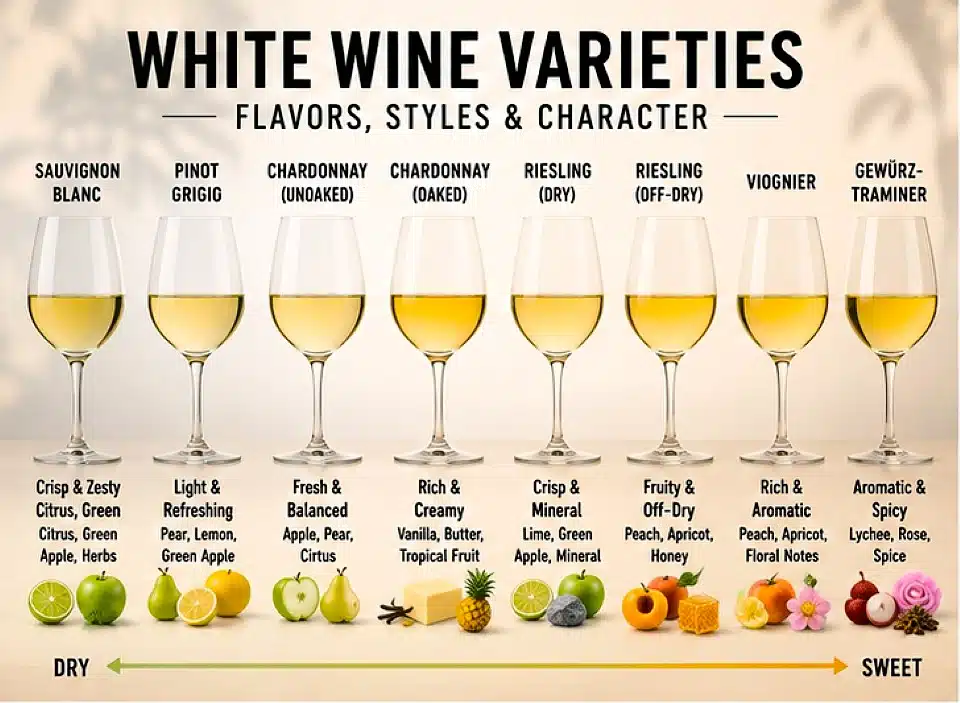
Popular white wine varieties including Chardonnay, Sauvignon Blanc, Riesling and Pinot Grigio
-
Semillon
Semillon is one of France’s classic white grape varieties and is best known for producing the legendary sweet wines of Sauternes. It is also widely planted in Australia, where it creates fresh, age-worthy dry wines.
Typical Flavors
- Lemon
- Green apple
- Fig
- Honey
- Beeswax
- Toast
- Nuts
Young Semillon is crisp and citrus-driven, while mature examples develop rich honeyed complexity.
Best Wine Regions
- Bordeaux (France)
- Hunter Valley (Australia)
- Washington State
- Chile
Food Pairings
- Roast chicken
- Lobster
- Grilled fish
- Cream sauces
- Soft cheeses
Best for: Collectors, elegant dinners, and seafood.
-
Vermentino
Vermentino thrives along the Mediterranean coast and produces fresh wines with bright acidity and distinctive mineral notes.
Typical Flavors
- Lime
- Lemon
- Green apple
- Pear
- Herbs
- Sea salt
- White flowers
Best Regions
- Sardinia
- Liguria
- Tuscany
- Corsica
Food Pairings
- Shrimp
- Mussels
- Oysters
- Mediterranean seafood
- Salads
Best for: Summer entertaining and coastal cuisine.
-
Torrontés
Argentina’s signature aromatic white grape produces expressive wines with floral aromas and refreshing acidity.
Typical Flavors
- Peach
- Apricot
- Orange blossom
- Jasmine
- Lemon
- Grapefruit
Best Regions
- Salta
- Mendoza
- La Rioja (Argentina)
Food Pairings
- Thai food
- Indian cuisine
- Spicy seafood
- Chicken curry
Best for: Aromatic wines and spicy dishes.
-
Assyrtiko
Native to the volcanic island of Santorini, Assyrtiko is one of Greece’s finest white wine varieties.
Typical Flavors
- Lemon
- Lime
- Green apple
- Flint
- Sea salt
- Mineral notes
Despite Greece’s warm climate, Assyrtiko retains remarkably high acidity.
Best Regions
- Santorini
- Northern Greece
Food Pairings
- Grilled octopus
- Seafood
- Sushi
- Fresh fish
- Greek cuisine
Best for: Mineral-driven wines and seafood lovers.
-
Garganega
Garganega is the principal grape behind Italy’s famous Soave wines.
Typical Flavors
- Pear
- Apple
- Almond
- Lemon
- White flowers
- Honey
Best Regions
- Veneto
- Soave DOC
Food Pairings
- Pasta
- Chicken
- Seafood
- Mild cheeses
Best for: Italian cuisine and everyday dining.
-
Verdejo
Spain’s Verdejo has become increasingly popular thanks to its lively acidity and fresh fruit character.
Typical Flavors
- Lime
- Grapefruit
- Green apple
- Herbs
- Fennel
Best Regions
- Rueda
Food Pairings
- Tapas
- Seafood
- Salads
- Chicken
Best for: Warm-weather dining and light appetizers.
-
Arneis
Arneis, sometimes called “the little rascal,” is an elegant white grape from Italy’s Piedmont region.
Typical Flavors
- Pear
- Peach
- Apricot
- Almond
- White flowers
Best Regions
- Roero
Food Pairings
- Seafood
- Risotto
- Chicken
- Pasta
Best for: Elegant Italian meals.
-
Marsanne
Marsanne is a traditional Rhône Valley grape known for producing full-bodied wines with excellent aging potential.
Typical Flavors
- Pear
- Quince
- Honey
- Nuts
- Spice
Best Regions
- Northern Rhône
- Australia
Food Pairings
- Roast turkey
- Chicken
- Cream sauces
- Rich seafood
Best for: Rich meals and cellaring.
-
Roussanne
Often blended with Marsanne, Roussanne contributes elegance, floral aromas, and complexity.
Typical Flavors
- Pear
- Herbal tea
- Honey
- Apricot
- Chamomile
Best Regions
- Rhône Valley
- California
Food Pairings
- Lobster
- Roast chicken
- Creamy pasta
Best for: Fine dining and sophisticated white wines.
-
Furmint
Hungary’s Furmint is famous for producing both dry wines and the legendary Tokaji dessert wines.
Typical Flavors
- Apple
- Pear
- Citrus
- Honey
- Mineral notes
Best Regions
- Tokaj
Food Pairings
- Duck
- Pork
- Foie gras
- Blue cheese
Best for: Collectors and dessert wine enthusiasts.
-
Trebbiano
Trebbiano is one of Italy’s most widely planted white grapes.
Typical Flavors
- Lemon
- Green apple
- Pear
- Herbs
Best Regions
- Tuscany
- Abruzzo
- Emilia-Romagna
Food Pairings
- Seafood
- Chicken
- Pasta
- Salads
Best for: Everyday Italian dining.
-
Silvaner
Silvaner is an underrated German variety producing fresh, elegant wines with subtle fruit and mineral character.
Typical Flavors
- Apple
- Pear
- Herbs
- Citrus
- Mineral notes
Best Regions
- Franconia (Germany)
Food Pairings
- Asparagus
- White fish
- Chicken
- Soft cheeses
Best for: Delicate cuisine.
-
Melon de Bourgogne
This grape is best known for producing Muscadet, one of France’s classic seafood wines.
Typical Flavors
- Lemon
- Lime
- Sea salt
- Mineral
- Apple
Best Regions
- Loire Valley
Food Pairings
- Oysters
- Mussels
- Crab
- Lobster
Best for: Shellfish and coastal cuisine.
-
Soave
Although Soave is technically the name of a wine rather than a grape, wines labeled Soave are primarily made from Garganega.
Typical Flavors
- Lemon
- Apple
- Almond
- White flowers
Food Pairings
- Chicken
- Seafood
- Pasta
- Risotto
Best for: Italian dinners.
-
White Rhône Blends
Many of France’s most respected white wines are blends of Marsanne, Roussanne, Viognier, Grenache Blanc, and Clairette.
These blends often offer remarkable complexity.
Typical Flavors
- Pear
- Peach
- Honey
- Citrus
- Herbs
- Almond
- Spice
Food Pairings
- Roast chicken
- Lobster
- Veal
- Cream sauces
Best for: Special occasions and fine dining.
White Wine Comparison Chart
| Variety | Body | Acidity | Typical Style |
| Semillon | Medium | Medium | Dry & Sweet |
| Vermentino | Light | High | Dry |
| Torrontés | Light | High | Aromatic |
| Assyrtiko | Medium | Very High | Mineral |
| Garganega | Medium | Medium | Dry |
| Verdejo | Light | High | Fresh |
| Arneis | Medium | Medium | Elegant |
| Marsanne | Full | Medium | Rich |
| Roussanne | Medium-Full | Medium | Floral |
| Furmint | Medium | High | Dry & Sweet |
| Trebbiano | Light | High | Crisp |
| Silvaner | Light | Medium | Mineral |
| Melon de Bourgogne | Light | High | Seafood Wine |
Best White Wine Regions in the World
The quality of white wine depends not only on the grape variety but also on the region where it is grown.
France
Famous for:
- Chardonnay
- Sauvignon Blanc
- Chenin Blanc
- Semillon
- Viognier
Italy
Known for:
- Pinot Grigio
- Garganega
- Vermentino
- Trebbiano
- Arneis
Germany
World-famous for:
- Riesling
- Silvaner
Spain
Leading varieties:
- Albariño
- Verdejo
Greece
Renowned for:
- Assyrtiko
Austria
Best known for:
- Grüner Veltliner
Argentina
Signature variety:
- Torrontés
Australia
Popular grapes:
- Chardonnay
- Riesling
- Semillon
- Viognier
New Zealand
Internationally recognized for:
- Sauvignon Blanc
- Pinot Gris
- Chardonnay
Canada
Excellent examples of:
- Chardonnay
- Riesling
- Icewine
Old World vs. New World White Wines
Understanding the distinction between Old World and New World wine styles can help you choose bottles that match your preferences.
Old World White Wines
Produced primarily in Europe, these wines often emphasize:
- Higher acidity
- Minerality
- Subtle fruit
- Food-friendly structure
New World White Wines
Produced in countries such as Canada, the United States, Australia, New Zealand, Chile, Argentina, and South Africa, these wines frequently showcase:
- Riper fruit
- Fuller body
- More expressive aromas
- Modern winemaking styles
Neither style is inherently better—the choice comes down to personal taste and the occasion.
Why Exploring Different White Wine Varieties Is Worthwhile
Each white grape variety reflects the place where it is grown, the climate, and the traditions of its winemakers. Exploring different styles allows you to discover new aromas, textures, and food pairings while gaining a deeper appreciation for the diversity of the world’s wine regions.
Whether you enjoy crisp coastal wines like Albariño, mineral-driven Assyrtiko, elegant Chardonnay, or aromatic Riesling, there is always another remarkable white wine waiting to be discovered.
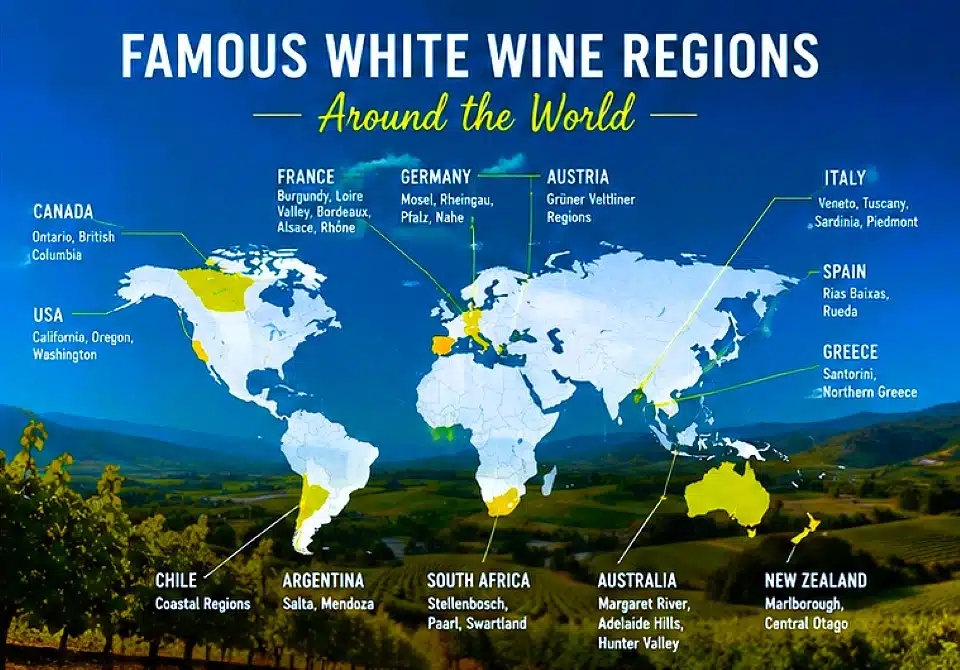
White wine grapes growing in vineyards from major wine regions around the world
World’s Most Popular White Wine Varieties
How to Choose the Perfect White Wine
With hundreds of white wines available from around the world, selecting the right bottle can feel overwhelming. Fortunately, understanding a few basic characteristics—such as body, acidity, sweetness, and aroma—makes choosing the perfect white wine much easier.
Whether you’re shopping for a casual dinner, a summer barbecue, a holiday celebration, or a special occasion, this guide will help you confidently select the right white wine for every meal and event.
Understanding White Wine Characteristics
Every white wine has its own personality. The main characteristics that define a wine include:
- Body
- Acidity
- Sweetness
- Alcohol level
- Aroma
- Flavor profile
- Minerality
- Oak influence
Learning these terms will help you identify wines that best match your personal taste.
Body
Body refers to how heavy or rich a wine feels in your mouth.
Light-Bodied White Wines
These wines are crisp, refreshing, and easy to drink.
Examples include:
- Sauvignon Blanc
- Pinot Grigio
- Albariño
- Verdejo
- Melon de Bourgogne
These wines are perfect for warm weather and lighter meals.
Medium-Bodied White Wines
Balanced between freshness and richness.
Examples include:
- Riesling
- Chenin Blanc
- Grüner Veltliner
- Garganega
- Assyrtiko
These wines pair with a wide variety of foods.
Full-Bodied White Wines
Rich, creamy, and often oak-aged.
Examples include:
- Chardonnay
- Viognier
- Marsanne
- White Rhône blends
These wines stand up well to richer dishes.
Acidity
Acidity gives white wine its freshness and crisp finish.
High-Acid Wines
Examples:
- Sauvignon Blanc
- Riesling
- Albariño
- Assyrtiko
- Pinot Grigio
These wines pair exceptionally well with seafood and salads.
Medium-Acid Wines
Examples:
- Chardonnay
- Chenin Blanc
- Viognier
Often excellent with poultry and cream sauces.
Sweetness Levels
White wines range from bone dry to intensely sweet.
Dry
Very little residual sugar.
Popular examples:
- Chardonnay
- Sauvignon Blanc
- Pinot Grigio
- Albariño
- Vermentino
Off-Dry
Slightly sweet while maintaining refreshing acidity.
Examples:
- Riesling
- Gewürztraminer
- Chenin Blanc
Sweet
Dessert wines featuring noticeable sweetness.
Examples:
- Moscato
- Icewine
- Sauternes
- Tokaji
Oak Influence
Some white wines spend time aging in oak barrels.
Oak aging may contribute notes of:
- Vanilla
- Butter
- Toast
- Caramel
- Hazelnut
- Baking spice
Chardonnay is the classic example of an oak-aged white wine, although some producers prefer an unoaked style that emphasizes fresh fruit and minerality.
Best White Wines for Every Occasion
Summer Patio
Refreshing choices include:
- Sauvignon Blanc
- Pinot Grigio
- Albariño
- Vermentino
These wines are crisp, lively, and ideal for warm afternoons.
Dinner Parties
Elegant options include:
- Chardonnay
- Riesling
- Viognier
- White Rhône blends
These wines complement a broad range of appetizers and main courses.
Holiday Celebrations
Popular choices:
- Oaked Chardonnay
- Riesling
- Premium White Burgundy
- Champagne or sparkling wine
These wines pair beautifully with festive meals.
Casual Entertaining
Reliable crowd-pleasers include:
- Pinot Grigio
- Sauvignon Blanc
- Chardonnay
Their approachable style appeals to many guests.
Best White Wines for Seafood
White wine and seafood remain one of the classic culinary pairings.
Excellent choices include:
Oysters
- Muscadet
- Sauvignon Blanc
- Albariño
Lobster
- Chardonnay
- Viognier
Salmon
- Chardonnay
- Pinot Gris
Shrimp
- Sauvignon Blanc
- Vermentino
Sushi
- Riesling
- Sauvignon Blanc
- Assyrtiko
Best White Wines for Chicken
Chicken pairs with a wide range of white wines depending on the preparation.
Roast Chicken
- Chardonnay
- Viognier
- Chenin Blanc
Grilled Chicken
- Sauvignon Blanc
- Pinot Grigio
- Vermentino
Creamy Chicken Dishes
- Oaked Chardonnay
- Marsanne
- White Rhône blends
Best White Wines for Pasta
Cream-Based Pasta
Best choices:
- Chardonnay
- Viognier
- Marsanne
Seafood Pasta
Excellent with:
- Pinot Grigio
- Sauvignon Blanc
- Vermentino
Vegetable Pasta
Recommended:
- Grüner Veltliner
- Albariño
- Chenin Blanc
Best White Wines for Cheese
Pairing wine with cheese is one of the easiest ways to elevate both.
Goat Cheese
- Sauvignon Blanc
Brie
- Chardonnay
Camembert
- Chardonnay
- Viognier
Blue Cheese
- Sauternes
- Icewine
Parmesan
- Vermentino
- Pinot Grigio
Best White Wines for Beginners
If you’re just beginning to explore white wine, start with approachable varieties that are widely available and easy to enjoy.
Chardonnay
Rich yet versatile.
Sauvignon Blanc
Fresh, crisp, and aromatic.
Pinot Grigio
Light-bodied and refreshing.
Riesling
Available in both dry and off-dry styles with vibrant fruit flavors.
Moscato
Sweet, floral, and low in alcohol—an approachable choice for new wine drinkers.
Sampling different styles is one of the best ways to discover your personal preferences.
White Wine Serving Temperature Guide
Serving temperature significantly affects aroma and flavor.
| Wine Style | Ideal Temperature |
| Sauvignon Blanc | 45–50°F (7–10°C) |
| Pinot Grigio | 45–50°F (7–10°C) |
| Riesling | 45–50°F (7–10°C) |
| Albariño | 45–50°F (7–10°C) |
| Vermentino | 45–50°F (7–10°C) |
| Chardonnay (Unoaked) | 48–52°F (9–11°C) |
| Chardonnay (Oaked) | 50–55°F (10–13°C) |
| Viognier | 50–55°F (10–13°C) |
| Dessert Wines | 42–48°F (6–9°C) |
Serving wines too cold can mute aromas, while serving them too warm may reduce their freshness.
Can White Wine Age?
Many people assume all white wines should be consumed young, but several varieties can develop remarkable complexity over time.
Examples with excellent aging potential include:
- Riesling
- Chardonnay
- Semillon
- White Burgundy
- White Rhône blends
- Furmint
As these wines mature, they often develop notes of honey, toasted nuts, dried fruit, and brioche while maintaining balanced acidity.
Common Buying Mistakes
Avoid these common mistakes when purchasing white wine:
- Choosing wine based only on the label.
- Serving every white wine ice cold.
- Assuming all Chardonnay is buttery and oaked.
- Thinking sweet wines are always low quality.
- Ignoring food pairing opportunities.
Exploring different regions and producers often reveals surprising styles and excellent value.
Expert Buying Tips
Wine professionals often recommend:
- Try the same grape from different countries to experience regional differences.
- Experiment with both Old World and New World styles.
- Keep a mix of dry, aromatic, and richer wines at home for different occasions.
- Taste wines with food to appreciate how pairings can change the overall experience.
- Don’t hesitate to ask for recommendations when shopping—many excellent wines come from lesser-known regions.
Why White Wine Continues to Grow in Popularity
Consumers are increasingly drawn to white wines because they offer freshness, versatility, and an incredible range of styles. From crisp patio wines to age-worthy classics, white wine suits everything from casual lunches to elegant celebrations.
Winemakers continue to innovate, introducing new vineyard practices, sustainable production methods, and exciting expressions of traditional grape varieties. As global interest in wine education grows, more people are discovering that white wine can be every bit as complex and rewarding as red wine.
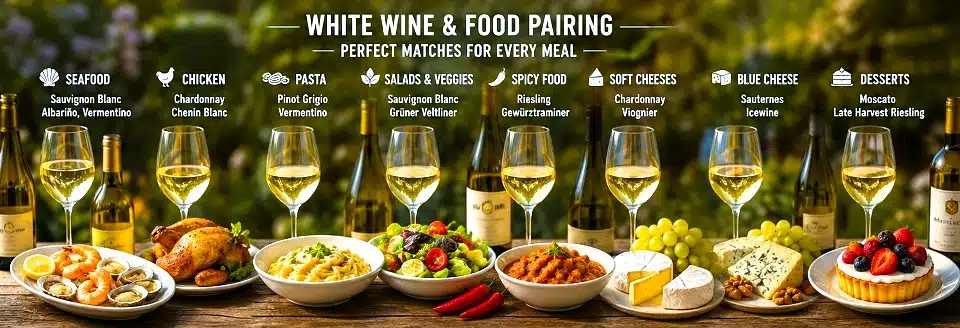
White wine and food pairing with seafood, chicken, cheese and fresh vegetables
The World’s Best White Wine Regions
France
France remains one of the most influential white wine-producing countries in the world.
Its major white wine regions include Burgundy, Loire Valley, Alsace, Bordeaux, and the Rhône Valley.
Burgundy
Burgundy is particularly famous for Chardonnay. The region produces some of the world’s most sought-after white wines, ranging from crisp and mineral-driven styles to rich, complex wines capable of aging for decades.
Loire Valley
The Loire Valley is famous for Sauvignon Blanc and Chenin Blanc.
Sancerre and Pouilly-Fumé are internationally recognized for Sauvignon Blanc, while areas such as Vouvray showcase the versatility of Chenin Blanc.
Alsace
Alsace is particularly known for:
- Riesling
- Gewürztraminer
- Pinot Gris
- Pinot Blanc
The wines can range from bone dry to richly sweet and aromatic.
Bordeaux
Bordeaux is famous for white blends based primarily on Sauvignon Blanc and Semillon.
Sweet wines from Sauternes are among the world’s most celebrated dessert wines.
Rhône Valley
Northern Rhône white wines often feature Viognier, Marsanne, and Roussanne, while southern Rhône blends can include several Mediterranean white varieties.
Italy
Italy is another essential country for white wine lovers.
Some of the country’s best-known white grapes include:
- Pinot Grigio
- Garganega
- Vermentino
- Arneis
- Trebbiano
- Verdicchio
Veneto
Veneto is home to Pinot Grigio and Soave.
Soave is primarily made from Garganega and can range from simple, fresh wines to sophisticated examples with considerable texture and complexity.
Tuscany
Although Tuscany is famous for red wine, Vermentino has become an important white wine variety, especially in coastal areas.
Piedmont
Piedmont is best known for red wines, but Arneis provides an elegant white counterpart.
Germany
Germany has a worldwide reputation for exceptional Riesling.
German Riesling can range from:
- Bone dry
- Off-dry
- Sweet
- Late harvest
- Dessert styles
The country’s major Riesling regions include Mosel, Rheingau, Nahe, and Pfalz.
German Riesling is especially prized for its combination of intense aroma and high natural acidity.
Spain
Spain produces a fascinating range of white wines.
Galicia
Albariño is the star variety, especially in Rías Baixas.
These wines are famous for their refreshing acidity, citrus fruit, floral aromas, and mineral character.
Rueda
Verdejo is the signature grape of Rueda.
It typically produces crisp, aromatic wines with citrus, green fruit, herbal notes, and refreshing acidity.
Austria
Austria’s most internationally recognized white grape is Grüner Veltliner.
The variety is known for:
- Green apple
- Citrus
- Fresh herbs
- White pepper
- Mineral character
Austria’s white wines are particularly popular with food because their acidity and savory character work well with everything from seafood to vegetables.
Greece
Greece has experienced renewed international interest in its indigenous white varieties.
Assyrtiko is the country’s most famous modern white wine grape.
It is particularly associated with Santorini, where volcanic soils and a dry climate help produce intensely mineral wines with impressive acidity.
Assyrtiko is especially good with:
- Grilled fish
- Oysters
- Octopus
- Greek salads
- Shellfish
Portugal
Portugal is well known for its distinctive white wines.
Important varieties include:
- Alvarinho
- Arinto
- Encruzado
- Loureiro
Vinho Verde, from northern Portugal, is particularly popular for its fresh, lively character and food-friendly acidity.
Australia
Australia produces a remarkable range of white wines.
Chardonnay is one of the country’s most important varieties, while Semillon from Hunter Valley has developed a particularly strong reputation.
Australian Riesling, especially from Clare Valley and Eden Valley, can also offer excellent quality and impressive aging potential.
New Zealand
New Zealand has become synonymous with Sauvignon Blanc.
Marlborough Sauvignon Blanc is internationally recognized for its expressive aromas and vibrant acidity.
Typical characteristics include:
- Passion fruit
- Lime
- Grapefruit
- Gooseberry
- Fresh herbs
New Zealand also produces Chardonnay, Pinot Gris, Riesling, and other white varieties.
United States
California dominates American white wine production, with Chardonnay being particularly important.
California Chardonnay ranges from:
- Crisp and mineral
- Fresh and fruit-driven
- Rich and buttery
- Heavily oak-influenced
Oregon is also increasingly recognized for Chardonnay and other cool-climate white wines.
Washington State produces excellent Riesling, Chardonnay, and other white varieties.
Canada
Canada has become internationally recognized for cool-climate wines.
Important white varieties include:
- Chardonnay
- Riesling
- Pinot Gris
- Gewürztraminer
- Vidal Blanc
Canada is particularly famous for Icewine, made from grapes that naturally freeze on the vine.
Ontario’s wine regions offer a wide range of white wines, making the province an important destination for Canadian wine lovers.
Argentina
Argentina is famous for Malbec, but its white wine scene is also worth exploring.
Torrontés is Argentina’s signature white grape.
It produces highly aromatic wines featuring:
- Peach
- Citrus
- Orange blossom
- Jasmine
- Tropical fruit
Torrontés can be an excellent match for spicy foods and Latin American cuisine.
Chile
Chile produces a wide range of white wines, particularly Sauvignon Blanc and Chardonnay.
Chile’s diverse geography allows winemakers to produce both fresh coastal wines and richer expressions from warmer inland areas.
Chilean Sauvignon Blanc is especially well suited to:
- Seafood
- Salads
- Sushi
- Fresh cheeses
South Africa
South Africa has a long wine history and produces both traditional and innovative white wines.
Chenin Blanc is particularly important and is produced in a wide variety of styles.
South African Chenin Blanc can be:
- Fresh and crisp
- Rich and textured
- Oak-aged
- Complex and age-worthy
Sauvignon Blanc and Chardonnay are also important varieties.
Old World vs. New World White Wine
One of the easiest ways to understand global wine styles is to compare Old World and New World approaches.
| Characteristic | Old World | New World |
| Main focus | Terroir and tradition | Fruit and varietal expression |
| Typical acidity | Often higher | Varies |
| Fruit profile | Often restrained | Often more pronounced |
| Oak | Traditionally integrated | Can be more prominent |
| Labeling | Often region-based | Often grape-based |
| Examples | France, Italy, Germany | Canada, USA, Australia, NZ |
These are general tendencies rather than strict rules.
Modern winemaking has blurred the distinction considerably, with producers around the world borrowing techniques and philosophies from one another.
How to Choose the Best White Wine
The “best” white wine is ultimately the wine you enjoy most.
However, you can make your selection easier by considering four things:
-
Your Preferred Flavor
If you enjoy:
Crisp and refreshing:
Try Sauvignon Blanc, Pinot Grigio, Albariño, or Vermentino.
Rich and creamy:
Try Chardonnay or Viognier.
Aromatic and floral:
Try Gewürztraminer, Moscato, or Torrontés.
Mineral and dry:
Try Assyrtiko, Chablis-style Chardonnay, or Muscadet.
Sweet:
Try Moscato, Icewine, Sauternes, or Tokaji.
-
The Food You’re Eating
Think about the meal before choosing the wine.
Seafood generally works beautifully with high-acid white wines.
Creamy dishes often benefit from fuller-bodied wines.
Spicy foods can be excellent with aromatic or slightly sweet wines.
Desserts can work beautifully with wines that have equal or greater sweetness than the dish.
-
The Occasion
For a casual gathering, Pinot Grigio or Sauvignon Blanc can be excellent choices.
For a dinner party, Chardonnay, Riesling, or a premium white Rhône blend can offer additional complexity.
For celebrations, sparkling wine or Champagne can make the occasion feel more special.
-
Your Budget
Great white wine is available at almost every price level.
You don’t necessarily need an expensive bottle to find quality.
Look for reputable producers from established regions, and explore less-famous varieties that may offer excellent value.
Best White Wines for Different Foods
| Food | Recommended White Wine |
| Oysters | Muscadet, Albariño |
| Lobster | Chardonnay, Viognier |
| Shrimp | Sauvignon Blanc, Vermentino |
| Salmon | Chardonnay, Pinot Gris |
| Sushi | Riesling, Sauvignon Blanc |
| Roast Chicken | Chardonnay, Chenin Blanc |
| Spicy Thai Food | Riesling, Gewürztraminer |
| Indian Cuisine | Riesling, Chenin Blanc |
| Goat Cheese | Sauvignon Blanc |
| Brie | Chardonnay |
| Blue Cheese | Sauternes, Icewine |
| Salads | Sauvignon Blanc, Grüner Veltliner |
| Pasta | Pinot Grigio, Chardonnay |
| Fruit Desserts | Moscato, Riesling |
White Wine Trends to Watch
The world of white wine continues to evolve.
Interest in Indigenous Grapes
Wine drinkers are increasingly exploring lesser-known varieties such as Assyrtiko, Furmint, Arneis, Torrontés, and Vermentino.
This gives consumers an opportunity to discover distinctive wines beyond familiar Chardonnay and Sauvignon Blanc.
Sustainable Winemaking
Environmental awareness is becoming increasingly important throughout the wine industry.
Many producers are adopting practices such as:
- Organic farming
- Biodynamic farming
- Water conservation
- Reduced chemical use
- Renewable energy
- Lightweight bottles
- Sustainable packaging
Sustainability does not automatically determine wine quality, but it is an increasingly important consideration for many consumers.
Lower-Alcohol White Wines
Consumers are also showing interest in lighter wines with moderate alcohol levels.
Crisp varieties such as Riesling, Sauvignon Blanc, and Pinot Grigio can work especially well for drinkers looking for freshness without a heavy mouthfeel.
Non-Alcoholic Wine
The growing interest in alcohol-free and non-alcoholic beverages has also expanded into wine.
Modern non-alcoholic wines are available in several white wine-inspired styles, including Chardonnay, Sauvignon Blanc, Riesling, and sparkling varieties.
These products offer an alternative for consumers who want the social and culinary experience of wine without traditional alcohol content.
How to Store White Wine
Proper storage helps preserve wine quality.
For unopened bottles, aim for:
- Stable temperature
- Minimal temperature fluctuation
- Limited exposure to light
- Low vibration
- Appropriate humidity for cork-sealed bottles
Avoid storing wine for long periods in places with significant heat, such as a garage, near a radiator, or in direct sunlight.
How Long Does White Wine Last After Opening?
The lifespan of an opened bottle depends on the variety and storage conditions.
Generally:
- Crisp whites: approximately 3–5 days when properly refrigerated
- Richer whites: approximately 3–5 days
- Sweet wines: often longer
- Sparkling wines: best consumed relatively quickly
Using a proper wine stopper can help preserve freshness.
Frequently Asked Questions About White Wine Varieties
What is the most popular white wine variety in the world?
Chardonnay is widely regarded as one of the world’s most popular and internationally planted white grape varieties. It is grown across major wine-producing regions and can produce everything from crisp, unoaked wines to rich, oak-aged styles.
What are the top white wine varieties?
Some of the world’s best-known white varieties include Chardonnay, Sauvignon Blanc, Riesling, Pinot Grigio, Chenin Blanc, Moscato, Gewürztraminer, Viognier, Albariño, and Grüner Veltliner.
What is the best white wine for beginners?
Sauvignon Blanc, Pinot Grigio, Chardonnay, Riesling, and Moscato are excellent starting points because they offer distinctly different flavor profiles and are widely available.
What is the driest white wine?
Dryness depends on the specific wine rather than simply the grape variety. Sauvignon Blanc, Chardonnay, Albariño, Assyrtiko, and Muscadet can all be made in very dry styles.
Which white wine is sweetest?
Moscato is commonly associated with sweet white wine, although wines such as Sauternes, Tokaji, Icewine, and certain Rieslings can also be intensely sweet.
What white wine is best with seafood?
High-acid wines such as Sauvignon Blanc, Albariño, Muscadet, Vermentino, and Assyrtiko are excellent with many seafood dishes.
What white wine goes best with chicken?
Chardonnay, Chenin Blanc, Sauvignon Blanc, Pinot Gris, and Viognier can all work well with chicken. The ideal choice depends on the preparation and sauce.
Is Chardonnay sweet or dry?
Most Chardonnay is dry, although its flavor can range from crisp and mineral-driven to rich and creamy. Oak aging can give Chardonnay buttery, vanilla, and toasted characteristics that may make it seem richer without making it technically sweet.
Is Sauvignon Blanc sweet?
Most Sauvignon Blanc is dry. It is typically known for high acidity and citrus, herbal, tropical, or mineral flavors.
Is Riesling always sweet?
No. Riesling can be bone dry, off-dry, or very sweet. Its naturally high acidity allows producers to create many different styles.
What is the difference between Pinot Grigio and Pinot Gris?
They are different names for the same grape variety. Pinot Grigio generally refers to Italian expressions, which tend to be lighter and crisp, while Pinot Gris is often associated with richer styles from France and other regions.
What white wine goes with spicy food?
Riesling is one of the classic choices for spicy cuisine. Gewürztraminer, Chenin Blanc, and Moscato can also work particularly well depending on the dish.
What white wine goes with cheese?
Sauvignon Blanc is excellent with goat cheese, Chardonnay works well with Brie and Camembert, while sweet wines such as Sauternes and Icewine can be exceptional with blue cheese.
Should white wine be served cold?
Yes, most white wines benefit from being chilled, but extremely cold temperatures can mute aromas and flavors. Light-bodied whites are generally served colder than richer, full-bodied whites.
Can white wine age?
Yes. While many white wines are intended for relatively early consumption, premium Riesling, Chardonnay, Semillon, Furmint, and certain Rhône whites can develop substantial complexity with age.
What is the best white wine for summer?
Crisp, refreshing wines such as Sauvignon Blanc, Pinot Grigio, Albariño, Vermentino, and Riesling are excellent summer choices.
Are expensive white wines always better?
Not necessarily. Price can reflect factors such as vineyard location, production costs, scarcity, aging, and reputation. Excellent value can be found across many regions and grape varieties.
What is the best white wine in the world?
There is no objective single “best” white wine. Wine preference is highly personal, and the best bottle depends on taste, food, occasion, and budget.
Final Thoughts: Discover the World’s Most Popular White Wine Varieties
The world of white wine is enormous, diverse, and continually evolving.
From the elegance of Chardonnay and the vibrant freshness of Sauvignon Blanc to the aromatic character of Riesling and Gewürztraminer, every grape offers something different. Exploring lesser-known varieties such as Assyrtiko, Furmint, Vermentino, Torrontés, and Arneis can make the experience even more rewarding.
The best way to discover your favorites is to taste widely.
Try the same variety from different countries. Compare an Old World Chardonnay with a New World Chardonnay. Taste Sauvignon Blanc from New Zealand alongside one from France. Explore Riesling in dry and sweet styles. Pair white wine with seafood, poultry, cheese, vegetables, and spicy cuisine.
Most importantly, don’t be afraid to experiment.
Whether you’re looking for a refreshing bottle for a summer evening, an elegant Chardonnay for dinner, a crisp Sauvignon Blanc for seafood, or a special white wine for a celebration, there is a bottle for virtually every occasion.
For wine lovers in Toronto and the Greater Toronto Area, Always Dial A Bottle Toronto makes it convenient to explore wine and have your selection delivered to your door. From everyday favorites to wines for special occasions, discovering your next favorite bottle can be just as enjoyable as drinking it.
Explore different grapes, regions, styles, and food pairings—and discover which of the world’s most popular white wine varieties belongs in your glass next.